Overview
- Ethnoarchaeology is the systematic study of living societies to generate analogies and models for interpreting the static material remains of the archaeological record, bridging the gap between observable human behavior and its surviving physical traces.
- Pioneered by Lewis Binford's fieldwork among the Nunamiut Eskimo and John Yellen's studies of !Kung San camps in the 1970s, ethnoarchaeology became central to middle-range theory — the effort to establish reliable inferential links between archaeological patterns and the dynamic behaviors that produced them.
- Although critiqued for its colonial undertones and the risk of treating living societies as relics of the past, ethnoarchaeology continues to generate essential reference data for interpreting lithic reduction, ceramic production, spatial organization, and subsistence strategies across the deep human past.
Ethnoarchaeology is the study of living or historically documented societies from an explicitly archaeological perspective, carried out with the goal of generating analogies, models, and interpretive frameworks for understanding the material remains of the past. Archaeology faces a fundamental inferential problem: the record it investigates consists of static physical traces — stone tools, pottery sherds, burnt bone, postholes, and spatial configurations of debris — yet the behaviors that created those traces were dynamic, purposeful, and embedded in social relationships that left no direct physical imprint.1, 11 Ethnoarchaeology addresses this gap by observing how living people make, use, distribute, and discard material objects, and then asking which aspects of that behavior are visible in the resulting material residues. The discipline emerged as a formal research strategy in the 1960s and 1970s and has since generated an extensive body of reference data on topics ranging from lithic technology and ceramic production to site structure, food processing, and mortuary practices.2, 4, 11
The term itself signals a hybrid enterprise: ethnoarchaeology is ethnography conducted for archaeological ends, or archaeology practiced among the living. It is neither a unified theory nor a single method, but rather a research strategy that encompasses a range of approaches to understanding how material culture relates to the full complexity of human behavior.11 Its intellectual foundations lie in the broader use of ethnographic analogy in archaeology, a practice with roots extending back to the nineteenth century, but which was formalized and subjected to systematic scrutiny beginning in the 1960s.1
Origins and rationale
The use of observations from living societies to interpret archaeological remains long predates the formal practice of ethnoarchaeology. Nineteenth-century antiquarians routinely drew parallels between the tools and customs of contemporary non-Western peoples and the artifacts of European prehistory, often within explicitly evolutionary frameworks that ranked societies along a unilinear trajectory from "savagery" to "civilization." These early analogies were informal and largely uncritical, relying on superficial resemblances between artifacts rather than on any systematic understanding of the processes that linked behavior to material residues.1, 18
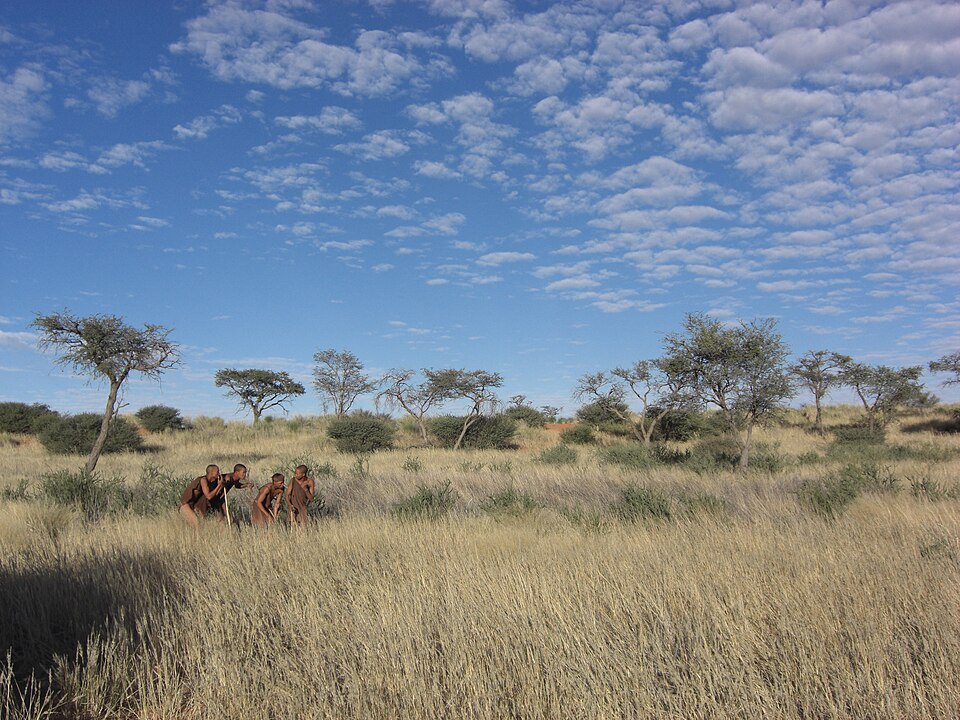

The modern discipline of ethnoarchaeology traces its intellectual origins to a 1961 paper by Robert Ascher, who argued that archaeological analogy should be drawn preferentially from societies that occupy environments and maintain technologies similar to those of the archaeological case under study, rather than from whatever ethnographic parallel happened to be conveniently available.1 Ascher distinguished between "general" analogies, which draw on broad cross-cultural patterns, and "specific" analogies, which draw on societies with demonstrated historical or ecological continuity with the archaeological case. This distinction sharpened the question of how and when ethnographic observations could legitimately be extended into the past, and it set the stage for the more rigorous approaches that would follow in the next decade.1, 11
The decisive impetus for ethnoarchaeology as a sustained field research program came from the New Archaeology of the 1960s and its insistence that archaeology should be an explicitly scientific discipline capable of explaining, not merely describing, the past. Lewis Binford, the most prominent advocate of the New Archaeology, argued that archaeologists needed independent means of evaluating their interpretations of the archaeological record — and that the most direct way to develop such means was to observe the relationships between behavior and material residues in living contexts where both could be documented simultaneously.2, 3 This reasoning propelled Binford and others into the field among contemporary hunter-gatherers, pastoralists, and farming communities, inaugurating the era of systematic ethnoarchaeological research.
Pioneering fieldwork of the 1970s
The foundational ethnoarchaeological projects of the 1970s established the empirical and conceptual templates that would shape the discipline for decades. The most influential was Lewis Binford's extended fieldwork among the Nunamiut Eskimo of the Brooks Range in northern Alaska, documented in his 1978 monograph Nunamiut Ethnoarchaeology. Binford chose the Nunamiut because their reliance on caribou hunting in a periglacial environment provided a potential analogue for understanding the subsistence strategies and site-formation processes of Pleistocene hunter-gatherers in similar environments, including the Mousterian hominins of Ice Age Europe.2
Binford accompanied Nunamiut hunters through a complete annual cycle of subsistence activities, documenting in meticulous detail the decisions they made about where to hunt, how to butcher carcasses, which skeletal parts to transport to residential camps and which to abandon at kill sites, and how the resulting bone assemblages varied as a function of site type, season, group size, and distance from the kill. From this work emerged several concepts that became standard tools in zooarchaeology and archaeological site analysis, including the meat utility index (a quantitative ranking of skeletal elements by their nutritional yield, used to predict which bones hunters would preferentially transport), and the concepts of drop zones and toss zones (the spatial areas immediately around and at some distance from activity loci where refuse accumulates through different disposal behaviors).2, 3
A second landmark project was John Yellen's ethnoarchaeological study of !Kung San (Ju/'hoansi) camps in the Kalahari Desert of Botswana, published in 1977 as Archaeological Approaches to the Present. Yellen mapped the spatial layout of sixteen !Kung camps in exhaustive detail, recording the locations of hearths, hut structures, activity areas, and refuse deposits. He then returned to camps that had been abandoned and examined what remained as an "archaeological" site, comparing the living reality he had documented with the material traces that survived after abandonment.4 Yellen's work demonstrated that the spatial organization of hunter-gatherer camps was patterned in ways that reflected the social composition of the group — nuclear families clustered around individual hearths, with communal activity areas in the center — and that these patterns were at least partially preserved in the archaeological residues. The study provided a detailed reference framework for interpreting the spatial structure of Pleistocene open-air sites.4, 11
Richard Gould's 1980 monograph Living Archaeology, based on fieldwork among Aboriginal Australians in the Western Desert, added a third major case study to the ethnoarchaeological canon. Gould documented stone tool manufacture, use, and discard among people who still employed lithic technology in their daily subsistence activities, providing direct observations of reduction sequences, tool curation behaviors, and the formation of lithic scatters. Importantly, Gould proposed an argument from anomaly — suggesting that ethnoarchaeology should focus not on similarities between past and present but on anomalies, cases where archaeological patterns diverge from ethnographic expectations, as these discrepancies are the most informative for identifying behaviors unique to the past.10
Middle-range theory
The theoretical framework that most explicitly linked ethnoarchaeology to archaeological interpretation was Binford's concept of middle-range theory, articulated across several publications in the late 1970s and early 1980s, most systematically in Bones: Ancient Men and Modern Myths (1981). Binford argued that archaeology operates with two distinct bodies of theory: "general theory," which encompasses the broad explanatory frameworks used to interpret the past (cultural ecology, evolutionary theory, Marxist materialism), and "middle-range theory," which provides the inferential bridge between the static patterns observed in the archaeological record and the dynamic behaviors that produced them.3, 6
Middle-range theory, as Binford conceived it, sought to establish uniformitarian principles — lawlike relationships between behavior and its material consequences that hold true across time and space. If, for instance, ethnoarchaeological and experimental research could demonstrate that a particular pattern of cut marks on bone invariably results from a specific butchering technique, then that pattern could be used to infer the same technique when encountered in the Pleistocene record. The key assumption was that the physical and chemical processes linking behavior to material traces operate uniformly: flint fractures the same way whether struck by a modern knapper or an Homo erectus individual 1.5 million years ago, and animal carcasses undergo the same taphonomic processes regardless of the cultural context in which they were discarded.3, 15
Raab and Goodyear, in a 1984 critical review, traced Binford's middle-range concept to the sociological tradition of Robert K. Merton, who had proposed "theories of the middle range" as an intermediate level between grand sociological theory and empirical observation. They argued that while the concept had been productive in orienting archaeological research toward explicit hypothesis testing, its implementation raised unresolved questions about the boundaries between middle-range and general theory, and about the conditions under which uniformitarian assumptions were justified.6 Michael Schiffer's complementary but competing framework of formation processes — which distinguished between cultural transforms (c-transforms) and natural transforms (n-transforms) that convert the "systemic context" of living behavior into the "archaeological context" of the excavated record — offered an alternative vocabulary for addressing many of the same problems, though with less emphasis on cross-cultural analogy and more on the physical and chemical mechanisms of site formation.7, 22
Hodder and the symbolic critique
Not all ethnoarchaeologists shared Binford's confidence in uniformitarian principles or his emphasis on ecological and economic variables. Ian Hodder's 1982 monograph Symbols in Action: Ethnoarchaeological Studies of Material Culture, based on fieldwork among the Baringo, Njemps, Tugen, and other communities in Kenya, Zambia, and Sudan, mounted a fundamental challenge to the processual ethnoarchaeological program. Hodder argued that material culture does not simply reflect behavior in a mechanical, predictable fashion; rather, it is actively used by people to construct, negotiate, and contest social identities, power relationships, and symbolic meanings.5
In his East African case studies, Hodder found that the distribution of material culture styles — pottery decoration, house forms, ornament types — did not correlate neatly with ecological zones, subsistence strategies, or interaction frequencies, as processual models predicted. Instead, stylistic boundaries tracked ethnic and social boundaries in complex ways, with material culture being deliberately used to signal identity, mark social distinctions, and reinforce or challenge existing power structures.5 A shared ecological adaptation did not produce shared material culture; groups in close contact and similar environments sometimes maintained sharply distinct artifact styles precisely because material culture served as an active medium of social differentiation.
Hodder concluded that the analogies generated by ethnoarchaeology should be structural rather than formal — that is, they should seek to understand the underlying principles by which material culture is organized and given meaning in particular cultural contexts, rather than assuming that superficial similarities in artifact form reflect equivalent behaviors or functions. This position led Hodder toward the post-processual archaeology movement, which emphasized the symbolic, contextual, and historically contingent dimensions of material culture that processual approaches had undervalued.5, 18 While the debate between processual and post-processual ethnoarchaeology has moderated over time, Hodder's critique permanently expanded the range of questions that ethnoarchaeologists were expected to address, moving the discipline beyond a narrow focus on ecological and technological variables to encompass social organization, ideology, and power.11
Applications in archaeological interpretation
Ethnoarchaeological research has generated reference data across nearly every domain of archaeological inquiry. Several application areas illustrate the range and depth of the discipline's contributions.
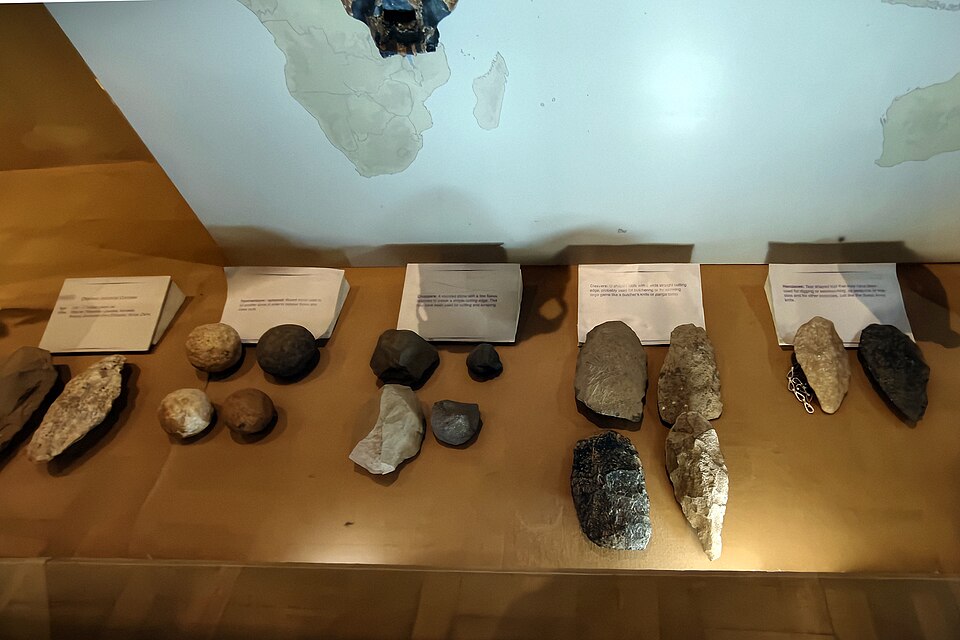

Lithic technology. Ethnoarchaeological and experimental studies of stone tool production have provided essential frameworks for interpreting the lithic debris that constitutes the most abundant and durable class of artifacts in the Paleolithic record. Observations of living and recent knappers have documented the complete reduction sequences by which nodules of raw material are transformed into finished tools, generating predictions about the debitage assemblages, core forms, and tool morphologies that result from different technological strategies.10, 11 Dietrich Stout and colleagues extended this work into cognitive science by using positron emission tomography (PET) and functional magnetic resonance imaging (fMRI) to image the brains of modern experimental knappers as they produced Oldowan and Acheulean stone tools. Their studies revealed that Acheulean handaxe production activates brain regions associated with hierarchical action planning and complex motor coordination, including the right-hemisphere homologue of Broca's area — a finding with implications for understanding the cognitive evolution of Homo erectus and the possible co-evolution of toolmaking and language.13, 23
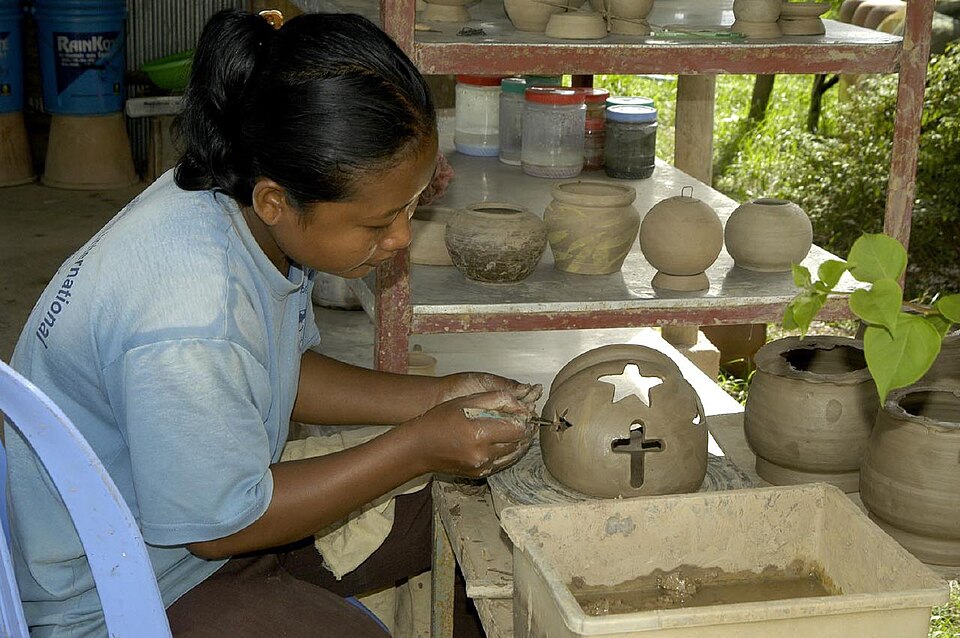

Ceramic production. William Longacre's Kalinga Ethnoarchaeological Project, conducted among pottery-making communities in the Cordillera Mountains of the northern Philippines beginning in 1973 and continuing for nearly two decades, became one of the longest-running ethnoarchaeological projects in the world. Longacre and his collaborators inventoried over 2,000 pots in use across multiple villages, recording for each vessel the potter who made it, the year of manufacture, the clay source, the forming technique, and the decorative motifs employed.12 The project yielded foundational data on ceramic use-life (how long pots remain in service before breakage), the relationship between production specialization and community social organization, and the ways in which ceramic style varies within and between production communities. The Kalinga data demonstrated that ceramic designs are relatively homogeneous within regional production traditions but sharply differentiated between them, providing an empirical basis for using stylistic boundaries in the archaeological record to infer social boundaries in the past.12, 11
Spatial organization. Susan Kent's ethnoarchaeological research on the use of domestic space, synthesized in her 1984 monograph Analyzing Activity Areas and her 1990 edited volume Domestic Architecture and the Use of Space, established cross-cultural principles for interpreting the spatial organization of archaeological sites. Kent proposed that the degree of internal spatial segmentation within dwellings — the extent to which different activities are assigned to distinct, physically bounded areas — correlates with the overall sociopolitical complexity of a society, with more complex societies exhibiting greater spatial partitioning of domestic functions.14, 24 This hypothesis, though debated and refined, provided archaeologists with a testable model for inferring aspects of social organization from the spatial patterning of artifacts and features within excavated structures.
Major ethnoarchaeological projects and their contributions2, 4, 5, 12, 14
| Researcher | Study population | Domain | Key contribution |
|---|---|---|---|
| Binford (1978) | Nunamiut Eskimo, Alaska | Faunal analysis, site structure | Meat utility index, drop/toss zones |
| Yellen (1977) | !Kung San, Kalahari | Camp spatial organization | Mapping of living floors and refuse patterns |
| Gould (1980) | Aboriginal Australians, Western Desert | Lithic technology | Argument from anomaly |
| Hodder (1982) | Baringo & other groups, East Africa | Symbolic material culture | Material culture as active social signaling |
| Kent (1984) | Cross-cultural study | Activity areas, domestic space | Spatial segmentation & sociopolitical complexity |
| Longacre (1973–1991) | Kalinga, Philippines | Ceramic production & use | Pottery use-life, regional style variation |
| Stout et al. (2008) | Experimental knappers | Lithic cognition | Brain imaging of Acheulean toolmaking |
The uniformitarian assumption and its limits
The logical foundation of ethnoarchaeological inference rests on a form of uniformitarianism — the assumption that the relationships between human behavior and its material consequences observed in the present also held in the past. This assumption is borrowed, with important modifications, from the geological principle that "the present is the key to the past," articulated by James Hutton and Charles Lyell in the eighteenth and nineteenth centuries. In ethnoarchaeology, the uniformitarian assumption takes the form of a claim that the physical, chemical, and biological processes governing the formation of material residues operate consistently across time, even as the cultural contexts in which those processes are embedded change dramatically.3, 9
Binford and other processual ethnoarchaeologists argued that uniformitarianism is justified for the natural science dimensions of archaeological inference: the physics of stone fracture, the chemistry of combustion residues, the biomechanics of animal butchering, and the taphonomic processes by which organic materials decompose. These are the domains in which middle-range theory operates, and they are governed by laws of nature that do not change between the Pleistocene and the present.3, 15 The difficulty arises when ethnoarchaeological analogy is extended to the cultural dimensions of behavior — social organization, symbolic meaning, ritual practice, kinship structures — which are historically contingent and cannot be assumed to replicate across different societies or time periods.
Gould and Watson, in an influential 1982 dialogue, debated the scope of legitimate analogical reasoning in ethnoarchaeology. Gould argued for restricting analogy to directly observable material correlates and proposed his "argument from anomaly" as a way to move beyond simplistic one-to-one analogies between present and past. Watson countered that all archaeological reasoning is inherently analogical, and that the task is not to avoid analogy but to use it rigorously, with explicit attention to the relevance and limitations of each comparison.9 This exchange crystallized a tension that persists in the discipline: ethnoarchaeology is most powerful when it documents the material consequences of physical processes (flaking, firing, depositing), but archaeologists routinely aspire to infer social and cognitive phenomena that are not reducible to physical processes alone.11, 21
Critiques and ethical challenges
Ethnoarchaeology has attracted sustained critique on both epistemological and ethical grounds. The most fundamental epistemological objection is the charge that ethnoarchaeologists treat living societies as relics of the past. By using contemporary hunter-gatherers, pastoralists, or small-scale farmers as analogues for prehistoric populations, the discipline risks implying that these societies are somehow frozen in time, representing earlier stages of cultural development through which all of humanity once passed. This criticism was articulated forcefully by H. Martin Wobst in his 1978 paper on "the tyranny of the ethnographic record," in which he argued that the ethnographic literature available to archaeologists was systematically biased toward small-scale, geographically marginal societies that had been profoundly affected by colonial contact, and that using these societies as models for the deep past imposed an artificial uniformity on the diversity of prehistoric adaptations.8
The ethical dimensions of this critique have intensified as archaeology has reckoned with its colonial inheritance. Chris Gosden's 1999 analysis of the relationship between anthropology and archaeology highlighted the extent to which both disciplines were shaped by the intellectual frameworks and political structures of European colonialism, and argued that ethnoarchaeological practice must be critically examined for the power asymmetries it reproduces.18 The "colonial gaze" critique holds that ethnoarchaeological research, however well-intentioned, involves Western-trained scholars visiting non-Western communities to extract data that primarily serves the academic goals of the researcher's own discipline, with limited reciprocal benefit to the communities studied.18, 20
Contemporary ethnoarchaeologists have responded to these critiques in several ways. Many projects now emphasize collaborative research designs in which community members participate as co-researchers rather than passive subjects, and in which the research addresses questions of interest to the community as well as to archaeologists.20, 21 Lyons and David, in a 2019 assessment of the discipline's trajectory, argued that ethnoarchaeologists "refute charges that they regard the societies with which they work as living fossils" and that modern practice explicitly acknowledges that all living societies, including those studied ethnoarchaeologically, are products of their own complex histories and are not frozen representatives of any past stage.20 Politis, drawing on decades of ethnoarchaeological research in South America, has argued that the discipline's continued relevance depends on its willingness to engage with indigenous knowledge systems on their own terms, rather than treating them solely as data for archaeological modeling.21
Experimental archaeology as a related approach
Experimental archaeology overlaps substantially with ethnoarchaeology but is distinguished by its emphasis on controlled replication of past technologies and processes under known conditions, rather than on the observation of living societies. Where ethnoarchaeology asks "how do living people produce and use material culture?", experimental archaeology asks "what happens when we attempt to replicate a specific past technology or process using the materials and techniques available at the time?"16, 17
John Coles' 1979 monograph Experimental Archaeology provided the first comprehensive survey of the field, documenting experiments in stone tool production, metalworking, pottery firing, house construction, ocean voyaging, and agricultural practice. Coles argued that controlled experimentation offered a rigorous complement to ethnoarchaeological analogy, because it allowed researchers to isolate specific variables and test causal hypotheses in ways that observational fieldwork among living societies could not.16
Dedicated experimental facilities have played a central role in advancing the discipline. The Historical-Archaeological Experimental Centre at Lejre (now Sagnlandet Lejre), founded in Denmark in 1964, became one of the world's premier centers for experimental replication of prehistoric technologies, including Mesolithic blade production and Neolithic ground-stone tool manufacture. In the late 1970s and early 1980s, the American experimental knapper Errett Callahan conducted pioneering work at Lejre on the replication of Scandinavian Neolithic flint daggers, demonstrating that these technically demanding artifacts could be produced using only prehistoric techniques and providing detailed data on the skill, time investment, and raw material requirements involved.16, 17 The Butser Ancient Farm in England, established in the 1970s by Peter Reynolds, pursued long-term experiments in Iron Age agriculture, animal husbandry, and roundhouse construction, generating data on crop yields, building longevity, and taphonomic processes that proved directly applicable to the interpretation of excavated Iron Age sites.16
Experimental and ethnoarchaeological approaches converge most productively in the study of chaînes opératoires (operational sequences), the step-by-step technical processes by which raw materials are transformed into finished artifacts. By combining ethnoarchaeological observation of living craftspeople with experimental replication of the same technologies, researchers can construct detailed models of the decisions, skills, and knowledge required at each stage of production — models that can then be used to interpret the fragmentary evidence of production debris recovered from archaeological sites.11, 17
Ethnoarchaeology in the computational era
The rise of computational modeling, geographic information systems, agent-based simulation, and large-scale quantitative databases in archaeology has prompted some scholars to question whether ethnoarchaeology remains necessary. If the relationships between behavior and material residues can be modeled mathematically, perhaps there is no longer a need to study those relationships through ethnographic fieldwork among living communities. Cunningham and MacEachern, in a 2016 defense of the discipline, reframed ethnoarchaeology as a form of "slow science" — a long-term, relationship-intensive, context-rich mode of inquiry that generates the kind of deep, nuanced understanding of human-material interactions that computational models require as inputs but cannot themselves produce.19
Binford's own late work anticipated this integrative role. His 2001 volume Constructing Frames of Reference compiled and analyzed ethnographic data from approximately 340 historically documented hunter-gatherer societies worldwide, constructing quantitative models of the relationships between environmental variables (temperature, rainfall, primary productivity) and behavioral variables (mobility, settlement pattern, subsistence strategy, group size). The resulting "frames of reference" were explicitly designed as tools for archaeologists to use when interpreting the archaeological record of hunter-gatherer adaptations, and they represent the most systematic attempt to date to bridge the gap between small-scale ethnoarchaeological case studies and the broad comparative patterns needed for global-scale archaeological interpretation.15
Contemporary ethnoarchaeological projects increasingly employ digital documentation technologies — photogrammetry, GPS-based spatial recording, 3D scanning of artifacts and features, and systematic sampling for residue analysis — that produce data directly compatible with computational modeling frameworks.19, 21 At the same time, agent-based models of site formation, lithic reduction, and settlement dynamics draw explicitly on parameters derived from ethnoarchaeological fieldwork to calibrate their simulations. The relationship is symbiotic rather than competitive: computational models depend on empirical data from ethnoarchaeology for their parameters and validation, while ethnoarchaeological research increasingly uses computational tools to analyze and visualize its observations.19, 20
The broader trajectory of the discipline reflects a shift from its original role as a generator of simple analogies — "the !Kung do X, therefore Paleolithic people probably did X" — toward a more sophisticated function as a source of middle-range principles about the general relationships between behavior, material culture, and the archaeological record.11, 21 David and Kramer, in their comprehensive 2001 survey Ethnoarchaeology in Action, defined the discipline as "the study of living culture from archaeological perspectives" and argued that its core contribution lies not in providing direct models for the past but in improving the general quality of archaeological reasoning by making explicit the assumptions, processes, and contingencies that link material evidence to human behavior.11 As long as archaeology confronts the fundamental challenge of inferring dynamic behavior from static material remains, ethnoarchaeology will remain an indispensable component of its interpretive toolkit.
References
The archaeo-ethnology of hunter-gatherers or the tyranny of the ethnographic record in archaeology
Neural correlates of Early Stone Age toolmaking: technology, language and cognition in human evolution
Constructing Frames of Reference: An Analytical Method for Archaeological Theory Building Using Ethnographic and Environmental Data Sets
Domestic Architecture and the Use of Space: An Interdisciplinary Cross-Cultural Study