Overview
- The Phoenicians were a Semitic-speaking maritime civilization centered on the city-states of Tyre, Sidon, and Byblos along the coast of modern Lebanon, who dominated Mediterranean trade networks from roughly 1200 to 300 BCE and established colonies from Carthage to the Iberian Peninsula.
- Their most enduring legacy is the Phoenician alphabet, a 22-letter consonantal script developed by approximately 1050 BCE that became the direct ancestor of the Greek, Latin, Arabic, and Hebrew writing systems used by billions of people today.
- Phoenician industry centered on the production of Tyrian purple dye extracted from murex sea snails — a luxury commodity so valuable that a single pound of double-dyed cloth could cost more than its weight in gold — alongside cedar timber, glass, metalwork, and a maritime trade network spanning from the Atlantic coast to the Persian Gulf.
The Phoenicians were a Semitic-speaking maritime civilization that flourished along a narrow strip of the eastern Mediterranean coast — corresponding roughly to modern Lebanon and portions of Syria and northern Israel — from the collapse of the Late Bronze Age around 1200 BCE through the conquest of the region by Alexander the Great in 332 BCE.1, 4 Never a unified empire, Phoenicia consisted of a chain of independent city-states, chief among them Byblos, Sidon, and Tyre, that competed with one another yet shared a common language, script, religious tradition, and maritime orientation.5, 6 Though they left relatively few extensive literary texts of their own, the Phoenicians exerted an outsized influence on the development of Mediterranean civilisation: they invented the alphabetic writing system from which virtually all modern European and Middle Eastern scripts descend, established the first commercial network spanning the entire Mediterranean basin, and founded colonies — most notably Carthage — that became major powers in their own right.2, 3 Their story is one of disproportionate cultural impact achieved not through territorial conquest but through trade, technological innovation, and the relentless pursuit of maritime commerce across vast distances.
Origins and geography
The term "Phoenician" derives from the Greek Phoinikes, likely related to phoinix ("purple-red"), a reference to the purple dye for which the region was famous.4, 3 The Phoenicians themselves never used this label as a collective ethnic designation; they identified primarily with their individual city-states, calling themselves Sidonians, Tyrians, or Byblians.3, 5 Josephine Crawley Quinn has argued persuasively that "the Phoenicians" as a unified people was largely a construction of Greek and later European observers who grouped diverse Levantine coastal communities under a single rubric.3 Nevertheless, the term remains useful for identifying the culturally related city-states that shared the Phoenician language, a Northwest Semitic tongue closely related to Hebrew, and the distinctive consonantal alphabet that would prove their most consequential invention.11
Phoenicia proper occupied a coastal strip roughly 200 kilometres long and rarely more than 30 kilometres wide, hemmed between the Mediterranean Sea to the west and the Lebanon mountain range to the east.4, 6 This geography was decisive in shaping Phoenician civilisation. The narrow coastal plain offered limited agricultural land, pushing the inhabitants toward the sea for their livelihood, while the Lebanon Mountains provided the region's other great natural resource: extensive forests of cedar, fir, and pine that were prized throughout the ancient Near East for shipbuilding, construction, and temple furnishing.1, 7 Egyptian, Mesopotamian, and biblical texts all attest to the fame of Lebanese cedar, which the Phoenicians exported in vast quantities to timber-poor civilisations across the region.4, 19
The major Phoenician cities occupied strategic positions along the coast. Byblos (modern Jbeil), the oldest continuously inhabited city in the region, maintained trading contacts with Egypt as early as the third millennium BCE and gave its name to the Greek word for book (biblos) and ultimately the Bible, owing to its role in the papyrus trade.6, 4 Sidon (modern Saida) was renowned for its glasswork and purple dye production, while Tyre (modern Sour), situated on an island roughly 600 metres offshore, emerged as the dominant Phoenician city-state from the tenth century BCE onward, leveraging its virtually impregnable position to build a commercial empire stretching across the Mediterranean.5, 13 Other significant centres included Berytus (modern Beirut), Arwad (on an island off the Syrian coast), and Sarepta, where important archaeological evidence of Phoenician industrial production has been recovered.6
Bronze Age roots and the emergence of Phoenicia
The Phoenician city-states did not emerge from a vacuum but grew out of the Canaanite urban traditions of the Bronze Age Levant.12, 6 During the Late Bronze Age (c. 1550–1200 BCE), the coastal cities of Byblos, Sidon, Tyre, and Ugarit (further north, in modern Syria) functioned as vassals within a complex international system dominated by the great powers of Egypt, the Hittite Empire, and Mittani.4, 19 The Amarna Letters, a diplomatic archive of roughly 350 clay tablets found in Egypt and dating to the fourteenth century BCE, include correspondence from the rulers of Byblos, Tyre, and Sidon to the Egyptian pharaoh, revealing cities that were already deeply integrated into long-distance trade networks while navigating the political demands of their Egyptian overlords.4, 5
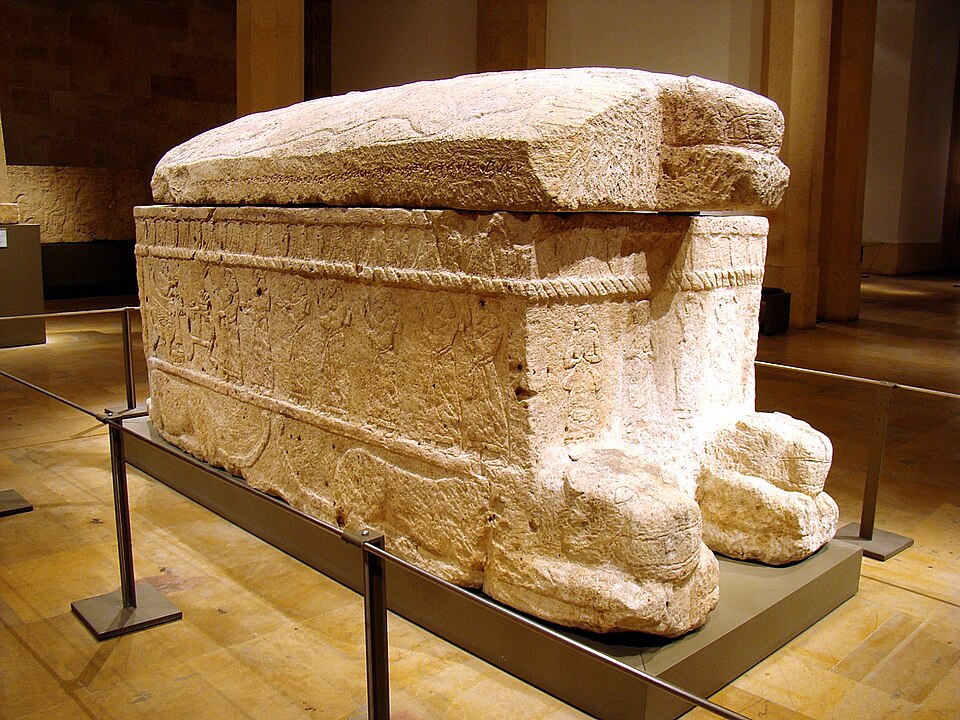

The Late Bronze Age collapse, a systemic crisis that swept the eastern Mediterranean between approximately 1250 and 1150 BCE, destroyed the Hittite Empire, destabilised Egypt, and disrupted the palace-based trade networks that had sustained the region for centuries.1, 12 Paradoxically, this catastrophe created the conditions for the Phoenician cities' rise. Freed from the political subordination of the palace-based international order, the coastal Levantine communities adapted by developing new, more flexible modes of maritime commerce that no longer depended on palace intermediaries.12 Ayelet Gilboa has argued that the transformation of south Levantine polities following the Bronze Age collapse provided the direct roots of the Phoenician mercantile phenomenon, as communities restructured their economies around independent maritime enterprise.12 By approximately 1000 BCE, the Phoenician city-states had emerged as the Mediterranean's preeminent trading power, filling the commercial vacuum left by the collapse of the palatial system.1, 4
The invention of the alphabet
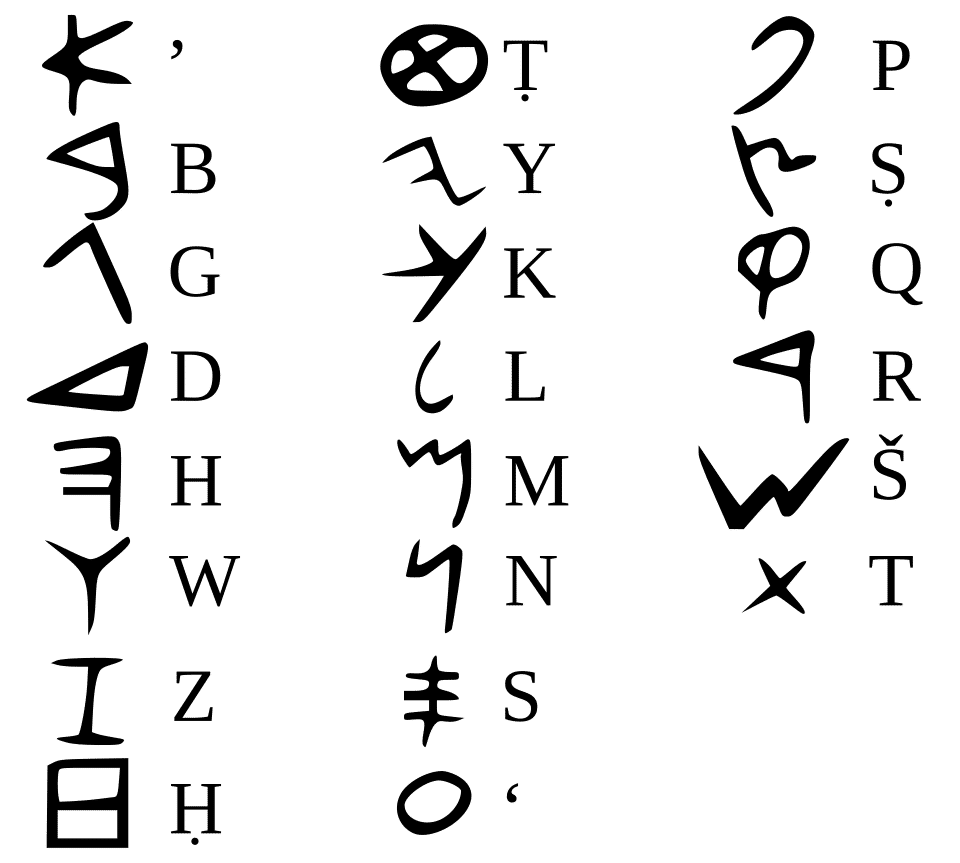

The Phoenician alphabet, standardised by approximately 1050 BCE, ranks among the most consequential inventions in human history.16, 2 It was a purely consonantal (abjad) script of 22 letters, written from right to left, that represented only consonant sounds and left vowels to be inferred by the reader.16, 11 The script evolved from the earlier Proto-Canaanite or Proto-Sinaitic alphabet, which had itself developed from Egyptian hieroglyphic models through the acrophonic principle — in which a pictographic sign was reduced to represent only the first consonant of the word it depicted.16 Thus the sign for "house" (bet) came to represent the sound /b/, the sign for "water" (mem) represented /m/, and so on.
The genius of the Phoenician system lay in its radical simplicity. Where cuneiform required mastery of hundreds of signs and Egyptian hieroglyphs demanded knowledge of several hundred logographic and phonetic symbols, the Phoenician alphabet could be learned with just 22 characters, making literacy accessible to merchants, sailors, and craftspeople rather than remaining the exclusive province of professional scribes.16, 2 This democratisation of writing was intimately connected to commerce: the alphabet was a practical tool for record-keeping, labelling cargo, and maintaining correspondence across the far-flung Phoenician trading network.4, 7
The Phoenician alphabet's most far-reaching impact came through its adoption and adaptation by other cultures. The Greeks adopted the Phoenician script, probably during the eighth century BCE, and made the crucial innovation of repurposing certain Phoenician consonant signs that represented sounds absent in Greek to denote vowels, thereby creating the first true alphabet in which both consonants and vowels were systematically represented.16, 2 The Greek alphabet in turn gave rise to the Latin, Cyrillic, and Coptic scripts. Meanwhile, the Phoenician script's Aramaic descendant spawned the Hebrew, Arabic, Syriac, and ultimately the Brahmi scripts of South and Southeast Asia.16 Virtually every alphabetic writing system in use today traces its ancestry, directly or indirectly, to the 22 letters devised by Phoenician scribes over three thousand years ago.2, 16
Descendant scripts of the Phoenician alphabet16, 2
Maritime trade and navigation
The Phoenicians were the ancient Mediterranean's most accomplished seafarers, developing navigational techniques, ship designs, and commercial networks that remained unrivalled for centuries.17, 1 Phoenician merchant vessels, known as gauloi (round ships) from their broad, deep-hulled design optimised for cargo capacity, employed a sophisticated construction technique of mortise-and-tenon joinery that produced hulls of exceptional strength and watertightness.17, 20 These ships could carry cargoes of up to 450 tonnes and were capable of long open-water voyages that other maritime peoples of the period avoided.17 The Phoenicians were reportedly the first Mediterranean sailors to navigate by the stars, using the constellation Ursa Minor (which the Greeks consequently called Phoinike) as a guide for maintaining northward bearings during night sailing.4, 7
Phoenician trading networks extended far beyond the Mediterranean. By the tenth century BCE, Tyrian merchants operated in partnership with King Solomon of Israel and King Hiram I of Tyre to dispatch fleets from the Red Sea port of Ezion-geber to the land of Ophir, returning with gold, silver, ivory, and exotic animals.5, 4 The Greek historian Herodotus reported that around 600 BCE, Phoenician sailors in the service of the Egyptian pharaoh Necho II circumnavigated the African continent, a voyage of approximately three years in which they reportedly observed the sun shifting to the north of their position as they rounded the southern tip of Africa — a detail that Herodotus himself disbelieved but which modern scholars regard as evidence supporting the account's authenticity.4, 1
The commodities that Phoenician ships carried were extraordinarily diverse. Outbound cargoes included cedar timber, purple-dyed textiles, glass vessels, metalwork (particularly fine bronze and silver bowls with intricate repoussé decoration), carved ivory, and wine.1, 4 Return cargoes comprised silver and tin from the Iberian Peninsula, copper from Cyprus, grain from Egypt, incense from Arabia, and gold from West Africa.1, 10 The Phoenicians also served as cultural intermediaries, transmitting artistic motifs, religious ideas, technological knowledge, and — most consequentially — their alphabet to peoples across the Mediterranean world.2, 9
Tyrian purple and industrial production
No Phoenician product was more famous or more valuable than Tyrian purple, the deep reddish-purple dye extracted from the hypobranchial glands of predatory sea snails of the family Muricidae, principally Bolinus brandaris and Hexaplex trunculus.15, 4 The production process was laborious and malodorous: thousands of snails had to be collected, their glands extracted, mixed with salt, and left to steep in stone vats for days before the liquid was slowly heated — but not boiled — to produce the dye.15 Ancient sources report that approximately 12,000 murex snails were required to produce just 1.4 grams of dye, enough to colour only the trim of a single garment.4, 15 The resulting colour was prized for its brilliance, its resistance to fading, and its tendency to become more vivid rather than duller with exposure to sunlight and washing.4
Archaeological excavations at Tel Shiqmona on the Carmel coast have revealed the only Mediterranean site demonstrably producing purple dye continuously for nearly 500 years, from approximately 1100 to 600 BCE, providing direct material evidence for the scale and longevity of the Phoenician dye industry.15 Massive deposits of crushed murex shells have been found at Sidon, Tyre, and other coastal sites, sometimes forming mounds several metres deep, attesting to industrial-scale production.6, 4 The extraordinary cost of Tyrian purple made it a marker of wealth and power throughout antiquity: Roman sumptuary laws restricted its use to senatorial and later imperial garments, and the association between purple and royalty persists in Western culture to this day.4, 7
Beyond purple dye, the Phoenicians were renowned for their glass production, particularly the invention of glass-blowing (traditionally attributed to Sidon in the first century BCE), and for fine metalwork in gold, silver, and bronze.4, 9 Phoenician artisans developed a distinctive artistic style that blended Egyptian, Mesopotamian, and Aegean motifs into a cosmopolitan visual vocabulary perfectly suited to their role as cultural intermediaries across the ancient world.2, 9
Colonies and the founding of Carthage
Beginning in the late second millennium BCE, Phoenician city-states established a network of trading posts, settlements, and colonies across the Mediterranean that eventually stretched from the coast of modern Lebanon to the Atlantic shores of Morocco and the Iberian Peninsula.1, 18 Hans Georg Niemeyer has distinguished the Phoenician model of overseas settlement from the Greek colonial model: whereas Greek colonies (apoikiai) were typically self-governing communities of citizen-farmers that replicated the mother city's political institutions, Phoenician establishments were more often commercial outposts designed to facilitate trade, extract resources, and maintain supply chains rather than to transplant an entire civic community.18 This distinction, while not absolute, helps explain the different character of Phoenician and Greek overseas presence.
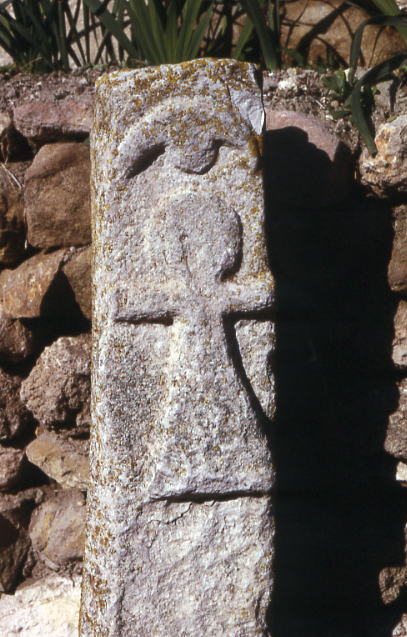

The earliest Phoenician colonies in the western Mediterranean were established in the late ninth and early eighth centuries BCE, though ancient literary traditions push some foundations earlier.1, 10 Key settlements included Kition on Cyprus, Motya in western Sicily, Sulcis and Nora in Sardinia, Lixus on the Atlantic coast of Morocco, and Gadir (modern Cádiz) on the Atlantic coast of Spain, where the Phoenicians accessed the rich silver and tin deposits of the Iberian Peninsula.1, 10 Gadir, traditionally founded by Tyrians around 1100 BCE though archaeological evidence suggests a date closer to the eighth century BCE, became one of the most important entrepôts in the ancient world, serving as the western terminus of Phoenician long-distance trade.1, 18
The most famous and consequential Phoenician colony was Carthage (from the Phoenician Qart-ḥadašt, "New City"), traditionally founded by Tyrian settlers led by the queen Elissa (Dido in Roman legend) in 814 BCE on the coast of modern Tunisia.8, 1 Archaeological evidence confirms significant Phoenician presence at Carthage from at least the late eighth century BCE.8 Carthage's superb natural harbour, its strategic position controlling the narrows between Sicily and North Africa, and its productive agricultural hinterland enabled it to grow rapidly, eventually surpassing its mother city Tyre in wealth and power.8, 1 By the sixth century BCE, Carthage had established its own colonial network across North Africa, Sardinia, western Sicily, and the Balearic Islands, and had evolved from a Phoenician trading post into the capital of an independent maritime empire that would challenge first the Greeks and then Rome for dominance of the western Mediterranean.8, 18
Major Phoenician colonies and approximate foundation dates1, 10
| Colony | Modern location | Traditional date (BCE) | Archaeological date (BCE) |
|---|---|---|---|
| Kition | Larnaca, Cyprus | c. 1000 | c. 9th century |
| Gadir (Cádiz) | Spain | c. 1100 | c. 8th century |
| Utica | Tunisia | c. 1100 | c. 8th century |
| Carthage | Tunisia | 814 | c. late 8th century |
| Motya | Sicily, Italy | c. 800 | c. 8th century |
| Sulcis | Sardinia, Italy | — | c. 8th century |
| Lixus | Morocco | c. 1100 | c. 8th century |
Religion and cultural life
Phoenician religion was polytheistic, with each city-state venerating its own patron deity alongside a broader shared pantheon.14, 9 The principal gods included El, the supreme creator deity; Baal (meaning "Lord"), the storm god associated with fertility and agricultural prosperity; Astarte, the goddess of love, war, and the evening star, equivalent to Mesopotamian Ishtar; and Melqart, the patron god of Tyre, identified by the Greeks with Heracles.14, 4 Each major city maintained its own divine triad: Byblos honoured Baalat Gubal ("Lady of Byblos"), El, and Adonis; Sidon worshipped Astarte, Eshmun (a healing deity), and Baal of Sidon; while Tyre's supreme triad consisted of Melqart, Astarte, and Baal Shamem ("Lord of the Heavens").14, 6
Temples were the focal points of Phoenician religious life, and archaeological remains suggest that Phoenician sacred architecture influenced both Israelite and Greek temple design.9, 6 The biblical description of Solomon's Temple in Jerusalem, reportedly built with the assistance of Tyrian craftsmen and materials supplied by King Hiram I of Tyre, follows a tripartite plan (vestibule, main hall, and inner sanctum) that closely parallels known Phoenician temple layouts.4, 5 Religious rituals centred on animal sacrifice, libation offerings, and votive deposits, with elaborate festivals marking agricultural and seasonal cycles.14
The most controversial aspect of Phoenician religion is the question of child sacrifice, referred to in ancient sources as molk or mulk and associated with open-air sanctuaries called tophets found at Carthage and other western Phoenician sites.8, 9 Greek and Roman authors described the Carthaginians as sacrificing infants to Baal Hammon and Tanit, and the tophets contain thousands of urns holding the cremated remains of very young children and animals alongside dedicatory stelae.8 The interpretation of these remains remains fiercely debated: some scholars accept the literary accounts and physical evidence as confirmation of ritual child sacrifice, while others argue that the tophets were dedicated cemeteries for children who died of natural causes and were subsequently consecrated to the gods.8, 9
Phoenician art and material culture reflected the cosmopolitan character of a civilisation that sat at the crossroads of Egyptian, Mesopotamian, Anatolian, and Aegean cultural spheres.2, 4 Phoenician craftsmen excelled in ivory carving, producing elaborate furniture inlays and decorative panels that have been recovered from Assyrian palaces at Nimrud and Samaria; in fine metalwork, particularly silver and bronze bowls with concentric registers of mythological scenes; and in scarab-seal production that creatively blended Egyptian and Levantine iconographic traditions.4, 9 Carolina López-Ruiz has argued that Phoenician cultural transmission was central to the "orientalising" revolution that transformed Greek art, religion, and mythology during the eighth and seventh centuries BCE, making the Phoenicians essential mediators in the formation of classical Greek civilisation itself.2
Political history and foreign domination
The political independence of the Phoenician city-states was repeatedly constrained by the succession of imperial powers that dominated the ancient Near East.5, 10 During the tenth and ninth centuries BCE, Tyre enjoyed its golden age under kings such as Hiram I (c. 970–936 BCE), who expanded the island city, built new temples to Melqart and Astarte, and forged the commercial alliance with Solomon that extended Tyrian trade into the Red Sea and beyond.5, 4 This prosperity attracted the attention of the expanding Neo-Assyrian Empire, and from the ninth century BCE onward, the Phoenician cities became tribute-paying vassals of Assyria, retaining their internal autonomy and commercial freedom in exchange for substantial annual payments of silver, gold, and luxury goods.10, 5
The Assyrian relationship was complex: while Assyrian tribute demands were heavy, Assyrian imperial order also provided the security and infrastructure that facilitated long-distance trade, and the Phoenician cities generally prospered under Assyrian hegemony.10, 1 When Phoenician cities rebelled, however, Assyrian retribution was severe. The Assyrian king Sennacherib sacked Sidon in 701 BCE, and his successor Esarhaddon destroyed the city again in 677 BCE, deporting its population and resettling the site with foreign colonists.5 Tyre's island position made it more resistant to siege: the city withstood Assyrian blockades on multiple occasions, most notably a five-year siege by Shalmaneser V (c. 727–722 BCE) and a thirteen-year siege by Nebuchadnezzar II of Babylon (c. 586–573 BCE), neither of which succeeded in taking the island city by force.5, 4
Following the fall of the Neo-Babylonian Empire, the Phoenician cities came under Persian Achaemenid rule (539–332 BCE), a period in which they enjoyed considerable autonomy and their fleets served as the backbone of the Persian navy.5, 7 Phoenician triremes formed the most formidable contingent in the fleet that Xerxes assembled for his invasion of Greece in 480 BCE.20 The end of independent Phoenicia came with Alexander the Great's siege of Tyre in 332 BCE, a seven-month operation in which the Macedonian king built a massive causeway (a mole) from the mainland to the island, permanently transforming Tyre's geography and demolishing the city that had resisted every previous besieger.5, 4 Under Hellenistic and then Roman rule, the Phoenician cities persisted as prosperous urban centres but gradually adopted Greek language and culture, and the distinctive Phoenician identity dissolved into the broader Hellenistic-Roman world.5, 9
Legacy and historical significance
The Phoenicians' historical significance is inversely proportional to their political power. They built no great land empire, left no monumental royal inscriptions comparable to those of Assyria or Egypt, and produced no surviving literary corpus.3, 4 Yet their contributions to human civilisation were profound and enduring. The alphabet they created became the foundation of virtually all Western and Middle Eastern writing systems, an innovation that democratised literacy and fundamentally altered the possibilities of human communication.16, 2 Their maritime expertise opened the Mediterranean to long-distance commerce, creating the interconnected economic and cultural world that would later be unified politically by Rome.1, 17 The colonial network they established planted urban civilisation across the western Mediterranean, with Carthage enduring for over six centuries as one of the ancient world's most powerful cities.8, 18
Recent scholarship has increasingly emphasised the Phoenicians' role as cultural mediators who catalysed the transformations of the early first millennium BCE.2, 9 López-Ruiz's work has demonstrated that Phoenician transmission of Near Eastern artistic, mythological, and technological traditions to the Aegean world was central to the "orientalising" revolution that shaped Archaic Greek culture, including religious ideas, artistic motifs, and possibly even elements of the Homeric epic tradition.2 At the same time, Quinn's reassessment of Phoenician identity has complicated older narratives by showing that "the Phoenicians" were less a self-conscious nation than a modern scholarly category applied retrospectively to diverse communities that shared certain linguistic, commercial, and religious features.3 Ongoing excavations at Tyre, Sidon, and across the western Mediterranean continue to refine understanding of these remarkable maritime peoples who, from a narrow strip of the Levantine coast, reshaped the world through commerce, craft, and the invention of the tools of writing itself.13, 6
References
Tel Shiqmona during the Iron Age: A First Glimpse into an Ancient Mediterranean Purple Dye 'Factory'
Early History of the Alphabet: An Introduction to West Semitic Epigraphy and Palaeography