Overview
- Paralogous genes are genes within the same genome that arose by duplication of an ancestral gene, and their divergence through subfunctionalization, neofunctionalization, and dosage effects has been a primary engine for the evolution of biological complexity.
- Classic gene families produced by paralogous duplication include the globins (whose members became specialized for embryonic, fetal, and adult oxygen transport), the Hox gene clusters (which pattern the body axis across bilaterians), and the opsins (whose diversification enabled trichromatic color vision in primates).
- Whole-genome duplications, tandem duplications, and retrotransposition generate paralogous copies at different scales, and comparative genomics reveals that rounds of large-scale duplication in early vertebrate evolution and in teleost fishes were followed by waves of functional diversification.
Paralogous genes are genes within the same organism that share sequence similarity because they descend from a common ancestral gene through duplication. The term was introduced by Walter Fitch in 1970 to distinguish intra-genomic homologs (paralogs) from inter-species homologs (orthologs), and the concept has since become central to understanding how genomes evolve new functions.1 Whereas orthologs arise through speciation and typically retain the ancestral function, paralogs arise through duplication and are freed from the full force of purifying selection, enabling one or both copies to diverge in sequence, expression, or function. Susumu Ohno's landmark 1970 monograph Evolution by Gene Duplication argued that gene duplication is the primary source of new genetic material and therefore the principal mechanism by which organisms acquire novel capabilities.1 Half a century of comparative genomics has largely vindicated this thesis, revealing that paralogous gene families underlie much of the functional complexity of eukaryotic genomes.2, 17
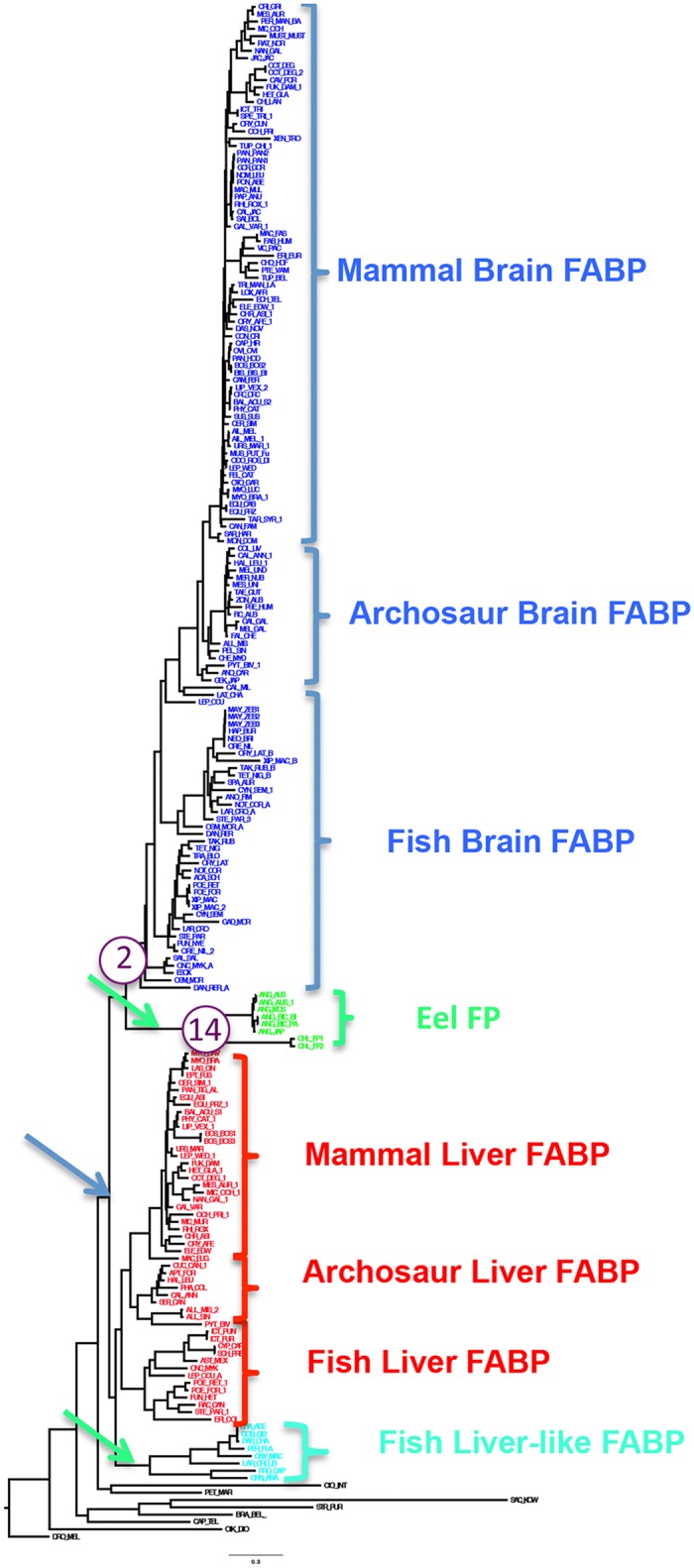

Mechanisms of gene duplication
Gene duplications arise through several distinct molecular mechanisms operating at different genomic scales. Tandem duplication occurs when unequal crossing over during meiosis produces a chromosomal segment carrying two adjacent copies of a gene; this is the predominant mechanism generating closely linked paralogous clusters such as the globin gene family.6 Retrotransposition occurs when an mRNA transcript is reverse-transcribed and inserted elsewhere in the genome, producing an intronless copy (a retrogene or processed pseudogene) that may or may not acquire regulatory elements enabling its expression.2 Segmental duplication involves the duplication of large chromosomal blocks containing multiple genes, and is particularly prevalent in primate genomes.15
The most dramatic form of duplication is whole-genome duplication (WGD), in which the entire chromosome complement is doubled in a single event, typically through autopolyploidy or allopolyploidy. WGD instantly doubles every gene in the genome, generating thousands of paralogous pairs simultaneously. Two rounds of whole-genome duplication (the "2R hypothesis") are thought to have occurred early in vertebrate evolution, prior to the divergence of jawed vertebrates, and a third round occurred in the teleost fish lineage.8, 9 These events massively expanded the gene repertoire of vertebrates relative to invertebrate chordates such as amphioxus, and are widely regarded as having provided the raw material for the evolution of vertebrate-specific innovations including the adaptive immune system, elaborated neural crest derivatives, and complex endocrine signaling.8, 14
Fates of duplicate genes
Following duplication, the most common fate of a paralogous copy is nonfunctionalization (pseudogenization): one copy accumulates deleterious mutations and decays into a pseudogene, while the other retains the ancestral function. Lynch and Conery estimated from comparative genomic data that the half-life of a duplicate gene is on the order of a few million years, with most duplicates lost to pseudogenization relatively quickly.2 However, a substantial minority of duplicates survive, and they do so through two principal mechanisms.
Subfunctionalization occurs when each copy loses a subset of the ancestral gene's functions, such that both copies together perform the full ancestral role but neither is individually dispensable. The duplication-degeneration-complementation (DDC) model formalized by Force and colleagues proposes that degenerative mutations in complementary regulatory elements can partition the expression domains or biochemical activities of the ancestral gene between the two copies, preserving both through purifying selection.3 This process does not itself generate novelty, but it stabilizes duplicate retention and thereby extends the evolutionary window during which subsequent adaptive mutations can occur.12
Neofunctionalization, the mechanism emphasized by Ohno, occurs when one copy retains the ancestral function while the other acquires mutations that confer a genuinely new function beneficial to the organism.1 Because the ancestral copy continues to fulfil the original role, the duplicate is shielded from the purifying selection that would otherwise eliminate function-disrupting mutations, creating what Ohno called evolutionary "freedom" to explore sequence space. Zhang documented a compelling example in the Antarctic zoarcid fish Lycodichthys dearborni, where a duplicated copy of sialic acid synthase was repurposed as an antifreeze protein through a series of amino acid substitutions, illustrating how a paralog can acquire a function entirely unrelated to its ancestral role.7
The globin gene family
The vertebrate globin gene family is one of the most thoroughly studied examples of paralogous diversification. All vertebrate globins descend from a single ancestral globin gene that duplicated approximately 500 million years ago into the alpha-globin and beta-globin lineages, which subsequently underwent additional tandem duplications to generate the multigene clusters found on separate chromosomes in modern vertebrates.6 In humans, the alpha-globin cluster on chromosome 16 contains the embryonic zeta gene and two adult alpha genes, while the beta-globin cluster on chromosome 11 contains the embryonic epsilon gene, the fetal gamma genes, and the adult delta and beta genes.
The different globin paralogs exhibit stage-specific expression patterns that are functionally significant: embryonic globins have higher oxygen affinity than fetal globins, which in turn have higher affinity than adult globins, ensuring efficient oxygen transfer from mother to fetus and from yolk sac to embryonic tissues at each developmental stage.6 This temporal partitioning of oxygen-transport function across paralogs is a textbook example of subfunctionalization at the expression level, with subsequent adaptive tuning of the oxygen-binding properties of each paralog constituting a form of neofunctionalization.
Hox gene clusters
The Hox genes encode homeodomain transcription factors that specify positional identity along the anterior-posterior body axis during embryonic development. In arthropods and other invertebrates, the Hox genes are typically organized in a single genomic cluster. In vertebrates, the two rounds of whole-genome duplication produced four paralogous Hox clusters (HoxA, HoxB, HoxC, HoxD), each containing a subset of the original complement of Hox genes.5, 13
The duplication and divergence of Hox clusters has had profound consequences for vertebrate body plan evolution. Paralogous Hox genes from different clusters often exhibit partially overlapping but distinct expression domains along the body axis, and loss-of-function experiments in mice demonstrate that paralogs have both redundant and unique functions.5 Holland and colleagues argued that the expansion of Hox gene number through WGD provided the genetic substrate for the elaboration of the vertebrate body plan, including the regionalization of the vertebral column and the patterning of paired appendages.13 The teleost-specific third round of genome duplication generated up to seven Hox clusters in some fish species, and the differential retention and divergence of Hox paralogs in teleosts has been linked to the morphological diversity of this extraordinarily species-rich vertebrate group.9
Opsin diversification and color vision
The visual opsins are light-sensitive G-protein-coupled receptors whose diversification through gene duplication has enabled organisms to detect different wavelengths of light. Vertebrate color vision depends on the presence of multiple cone opsin paralogs, each tuned to absorb maximally at a different wavelength. The ancestral vertebrate likely possessed four classes of cone opsin (SWS1, SWS2, RH2, and LWS), which arose through ancient gene duplications and provided tetrachromatic color vision.10
In the primate lineage, most mammals had lost two of these opsin classes and were dichromatic. Trichromatic color vision was regained in Old World primates through a tandem duplication of the LWS (long-wavelength-sensitive) opsin gene on the X chromosome, followed by spectral tuning mutations that shifted one copy to peak sensitivity in the green range while the other retained peak sensitivity in the red range.16 This duplication event, estimated to have occurred approximately 30 to 40 million years ago, enabled Old World primates including humans to discriminate red from green, a capacity thought to have been advantageous for detecting ripe fruits against a background of green foliage. New World monkeys achieved a polymorphic form of trichromacy through a different mechanism: allelic variation at a single X-linked opsin locus rather than gene duplication, meaning that only heterozygous females are trichromatic.16 The contrast between Old World and New World primate solutions to the same adaptive problem illustrates how gene duplication provides a more stable evolutionary route to functional diversification than allelic polymorphism alone.
Paralogy and organismal complexity
The relationship between gene duplication and organismal complexity has been a major theme in evolutionary biology since Ohno.1 Comparative analyses reveal that the number of paralogous gene families correlates broadly with morphological and developmental complexity across eukaryotes. Vertebrates possess substantially more paralogs than invertebrate chordates such as amphioxus, and this difference is largely attributable to the two rounds of whole-genome duplication at the base of the vertebrate lineage.8 Lynch and Conery argued more generally that increases in genome complexity, including the accumulation of duplicate genes, are facilitated by reductions in effective population size that weaken the efficiency of purifying selection, permitting slightly deleterious duplicates to drift to fixation and subsequently acquire new functions.17
The expansion of paralogous transcription factor families has been particularly consequential for the evolution of developmental complexity. Gene regulatory networks in vertebrates employ numerous paralogous transcription factors with partially overlapping expression domains, creating layered, combinatorial control of gene expression that enables fine-grained patterning of tissues and cell types.4 Huminiecki and Wolfe demonstrated that recently duplicated genes in humans and mice show rapid divergence in spatial expression profiles, suggesting that changes in expression following duplication are a major source of regulatory innovation.11
The history of paralogous gene families thus illustrates a recurring evolutionary pattern: duplication generates redundancy, redundancy relaxes selective constraint, relaxed constraint permits divergence, and divergence produces functional novelty. Whether through the subfunctionalization of globin expression across developmental stages, the neofunctionalization of duplicated Hox genes for vertebrate body plan elaboration, or the spectral tuning of opsin paralogs for color vision, the duplication and divergence of genes within genomes has been among the most powerful mechanisms for the evolution of biological complexity.1, 15
References
Genome duplication in the teleost fish Tetraodon nigroviridis reveals the early vertebrate proto-karyotype
Divergence of spatial gene expression profiles following species-specific gene duplications in human and mouse
Origin and evolution of the adaptive immune system: genetic events and selective pressures
The evolution of trichromatic color vision by opsin gene duplication in New World and Old World primates