Overview
- For centuries, Christians on both sides of the slavery debate claimed biblical support for their positions—pro-slavery advocates cited the Curse of Ham, Pauline household codes, and the letter to Philemon, while abolitionists appealed to the imago Dei, Galatians 3:28, and the Exodus liberation narrative.
- Major denominations, including the Southern Baptist Convention (1845), were founded explicitly to defend slaveholding, and post-bellum “Lost Cause” theology recast the Confederacy as a divinely sanctioned Christian civilization, producing theological legacies that persisted well into the twentieth century.
- The slavery debate remains a pivotal case study in biblical hermeneutics: the fact that sincere Christians using the same text reached opposite moral conclusions raises enduring questions about scriptural clarity, the role of moral intuition in interpretation, and how similar interpretive patterns recur in modern ethical controversies.
The relationship between Christianity and slavery is one of the most consequential—and morally revealing—chapters in the history of Western religion. For nearly two millennia, Christians have appealed to scripture, theology, and church tradition to both defend and oppose the enslavement of human beings. The American antebellum period brought this tension to its sharpest expression: slaveholders and abolitionists alike claimed the Bible as their authority, producing a hermeneutical crisis that fractured denominations, shaped the course of a civil war, and left theological scars that persist into the present day.1
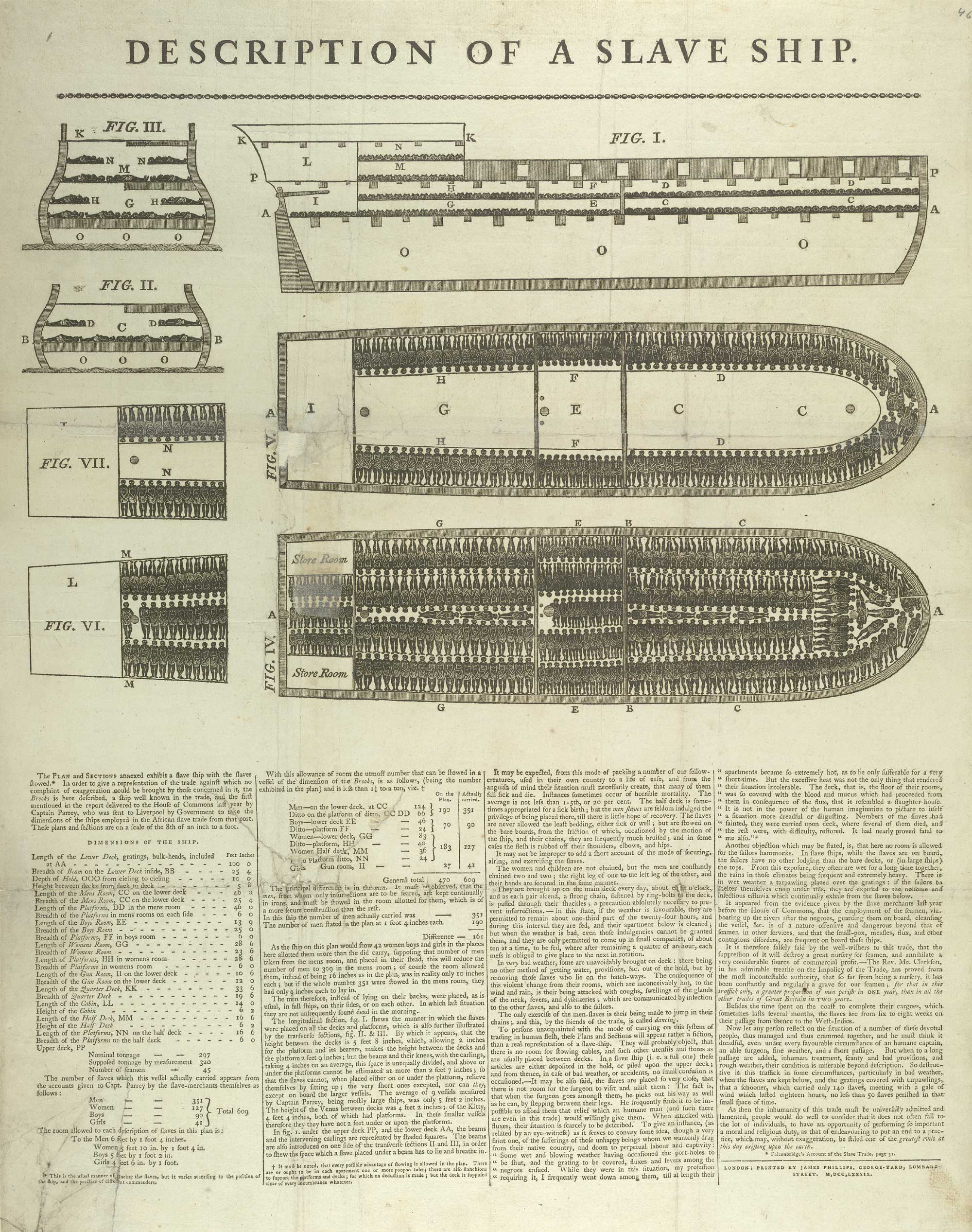

This article examines the biblical texts invoked in the slavery debate, the theological arguments constructed on each side, the denominational ruptures that followed, and the interpretive lessons the episode continues to offer. For a detailed treatment of slavery as it appears within the biblical text itself, see slavery in the Bible.1, 17
Biblical Texts Invoked to Justify Slavery
Pro-slavery Christians drew on a remarkably consistent set of biblical passages, repeated across sermons, pamphlets, and legislative arguments from the colonial period through the Civil War.5
The Curse of Ham (Genesis 9:20–27). After Noah’s son Ham “saw the nakedness of his father,” Noah pronounced a curse not on Ham but on Ham’s son Canaan: “Cursed be Canaan; lowest of slaves shall he be to his brothers” (Genesis 9:25, NRSV). Pro-slavery interpreters identified Ham as the progenitor of African peoples and argued that Black enslavement fulfilled this divine decree.2 David Goldenberg’s research demonstrates that the racial reading of this passage was a relatively late development, largely absent from ancient Jewish and early Christian commentary, but it became enormously influential in the early modern period as Europeans sought theological justification for the Atlantic slave trade.2
Pauline household codes. Several New Testament epistles contain instructions to slaves that pro-slavery advocates treated as normative endorsements of the institution:
“Slaves, obey your earthly masters with fear and trembling, in singleness of heart, as you obey Christ” (Ephesians 6:5, NRSV).
“Slaves, obey your earthly masters in everything, not only while being watched and in order to please them, but wholeheartedly, fearing the Lord” (Colossians 3:22, NRSV).
“Let all who are under the yoke of slavery regard their masters as worthy of all honor, so that the name of God and the teaching may not be blasphemed. Those who have believing masters must not be disrespectful to them on the ground that they are members of the church; rather they must serve them all the more, since those who benefit by their service are believers and beloved” (1 Timothy 6:1–2, NRSV).
Pro-slavery theologians argued that if the apostle Paul had considered slavery sinful, he would have commanded its abolition rather than instructing slaves on proper conduct within it.5 The absence of an explicit New Testament condemnation of slavery became one of the most powerful weapons in the pro-slavery arsenal.1
The Letter to Philemon. Paul’s brief letter concerning the enslaved man Onesimus was claimed by both sides. Pro-slavery readers emphasized that Paul returned Onesimus to his master rather than harboring a fugitive, and that Paul appealed to Philemon’s goodwill rather than commanding manumission—proof, they argued, that Paul accepted the legitimacy of slave ownership.14 Abolitionists countered that Paul’s request that Philemon receive Onesimus “no longer as a slave but more than a slave, a beloved brother” (Philemon 1:16, NRSV) undermined the institution from within.4
Old Testament legal codes. Leviticus 25:44–46 permits Israelites to purchase slaves from surrounding nations and to bequeath them as property. Pro-slavery Christians argued that God’s direct legislation of slavery in the Mosaic law demonstrated that the institution could not be inherently sinful, since God would not codify sin.3 This argument drew additional force from the broader claim that the Mosaic law reflected God’s moral character—a claim closely connected to divine command theory.
The Pro-Slavery Theological Framework
Pro-slavery theology was not a marginal phenomenon sustained by a few proof-texts. It was a sophisticated interpretive system built on several reinforcing principles.1
Biblical literalism. Southern theologians accused abolitionists of abandoning the plain meaning of scripture. The Bible mentions slavery repeatedly, regulates it in detail, and never explicitly prohibits it. If one reads the text at face value, they argued, the case for slavery is straightforward.1 As Mark Noll observes, this put abolitionists in the difficult position of arguing against the apparent surface meaning of multiple passages—a position that looked, to many antebellum Americans, like theological liberalism.1
The argument from divine ordering. Pro-slavery theologians embedded slavery within a broader vision of divinely ordained social hierarchy. Just as God had ordered the relationships between husbands and wives, parents and children, rulers and subjects, so too had God ordered the relationship between masters and slaves. To challenge slavery was to challenge the entire structure of authority that God had established.5 This argument gained force from the same Pauline household codes cited above, in which instructions to slaves appear alongside instructions to wives and children in a single hierarchical framework.
The providential argument. Many slaveholders argued that the Atlantic slave trade, however brutal in its execution, had been part of God’s providential plan to bring Africans into contact with Christianity. Enslaved people were being Christianized, the argument went, and their spiritual salvation outweighed their temporal suffering.3 This reasoning depended on a sharp distinction between spiritual and physical freedom—a distinction that enslaved Christians themselves frequently rejected.8
The inferiority argument. While some pro-slavery theologians avoided explicitly racial arguments, many did not. Josiah Priest’s A Bible Defence of Slavery (1850) argued that Black people were created as a separate and inferior order, a claim he supported through creative readings of Genesis alongside the pseudoscientific racial theories of the era.3 The Curse of Ham narrative provided the theological scaffolding for this view, connecting racial hierarchy to divine decree.2
Denominational Ruptures
The theological conflict over slavery did not remain abstract. It shattered American Protestantism along regional lines, producing denominational schisms whose effects endured long after emancipation.1, 10
The Southern Baptist Convention. In 1845, Baptists in the American South broke from northern Baptists to form the Southern Baptist Convention (SBC) after the national mission boards refused to appoint slaveholders as missionaries. The SBC was founded, in its own words, to protect the rights of slaveholding Christians and to affirm that slavery was compatible with Christian faith and practice.7 The denomination grew to become the largest Protestant body in the United States—a fact that made its founding rationale an increasingly uncomfortable legacy. It was not until 1995, on its 150th anniversary, that the SBC issued a formal resolution apologizing for its defense of slavery and acknowledging the role of racism in its history.19
The Methodist split. The Methodist Episcopal Church divided in 1844 over the case of Bishop James O. Andrew, a slaveholder. Southern Methodists formed the Methodist Episcopal Church, South, arguing that the national body had exceeded its authority in attempting to restrict slaveholding among its leadership.10
The Presbyterian split. Old School and New School Presbyterians had already divided over theological issues in 1837, but slavery intensified both factions’ internal tensions. By 1861, southern Presbyterians had formed their own denomination, the Presbyterian Church in the Confederate States of America, explicitly tying their ecclesiastical independence to the defense of the southern social order.10
These divisions reveal something crucial: the slavery debate was not merely a disagreement over biblical interpretation in the abstract. It was a conflict in which enormous economic interests, social structures, and regional identities were at stake—and theological reasoning was shaped, consciously or not, by those material realities.1
The Abolitionist Christian Response
Christian abolitionists faced a genuine hermeneutical challenge. The pro-slavery reading of specific biblical texts was, in many cases, closer to the surface meaning than the abolitionist alternative. Abolitionists had to develop a different approach to scripture—one that read individual passages in light of broader theological principles rather than treating each text as an isolated command.1, 4
The Quaker tradition. The Religious Society of Friends (Quakers) were among the earliest and most consistent Christian opponents of slavery. By the mid-eighteenth century, Quakers including John Woolman and Anthony Benezet had articulated a theological case against slavery grounded in the doctrine of the “Inner Light”—the belief that every human being carries a divine spark that slavery violates.16 The 1688 Germantown Quaker Petition against Slavery is widely regarded as the first formal protest against slavery in the American colonies. Quaker abolitionism did not emerge overnight, however; Jean Soderlund’s research documents the decades of internal conflict within Quaker meetings before antislavery positions became normative.16
William Wilberforce and the British evangelical movement. In Britain, the evangelical Anglican William Wilberforce led a decades-long parliamentary campaign that resulted in the abolition of the British slave trade in 1807 and the emancipation of enslaved people throughout the British Empire in 1833.6 Wilberforce’s theological case rested on the imago Dei—the doctrine that every human being is made in the image of God (Genesis 1:27)—and on the conviction that the whole trajectory of scripture moved toward liberation, compassion, and the recognition of human dignity.6
Hermeneutical moves of the abolitionists. American abolitionists like Theodore Dwight Weld employed several interpretive strategies:4
First, they distinguished between the slavery described in the Bible and the chattel slavery practiced in the American South. Hebrew servitude, they argued, was time-limited (for Israelite servants), regulated by protections unknown in the antebellum system, and qualitatively different from the race-based, hereditary, dehumanizing slavery of the New World.4
Second, they appealed to the overarching “spirit” of scripture rather than isolated proof-texts. The golden rule (Matthew 7:12), the command to love one’s neighbor (Leviticus 19:18; Mark 12:31), and Paul’s declaration that “there is no longer slave or free” (Galatians 3:28, NRSV) were read as articulating principles that logically demanded the abolition of slavery, even if no single verse said so explicitly.4
Third, they invoked the Exodus narrative as the paradigmatic biblical story—God liberating an enslaved people—and argued that any theology siding with Pharaoh over Moses had fundamentally misread the text.8 This reading was shared and deepened by enslaved Black Christians themselves, for whom the Exodus was not abstract theology but lived experience. As Albert Raboteau documents, the “invisible institution” of slave religion developed a liberation theology that read the Bible through the lens of their own oppression, finding in its pages a God who sided with the enslaved, not the enslaver.8
Frederick Douglass’s critique. Frederick Douglass articulated one of the most devastating assessments of pro-slavery Christianity. In the appendix to his Narrative (1845), Douglass drew a sharp distinction between “the Christianity of this land” and “the Christianity of Christ,” arguing that slaveholding religion was not merely a flawed version of the faith but its direct antithesis.13 Douglass’s critique went beyond hermeneutics to indict the moral character of a religious culture that could sing hymns on Sunday and sell human beings on Monday.13
Post-Bellum Apologetics and Lost Cause Theology
The Confederacy’s military defeat did not produce immediate theological repentance among southern Christians. Instead, many southern clergy and intellectuals developed what Charles Reagan Wilson has termed the “religion of the Lost Cause”—a quasi-theological framework that reinterpreted the Confederacy’s defeat as a form of divine testing rather than divine judgment.15
Lost Cause theology drew on several themes. It cast the antebellum South as a Christian civilization that had been destroyed by the godless, materialistic North. It portrayed Confederate soldiers as martyrs and Confederate leaders as saints. It minimized slavery’s centrality to the war, replacing it with narratives about states’ rights, honor, and cultural self-determination.15 Churches, particularly in the southern Presbyterian and Baptist traditions, served as institutional custodians of this narrative, embedding Lost Cause mythology into sermons, Sunday school curricula, and public commemorations.10
This theological reframing had two significant effects. First, it allowed southern Christians to avoid reckoning with their tradition’s complicity in slavery and thus with the moral failure of their hermeneutical methods. Second, it provided a religious vocabulary for the resistance to Reconstruction and, later, the Jim Crow system—a connection Jemar Tisby traces in detail, arguing that the same theological reflexes that defended slavery were repurposed to defend racial segregation.9
Modern Evangelical Reckoning
The twentieth and twenty-first centuries have seen uneven attempts by historically pro-slavery denominations to confront their past. The SBC’s 1995 resolution remains the most prominent example of formal institutional acknowledgment.19 However, critics have argued that such resolutions, while symbolically important, have not been accompanied by the deeper theological work necessary to explain how the tradition went wrong—or to develop safeguards against similar failures in the future.9
Joel McDurmon’s The Problem of Slavery in Christian America (2019) represents one attempt at such theological self-examination from within the Reformed tradition. McDurmon argues that the pro-slavery position was not an aberration but a logical consequence of specific hermeneutical commitments—particularly the tendency to treat Old Testament civil law as directly applicable to contemporary society without adequate attention to the differences between ancient Israelite and modern contexts.12
More broadly, the history of Christian complicity in slavery has become a significant factor in debates about biblical inerrancy and the authority of scripture. If millions of sincere, Bible-believing Christians could read their Bibles faithfully for centuries and conclude that God endorsed chattel slavery, what does this say about the clarity and sufficiency of scripture as a moral guide?1 This question, once confined to liberal theological circles, has increasingly been raised by evangelical scholars and writers confronting their own tradition’s history.9
The Hermeneutical Lesson
The slavery debate is arguably the single most important case study in the history of biblical interpretation, because it exposes the mechanics of how biblical authority functions—and fails—in practice.17
Willard Swartley’s comparative analysis of slavery, Sabbath observance, war, and women’s roles demonstrates a recurring pattern: on each of these issues, Christians have constructed opposing positions from the same biblical texts, using the same methods, with equal confidence in their conclusions.17 The slavery debate is simply the case where history has rendered its verdict most unambiguously. Virtually no Christian today defends chattel slavery, which means that the pro-slavery reading—for all its apparent fidelity to the surface of the text—was wrong. But recognizing this raises uncomfortable questions about current debates that follow the same hermeneutical patterns.
Several observations emerge from the slavery episode:1
Surface literalism is not the same as faithful interpretation. The pro-slavery position was, on many individual texts, more literally accurate than the abolitionist position. Abolitionists had to argue from principles, trajectories, and the “spirit” of the text—moves that their opponents denounced as departures from biblical authority.1 History vindicated the abolitionists, which suggests that literalism as a hermeneutical method is insufficient for resolving major moral questions.
Material interests shape interpretation. The correlation between economic dependence on slave labor and pro-slavery theology was not coincidental. Southern Christians who profited from slavery found biblical justification for it; northern Christians whose economies did not depend on it were more likely (though far from certain) to find biblical arguments against it.1 This does not mean that all theological reasoning is merely rationalization, but it does mean that interpreters are rarely as objective as they believe themselves to be.
Moral intuition plays a larger role than most hermeneutical theories acknowledge. The eventual Christian consensus against slavery was driven less by the discovery of new exegetical arguments than by a growing moral conviction—informed by Enlightenment philosophy, by the testimony of enslaved people, and by changing economic conditions—that slavery was simply wrong.1 The Bible was then reread in light of that conviction. This sequence—moral intuition first, biblical interpretation second—is the reverse of how most Christians describe the process, but the historical evidence suggests it is how the process actually works on contested moral questions.
The same patterns recur. Scholars including Swartley and Boswell have noted that the hermeneutical dynamics of the slavery debate reappear in subsequent controversies, including debates over women’s ordination, divorce and remarriage, and the moral status of same-sex relationships.17, 11 In each case, one side appeals to specific biblical texts that appear to address the issue directly, while the other side appeals to broader theological principles and argues that the specific texts must be read in historical context. In each case, both sides accuse the other of unfaithfulness to scripture. The slavery precedent does not determine how these debates should be resolved, but it does demonstrate that confident appeals to “what the Bible clearly teaches” have been catastrophically wrong before.
The Enslaved Church and Liberation Theology
Any account of Christianity and slavery that focuses only on white theological debates misses what may be the most important chapter of the story: the Christianity practiced by enslaved people themselves.8
Enslaved Africans in the Americas encountered Christianity primarily as a tool of social control—masters used carefully curated biblical texts (particularly the Pauline household codes) to encourage obedience and submission. But enslaved communities reinterpreted the faith from within, developing a “slave religion” that emphasized liberation, divine justice, and eschatological reversal.8 The Exodus narrative was central to this tradition: God had heard the cries of the Israelites in Egypt and delivered them from bondage, and God would do the same for enslaved Black Christians. Spirituals like “Go Down, Moses” and “Swing Low, Sweet Chariot” encoded this theology in forms that could be shared openly without provoking white suspicion.8
This tradition constitutes a hermeneutical achievement of the first order. Without formal theological training, without access to the original languages, and under conditions of violent oppression, enslaved Christians developed an interpretation of the Bible that was, by the moral judgment of history, more faithful to the text’s deepest themes than the learned exegesis of their masters.8 Their readings anticipated the liberation theology that would emerge formally in the twentieth century and demonstrated that the social location of the interpreter is not incidental to the act of interpretation.
Implications for Biblical Authority
The history of Christianity and slavery poses a direct challenge to several common claims about biblical authority and biblical inerrancy.1
If the Bible is sufficiently clear on moral matters that sincere readers can arrive at correct conclusions through careful study, then the slavery debate should not have been possible—or, at minimum, it should have been quickly resolved. Instead, it persisted for centuries and required a civil war and the moral pressure of secular Enlightenment thought to reach resolution.1 This does not necessarily entail that the Bible lacks moral authority, but it does suggest that the Bible’s moral authority operates differently than simple models of “read the text and obey it” would predict.
The slavery case also complicates the moral argument for God’s existence in an indirect but significant way. If moral knowledge is supposed to derive from divine revelation, the fact that divine revelation was used to defend one of history’s greatest moral atrocities requires explanation. The most common responses—that pro-slavery interpreters were insincere, or that they were blinded by sin—prove too much, since the same charges can be leveled at interpreters on any side of any moral debate.18
For a broader survey of morally challenging biblical material, see difficult passages.
Conclusion
The history of Christianity and slavery is not merely a historical curiosity. It is a standing demonstration that biblical interpretation is never a purely textual exercise—it is always shaped by the interpreter’s social location, material interests, moral intuitions, and cultural assumptions. The Christians who defended slavery were not, for the most part, cynical manipulators. They were sincere believers who read their Bibles carefully and reached conclusions that history has judged to be morally monstrous.1
This recognition need not lead to interpretive nihilism—the conclusion that the Bible can be made to say anything and therefore says nothing. But it should produce interpretive humility: a recognition that confidence in one’s reading of scripture is not the same as correctness, and that the moral stakes of getting it wrong are not merely academic. The enslaved people who suffered under “biblical” slavery are a permanent reminder of what those stakes look like in practice.1, 8
References
SBC Resolution on Racial Reconciliation on the 150th Anniversary of the Southern Baptist Convention