Overview
- J. L. Schellenberg’s argument from divine hiddenness (1993) contends that if a perfectly loving God exists, every person capable of and not resistant to a relationship with God would possess evidence sufficient for belief — yet the existence of sincere seekers and culturally isolated persons who lack such evidence constitutes a distinct philosophical challenge to theism, independent of the problem of evil.
- Unlike the problem of evil, which turns on the existence of suffering, the hiddenness argument would retain its force even in a world with no suffering at all: the mere absence of evidence among non-resistant nonbelievers is enough to generate the challenge, making it logically prior to and separable from all theodicies.
- Theistic responses — including the anti-coercion defense (Murray), soul-making epistemic distance (Hick), proper-function epistemology (Plantinga), skeptical theism (Rea), and purposive evidence (Moser) — each challenge a different premise of the argument, but none has achieved the kind of consensus that would close the debate, and the hiddenness argument remains one of the most active research fronts in analytic philosophy of religion.
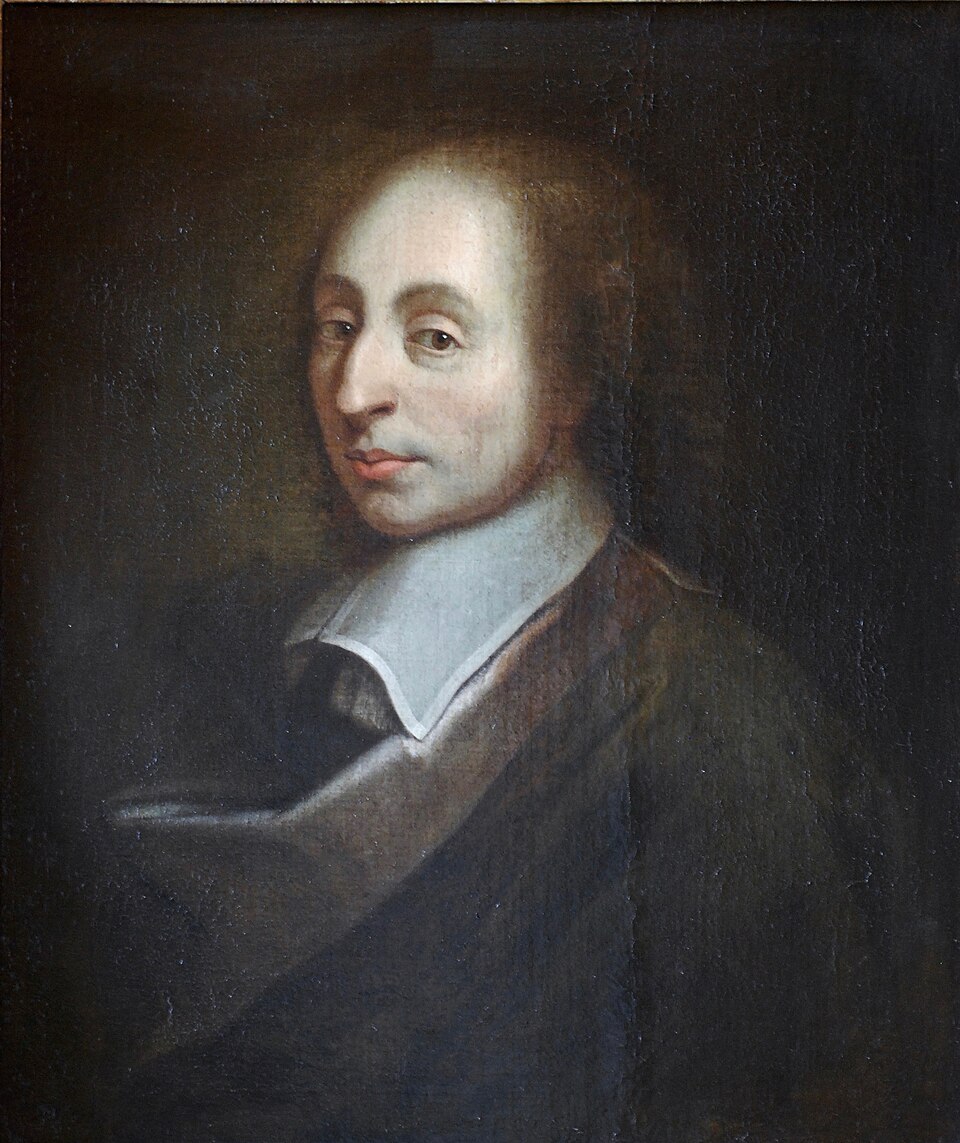

The argument from divine hiddenness is a philosophical argument against the existence of God that proceeds not from the existence of suffering but from the existence of reasonable nonbelief. The argument, formulated most rigorously by the Canadian philosopher J. L. Schellenberg in Divine Hiddenness and Human Reason (1993), contends that if a perfectly loving God exists, every person who is capable of a personal relationship with God and who does not resist such a relationship would be in a position to believe that God exists. Yet there are persons — honest inquirers, the culturally isolated, former believers who lose faith through sincere investigation — who lack belief in God through no fault of their own. The existence of such “non-resistant nonbelief” is, Schellenberg argues, incompatible with the existence of a perfectly loving God. The argument has generated one of the most active research programs in contemporary analytic philosophy of religion, attracting responses from theists and further refinements from atheists, and it has established itself as a challenge to theism that is logically independent of the problem of evil.1, 2
Historical precursors
The experience of divine hiddenness is far older than the philosophical argument that bears its name. The Hebrew Bible is suffused with laments about God’s perceived absence: “How long, O LORD? Will you forget me forever? How long will you hide your face from me?” (Psalm 13:1, NRSV). The prophet Isaiah declares that God “hides himself” (Isaiah 45:15), and the book of Job portrays a protagonist who demands an audience with God and receives silence for the better part of forty chapters. These texts, however, presuppose God’s existence; they express bewilderment at divine absence within the framework of belief rather than using that absence as evidence against belief.1, 3
The first thinker to transform the observation of divine hiddenness into something approaching a philosophical position was Blaise Pascal. In the Pensées (published posthumously in 1670), Pascal acknowledged that God is hidden and quoted Isaiah 45:15 approvingly: “Truly you are a God who hides himself.” But Pascal treated hiddenness as a feature of divine wisdom, not as evidence against God. God calibrates the evidence so that those who seek with a sincere heart find enough to believe, while those whose disposition is contrary do not. “There is enough light for those who desire only to see, and enough darkness for those of a contrary disposition.” For Pascal, the ambiguity of the evidence is not a defect in divine self-revelation but a deliberate filter that separates sincere seekers from the indifferent.10, 3
Søren Kierkegaard developed a related but distinct account of hiddenness in Philosophical Fragments (1844) and Concluding Unscientific Postscript (1846). For Kierkegaard, God does not reveal himself through direct rational proof because such proof would eliminate the need for faith, and faith is the mode of relationship God desires. If God’s existence could be demonstrated with the same certainty as a mathematical theorem, belief would become a matter of compulsion rather than passionate commitment. Kierkegaard argued that the “infinite qualitative difference” between God and human beings means that God can only be encountered through a “leap of faith” — an act of subjective commitment that is incompatible with objective certainty. On this view, hiddenness is not a problem to be solved but a structural feature of the God-human relationship that makes authentic faith possible.11, 12
David Hume, writing in the Dialogues Concerning Natural Religion (1779), approached hiddenness from a more skeptical direction. Hume’s character Philo observes that the natural world does not clearly point to a morally perfect creator: the evidence is ambiguous, and reasonable persons can survey the same data and reach opposite conclusions. Hume did not formulate a hiddenness argument as such, but his observation that the evidence for God is systematically ambiguous rather than decisive laid groundwork that Schellenberg would later exploit. If God exists and wants to be known, why is the evidence merely ambiguous rather than clear?14
Schellenberg’s argument
Schellenberg’s argument, first presented in Divine Hiddenness and Human Reason (1993) and refined in The Hiddenness Argument (2015), can be stated in a compact deductive form:1, 2
P1. If a perfectly loving God exists, then every person who is capable of a personal relationship with God and who does not resist such a relationship is in a position to participate in one (i.e., at minimum, possesses evidence sufficient for belief in God’s existence).
P2. There are (or have been) persons who are capable of a personal relationship with God, who do not resist such a relationship, and yet who lack evidence sufficient for belief in God’s existence (non-resistant nonbelievers).
C. Therefore, a perfectly loving God does not exist.
The argument is deductively valid: if both premises are true, the conclusion follows necessarily. The philosophical debate therefore centers on whether one or both premises can be denied.
The first premise is defended by appeal to the nature of perfect love. Schellenberg argues that love, in its most complete expression, involves openness to relationship with the beloved. A perfectly loving being would not withhold from the beloved the conditions that are necessary for relationship. Since belief in God’s existence is a necessary condition for entering into a personal relationship with God — one cannot relate personally to a being one does not believe exists — a perfectly loving God would ensure that every willing person possesses evidence sufficient for belief. Schellenberg supports this with a parental analogy: a loving mother would not permanently hide from a child who sincerely seeks her. Temporary pedagogical withdrawal might be justified, but only within the context of a relationship the child already knows exists. Total hiddenness, which denies the child even the knowledge that a relationship is available, is incompatible with love.1, 2
The second premise is defended by identifying categories of persons whose nonbelief appears to be non-resistant. Schellenberg points to honest seekers who investigate the evidence for God and remain unconvinced; former believers who lose faith through sincere intellectual inquiry rather than moral rebellion; persons in non-theistic cultures who have never encountered theistic evidence; and young children or cognitively impaired persons who lack the conceptual resources to form theistic belief. In each case, the nonbelief is not the product of willful resistance to God but of circumstances that lie outside the individual’s control.1, 2, 16
The concept of reasonable nonbelief
Central to Schellenberg’s argument is the notion of “reasonable nonbelief” or “non-resistant nonbelief” — a type of unbelief that cannot be attributed to the nonbeliever’s moral fault, willful resistance, or culpable ignorance. The concept does important philosophical work because many theistic traditions, following Romans 1:19–20, hold that God’s existence is sufficiently evident from the natural world that all nonbelief is in some sense culpable. Schellenberg’s argument requires showing that this blanket attribution of culpability is mistaken — that there exist or have existed nonbelievers who are genuinely open to belief in God and yet do not believe.1, 22
Schellenberg distinguishes several varieties of non-resistant nonbelief. The most philosophically significant is the case of the honest seeker: a person who desires to know whether God exists, investigates the relevant evidence with intellectual integrity, and concludes that the evidence is insufficient for belief. Such a person does not suppress evidence, does not willfully close herself to the possibility of God, and does not refuse a relationship with God — she simply finds the evidence wanting. Schellenberg argues that the honest testimony of such persons should be taken at face value: if a person reports sincere seeking and honest inability to believe, that report constitutes prima facie evidence that non-resistant nonbelief exists.2
A second variety involves persons who are geographically or culturally isolated from theistic traditions. Throughout most of human history, entire civilizations developed without exposure to monotheistic claims. The nonbelief of these persons — millions of individuals across thousands of years — cannot plausibly be attributed to resistance against a God they have never heard of. Their nonbelief is a function of when and where they were born, not of any disposition against the divine. If God is perfectly loving and desires relationship with every person, the existence of such widespread, culturally determined nonbelief is difficult to explain.2, 16
A third variety involves former believers who lose their faith not through moral corruption but through honest confrontation with intellectual challenges — the problem of evil, the findings of modern science, exposure to the diversity of mutually exclusive religious traditions. These persons often report that their loss of faith was painful and unwanted, that they would prefer to believe if the evidence permitted it. Their trajectory from belief to unbelief is the opposite of what one would expect if nonbelief were always a product of resistance.1, 19
Distinction from the problem of evil
Schellenberg has consistently insisted that the argument from divine hiddenness is logically independent of the problem of evil, and understanding this distinction is essential to grasping the argument’s philosophical significance. The problem of evil argues that the existence and distribution of suffering — especially apparently gratuitous suffering — is evidence against the existence of an omnipotent, omniscient, and perfectly good God. The hiddenness argument, by contrast, does not mention suffering at all. It argues that the existence of non-resistant nonbelief is evidence against the existence of a perfectly loving God, regardless of whether anyone suffers.2, 17
The independence of the two arguments can be demonstrated by a thought experiment. Imagine a world that contains no suffering whatsoever — no disease, no natural disaster, no cruelty, no death. In such a world, the problem of evil would have no purchase. But if that world also contained persons who sincerely sought God and found no evidence, the hiddenness argument would apply with full force. The absence of suffering would not explain why God remains hidden from willing seekers. This shows that even if every theodicy succeeds — even if every instance of suffering in the actual world is satisfactorily explained — the question of divine hiddenness requires a separate answer.2, 18
The independence also means that standard responses to the problem of evil do not automatically transfer to the hiddenness argument. The free will defense, which argues that God permits evil because the existence of free creatures is a great good, does not directly address why God would remain hidden from sincere seekers. The soul-making theodicy, which argues that suffering is instrumentally necessary for moral development, does not explain why lack of evidence for God would serve any analogous purpose. Skeptical theism, which argues that humans cannot assess whether apparently gratuitous evils really are gratuitous, faces the question of whether the same skepticism about God’s reasons applies to hiddenness. Each response must be adapted and independently evaluated in the hiddenness context.2, 15
Theistic responses
The argument from divine hiddenness has generated a wide range of theistic responses, each of which targets a different element of Schellenberg’s reasoning. These can be organized by the premise they challenge.3, 15
Michael Murray’s anti-coercion defense, published the same year as Schellenberg’s original argument, contends that divine hiddenness is necessary to preserve morally significant freedom. If God’s existence were overwhelmingly obvious — as obvious as, say, the existence of the sun — human beings would be unable to make genuinely free moral choices. The knowledge that an omnipotent, omniscient moral judge is watching every action would coerce moral behavior in the way that a visible surveillance camera deters crime. God remains hidden so that moral choices can be made without this coercive pressure, and the development of authentic moral character can proceed in an environment of genuine freedom.9
John Hick’s soul-making framework, developed in Evil and the God of Love (1966, revised 1977), offers a broader theological context for understanding hiddenness. Hick argues that the world functions as a “vale of soul-making” in which human beings are meant to develop morally and spiritually through engagement with an environment that is epistemically ambiguous. If God’s existence were certain, the epistemic distance between God and humanity would collapse, and the soul-making process would be undermined. Genuine faith, trust, and moral courage require the possibility of doubt. Hiddenness, on this view, is not a deficiency in God’s self-revelation but a structural feature of a world designed for the development of character.4
Alvin Plantinga’s proper-function epistemology challenges the second premise by denying that genuinely non-resistant nonbelief exists. Drawing on his account of the sensus divinitatis — a cognitive faculty designed by God to produce belief in God under appropriate circumstances — Plantinga argues that all nonbelief reflects some degree of cognitive malfunction caused by the noetic effects of sin. On this view, persons who report sincere seeking and inability to believe are affected by a dysfunction of which they may not be aware, just as a person with an undiagnosed visual impairment may sincerely report that she cannot see something that is nonetheless visible.6
Michael Rea applies skeptical theism to the hiddenness problem. Just as skeptical theists argue that humans are not in a position to assess whether God has morally sufficient reasons for permitting apparently gratuitous evil, Rea contends that humans are not in a position to assess whether God has morally sufficient reasons for remaining hidden. God may have reasons for permitting non-resistant nonbelief that are beyond the cognitive reach of finite minds. This response does not identify what those reasons are — it argues that the absence of identifiable reasons does not entail the absence of reasons.8
Paul Moser, in The Elusive God (2008), takes a different approach. Moser argues that God provides evidence of divine existence not through publicly available “spectator evidence” (the kind philosophers typically seek) but through “purposively available evidence” that is accessible only to those who approach with the right moral and spiritual disposition. God is not so much hidden as elusive in a purposive way: divine self-revelation is directed toward moral transformation, not mere intellectual assent. On Moser’s account, the philosopher who demands evidence of the kind found in a logic textbook is looking in the wrong place.5
Richard Swinburne argues that God may delay belief in certain persons to serve long-term relational goods. A period of seeking and uncertainty may deepen the eventual relationship, just as a courtship involving difficulty and uncertainty can produce a more robust bond than one that begins with instant certainty. On this view, God’s hiddenness is temporary and purposeful, not permanent and arbitrary.13
Theistic responses to the hiddenness argument3, 15
| Response | Key proponent | Core claim | Premise challenged |
|---|---|---|---|
| Anti-coercion | Murray (1993) | Obvious divine existence would coerce moral behavior and undermine free will | P1 (love requires evidence) |
| Epistemic distance / soul-making | Hick (1966) | Ambiguity is necessary for genuine moral and spiritual development | P1 (love requires evidence) |
| Proper function | Plantinga (2000) | All nonbelief reflects cognitive malfunction caused by sin | P2 (non-resistant nonbelief exists) |
| Skeptical theism | Rea (2012) | God may have inscrutable reasons for permitting hiddenness | P1 (love requires evidence) |
| Purposive evidence | Moser (2008) | God provides evidence only to the morally receptive, not as spectator proof | P2 (seekers truly lack evidence) |
| Relationship delay | Swinburne (2004) | Temporary hiddenness serves long-term relational goods | P1 (love requires immediate evidence) |
Schellenberg’s replies to objections
Schellenberg has responded to each major category of objection, and these replies have sharpened the dialectic considerably. Against the anti-coercion defense, Schellenberg argues that Murray conflates belief in God’s existence with overwhelming confrontation with God’s power. One can believe that God exists — on the basis of evidence — without being coerced into moral behavior by that belief. A person can believe that a police officer exists somewhere in the city without being deterred from jaywalking. Similarly, a person who possesses evidence sufficient for belief in God would retain full moral freedom. It is not mere belief in God’s existence that would be coercive but, at most, a direct and inescapable confrontation with divine omnipotence — and Schellenberg’s argument requires only the former, not the latter.2
Schellenberg presses a related point using theistic scriptures themselves. Within the narrative framework of the Bible, numerous figures possess direct knowledge of God’s existence and yet exercise genuine moral freedom, including the freedom to disobey. Adam and Eve know they are in God’s garden and nonetheless eat the forbidden fruit. The Israelites at Sinai witness God’s presence and nonetheless construct the golden calf. Satan, in the traditional reading, knows God perfectly and nonetheless rebels. If direct knowledge of God does not eliminate moral freedom in these cases, it is unclear why evidence sufficient for belief would do so in the human case.2, 19
Against Plantinga’s proper-function response, Schellenberg objects on both empirical and methodological grounds. Empirically, the claim that all nonbelief reflects cognitive malfunction requires attributing hidden resistance or dysfunction to millions of persons whose self-reports indicate no such thing. Former believers who describe their loss of faith as painful and unwanted, seekers who report genuine openness to evidence for God, persons in non-theistic cultures who have never had the opportunity to resist a God they have never heard of — in each case, the blanket diagnosis of malfunction seems arbitrary and unresponsive to the actual phenomenology of nonbelief. Methodologically, the move renders theism unfalsifiable: if every nonbeliever is classified as resistant or malfunctioning regardless of the evidence, then no possible evidence could count against the existence of non-resistant nonbelief, and the theistic position is insulated from critique by stipulation rather than argument.2, 22
Against the skeptical theist response, Schellenberg argues that the appeal to inscrutable divine reasons is a double-edged sword. If we cannot know God’s reasons for permitting hiddenness, we equally cannot know God’s reasons for providing evidence. The same epistemic humility that blocks the hiddenness argument also blocks positive arguments for God’s existence: we cannot be confident that the evidence we take to support theism actually does so, since God might have inscrutable reasons for providing misleading evidence. Moreover, skeptical theism, if applied consistently, undermines practical reasoning about God’s character: we could never trust any inference about what a loving God would or would not do, which would empty the concept of divine love of all content.2, 8
Variants and extensions
The hiddenness debate has generated several variants and extensions of Schellenberg’s original argument. Theodore Drange formulated an argument from nonbelief that does not depend on the concept of perfect love. Drange argues that if God wants all persons to believe in God — for any reason, whether love, justice, or simply the desire to be known — and God is able to bring about universal belief, then the existence of nonbelief constitutes evidence against God’s existence. Drange’s version is broader than Schellenberg’s because it does not require the specific claim that divine love necessitates openness to relationship; any divine desire for human belief would suffice.20, 16
Stephen Maitzen has developed a demographic argument from the geographical distribution of theistic belief. The probability of a person being a theist is strongly correlated with the place and culture of birth: a person born in Saudi Arabia is overwhelmingly likely to be a theist, while a person born in certain Scandinavian or East Asian contexts is substantially less likely. If God desired a personal relationship with every human being and provided evidence sufficient for belief, one would expect the distribution of belief to be relatively uniform across cultures and continents. The actual distribution — which tracks cultural transmission more closely than it tracks individual investigation — looks more like what one would expect if belief were a product of social environment rather than divine self-revelation.16, 22
Schellenberg himself has expanded the argument in later work. In The Hiddenness Argument (2015), he argues that the problem is more fundamental than he initially framed it. The argument applies not only to a perfectly loving God but to any conception of the divine according to which God values a conscious relationship with finite persons. If any such relationship requires that the finite person believe in God’s existence, and if a God who values the relationship has the power to provide evidence for belief, then the existence of persons who are open to such belief but lack it constitutes a challenge. Schellenberg has also argued that because the concept “God” is typically defined as including perfect love, the hiddenness argument can be taken as evidence that no such being exists — leaving open the possibility that some other, non-perfectly-loving ultimate reality might exist, a position he calls “ultimism.”2, 19
Pascal and Kierkegaard as interlocutors
Although Pascal and Kierkegaard wrote centuries before Schellenberg, their treatments of hiddenness remain central to the contemporary debate, and both are frequently cited by defenders and critics of the argument alike.
Pascal’s position anticipates several modern theistic responses. His claim that God provides “enough light for those who desire only to see, and enough darkness for those of a contrary disposition” amounts to a thesis about the purposive calibration of evidence. This is structurally similar to Moser’s “purposive evidence” account: God makes evidence available in a mode that rewards the right disposition and withholds it from those who approach with the wrong one. The Pascalian view, however, faces Schellenberg’s objection about non-resistant nonbelievers head-on: are there persons of the right disposition who nonetheless fail to find the “enough light” Pascal describes? If so, Pascal’s framework is incomplete. If not, then Pascal’s position amounts to a denial of P2 — a denial that must contend with the empirical evidence Schellenberg marshals for the existence of non-resistant nonbelief.10, 3
Kierkegaard’s contribution is more radical. For Kierkegaard, the demand for evidence sufficient to compel belief reflects a misunderstanding of the nature of faith. Genuine faith is not a conclusion drawn from evidence but a passionate commitment made in the face of objective uncertainty. If God provided evidence that made belief rationally compulsory, faith — which Kierkegaard regards as the highest human virtue — would be impossible. God’s hiddenness is therefore not a problem but a precondition for authentic human existence. The philosophical question is whether Kierkegaard’s framework engages Schellenberg’s argument or simply redefines the terms. Schellenberg is not asking for evidence that compels belief with mathematical certainty; he is asking for evidence sufficient for belief — evidence that makes belief reasonable, even if not inevitable. The gap between “evidence sufficient for belief” and “evidence that eliminates faith” is precisely the space in which much of the debate unfolds.11, 12, 2
The role of epistemic humility
Several responses to the hiddenness argument invoke a form of epistemic humility: the claim that finite human minds are not in a position to assess what a perfectly loving God would or would not do. This response has deep roots in the theistic tradition — the book of Job, in which God answers Job’s complaints by asking “Where were you when I laid the foundation of the earth?” (Job 38:4), is often cited as a paradigm case of God asserting that divine purposes exceed human comprehension.8, 15
In its contemporary philosophical form, the epistemic humility response draws on the same resources as skeptical theism. The skeptical theist argues that the space of possible reasons is vast, that human cognitive limitations prevent us from surveying that space, and that the absence of a known reason for God to permit some state of affairs does not entail the absence of a reason. Applied to hiddenness: even if we cannot identify a reason why a perfectly loving God would remain hidden from non-resistant seekers, we should not infer that no such reason exists. Our inability to see the reason may reflect the limits of our cognition rather than the nonexistence of the reason.8
Critics of this response, including Schellenberg, raise several concerns. First, if epistemic humility is applied consistently, it undercuts not only the hiddenness argument but also positive claims about God’s character. If we cannot know what a perfectly loving God would do, we cannot know that God loves us, that God desires relationship with us, or that God is trustworthy — all of which are central to theistic religious life. The epistemic humility defense, if successful, purchases immunity from the hiddenness argument at the cost of theological agnosticism about God’s nature. Second, Antony Flew’s classic objection applies: a thesis that is compatible with any possible state of affairs — one that can accommodate both divine manifestation and divine hiddenness as equally consistent with divine love — makes no empirical claims and dies “the death of a thousand qualifications.”2, 21
Current state of the debate
The argument from divine hiddenness has grown from a single monograph in 1993 to one of the most productive research areas in analytic philosophy of religion. Two edited volumes — Howard-Snyder and Moser’s Divine Hiddenness: New Essays (2002) and Howard-Snyder and Green’s What the Hiddenness of God Reveals (2016) — have collected major contributions to the debate, and Kirk Lougheed’s Reasonable Nonbelief (2022) provides a comprehensive survey of the argument’s development and current status. The argument has been treated in the Stanford Encyclopedia of Philosophy, the Internet Encyclopedia of Philosophy, and the Blackwell Companion to the Problem of Evil, confirming its place in the standard repertoire of analytic philosophy of religion.3, 15, 16, 18, 22
The debate has identified several persistent pressure points where the dialectic remains unresolved. The first is the existence and characterization of non-resistant nonbelief. Theists and atheists continue to disagree about whether genuinely non-resistant nonbelief occurs, and the dispute partly turns on how “resistance” is defined — whether it must be conscious and deliberate or whether it can be subconscious and involuntary. If resistance is defined broadly enough to include any cognitive state that impedes belief, the theist can deny P2 — but only by stretching the concept of resistance beyond ordinary usage. If resistance is defined narrowly as conscious, deliberate refusal to believe, the existence of non-resistant nonbelief seems empirically obvious.22, 15
The second pressure point concerns the love analogy. Schellenberg’s argument depends on an analogy between divine love and human love, specifically parental love. Some theists have argued that this analogy may break down: divine love may differ from human love in kind, not merely in degree, and divine purposes may encompass considerations — such as the moral development of entire civilizations across millennia — that have no analogue in the parent-child relationship. Schellenberg responds that if divine love differs so radically from human love that it is compatible with permanent hiddenness from willing seekers, then the word “love” as applied to God has been emptied of its ordinary meaning.2, 19
The third pressure point is the relationship between hiddenness and other divine attributes. Some philosophers have argued that the hiddenness argument proves too much: if applied consistently, it would rule out not only the traditional theistic God but any conceivable divine being who values relationship with creatures. Others have argued that it proves too little: that it establishes at most that God is not perfectly loving in the specific sense Schellenberg defines, which is compatible with the existence of a God who is loving in some other sense. Schellenberg has embraced this implication, arguing that the hiddenness argument is evidence against the traditional theistic God specifically and that it leaves open the possibility of an “ultimate reality” that is not a personal, perfectly loving being.2
No theistic response to the hiddenness argument has achieved the kind of broad consensus that Plantinga’s free will defense achieved against the logical problem of evil. Each response has generated substantial counter-objections, and the debate continues to evolve. What is clear is that the argument from divine hiddenness has established itself as a permanent feature of the philosophical landscape — a challenge to theism that is independent of the problem of evil and that requires its own set of answers.2, 7, 15