Overview
- David Hume’s argument against miracles, presented in Section X (“Of Miracles”) of his Enquiry Concerning Human Understanding (1748), consists of an in-principle argument that the uniform experience supporting a law of nature always outweighs the testimony for a miraculous violation of that law, and an in-fact argument that miracle testimony in practice is invariably compromised by unreliable witnesses, human credulity, the prevalence of reports among ‘ignorant and barbarous nations,’ and the mutual cancellation of rival religious miracle claims.
- Modern critics — most notably John Earman in Hume’s Abject Failure (2000) — have argued that Hume’s argument either begs the question by assuming that no testimony can overcome a low prior probability, or is demonstrably invalid when formalised in Bayesian terms, since sufficiently reliable testimony can in principle raise the posterior probability of even an extremely improbable event above the threshold of rational belief.
- Defenders of Hume, including Robert Fogelin and Peter Millican, have responded that Hume’s argument is best understood not as a formal probability calculation but as an epistemological principle about the maximal evidential weight of natural laws, or that the very high base rate of false miracle testimony ensures that even individually strong reports are overwhelmed by the background frequency of error — leaving the debate as one of the most actively contested in the philosophy of religion.
David Hume’s argument against miracles, set out in Section X (“Of Miracles”) of his Enquiry Concerning Human Understanding (1748), is the single most influential philosophical discussion of miracle testimony in Western intellectual history. It has generated a vast secondary literature spanning more than 275 years, drawn responses from theologians, probabilists, and epistemologists, and continues to structure the terms of contemporary debate. Hume’s discussion is brief — Section X occupies only a few thousand words — but its influence has been enormously disproportionate to its length, in part because it addresses with deceptive simplicity a question that lies at the intersection of epistemology, the philosophy of science, and the philosophy of religion.1, 4
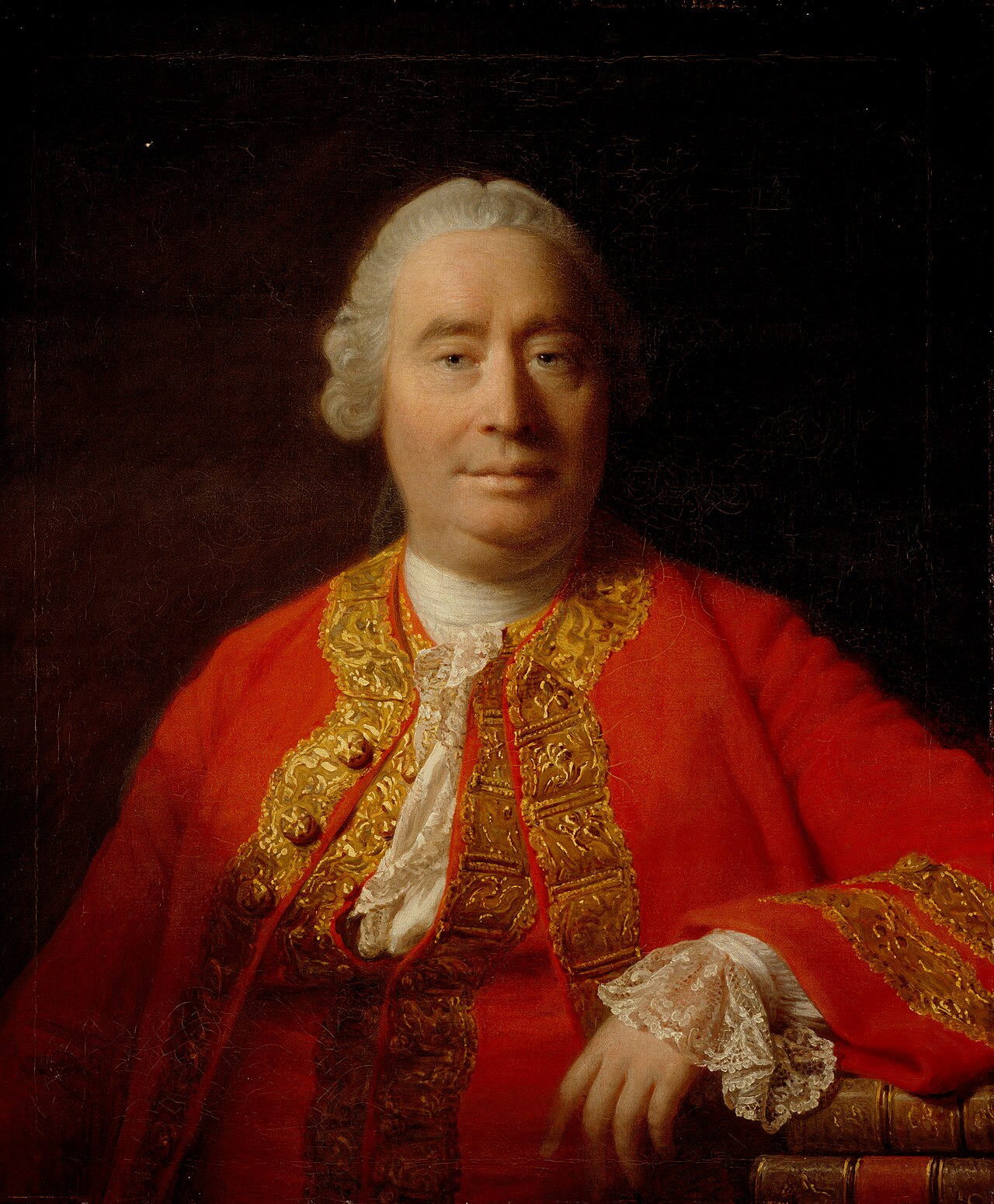

The argument is conventionally divided into two parts: the in-principle argument of Part I, which offers a general framework for weighing testimony against the evidence for natural regularities, and the in-fact argument of Part II, which presents four empirical observations about the actual character of miracle testimony as it has historically been offered. Together, they constitute what Hume intended as a decisive “everlasting check” against all species of superstitious delusion.1, 13
Background and context
Hume’s argument did not emerge in a vacuum. The question of how to evaluate miracle testimony had been debated in British intellectual circles since at least the late seventeenth century, prompted by the Deist controversies and the growing confidence in natural law that accompanied the Scientific Revolution. John Locke had argued in his Essay Concerning Human Understanding (1690) that the credibility of testimony diminishes in proportion to the improbability of the event reported, and that miracle claims require correspondingly strong evidence.4 The early eighteenth century saw a series of pamphlet exchanges between Deists (who denied the continuing occurrence of miracles) and orthodox Christians (who defended miracle testimony as evidence for the truth of Christianity), and Hume was familiar with both sides of this debate.
Hume’s broader philosophical project, developed in the Treatise of Human Nature (1739–1740) and refined in the Enquiry, is empiricist in character: all substantive knowledge derives from experience, and the strength of any belief should be proportioned to the evidence that supports it.14 His account of causation holds that our belief in causal connections rests on observed constant conjunction — the repeated experience that events of type A are followed by events of type B. What we call a “law of nature” is simply a generalisation from uniform experience. This framework sets the stage for the argument of Section X, because it defines the evidential backdrop against which miracle testimony must be assessed: the evidence for a law of nature is the entire body of uniform experience supporting the regularity in question.1, 14
Hume reportedly wrote the core of the argument as early as 1737, but delayed publication for over a decade, omitting it from the Treatise and including it only in the Enquiry. He described the argument to his friends as one that would be “decisive” and that the “learned world” would find unanswerable — a confidence that has been both vindicated and challenged by the subsequent history of the debate.4, 9
The in-principle argument (Part I)
The first part of Hume’s argument establishes a general epistemological framework for evaluating reports of extraordinary events. Hume begins from a principle that he takes to be uncontroversial: “A wise man proportions his belief to the evidence.”1 Evidence comes in degrees, and when competing bodies of evidence bear on the same question, the rational person follows the stronger body. In matters of fact, the strongest evidence comes from experience — and the strongest form of experiential evidence is uniform, exceptionless observation.
A law of nature, on Hume’s account, is precisely a regularity for which the evidence is uniform. The observation that dead people do not return to life, that water does not spontaneously transform into wine, and that heavy objects fall when unsupported is supported by every instance in human experience, without exception. A miracle, Hume argues, is by definition a violation of a law of nature — an event that contravenes a regularity supported by this uniform experience. The evidence against a miracle is therefore, by definition, as strong as any evidence can be: it is the full weight of human experience with respect to the regularity in question.1, 13
Against this maximal evidence stands testimony. The question is whether testimony can ever be strong enough to outweigh the evidence for the law. Hume’s answer is that it cannot, or at least that the bar is set prohibitively high. He formulates the criterion in what has become the most quoted passage of the argument:
“No testimony is sufficient to establish a miracle, unless the testimony be of such a kind, that its falsehood would be more miraculous, than the fact, which it endeavours to establish; and even then there is a mutual destruction of arguments, and the superior only gives us an assurance suitable to that degree of force, which remains, after deducting the inferior.”
The logic of this passage has been interpreted in multiple ways. On one reading, Hume is saying that rational acceptance of a miracle report requires that the probability of the testimony being false be lower than the probability of the miracle itself — a condition that, given the maximal improbability of a law-violating event, is virtually impossible to satisfy. On a more moderate reading, Hume is merely stating a general principle of evidence: extraordinary claims require extraordinary evidence, and the degree of confidence warranted by a miracle report is the residual after subtracting the force of the countervailing evidence.1, 9, 16
P1. A wise person proportions belief to the evidence.
P2. The evidence for a law of nature is uniform experience — the strongest possible experiential evidence.
P3. A miracle is a violation of a law of nature; therefore the evidence against it is maximal.
P4. Testimony, however strong, is always subject to some probability of error.
C. Testimony is never sufficient to establish a miracle unless its falsehood would be more improbable than the miracle itself.
The crucial interpretive question is whether Hume intends the conclusion as an absolute barrier or as a very high but in-principle-surmountable evidential threshold. Antony Flew read Hume as offering an absolute barrier: the concept of a law of nature entails that no testimony can outweigh it, because any experience that counts against the regularity simply shows that what was thought to be a law was not genuinely one.9 J. L. Mackie read the argument more moderately, as setting a very high evidential bar that is unlikely but not logically impossible to meet.10 The distinction matters, because the absolute reading is stronger but more vulnerable to the charge of circularity, while the moderate reading is more defensible but less devastating to the theist.4, 16
The in-fact argument (Part II)
In the second part of Section X, Hume shifts from the abstract logic of evidence to the empirical realities of miracle testimony. He presents four considerations that, he argues, show that no miracle report in human history has even approached the evidential standard required by the in-principle argument.1
First, Hume observes that no miracle “is attested by a sufficient number of men, of such unquestioned good-sense, education, and learning, as to secure us against all delusion in themselves.” The witnesses to alleged miracles have never been of a calibre that would make their combined testimony practically irrefutable. Second, Hume appeals to the psychology of wonder: human beings have a natural propensity to believe and propagate reports of extraordinary events, and this propensity is amplified by religious passion, creating a systematic bias in favour of accepting miracle claims. The pleasure of surprise and wonder, Hume argues, provides a motive for credulity that operates even in otherwise reasonable people.1, 13
Third, Hume asserts that miracle reports “are observed chiefly to abound among ignorant and barbarous nations,” and when such reports are found in civilised societies, they invariably trace their origin to earlier, less educated periods. This observation is sociological rather than logical, but Hume intends it as evidence that the production of miracle testimony correlates inversely with the educational and critical capacity of the reporting population. Fourth, and most philosophically substantial, Hume advances what is now called the cancellation argument: the miracle claims of rival religions are mutually destructive, because the miracles of each religion are offered as evidence for a theological system that contradicts the systems supported by the miracles of every other religion. The resurrection of Jesus, the miracles of the Prophet Muhammad, and the wonders attributed to Hindu deities all support incompatible worldviews, so the evidential force of each set of miracles is cancelled by the opposing evidence of the others.1, 4
Hume regards these four considerations as independently sufficient to show that miracle testimony has never, in fact, met the high standard demanded by the in-principle argument. Even if the in-principle argument permits the theoretical possibility that testimony could establish a miracle, the in-fact argument is meant to show that this possibility has never been realised and is unlikely ever to be.1
Bayesian reconstruction and critique
The most productive modern engagement with Hume’s argument has come through the framework of Bayesian probability. The application of Bayes’s theorem to miracle testimony was anticipated by Charles Babbage in 1838, but it received its most rigorous treatment in John Earman’s Hume’s Abject Failure (2000), which remains the single most important critical analysis of the argument.2, 11
In Bayesian terms, the question Hume addresses can be stated precisely. Let M denote the occurrence of a miracle and T the receipt of testimony that M occurred. Bayes’s theorem gives the posterior probability of the miracle, given the testimony, as:
P(M|T) = [P(M) × P(T|M)] / P(T)
Here P(M) is the prior probability of the miracle (before considering the testimony), P(T|M) is the probability that such testimony would be produced if the miracle actually occurred (the likelihood), and P(T) is the total probability of receiving such testimony from all possible causes, including fraud, hallucination, honest error, and legendary development. For the testimony to make the miracle more probable than not, the likelihood ratio — P(T|M) / P(T|¬M) — must be large enough to overcome the low prior.2, 8
Earman’s central objection is that Hume conflates the prior probability of a miracle with the posterior probability after testimony is received. Even if P(M) is extremely small, it does not follow that P(M|T) must be small, because the testimony may be of a kind that would be extraordinarily improbable in the absence of the miracle. If the witnesses are numerous, independent, had no motive to deceive, and stood to lose rather than gain by their testimony, then P(T|¬M) may be very small indeed, and the likelihood ratio can be large enough to override the prior improbability. Hume’s argument succeeds only if no testimony can ever achieve such a ratio — but this is precisely the point at issue, and assuming it amounts to begging the question.2
Earman stresses that his critique is not a defence of any particular miracle claim. He is an atheist who considers miracles extremely unlikely on other grounds. His point is purely logical: Hume’s argument, as stated, is either question-begging or formally invalid, because it fails to establish the impossibility of testimony strong enough to overcome the prior improbability of a miracle. Whether any actual testimony meets this standard is a separate, empirical question that Hume’s in-principle argument, on its own, cannot settle.2, 4
Timothy and Lydia McGrew have attempted to show that at least one actual case does meet the standard. In their detailed Bayesian analysis of the resurrection of Jesus in the Blackwell Companion to Natural Theology (2009), they assign numerical values to the reliability of the testimony, the number and independence of the witnesses, and the alternative explanations, and conclude that the posterior probability of the resurrection is very high even on conservative prior assumptions. Their analysis has been criticised on multiple grounds — the difficulty of assigning reliable numerical probabilities to ancient testimony, the sensitivity of the result to the chosen priors, and the question of whether the witnesses were truly independent — but it represents the most detailed attempt to apply the Bayesian framework to a specific miracle claim.7
Defences of Hume
Not all modern philosophers have accepted Earman’s critique. Several lines of defence have been developed, each attempting to show that the force of Hume’s argument survives the Bayesian challenge.
Robert Fogelin, in A Defense of Hume on Miracles (2003), argues that Earman and other critics have fundamentally misread Hume. On Fogelin’s interpretation, Hume is not offering a probability calculation that could be defeated by sufficiently strong testimony. Rather, Hume is making an epistemological point about the nature of natural laws: a law of nature is, by definition, a regularity supported by the maximal weight of human experience, and this maximal weight can never be outweighed by any finite amount of testimony, because testimony is itself a species of experience that is weaker than the direct experience supporting the law. Fogelin contends that this reading makes the argument not about mathematics but about the structure of evidence, and that on this reading the Bayesian critique simply misses the target.3
Peter Millican has offered a different defence that engages more directly with the Bayesian framework. Millican argues that when one considers the base rate of miracle claims across the full range of human history and across all religions and cultures, the frequency of false miracle reports is extremely high. This means that the prior probability of any individual miracle report being true, given the class of reports to which it belongs, is very low — not because miracles are defined as impossible, but because the empirical track record of miracle testimony is overwhelmingly one of error, exaggeration, and fraud. The analogy, as Millican develops it, is to medical screening: even a highly accurate test produces mostly false positives when the condition being tested for is extremely rare. Similarly, even testimony from apparently reliable witnesses is more likely to be a false positive than a true positive when the base rate of genuine miracles is vanishingly low.8, 16
Richard Swinburne has responded to Hume from the theistic side, arguing that the assessment of miracle testimony cannot be divorced from one’s broader metaphysical commitments. If there are independent reasons to believe that God exists — from the cosmological, teleological, or moral arguments — then the prior probability of a miracle is not as low as Hume assumes, because a God who exists and has purposes might be expected to intervene in the natural order on certain occasions. On Swinburne’s view, the question of miracles is parasitic on the question of theism: the reasonableness of believing a miracle report depends on one’s background assessment of whether a miracle-working God exists. This approach effectively concedes the formal structure of Hume’s argument while challenging the value he assigns to the prior probability.5, 12
Legacy and continuing debate
Hume’s argument against miracles has been called “the most important single contribution to the philosophical debate about miracles” and remains the unavoidable starting point for any serious engagement with the topic.4 Its influence extends well beyond philosophy of religion into epistemology, probability theory, and the philosophy of science. The framework Hume established — that extraordinary claims require extraordinary evidence, that testimony must be weighed against background probabilities, and that the reliability of witnesses must be assessed in light of the psychological and cultural factors that systematically distort human reporting — has been absorbed into the broader methodology of critical thinking and scientific reasoning.4, 16
The debate over the argument shows no sign of resolution, because the central disagreements are at bottom disagreements about the values to assign to the terms in Bayes’s theorem — and these values depend on one’s prior metaphysical commitments. Those who assign a low prior probability to theism tend to find Hume’s argument compelling or at least approximately correct; those who assign a higher prior tend to regard it as question-begging or as establishing only a very high but surmountable evidential bar. This pattern confirms what many commentators have observed: the assessment of miracle testimony is not a self-contained evidential question but is entangled at every level with one’s broader worldview, particularly one’s assessment of the prior probability of theism and the nature of natural law.2, 5, 8
What is not in dispute is the argument’s centrality. Whether one regards Hume as having delivered a decisive refutation of miracle claims, as having stated a broadly correct evidential principle marred by sloppy formulation, or as having committed what Earman called an “abject failure,” the debate he initiated remains the organising framework for all subsequent philosophical discussion of miracles. Any serious attempt to assess the rationality of miracle belief must engage with Hume’s challenge, and the tools developed in response to that challenge — particularly the Bayesian framework for analysing testimony — have enriched epistemology and philosophy of religion far beyond the specific question of miracles.2, 4, 10
References
The Argument from Miracles: A Cumulative Case for the Resurrection of Jesus of Nazareth