Overview
- The Outsider Test for Faith, formulated by John Loftus, argues that because religious belief is overwhelmingly determined by the accident of birthplace and cultural upbringing, believers should evaluate their own faith with the same skepticism they already apply to every other religion — a standard that, Loftus contends, no religion can survive.
- The argument draws on the sociology of knowledge and the empirical fact of religious diversity to generate an epistemological challenge: if the geographic distribution of belief is best explained by cultural transmission rather than independent discovery of truth, then the mere fact of holding a belief confers no evidential weight in its favor.
- Critics have responded that the test is self-defeating (it applies equally to atheism and secular worldviews), that it presupposes an implausible requirement of religious neutrality, and that reformed epistemology’s account of properly basic beliefs provides resources for resisting the demand that all beliefs must survive external skeptical scrutiny to be rationally held.
The Outsider Test for Faith (OTF) is an epistemological challenge to religious belief formulated by the American philosopher and former Christian minister John W. Loftus. First presented in his 2008 book Why I Became an Atheist and developed at length in The Outsider Test for Faith: How to Know Which Religion Is True (2013), the argument holds that because the religion a person adopts is overwhelmingly determined by the accident of geographic birthplace and cultural upbringing, intellectual honesty requires that believers evaluate their own faith with the same degree of skepticism they already apply to the religions of others. Loftus contends that no religion can survive this test, since the rational default when confronted with the sheer diversity of mutually exclusive religious claims is to adopt a stance of skepticism toward all of them equally.1, 2
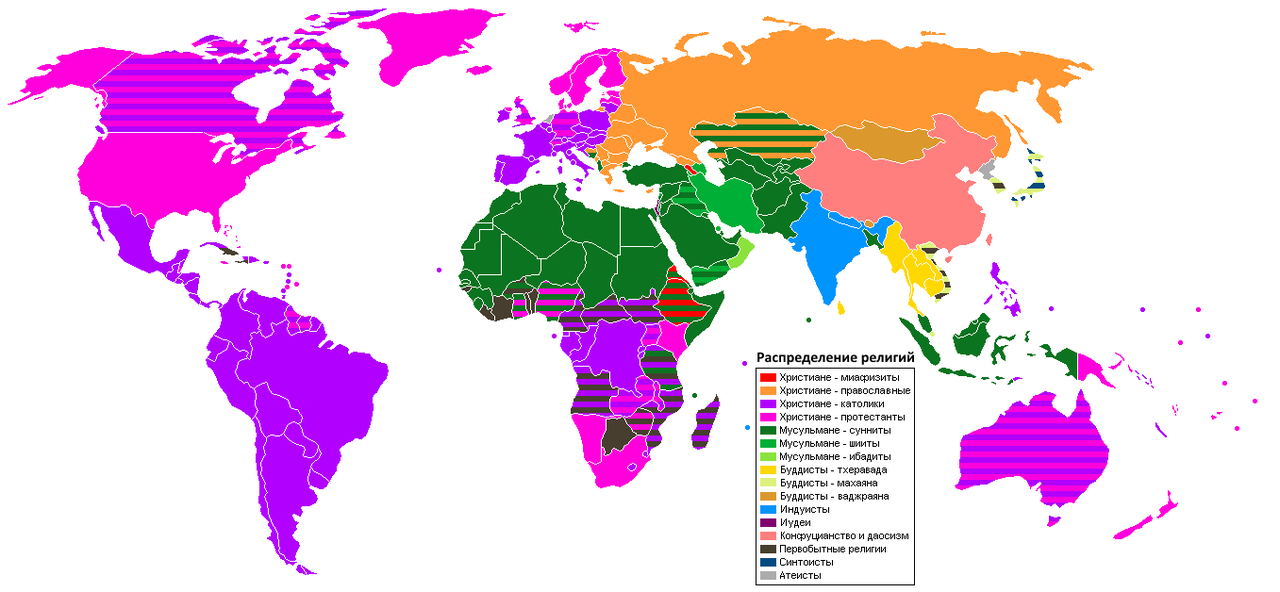

The argument occupies a distinctive position in the philosophy of religion. It is not a traditional argument against the existence of God in the manner of the problem of evil or the argument from divine hiddenness; rather, it is a second-order epistemological argument about how one should assess the rationality of religious commitments in light of their sociological origins. The OTF has generated substantial discussion among both atheist and theistic philosophers, and the responses to it illuminate fundamental disagreements about the relationship between cultural context and epistemic justification.2, 8
Structure of the argument
Loftus presents the OTF as a cumulative case built on several empirical premises and a normative conclusion. The argument can be reconstructed as follows. First, the particular religion a person holds is, in the vast majority of cases, determined by the time and place in which that person was born and raised. A child born in Saudi Arabia will almost certainly become a Muslim; a child born in Thailand will almost certainly become a Buddhist; a child born in rural Mississippi will almost certainly become a Protestant Christian. This is not a controversial sociological observation — it is confirmed by demographic data on religious affiliation and has been recognized by sociologists of religion since at least the work of Peter Berger and Thomas Luckmann in the 1960s.2, 3, 4
Second, the world’s religions make mutually exclusive truth claims. Christianity claims that Jesus is the unique incarnation of God and that salvation depends on faith in him. Islam denies the incarnation and the crucifixion. Hinduism affirms a radically different metaphysics. These religions cannot all be correct in their central claims, yet each is held with comparable conviction by its adherents, and each produces comparable reports of religious experience, answered prayer, and transformed lives. The existence of this diversity, Loftus argues, is itself evidentially significant: it means that the subjective certainty a believer feels provides no reliable guide to the truth of the belief, since adherents of incompatible religions report the same kind of certainty.1, 2, 17
Third, Loftus invokes what he calls the “religious dependency thesis” — the claim that the best explanation for the global distribution of religious belief is not that different populations have independently discovered religious truths, but that religious belief is transmitted culturally, much like language or cuisine. If Methodism were true in some objective sense, one would expect its truth to be discoverable by inquirers across cultures, rather than being concentrated in the regions where Methodist missionaries happened to operate. The geographic clustering of religious belief, on this view, is a defeater for the claim that any particular religion was adopted because of its evidential merits.2, 7
From these premises, Loftus derives a normative conclusion: the rational response is to test one’s own religious beliefs “from the outside,” adopting the same skeptical posture one already takes toward the religions one was not raised in. A Christian, for instance, already knows how to be skeptical of Hinduism — the OTF simply asks that the same skepticism be turned inward. Loftus argues that the appropriate default position is one of skepticism, not belief, and that the burden of proof falls on the religious believer to demonstrate that their particular tradition is an exception to the general pattern of culturally transmitted error.2, 15
P1. The specific religion a person holds is, in the overwhelming majority of cases, causally determined by the cultural and geographic circumstances of birth.
P2. The world’s religions make mutually exclusive truth claims, so at most one can be wholly correct.
P3. If the best explanation for the distribution of a class of beliefs is cultural transmission rather than independent rational inquiry, those beliefs should be treated with a default stance of skepticism.
P4. Believers already apply this skeptical stance to religions other than their own.
C. Therefore, intellectual consistency requires that believers apply the same skeptical stance to their own religion (the Outsider Test).
The sociology of knowledge
The OTF draws heavily on the sociology of knowledge, particularly the tradition associated with Peter Berger and Thomas Luckmann’s The Social Construction of Reality (1966). Berger and Luckmann argued that human beings construct and maintain their understanding of reality through social processes — socialization, institutionalization, and the ongoing conversation of everyday life. What counts as “obvious” or “self-evident” in a given society is not a function of the intrinsic plausibility of the belief but of the social structures that sustain it. A belief that seems absurd to an outsider can feel utterly natural to someone embedded in the social world that maintains it.3
Berger extended this analysis specifically to religion in The Sacred Canopy (1967), arguing that religious worldviews are maintained by “plausibility structures” — the social networks, institutions, rituals, and authority figures that make a particular set of religious claims seem credible. When the plausibility structure is intact, belief feels effortless; when it erodes (through migration, education, or exposure to alternative worldviews), belief becomes precarious. Berger observed that pluralism — the coexistence of multiple competing worldviews within a single society — inherently undermines plausibility structures by making the contingency of one’s own beliefs visible.4
Loftus appropriates this sociological framework for epistemological purposes. If Berger is correct that religious belief is sustained by plausibility structures rather than by evidence, then the fact that a person holds a religious belief tells us more about the social environment in which they were raised than about the truth of the belief itself. The OTF treats the sociology of knowledge not merely as a descriptive account of how beliefs are formed but as having normative implications for how they should be evaluated: beliefs whose origin is best explained by social transmission rather than rational inquiry deserve a higher burden of proof.2, 4
This move from sociology to epistemology is one of the argument’s most contested features. Critics have pointed out that the causal origin of a belief is logically distinct from its justification — a distinction philosophers call the difference between the “context of discovery” and the “context of justification.” A mathematician who was raised in a culture that happens to teach correct arithmetic does not need to doubt that 2 + 2 = 4 simply because her belief has a cultural origin. Loftus responds that the analogy is imprecise: arithmetic is independently verifiable in a way that religious claims are not, and the cross-cultural convergence on mathematical truths has no parallel in the domain of religion, where different cultures converge on incompatible conclusions.2, 12
Responses from Christian philosophers
The OTF has drawn responses from several Christian philosophers and apologists, with objections clustering around a few recurring themes. Victor Reppert, a philosopher known for his development of the argument from reason, offered one of the earliest sustained critiques. Reppert argued that the OTF conflates the question of how a person came to hold a belief with the question of whether that belief is justified. Even if it is true that most Christians are Christians because they were raised in Christian households, this fact alone does not tell us whether Christianity is true or whether its adherents have good reasons for their beliefs. Reppert drew an analogy to political beliefs: the fact that most Democrats were raised by Democrats does not, by itself, constitute a reason to doubt the Democratic platform. What matters is whether the belief can be supported by evidence and argument, not whether its origin is sociological.10, 12
Steve Engwer, writing from an evangelical perspective, pressed a related objection. He argued that the OTF sets up an impossible standard by requiring believers to evaluate their religion as if they had no prior exposure to it. Such a demand, Engwer contended, is both psychologically unrealizable and epistemically unmotivated. No one can genuinely adopt the perspective of a person who has never encountered their own religion; the attempt to do so is a philosophical fiction. Moreover, Engwer argued that the OTF ignores the possibility that being raised within a religious tradition might provide epistemic advantages — access to a community of inquiry, familiarity with the relevant texts and arguments, and a framework for interpreting religious experience — rather than merely constituting a source of bias.2, 7
Randal Rauser, a Canadian theologian, mounted a more sympathetic but still critical engagement with the OTF. Rauser acknowledged the force of the sociological observations and agreed that believers ought to take seriously the challenge posed by religious diversity. However, he argued that Loftus’s version of the test was rigged: by stipulating that the default position should be skepticism rather than openness, Loftus effectively guaranteed the outcome he wanted. Rauser proposed an alternative formulation in which the “outsider” stance would involve genuine openness to all possibilities, including the possibility that one’s inherited religion might be true. On this revised test, the appropriate response to religious diversity would be a willingness to examine evidence fairly, not a presumption that all religions are false.18
A further line of response invokes the distinction between internal and external evidence. Even if the sociological origin of a belief is purely cultural, the believer may possess independent evidence — philosophical arguments for theism, historical evidence for the resurrection, personal religious experience — that supports their particular tradition. The OTF, critics argue, focuses exclusively on the external, sociological explanation for belief while ignoring the possibility that believers have genuinely evaluated the evidence and found it compelling. Loftus responds that the evidence believers cite is itself interpreted through the lens of their cultural conditioning, and that adherents of other religions cite comparably persuasive evidence for their own traditions.2, 13, 14
The tu quoque objection
The most frequently raised objection to the OTF is the tu quoque (“you too”) argument: if religious belief is undermined by its cultural dependence, then so is atheism, since atheists are also products of particular cultural and intellectual environments. A person raised in a secular household in Scandinavia or in an academic environment in coastal North America is statistically far more likely to be an atheist than someone raised in rural Guatemala or Saudi Arabia. If cultural conditioning undermines the epistemic standing of religious belief, the objection runs, it should equally undermine the epistemic standing of irreligion.10, 9
Loftus has responded to the tu quoque objection in several ways. His primary response is that atheism is not a “belief” in the same sense that a religion is; it is rather the absence of belief, or at most the conclusion that no religion has met its burden of proof. On this view, the OTF does not presuppose atheism as a substantive worldview but rather establishes skepticism as the epistemically appropriate default — the starting point from which any particular religious claim must earn its way to acceptance through evidence. Loftus compares the situation to a jury trial: the default is not guilty (analogous to withholding belief), and the burden of proof falls on the prosecution (analogous to the religion making positive claims). This framing draws on Antony Flew’s earlier argument for the “presumption of atheism.”2, 15
Critics have found this response inadequate. The claim that atheism is merely the “absence of belief” is itself contested: many atheists hold substantive metaphysical commitments (naturalism, materialism, the causal closure of the physical) that are no less culturally influenced than religious commitments. Peter van Inwagen has argued that philosophical naturalism is sustained by its own plausibility structures — the norms of secular academia, the prestige of the natural sciences, the social cost of religious affiliation in certain intellectual communities — and that these structures function in precisely the way Berger described for religious plausibility structures. If the OTF is applied consistently, van Inwagen suggests, it undermines the epistemic standing of the atheist’s worldview just as effectively as it undermines the believer’s.9, 4
Loftus’s second response is empirical: he argues that while atheism does have cultural correlates, the correlation between geography and irreligion is weaker than the correlation between geography and specific religious affiliation. Atheism appears across many different cultures and historical periods, whereas specific religions tend to be tightly clustered geographically. Moreover, Loftus contends that the rise of atheism correlates with education, scientific literacy, and exposure to diverse worldviews — factors that are plausibly truth-tracking — whereas the persistence of specific religious beliefs correlates primarily with social insularity and limited exposure to alternatives.2, 7
Reformed epistemology and proper basicality
The OTF intersects in important ways with reformed epistemology, the school of thought associated primarily with Alvin Plantinga, Nicholas Wolterstorff, and William Alston. Reformed epistemology holds that belief in God can be “properly basic” — that is, rationally held without being inferred from other beliefs or supported by argument. On Plantinga’s account, human beings possess a sensus divinitatis, a cognitive faculty that, when functioning properly in an appropriate environment, produces belief in God directly, much as perception produces beliefs about the external world. If the sensus divinitatis exists and functions as Plantinga describes, then theistic belief requires no more external justification than perceptual belief does.5, 6
This framework provides a potential response to the OTF. If belief in God is properly basic, then its cultural origin is epistemically irrelevant, just as the cultural origin of perceptual beliefs is irrelevant to their justification. Plantinga has argued that the causal history of a belief — including its sociological explanation — does not by itself constitute a defeater for that belief. A person who sees a tree does not need to worry that her belief in the tree’s existence is culturally conditioned; the belief is produced by a reliable cognitive faculty operating in the right conditions. Similarly, if the sensus divinitatis is a genuine cognitive faculty, then the fact that it operates within particular cultural contexts does not undermine the beliefs it produces.5, 19
Loftus has responded that reformed epistemology is circular in a way that renders it unfalsifiable. Plantinga’s argument works only if God exists and has implanted the sensus divinitatis in human beings — but whether God exists is precisely the question at issue. A Muslim could construct an exactly parallel argument: Allah has endowed human beings with a fitra (innate disposition toward Islam), and therefore Islamic belief is properly basic. A Hindu could appeal to a divinely given capacity for perceiving Brahman. Each of these arguments is internally consistent but mutually exclusive with the others, and none provides a way of adjudicating between them. The OTF, Loftus contends, exposes the inadequacy of reformed epistemology by showing that its resources are equally available to adherents of any religion — a result that should trouble anyone who takes the exclusivity of their own tradition seriously.2, 7
This exchange reveals a deep disagreement about epistemic starting points. Plantinga maintains that one cannot be required to adopt a position of religious neutrality before evaluating the evidence, because no such neutral position exists — everyone begins from some set of background beliefs that shapes how evidence is interpreted. The OTF, in his view, smuggles in a particular set of background assumptions (naturalism, evidentialism) while presenting them as the neutral default. Loftus counters that the demand for neutrality is not a demand for naturalism but simply a demand for consistency: evaluate all religious claims by the same standard, whatever that standard is.5, 2, 16
Relationship to the argument from inconsistent revelations
The OTF is closely related to the argument from inconsistent revelations, sometimes called the “avoiding the wrong hell” problem. This older argument observes that the world’s religions make competing and mutually exclusive claims about the nature of God, the requirements for salvation, the afterlife, and the content of divine revelation. Since these claims contradict one another, they cannot all be true. The argument from inconsistent revelations uses this observation to challenge the reliability of revelation as a source of knowledge: if revelatory experience produces contradictory results across cultures, it cannot be a reliable epistemic mechanism.20, 11
The OTF adds a sociological dimension to this older argument. Where the argument from inconsistent revelations focuses on the logical incompatibility of competing truth claims, the OTF focuses on the mechanism by which people come to accept one set of claims rather than another. The inconsistent-revelations argument says, “These religions contradict each other, so they can’t all be right.” The OTF adds, “And the reason you believe yours rather than the others has nothing to do with evidence — it is an accident of birth.” Together, the two arguments create a pincer: the fact of contradiction shows that most religious believers must be wrong, and the sociology of belief suggests that no one has a reliable way of determining which (if any) are right.2, 17
David Hume anticipated both arguments in his Dialogues Concerning Natural Religion (1779), where the character Philo observes that the religious convictions of any individual are largely a product of education and social environment, and that the multiplicity of religions, each claiming unique access to truth, should induce caution in all of them. Hume’s observation was not formalized as an explicit “test,” but the underlying epistemological point — that the geographic and cultural distribution of religious belief is itself evidence against the reliability of the processes that produce it — is essentially the same.20
Cultural context and epistemic justification
The broadest philosophical question raised by the OTF concerns the relationship between cultural context and epistemic justification. The challenge is not unique to religion: political beliefs, moral intuitions, philosophical commitments, and even scientific paradigms are all influenced by cultural context. If the cultural dependence of a belief class is sufficient to undermine its epistemic standing, then the implications extend far beyond religion to encompass virtually all of human thought. This is the “generality problem” for the OTF: it is difficult to formulate a principle that targets religious belief specifically without also sweeping away beliefs that both Loftus and his critics want to preserve.12, 8
One way to sharpen the argument is to distinguish between domains where cultural variation tracks truth and domains where it does not. In mathematics and the natural sciences, independent inquirers across different cultures tend to converge on the same conclusions — a pattern that suggests the inquiry is tracking real features of the world. In religion, by contrast, independent cultures tend to diverge, arriving at mutually incompatible conclusions. Loftus argues that this divergence is evidence that religious inquiry is not tracking truth but is instead reflecting local cultural preferences. The convergence of scientific inquiry across cultures, he contends, is precisely what we would expect if science were truth-tracking; the divergence of religious inquiry is precisely what we would expect if religion were not.2, 21
Critics have questioned whether the convergence criterion is as clean as Loftus suggests. Moral beliefs, for instance, show both significant cross-cultural convergence (prohibitions on murder, theft, and betrayal are nearly universal) and significant divergence (attitudes toward gender roles, sexual ethics, and punishment vary enormously). The existence of moral disagreement does not lead most philosophers to conclude that there are no moral truths; instead, it leads to more nuanced accounts of how cultural context can both illuminate and distort moral perception. Similarly, some philosophers of religion have argued that the diversity of religious belief is compatible with the existence of religious truth, provided one allows that cultural context can partially occlude or distort the perception of that truth.8, 16
William Alston has offered a particularly detailed treatment of this issue. In Perceiving God (1991), Alston acknowledged that the existence of multiple, mutually incompatible “mystical practices” (Christian, Islamic, Hindu, Buddhist) poses a genuine epistemic problem. He argued, however, that this problem does not require abandoning one’s own mystical practice, because there is no neutral, practice-independent standpoint from which to adjudicate between them. Each practice is self-authenticating in the sense that its outputs are evaluated by its own internal standards, just as sense perception is evaluated by its own standards. Alston conceded that this is an uncomfortable result — he called it a “significant weakening” of the epistemic position of any particular tradition — but he maintained that it is not a decisive defeater.14
Demographic patterns of religious belief
The empirical foundation of the OTF rests on the observable correlation between geography and religious affiliation. Demographic data consistently shows that religious identity is among the most geographically clustered of all human characteristics. The following table illustrates the dominant religious affiliation by region, drawn from global survey data.
Dominant religious affiliation by world region2, 11
| Region | Dominant affiliation | Approximate share |
|---|---|---|
| Middle East & North Africa | Islam | 93% |
| South Asia | Hinduism | 65% |
| Southeast Asia | Buddhism | 40% |
| Latin America | Christianity (Catholic) | 69% |
| Sub-Saharan Africa | Christianity | 62% |
| North America | Christianity (Protestant) | 48% |
| East Asia | Unaffiliated / folk religion | 52% |
| Western Europe | Christianity (declining) | 45% |
These figures illustrate Loftus’s central empirical claim: religious affiliation tracks geography more closely than it tracks evidence or argument. A person’s religion is, statistically, more predictable from their birthplace than from any other single variable. Loftus argues that this pattern is far more consistent with the hypothesis that religious belief is culturally transmitted than with the hypothesis that any particular religion has been independently discovered by rational inquirers who happened to be born in the right place.2, 3
Defenders of religious belief have noted that the same data admits of alternative interpretations. The geographic clustering of Christianity in the Roman Empire by the fourth century, for instance, was the result of missionary activity, intellectual argument, and the appeal of Christian community — not merely of unreflective cultural inheritance. The spread of Buddhism from India to East Asia involved the deliberate evaluation and adoption of new ideas by individuals who were raised in entirely different religious traditions. The fact that religions cluster geographically does not, by itself, demonstrate that no one within those regions has good reasons for their beliefs; it merely shows that cultural environment is a powerful influence on belief formation, which is compatible with some individuals within each tradition holding their beliefs on genuinely rational grounds.12, 13
Significance and assessment
The Outsider Test for Faith has proved to be one of the more durable contributions to popular philosophy of religion in the early twenty-first century, generating discussion that extends well beyond Loftus’s original audience of internet atheists and into academic philosophy. Its strength lies in its intuitive appeal: the observation that people tend to adopt the religion of their parents and culture is both empirically robust and genuinely unsettling for anyone who takes the truth of their religion seriously. The argument forces believers to confront the question of whether they would hold the same beliefs had they been born in a different time and place — a question that, honestly faced, can be destabilizing.2, 7
Its weaknesses, however, are also significant. The argument’s reliance on the genetic character of belief formation exposes it to the charge that it commits, or at least flirts with, the genetic fallacy — the error of evaluating a belief based on its causal origin rather than its evidential support. Loftus insists that the OTF does not commit this fallacy because it does not claim to refute any religion; it merely establishes a methodological presumption of skepticism. But critics have argued that even this methodological move is question-begging, since it assumes that the appropriate default is nonbelief rather than openness — an assumption that is itself contested.10, 18
The tu quoque problem remains the argument’s most serious vulnerability. If cultural dependence is a reason for skepticism, then atheism, naturalism, secular humanism, and every other worldview with a sociological explanation for its distribution are equally suspect. Loftus’s attempts to exempt atheism from the test — by characterizing it as a mere absence of belief or by arguing that its cultural correlates are truth-tracking — have not been widely accepted even among sympathetic philosophers. The more consistent application of the OTF’s own logic would seem to generate a global skepticism that undermines all worldviews, religious and secular alike — a result that may be coherent but that few are willing to accept.9, 2
Perhaps the most productive legacy of the OTF is not the specific argument Loftus formulated but the broader question it raises about epistemic humility in the face of deep disagreement. The recognition that one’s beliefs are profoundly shaped by cultural context need not lead to skepticism about all beliefs; it can instead motivate a more careful and self-aware approach to belief formation, one that takes seriously the perspectives of those who disagree and that subjects one’s own convictions to rigorous scrutiny. This is a point on which both Loftus and some of his more thoughtful critics — Rauser in particular — converge, even if they disagree about where such scrutiny ultimately leads.18, 8, 17