Overview
- The soul-making theodicy, developed by John Hick in Evil and the God of Love (1966) and rooted in the thought of the second-century church father Irenaeus, argues that God created an imperfect world not as a finished paradise but as an environment designed to facilitate the moral and spiritual development of immature creatures into mature moral agents.
- The theodicy rests on several structural commitments: a distinction between the image and likeness of God (humans are created in God’s image but must grow into God’s likeness), the concept of epistemic distance (God’s existence is not overwhelmingly evident so that genuine free response is possible), and the necessity of an afterlife in which the soul-making process reaches completion for all persons.
- Critics have challenged the theodicy on multiple fronts — the problem of dysteleological suffering that destroys rather than builds character, the moral objection that God instrumentalizes persons by using their suffering as a means to development, and the question of whether virtues could be cultivated without the extreme forms of evil the actual world contains.
The soul-making theodicy is a response to the problem of evil that locates the purpose of suffering in the moral and spiritual development of human persons. Where the Augustinian tradition traces evil to a primordial fall from an original perfection, the soul-making approach holds that God created human beings in an unfinished state and placed them in an environment of challenge and difficulty so that they might freely grow into mature moral agents. The theodicy was given its most influential modern formulation by the British philosopher of religion John Hick (1922–2012) in Evil and the God of Love (1966), drawing on the theology of the second-century church father Irenaeus of Lyons. Hick contrasted his “Irenaean” approach with the dominant “Augustinian” tradition, arguing that the former provides a more coherent and morally serious account of why an omnipotent, perfectly good God would permit the range and depth of suffering the world contains. The soul-making theodicy has generated extensive philosophical discussion and remains one of the major theistic responses to the evidential problem of evil.1, 4
Unlike Alvin Plantinga’s free will defense, which aims only to show the logical compatibility of God and evil, the soul-making theodicy is a theodicy in the full sense: it claims to identify the actual purpose for which God permits suffering. This higher ambition makes the theodicy more philosophically informative but also more vulnerable to objection, since it must show not merely that a morally sufficient reason for evil is logically possible but that the proposed reason is plausible and morally adequate.1, 5
Historical development
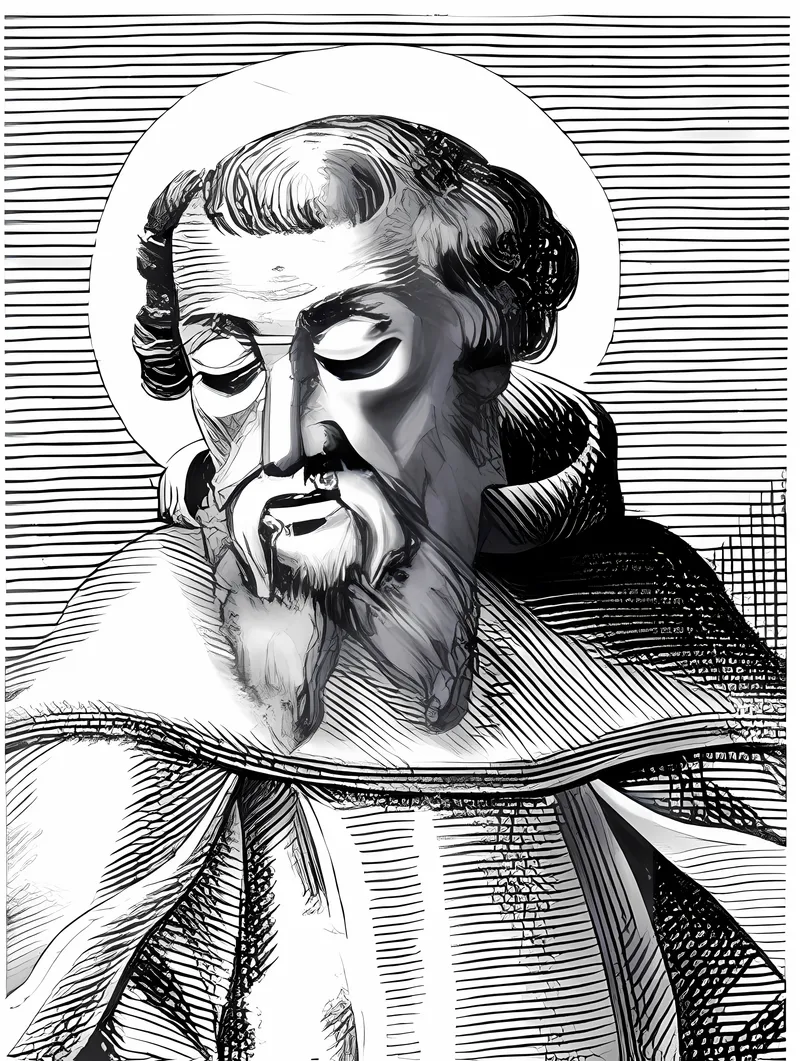

The intellectual roots of the soul-making theodicy extend to the earliest centuries of Christian theology. Irenaeus of Lyons (c. 130–202 CE), writing against Gnostic heresies in his major work Against Heresies (Adversus Haereses), developed a distinctive account of human creation that distinguished between the “image” (imago) and the “likeness” (similitudo) of God. For Irenaeus, to be created in the image of God is to possess the basic capacities of rational, moral agency — intelligence, freedom, and the capacity for relationship with God. To grow into the likeness of God is a further achievement: the development of moral and spiritual maturity through the exercise of those capacities over time. Humanity was created in God’s image but not yet in God’s full likeness; the likeness is something to be attained through a process of growth and development, not something given at the outset.11, 1
Irenaeus held that humanity was created in a state of immaturity rather than perfection. Adam and Eve, on this reading, were not fully developed moral agents who fell catastrophically from a state of original righteousness but rather childlike beings at the beginning of a developmental journey. The “fall” was a failure of immature creatures, not the cosmic rupture of a perfect order. This view stood in contrast to the Augustinian tradition, which became dominant in Western Christianity, wherein humanity was created in a state of original perfection and evil entered the world through a freely chosen rebellion against God. For Augustine, evil is a privation — the absence of good — and suffering is the consequence of sin. For Irenaeus, suffering is part of the environment in which immature creatures are formed into the likeness of God.11, 1
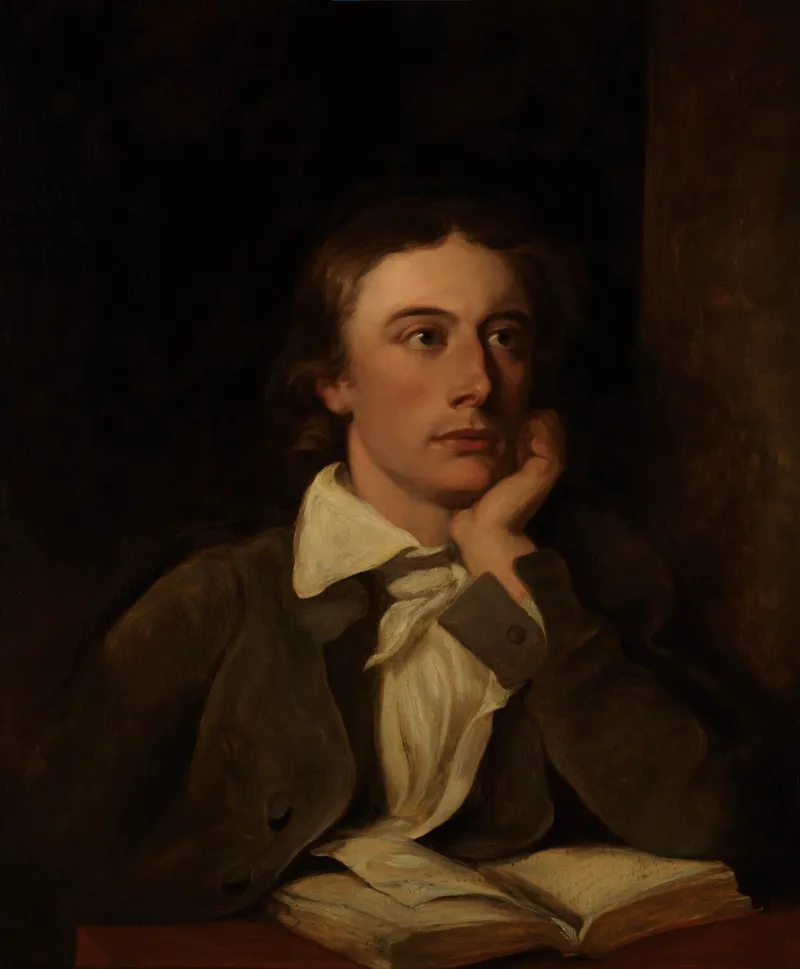

The Irenaean strand of thought remained a minority position in Christian theology for centuries, overshadowed by the Augustinian framework. It resurfaced in the Romantic period through the English poet John Keats, who in an 1819 letter to his brother George described the world as a “vale of soul-making” rather than a “vale of tears.” Keats wrote: “Call the world if you please ‘The Vale of Soul-Making.’ Then you will find out the use of the world.” The phrase gave Hick the central metaphor for his theodicy. Friedrich Schleiermacher, the nineteenth-century Protestant theologian, also developed ideas compatible with the Irenaean approach, arguing that the world’s imperfections serve the development of human piety and moral consciousness.1, 3
Hick’s systematic development of the Irenaean theodicy in Evil and the God of Love (1966, revised edition 1977) brought this minority tradition into the center of analytic philosophy of religion. Hick presented the Augustinian and Irenaean approaches as the two fundamental types of Christian theodicy and argued that the Irenaean type, suitably developed, provides a more adequate response to the problem of evil in light of modern science, including evolutionary biology. He further refined the theodicy in “An Irenaean Theodicy,” his contribution to the 1981 volume Encountering Evil.1, 2
The formal argument
The soul-making theodicy can be stated as a structured argument, though Hick himself presented it in discursive rather than formal terms. The following reconstruction captures the essential reasoning:
P1. The highest good for human persons is the development of moral and spiritual maturity — the formation of character traits such as compassion, courage, generosity, and love — achieved through free response to genuine challenges.
P2. Moral and spiritual development of this kind requires an environment that contains real difficulties, including suffering, temptation, danger, and the possibility of failure.
P3. A world designed as a hedonic paradise — one containing no suffering, no risk, and no moral challenge — would preclude the development described in P1.
P4. An omnipotent, omniscient, perfectly good God would create the kind of world best suited to achieving the highest good for human persons.
C. God has morally sufficient reason to create a world containing suffering: such a world is necessary for the soul-making process that constitutes the highest good for human persons.
The argument is teleological in structure: the world is understood as an instrument designed for a purpose, and that purpose is the formation of persons. Evil and suffering are not gratuitous intrusions into an otherwise good creation but integral features of an environment designed to produce something of supreme value — morally and spiritually mature agents who have freely chosen the good through their own effort and experience.1, 2
Epistemic distance and the cognitive environment
A central feature of Hick’s theodicy is the concept of epistemic distance. If God’s existence and moral demands were overwhelmingly obvious — if every human being were born with direct, unambiguous awareness of an omnipotent creator who rewards virtue and punishes vice — then obedience to God would be effectively compelled rather than freely chosen. In such a world, moral behavior would be prudential compliance rather than genuine moral development, and the soul-making process would be undermined. Hick argued that God has therefore created human beings at an epistemic distance from the divine: God’s existence is not immediately evident from the structure of the world, and human beings must exercise faith, moral effort, and personal judgment in responding to their situation.1, 13
The concept of epistemic distance serves multiple functions in the theodicy. First, it explains why the world does not appear to be designed by a benevolent God: the very ambiguity of the world’s moral and religious significance is a feature of the soul-making environment, not evidence against God’s existence. Second, it grounds the possibility of genuine moral freedom: only in an environment where God’s existence and purposes are not coercively evident can creatures freely choose to develop virtue, pursue justice, and seek relationship with the divine. Third, it connects the soul-making theodicy to the problem of divine hiddenness: God’s apparent absence from the world is not a deficiency but a condition of the soul-making enterprise.1, 13
Hick did not claim that epistemic distance is absolute. Rather, there is a spectrum between the extremes of overwhelming divine presence (which would eliminate freedom) and total divine absence (which would eliminate any possibility of faith). The actual world, Hick argued, is positioned at a point on this spectrum that permits both genuine doubt and genuine faith — an environment in which responsible belief in God is possible but not compelled. This positioning is itself part of the design of the soul-making environment.1, 3
Nick Trakakis has offered a sustained critique of Hick’s epistemic distance thesis, arguing that it is in tension with other features of Hick’s theology. If God desires a genuine personal relationship with human beings, Trakakis contends, then epistemic distance is counterproductive: relationships require knowledge and interaction, and a God who deliberately conceals evidence of divine existence is undermining the very relationship that is supposed to constitute the goal of soul-making. Hick responded that epistemic distance is not divine concealment but the necessary condition for the kind of free, uncoerced response that genuine relationship requires.13
The role of natural evil
One of the soul-making theodicy’s claimed advantages over the free will defense is its treatment of natural evil. The free will defense, in its standard form, addresses moral evil (evil resulting from free human choices) but has difficulty accounting for natural evil (earthquakes, diseases, animal suffering) without invoking non-human agents such as fallen angels. The soul-making theodicy provides a unified account: both moral and natural evil contribute to the soul-making environment.1, 5
Natural evil, on Hick’s account, performs several functions in the soul-making process. First, it provides occasions for the exercise of virtues that could not exist in a world without suffering: compassion requires the existence of those who suffer, courage requires the existence of genuine danger, and perseverance requires the existence of genuine adversity. Second, it establishes the regularity and predictability of natural law that is necessary for meaningful moral agency. If the natural world did not operate according to regular causal laws — if God intervened to prevent every harmful natural event — human beings could not predict the consequences of their actions, plan for the future, or exercise responsible agency. Third, it creates the shared vulnerability and mutual dependence that are conditions for the development of community, solidarity, and self-sacrificial love.1, 8
Richard Swinburne has developed a complementary argument for the necessity of natural evil in Providence and the Problem of Evil (1998). Swinburne argues that natural evil provides the epistemic conditions for moral knowledge: human beings learn that their actions can cause harm (and therefore learn to avoid causing harm) only because the natural world contains regular processes that produce suffering. If fire never burned and water never drowned, human beings would have no understanding of the harmful consequences of their choices, and moral agency would be impossible. Swinburne’s argument differs from Hick’s in its emphasis on epistemic rather than developmental considerations, but both locate the justification for natural evil in its contribution to the conditions necessary for moral life.8
The eschatological completion
Hick recognized that the soul-making theodicy faces an immediate objection: many human lives end in circumstances where soul-making appears not to have occurred. Infants who die before any moral development is possible, persons whose suffering destroys rather than builds character, individuals who endure horrendous evil without any apparent growth — these cases seem to falsify the claim that the world is designed for soul-making. Hick’s response was to invoke an eschatological completion of the soul-making process: the development that cannot be completed in this life will be completed in a life to come.1, 2
Hick’s eschatology is universalist: he held that all human persons will ultimately achieve the moral and spiritual maturity that is the goal of creation. No one is permanently lost or damned. The soul-making process may continue through multiple stages of existence beyond death, with each person eventually reaching the full likeness of God. This universalism is essential to the theodicy’s internal coherence: if some persons were permanently excluded from the fulfillment of the soul-making process, their suffering would be instrumentalized without achieving its purpose, and the theodicy would be morally compromised.1, 3
The eschatological component of the theodicy has drawn criticism from multiple directions. Philosophers who reject the existence of an afterlife regard it as an unfounded metaphysical commitment that insulates the theodicy from empirical falsification: whatever counter-evidence is presented (horrendous suffering, destroyed lives, innocent deaths), the theodicy can always appeal to post-mortem completion. The theodicy thus becomes, in this view, unfalsifiable — and therefore uninformative as an explanation. Philosophers within the theistic tradition have also raised concerns: if the soul-making process is guaranteed to succeed for every person, then the stakes of moral choice in this life are diminished, and the urgency that Hick attributes to the soul-making environment is undermined.4, 14
Major objections
Dysteleological suffering
The most persistent objection to the soul-making theodicy is the existence of suffering that appears to destroy rather than develop persons. Hick’s theodicy claims that suffering serves the purpose of moral and spiritual growth, but the actual world contains forms of suffering that manifestly do not serve this purpose. The prolonged agony of a child dying of leukemia, the psychological devastation of a torture victim who never recovers, the suffering of animals incapable of moral development — these cases are not plausibly interpreted as instruments of soul-making. William Rowe’s celebrated example of a fawn suffering for days in a forest fire, unobserved by any human, illustrates the point: no soul-making occurs in cases where there is no rational agent to develop.15, 4
Marilyn McCord Adams has argued that what she calls “horrendous evils” — evils so severe that participation in them gives the victim prima facie reason to doubt that their life is a great good to them on the whole — pose a problem that soul-making theodicies cannot address. The suffering of Holocaust victims, of children subjected to prolonged abuse, of persons destroyed by mental illness, is not plausibly accounted for as character formation. Adams contends that theodicies of the soul-making type “at least teeter on the rock of horrendous evils” because the suffering involved is grossly disproportionate to any developmental benefit that could result.7
The instrumentalization objection
D. Z. Phillips argued that the soul-making theodicy treats persons as instruments of a divine educational program. If God creates persons and subjects them to suffering for the purpose of developing their characters, God is using them as means to an end — a violation of the Kantian principle that persons should be treated as ends in themselves. Phillips contended that the suggestion “suffers from a fatal objection”: “To make the development of one’s character an aim is to ensure that the development will not take place.” Character development, Phillips argued, occurs as a by-product of engagement with the world, not as the result of a deliberate program of suffering imposed from without. If God designs suffering for the purpose of building character, the suffering loses its moral seriousness: it becomes a pedagogical exercise rather than a genuine encounter with evil.10
The problem of amount and distribution
Even if some suffering is necessary for soul-making, the actual world appears to contain far more suffering than the purpose requires. Graham Oppy argues that a soul-making environment would need to contain some adversity, but it need not contain genocide, childhood cancer, or natural disasters that kill hundreds of thousands. A world with moderately challenging conditions — enough to develop courage, compassion, and perseverance — would serve the soul-making purpose without the extreme forms of suffering the actual world contains. The theodicy, Oppy contends, does not explain why the actual world is so much worse than the minimum required for character development.14
The distribution of suffering also poses a challenge. If the world is designed for soul-making, one would expect suffering to be distributed in ways that optimize developmental opportunities — more suffering for those who need more development, less for those who have already achieved moral maturity. The actual distribution of suffering bears no such relationship to moral development: some persons endure catastrophic evil while displaying exemplary virtue, while others live comfortable lives while exhibiting moral indifference. The theodicy, critics argue, predicts a pattern of suffering that does not match the actual world.4, 14
Animal suffering
The soul-making theodicy is designed to account for human suffering in terms of human moral and spiritual development. Animal suffering, which predates the existence of human beings by hundreds of millions of years, does not plausibly serve any soul-making function. Animals lack the cognitive capacities for the kind of moral and spiritual development Hick describes, and their suffering cannot be accounted for as an instrument of their character formation. The evolutionary record reveals vast quantities of animal suffering — predation, disease, parasitism, starvation — that occurred before any human being existed to be developed by it. Michael Tooley has pressed this objection, arguing that the suffering of animals and young children constitutes a form of evil that the soul-making theodicy simply cannot address, since neither animals nor infants are capable of the moral development that is supposed to justify their suffering.4, 6
Responses to objections
Hick responded to the objection from dysteleological suffering by invoking the eschatological dimension of the theodicy: suffering that does not produce visible growth in this life may contribute to growth in a life beyond death. The apparent failure of soul-making in particular cases does not refute the theodicy if the soul-making process extends beyond the temporal boundaries of earthly existence. Hick acknowledged that this response depends on the reality of an afterlife and that the theodicy is therefore committed to a metaphysical claim that cannot be empirically verified in the present.1, 2
To the instrumentalization objection, defenders of the theodicy have responded that soul-making is not something imposed on persons from without but a process in which persons participate as active agents. The suffering that contributes to moral development does so only insofar as the person freely responds to it with courage, compassion, or perseverance. God does not program the outcome: the environment creates opportunities for growth, and the person’s free response determines whether growth occurs. This preservation of human agency, defenders argue, distinguishes the soul-making theodicy from a deterministic model of character formation and addresses the Kantian concern about treating persons as mere means.1, 8
To the problem of excessive suffering, Hick argued that a world in which suffering were reliably proportioned to developmental need would undermine the epistemic distance that the theodicy requires. If suffering were always and transparently developmental — if the connection between suffering and growth were obvious — the world would lack the ambiguity that is necessary for genuine moral freedom. The inscrutability of suffering, on this view, is itself a feature of the soul-making environment: if the purpose of every evil were evident, the environment would lose the character of genuine challenge and moral testing that the theodicy requires.1, 2
The problem of animal suffering remains the least adequately addressed objection. Hick speculated that animal suffering might serve purposes beyond human comprehension or that animals might participate in some form of post-mortem completion, but he acknowledged that these suggestions were speculative and that the theodicy was primarily designed to address human suffering. Swinburne has offered a different response, arguing that animal suffering is a necessary by-product of the regular natural laws required for the soul-making environment to function: a world with natural laws inevitably produces suffering in sentient creatures as a consequence of those laws’ regular operation.1, 8
Comparison with other approaches
The soul-making theodicy occupies a distinctive position in the landscape of theistic responses to the problem of evil. It differs from the free will defense in both scope and ambition. Plantinga’s defense claims only that God and evil are logically compatible, offering a possible scenario (universal transworld depravity) without claiming that the scenario is actual. Hick’s theodicy claims to identify the actual reason God permits evil, which makes it philosophically more ambitious but also more demanding in its evidential requirements. The defense needs only to be coherent; the theodicy must be plausible.5, 1
The soul-making theodicy also differs from skeptical theism, which holds that human cognitive limitations prevent us from reliably judging whether any particular evil is gratuitous. Skeptical theism is agnostic about God’s reasons for permitting evil; the soul-making theodicy claims to know what those reasons are. Some philosophers have noted a tension between the two approaches: if the soul-making theodicist is correct that suffering serves developmental purposes, then the skeptical theist’s claim that we cannot assess God’s reasons is too strong. Conversely, if the skeptical theist is correct that God’s reasons are inscrutable, then the soul-making theodicist’s claim to have identified those reasons is too confident.9, 4
Major theistic responses to the problem of evil4
| Response | Key proponent | Central claim | Type | Key commitment |
|---|---|---|---|---|
| Free will defense | Plantinga (1974) | Transworld depravity makes moral evil logically necessary for free creatures | Defense | Libertarian free will |
| Soul-making theodicy | Hick (1966) | Suffering is necessary for moral and spiritual development | Theodicy | Universalist afterlife |
| Skeptical theism | Wykstra (1984) | Human cognition cannot assess whether evils are gratuitous | Epistemological | Epistemic humility |
| Process theodicy | Griffin (1976) | God lacks coercive power; evil results from creaturely self-determination | Theodicy | Revised omnipotence |
| Narrative theodicy | Stump (2010) | Suffering enables deeper openness to God and to others | Theodicy | Thomistic value theory |
David Ray Griffin’s process theodicy, developed in God, Power, and Evil (1976), represents a fundamentally different approach. Griffin argued that the soul-making theodicy, like all traditional theodicies, fails because it retains the classical conception of divine omnipotence. If God has the power to prevent suffering and chooses not to, then God’s goodness is compromised regardless of the developmental benefits. Griffin proposed instead that God’s power is persuasive rather than coercive: God influences but does not control creaturely decisions, and evil results from the self-determination of creatures acting contrary to divine persuasion. On this view, God does not permit suffering for soul-making purposes; God is unable to unilaterally prevent it.6
Eleonore Stump’s Wandering in Darkness (2010) offers yet another approach, one that shares the soul-making theodicy’s emphasis on personal development but grounds it in a Thomistic framework rather than an Irenaean one. Stump argues that suffering can enable a deeper openness to God and to other persons — not by building character in the developmental sense that Hick describes, but by breaking down the self-sufficiency and self-enclosure that prevent genuine personal relationship. Stump’s approach differs from Hick’s in its emphasis on relationship over character formation, and in its use of biblical narratives (the stories of Job, Samson, Abraham, and Mary of Bethany) as sources of philosophical insight into the nature of suffering.12
The Augustinian and Irenaean types compared

Hick’s framing of the theodicy problem in terms of two fundamental types — Augustinian and Irenaean — has been influential in organizing the philosophical literature, even among those who disagree with Hick’s preference for the Irenaean approach. The two types differ on several fundamental points.
The Augustinian type begins with a perfect creation. God created the world and human beings in a state of original goodness; evil entered through a free act of rebellion (the fall of Adam and Eve, preceded by the fall of Satan and the angels). Suffering is the just consequence of sin, and God’s permission of evil is justified by the value of free will and by the ultimate restoration of the created order. The narrative structure is paradise – fall – redemption.1
The Irenaean type begins with an imperfect creation. God created human beings in an immature state, with the potential for moral and spiritual development but without having yet achieved it. The world is not a fallen paradise but a challenging environment designed for growth. Suffering is not a punishment for sin but a feature of the developmental process. The narrative structure is creation – development – eschatological fulfillment.1, 2
Augustinian vs. Irenaean theodicy types1
| Feature | Augustinian type | Irenaean type |
|---|---|---|
| Initial state of creation | Perfect, complete | Imperfect, immature |
| Source of evil | Free creaturely rebellion (the fall) | Feature of the developmental environment |
| Function of suffering | Just punishment for sin | Instrument of moral and spiritual growth |
| Narrative structure | Paradise – fall – redemption | Creation – development – fulfillment |
| Compatibility with evolution | Requires historical fall event | Compatible with gradual development |
| Human nature | Corrupted by original sin | Immature but developing |
| Eschatology | Salvation for the elect; damnation for the reprobate | Universal salvation |
Hick argued that the Irenaean type is better suited to the modern intellectual context for several reasons. First, the Augustinian type depends on a literal reading of the Genesis narrative (a historical Adam and Eve, a historical fall from perfection) that is difficult to maintain in light of evolutionary biology, which reveals human beings as the product of a gradual developmental process rather than a sudden creation in a state of perfection. The Irenaean type, by contrast, is naturally compatible with an evolutionary account of human origins: humanity emerging gradually from animal ancestors is precisely the kind of immature, developing creature the Irenaean theodicy describes. Second, the Augustinian type has difficulty accounting for natural evil that predates the existence of human beings — geological catastrophes, animal predation, disease — since these cannot be consequences of a human fall that had not yet occurred. The Irenaean type treats such evil as part of the soul-making environment and does not require a causal connection to human sin.1, 2
Swinburne’s related theodicy
Richard Swinburne’s Providence and the Problem of Evil (1998) presents a theodicy that shares significant features with Hick’s soul-making approach while differing in important details. Swinburne argues that God’s central purpose in creating human beings is to provide them with the opportunity for significant moral agency — the ability to make choices that have real consequences for themselves and others. This purpose requires a world that is structured by regular natural laws (so that agents can predict the consequences of their actions), that contains genuine suffering (so that agents have the opportunity to respond with compassion, courage, and self-sacrifice), and that includes the possibility of moral failure (so that agents face genuine choices between good and evil).8
Swinburne’s approach differs from Hick’s in several respects. First, Swinburne emphasizes the value of significant free choice rather than the development of moral character: the good that justifies suffering is not primarily that persons become better through suffering but that they have the opportunity to make morally significant choices in response to it. Second, Swinburne does not require Hick’s universalist eschatology: on Swinburne’s view, the goods of moral agency are realized in this life through the choices persons make, and the theodicy does not depend on post-mortem completion. Third, Swinburne provides a distinct account of natural evil: natural evil is necessary not primarily as an instrument of character development but as the epistemic foundation for moral knowledge. Human beings learn about harm and its prevention through the regular operation of natural laws, and this knowledge is a precondition for responsible moral agency.8, 1
Swinburne’s theodicy has faced objections analogous to those directed at Hick’s. Critics have argued that the value of significant moral agency does not justify the extreme forms of suffering the actual world contains: a world with moderate challenges would provide ample opportunities for morally significant choices without including genocide, childhood cancer, or tsunamis. Swinburne has responded that greater suffering provides opportunities for greater moral significance: the person who chooses compassion in the face of extreme evil exercises a more significant moral agency than one who faces only trivial adversity. Whether this response adequately addresses the objection from excessive suffering remains contested.8, 14
Contemporary assessment
The soul-making theodicy remains one of the most widely discussed responses to the problem of evil in contemporary analytic philosophy of religion. Its strengths include its compatibility with evolutionary biology, its unified treatment of moral and natural evil, its philosophical ambition in attempting to identify the actual purpose of suffering, and its moral seriousness in confronting the full range of human and animal suffering rather than retreating to purely defensive maneuvers. It remains a living option in the philosophical literature, routinely discussed alongside the free will defense and skeptical theism as one of the three major theistic strategies for addressing the problem of evil.4, 9
Its weaknesses are equally recognized. The dependence on an eschatological completion that cannot be empirically verified has led some philosophers to regard the theodicy as unfalsifiable. The problem of dysteleological suffering — suffering that appears to destroy rather than develop — remains the most powerful objection, and Hick’s appeal to post-mortem soul-making, while internally consistent, strikes many critics as ad hoc. The instrumentalization objection, whether or not it can be fully answered, identifies a genuine moral tension in the theodicy’s core claim. And the problem of animal suffering remains largely unaddressed.7, 10, 14
The theodicy’s broader significance lies in its reframing of the relationship between God and evil. Where the Augustinian tradition treats evil as an aberration — something that was not supposed to happen and that God permits only because of the value of free will — the Irenaean tradition treats evil as integral to the divine purpose. The world is not a failed paradise but a workshop for the formation of persons. Whether this reframing is morally adequate — whether it takes the full horror of suffering seriously enough, or whether it risks domesticating evil by assigning it a positive function — is the question on which the theodicy’s philosophical standing ultimately depends.1, 4
References
An Epistemically Distant God? A Critique of John Hick’s Response to the Problem of Divine Hiddenness