Overview
- The genetic fallacy is the error of evaluating the truth or falsity of a claim based on its origin, history, or the manner in which it was acquired rather than on the evidence and reasoning that currently support or undermine it — a confusion between the context of discovery and the context of justification that has been recognized as a distinct informal fallacy since at least Morris Cohen and Ernest Nagel’s 1934 textbook.
- The fallacy operates symmetrically in philosophy of religion: naturalists commit it when arguing that religious belief is false because it arose from cognitive biases or wish-fulfillment, and theists commit it when dismissing atheism because it supposedly originates in father-rejection or moral rebellion — in both cases, the causal story behind a belief is logically independent of whether the belief is true.
- Not all genetic reasoning is fallacious: epistemologists distinguish between the genetic fallacy proper and legitimate debunking arguments in which the causal origin of a belief is shown to be systematically unreliable, a framework developed by Guy Kahane and extended in debates over the cognitive science of religion, evolutionary debunking of moral realism, and Plantinga’s evolutionary argument against naturalism.
The genetic fallacy is the informal logical error of judging the truth or falsity of a belief, argument, or claim on the basis of its origin rather than on the basis of the evidence or reasoning that currently supports or undermines it.1, 3 The name derives from the Latin genesis (origin), not from biological genetics: the fallacy concerns the source from which an idea came, not genes or heredity. A claim that mathematics was first developed for commercial bookkeeping does not entail that mathematical truths are merely commercial conventions; a demonstration that a scientific theory was first proposed by a morally reprehensible person does not entail that the theory is false. In each case, the origin of the idea is logically independent of its truth value.1

The genetic fallacy is closely related to, but broader than, the ad hominem argument. An ad hominem attacks the person advancing a claim; the genetic fallacy attacks any aspect of the claim’s causal history — the person, the culture, the psychological motive, the historical period, or the evolutionary process from which it emerged.2, 3 Every ad hominem is a species of genetic reasoning, but not every genetic argument targets a person. Dismissing a political idea because it originated in a particular country, or rejecting a philosophical position because it was historically associated with a discredited movement, are genetic fallacies that have no specific individual target.3
Historical background
The genetic fallacy was first identified and named by Morris Cohen and Ernest Nagel in their 1934 textbook An Introduction to Logic and Scientific Method, where they described it as the confusion of the temporal or psychological origin of a belief with its logical justification.1 Cohen and Nagel were drawing on a distinction that had been developing in philosophy of science since the late nineteenth century: the difference between the context of discovery — the psychological, social, and historical circumstances in which an idea first arises — and the context of justification — the logical and evidential reasons that bear on whether the idea is true.1, 4 Hans Reichenbach would later formalize this distinction in Experience and Prediction (1938), but Cohen and Nagel had already identified the conflation of the two contexts as a distinct fallacious pattern.
The concept had intellectual precursors. C. L. Hamblin’s historical survey of fallacy theory traces related errors back to Aristotle’s classification of fallacies in the Sophistical Refutations, though Aristotle did not isolate genetic reasoning as a separate category.2 The broader recognition that historical explanation and logical evaluation are different enterprises was a signature achievement of early twentieth-century analytic philosophy, and Cohen and Nagel’s naming of the fallacy consolidated that insight into a teachable logical principle.1
Formal structure
The genetic fallacy can be stated in a general form:3, 15
P1. Belief B originated from source S (a person, process, culture, or motive).
P2. Source S is disreputable, biased, unreliable, or otherwise defective.
C. Therefore, belief B is false (or unjustified).
The error lies in the move from P2 to C. Even if P1 and P2 are both true — even if the belief really did originate from a defective source — the conclusion does not follow, because the belief may since have acquired independent evidential support that has nothing to do with its origin.1, 3 A parallel positive form of the fallacy also exists: arguing that a belief is true because it originated from a prestigious, admirable, or ancient source. The appeal to tradition and the appeal to authority, when deployed as substitutes for evidence rather than as inductive indicators, are positive genetic fallacies.3
Andrew Ward has argued that the logical status of the genetic fallacy is more nuanced than introductory textbooks suggest. Ward notes that while the fallacy is deductively invalid — the conclusion does not follow necessarily from the premises — genetic reasoning can sometimes be inductively strong when there is an established correlation between a type of origin and unreliability.15 This observation anticipates the distinction between the genetic fallacy proper and legitimate debunking arguments, discussed below.
The genetic fallacy in philosophy of religion
Philosophy of religion is one of the domains where the genetic fallacy is most frequently committed and most frequently alleged, because both theists and atheists are drawn to causal explanations of their opponents’ beliefs.6 The fallacy operates symmetrically: it can be deployed against religious belief or in its defense.
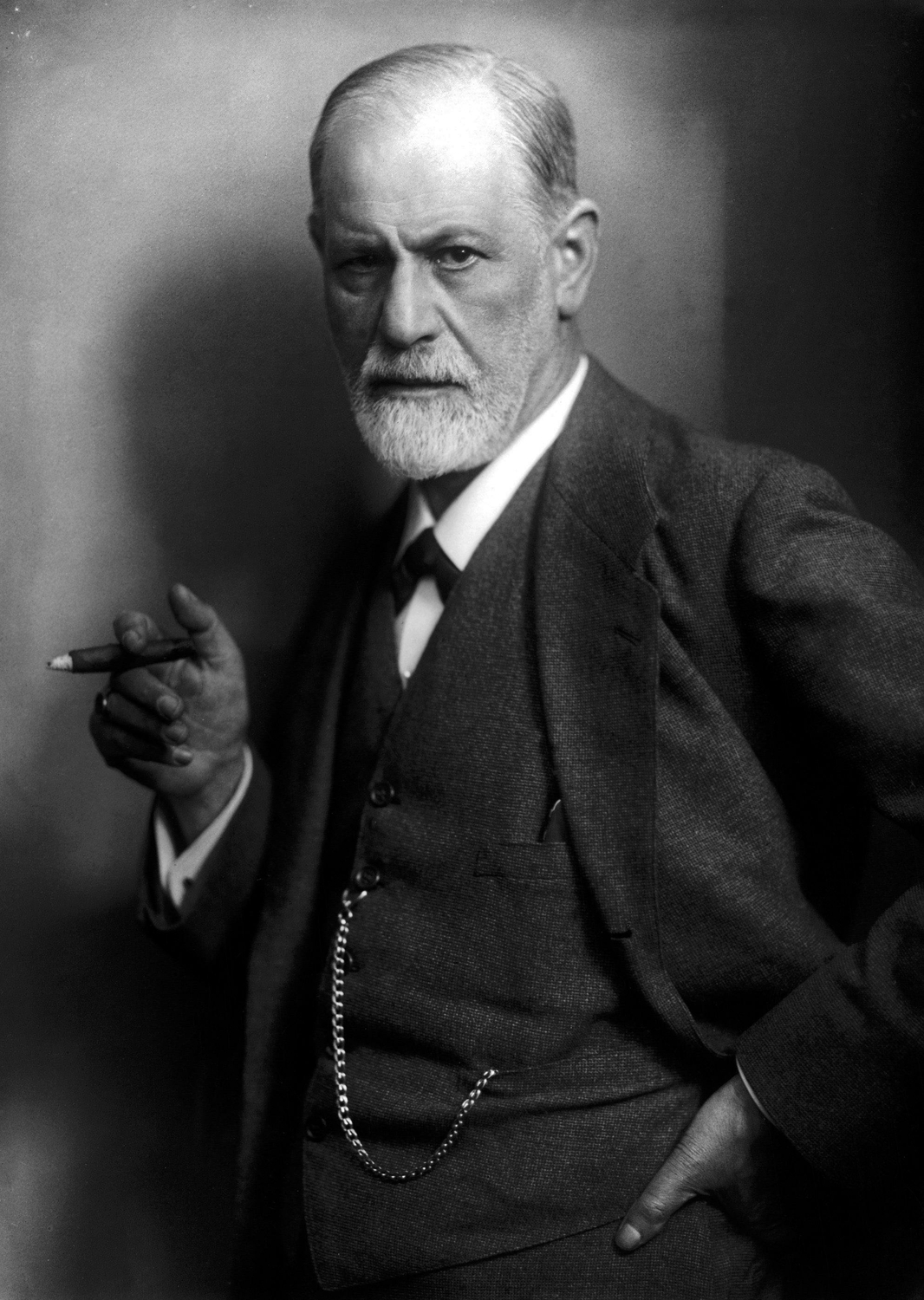
The anti-religious direction is the more familiar. Sigmund Freud argued in The Future of an Illusion (1927) that religious belief is a product of wish-fulfillment — a projection of the human need for a cosmic father figure who provides security in a threatening universe.5 Karl Marx characterized religion as the “opium of the people,” a product of socioeconomic alienation. Friedrich Nietzsche traced theistic morality to the ressentiment of the weak. In each case, a causal explanation of how religious belief arises is presented as though it demonstrated that religious belief is false.6 But as Alvin Plantinga has pointed out, even if Freud’s psychology were entirely correct — even if every religious believer were motivated by wish-fulfillment — this would tell us nothing about whether God actually exists. The wish for something to be true is logically compatible with its actually being true.6
The pro-religious direction is less commonly discussed but equally fallacious. Paul Vitz’s The Faith of the Fatherless (1999) argued that prominent atheists — including Freud himself, Nietzsche, Hume, Russell, and Sartre — had absent, abusive, or weak fathers, and that their rejection of God was a psychological consequence of defective paternal relationships.7 Even if Vitz’s biographical claims were accurate, they would not show that atheism is false. The origin of a person’s disbelief in God is irrelevant to whether God exists, just as the origin of a person’s belief in God is irrelevant to whether God exists. The symmetry is exact: Freud’s argument and Vitz’s argument are mirror images of the same logical error.6
Cognitive science of religion and genetic reasoning
The cognitive science of religion (CSR) has intensified the relevance of the genetic fallacy by providing increasingly detailed causal explanations of how religious belief forms. Researchers such as Pascal Boyer, Scott Atran, and Stewart Guthrie have identified specific cognitive mechanisms — hyperactive agency detection, theory of mind applied to invisible agents, minimally counterintuitive concepts — that predictably generate religious ideas across cultures.9, 14 Boyer’s work shows that religious concepts are “natural” in the sense that they are produced by ordinary cognitive systems operating on ordinary inputs, not by any special revelation or insight.9
The temptation to draw an anti-religious conclusion from CSR findings is strong: if religion can be fully explained as a byproduct of cognitive mechanisms that evolved for non-religious purposes, then there is no need to posit a supernatural cause, and religious beliefs are probably false. But CSR researchers themselves have generally been careful to note that this inference is logically problematic.9 Explaining why humans form mathematical beliefs (because of evolved cognitive capacities for pattern recognition, abstraction, and quantity estimation) does not show that mathematical truths are illusory. A complete causal account of how a belief is formed is compatible with the belief being true, because truth and causal origin are different categories. The logical fallacies in apologetics literature notes that both sides of the debate regularly fail to observe this distinction.3
The difficulty is that the inference from CSR to atheism feels stronger than a textbook genetic fallacy, because the cognitive mechanisms CSR identifies are not truth-tracking — hyperactive agency detection, for example, produces many false positives by design.14 This intuition leads to the philosophical literature on debunking arguments, which attempts to specify the conditions under which genetic reasoning is epistemically legitimate.
Debunking arguments and Kahane’s framework
Guy Kahane’s influential 2011 paper “Evolutionary Debunking Arguments” provides a framework for distinguishing the genetic fallacy from legitimate debunking arguments.8 Kahane argues that a debunking argument is not simply an assertion that a belief has a disreputable origin. Rather, a successful debunking argument must establish that the causal process that produced the belief is not sensitive to the truth of the belief — that the believer would have formed the same belief whether or not it was true. If the belief-forming process is shown to be insensitive to truth in this way, then the belief’s origin does become epistemically relevant, because it provides a reason to doubt that the belief tracks reality.8
Kahane’s framework can be stated formally:8
P1. Belief B was produced by causal process P.
P2. Process P is not sensitive to the truth of B — that is, P would have produced B regardless of whether B is true.
C. Therefore, B is unjustified (unless independent evidence for B is available).
This is structurally different from the genetic fallacy. The genetic fallacy dismisses a belief merely because of where it came from; a debunking argument provides a specific epistemological reason — the insensitivity of the belief-forming process to truth — for thinking the belief is unreliable.8, 12 The debunking argument does not claim to demonstrate that the belief is false; it claims to show that the believer lacks justification for holding it, absent independent evidence.
Sharon Street’s “Darwinian Dilemma” applies this structure to moral realism. Street argues that evolutionary forces shaped human moral intuitions to promote reproductive fitness, not to track stance-independent moral truths — and that if there is no correlation between fitness-promoting moral beliefs and objectively true moral beliefs, then our moral beliefs are unjustified as claims about objective moral reality.13 Whether this argument succeeds depends on whether one can establish the required insensitivity premise, but its logical form is a debunking argument, not a genetic fallacy.8, 12
When origins are epistemically relevant
The genetic fallacy is a real and common error, but there are well-established cases in which the origin of a belief is directly relevant to its epistemic status. The most obvious case is testimony. When a person tells you that it is raining outside, the reliability of the belief you form depends in part on the reliability of the person — on the origin of the testimony. If you discover that the person is a habitual liar, or that they are in a room with no windows and are guessing, the origin of the claim is legitimately relevant to whether you should believe it.3 This is not a genetic fallacy because the evaluation of testimony inherently involves assessing the source’s reliability.
More broadly, the epistemology of reliability tracking holds that the justification of a belief depends in part on whether the process that produced it is generally truth-conducive.10 Plantinga’s own epistemological framework — proper functionalism — makes belief justification explicitly dependent on origin: a belief is warranted only if it is produced by cognitive faculties that are functioning properly, in the environment for which they were designed, according to a design plan aimed at truth.10 Under this framework, discovering that a belief was produced by a malfunctioning cognitive faculty, or by a faculty not aimed at truth, is a legitimate reason to withhold assent — and it is genetic reasoning, but not the genetic fallacy.
The boundary between the genetic fallacy and legitimate genetic reasoning thus depends on whether the origin information is connected to the belief’s truth-tracking properties or is merely a biographical or historical curiosity. Saying “you only believe that because you were raised in a Christian household” is typically a genetic fallacy, because it offers no argument that childhood religious formation is systematically unreliable as a belief-forming process. Saying “your belief in this conspiracy theory was produced by an algorithm designed to maximize engagement, not accuracy” is closer to a legitimate debunking argument, because it identifies a specific mechanism that is insensitive to truth.8, 15
Plantinga’s evolutionary argument against naturalism
Alvin Plantinga’s evolutionary argument against naturalism (EAAN) is a sophisticated deployment of genetic reasoning against the naturalist. Plantinga argues that if naturalism and evolution are both true, then human cognitive faculties were shaped by natural selection for survival and reproduction, not for producing true beliefs. Under naturalism, there is no reason to think that the cognitive processes selected for fitness are also reliable guides to truth — an organism can behave in fitness-maximizing ways while holding systematically false beliefs. If so, the naturalist has a defeater for the reliability of all her beliefs, including her belief in naturalism. Naturalism, Plantinga concludes, is self-defeating.10, 6
The EAAN is structurally a debunking argument aimed at naturalism rather than at theism. Plantinga is not simply noting that naturalistic beliefs have a causal origin and declaring them false on that basis; he is arguing that the specific causal process posited by the naturalist — unguided evolution — is one whose connection to truth is doubtful.10 Whether the argument succeeds depends on empirical and philosophical questions about the relationship between fitness-promoting behavior and true belief — critics argue that in many domains, true beliefs are fitness-enhancing precisely because they enable successful prediction and action.11 But the EAAN illustrates that genetic reasoning can be philosophically rigorous when the connection between origin and reliability is carefully specified.
Plantinga simultaneously argues that the theist is immune to this problem, because on theism, human cognitive faculties were designed by God to be truth-conducive — our cognitive origin, under theism, provides a positive reason to trust our faculties rather than a reason to doubt them.6 The debate over the EAAN thus becomes a debate about which worldview provides a better genetic story — a better account of why the causal origin of human belief should be expected to produce truth — rather than a debate about whether genetic reasoning is legitimate at all.
Avoiding the fallacy in practice
The genetic fallacy is pervasive in popular discourse about religion, politics, and science, and recognizing it requires distinguishing between two questions that human psychology naturally conflates: why does a person believe something, and is the belief true?1, 3 The first question is a question about psychology, sociology, or history; the second is a question about evidence and logic. A complete answer to the first question never constitutes an answer to the second, though it may — if the causal account reveals a process that is insensitive to truth — provide a reason to investigate the second question more carefully.8
In debates over religion specifically, the genetic fallacy functions as a shortcut that allows both sides to avoid engaging with their opponents’ actual evidence. The atheist who explains religion away as a cognitive byproduct avoids engaging with the philosophical arguments for God’s existence. The theist who explains atheism away as father-rejection avoids engaging with the evidential problem of evil or the argument from divine hiddenness. In both cases, the genetic explanation is psychologically satisfying — it provides a story about why the opponent is wrong — but logically inert with respect to the question at issue.6, 7
The philosophical literature on the genetic fallacy ultimately demonstrates that the relationship between the origin of a belief and its truth is neither always irrelevant nor always decisive. The task is to specify, in each particular case, whether the origin information bears on the reliability of the belief-forming process in a way that undermines the belief’s claim to truth — and to recognize that even when it does, the result is a defeater that shifts the burden of proof, not a demonstration that the belief is false.8, 15