Overview
- The predictive and technological success of the natural sciences — from the Standard Model of particle physics to the germ theory of disease to plate tectonics — constitutes the strongest available evidence that methodological naturalism reliably tracks truth about the physical world, a phenomenon that scientific realists argue would be miraculous if scientific theories were not at least approximately true.
- Methodological naturalism succeeds not because it dogmatically excludes the supernatural but because it imposes the discipline of empirical testability, predictive precision, self-correction through falsification, and public replicability — constraints that have historically enabled science to displace supernatural explanations of lightning, disease, earthquakes, the diversity of life, and the structure of the cosmos.
- Supernatural explanations have an unbroken historical track record of failure: every phenomenon once attributed to divine or spiritual agency that has subsequently been explained has received a naturalistic explanation, a pattern that constitutes a powerful inductive argument against invoking supernatural causes for currently unexplained phenomena.
The natural sciences have achieved a record of predictive and explanatory success unmatched by any other human epistemic enterprise. Physics predicts the magnetic moment of the electron to ten decimal places. The germ theory of disease has eradicated smallpox and brought polio to the brink of extinction. Plate tectonics explains the distribution of earthquakes, volcanoes, mountain ranges, and fossils across six continents. The theory of evolution by natural selection unifies the diversity of life into a single genealogical framework confirmed by genetics, palaeontology, biogeography, and comparative anatomy.2, 9 This accumulation of predictive success, technological application, and explanatory power raises a philosophical question of first importance: why does science work so well, and what does its success tell us about the methods it employs?3, 4
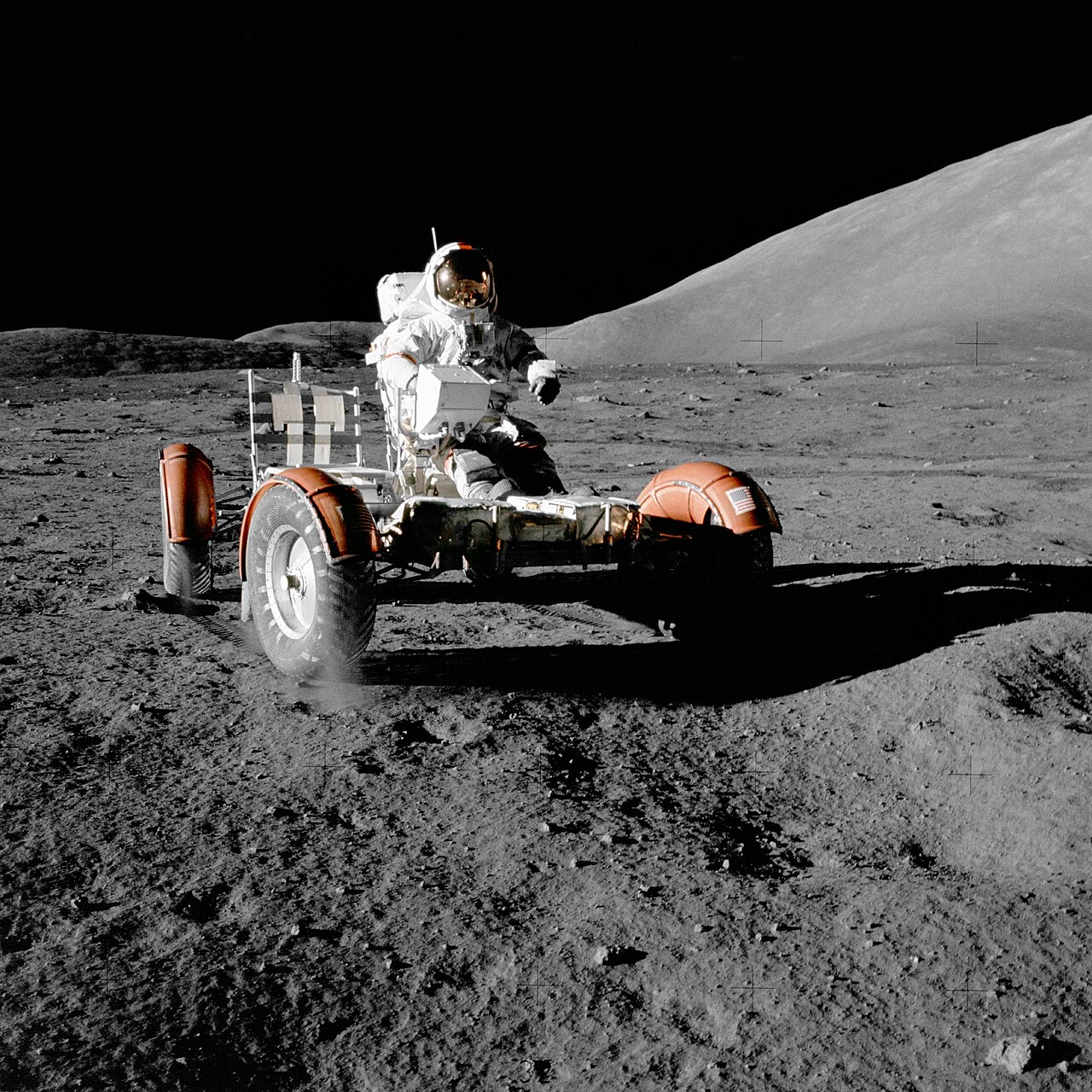

The no-miracles argument
The most influential philosophical argument concerning the success of science is the no-miracles argument, formulated by Hilary Putnam in 1975. Putnam argued that scientific realism — the view that mature scientific theories are at least approximately true descriptions of the world — "is the only philosophy that doesn't make the success of science a miracle."4 If scientific theories were not even approximately true, the fact that they yield spectacularly accurate predictions and enable powerful technologies would be an inexplicable coincidence. The theory of general relativity predicted gravitational lensing; quantum electrodynamics predicted the anomalous magnetic moment of the electron; the Standard Model predicted the existence of the Higgs boson decades before its detection. Realists contend that the best explanation of such predictive success is that the theories are latching on to the actual structure of nature.2, 3
Stathis Psillos developed this argument in detail, contending that the no-miracles argument is itself an inference to the best explanation: we observe the success of science, consider possible explanations (including realism, instrumentalism, and constructive empiricism), and infer that approximate truth is the best explanation of that success.2, 3 If the argument is sound, it supports the broader conclusion that the methods of science — empirical observation, hypothesis testing, mathematical modelling, and peer review — constitute a reliable path to truth about the physical world.
Methodological naturalism and its constraints
The method that underlies science's success is methodological naturalism: the principle that scientific inquiry explains natural phenomena by reference to natural causes and processes, without invoking supernatural agents or interventions. Methodological naturalism is a procedural rule, not a metaphysical commitment. It does not assert that the supernatural does not exist; it restricts scientific inquiry to hypotheses that are empirically testable, publicly replicable, and potentially falsifiable.6, 8
This restriction is not arbitrary. It reflects a set of constraints that have proven essential for reliable knowledge production: empirical testability (a hypothesis must make predictions that can be checked against observation), falsifiability (it must be possible to specify what evidence would count against the hypothesis), predictive precision (successful predictions should be specific rather than vague), self-correction (the process must have mechanisms for detecting and correcting errors), and public replicability (the evidence must be accessible to independent investigators).6, 7, 14 Henri Poincaré argued as early as 1905 that the predictive success of scientific hypotheses provides evidence for a structural correspondence between theory and nature that goes beyond mere empirical adequacy.15 Supernatural hypotheses characteristically violate one or more of these constraints: a hypothesis that invokes an omnipotent agent is compatible with any observation (since an omnipotent being could produce any outcome), making it unfalsifiable; its predictions are typically vague or post hoc; and supernatural events are, by definition, not replicable under controlled conditions.8
Boudry, Blancke, and Braeckman have argued that methodological naturalism is not an a priori dogma imposed on science from outside but an empirical generalisation justified by the historical track record of naturalistic explanations. Science restricts itself to natural causes because this restriction has consistently produced reliable results, whereas the invocation of supernatural causes has not.8 In this sense, methodological naturalism is a conclusion of science's success, not merely a presupposition of it.
The historical track record of supernatural versus natural explanations
One of the most striking features of the history of science is the asymmetry between naturalistic and supernatural explanations. Over the past five centuries, hundreds of phenomena that were once attributed to divine or spiritual agency have received naturalistic explanations. Lightning was attributed to Zeus or Thor; it is now understood as electrical discharge between clouds and ground. Epilepsy was attributed to demonic possession; it is now known to result from abnormal neuronal activity. The diversity of living species was attributed to special creation; it is now explained by evolution by natural selection. The apparent design of biological organisms was attributed to an intelligent designer; it is now understood as the product of cumulative selection acting on heritable variation.9, 14, 16
The reverse has never occurred. No phenomenon previously explained by a well-confirmed naturalistic theory has subsequently been shown to require a supernatural explanation. The historical flow is entirely one-directional: from supernatural to natural, never from natural to supernatural.9 This pattern constitutes a powerful inductive argument. If one is asked to predict whether a currently unexplained phenomenon — the origin of consciousness, the fine-tuning of physical constants, the origin of life — will ultimately receive a naturalistic or a supernatural explanation, the entire evidential track record points in one direction.14, 16
Carl Sagan captured this point by observing that science is "a candle in the dark" precisely because it has systematically replaced magical thinking with testable explanations, and that the success of this replacement programme constitutes the strongest available evidence for the reliability of its methods.14
Challenges and limitations
The argument from the success of science is not without critics. Larry Laudan's "pessimistic meta-induction" points out that the history of science is littered with theories that were once empirically successful but are now known to be false: the caloric theory of heat, the phlogiston theory of combustion, Newtonian gravitational theory as a fundamental description (rather than an approximation), and the classical ether. If past success is no guarantee of truth, Laudan argued, then the no-miracles argument is weakened: the success of current theories may be no better a guide to their truth than the success of past theories was to theirs.1
Realists have responded by distinguishing between the theoretical components responsible for a theory's success and those that are merely idle. Psillos argued that the parts of discarded theories that actually generated successful predictions have typically been preserved in successor theories: Fresnel's equations for the behaviour of light survived the transition from ether theory to electromagnetism, and Newtonian mechanics survives as a limiting case of general relativity. On this "selective realist" view, science tracks truth about the structures and mechanisms that do the explanatory work, even when the broader theoretical framework undergoes revision.2, 3
Bas van Fraassen's constructive empiricism offers an alternative interpretation of science's success that stops short of realism. Van Fraassen argued that the success of science shows only that our theories are "empirically adequate" — that they accurately describe what is observable — without warranting the further inference that they are true descriptions of unobservable reality. On this view, science succeeds because it selects for theories that fit the data, not because it tracks mind-independent truth about the deep structure of the world.5 Most philosophers of science find this position difficult to sustain, because it cannot explain why empirical adequacy itself is so reliably achieved by theories that posit specific unobservable mechanisms.3, 13 The postmodernist challenge to scientific objectivity, which reached its peak in the 1990s, was similarly deflated when physicist Alan Sokal demonstrated the ease with which obscurantist jargon could be mistaken for genuine scholarship, underscoring that the empirical rigour of science is not merely one perspective among many but a discipline with demonstrable epistemic superiority in its domain.17
Implications for philosophy of religion
The success of science bears directly on several debates in philosophy of religion. Theists such as Swinburne and Plantinga have argued that the success of science is not in tension with theism and may even support it: the intelligibility and law-governed order of the universe, which make science possible, are themselves facts requiring explanation, and a rational God who designed an orderly universe is a better explanation of that order than brute contingency.10, 18
Critics have responded that this argument conflates the success of science with its presuppositions. The question is not whether the universe is ordered — everyone agrees that it is — but whether the method that has successfully explained every phenomenon it has investigated so far (methodological naturalism) should be abandoned in favour of supernatural explanation when confronting remaining mysteries.8, 11 The god-of-the-gaps pattern — invoking God to explain what science has not yet explained — has been uniformly unsuccessful, because the gaps in scientific knowledge have consistently closed without requiring supernatural agency.9, 12
Plantinga has challenged the naturalist interpretation from a different angle, arguing that evolutionary naturalism undermines the reliability of human cognitive faculties: if our cognitive faculties evolved solely for survival rather than truth-tracking, there is no reason to trust them to deliver true beliefs about science or anything else. Science's success, on this view, actually presupposes a theistic worldview in which a rational God designed human faculties to be reliable truth-trackers.18 Dennett and others have responded that natural selection does reliably produce truth-tracking faculties in domains where truth matters for survival (such as predator detection and spatial reasoning), and that the cultural institutions of science — peer review, replication, formal logic, mathematical modelling — provide additional layers of error correction that compensate for whatever biases evolution may have introduced.9, 11
The success of science is ultimately an empirical datum that any comprehensive worldview must accommodate. The naturalist interprets it as evidence that methodological naturalism reliably tracks truth and that supernatural explanations are unnecessary. The theist interprets it as evidence that the universe was designed to be intelligible by a rational creator. Both interpretations acknowledge the same remarkable fact: the methods of empirical science have proven extraordinarily successful at explaining the natural world, and no comparable success has been achieved by any alternative epistemic methodology.2, 10, 14
References
Representing and Intervening: Introductory Topics in the Philosophy of Natural Science