Overview
- The transcendental argument for the existence of God (TAG) contends that the preconditions of intelligible experience — the laws of logic, the uniformity of nature, and the possibility of moral reasoning — can only be accounted for if God exists, making God’s existence a necessary precondition of rational thought itself
- Cornelius Van Til originated the approach and Greg Bahnsen gave it its most prominent public defence in his 1985 debate with atheist Gordon Stein, arguing that the atheist cannot account for the laws of logic without presupposing the very theistic framework he denies — a claim that has made TAG central to presuppositional apologetics
- Critics respond that the argument equivocates on what it means to ‘account for’ the laws of logic, that rival worldviews can provide their own transcendental groundings, that the move from ‘logic requires a foundation’ to ‘that foundation must be the Christian God’ is a non sequitur, and that the argument is viciously circular in presupposing God to prove God
The transcendental argument for the existence of God (TAG) contends that God’s existence is a necessary precondition for the intelligibility of human experience. Rather than arguing from evidence in the world to God as the best explanation of that evidence — the strategy of cosmological, teleological, and moral arguments — TAG argues that the very possibility of reasoning, logic, science, and morality presupposes a theistic framework, so that any attempt to deny God’s existence relies on cognitive tools that only God’s existence can ground. The argument is the centrepiece of presuppositional apologetics, the school of Christian thought developed by Cornelius Van Til and given its most prominent public articulation by Greg Bahnsen.1, 2
TAG differs structurally from the classical theistic arguments. Where the cosmological argument moves from contingent existence to a necessary being, and the moral argument moves from moral facts to a moral lawgiver, TAG moves in the opposite direction: it begins with the preconditions of rational thought itself and argues that those preconditions can only be satisfied within a theistic worldview. The argument is “transcendental” in the Kantian sense of inquiring into the necessary conditions for the possibility of experience, though its proponents apply this method to conclusions that Kant himself did not draw.1, 5
Historical background
The concept of a transcendental argument originates with Immanuel Kant, who in the Critique of Pure Reason (1781) sought to identify the necessary conditions for the possibility of experience. Kant’s transcendental arguments took the form: “X is a necessary condition for the possibility of experience; experience is actual; therefore X obtains.” Kant used this method to argue for the necessity of the categories of the understanding (causation, substance, unity) and the forms of sensibility (space and time) as structural preconditions of any possible experience. He did not, however, extend the method to prove the existence of God; indeed, Kant famously argued in the same work that all speculative proofs of God’s existence fail.5, 15
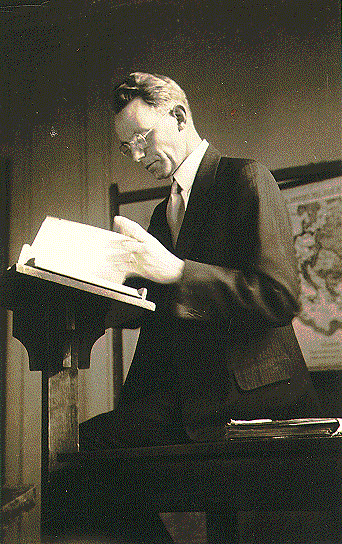
The application of transcendental reasoning to theistic apologetics was pioneered by Cornelius Van Til, a Dutch-American philosopher and theologian who taught at Westminster Theological Seminary from 1929 to 1975. Van Til drew on the Reformed theological tradition, particularly the thought of Abraham Kuyper and Herman Bavinck, which emphasised the comprehensive scope of the Christian worldview and the noetic effects of sin on human reasoning. Van Til argued that every system of thought rests on ultimate presuppositions that cannot be proved by appeal to more basic premises, and that the Christian presupposition — the self-attesting God of Scripture — alone provides a coherent foundation for knowledge, logic, and moral reasoning.1, 16
Van Til’s student Greg Bahnsen refined the transcendental argument into a more explicitly formulated philosophical tool. In his 1985 debate with atheist Gordon Stein at the University of California, Irvine, Bahnsen presented TAG as the decisive argument for theism, challenging Stein to provide a non-theistic account of the laws of logic, the uniformity of nature, and the foundations of morality. The debate, widely circulated in apologetics circles, became the most prominent public presentation of TAG and established presuppositional apologetics as a distinctive school of Christian thought.4, 3
The formal argument
TAG can be formulated in several ways. The following version captures the core logical structure as presented by Bahnsen and refined by Frame:
P1. The laws of logic, the uniformity of nature, and the foundations of moral reasoning are real and operative features of human experience.
P2. These features require an adequate metaphysical grounding — that is, a worldview that can account for their existence, universality, and normativity.
P3. No non-theistic worldview can provide an adequate metaphysical grounding for these features.
C. Therefore, a theistic worldview — specifically, the existence of the God who grounds logic, sustains natural regularity, and establishes moral norms — is a necessary precondition of intelligible experience.
The argument is “transcendental” in that it does not merely claim that God exists as a matter of fact but that God’s existence is a necessary condition for the possibility of the very reasoning that might be used to deny it. If the argument succeeds, atheism is not merely false but self-undermining: the atheist, in attempting to reason against God’s existence, employs logical and epistemic tools that only God’s existence can ground.2, 3
The precondition of logic
The first and most developed strand of TAG concerns the laws of logic — the law of non-contradiction, the law of excluded middle, and the law of identity. Bahnsen argued that these laws are universal (they apply everywhere), necessary (they could not fail to hold), immaterial (they are not physical objects), and normative (they prescribe how reasoning ought to proceed). The question is: what kind of reality can ground entities with these properties?2, 4
On the presuppositionalist account, the laws of logic are grounded in the nature of God — specifically, in the rationality and self-consistency of the divine mind. God’s nature is necessarily rational, and the laws of logic are expressions of the way God thinks. Their universality follows from God’s sovereignty over all reality; their necessity follows from the necessity of God’s nature; their immateriality follows from God’s incorporeality; and their normativity follows from the fact that human beings are created in the image of God and are therefore designed to reason in accordance with the divine pattern.1, 3
Bahnsen challenged the atheist to provide an alternative account. If the laws of logic are merely conventions, they are not genuinely universal or necessary and could in principle be adopted or abandoned at will — a conclusion that undermines the possibility of binding rational argument. If they are descriptions of how human brains happen to process information, they are contingent products of evolution with no guarantee of tracking truth — a version of the problem that Alvin Plantinga later formalised as the evolutionary argument against naturalism. If they are Platonic abstract objects existing independently of any mind, then their existence is a brute fact with no explanation, and the question of how immaterial abstract objects can constrain material brains remains unanswered. On Bahnsen’s analysis, only theism provides a worldview in which the laws of logic have the properties they are observed to have.4, 2
The uniformity of nature
The second strand of TAG addresses the uniformity of nature — the regularity that makes inductive reasoning and empirical science possible. The problem of induction, famously posed by David Hume, is that the future resemblance of the past cannot be established by inductive reasoning without circularity. Every inductive argument for the reliability of induction assumes the very regularity it seeks to establish. Presuppositionalists argue that theism resolves this problem by grounding the uniformity of nature in the faithfulness and providence of God, who sustains the created order and ensures its regularity.2, 3
On the Van Tilian account, the regularity of natural law reflects the covenant faithfulness of God, who has promised to maintain the natural order. The uniformity of nature is not a brute fact but a consequence of divine sustaining activity. If naturalism is true, by contrast, the regularity of nature is an unexplained given — the laws of physics simply are what they are, and there is no deeper reason why they should remain constant from one moment to the next. The presuppositionalist contends that science, which depends on the assumption of natural regularity, therefore rests on a borrowed capital — an assumption that only theism can justify.1, 16
Critics have questioned whether theism genuinely solves the problem of induction rather than merely relocating it. The claim that God sustains the uniformity of nature presupposes that God is reliable and consistent, but how do we know that God is reliable and consistent without relying on our past experience of regularity — the very thing in question? If the presuppositionalist appeals to God’s nature as necessarily consistent, the critic can equally posit that natural law is necessarily uniform, achieving the same explanatory result without invoking God. The question of whether either move is legitimate remains contested.7, 13
The precondition of morality
The third strand of TAG extends the transcendental method to moral reasoning. Van Til and Bahnsen argued that objective moral norms — binding obligations that apply to all persons regardless of their preferences — require a personal, authoritative moral lawgiver. On naturalism, moral norms are either human conventions (in which case they are not genuinely binding), evolutionary adaptations (in which case they track reproductive fitness rather than moral truth), or brute facts (in which case their normativity is unexplained). Only theism, on this account, provides a basis for moral norms that are genuinely universal, objective, and binding: they are grounded in the character and commands of God.2, 10
This strand of TAG overlaps substantially with the independent moral argument for God’s existence, but differs in its logical role within the presuppositional framework. Where the standard moral argument reasons from moral facts as evidence for God (an evidentialist strategy), TAG argues that the very possibility of making moral judgments presupposes God. The atheist who condemns something as morally wrong is, on the presuppositionalist view, borrowing from the theistic worldview in the very act of making the judgment, since no atheistic worldview can account for binding moral obligations.6, 10
Van Til’s indirect method
Van Til described his apologetic method as “indirect” or reductio ad absurdum: rather than offering positive evidence for theism, the presuppositionalist assumes the truth of the opponent’s worldview and demonstrates that it leads to internal contradictions or to the destruction of the preconditions of intelligibility. If every non-theistic worldview, when consistently followed, undermines the possibility of knowledge, logic, science, and morality, then theism is established as the only viable alternative.16, 3
This method is sometimes described as a “worldview argument” rather than a narrowly logical proof. Van Til held that individual arguments for God’s existence (cosmological, teleological, moral) are insufficient because they attempt to reason from shared neutral ground between theist and atheist, whereas Van Til denied that any such neutral ground exists. Every fact is already a God-interpreted fact, and the unbeliever’s rejection of God distorts not merely individual beliefs but the entire framework within which beliefs are formed and evaluated. The apologetic task is therefore not to present evidence that the unbeliever can evaluate from a neutral standpoint but to expose the internal inconsistency of the unbeliever’s standpoint itself.1, 16
John Frame, Van Til’s most prominent student, refined this approach by arguing that the transcendental argument and the traditional theistic proofs are not as sharply opposed as Van Til sometimes suggested. Frame contended that every sound argument for God’s existence is implicitly transcendental, since any demonstration that a feature of the world requires God for its explanation is equivalent to showing that God is a precondition of that feature. On Frame’s reading, the cosmological argument shows that God is a precondition of contingent existence, the teleological argument shows that God is a precondition of design, and the moral argument shows that God is a precondition of moral obligation. TAG is therefore not an alternative to the traditional proofs but their deepest and most general form.10
Major objections
TAG has attracted extensive criticism from both atheist philosophers and fellow Christian apologists. The objections fall into several categories.
The circularity objection is the most frequently pressed. TAG argues that God is a precondition of logic, but it uses logical reasoning to establish this conclusion. If logic depends on God, then the argument for God depends on God, which is circular. Bahnsen responded by distinguishing between “narrow” circularity (where a single premise directly assumes the conclusion) and “broad” circularity (where an argument’s ultimate presuppositional framework includes the conclusion). All ultimate commitments, Bahnsen argued, involve broad circularity: the empiricist must assume the reliability of sense experience to argue for empiricism, the rationalist must assume the reliability of reason to argue for rationalism, and the theist must assume God’s existence to argue for theism. The question is not whether a worldview’s ultimate defence is circular but whether the circle is internally consistent and externally adequate. Critics have found this response unsatisfying, arguing that it licenses any worldview to presuppose itself into existence.4, 7
The rival transcendentals objection, developed by Michael Martin, argues that if TAG is valid as a form of argument, then analogous transcendental arguments could be constructed for non-theistic worldviews. Martin proposed a “Transcendental Argument for the Non-existence of God” (TANG): if the preconditions of intelligibility can be accounted for without God, then God is not a necessary precondition of intelligibility, and TAG fails. Martin argued that Platonic realism, which grounds the laws of logic in mind-independent abstract objects, and naturalistic accounts of uniformity and morality provide alternative transcendental groundings that do not require theism.8, 9
The specificity objection asks why the argument, even if valid, establishes the existence of the Christian God rather than some other deity or metaphysical absolute. TAG purports to show that logic, nature, and morality require a theistic grounding, but Islam, Judaism, and various philosophical theisms also posit a rational, sovereign God who sustains the natural order and grounds moral norms. The argument as formulated does not discriminate between these options. Van Til and Bahnsen insisted that only the self-attesting triune God of the Bible provides the required grounding, but critics have argued that this specificity is asserted rather than demonstrated and that the philosophical content of TAG is compatible with generic theism rather than specifically Christian theism.7, 12
R. C. Sproul, John Gerstner, and Arthur Lindsley, writing from a classical Reformed perspective in Classical Apologetics, offered an internal Christian critique. They argued that presuppositionalism’s rejection of common ground between believers and unbelievers contradicts the biblical teaching that God’s existence is manifest to all through creation (Romans 1:19–20) and that natural reason can apprehend truths about God. On the classical view, apologetics properly begins with evidence and arguments that both parties can evaluate, and the presuppositionalist’s insistence on starting from Christian presuppositions confuses the order of knowing with the order of being.7
William Lane Craig has argued that TAG conflates a necessary being with a necessary presupposition. Even if reasoning requires certain preconditions (such as the laws of logic), it does not follow that those preconditions must be metaphysically grounded in a personal God. Logic might be grounded in the structure of possible worlds, or it might be self-grounding — necessarily true in a way that requires no further explanation. Craig maintains that the classical theistic proofs, which reason from premises to conclusions without presupposing their conclusion, remain epistemically superior to TAG’s transcendental method.12, 14
Responses to objections
Presuppositionalists have developed responses to each major objection. Against the circularity charge, Frame and Bahnsen insist that the circularity is not vicious but is an unavoidable feature of arguing for an ultimate standard of truth. If God is the ultimate standard, then any argument for God’s existence will necessarily appeal to criteria that God’s existence establishes — but this is no different in kind from the materialist who appeals to empirical evidence to justify empiricism or the logicist who appeals to logical axioms to justify logic. The charge of circularity, they argue, applies equally to every worldview at the level of its most basic commitments, and the relevant question is which circle is internally coherent.10, 3
Against Martin’s rival transcendentals objection, Bahnsen and his successors argue that competing worldviews cannot in fact provide the required grounding. Platonic realism, for instance, faces the problem of explaining how immaterial abstract objects can causally influence material minds or prescribe norms for reasoning. Naturalism faces the problem of explaining why a universe governed by impersonal physical laws should exhibit the kind of rational order that grounds logical inference. Each alternative, when pressed to provide a comprehensive account of the preconditions of intelligibility, either collapses into incoherence or implicitly borrows theistic resources. The presuppositionalist contends that this is not a claim that can be settled in the abstract but must be demonstrated case by case, by performing the indirect reductio on each competing worldview.2, 11
K. Scott Oliphint, building on Van Til and Frame, has reformulated the presuppositional approach under the label “covenantal apologetics,” emphasising the biblical-theological framework in which TAG operates. On Oliphint’s account, the argument is not primarily a philosophical proof but a theological claim about the covenant relationship between God and creation: all human knowledge is possible only because God has created human beings as knowing agents within a rationally ordered creation, and the denial of God is not an intellectual error but a moral suppression of a truth that is already known. This theological dimension gives TAG a character that purely philosophical analysis cannot fully capture — but it also limits its persuasive force to those who share, or are open to, the theological premises on which it rests.11
TAG and other theistic arguments
The relationship between TAG and the classical theistic proofs has been a recurring point of debate within Christian philosophy. Van Til himself was critical of the traditional cosmological and teleological arguments, contending that they concede too much to the unbeliever by attempting to argue on common ground. If the unbeliever’s reasoning is corrupted by sin, then evidence-based arguments cannot reliably lead to correct conclusions, and only the Holy Spirit’s internal testimony, working through the proclamation of the gospel, can overcome the epistemic effects of the fall.16, 1
Frame’s perspectivalism offers a mediating position. Frame argues that the traditional proofs, properly understood, are implicitly transcendental: the cosmological argument demonstrates that contingent existence presupposes a necessary being, which is equivalent to showing that God is a transcendental precondition of contingent reality. The teleological and moral arguments similarly demonstrate that design and moral order presuppose a designer and moral lawgiver. On this reading, TAG is not an alternative to the classical proofs but their completion — the deepest level at which the arguments operate.10
Comparison of apologetic methods and TAG6, 12
| Method | Starting point | Logical strategy | Relationship to TAG |
|---|---|---|---|
| Classical apologetics | Shared rational principles | Deductive proofs from premises to God | Rejects TAG’s denial of common ground |
| Evidentialism | Empirical evidence | Inductive probability arguments | Considers TAG unnecessary; evidence suffices |
| Reformed epistemology | Properly basic belief | Belief in God is warranted without argument | Shares Reformed roots but does not require TAG |
| Presuppositionalism (Van Til) | Christian theism as precondition | Transcendental / reductio ad absurdum | TAG is the central and sufficient argument |
| Cumulative case | Multiple independent evidences | Inference to the best explanation | May include TAG as one strand among many |
Contemporary assessment
TAG occupies a distinctive but contested position in the philosophy of religion. Within presuppositional circles, it is regarded as the definitive argument for theism — not merely one argument among others but the argument that reveals the impossibility of the contrary. Outside these circles, it is more commonly viewed as an interesting but flawed argumentative strategy whose central claims are either question-begging or insufficiently supported.6, 13
The argument’s philosophical assessment depends heavily on the evaluation of its third premise — the claim that no non-theistic worldview can account for the preconditions of intelligibility. This is an extraordinarily strong claim, amounting to the assertion that every possible non-theistic metaphysics is incapable of grounding logic, science, and morality. Establishing such a claim would require a comprehensive survey and refutation of every actual and possible non-theistic worldview — an impossible task in practice, even if the claim is true in principle. Presuppositionalists respond that the burden is met case by case: every non-theistic worldview that has been proposed has been shown to be internally incoherent, and the pattern of failure justifies the general claim. Critics counter that the absence of a successful non-theistic transcendental grounding to date does not establish the impossibility of one — an inference that would commit the fallacy of argument from ignorance.13, 8
Graham Oppy has argued that TAG’s deepest problem is not circularity or rival transcendentals but the lack of a clear account of what it means for one thing to be a “precondition” of another. If “precondition” means “logically necessary condition,” then TAG claims that it is logically impossible for logic to exist without God — a claim that is both philosophically contentious and difficult to defend without circularity. If “precondition” means something weaker, such as “best explanation,” then TAG reduces to an inference to the best explanation and loses its distinctive transcendental character, becoming just another version of the design or cosmological argument. Oppy concludes that TAG has not been formulated with sufficient precision to be evaluated as a successful argument.13
TAG’s enduring influence may lie less in its philosophical rigour than in its rhetorical and pedagogical power. The argument forces both theists and atheists to examine their most fundamental assumptions about the nature of logic, knowledge, and morality, and it highlights the often-unexamined presuppositional commitments that underlie all reasoning. Whether or not TAG succeeds as a proof of God’s existence, it raises important questions about the foundations of rational thought that any comprehensive philosophy must address.6, 14
References
Classical Apologetics: A Rational Defense of the Christian Faith and a Critique of Presuppositional Apologetics