Overview
- The Kenite (or Midianite-Kenite) hypothesis proposes that Yahweh was originally the deity of the Kenites or Midianites of the southern Transjordan and northwestern Arabia, and that the Israelites adopted Yahweh worship through Moses's connection to Jethro, a Midianite priest described in the Book of Exodus.
- Egyptian topographical lists from the temples at Soleb (c. 1390 BCE) and Amarah West (c. 1250 BCE) contain references to 'Yhw in the land of the Shasu,' placing the earliest known attestation of the divine name in the semi-nomadic regions south and southeast of Canaan, consistent with the hypothesis of a southern origin for Yahweh.
- While no inscription directly states that the Kenites worshipped Yahweh, the convergence of biblical theophanic poetry locating Yahweh in Seir, Edom, Paran, and Teman, the Egyptian epigraphic evidence, and the Midianite cultic installations at Timna has led most scholars to accept some form of a southern origin for Yahweh worship, even as the specific mechanism of transmission remains debated.
The Kenite hypothesis, also known as the Midianite-Kenite hypothesis, is one of the most influential proposals in the modern study of Israelite religion. It holds that Yahweh was not originally an Israelite deity but was the god of the Kenites or Midianites, semi-nomadic peoples of the southern Transjordan and northwestern Arabian Peninsula. According to this theory, the Israelites first encountered Yahweh worship through Moses, who married into a Midianite priestly family and was introduced to the cult of Yahweh by his father-in-law, variously named Jethro, Reuel, or Hobab in the biblical text. The hypothesis draws on several converging lines of evidence: the biblical traditions connecting Moses to Midian, ancient Hebrew poetry that locates Yahweh's home in the southern desert regions, Egyptian inscriptions that place the divine name in the territory of the Shasu nomads, and archaeological evidence of Midianite cultic activity at sites such as Timna.1, 3, 8
The Kenite hypothesis does not claim that the Israelites borrowed all of their religious traditions from the Kenites or Midianites, nor does it deny the distinctiveness of later Israelite theology. Rather, it addresses a narrower question: where did the worship of a deity called Yahweh originate before it became the national religion of Israel and Judah? The evidence, while circumstantial, has been compelling enough that some form of a southern origin for Yahweh worship is now accepted by most scholars working in the field, even as significant disagreements remain about the details.6, 7, 11
History of the hypothesis
The idea that Yahweh originated among a people other than the Israelites was first proposed by Friedrich Wilhelm Ghillany in 1862, and a similar theory was independently advanced by the Dutch scholar Cornelis Petrus Tiele in the 1870s.8 However, the hypothesis received its classic formulation from the German Old Testament scholar Karl Budde in his 1899 work The Religion of Israel to the Exile, originally delivered as a series of lectures at Harvard University. Budde argued that the biblical traditions about Moses's sojourn in Midian preserved a genuine historical memory: the Israelites had learned to worship Yahweh from the Midianites, and Moses served as the mediator of this transmission. Budde drew particular attention to the account in Exodus 18, where Jethro, Moses's Midianite father-in-law, offers sacrifices to Yahweh and presides over a sacred meal with Aaron and the elders of Israel, acting in a capacity that suggests he was already a priest of Yahweh before the Israelites were.1
The hypothesis was subsequently adopted and refined by a series of prominent scholars throughout the twentieth century. In Germany, Eduard Meyer, Bernhard Stade, and Hugo Gressmann supported and elaborated the theory. H. H. Rowley, in his 1950 study From Joseph to Joshua, argued that the Kenite hypothesis best explained the complex traditions surrounding Moses's relationship with Midian and the introduction of Yahweh worship to the Israelite tribes.2 Frank Moore Cross, in Canaanite Myth and Hebrew Epic (1973), integrated the hypothesis into a broader account of early Israelite religion, arguing that Yahweh was originally a deity of the southern desert who was brought northward and assimilated into the Canaanite religious framework centred on the high god El.3 More recently, Thomas Romer has presented an updated version of the hypothesis in The Invention of God (2015), and Joseph Blenkinsopp, in a 2008 reassessment, concluded that the Midianite-Kenite hypothesis "provides the best explanation currently available of the relevant literary and archaeological data."7, 8
Biblical evidence
The biblical case for the Kenite hypothesis rests on three categories of textual evidence: the narratives connecting Moses to Midian and to a Midianite priest of Yahweh, the traditions identifying the Kenites as longstanding allies of Israel, and the ancient poetic texts that locate Yahweh's original dwelling in the southern desert.
The Moses-Midian connection is the most prominent strand. After killing an Egyptian overseer, Moses fled to the land of Midian, where he married Zipporah, the daughter of a Midianite priest (Exodus 2:15–22). The text identifies this priest as "the priest of Midian" and names him Reuel in Exodus 2:18 and Jethro in Exodus 3:1 and Exodus 18:1. It was while tending Jethro's flock that Moses encountered the burning bush at "Horeb, the mountain of God" (Exodus 3:1) and received the revelation of the divine name Yahweh. The phrase "the mountain of God" is significant because it implies that the mountain was already recognized as sacred before Moses arrived, suggesting an existing cult at the site.3, 7
The account in Exodus 18:1–12 is particularly important for the hypothesis. When Jethro visited the Israelite camp in the wilderness, he declared, "Now I know that Yahweh is greater than all gods" (Exodus 18:11, NRSV), and then "Jethro, Moses's father-in-law, brought a burnt offering and sacrifices to God; and Aaron came with all the elders of Israel to eat bread with Moses's father-in-law in the presence of God" (Exodus 18:12, NRSV). Proponents of the Kenite hypothesis have noted that Jethro acts as the officiant of this sacrifice, not Moses or Aaron, and that his declaration of Yahweh's supremacy reads not as a conversion to a new faith but as a reaffirmation of loyalty to a deity he already worshipped. Cross described this passage as "the strongest single piece of evidence" for the hypothesis.3
The Kenites themselves appear elsewhere in the biblical text as allies and associates of Israel. Judges 1:16 states that "the descendants of the Kenite, Moses's father-in-law, went up with the people of Judah from the city of palms into the wilderness of Judah." Judges 4:11 identifies Heber the Kenite as a descendant of Hobab, Moses's father-in-law. In 1 Samuel 15:6, Saul warns the Kenites to separate from the Amalekites before a military campaign, saying, "You showed kindness to all the people of Israel when they came up out of Egypt." These passages consistently associate the Kenites with Judah, with the wilderness of the Negev, and with a historical bond traced back to the period of the Exodus.8, 16
Theophanic poetry and Yahweh's southern home
Some of the oldest poetry in the Hebrew Bible places Yahweh's point of origin not in Canaan but in the mountainous desert regions to the south and southeast. These passages, often dated on linguistic grounds to the twelfth or eleventh century BCE, describe Yahweh as marching forth from a specific homeland to intervene on Israel's behalf. The geographic terms used in these poems consistently point to the same region: the area of Seir, Edom, Paran, and Teman, corresponding to the southern Transjordan, the Negev, and the northwestern Arabian Peninsula.3, 6
The Song of Deborah, widely regarded as one of the oldest compositions in the Hebrew Bible, declares: "Yahweh, when you went out from Seir, when you marched from the region of Edom, the earth trembled, and the heavens poured, the clouds indeed poured water" (Judges 5:4–5, NRSV). The Blessing of Moses contains a similar tradition: "Yahweh came from Sinai, and dawned from Seir upon us; he shone forth from Mount Paran" (Deuteronomy 33:2, NRSV). The prophet Habakkuk preserves yet another version: "God came from Teman, the Holy One from Mount Paran" (Habakkuk 3:3, NRSV). A fragment in Psalm 68:8 also references Sinai in connection with Yahweh's march.3, 6, 7
The cumulative effect of these texts is striking. Seir and Edom lie in the territory southeast of the Dead Sea. Teman, a region associated with Edom, is situated in the same general area. Paran refers to the wilderness south of Judah and west of the Arabah. Sinai itself, regardless of its precise location, is consistently placed in the southern wilderness. Cross argued that these poems preserve "archaic Israelite memory" of Yahweh as a deity whose home was in the southern desert, and who "marched north" to fight for Israel in the land of Canaan. The fact that multiple, independent poetic traditions converge on the same geographic region gives the evidence a cumulative weight that is difficult to dismiss as coincidence.3, 11
Egyptian inscriptional evidence
The most significant extra-biblical evidence bearing on the Kenite hypothesis comes from Egyptian topographical lists that contain what appear to be the earliest known references to the divine name Yahweh. These lists, inscribed in temple contexts, enumerate geographic names and peoples associated with lands south and east of Egypt.

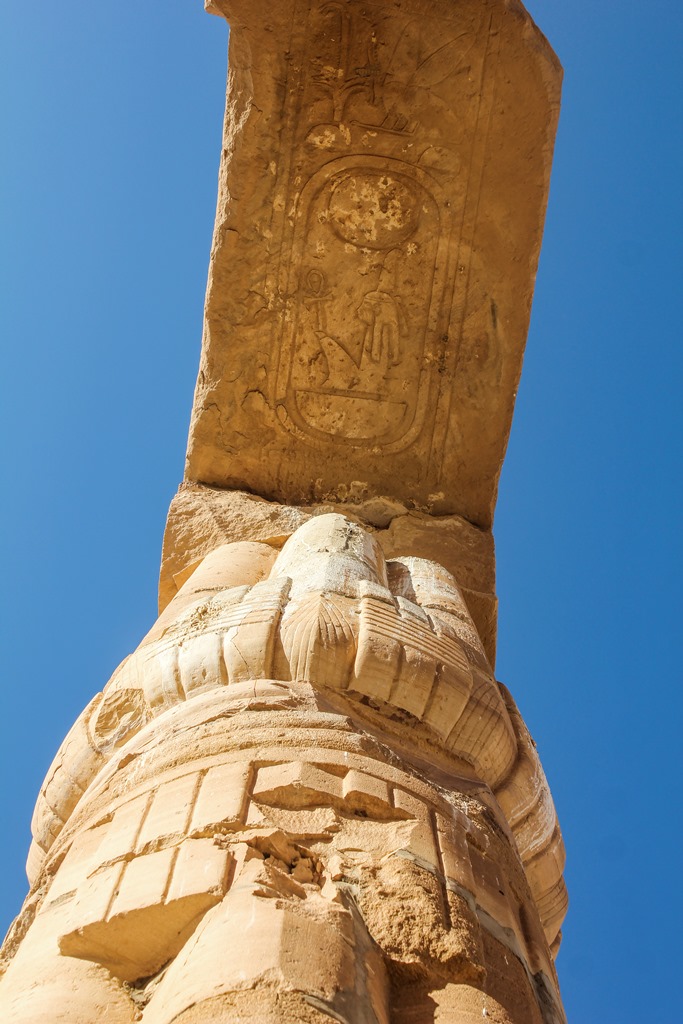
The first and most important inscription comes from the temple of Amenhotep III (c. 1390–1352 BCE) at Soleb in Upper Nubia (modern Sudan). Among a list of topographical names associated with the Shasu, semi-nomadic pastoralists of the southern Levant and Transjordan, one entry reads t3 sh3sw yhw3, meaning "the land of the Shasu of Yhw." The reading was first published by Raphael Giveon in his comprehensive 1971 study of the Shasu in Egyptian documents, and it has been widely accepted by Egyptologists since.4, 10 The same name appears in a second topographical list from the temple of Ramesses II (c. 1279–1213 BCE) at Amarah West, also in Nubia. The Amarah West list appears to have been largely copied from the earlier Soleb list, but it includes the name in the same section enumerating Shasu lands, alongside other geographic designations including Seir, a name associated with Edom in both Egyptian and biblical sources.4, 5
The identification of "Yhw" with the divine name Yahweh was proposed by Giveon and has been supported by the majority of scholars who have examined the inscriptions, including Michael Astour, Donald Redford, and more recently Titus Kennedy.4, 5, 10 The format of the entry follows the standard Egyptian pattern for naming Shasu groups by their associated territory: just as the lists mention "the Shasu of Seir" (a known geographic region), "the Shasu of Yhw" denotes the Shasu associated with a place called Yhw. The question is whether Yhw is purely a geographic place-name, a divine name that has been attached to a territory, or both. Redford argued that a divine name functioning as a place-name would be a normal phenomenon in the ancient Near East, where regions were frequently named after their patron deity.5
The significance of these inscriptions for the Kenite hypothesis is substantial. They place the name Yhw in precisely the region that the biblical theophanic poems associate with Yahweh's homeland, and they do so in the fourteenth and thirteenth centuries BCE, before Israel appears in the historical record. The Shasu, identified in Egyptian texts as semi-nomadic herders of the Transjordanian highlands and the Sinai margins, correspond broadly to the type of population that the biblical text associates with the Kenites and Midianites. If the Soleb and Amarah West inscriptions refer to the same deity that the Israelites later called Yahweh, then worship of this deity existed among southern pastoral nomads well before the emergence of Israel as a recognizable entity in Canaan around 1200 BCE.4, 5, 7
Timeline of key evidence for the southern origin of Yahweh4, 5, 9
| Date (BCE) | Source | Significance |
|---|---|---|
| c. 1390 | Soleb temple list (Amenhotep III) | Earliest attestation of "Yhw" among Shasu lands |
| c. 1250 | Amarah West temple list (Ramesses II) | Second attestation of "Yhw" alongside Seir |
| c. 1200–1150 | Midianite tent shrine at Timna | Evidence of Midianite cultic activity in the Arabah |
| c. 1208 | Merneptah Stele | Earliest reference to "Israel" as an entity in Canaan |
| c. 1150–1000 | Song of Deborah (Judges 5) | Locates Yahweh's march from Seir and Edom |
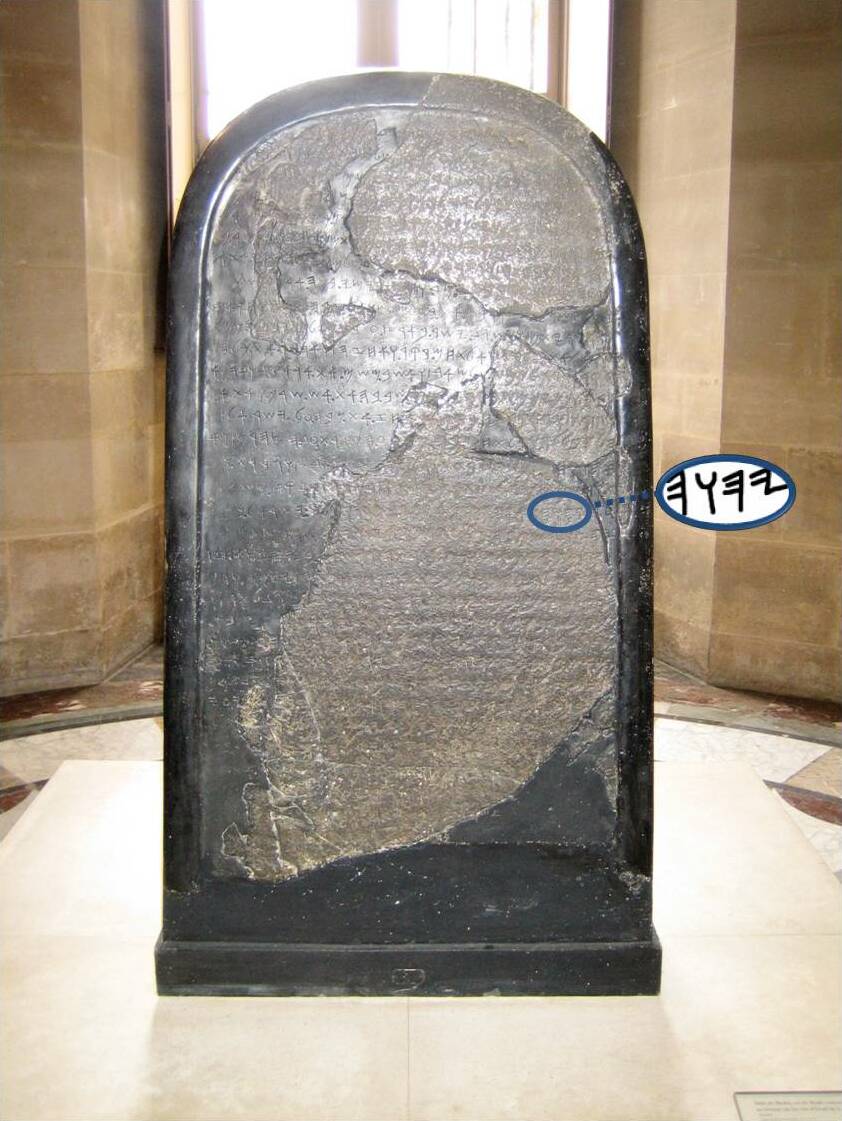
| c. 840 | Mesha Stele (Moabite Stone) | Earliest extra-biblical reference to Yahweh as Israel's god |
Archaeological evidence from Timna
The Timna Valley, located in the southern Arabah approximately thirty kilometres north of the Gulf of Aqaba, provides the most relevant archaeological evidence for Midianite religious practices. The site was a major copper-mining region exploited intermittently over several millennia. Between 1964 and 1990, Beno Rothenberg of the Institute for Archaeo-Metallurgical Studies at University College London directed extensive excavations in the valley, uncovering a sequence of mining installations, smelting camps, and cultic structures.9
The most significant discovery for the Kenite hypothesis was Site 200, a small Egyptian temple dedicated to the goddess Hathor, patron of mining. The temple was originally constructed during the reign of Seti I (c. 1294–1279 BCE) or possibly Ramesses II, and it served the Egyptian mining expeditions operating in the region during the Nineteenth and Twentieth Dynasties. The temple contained Egyptian votive offerings, Hathor plaques, and hieroglyphic inscriptions. However, at some point in the late thirteenth or twelfth century BCE, after the withdrawal of the Egyptian mining operations, the temple was transformed. The images of Hathor were deliberately effaced, the Egyptian hieroglyphs were defaced, and the stone structure was converted into a tent shrine. Post-holes were found along the walls, and large quantities of red and yellow decayed cloth with copper wire fastenings were recovered, indicating that fabric curtains had been suspended over the stone walls to create a tented enclosure.9, 17
The material culture associated with the tent-shrine phase is distinctively Midianite. Large quantities of Midianite pottery, decorated with characteristic bichrome geometric patterns, were found in and around the structure, along with copper jewellery and a small copper serpent with a gilded head. The Midianite pottery at Timna is part of a wider ceramic tradition found at sites in northwestern Arabia and the southern Transjordan, the region traditionally associated with Midian. Rothenberg interpreted the conversion of the Hathor temple into a Midianite tent shrine as evidence of a distinct Midianite religious practice that replaced the Egyptian cult after the Egyptians departed the region.9
The relevance of Timna to the Kenite hypothesis is indirect but significant. The site demonstrates that the Midianites had their own cultic traditions and were capable of appropriating and transforming foreign religious installations. The tent-shrine form has been compared by some scholars to the biblical description of the Tabernacle, the portable tent sanctuary described in Exodus 25–27. The copper serpent found at the site has been compared to the Nehushtan, the bronze serpent attributed to Moses in 2 Kings 18:4. Nissim Amzallag has argued that the association between Yahweh worship, the Kenites (who are etymologically connected to metalworking, as the Hebrew root qayin can mean "smith"), and copper smelting in the Arabah is not coincidental but reflects an original connection between the worship of Yahweh and the craft of metallurgy.15, 17 Juan Manuel Tebes, however, has cautioned that the Timna evidence demonstrates Midianite cultic activity but does not by itself identify the deity worshipped there; the tent shrine could have been dedicated to any number of deities, and no inscription at Timna names Yahweh.17
The burning bush and the divine name
A central text for the Kenite hypothesis is the theophany at the burning bush in Exodus 3, where Moses receives the revelation of the divine name. The narrative specifies that Moses was tending the flock of his father-in-law Jethro, the priest of Midian, when he came to "Horeb, the mountain of God" (Exodus 3:1). There, Yahweh appeared to him in a flame of fire from within a bush and commissioned him to lead the Israelites out of Egypt. When Moses asked for the name of the deity who was sending him, he received the response: "I AM WHO I AM" (Hebrew: ehyeh asher ehyeh), followed by the instruction, "Thus you shall say to the Israelites, 'Yahweh, the God of your ancestors, the God of Abraham, the God of Isaac, and the God of Jacob, has sent me to you'" (Exodus 3:14–15, NRSV).

The passage raises a question that proponents of the Kenite hypothesis consider crucial: why would Moses need to ask the name of the God of his own ancestors? If Yahweh had been the God of the patriarchs Abraham, Isaac, and Jacob, as the text itself asserts, then Moses should have known the name already. The need for a revelation of the divine name implies that the name was not previously known to the Israelites. This reading is reinforced by a passage in the Priestly source: "God also spoke to Moses and said to him: 'I am Yahweh. I appeared to Abraham, Isaac, and Jacob as El Shaddai, but by my name Yahweh I did not make myself known to them'" (Exodus 6:2–3, NRSV). Cross and Romer have argued that this passage preserves a tradition in which the Israelite ancestors worshipped a deity called El (or El Shaddai) and that the identification of this god with Yahweh was a later development, one that the Kenite hypothesis attributes to the encounter between Moses and the Midianite cult of Yahweh at the mountain of God in the wilderness.3, 7
The location of the theophany is also significant. The "mountain of God" is placed in or near Midian, not in Canaan or Egypt. The fact that this mountain is already called "the mountain of God" before Moses arrives suggests a pre-existing sacred site, one associated with a deity already worshipped in the region. If Yahweh was originally the patron deity of the Midianites or Kenites, then the narrative of Moses encountering Yahweh at a sacred mountain in Midianite territory makes geographic and religious sense. Moses, having married into a Midianite priestly family, would have been introduced to local religious traditions and would have encountered the deity of the land.7, 11
Criticisms and limitations
Despite its long history and wide influence, the Kenite hypothesis faces significant criticisms. The most fundamental objection is that no inscription, whether Egyptian, Midianite, or of any other origin, explicitly states that the Kenites or Midianites worshipped a deity called Yahweh. The Egyptian topographical lists from Soleb and Amarah West associate the name Yhw with a Shasu territory, but they do not identify it unambiguously as a deity worshipped by those Shasu. It could be a place-name that coincidentally resembles the later divine name, or it could be a geographic designation derived from a deity's name. The interpretation requires an inference that, while reasonable, is not conclusively demonstrable from the inscriptions alone.11, 12
The identification of the Kenites with the Midianites is itself uncertain. The Bible treats the Kenites and Midianites as closely related but not identical groups. In Judges 1:16, Moses's father-in-law is called a Kenite, while in Exodus 2:16 and 18:1, he is a priest of Midian. Some scholars have proposed that the Kenites were a sub-group or clan within the larger Midianite confederation, but the precise relationship remains unclear. Mondriaan has surveyed the evidence and concluded that the Kenites were a distinct but closely associated group whose identity in the biblical text is frequently conflated with that of the Midianites.16
Kitchen and Hoffmeier, writing from a more conservative perspective, have raised additional objections. Kitchen has argued that the Exodus 18 passage can be read as Jethro's conversion to Yahweh worship rather than as evidence that he was already a Yahweh worshipper, noting that his declaration "Now I know that Yahweh is greater than all gods" could express a new realization rather than a prior commitment.12 Hoffmeier has pointed out that the patriarchal narratives in Genesis consistently depict Yahweh as the God of Abraham, Isaac, and Jacob, and that reading Exodus 6:2–3 as evidence that the patriarchs did not know Yahweh is only one possible interpretation of a notoriously difficult verse.13
Some scholars have proposed alternative origins for Yahweh that do not require a Midianite or Kenite intermediary. One minority view, advanced by Amzallag, holds that Yahweh was a Canaanite deity associated with copper smelting and metallurgy, worshipped by metalworking groups across the southern Levant including but not limited to the Kenites.15 This proposal retains a connection to the Kenites and to the southern regions but situates Yahweh's origin within a broader Canaanite religious context rather than specifically Midianite one. Another approach, taken by some minimalist scholars, argues that the traditions connecting Moses to Midian are late literary constructions rather than historical memories, and that the question of Yahweh's pre-Israelite origins may be unanswerable with the available evidence.18
Current scholarly status
The Kenite hypothesis has passed through cycles of acceptance and criticism since Budde's original formulation, but it has proven remarkably durable. In the early and mid-twentieth century, it was widely endorsed by leading scholars of Israelite religion, including Rowley, Gerhard von Rad, Martin Noth, and Albrecht Alt. It faced a period of relative neglect in the later twentieth century, partly because of broader methodological shifts in biblical studies that discouraged the historical reconstruction of Israel's earliest periods. However, beginning in the 1990s and accelerating in the 2000s and 2010s, the hypothesis experienced a significant revival, driven by renewed attention to the Egyptian epigraphic evidence, new archaeological discoveries in the southern Levant and northwestern Arabia, and comprehensive reassessments by scholars such as Blenkinsopp, Romer, and Fleming.7, 8, 11
The current state of scholarship can be summarized as follows. Most specialists in the history of Israelite religion accept that Yahweh worship had its origins in the southern regions, in or around Edom, Midian, and the Transjordanian highlands. Mark Smith, in The Early History of God, writes that "the original home of Yahweh" appears to have been in the south, in the regions of "Edom/Seir/Teman/Paran," and that Yahweh was subsequently adopted by the highland population of early Israel.6 Romer similarly concludes that "the original devotees of Yahweh are to be sought among the Shasu or other groups of the Edomite and Midianite regions."7 Fleming, while more cautious about the specific mechanism of transmission, agrees that the name Yahweh has "roots in a world south of the land later known as Israel and Judah."11
Where scholars diverge is on the question of how Yahweh worship was transmitted from the south to the central hill country of Canaan. The classic Kenite hypothesis posits a specific historical channel: Moses married into a Midianite priestly family and brought the cult of Yahweh to the Israelite tribes. Some scholars accept this reconstruction in broad outline, while others regard it as too specific and prefer to speak more generally of a southern origin without committing to the Moses-Jethro narrative as the mechanism of transmission. Dever, for example, accepts the southern origin of Yahweh but notes that the emergence of Israel in the hill country involved complex processes of migration, trade, and cultural exchange that may have included multiple pathways for the adoption of new religious practices.14
The hypothesis also intersects with broader questions about the development of Israelite religion. If Yahweh was originally a deity from outside Canaan, then his later identification with El, the head of the Canaanite pantheon, represents a conscious theological merger. Cross argued that this identification was one of the most important developments in early Israelite religion, allowing the Yahweh cult to absorb the mythology, epithets, and attributes of El while maintaining its distinctive character.3 Smith has elaborated this reconstruction, arguing that Yahweh and El were originally separate deities who were identified with one another at an early stage of Israelite settlement in Canaan, with the result that Yahweh inherited El's role as the divine patriarch, creator, and head of the divine council.6
The Kenite hypothesis thus remains a living scholarly proposal, not a settled conclusion. Its strength lies in the convergence of multiple, independent lines of evidence: biblical narratives, ancient poetry, Egyptian epigraphy, and archaeology all point toward the same general region as the cradle of Yahweh worship. Its limitation is that the evidence is circumstantial rather than conclusive, and that no single piece of evidence establishes the hypothesis beyond doubt. As Blenkinsopp observed, it remains "the best explanation currently available," while acknowledging that future discoveries, particularly in the poorly explored regions of northwestern Arabia and the southern Transjordan, could either confirm or significantly revise the hypothesis.8
References
The Archaeology of Cult of Ancient Israel's Southern Neighbors and the Midianite-Kenite Hypothesis
The Bible Unearthed: Archaeology's New Vision of Ancient Israel and the Origin of Its Sacred Texts