Overview
- The same census is attributed to God in 2 Samuel and to Satan in 1 Chronicles. Jesus’s last words on the cross differ in Mark, Luke, and John.
- Passages address whether anyone can see God, whether God changes, whether God authors evil, and whether divine punishment extends across generations.
- All passages below are quoted from the New Revised Standard Version.
Each section presents passages that address the same subject with different theological framings. All quotations are from the New Revised Standard Version.1 Brueggemann characterizes the theology of the Hebrew Bible as containing both “testimony” and “counter-testimony” — claims and counter-claims about the nature of God that the canonical editors preserved in tension rather than resolving into a single systematic position.2
Incitement of David’s census
In 2 Samuel, God’s anger drives David to take the census; in 1 Chronicles, Satan does. Pagels traces this shift to the post-exilic development of the satan figure: in earlier Israelite literature, harmful actions were attributed directly to God (as in 2 Samuel), but the Chronicler, writing after exposure to Persian dualism during the exile, introduced an adversarial figure to distance God from the act of incitement.5 Japhet notes that the Chronicler systematically avoids attributing morally problematic actions to God, and that the substitution of Satan for God in this passage is the clearest example of that editorial principle.11
| 2 Samuel 24:1 | 1 Chronicles 21:1 |
|---|---|
| “Again the anger of the LORD was kindled against Israel, and he incited David against them, saying, ‘Go, count the people of Israel and Judah.’” | “Satan stood up against Israel, and incited David to count the people of Israel.” |
Last words of Jesus on the cross
Mark and Matthew record the cry of dereliction from Psalm 22:1; Luke replaces it with a prayer of trust from Psalm 31:5; John has the declaration “It is finished” (tetelestai). Brown observes that each set of last words serves the evangelist’s distinct christology: Mark’s Jesus dies in apparent abandonment, consistent with the Gospel’s emphasis on suffering and secrecy; Luke’s Jesus dies serenely, consistent with the portrayal of Jesus as a model of trust in God throughout the third Gospel; John’s Jesus dies in sovereign completion of his mission, consistent with the Fourth Gospel’s high christology.3 Collins notes that Mark’s cry of dereliction is the only last word in the earliest Gospel and that Mark provides no comforting interpretive context for it, leaving the reader with the raw force of the lament psalm.14 Fitzmyer reads Luke’s substitution as part of a broader pattern in which Luke systematically softens Markan elements that portray Jesus in distress, replacing the Gethsemane agony, the fleeing disciples, and the cry of dereliction with scenes of composure and forgiveness.9 Brown’s commentary on John observes that tetelestai carries the double meaning of “finished” and “accomplished,” signaling that the crucifixion is not a defeat but the completion of the work the Father gave the Son to do (John 17:4).15
| Mark 15:34 | Luke 23:46 | John 19:30 |
|---|---|---|
| “My God, my God, why have you forsaken me?” | “Father, into your hands I commend my spirit.” | “It is finished.” |
Genealogies of Jesus
Matthew traces Jesus’s lineage from Abraham through David’s son Solomon; Luke traces it backward from Jesus through David’s son Nathan to Adam and then to God. The two lists share only two names between David and Joseph (Shealtiel and Zerubbabel), and they disagree on the name of Joseph’s father (Jacob in Matthew, Heli in Luke). Brown examines the traditional harmonizations — that one genealogy traces Joseph’s line and the other Mary’s, or that levirate marriage accounts for the dual paternity — and finds that neither proposal is supported by the texts themselves, since both genealogies explicitly trace descent through Joseph.4 Davies and Allison note that Matthew’s genealogy is structured around three sets of fourteen generations, a numerological scheme requiring selective omission of known kings, which indicates that theological symbolism rather than strict historical record governed the composition.8
| Detail | Matthew 1:1–17 | Luke 3:23–38 |
|---|---|---|
| Direction | “An account of the genealogy of Jesus the Messiah, the son of David, the son of Abraham. Abraham was the father of Isaac” (Matthew 1:1–2) | “Jesus was about thirty years old when he began his work. He was the son (as was thought) of Joseph son of Heli” (Luke 3:23) |
| Line from David | “David was the father of Solomon by the wife of Uriah” (Matthew 1:6) | “son of Melea, son of Menna, son of Mattatha, son of Nathan, son of David” (Luke 3:31) |
| Joseph’s father | “Jacob the father of Joseph the husband of Mary, of whom Jesus was born” (Matthew 1:16) | “the son (as was thought) of Joseph son of Heli” (Luke 3:23) |
| Endpoint | “An account of the genealogy of Jesus the Messiah, the son of David, the son of Abraham” (Matthew 1:1) | “son of Enos, son of Seth, son of Adam, son of God” (Luke 3:38) |
Seeing God
Several passages state that no human can see God and live (Exodus 33:20, John 1:18); other passages describe individuals seeing God face to face (Genesis 32:30, Exodus 33:11, Isaiah 6:1). Brueggemann identifies this as one of the core tensions in Old Testament theology between divine transcendence and divine accessibility, noting that the two sets of texts reflect different theological traditions that the canonical editors did not attempt to reconcile.2 The tension appears even within a single chapter: Exodus 33:11 states that God spoke to Moses “face to face,” while 33:20 states that no one can see God’s face and live.13
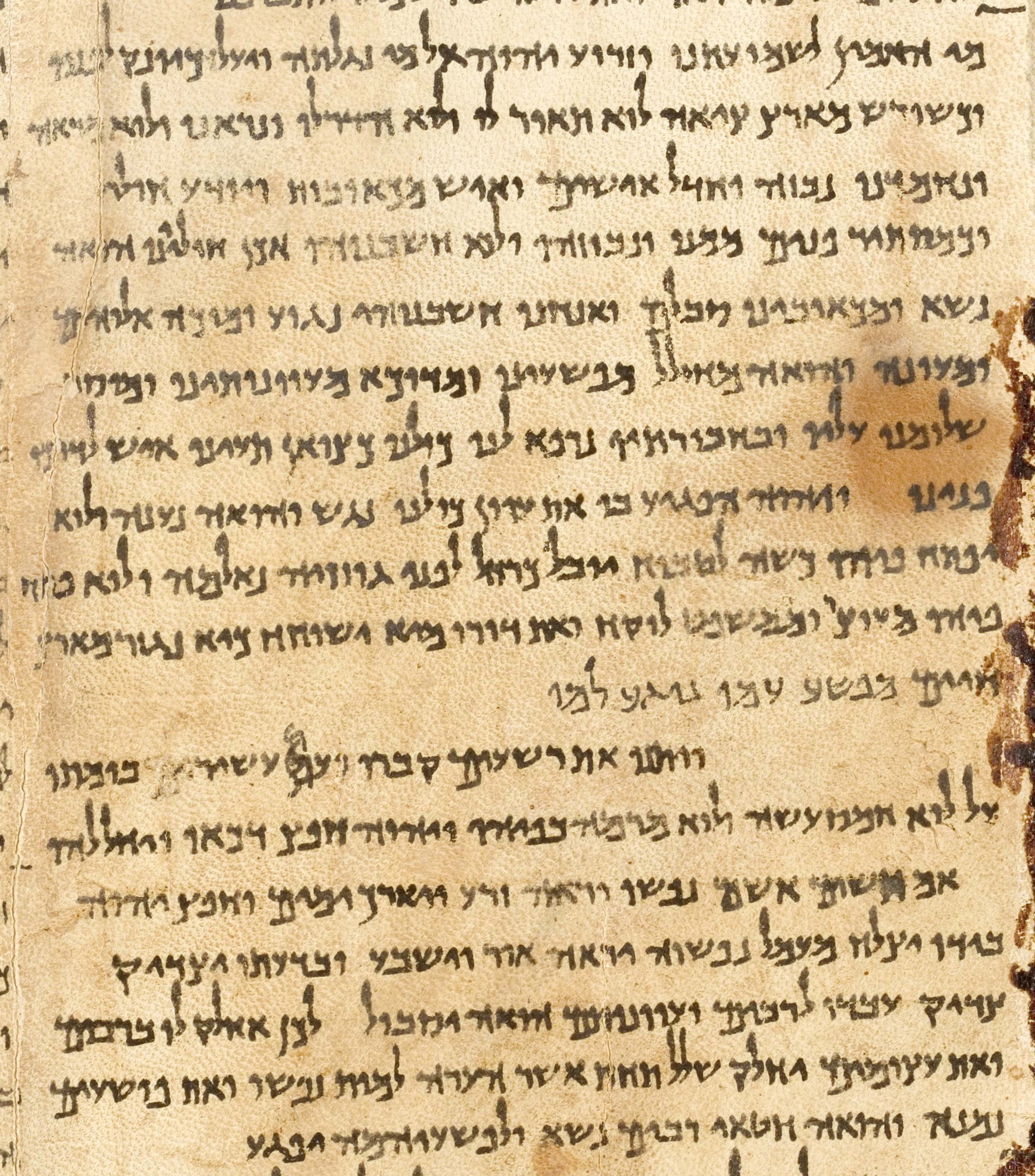

| No one can see God | People see God |
|---|---|
| “You cannot see my face; for no one shall see me and live.” (Exodus 33:20) | “So Jacob called the place Peniel, saying, ‘For I have seen God face to face, and yet my life is preserved.’” (Genesis 32:30) |
| “No one has ever seen God.” (John 1:18) | “Thus the LORD used to speak to Moses face to face, as one speaks to a friend.” (Exodus 33:11) |
| “No one has ever seen God.” (1 John 4:12) | “I saw the Lord sitting on a throne, high and lofty.” (Isaiah 6:1) |
God changing his mind
Several passages assert that God does not change (Numbers 23:19, 1 Samuel 15:29, Malachi 3:6); others narrate God changing his mind (Exodus 32:14, 1 Samuel 15:11, Jonah 3:10). The Hebrew verb nacham (often translated “relent” or “change his mind”) appears in both directions within the same narrative: 1 Samuel 15:11 has God saying “I regret (nichamti) that I made Saul king,” while 15:29, just eighteen verses later, declares that God “will not change his mind (yinnachem).” Brueggemann treats this tension as theologically productive rather than as an error, arguing that it reflects two distinct conceptions of God in Israel — the sovereign judge who does not waver and the relational partner who responds to human action.2
| God does not change his mind | God changes his mind |
|---|---|
| “God is not a human being, that he should lie, or a mortal, that he should change his mind.” (Numbers 23:19) | “And the LORD changed his mind about the disaster that he planned to bring on his people.” (Exodus 32:14) |
| “The Glory of Israel will not recant or change his mind; for he is not a mortal, that he should change his mind.” (1 Samuel 15:29) | “I regret that I made Saul king, for he has turned back from following me.” (1 Samuel 15:11) |
| “For I the LORD do not change.” (Malachi 3:6) | “God changed his mind about the calamity that he had said he would bring upon them; and he did not do it.” (Jonah 3:10) |
God and evil
Isaiah 45:7 attributes the creation of “woe” (Hebrew ra’, which can mean evil, calamity, or disaster) directly to God; Amos 3:6 asks whether disaster befalls a city without God’s agency; 1 Samuel 16:14 sends “an evil spirit from the LORD.” James 1:13, by contrast, states that God “cannot be tempted by evil and he himself tempts no one,” and 1 John 1:5 declares that “in him there is no darkness at all.” Brueggemann frames this as the tension between what he calls Israel’s “core testimony” (God is just and good) and its “counter-testimony” (God is the author of suffering), both of which the canon preserves without resolution.2
| God creates calamity | God has no part in evil |
|---|---|
| “I form light and create darkness, I make weal and create woe; I the LORD do all these things.” (Isaiah 45:7) | “God cannot be tempted by evil and he himself tempts no one.” (James 1:13) |
| “Does disaster befall a city, unless the LORD has done it?” (Amos 3:6) | “God is light and in him there is no darkness at all.” (1 John 1:5) |
| “An evil spirit from the LORD tormented him.” (1 Samuel 16:14) | “Let no one say when he is tempted, ‘I am being tempted by God.’” (James 1:13) |
Intergenerational punishment
The Decalogue declares that God punishes children for their parents’ sins “to the third and the fourth generation” (Exodus 20:5); Deuteronomy 24:16 establishes the legal principle that “parents shall not be put to death for their children, nor shall children be put to death for their parents”; Ezekiel 18:20 states the individual accountability principle with full theological weight. Nelson observes that the Deuteronomic law code contains both principles — communal liability and individual responsibility — without indicating which takes precedence, suggesting that Israelite legal and theological thought held both simultaneously as operative frameworks.12 Greenberg reads Ezekiel 18 as a prophetic polemic against the proverb “the parents have eaten sour grapes, and the children’s teeth are set on edge” (Ezekiel 18:2), an explicit rejection of the intergenerational principle that the people of Jerusalem had invoked to explain the exile.16
| Children punished for parents’ sins | Each person bears their own sin |
|---|---|
| “I the LORD your God am a jealous God, punishing children for the iniquity of parents, to the third and the fourth generation.” (Exodus 20:5) | “Parents shall not be put to death for their children, nor shall children be put to death for their parents; only for their own crimes may persons be put to death.” (Deuteronomy 24:16) |
| “visiting the iniquity of the parents upon the children and the children’s children, to the third and the fourth generation.” (Exodus 34:7) | “A child shall not suffer for the iniquity of a parent, nor a parent suffer for the iniquity of a child.” (Ezekiel 18:20) |
Other gods
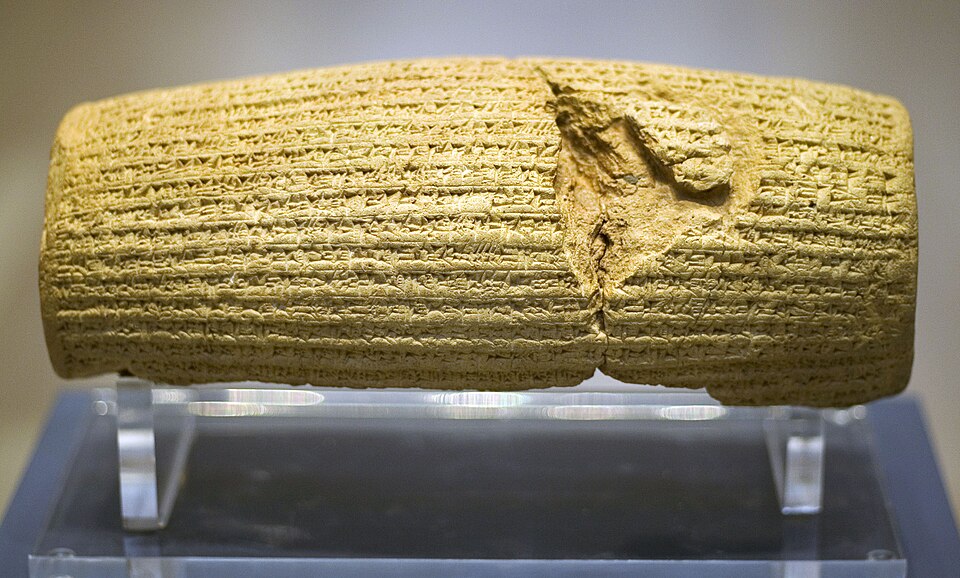
Earlier biblical texts acknowledge the existence of other gods alongside YHWH: Psalm 82 places God in a “divine council” among other deities; the Song of the Sea asks “Who is like you, O LORD, among the gods?” (Exodus 15:11); the first commandment presupposes other gods by forbidding their worship. Later texts, especially Second Isaiah (chapters 40–55), deny the existence of other gods entirely: “Before me no god was formed, nor shall there be any after me” (Isaiah 43:10). Smith traces this development from monolatry to monotheism, a theological shift that occurred primarily during the Babylonian exile when Israelite writers, confronted with Babylonian polytheism, responded by asserting YHWH’s absolute uniqueness.7

| Other gods acknowledged | Other gods denied |
|---|---|
| “God has taken his place in the divine council; in the midst of the gods he holds judgment.” (Psalm 82:1) | “I am the LORD, and there is no other; besides me there is no god.” (Isaiah 45:5) |
| “Who is like you, O LORD, among the gods?” (Exodus 15:11) | “Before me no god was formed, nor shall there be any after me.” (Isaiah 43:10) |
| “You shall have no other gods before me.” (Exodus 20:3) | “There is no God but one.” (1 Corinthians 8:4) |
The law: eternal or temporary
Within the Hebrew Bible, the law is presented as permanently binding: Psalm 119:160 declares its ordinances endure “forever,” and Matthew 5:18 (attributed to Jesus) states that not one letter will pass from the law until heaven and earth pass away. Yet Pauline epistles declare believers “discharged from the law” (Romans 7:6), and Hebrews 8:13 calls the first covenant “obsolete.” Ehrman identifies this as a tension within the New Testament itself: the Matthean Jesus upholds every detail of the Torah, while Paul argues that the law was a temporary custodian whose role ended with Christ.6 Davies and Allison note that Matthew 5:17–20 appears to be directed against a Pauline-type position that Christians are free from the law, suggesting an early intra-Christian dispute that the New Testament preserves rather than resolves.8
| The law is eternal | The law is abolished |
|---|---|
| “The sum of your word is truth; and every one of your righteous ordinances endures forever.” (Psalm 119:160) | “But now we are discharged from the law, dead to that which held us captive.” (Romans 7:6) |
| “Until heaven and earth pass away, not one letter, not one stroke of a letter, will pass from the law.” (Matthew 5:18) | “Now before faith came, we were imprisoned and guarded under the law until faith would be revealed. Therefore the law was our disciplinarian until Christ came … But now that faith has come, we are no longer subject to a disciplinarian.” (Galatians 3:23–25) |
| “Do not think that I have come to abolish the law or the prophets; I have come not to abolish but to fulfill.” (Matthew 5:17) | “In speaking of ‘a new covenant,’ he has made the first one obsolete.” (Hebrews 8:13) |
Does God desire sacrifice
The Priestly source in Leviticus presents an elaborate sacrificial system commanded by God in direct speech from the tent of meeting. The prophets, however, repeatedly question or reject sacrifice: Hosea 6:6 declares God desires “steadfast love and not sacrifice”; Jeremiah 7:22 states that God “did not speak to them or command them concerning burnt offerings and sacrifices” when Israel left Egypt — an apparent denial of the Priestly legislation. Brueggemann and Linafelt locate this tension in the conflict between the Priestly and Prophetic theological traditions, observing that the canonical editors preserved both voices as legitimate expressions of Israel’s understanding of God’s requirements.13
| God commands sacrifice | God does not desire sacrifice |
|---|---|
| “The LORD summoned Moses and spoke to him from the tent of meeting, saying: Speak to the people of Israel and say to them: When any of you bring an offering to the LORD …” (Leviticus 1:1–2) | “For I desire steadfast love and not sacrifice, the knowledge of God rather than burnt offerings.” (Hosea 6:6) |
| “If the offering is a burnt offering from the herd, you shall offer a male without blemish; you shall bring it to the entrance of the tent of meeting, for acceptance in your behalf before the LORD.” (Leviticus 1:3) | “For in the day that I brought your ancestors out of the land of Egypt, I did not speak to them or command them concerning burnt offerings and sacrifices.” (Jeremiah 7:22) |
| “Then Noah built an altar to the LORD … and offered burnt offerings on the altar. And when the LORD smelled the pleasing odor, the LORD said in his heart, ‘I will never again curse the ground.’” (Genesis 8:20–21) | “Has the LORD as great delight in burnt offerings and sacrifices, as in obedience to the voice of the LORD? Surely, to obey is better than sacrifice.” (1 Samuel 15:22) |
Election and human choice
Romans 9 presents divine election as unconditional and prior to human action: God “has mercy on whomever he chooses, and he hardens the heart of whomever he chooses” (9:18). Yet the same author writes “work out your own salvation with fear and trembling” (Philippians 2:12), and the Gospels record open invitations (“Come to me, all you that are weary,” Matthew 11:28). Jewett’s commentary on Romans notes that Paul’s argument in Romans 9–11 is not a systematic treatise on predestination but a diatribe-style response to a specific question about why Israel has not accepted the gospel, and that extracting a comprehensive doctrine of election from this context requires reading beyond what Paul intended to address.10
| God determines | Humans choose |
|---|---|
| “Even before they had been born or had done anything good or bad — so that God’s purpose of election might continue, not by works but by his call — she was told, ‘The elder shall serve the younger.’” (Romans 9:11–12) | “Work out your own salvation with fear and trembling.” (Philippians 2:12) |
| “He has mercy on whomever he chooses, and he hardens the heart of whomever he chooses.” (Romans 9:18) | “If you continue in my word, you are truly my disciples.” (John 8:31) |
| “No one can come to me unless drawn by the Father who sent me.” (John 6:44) | “Come to me, all you that are weary and are carrying heavy burdens, and I will give you rest.” (Matthew 11:28) |
Universal salvation and eternal punishment
Paul writes that Christ’s act of righteousness “leads to justification and life for all” (Romans 5:18) and that God will “reconcile to himself all things” (Colossians 1:20). Matthew’s Jesus, by contrast, speaks of “eternal punishment” (Matthew 25:46) and a “wide gate that leads to destruction” (Matthew 7:13); Revelation envisions a “lake of fire” for those whose names are not in the book of life (Revelation 20:15). Ehrman identifies this tension as a genuine diversity within the New Testament: the universalist strand in Paul exists alongside the particularist and judgment-oriented strand in Matthew and Revelation, and no single New Testament author addresses both perspectives in a way that resolves the tension.6
| All will be saved | Many will be punished eternally |
|---|---|
| “This is right and is acceptable in the sight of God our Savior, who desires everyone to be saved and to come to the knowledge of the truth.” (1 Timothy 2:3–4) | “These will go away into eternal punishment, but the righteous into eternal life.” (Matthew 25:46) |
| “Therefore just as one man’s trespass led to condemnation for all, so one man’s act of righteousness leads to justification and life for all.” (Romans 5:18) | “Anyone whose name was not found written in the book of life was thrown into the lake of fire.” (Revelation 20:15) |
| “Through him God was pleased to reconcile to himself all things, whether on earth or in heaven.” (Colossians 1:19–20) | “Enter through the narrow gate; for the gate is wide and the road is easy that leads to destruction, and there are many who take it.” (Matthew 7:13) |
Jews only or all nations
Matthew records both extremes of the mission scope: Jesus instructs the disciples to “go nowhere among the Gentiles” (10:5–6) and to “make disciples of all nations” (28:19). Davies and Allison read the two commissions as reflecting different stages in Matthew’s salvation-historical scheme — the restriction to Israel during Jesus’s earthly ministry and the universal mission after the resurrection — but note that the tension between the two commissions was acute for Matthew’s community, which was negotiating its identity in relation to both Judaism and the Gentile mission.8
| Mission restricted to Israel | Mission to all nations |
|---|---|
| “Go nowhere among the Gentiles, and enter no town of the Samaritans, but go rather to the lost sheep of the house of Israel.” (Matthew 10:5–6) | “Go therefore and make disciples of all nations, baptizing them in the name of the Father and of the Son and of the Holy Spirit.” (Matthew 28:19) |
| “I was sent only to the lost sheep of the house of Israel.” (Matthew 15:24) | “You will be my witnesses in Jerusalem, in all Judea and Samaria, and to the ends of the earth.” (Acts 1:8) |
God’s knowledge
The psalms and Second Isaiah affirm comprehensive divine foreknowledge: God knows words before they are spoken (Psalm 139:4) and declares “the end from the beginning” (Isaiah 46:10). Yet Genesis narratives portray God as learning and discovering: after the binding of Isaac, God says “Now I know that you fear God” (Genesis 22:12); before the flood, God “was sorry that he had made humankind” (Genesis 6:6); before Sodom, God goes down to “see whether they have done altogether according to the outcry” (Genesis 18:21). Brueggemann argues that these anthropomorphic depictions are not merely accommodations to human understanding but genuine theological claims about a God who enters into relationship with creation and is affected by what transpires within it.2
| God knows everything | God learns or discovers |
|---|---|
| “I am God, and there is no one like me, declaring the end from the beginning and from ancient times things not yet done.” (Isaiah 46:9–10) | “Now I know that you fear God, since you have not withheld your son.” (Genesis 22:12) |
| “Even before a word is on my tongue, O LORD, you know it completely.” (Psalm 139:4) | “And the LORD was sorry that he had made humankind on the earth, and it grieved him to his heart.” (Genesis 6:6) |
| “O LORD, you have searched me and known me. You know when I sit down and when I rise up; you discern my thoughts from far away.” (Psalm 139:1–2) | “Then the LORD said, ‘How great is the outcry against Sodom and Gomorrah … I must go down and see whether they have done altogether according to the outcry that has come to me.’” (Genesis 18:20–21) |
The cause of suffering
The Deuteronomistic history operates on a retribution principle: obedience brings blessing, disobedience brings curse (Deuteronomy 28). Ecclesiastes directly challenges this framework: “There are righteous people who are treated according to the conduct of the wicked” (8:14). Job 38 responds to the suffering of a righteous man not with an explanation but with a display of divine power that refuses to answer the question on its own terms. Brueggemann reads these as three distinct theological voices that the canon holds in tension: the Deuteronomic voice that insists on moral order, the wisdom voice that observes empirical exceptions, and the divine speech from the whirlwind that transcends the categories of the debate entirely.2
| Suffering follows from disobedience | Suffering has no moral logic |
|---|---|
| “If you will only obey the LORD your God … all these blessings shall come upon you. … But if you will not obey … all these curses shall come upon you.” (Deuteronomy 28:1–2, 15) | “There are righteous people who are treated according to the conduct of the wicked, and there are wicked people who are treated according to the conduct of the righteous.” (Ecclesiastes 8:14) |
| “See, I am setting before you today a blessing and a curse: the blessing, if you obey the commandments of the LORD your God … and the curse, if you do not obey.” (Deuteronomy 11:26–28) | “Where were you when I laid the foundation of the earth? Tell me, if you have understanding.” (Job 38:4) |
References
The Birth of the Messiah: A Commentary on the Infancy Narratives in the Gospels of Matthew and Luke