Overview
- Carthage was a Phoenician colony founded on the coast of modern Tunisia traditionally in 814 BCE that grew into the dominant maritime power of the western Mediterranean, controlling trade networks from the Atlantic coast of Iberia to the Levant and fielding a navy of over 300 warships at its peak.
- The Carthaginian constitution, praised by Aristotle as one of the best-governed states of the ancient world, blended monarchical, aristocratic, and democratic elements through annually elected dual magistrates called suffetes, a powerful Senate of several hundred elders, and a popular assembly that voted on unresolved disputes.
- Rome destroyed Carthage utterly in 146 BCE at the conclusion of the Third Punic War, razing the city, enslaving its estimated 50,000 surviving inhabitants, and ending a civilisation that had endured for nearly seven centuries — yet Carthaginian innovations in agriculture, harbour engineering, and long-distance commerce profoundly shaped the Mediterranean world that succeeded it.
Carthage was a Phoenician city-state founded on a promontory overlooking the Gulf of Tunis in modern-day Tunisia that rose from a modest colonial trading post to become the dominant power of the western Mediterranean for over four centuries.1, 2 Its Phoenician name, Qart-ḥadašt ("New City"), reflected its origins as an offshoot of the great Levantine city of Tyre, but Carthage quickly outgrew its parent, developing an independent maritime empire that at its height controlled the coasts of North Africa, Sardinia, western Sicily, the Balearic Islands, and southern Iberia.1, 3 Aristotle singled out the Carthaginian constitution as one of the finest in the ancient world, and the city's population may have reached 250,000 at its zenith in the third century BCE, making it one of the largest urban centres of classical antiquity.7, 2 The three Punic Wars between Carthage and Rome (264–146 BCE) produced some of the most consequential military campaigns in Western history, culminating in the total destruction of Carthage in 146 BCE and the incorporation of its territories into the expanding Roman world.9, 1
Foundation and early history
Ancient literary tradition, transmitted principally through the Roman historian Justin's epitome of the earlier historian Pompeius Trogus, dates the founding of Carthage to 814 BCE and attributes it to Elissa (known to Roman writers as Dido), a Tyrian princess who fled the city after the murder of her husband Acerbas by her brother, King Pygmalion of Tyre.1, 2 According to the foundation legend, Elissa purchased from the local Libyan population as much land as could be enclosed by an ox hide, then cleverly cut the hide into thin strips to encircle a large hilltop — the Byrsa, which became the citadel of Carthage.1, 14 While the narrative is clearly legendary, it preserves a kernel of historical plausibility: Tyre was the dominant Phoenician city-state in the ninth century BCE, and internal political conflicts plausibly motivated the emigration of disaffected elites.3, 5
The archaeological evidence, however, complicates the traditional chronology. Excavations at Carthage have not yielded material earlier than the last quarter of the eighth century BCE, placing the earliest confirmed occupation approximately a century later than the literary date of 814 BCE.2, 17 Serge Lancel and other scholars have suggested that the traditional date may reflect a Carthaginian desire to establish chronological priority over rival Greek foundations in Sicily and southern Italy, or that the earliest settlement was too modest to leave a significant archaeological footprint.2 Regardless of the precise date, Carthage's location was strategically superb: the site offered a sheltered harbour, a defensible hilltop, access to the fertile Cape Bon peninsula, and a position commanding the narrow strait between Sicily and North Africa through which all east–west Mediterranean traffic was funnelled.1, 3
During its first two centuries, Carthage appears to have maintained close ties to its mother city Tyre, contributing annual tribute to the temple of Melqart and participating in the broader network of Phoenician trading settlements stretching across the Mediterranean.3, 16 The city grew steadily as a commercial entrepôt, benefiting from its central position between the eastern and western Mediterranean basins to serve as a transshipment point for metals from Iberia and Sardinia, grain and other agricultural products from its own hinterland, and luxury goods from the Levant, Egypt, and Greece.1, 3
Rise to Mediterranean power
Carthage's transformation from a Phoenician colony into an independent imperial power accelerated during the sixth century BCE, a period shaped by the weakening of Tyre under successive Assyrian, Babylonian, and Persian domination.1, 8 As Tyre's capacity to protect its western colonies diminished, Carthage stepped into the vacuum, assuming leadership of the Phoenician communities in the western Mediterranean.3, 12 The political dominance of the Magonid dynasty, beginning with Mago I around 550 BCE, consolidated Carthaginian military and naval power and inaugurated an expansionist policy that brought Sardinia, western Sicily, parts of North Africa, and the Balearic Islands under Carthaginian control or influence.1, 12
Carthage's imperial expansion brought it into direct conflict with Greek colonial states in the western Mediterranean, particularly the powerful city of Syracuse in eastern Sicily.8, 1 The Battle of Himera in 480 BCE, in which a Greek coalition under Gelon of Syracuse defeated a large Carthaginian army led by Hamilcar (a Magonid general), marked a decisive check on Carthaginian ambitions in eastern Sicily, though Carthage retained control of the island's western portion for another two and a half centuries.8, 12 Carthage also established treaty relationships with Rome — the earliest recorded Carthaginian-Roman treaty dates to approximately 509 BCE, according to the Greek historian Polybius — delineating spheres of commercial and naval influence in the western Mediterranean.8, 9
By the fourth century BCE, Carthage controlled a maritime empire stretching from the Atlantic coast of Morocco and the Iberian Peninsula in the west to the shores of Libya in the east, secured by a navy of several hundred warships and sustained by trading networks that reached into sub-Saharan Africa, the Atlantic, and the eastern Mediterranean.1, 2 The Carthaginian explorer Hanno the Navigator reportedly led an expedition of sixty ships and 30,000 settlers down the West African coast around 500 BCE, establishing colonies and reaching at least as far as modern Cameroon or Gabon.2, 14 Carthage's commercial reach, its formidable military capacity, and its strategic control of key maritime chokepoints made it the unrivalled power of the western Mediterranean world on the eve of its confrontation with Rome.1, 8
Government and constitution
The Carthaginian political system was a mixed constitution that combined monarchical, aristocratic, and democratic elements in a balance that ancient observers regarded as exceptionally well designed.7, 1 Aristotle, writing in the fourth century BCE, devoted a substantial passage in his Politics to analysing the Carthaginian constitution alongside those of Sparta and Crete, judging it "excellent" and "in many respects superior" to other constitutions known to him.7 He noted that Carthage had never experienced either a significant popular revolution or the rise of a tyrant — a remarkable record of political stability that he attributed to the constitution's careful balancing of interests.7, 12
The executive was headed by two annually elected magistrates called suffetes (from the Phoenician šōfeṭ, "judge"), whom Greek and Roman writers frequently compared to the Roman consuls or Spartan kings.1, 2 The suffetes presided over the Senate and popular assembly, exercised judicial authority, and managed the civil administration, but unlike Roman consuls they did not hold military command, which was vested in separately elected generals.12, 7 This separation of civil and military authority was distinctive among ancient Mediterranean states and served as a check on the concentration of power.1
The Senate, a council of several hundred members drawn from the city's wealthiest and most prominent families, functioned as the primary deliberative body, controlling foreign policy, financial administration, and oversight of military campaigns.2, 12 Within the Senate, a powerful inner council of 30 members and a separate judicial body known as the Tribunal of the Hundred and Four exercised concentrated authority, including the power to investigate and punish unsuccessful generals — a mechanism that incentivised military success but also engendered considerable political risk for Carthaginian commanders.1, 12 The popular assembly of citizens had the right to vote on matters where the suffetes and Senate could not reach agreement, providing a democratic check on aristocratic power, though in practice the Carthaginian system was heavily oligarchic, dominated by wealthy trading families and landed elites.7, 2
Economy and trade
Carthage's power rested fundamentally on its commercial economy, which combined long-distance maritime trade, agricultural production, and manufacturing on a scale unmatched in the pre-Roman western Mediterranean.1, 6 The city's twin harbours — a rectangular commercial port connected to a circular military harbour, the cothon, capable of sheltering over 200 warships — were among the most sophisticated port facilities in the ancient world and served as the hub of a trading network spanning three continents.2, 14 Carthaginian merchants exported agricultural products (olive oil, wine, salted fish, and grain), manufactured goods (pottery, textiles, metalwork, and dyed cloth), and re-exported raw materials acquired from distant sources, including tin from Britain, silver from Iberia, gold and ivory from sub-Saharan Africa, and incense from Arabia.1, 3
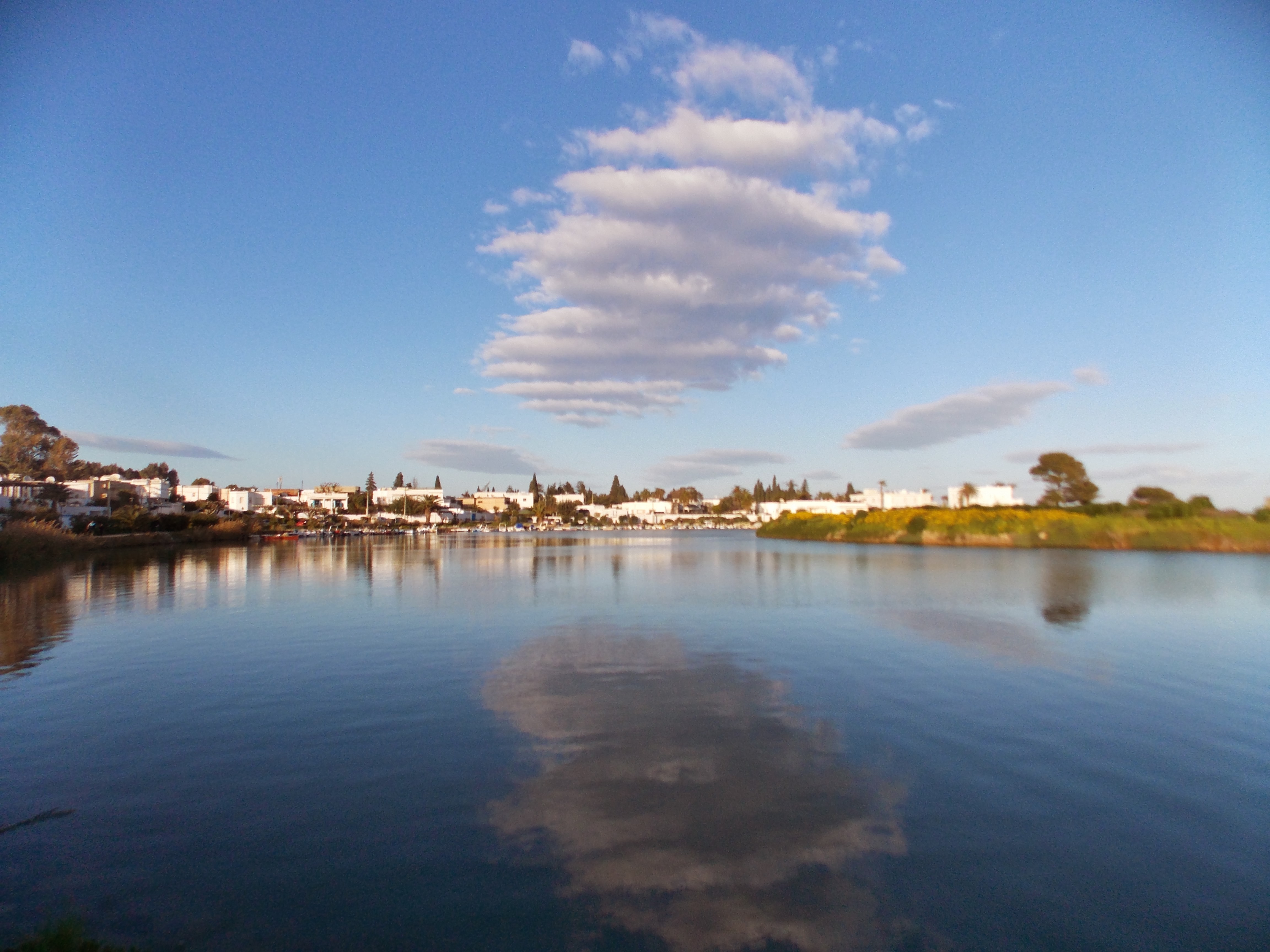

Agriculture was central to the Carthaginian economy and formed the basis of the wealth of the city's landed aristocracy.2, 10 The fertile Cape Bon peninsula and the Medjerda River valley provided Carthage with a productive agricultural hinterland where large estates cultivated grain, olives, grapes, figs, and pomegranates on a scale sufficient both to feed the city's large population and to generate substantial export surpluses.10, 2 Carthaginian agricultural expertise was renowned throughout the ancient world: the agronomist Mago composed a 28-volume treatise on farming that the Roman Senate ordered translated into Latin after the destruction of Carthage in 146 BCE, the only Carthaginian text deliberately preserved by the conquerors.1, 14 Columella and Pliny the Elder both cited Mago as an authoritative source, testifying to the enduring influence of Punic agricultural knowledge on Roman practice.14, 2
Sedimentological analysis of the Medjerda River delta near the ancient city of Utica has provided scientific evidence of Carthage's economic resilience during the Punic Wars, demonstrating that Carthaginian exploitation of agricultural and mineral resources in its North African hinterland sustained the city's capacity to resist Rome far longer than its diminished naval power alone would have permitted.10
Carthaginian trade commodities by origin1, 3
| Commodity | Source region | Primary use |
|---|---|---|
| Silver, tin | Iberian Peninsula | Coinage, alloys, trade medium |
| Tin | Britain (via Atlantic route) | Bronze production |
| Gold, ivory | Sub-Saharan Africa | Luxury goods, trade |
| Grain, olive oil, wine | North African hinterland | Food supply, export |
| Copper | Cyprus, Sardinia | Bronze production |
| Purple dye, textiles | Carthage, Levant | Luxury trade |
| Incense, aromatics | Arabia | Religious ritual, luxury trade |
| Pottery, metalwork | Carthage (manufactured) | Domestic use, export |
Religion and the tophet
Carthaginian religion was rooted in the Phoenician polytheistic tradition but developed distinctive characteristics in its western Mediterranean context.4, 1 The supreme deities of the Carthaginian pantheon were Baal Hammon, a sky and fertility god who may have absorbed characteristics of the older Phoenician El, and Tanit, a mother goddess frequently styled "Face of Baal" who became the city's paramount protective deity by the fifth century BCE, displacing Baal Hammon from the chief position in the pantheon.1, 4 Other significant deities included Melqart (the patron god of Tyre, identified by the Greeks with Heracles), Eshmun (a healing god equated with Asclepius), and Astarte.4, 2 Temples were prominent features of the urban landscape, and religious festivals, animal sacrifices, and votive offerings structured the ritual calendar of the city.2
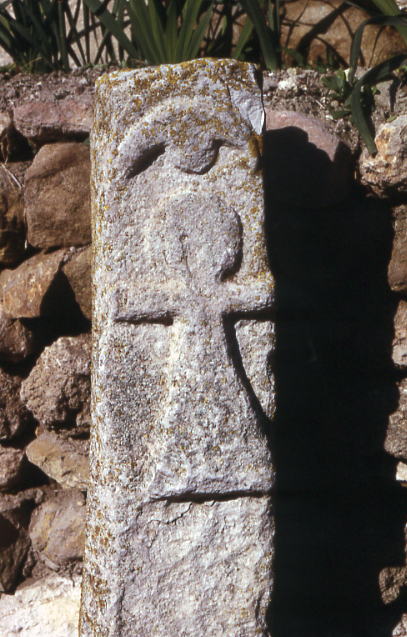

The most controversial aspect of Carthaginian religious practice is the question of child sacrifice, associated with open-air sanctuaries called tophets.13, 15 The Tophet of Carthage, excavated from the 1920s onward, is a large precinct containing thousands of urns holding the cremated remains of very young children (predominantly neonates and infants under six months) and young animals, accompanied by dedicatory stelae inscribed to Tanit and Baal Hammon.15, 1 Greek and Roman literary sources, including Diodorus Siculus, Plutarch, and Tertullian, described the Carthaginians as sacrificing children — particularly firstborn sons — in times of crisis or to fulfil vows to the gods, and these accounts informed Roman propaganda that portrayed Carthage as uniquely barbarous.1, 13
The interpretation of the tophet evidence remains one of the most fiercely contested debates in Mediterranean archaeology.13, 15 Lawrence Stager and Samuel Wolff argued on the basis of osteological analysis that the age distribution of the remains — overwhelmingly neonates and very young infants — does not correspond to the expected pattern of natural childhood mortality, suggesting deliberate selection and sacrifice.15 A 2013 study by Paolo Xella and colleagues concluded that when archaeological, epigraphic, and literary evidence is considered together, the case for ritual child sacrifice is "overwhelming and conclusive."13 Other scholars, however, have proposed that the tophets were dedicated cemeteries for stillborn infants and children who died of natural causes, whose remains were then consecrated to the gods, and that the Greco-Roman accounts were distorted by cultural bias and wartime propaganda.4, 5 The debate remains unresolved, though the weight of recent scholarship favours the interpretation that at least some form of child sacrifice was practised, particularly under conditions of extreme communal stress.13, 1
The Punic Wars
The three Punic Wars (264–146 BCE) between Carthage and Rome constitute one of the defining military and political struggles of the ancient world, ultimately determining whether Carthage or Rome would dominate the Mediterranean.9, 1 The First Punic War (264–241 BCE) was fought primarily over control of Sicily and was predominantly a naval conflict.9, 8 Rome, a land power with no significant naval tradition, built its first major fleet to challenge Carthaginian maritime supremacy, and the invention of the corvus — a boarding bridge that allowed Roman legionaries to turn naval engagements into infantry combat — helped offset Carthaginian seamanship.9 After 23 years of attritional warfare, Carthage ceded Sicily to Rome and agreed to pay a heavy indemnity of 3,200 talents of silver over ten years.9, 1
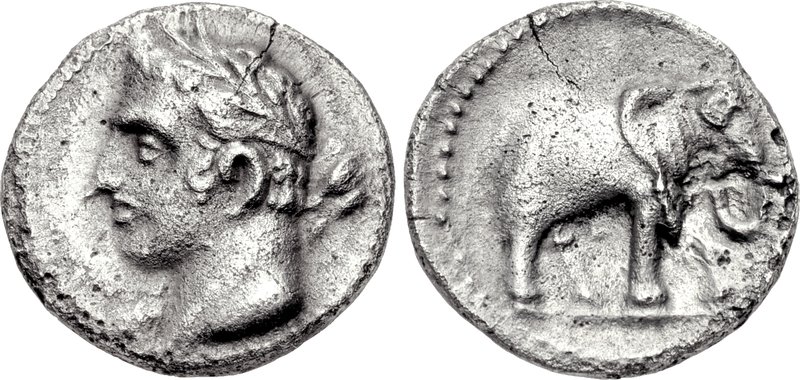

The Second Punic War (218–201 BCE) was the most consequential of the three conflicts and produced one of history's greatest military commanders: Hannibal Barca.11, 20 Launching his campaign from Carthaginian Spain, Hannibal led an army of approximately 50,000 infantry, 9,000 cavalry, and 37 war elephants across the Pyrenees and over the Alps into Italy in one of the most audacious strategic manoeuvres in military history.20, 11 In Italy, Hannibal inflicted a series of devastating defeats on Roman armies, culminating in the Battle of Cannae on 2 August 216 BCE, where his double envelopment of a numerically superior Roman force resulted in the destruction of between 50,000 and 70,000 Roman troops — the deadliest single day in Roman military history and a tactical masterpiece studied by military theorists to the present day.20, 9
Despite his tactical brilliance, Hannibal lacked the siege equipment and reinforcements necessary to attack Rome itself, and the Roman strategy of attrition, perfected by the general Fabius Maximus, gradually eroded his position in Italy.11, 1 The war's decisive turning point came when the Roman general Publius Cornelius Scipio carried the conflict to North Africa, compelling Hannibal's recall from Italy and defeating him at the Battle of Zama in 202 BCE.20, 9 The resulting peace treaty stripped Carthage of its overseas possessions, imposed an indemnity of 10,000 talents payable over fifty years, reduced its fleet to just ten warships, and prohibited Carthage from waging war without Roman permission — effectively reducing it to a Roman client state.9, 1
The Third Punic War (149–146 BCE) was less a war than a siege and an act of annihilation.9, 19 Despite Carthage's compliance with its treaty obligations and its continued economic prosperity, Roman hawks led by Cato the Elder agitated relentlessly for the city's destruction, famously ending every Senate speech with the declaration Carthago delenda est ("Carthage must be destroyed").1, 19 Rome engineered a casus belli by supporting Numidian encroachments on Carthaginian territory and then demanding that the Carthaginians abandon their city and resettle inland — a condition that the Carthaginians, whose entire civilisation was built around their port city, refused.19, 1 After a three-year siege, Scipio Aemilianus stormed the city in the spring of 146 BCE. The city was systematically destroyed, its estimated 50,000 surviving inhabitants were enslaved, and the territory was incorporated as the Roman province of Africa.9, 1
Timeline of the Punic Wars9, 1
Military organisation
The Carthaginian military system differed fundamentally from those of its Greek and Roman adversaries in its heavy reliance on mercenary and allied contingents rather than citizen soldiers.12, 1 Carthaginian citizens served primarily in the navy and in the Sacred Band, an elite infantry unit of approximately 2,500 men drawn from the city's aristocracy, but the bulk of Carthage's land forces were recruited from subject peoples and hired mercenaries.12, 2 This polyglot army drew upon specialised military traditions from across the Mediterranean and beyond: Numidian light cavalry from North Africa, famed for their skill in skirmishing and pursuit; Libyan heavy infantry equipped in the Greek style with spear and shield; Iberian swordsmen; Balearic slingers, whose accuracy with lead projectiles was legendary; and Gallic warriors.1, 12
The Carthaginian navy was the city's primary instrument of military power for most of its history and at its peak comprised over 300 warships, predominantly quinqueremes (five-banked oared warships).2, 8 The circular military harbour, or cothon, at Carthage was an engineering marvel: an artificial basin approximately 325 metres in diameter, lined with ship sheds capable of housing over 200 vessels, with a central island housing the admiral's headquarters.2, 14 Carthaginian naval superiority rested on centuries of Phoenician maritime expertise, superior ship construction, and the professional seamanship of experienced crews.8, 3
The reliance on mercenaries, while providing military flexibility and specialist capabilities, also created significant vulnerabilities.12 The most dramatic illustration was the Mercenary War (241–238 BCE), fought immediately after the First Punic War, when unpaid mercenaries — Libyans, Iberians, Gauls, and others — revolted against Carthage in a brutal conflict that nearly destroyed the city and was suppressed only after three years of savage fighting under the generalship of Hamilcar Barca.11, 1 The episode, described by Polybius as the "Truceless War" for its extraordinary ferocity, exposed the fragility of a military system dependent on the loyalty of hired soldiers and subject peoples.11
The urban landscape and archaeology
The physical city of Carthage, at its height in the third and second centuries BCE, was one of the largest and most impressively fortified urban centres in the ancient Mediterranean.2, 17 The city was enclosed by a massive triple line of fortification walls stretching approximately 34 kilometres in circuit and rising to a height of over 13 metres, with towers at regular intervals, stables for 300 elephants and 4,000 horses, and barracks for a garrison of 20,000 infantry and 4,000 cavalry incorporated into the wall system on the vulnerable landward side.2, 14 The Byrsa hill, the original citadel, was crowned by the temple of Eshmun, the city's most prominent religious monument, approached by a monumental stairway of sixty steps.2
The city's residential quarters featured multi-storey buildings — Appian reported structures of up to six storeys — arranged along a grid-plan street system that impressed ancient visitors with its orderliness.2, 14 The twin harbours occupied the southern part of the city: the rectangular commercial port, connected by a narrow channel to the circular military cothon, together formed a harbour complex without parallel in the ancient world.2 Public spaces included the agora (marketplace), temples, and the extensive Tophet sanctuary south of the harbours.15, 2
Because of the thoroughness of the Roman destruction in 146 BCE and the subsequent construction of Roman Carthage directly atop the Punic remains, archaeological recovery of the pre-Roman city has been exceptionally challenging.17, 18 UNESCO designated the archaeological site of Carthage as a World Heritage Site in 1979 and launched a major international campaign from 1972 to 1992 to rescue threatened remains from encroaching modern development.18 These excavations, along with continuing work by Tunisian, European, and American teams, have recovered substantial evidence of Punic residential architecture, harbour installations, industrial facilities, and cemetery remains, providing a material counterpoint to the overwhelmingly Greco-Roman literary record.17, 18
Legacy and historical significance
The destruction of Carthage in 146 BCE was one of the most complete acts of cultural annihilation in ancient history, and yet Carthaginian influence persisted in numerous domains long after the city's physical obliteration.1, 9 The Roman province of Africa, centred on Carthage's former territory, became one of the empire's most productive agricultural regions, employing farming techniques and estate management practices directly inherited from Punic predecessors, as codified in Mago's treatise.14, 2 The Punic language survived in North Africa for centuries after 146 BCE: Saint Augustine, writing in the early fifth century CE, noted that Punic was still spoken in the countryside around Hippo Regius, over 500 years after Carthage's fall.1, 5
Carthage's military legacy proved equally enduring. Hannibal's campaigns, particularly the double envelopment at Cannae, became canonical studies in military strategy, influencing commanders from Scipio Africanus to Napoleon to the architects of twentieth-century manoeuvre warfare doctrine.20, 11 The Punic Wars themselves reshaped the Mediterranean political order, transforming Rome from an Italian regional power into a Mediterranean-wide empire and establishing the pattern of Roman overseas imperialism that would define the next five centuries of Western history.9, 1
In modern scholarship, Carthage has undergone significant historiographic rehabilitation. Older accounts, heavily dependent on hostile Greek and Roman sources, portrayed Carthaginian civilisation as culturally derivative, commercially rapacious, and morally debased. Richard Miles, Josephine Crawley Quinn, Dexter Hoyos, and other contemporary historians have worked to reconstruct a more balanced picture of a sophisticated urban civilisation whose achievements in navigation, commerce, constitutional government, and agriculture matched or exceeded those of its Greek and Roman contemporaries.1, 5, 12 The 2024 publication of a new archaeological synthesis by Bingham and MacDonald reflects the continuing vitality of Carthaginian studies, drawing on decades of excavation, environmental science, and reassessment of literary evidence to illuminate a civilisation that, though vanquished, left an indelible mark on the Mediterranean world it helped to create.17
References
Economic resilience of Carthage during the Punic Wars: Insights from sediments of the Medjerda delta around Utica (Tunisia)
Unravelling the Punic Mediterranean: An Archaeological Commentary on the Ancient Tophet