Overview
- Stars form inside giant molecular clouds—vast, cold structures of gas and dust with temperatures as low as 10 kelvins and densities up to 106 molecules per cubic centimeter—when gravitational potential energy exceeds thermal and turbulent support, a threshold formalized by the Jeans criterion first derived in 1902.
- A collapsing cloud does not form a single star but fragments into many smaller cores, producing a characteristic distribution of stellar masses called the initial mass function (IMF), in which low-mass stars vastly outnumber high-mass ones—a pattern first quantified by Edwin Salpeter in 1955 and refined by Kroupa and Chabrier into the standard modern form.
- Protostars evolve through a well-defined sequence of spectral energy distribution classes (0 through III), accreting material from circumstellar disks while driving bipolar jets and Herbig-Haro outflows, before contracting along the Hayashi track as T Tauri stars until core temperatures reach ~10 million kelvins and stable hydrogen fusion ignites on the main sequence.
Stars are not born in isolation against the empty backdrop of space. They form deep within vast, cold structures of gas and dust called molecular clouds, where temperatures hover only a few degrees above absolute zero and densities reach millions of particles per cubic centimeter. The physics governing this process—how diffuse interstellar gas is converted into compact, luminous, fusion-powered objects—connects gravitational dynamics, thermodynamics, magnetohydrodynamics, and nuclear physics into one of the most richly studied problems in modern astrophysics.1
Understanding star formation is essential because stars are the engines of cosmic chemical evolution. Every atom heavier than lithium in the universe was manufactured inside a star or in the explosive events that end stellar lives. The rate at which stars form, and the distribution of masses among them, governs the luminosity of galaxies, the chemical enrichment of the interstellar medium, and ultimately the conditions under which planetary systems and life can emerge.1, 4
Molecular cloud properties
The interstellar medium of a galaxy like the Milky Way is organized into multiple phases distinguished by temperature, density, and ionization state. Star formation occurs exclusively in the coldest, densest phase: molecular clouds, so called because the dominant constituent is molecular hydrogen (H2).3 Because H2 lacks a permanent electric dipole moment and does not emit radiation efficiently at the low temperatures found in molecular clouds, these objects are most commonly traced by emission from carbon monoxide (CO), whose rotational transitions at millimeter wavelengths serve as a practical proxy for the total molecular gas mass.3
.jpg)
.jpg)
Molecular clouds span an enormous range of sizes and masses. The smallest are Bok globules, compact, roughly spherical objects with diameters of about 0.1 to 1 parsec and masses of a few to a few hundred solar masses. At the other extreme, giant molecular clouds (GMCs) are vast complexes extending tens to over a hundred parsecs across, with masses reaching 105 to 106 solar masses.1, 3 GMCs dominate the molecular gas budget of the Milky Way and are the principal sites of star formation in spiral galaxies. Internal temperatures in the densest cloud cores fall as low as 10 kelvins, with densities exceeding 105 molecules per cubic centimeter—conditions that make them the coldest and densest naturally occurring environments in the universe outside of stellar interiors.3
The internal structure of molecular clouds is far from uniform. Observations across a wide range of spatial scales reveal a fractal-like hierarchy of substructure: clouds contain clumps, clumps contain cores, and cores represent the immediate progenitors of individual stars or small stellar systems.1 This complex architecture is shaped primarily by supersonic turbulence—random gas motions at velocities well above the local sound speed—which compresses some regions to high density while rarefying others. Magnetic fields also thread molecular clouds and contribute to their support against gravitational collapse, though the relative importance of magnetic and turbulent support remains an active area of research.1, 3
Recent observations with the Herschel Space Observatory have revealed that molecular clouds are pervaded by networks of elongated filamentary structures, typically about 0.1 parsec in width. Dense cores tend to form preferentially along these filaments, suggesting that filamentary fragmentation is a key step in the pathway from diffuse gas to stars.9
Properties of molecular cloud structures1, 3
| Structure | Size (pc) | Mass (M☉) | Temperature (K) | Density (cm−3) |
|---|---|---|---|---|
| Giant molecular cloud | 10–100+ | 105–106 | 15–25 | 102–103 |
| Clump | 0.3–3 | 50–500 | 10–20 | 103–104 |
| Dense core | 0.03–0.2 | 0.5–5 | 8–12 | 104–106 |
| Bok globule | 0.1–1 | 2–50 | 10–20 | 103–105 |
| Filament | 1–10 (length); ~0.1 (width) | 10–1000 | 10–15 | 103–105 |
The Jeans criterion and gravitational instability
The fundamental question in star formation is deceptively simple: when does gravity overcome the forces that support a gas cloud against collapse? The answer was first formulated quantitatively in 1902 by the British physicist James Jeans, who analyzed the stability of an infinite, uniform, self-gravitating gas.2 His analysis showed that a perturbation in such a gas will grow if its wavelength exceeds a critical value, now called the Jeans length. Equivalently, for a cloud of a given temperature and density, there exists a minimum mass below which thermal pressure can support the cloud against its own gravity. This threshold is the Jeans mass.
The Jeans mass scales as the temperature to the three-halves power divided by the square root of the density: higher temperatures raise the Jeans mass (making collapse harder), while higher densities lower it (making collapse easier).2, 1 For the conditions typical of a molecular cloud core—a temperature of 10 kelvins and a density of roughly 104 molecules per cubic centimeter—the Jeans mass is on the order of a few solar masses, which is broadly consistent with the typical masses of the dense cores observed to be the immediate precursors of individual stars.3
In reality, the classical Jeans analysis is an idealization. Molecular clouds are not uniform, static, or infinite. They are turbulent, magnetized, and subject to external forces. Supersonic turbulence generates a complex web of shocks and compressions that create local density enhancements far exceeding the mean cloud density. Some of these compressed regions satisfy the Jeans criterion locally and begin to collapse, even when the cloud as a whole would not collapse under its average conditions.1 Magnetic fields provide additional support through magnetic pressure and tension, and the degree to which magnetic fields retard or channel collapse depends on whether they can be removed from the gas through a process called ambipolar diffusion, in which ions coupled to the magnetic field gradually drift relative to the neutral molecules.1, 3
The modern view of gravitational instability in molecular clouds thus incorporates both thermal and non-thermal (turbulent and magnetic) support. Collapse begins in those regions where the combined gravitational energy exceeds all forms of internal support—a generalized version of the Jeans criterion that accounts for the actual complexity of interstellar gas.1
Triggering mechanisms
Although molecular clouds contain vast reservoirs of gas, they do not form stars with maximum efficiency. Observations indicate that only a few percent of a cloud's mass is converted to stars before the cloud is disrupted, implying that something must compress the gas past the threshold of gravitational instability in specific regions while leaving the bulk of the cloud inert.1, 4 Several physical processes are known to trigger or accelerate the onset of star formation.
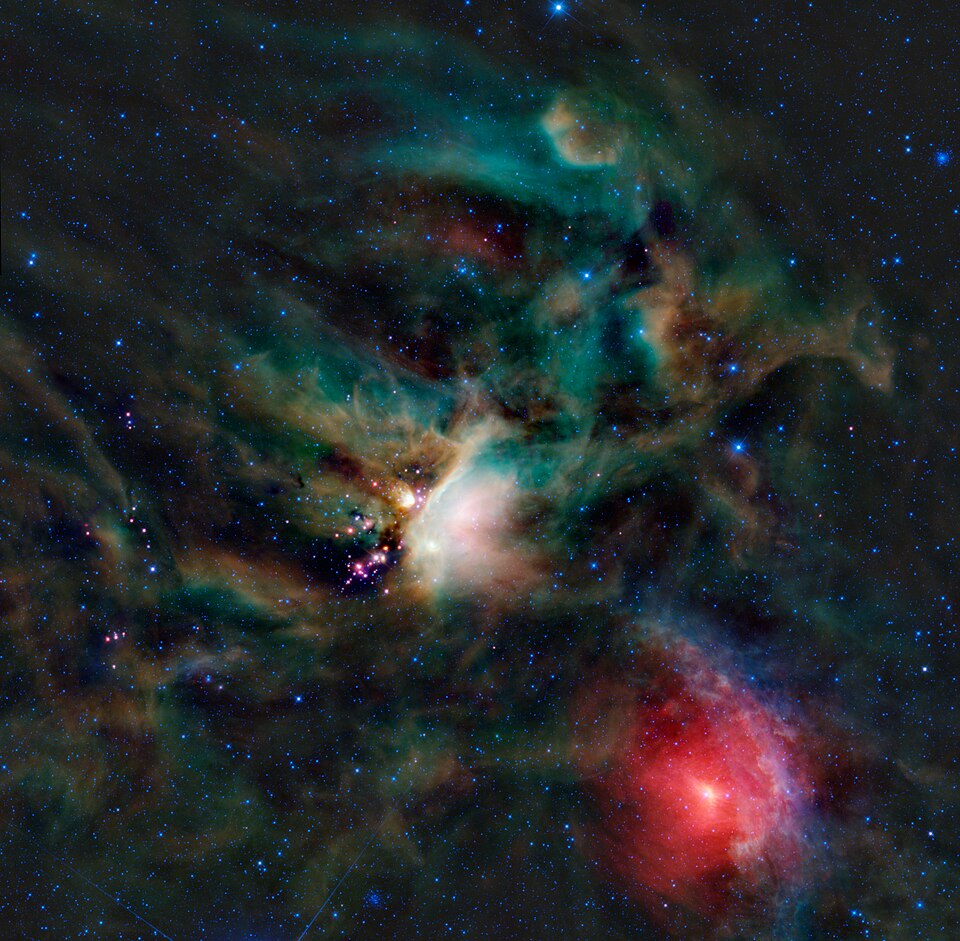

The most widely studied triggering mechanism is supernova-driven compression. When a massive star explodes as a supernova, the expanding blast wave sweeps up surrounding interstellar material into a dense shell. If this shell encounters a molecular cloud, or if it compresses the gas within the same cloud from which the progenitor star formed, the resulting shock can push the cloud gas past the Jeans threshold, initiating new rounds of collapse.15 This process can produce a cascade of star formation in which each generation of massive stars triggers the birth of the next, a concept known as sequential star formation, first proposed by Bruce Elmegreen and Charles Lada in 1977.15
A related mechanism is radiative compression from OB associations. Massive O- and B-type stars emit prodigious quantities of ultraviolet radiation, which ionizes the surrounding hydrogen gas and drives expanding H II regions into the neutral molecular cloud. The ionization front is preceded by a shock front that compresses the adjacent neutral gas, potentially creating conditions favorable for gravitational collapse at the boundary of the expanding H II region.15, 1
On galactic scales, spiral arm compression concentrates interstellar gas as it passes through the density wave pattern of the galaxy's spiral structure. The enhanced gas density within spiral arms favors the formation of giant molecular clouds and the initiation of star formation, which is why spiral arms are visually prominent in blue light: they are delineated by the young, luminous stars born within them.4 Cloud-cloud collisions, in which two molecular clouds or clumps physically collide at relative velocities of several kilometers per second, represent another mechanism capable of producing localized regions of very high density and triggering gravitational collapse.1
Fragmentation and the initial mass function
A collapsing molecular cloud does not produce a single star. As the cloud contracts, it fragments into many smaller clumps, each of which collapses independently to form a star or a small multiple-star system. This fragmentation occurs because the Jeans mass decreases as density increases during isothermal collapse—that is, as long as the gas can radiate away its compressional heat and remain at roughly constant temperature, higher-density subregions within the collapsing cloud become Jeans-unstable and break off into separate collapse centers.1, 19 The result is that stars almost always form not individually but in clusters or loose groups.4
The distribution of stellar masses that emerges from this fragmentation process is one of the most fundamental quantities in astrophysics: the initial mass function (IMF). In 1955, Edwin Salpeter published the first empirical determination of the IMF, based on the luminosity function of stars in the solar neighborhood. He found that the number of stars formed per unit mass interval follows a power law of the form dN/dM proportional to M−2.35, meaning that for every factor-of-ten increase in stellar mass, there are roughly twenty times fewer stars.5 This steep decline at high masses means that massive stars are rare: the universe produces far more dim, low-mass M dwarfs than it does luminous O and B stars.
The Salpeter power law accurately describes the IMF above roughly 1 solar mass, but subsequent work revealed that it overestimates the number of the lowest-mass stars. Pavel Kroupa (2001) and Gilles Chabrier (2003) independently derived improved forms of the IMF that incorporate a flattening or turnover below about 0.5 solar masses.6, 7 The Kroupa IMF is a multi-segment power law, with a slope of −1.3 for masses between 0.08 and 0.5 solar masses and the Salpeter slope of −2.3 above 0.5 solar masses.6 The Chabrier IMF replaces the low-mass power law with a lognormal distribution peaking near 0.2–0.3 solar masses.7 Both forms are in good agreement with observational data and have been widely adopted as standard representations.
One of the most remarkable features of the IMF is its apparent universality. Despite the wide range of physical conditions in different star-forming environments—from isolated Bok globules to dense cluster-forming clumps in giant molecular clouds—the distribution of stellar masses appears to be broadly the same everywhere it has been measured, at least within the Milky Way and nearby galaxies.6, 7, 19 Why the fragmentation of molecular clouds under such diverse conditions produces such a consistent mass distribution remains one of the central open questions in star formation theory. Leading explanations invoke some combination of turbulent fragmentation, competitive accretion among protostars within a common gas reservoir, and feedback from protostellar outflows that limits the mass a forming star can ultimately accumulate.19
Protostellar evolution
When a dense core begins its gravitational collapse, the initial contraction proceeds nearly in free fall because the gas is optically thin to its own infrared radiation and can cool efficiently. As the central density rises, however, the innermost region becomes opaque to infrared photons, trapping heat and causing the temperature and pressure to rise sharply. This halts the free-fall collapse at the center and forms a protostar—a small, hot, pressure-supported object surrounded by a massive infalling envelope of gas and dust.8, 14
Conservation of angular momentum ensures that the infalling material does not simply rain directly onto the protostar. Instead, it settles into a rotating accretion disk around the central object, through which mass is transported inward by viscous or magnetic torques and accreted onto the growing star. The gravitational energy released by accretion powers the protostellar luminosity during this phase, which can be substantial: accretion luminosities of several solar luminosities are common, and much higher values are observed during accretion outbursts.14, 13
A distinctive feature of protostellar systems is the presence of highly collimated bipolar jets and outflows launched perpendicular to the disk plane. These outflows, driven by the interaction of the magnetic field with the rotating disk and infalling envelope, carry away mass, angular momentum, and energy. Where the fastest jet material collides with the surrounding molecular cloud, it produces luminous shock-heated knots called Herbig-Haro (HH) objects, named after George Herbig and Guillermo Haro, who first identified them in the 1950s.10 Herbig-Haro flows can extend over a parsec or more from the driving source and serve as visible signposts of ongoing star formation even when the protostar itself is hidden deep within its dusty envelope.10
The evolutionary state of a protostar is classified observationally by the shape of its spectral energy distribution (SED)—the distribution of emitted light across wavelengths. The standard classification system, developed by Charles Lada and refined by Philippe André and collaborators, defines four classes.8, 11 Class 0 objects are the youngest protostars, still deeply embedded in their natal envelopes with most of the system mass residing in the envelope rather than in the central star; they radiate primarily at submillimeter wavelengths. Class I sources have partially dissipated their envelopes and show rising SEDs toward the mid-infrared. Class II objects, which correspond to classical T Tauri stars, have dispersed most of their envelopes and are surrounded by optically thick circumstellar disks. Class III sources are weak-line T Tauri stars with little or no remaining disk emission.11, 16 The typical duration of the embedded protostellar phase (Class 0 and Class I combined) is estimated at roughly 0.5 million years for a solar-mass object, based on statistical comparisons of the numbers of sources in each class within nearby star-forming regions.11, 16
T Tauri stars and pre-main-sequence contraction
When the surrounding envelope has been largely accreted or dispersed by outflows and radiation, the young star becomes optically visible as a T Tauri star, named after the prototype object T Tauri in the constellation Taurus. T Tauri stars are pre-main-sequence objects: they have not yet initiated stable hydrogen fusion in their cores and are powered instead by the gravitational potential energy released as the star contracts—the Kelvin-Helmholtz mechanism.14, 20
The pre-main-sequence contraction path of a star on the Hertzsprung-Russell (HR) diagram was first calculated by Chushiro Hayashi in 1961. Hayashi showed that a fully convective star of a given mass follows a nearly vertical track at approximately constant surface temperature, descending in luminosity as the star shrinks. This is the Hayashi track.12 As the star contracts and its interior temperature rises, the deep interior eventually becomes radiatively stable, at which point the contraction track bends toward higher temperatures along the Henyey track, approaching the main sequence from the upper right of the HR diagram. The total pre-main-sequence contraction time depends sensitively on mass: for a one-solar-mass star, it is approximately 30 to 50 million years; for a 10-solar-mass star, it is less than 100,000 years; for a 0.1-solar-mass M dwarf, it can exceed 100 million years.20, 12
T Tauri stars are divided into two subclasses based on the strength of their hydrogen emission lines. Classical T Tauri stars (CTTS) exhibit strong, broad emission lines indicative of active magnetospheric accretion from a circumstellar disk, corresponding to SED Class II. Weak-line T Tauri stars (WTTS) have weaker emission lines and little or no disk emission, corresponding to SED Class III, indicating that their disks have been substantially or entirely dissipated.14 The transition from CTTS to WTTS reflects the gradual dispersal of the circumstellar disk through a combination of accretion onto the star, photoevaporation by stellar ultraviolet and X-ray radiation, and the formation of planetesimals and planets.14
The accretion process during the T Tauri phase is not steady. FU Orionis outbursts, named after the prototype star FU Orionis, are dramatic episodes in which the accretion rate onto a young star increases by a factor of a hundred to a thousand for decades to centuries, causing the star to brighten by several magnitudes. During an FU Orionis outburst, the mass accretion rate can exceed 10−4 solar masses per year, compared to typical T Tauri accretion rates of 10−8 to 10−7 solar masses per year.13 These outbursts are thought to arise from thermal or gravitational instabilities in the accretion disk and may play a significant role in the overall mass assembly of low-mass stars, with a substantial fraction of the final stellar mass potentially accumulated in a few brief, intense accretion episodes rather than through steady accretion.13
The pre-main-sequence phase ends when the contracting star's core temperature reaches approximately 10 million kelvins—the threshold for sustained hydrogen fusion via the proton-proton chain. At this point the star achieves thermal equilibrium, with nuclear energy generation precisely balancing the radiative losses from the surface, and it settles onto the main sequence of the HR diagram. It will remain there, burning hydrogen in its core, for the great majority of its life.20
Observational windows into star formation
Because protostars are born inside dense cocoons of gas and dust that absorb and scatter visible light, the earliest stages of star formation are invisible to optical telescopes. Progress in understanding star formation has therefore depended critically on the development of observational capabilities at infrared, submillimeter, and radio wavelengths, where dust becomes increasingly transparent.11, 16
.jpg)
.jpg)
The Spitzer Space Telescope, launched by NASA in 2003, transformed the study of star formation with its sensitive mid-infrared imaging of nearby molecular clouds. The Spitzer "Cores to Disks" (c2d) Legacy program surveyed five of the nearest star-forming clouds—Serpens, Ophiuchus, Perseus, Lupus, and Chamaeleon II—cataloging young stellar objects across all evolutionary classes and providing the first statistically robust census of protostellar populations in these regions.16 Spitzer surveys of the Orion molecular clouds identified over 3,400 young stellar objects, including nearly 500 protostars, providing an unprecedented view of star formation in the nearest massive star-forming complex.17
The Herschel Space Observatory (2009–2013), operating at far-infrared and submillimeter wavelengths, probed even colder and more deeply embedded structures than Spitzer could reach. Herschel's Gould Belt Survey and Hi-GAL Galactic Plane Survey mapped entire molecular clouds with angular resolution and sensitivity sufficient to detect individual prestellar cores—the dense condensations on the verge of gravitational collapse that represent the earliest identifiable stage of the star formation process. A key discovery from Herschel was the ubiquity of filamentary structure in molecular clouds and the finding that prestellar cores are preferentially located within supercritical filaments whose linear mass density exceeds the critical value for gravitational instability.9
The Atacama Large Millimeter/submillimeter Array (ALMA), an interferometer of 66 antennas in the Chilean Atacama Desert, has brought angular resolution at millimeter and submillimeter wavelengths to levels previously achievable only at optical wavelengths. ALMA's 2014 observation of the protoplanetary disk around the young star HL Tauri revealed a stunning pattern of concentric bright and dark rings at a resolution of approximately 3.5 astronomical units, providing the most detailed view of a circumstellar disk ever obtained and offering direct evidence for the early stages of planet formation.18 ALMA has since become the preeminent tool for studying the kinematics, chemistry, and structure of protostellar disks, envelopes, and outflows at sub-arcsecond resolution.18
Several iconic regions serve as natural laboratories for studying star formation across a range of conditions. The Orion Nebula (M42), at a distance of roughly 400 parsecs, is the nearest region of active massive star formation and hosts the dense Trapezium cluster of young OB stars whose radiation sculpts the surrounding molecular gas into the visible nebula.17 The Taurus-Auriga molecular cloud complex, at a distance of about 140 parsecs, is a low-mass star-forming region with no O or B stars, providing a contrasting environment in which stars form in relative isolation rather than in dense clusters.16 These two regions represent opposite ends of the star formation spectrum—clustered, high-mass formation in Orion versus distributed, low-mass formation in Taurus—and together they have served as primary testbeds for much of the theoretical framework described in this article.1, 4
Together, these observational tools and laboratory regions have built a coherent, physically detailed picture of star formation that spans more than seven orders of magnitude in spatial scale—from galactic spiral arms hundreds of kiloparsecs across to protoplanetary disks a few hundred astronomical units in diameter—and connects the physics of interstellar gas to the formation of stars, planetary systems, and ultimately the conditions for life.1, 14
References
From Filamentary Networks to Dense Cores in Molecular Clouds: Toward a New Paradigm for Star Formation
The Evolution of Protostars: Insights from Ten Years of Infrared Surveys with Spitzer and Herschel
The Spitzer c2d Legacy Results: Star-Formation Rates and Efficiencies; Evolution and Lifetimes
The Spitzer Space Telescope Survey of the Orion A and B Molecular Clouds. I. A Census of Dusty Young Stellar Objects
The 2014 ALMA Long Baseline Campaign: First Results from High Angular Resolution Observations toward the HL Tau Region