Overview
- Bergmann's rule, formulated by Carl Bergmann in 1847, is the ecogeographic generalization that within widely distributed clades of endothermic animals, populations and closely related species in colder climates tend to be larger in body size than those in warmer climates, an effect Bergmann attributed to the heat-conservation advantage of a lower surface-area-to-volume ratio.
- Meta-analyses of mammals and birds find that roughly 65 to 78 percent of species conform to the rule, with the strongest signal in sedentary, large-bodied taxa, while a 2018 reassessment of 952 species using georeferenced museum specimens found that for 79 percent of species temperature explained little of the variation in body mass, indicating that Bergmann's rule is a real but variable tendency rather than a universal law.
- Paleontological records of mammalian dwarfing during the Paleocene-Eocene Thermal Maximum, fecal-pellet body-mass series in Late Quaternary woodrats, and contemporary observations of shrinking birds and mammals during recent warming all link body size to temperature on geological, millennial, and decadal timescales, making Bergmann's rule a central reference point for forecasting morphological responses to anthropogenic climate change.
Bergmann's rule is the ecogeographic generalization that within widely distributed clades of endothermic animals, populations and closely related species inhabiting colder climates tend to attain larger body sizes than those in warmer climates. The pattern was first articulated in 1847 by the German anatomist and physiologist Carl Bergmann, who proposed that the relationship between heat production and heat loss in warm-blooded animals scales with body geometry: because metabolic heat generation increases approximately with body volume while heat dissipation occurs across the external surface, larger animals possess a lower surface-area-to-volume ratio and therefore retain heat more efficiently in cold environments.1, 6 The rule has become one of the most frequently cited and most contested generalizations in ecology and biogeography, anchoring debates over the strength of climatic selection on morphology, the validity of broad-scale ecological "laws," and the predicted consequences of anthropogenic warming for animal body size.5, 13
Modern meta-analyses of hundreds of mammal and bird species report that the majority conform to the rule, with sedentary species and those measured by body mass showing the strongest signal, while a recent reassessment using nearly 274,000 georeferenced museum specimens has found that for most individual species temperature explains only a small fraction of within-species variation in mass.3, 4, 8 The rule's predictive value has therefore shifted from a universal physiological law to a robust statistical tendency at higher taxonomic levels, with substantial heterogeneity among species, geographic regions, and timescales.
Bergmann's 1847 formulation
Carl Georg Lucas Christian Bergmann (1814–1865) was a physician and comparative anatomist trained at the University of Göttingen, where he held a position in physiology before moving to Rostock as a professor of anatomy. His treatise Ueber die Verhältnisse der Wärmeökonomie der Thiere zu ihrer Grösse ("On the relations of the heat economy of animals to their size") appeared in volume 3 of Göttinger Studien in 1847, twelve years before the publication of Darwin's On the Origin of Species.1, 6 The work runs to more than one hundred pages of mid-nineteenth-century German and has never been translated in full into English; modern access to its argument has depended on partial digests prepared by later authors.5, 6
Bergmann's reasoning was explicitly biophysical. He treated heat production as proportional to body volume and heat loss as proportional to surface area, and observed that the ratio of surface to volume decreases as a body grows larger because surface scales with the square of linear dimension while volume scales with the cube. From this geometric fact he inferred that, all else being equal, larger endotherms should be better suited to retain metabolic heat in cold environments and smaller endotherms better suited to dissipate it in warm environments. To test the prediction empirically he compiled body-size data for more than three hundred bird species across eighty-six genera and reported that within many genera the larger species inhabited the colder portions of the geographic range.6 Crucially, Bergmann framed the rule as a comparison among closely related species (and within species) rather than across all of life, and he restricted it to homeothermic animals because his entire mechanism depended on the maintenance of a constant elevated body temperature.5, 6
Salewski and Watt's careful re-reading of the original German concludes that Bergmann's rule, in its original sense, can be paraphrased as: within species and among closely related species of homeothermic animals, larger size is often achieved in colder climates than in warmer ones, a pattern linked to the temperature budget of those animals.6 This reading restores the explicit role of mechanism, which many later interpreters dropped, and limits the rule's intended scope to comparisons that are taxonomically and physiologically meaningful.5
Heat economy and the surface-area-to-volume mechanism
The physical basis of Bergmann's rule rests on the geometry of heat exchange in a thermoregulating animal. Metabolic heat is generated throughout the volume of the body, primarily by the catabolism of carbohydrates, fats, and proteins in metabolically active tissues. Heat is lost from the body across its external surface by conduction, convection, radiation, and evaporation. Because the surface area of a geometrically similar body scales as the square of a linear dimension while its volume scales as the cube, the ratio of surface to volume falls as body size increases. A small mouse and a large bear with the same shape and the same mass-specific metabolic rate would generate heat in proportion to their masses but would lose heat in proportion to a much smaller fraction of those masses in the larger animal, so the larger animal could maintain a high core temperature against a cold environment with proportionally less metabolic effort.1, 5, 6
This argument explains why Bergmann himself confined his rule to endotherms. Ectotherms do not maintain a constant elevated body temperature and so face a fundamentally different thermal problem, and the surface-volume calculation that links body geometry to heat conservation does not translate directly to organisms that take their heat from the environment.14, 16 In real endotherms the simple geometric prediction is modified by several factors: insulation by fur, feathers, or blubber alters the effective surface; evaporative water loss provides an additional cooling pathway in hot climates; behavioral thermoregulation, including burrowing, huddling, and selection of microhabitats, can decouple ambient temperature from the thermal stress experienced by the animal; and basal metabolic rate itself varies among taxa and with body size.5, 13 Each of these moderators weakens the strict geometric expectation but does not eliminate the underlying thermodynamic asymmetry that motivates the rule.
Beyond heat conservation, several auxiliary hypotheses have been advanced to explain or augment Bergmann's pattern. Larger body size confers greater fasting endurance, which may be advantageous in cold or seasonal environments where food availability is intermittent. Larger animals also have greater absolute energy stores in fat, lower mass-specific metabolic rates, and slower rates of dehydration. Conversely, smaller body size in warm environments may be favored not only for heat dissipation but also for reduced absolute energy requirements where productivity is high but year-round, and for resource competition in species-rich tropical communities.7, 13 Modern statements of Bergmann's rule typically distinguish the bare empirical pattern from the suite of mechanistic hypotheses that may produce it, acknowledging that the same latitudinal gradient in body size could in principle arise from any combination of these processes acting on different taxa.5, 6
Mayr's mid-twentieth-century reinterpretation
By the early twentieth century Bergmann's rule had become entangled with a broader debate about whether the geographic differentiation of races and subspecies reflected adaptation, neutral drift, or non-genetic plasticity. Ernst Mayr addressed this question directly in a brief but influential 1956 paper in the journal Evolution, "Geographical character gradients and climatic adaptation," in which he argued that the recurrent association between body size and temperature in birds and mammals constituted strong evidence for adaptation rather than coincidence.2
Mayr's contribution was to recast Bergmann's rule, along with other ecogeographic generalizations such as Allen's rule on the relative length of appendages and Gloger's rule on coloration, as empirical patterns describing parallelisms between morphological variation and physiogeographic conditions. He emphasized that the validity of a rule as a description of pattern was logically independent of any particular hypothesis about its mechanism: even if a proposed causal explanation was wrong, the empirical regularity could still hold and demand a different explanation. He also stressed that body size in any given species is shaped by many simultaneous, sometimes conflicting selective pressures, so that no single rule should be expected to explain all variation.2, 5
Mayr's framing had two lasting effects on the field. First, it shifted the operational test of Bergmann's rule from cross-taxonomic comparisons of unrelated organisms toward the intraspecific level, in which populations of a single species are sampled across latitude or temperature and the slope of the size-temperature relationship is estimated. This is the approach that has dominated empirical work on Bergmann's rule for the past half century.3, 4 Second, by labeling the rule "ecogeographic" Mayr placed it in a family of similar empirical generalizations that together describe how morphology covaries with environment across the globe, and he treated the existence of such correlations as evidence that natural selection responds to climate in repeatable ways.2
Empirical evidence in mammals
The most thorough modern test of Bergmann's rule in mammals is the meta-analysis by Kyle Ashton, Mark Tracy, and Alan de Queiroz, published in The American Naturalist in 2000. They surveyed published intraspecific studies relating body size to latitude, temperature, or both, and identified 110 mammal species for which the size-latitude relationship had been quantified and 64 species for which the size-temperature relationship was available. Across all studies they found that 78 of 110 species (71 percent) showed a positive correlation between body size and latitude, and 48 of 64 species (75 percent) showed a negative correlation between body size and temperature, with both proportions significantly greater than the 50 percent expected under the null hypothesis of no relationship.3 When the analysis was restricted to studies in which the relationships were individually statistically significant, or to studies that sampled each species extensively, the same conclusion held.
Shai Meiri and Tamar Dayan extended this analysis three years later in the Journal of Biogeography, restricting attention to studies that had themselves tested statistical significance and analyzing 149 mammal species and 94 bird species. They reported that 65 percent of mammal species and 72 percent of bird species followed Bergmann's rule, that body mass was a more reliable correlate of latitude than were linear measurements such as skull length or dental dimensions, and that the tendency to follow the rule was visible at the level of taxonomic orders and families as well as individual species.4 Both meta-analyses identified the woodrats (genus Neotoma), various deer mice (Peromyscus), and a number of carnivores as particularly clear examples, while several bat lineages and small insectivores showed weak or absent patterns.3, 4
Conformity to Bergmann's rule in meta-analyses of endotherms3, 4
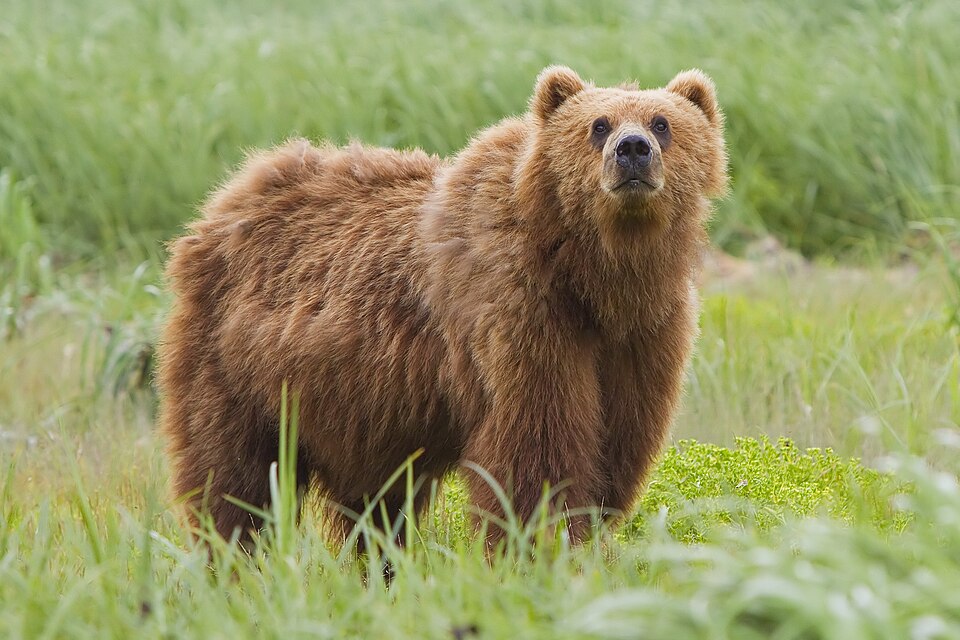
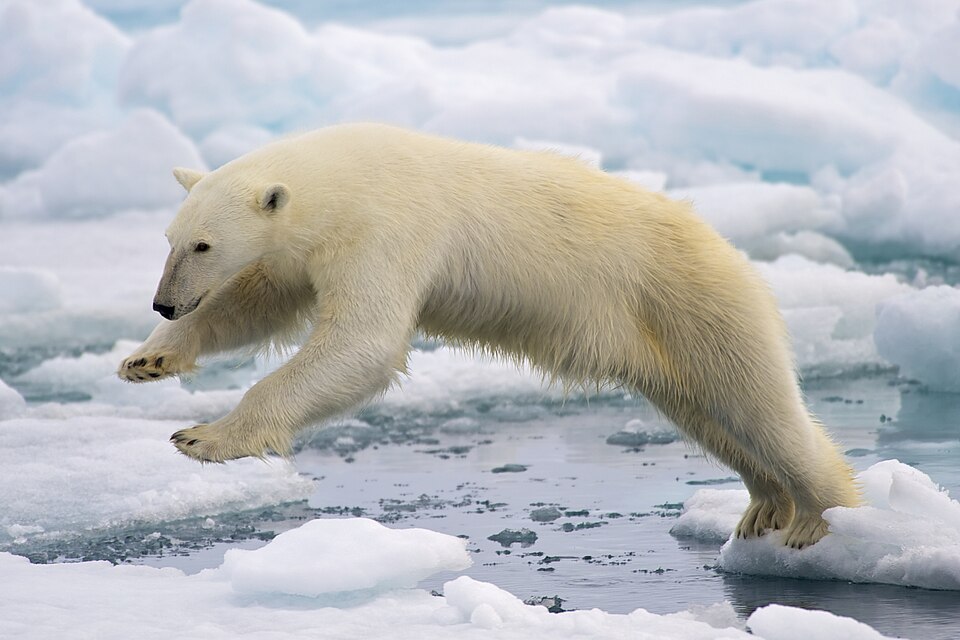
Among carnivores, the brown bear (Ursus arctos) provides a textbook illustration of the rule at the level of subspecies and population. The Kodiak brown bear (U. a. middendorffi) of the Kodiak Archipelago in southwestern Alaska is one of the largest extant terrestrial carnivores, with adult males averaging in excess of 480 kilograms and exceptionally large individuals exceeding 680 kilograms. The Alaska Department of Fish and Game places the size of mature males between 500 and 700 kilograms in autumn condition, comparable to the size of polar bears (U. maritimus) and substantially larger than brown bears from temperate continental Europe and southern parts of North America.20 The pattern is complicated by salmon-driven productivity in coastal Alaska, which contributes additional protein and fat to coastal populations, but the latitudinal trend in maximum brown bear body size from southern Europe to interior Eurasia and on to the Alaskan coast remains broadly consistent with Bergmann's expectation.3

Representative body mass of selected mammals across climatic zones3, 20
| Species or population | Climate | Approximate adult body mass |
|---|---|---|
| Polar bear (Ursus maritimus) | Arctic | 350–700 kg (males) |
| Kodiak brown bear (U. a. middendorffi) | Subarctic coastal | 500–700 kg (autumn males) |
| Eurasian brown bear (U. arctos arctos) | Boreal/temperate | 150–300 kg (males) |
| Syrian brown bear (U. a. syriacus) | Warm temperate | 100–250 kg |
| Sun bear (Helarctos malayanus) | Tropical Southeast Asia | 27–65 kg |
Empirical evidence in birds
Birds have figured in tests of Bergmann's rule since Bergmann's own study, and they remain the group for which the global pattern is best resolved. The 2003 meta-analysis of Meiri and Dayan found that 72 percent of bird species in studies meeting their statistical criteria conformed to the rule, with sedentary species showing significantly stronger conformity than long-distance migrants. The authors interpreted this difference as evidence that local thermal adaptation acts more strongly on populations that experience the same climate year-round than on migrants whose annual cycle exposes them to multiple thermal regimes.4
A still broader test was conducted by Valerie Olson and colleagues, who in 2009 published the first assemblage-level global analysis of bird body size in Ecology Letters. Using a database of nearly all extant bird species, they constructed global maps of mean body size within bird assemblages and tested for environmental correlates. The analysis confirmed a robust pattern of larger body sizes at higher latitudes consistent with Bergmann's rule, identified mean annual temperature as the single strongest environmental correlate of body size, and at the same time documented secondary effects: median body size is systematically larger on islands than on adjacent continents and smaller in species-rich tropical assemblages than in depauperate temperate ones.7 The authors concluded that geographic patterns of body size in birds reflect both within-lineage adaptation, as Bergmann had argued, and turnover among lineages with different size distributions, so that Bergmann's physiological prediction is part of a fuller ecological story that also involves species richness and resource availability.
The bird record also provided some of the earliest and clearest demonstrations of the rule's contemporary breakdown under climate warming. Janet Gardner and colleagues, working with century-spanning museum collections of Australian passerines, documented decreases in body size of about 1.8 to 3.6 percent in wing length over the twentieth century in four species, accompanied by a southward shift in latitudinal clines such that southern populations now resemble in size the more northern populations of the early twentieth century, equivalent to roughly a seven-degree shift in latitude.19 Comparable shrinking has been reported in central European passerines and in North American migrants captured at long-running banding stations, providing one of the strongest lines of evidence that Bergmann's rule has predictive power in the face of ongoing warming.13
Ectotherms and the converse pattern
Bergmann's original argument depended on the heat budget of an animal that maintains an elevated body temperature, and ectotherms therefore lie outside the rule's intended scope. Empirical surveys of ectotherms nevertheless reveal interesting patterns that have been described in relation to Bergmann's expectation, sometimes confirming a similar trend and sometimes reversing it in what has come to be called the converse Bergmann rule.14, 16
Among insects, Timothy Mousseau's 1997 review in Evolution reported that many species follow the converse pattern, with adults reaching larger sizes in warmer climates and smaller sizes in cooler ones. Mousseau attributed this to the constraints of growing season length on multivoltine insects: in cold environments, insects often must complete their development in a single short summer, which can favor rapid maturation at small size, whereas warmer environments permit longer developmental periods and the attainment of larger adult body size.14 This explanation does not invoke heat conservation at all and illustrates that the same surface latitudinal gradient in body size can have different mechanistic causes in different taxa.
Reptiles show a famously mixed picture. Kyle Ashton and Chris Feldman, in a 2003 paper in Evolution, surveyed body size patterns across non-avian reptiles and concluded that turtles tend to follow Bergmann's rule, while lizards and snakes generally reverse it, with smaller species and populations occurring at higher latitudes.15 They suggested that for many squamates the relevant constraint is the rate at which a small ectotherm can warm in the morning sun: in cold climates, smaller body size enables faster heating to the operative temperature needed for foraging, courtship, and digestion, an argument that draws on the same surface-volume geometry that underlies Bergmann's rule but applies it in the opposite direction. A 2014 review by Matan Shelomi found that across major ectotherm groups, classical Bergmann patterns and converse patterns occur with roughly comparable frequency, and that different mechanisms, including season-length constraints, water economy, and predator avoidance, dominate in different lineages.16
Paleontological evidence: the PETM and Late Quaternary
If body size in endotherms responds to temperature, then ancient warming and cooling events should leave a Bergmannian signal in the fossil record. The most striking such test is the Paleocene-Eocene Thermal Maximum (PETM) of about 56 million years ago, a transient interval of roughly 175,000 years during which a massive release of carbon to the atmosphere drove a global temperature rise of approximately five to eight degrees Celsius.10, 11 Mammal communities in the Bighorn Basin of Wyoming, where the PETM is exceptionally well sampled, show conspicuous reductions in body size across multiple lineages at the onset of the warming and a partial rebound at its end.
Ross Secord and colleagues, in a 2012 study published in Science, used measurements and stable isotope geochemistry of fossil teeth from the earliest horses (Sifrhippus) of the Bighorn Basin to track body size at high temporal resolution through the PETM. They reported that the lineage shrank by approximately 30 percent during the first 130,000 years of the warming, reaching a minimum size comparable to a small house cat, and then partially rebounded by about 75 percent of the lost mass in the final 45,000 years of the event. The body-size record correlated tightly with temperature reconstructed from oxygen isotopes, providing an unusually direct test of the predicted relationship.10
A subsequent analysis by Abigail D'Ambrosia and colleagues in Science Advances in 2017 extended the test to a second, smaller hyperthermal known as ETM2, which occurred about two million years after the PETM, and to additional mammalian lineages. They found that the early Eocene equid lineage decreased in size by about 14 percent during ETM2, less than during the PETM but in the same direction, and that comparable dwarfing occurred in other small mammals. The authors interpreted the recurrence of body-size reductions during multiple warming events as evidence that the response is repeatable and tied to temperature, consistent with a Bergmannian mechanism operating across geological time.11
On much shorter timescales, Felisa Smith, Julio Betancourt, and James Brown reconstructed body-mass evolution in the bushy-tailed woodrat (Neotoma cinerea) over the past 25,000 years from fecal pellets preserved in paleomidden deposits across the Great Basin and Colorado Plateau of the western United States. Pellet width is an accurate proxy for body mass in Neotoma, and the midden record permits dated samples to be drawn from intervals spanning the Last Glacial Maximum, the cold Younger Dryas, the Holocene Climatic Optimum, and the present day. Body mass decreased during periods of climatic warming, in the predicted Bergmannian direction, and the inferred body sizes tracked both regional temperatures simulated by a climate model and independent paleotemperature estimates from the deuterium isotope ratios of plant cellulose recovered from the same middens.9 The result is one of the cleanest demonstrations that Bergmann's rule operates at the level of microevolution within a single species over millennial timescales.
Body size and contemporary climate warming

The fossil and historical evidence raises the natural question of whether ongoing anthropogenic warming is producing a similar response in living animal populations. Janet Gardner and colleagues addressed this question in a 2011 review in Trends in Ecology & Evolution, arguing that body-size reduction should be considered "a third universal response to warming" alongside shifts in geographic range and shifts in phenology. Drawing on examples from birds, mammals, fish, and invertebrates, they concluded that the empirical record showed widespread but heterogeneous reductions in size during recent decades, with the magnitude and even the direction of change depending on the taxon, the trait measured, and the local climatic context.13
In the same year Jennifer Sheridan and David Bickford reviewed evidence for shrinking body size as an ecological response to warming in Nature Climate Change. Their synthesis, which spanned plants and ectothermic and endothermic animals, found numerous examples in which contemporary populations had become smaller in association with rising temperatures, and they emphasized the implications for ecosystem function, food security, and species interactions, given that body size influences fecundity, trophic position, dispersal, and competitive ability.12 The gardner-Sheridan synthesis became a touchstone for arguments that Bergmann's rule, far from being a museum curiosity, was visibly shaping the present biota.
The prediction has not gone unchallenged. Kristina Riemer, Robert Guralnick, and Ethan White, in a 2018 paper in eLife, assembled a database of about 274,000 georeferenced specimens drawn from natural history museums, covering 952 species of birds and mammals each represented by at least 30 individuals collected over at least 20 years and at least five degrees of latitude. They tested the within-species relationship between body mass and the temperature at the collection locality and reported that 79 percent of species showed no statistically significant relationship, that 87 percent showed temperature explaining less than 10 percent of variation in mass, and that the mean correlation coefficient between mass and temperature across all species was approximately −0.05. Only 14 percent of species showed a significant negative slope (the Bergmannian direction), and 7 percent showed a significant positive slope.8 The authors concluded that temperature is not a dominant driver of within-species variation in mass for most birds and mammals and questioned whether widespread shrinking should be expected as a default response to warming.
Reconciling these results with the meta-analyses that report majority conformity to Bergmann's rule has become an active area of research. The discrepancy can be partly understood as a difference in what is being measured. Studies that compare disjoint populations of a species at different latitudes detect long-standing differences that reflect generations of selection and acclimation, while specimen-based slopes within a species that has not yet equilibrated to recent climate change capture a transient and noisy signal. The specimen analysis is also dominated by species with broad ranges and sufficient museum representation, which differ systematically from the more narrowly distributed taxa that featured in earlier reviews. Even taking these caveats into account, the eLife result supports a view of Bergmann's rule as a tendency that holds at the level of broad taxonomic samples and over longer evolutionary timescales but operates weakly or unevenly within most individual contemporary species.8, 13
Bergmann's rule and humans
Humans are endothermic mammals with a near-global geographic distribution, and body size and shape do covary with latitude in ways that have long been interpreted as a Bergmannian pattern. The classic study by D. F. Roberts, published in 1953, compiled body-mass and surface-area measurements for indigenous human populations spanning a broad range of mean annual temperatures and reported a negative correlation of about −0.59 between body weight and ambient temperature, with high-latitude populations such as the Inuit, Aleut, and Sami being on average heavier than mid-latitude and tropical populations.17, 18 Christopher Ruff extended this analysis to fossil hominids in a 1994 review in the Yearbook of Physical Anthropology, examining body breadth, limb proportions, and body mass in archaeological samples and concluding that climatic influences on body form were detectable across the Pleistocene record, with broader, stockier bodies in cold environments and longer-limbed, more linear bodies in hot environments.18
A 2013 reassessment by Frances Foster and Mark Collard in PLoS ONE tested Bergmann's rule in modern humans using a sample of indigenous populations and concluded that the relationship between body size and temperature in humans is weaker and more contingent than the Roberts analysis had suggested. Foster and Collard argued that the apparent strength of the pattern in mid-twentieth-century data depended in part on the particular populations sampled and on the inclusion of high-latitude groups whose body sizes may reflect dietary and historical factors as well as climate.17 The human case illustrates a recurring methodological lesson in the field: the apparent strength of Bergmann's rule depends sensitively on which species and which characters are sampled, on whether body mass or linear dimensions are used as the size proxy, and on whether the analysis controls for non-climatic factors such as diet, disease load, and cultural practice.4, 17
Critiques and the concept-cluster problem
The volume of empirical work on Bergmann's rule has been accompanied by a substantial conceptual literature questioning what, exactly, is being tested. Cortney Watt, Sarah Mitchell, and Volker Salewski, in a 2010 paper in Oikos entitled "Bergmann's rule; a concept cluster?", argued that the proliferation of mutually inconsistent definitions has produced confusion in the literature and undermined the rule's scientific value. Their review identified at least four common formulations of the rule that differ in whether they apply to closely related species, populations within species, or all organisms; in whether they specify endotherms or any animal; in whether they cite latitude or temperature as the predictor; and in whether they explicitly invoke a heat-conservation mechanism or treat the rule as a purely empirical pattern.5
Watt and colleagues recommended that Bergmann's original definition be retained, that mechanism be treated as inherent to the rule rather than as an optional add-on, that purely empirical patterns lacking a stated mechanism be labeled as "trends" rather than "rules," and that the original German source be translated and made accessible so that future tests can be anchored in Bergmann's actual claims rather than in shifting paraphrases.5 Salewski and Watt subsequently provided a careful digest of the original 1847 paper in 2017, offering direct translations of key passages and reconstructing Bergmann's intended scope and reasoning, partly in response to their own earlier critique.6
Other critics have focused on statistical and sampling issues. Phylogenetic non-independence among species, publication bias toward studies that find significant results, the use of inconsistent body-size proxies (mass, condyle-basal length, wing chord, dental dimensions), and the failure to control for confounding environmental variables such as productivity and seasonality have all been raised as reasons to interpret the meta-analytic majorities with caution.4, 5, 8 Together with the Riemer et al. specimen analysis, these critiques have moved the field toward a more nuanced consensus: Bergmann's rule is real as a tendency at higher taxonomic levels and over evolutionary timescales but should not be expected to operate as a strict, universal law within every species.
Significance and continuing research
Bergmann's rule occupies a distinctive place in evolutionary biology and biogeography. It is one of a small number of broad empirical generalizations, alongside Allen's rule on appendage length, Gloger's rule on coloration, and the latitudinal diversity gradient, that link morphological or community-level traits to environmental variables in repeatable ways across the globe. Its persistence as an active research subject for nearly two centuries reflects both the simplicity of its underlying physical argument and the complexity of the biological systems on which the argument is tested.2, 5
Three lines of contemporary work continue to extend Bergmann's framework. The first is the use of natural history collections as a high-resolution record of within-species variation, exemplified by the global specimen analyses of Riemer and colleagues and by long-term banding records of birds, which are revealing how body size is changing in real time across thousands of populations.8, 13, 19 The second is the integration of paleobiological body-size records, such as those from the PETM and the Late Quaternary, with paleotemperature reconstructions, which permits the rule to be tested over the same timescales on which climate change has historically operated.9, 10, 11 The third is the mechanistic dissection of how heat conservation, fasting endurance, productivity, water availability, season length, and predator escape interact to shape body size in particular taxa, an effort that increasingly treats Bergmann's rule not as a single causal hypothesis but as the surface signature of a layered set of biophysical and ecological processes.5, 13, 16
For applied questions about the future of biodiversity under climate change, Bergmann's rule supplies a baseline expectation: in a warming world, endothermic species should, on average, become smaller, with consequences for fecundity, energy demand, food-web structure, and species interactions. The empirical record indicates that this expectation is being borne out for a meaningful fraction of taxa but not for all, and that the speed and magnitude of the response vary across lineages and habitats.12, 13 Continuing to refine Bergmann's rule, to specify when and where it applies, and to integrate it with other ecogeographic patterns is therefore not only a question of historical interest but a practical contribution to forecasting how the living world will respond to the climates of the coming century.
References
Evolution of the earliest horses driven by climate change in the Paleocene-Eocene Thermal Maximum
Bergmann's rule in nonavian reptiles: turtles follow it, lizards and snakes reverse it
Shifting latitudinal clines in avian body size correlate with global warming in Australian passerines