Overview
- Venom systems in snakes, spiders, scorpions, cone snails, and other organisms evolved through gene duplication and co-option of ordinary body proteins—digestive enzymes, blood-clotting factors, and neurotransmitter regulators were duplicated, recruited into venom glands, and modified by natural selection into potent toxins.
- Venom has evolved independently at least 20 times across the animal kingdom, each time using different protein families recruited from different ancestral functions, making it one of the clearest examples of convergent evolution at the molecular level.
- The stepwise assembly of venom systems from pre-existing protein components directly addresses the 'irreducible complexity' objection by demonstrating how a complex biochemical system can be built incrementally from parts that originally served other functions.
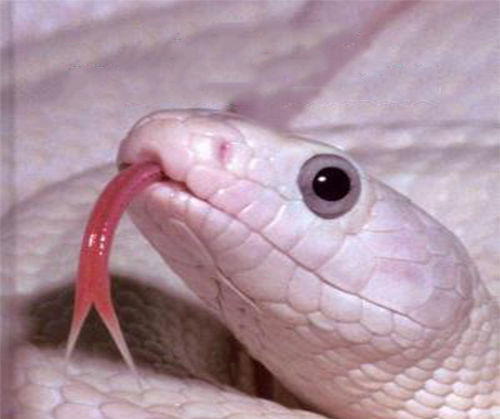
Venom—a cocktail of toxic proteins and peptides injected into prey or predators through a specialized delivery apparatus—has evolved independently at least 20 times across the animal kingdom, appearing in organisms as diverse as snakes, spiders, scorpions, cone snails, jellyfish, shrews, and the platypus.6, 10 The repeated, independent evolution of complex venom systems provides one of the most instructive case studies in how evolution builds sophisticated biochemical machinery through gene duplication, co-option of existing proteins, and natural selection. Venom proteins are not designed from scratch; they are modified versions of ordinary body proteins—digestive enzymes, blood-clotting regulators, immune molecules, and neurotransmitter modulators—that have been duplicated, recruited into venom glands, and reshaped by selection into potent toxins.2, 3, 6

Gene recruitment: from body protein to toxin
The central mechanism underlying venom evolution is gene recruitment (also called co-option or toxin recruitment). A gene encoding an ordinary physiological protein—a serine protease involved in digestion, a phospholipase involved in cell membrane remodeling, or a disintegrin involved in cell adhesion—is duplicated. One copy continues to perform its original function in the body's tissues, while the other comes under the control of regulatory elements that drive its expression in the venom gland. Freed from the functional constraints of its original role and subjected to strong positive selection for toxicity, the venom-expressed copy rapidly accumulates amino acid substitutions that enhance its ability to disrupt prey physiology.3, 6, 13
Fry's comprehensive phylogenetic analysis of snake venom proteins demonstrated that nearly every major toxin family in snake venom has a clear counterpart among ordinary body proteins. Venom metalloproteinases are related to the ADAM family of cell-surface metalloproteases. Venom serine proteases are related to coagulation factors and digestive enzymes. Venom phospholipase A2 enzymes are related to pancreatic and inflammatory phospholipases. In each case, the venom toxin and its non-toxic body protein homolog form sister groups on molecular phylogenetic trees, confirming that the toxin evolved from the body protein through duplication and subsequent divergence.3
The three-finger toxin family
The three-finger toxin (3FTx) family, one of the most abundant and diverse toxin families in elapid snake venoms (cobras, kraits, mambas, and their relatives), provides a detailed case study in toxin evolution. Three-finger toxins are small proteins with a characteristic fold of three β-strand loops extending from a central core stabilized by disulfide bonds. They include neurotoxins that block acetylcholine receptors at the neuromuscular junction (causing paralysis), cardiotoxins that disrupt cell membranes, and anticoagulants that interfere with blood clotting.4
Phylogenetic analysis reveals that the 3FTx family evolved from a non-toxic ancestor related to the Ly6/uPAR family of cell-surface receptor proteins, which play roles in cell signaling, immune regulation, and complement activation in non-venomous tissues. The ancestral 3FTx gene was recruited into the venom gland, and subsequent rounds of gene duplication followed by sequence diversification produced the dozens of functionally distinct three-finger toxins found in modern elapid venoms.4, 6 The evolutionary trajectory is visible in extant species: some elapids possess only a few 3FTx genes with moderate toxicity, while highly derived species like the many-banded krait (Bungarus multicinctus) have expanded the family to include potent neurotoxins, each optimized for a different molecular target in prey nervous systems.4
Convergent evolution of venom across the animal kingdom
One of the most remarkable features of venom evolution is its repeated, independent origin across unrelated animal lineages. Snake venom is built primarily from modified serine proteases, metalloproteinases, phospholipases, and three-finger toxins.3 Spider venoms are dominated by small disulfide-rich peptides (knottins) that target ion channels, recruited from an entirely different set of ancestral genes.8 Scorpion venoms rely on yet another family of cysteine-rich peptides that also target ion channels but are structurally and phylogenetically distinct from spider toxins.9 Cone snail venoms (conotoxins) are constructed from a diverse array of small peptides with yet another set of structural scaffolds, produced by an exceptionally rapid process of gene duplication and hypermutation.7
The platypus, one of the few venomous mammals, produces venom in crural glands on the hind legs of males. Its venom contains defensin-like peptides, C-type natriuretic peptides, and nerve growth factor-related proteins—recruited from gene families unrelated to those used by reptilian or arthropod venoms.12 Even among fish, venom has evolved independently in at least 18 lineages, using proteins derived from various sources including lectins and cysteine-rich secretory proteins.10
This pattern of convergent evolution is significant. Each independent venom system was assembled from a different starting point, co-opting whichever body proteins happened to be available for modification in that lineage. The result is functional convergence (all venoms incapacitate prey) achieved through different molecular mechanisms, consistent with evolution working with available raw materials rather than designing optimal solutions from scratch.6
Accelerated molecular evolution in venom genes
Venom toxin genes exhibit strikingly elevated rates of molecular evolution compared to their non-venom body-protein homologs. The ratio of nonsynonymous to synonymous substitutions (dN/dS) in venom genes frequently exceeds 1.0, indicating strong positive selection favoring amino acid changes—a pattern typical of evolutionary arms races between predators and prey.6, 13 This accelerated evolution is driven by the constant selective pressure to overcome prey resistance: as prey populations evolve resistance to a particular toxin, selection favors venom variants with altered binding properties that restore toxicity.
Casewell et al. demonstrated a "restriction and recruitment" model in which venom toxin genes undergo two phases of evolution: an initial phase of expansion through gene duplication and rapid sequence diversification (recruitment), followed by periods of purifying selection that maintain the toxic function of established toxin variants (restriction). This cyclical process produces the remarkable diversity of toxin isoforms found in the venoms of advanced venomous snakes, where a single viper species may possess dozens of serine protease and metalloproteinase variants, each with subtly different pharmacological properties.13
The squamate venom system
Fry et al. demonstrated that venom toxin genes are shared across a much broader range of squamate reptiles than previously recognized. Genes encoding phospholipase A2, three-finger toxins, and other toxin families are expressed in the oral glands of not only venomous snakes but also monitor lizards, iguanas, and other "non-venomous" squamates, suggesting that the venom system originated once in the common ancestor of snakes and lizards (Toxicofera) and was subsequently elaborated in some lineages and reduced in others.2, 5
This finding indicates that the ancestral squamate venom system was relatively simple—perhaps producing only mildly toxic secretions from oral glands—and that the sophisticated venom delivery systems of modern vipers and elapids evolved through the progressive elaboration of this ancestral condition. The specialized fangs of different snake families (rear fangs of colubrids, fixed front fangs of elapids, hinged front fangs of vipers) evolved independently from the ancestral tooth condition, each representing a different solution to the same functional problem of venom delivery.1, 2
Addressing irreducible complexity
The evolution of venom systems is directly relevant to the "irreducible complexity" argument, which claims that certain biological systems could not have evolved because they require all their parts to be present simultaneously in order to function. Venom systems, though undeniably complex in their mature form, demonstrably evolved through a stepwise process in which each stage was functional.2, 6
The ancestral condition was a body protein performing a normal physiological role—a digestive enzyme breaking down food, or a signaling molecule regulating blood pressure. Gene duplication created a second copy that began to be expressed in oral glands, where even mild cytotoxicity provided a selective advantage in subduing prey. Each subsequent modification—increased expression in the gland, enhanced toxicity through amino acid substitution, improved delivery through tooth modification—conferred an incremental fitness benefit.2, 3 No stage required a non-functional intermediate. The evolutionary history is preserved in the molecular phylogenies of toxin gene families, in the graded distribution of venom complexity across squamate reptiles, and in the independent assembly of venom systems from different protein building blocks in different animal lineages.6, 11
Venomics and intraspecific variation
Advances in proteomics and transcriptomics have given rise to the field of "venomics," which characterises the full complement of toxin proteins in a venom sample using mass spectrometry and next-generation sequencing. Venomic studies have revealed that venom composition is far more variable than previously appreciated, varying not only between species but also between populations, age classes, and sexes within a single species.14 In the Southern Pacific rattlesnake (Crotalus oreganus helleri), for example, individual populations separated by short geographic distances produce venoms with strikingly different toxin profiles, some dominated by neurotoxic phospholipase A2 complexes and others by hemorrhagic metalloproteinases.15
This intraspecific variation is driven by the same evolutionary mechanisms that produce interspecific differences—gene duplication, positive selection, and differential gene expression—operating on shorter timescales. The variation has direct medical consequences, because antivenom efficacy depends on matching the antivenom to the specific toxin profile of the envenomating species and population. Venomic databases are now being compiled to improve antivenom design and to identify novel bioactive compounds with pharmaceutical potential.14, 15
The diversity of venom systems extends to lineages often overlooked in discussions of venomous animals. Hymenopteran insects—bees, wasps, and ants—collectively represent one of the most species-rich venomous clades. Bee venom contains melittin, a membrane-disrupting peptide unrelated to any snake or spider toxin, alongside phospholipase A2 enzymes that, while functionally similar to snake venom phospholipases, were independently recruited from a different branch of the phospholipase gene family.16 This independent recruitment of analogous but non-homologous toxin proteins further illustrates that evolution assembles venom systems opportunistically from whatever molecular raw materials are available in each lineage.6, 16
References
The origin of snakes: revealing the ecology, behavior, and evolutionary history of early snakes using genomics, phenomics, and the fossil record
From genome to 'venome': molecular origin and evolution of the snake venom proteome inferred from phylogenetic analysis of toxin sequences and related body proteins
A central role for venom in predation by Varanus komodoensis (Komodo dragon) and the extinct giant Varanus (Megalania) priscus
Spider-venom peptides: structure, pharmacology, and potential for control of insect pests
Venom evolution widespread in fishes: a phylogenetic road map for the bioprospecting of piscine venoms
Restriction and recruitment—gene duplication and the origin and evolution of snake venom toxins
Intraspecific variation in venom composition in the medically significant Southern Pacific Rattlesnake (Crotalus oreganus helleri): biodiscovery, clinical, and evolutionary implications