Overview
- Heterochrony is evolutionary change in the timing, rate, or duration of developmental events, producing descendants whose adult morphology differs from their ancestors because growth started earlier or later, ran faster or slower, or stopped sooner or later than in the ancestral ontogeny.
- The two principal outcomes are paedomorphosis — in which the descendant adult retains features of the ancestral juvenile through neoteny, progenesis, or postdisplacement — and peramorphosis, in which development extends beyond the ancestral adult through acceleration, hypermorphosis, or predisplacement, as formalized by Alberch, Gould, Oster, and Wake in 1979.
- Iconic case studies include the paedomorphic Mexican axolotl, which retains larval gills and aquatic life because its hypothalamus fails to activate the thyroid axis; the bird skull, which is the paedomorphic descendant of theropod dinosaur juveniles; and the transcriptional neoteny of the human prefrontal cortex, in which the maturation of roughly a third of developmentally regulated genes is delayed relative to chimpanzees.
Heterochrony is evolutionary change in the timing, rate, or duration of developmental events. When a feature in a descendant species begins or ends its growth at a different age than in the ancestor, or grows faster or slower while it lasts, the resulting adult morphology can differ markedly from the ancestral form even though no new genes or developmental modules have been invented. The concept underlies many of the most striking transformations in the history of life: the gilled, aquatic adult salamanders that look like overgrown larvae, the bird skull that resembles a baby dinosaur, the dwarfed elephants that once browsed Mediterranean islands, and the prolonged brain development that distinguishes humans from other apes.1, 4
Although the German embryologist Ernst Haeckel introduced the word in 1875 as a label for exceptions to his own “biogenetic law,” heterochrony only became a central pillar of evolutionary theory after Stephen Jay Gould's 1977 monograph Ontogeny and Phylogeny and the formal mathematical treatment published two years later by Pere Alberch, Gould, George Oster, and David Wake.1, 2 Modern evolutionary developmental biology has retained the basic vocabulary of those works while extending it to molecular sequences, gene expression trajectories, and three-dimensional morphometric data, and while sharpening the conditions under which heterochrony, rather than spatial or topological change, can be invoked as a genuine mechanism of evolution.3, 7
Historical development of the concept
Haeckel coined Heterochronie in 1875 to describe cases in which the order of developmental events in an embryo deviated from the strict ancestor-recapitulating sequence demanded by his biogenetic law — the doctrine that “ontogeny recapitulates phylogeny.” For Haeckel, heterochrony was a nuisance category, a set of distortions that obscured the true historical signal embedded in development.1, 4 The British embryologist Walter Garstang inverted that framing in the 1920s by arguing that ontogeny does not recapitulate phylogeny but creates it: developmental innovations such as the persistence of larval features into reproductive adulthood could themselves be the source of major evolutionary novelties, and Garstang famously suggested that the vertebrate body plan might have arisen from the persistent larva of a sessile tunicate ancestor.4
The British embryologist Gavin de Beer extended this critique in his 1930 book Embryology and Evolution and its expanded 1940 successor Embryos and Ancestors, in which he stressed the importance of paedomorphosis — the retention of juvenile features in the adult — as a recurring theme in the fossil and comparative record and argued that paedomorphic lineages should be especially important in evolution because juvenile tissues are less specialized and therefore more capable of further change.4 The field then lay largely dormant until Stephen Jay Gould synthesized the older literature and reframed it in the context of the modern evolutionary synthesis. Gould's Ontogeny and Phylogeny, published by Harvard University Press in 1977, is divided into a long historical section on the rise and fall of recapitulation theory and a shorter analytical section in which Gould proposed a “clock model” for tracking the dissociation of size, shape, and reproductive maturity through evolutionary time.1 The book reignited interest in developmental timing as a source of evolutionary novelty and motivated a generation of empirical studies on neotenic salamanders, paedomorphic insects, and the prolonged maturation of the human brain.1, 4
Gould's clock model was qualitative. Two years after the book appeared, Pere Alberch, Stephen Jay Gould, George Oster, and David Wake replaced it with a fully formal framework in a paper that has become the canonical reference for heterochronic analysis. Published in Paleobiology in 1979, “Size and shape in ontogeny and phylogeny” characterizes a developmental trajectory by three vectors — size, shape, and ontogenetic age — and represents heterochronic change as a transformation of one trajectory into another within that three-dimensional space.2 The Alberch et al. scheme defined six elementary processes by which descendant ontogenies depart from ancestral ones, and showed that the older terminology of de Beer and others could be derived as special cases of those processes. Every contemporary discussion of heterochrony, whether grounded in fossils, embryology, or transcriptomics, traces its vocabulary back to this 1979 paper.3, 4
The formal classification: paedomorphosis and peramorphosis
Within the Alberch, Gould, Oster, and Wake framework, evolutionary change in development is described by altering one of three parameters of the ancestral ontogenetic trajectory: the time at which a developmental process begins (its onset), the time at which it ends (its offset), or the rate at which the trait grows once the process is under way.2, 3 Each of those parameters can be either increased or decreased relative to the ancestor, generating six elementary heterochronic processes. The processes are grouped into two contrasting outcomes: paedomorphosis, in which the descendant adult resembles the juvenile of its ancestor because development is curtailed; and peramorphosis, in which the descendant adult passes beyond the ancestral adult condition because development is extended.2, 4
Paedomorphosis can arise through three distinct routes. Neoteny is a reduction in the rate of somatic development, so that the trait grows more slowly while reproductive maturity arrives on schedule. Progenesis is an earlier offset, in which somatic development is truncated by precocious sexual maturation. Postdisplacement is a delayed onset, in which the developmental process begins later in life and therefore reaches a less advanced state by the time it stops.2, 4 Peramorphosis has three symmetric counterparts. Acceleration is an increase in the rate of somatic development, so that the trait passes through more developmental stages in a given amount of time. Hypermorphosis is a delayed offset, in which the trait continues to grow because reproductive maturity is postponed. Predisplacement is an earlier onset, in which the developmental process begins sooner and therefore reaches a more advanced state by the time it stops.2, 4
The six elementary heterochronic processes after Alberch, Gould, Oster & Wake (1979)2, 4
| Parameter changed | Direction | Process | Outcome | Adult morphology |
|---|---|---|---|---|
| Onset | Earlier | Predisplacement | Peramorphosis | More developed than ancestor |
| Onset | Later | Postdisplacement | Paedomorphosis | Less developed than ancestor |
| Offset | Later | Hypermorphosis | Peramorphosis | More developed than ancestor |
| Offset | Earlier | Progenesis | Paedomorphosis | Less developed than ancestor |
| Rate | Faster | Acceleration | Peramorphosis | More developed than ancestor |
| Rate | Slower | Neoteny | Paedomorphosis | Less developed than ancestor |
The distinction between neoteny and progenesis is subtle but biologically important. Both produce a paedomorphic adult, but in neoteny the timing of reproductive maturity is unchanged and the somatic trajectory has been slowed, while in progenesis the somatic trajectory is unchanged but reproductive maturity has been brought forward.2, 4 The two routes can be distinguished only by quantitative comparison of growth curves between the descendant and a putative ancestor, which is one reason that the unambiguous identification of heterochrony requires a phylogenetic context and detailed ontogenetic data.3, 7
The axolotl: a textbook case of paedomorphosis
The Mexican axolotl, Ambystoma mexicanum, is the most familiar example of paedomorphosis in any textbook of evolution or developmental biology. Most salamanders pass through an aquatic larval stage with feathery external gills and a finned tail before undergoing a thyroid-hormone-mediated metamorphosis into a terrestrial adult with lungs and an unfinned body. The axolotl skips the metamorphic stage entirely: the adult retains external gills, a tailfin, and an aquatic lifestyle while reaching full sexual maturity in the larval body.9
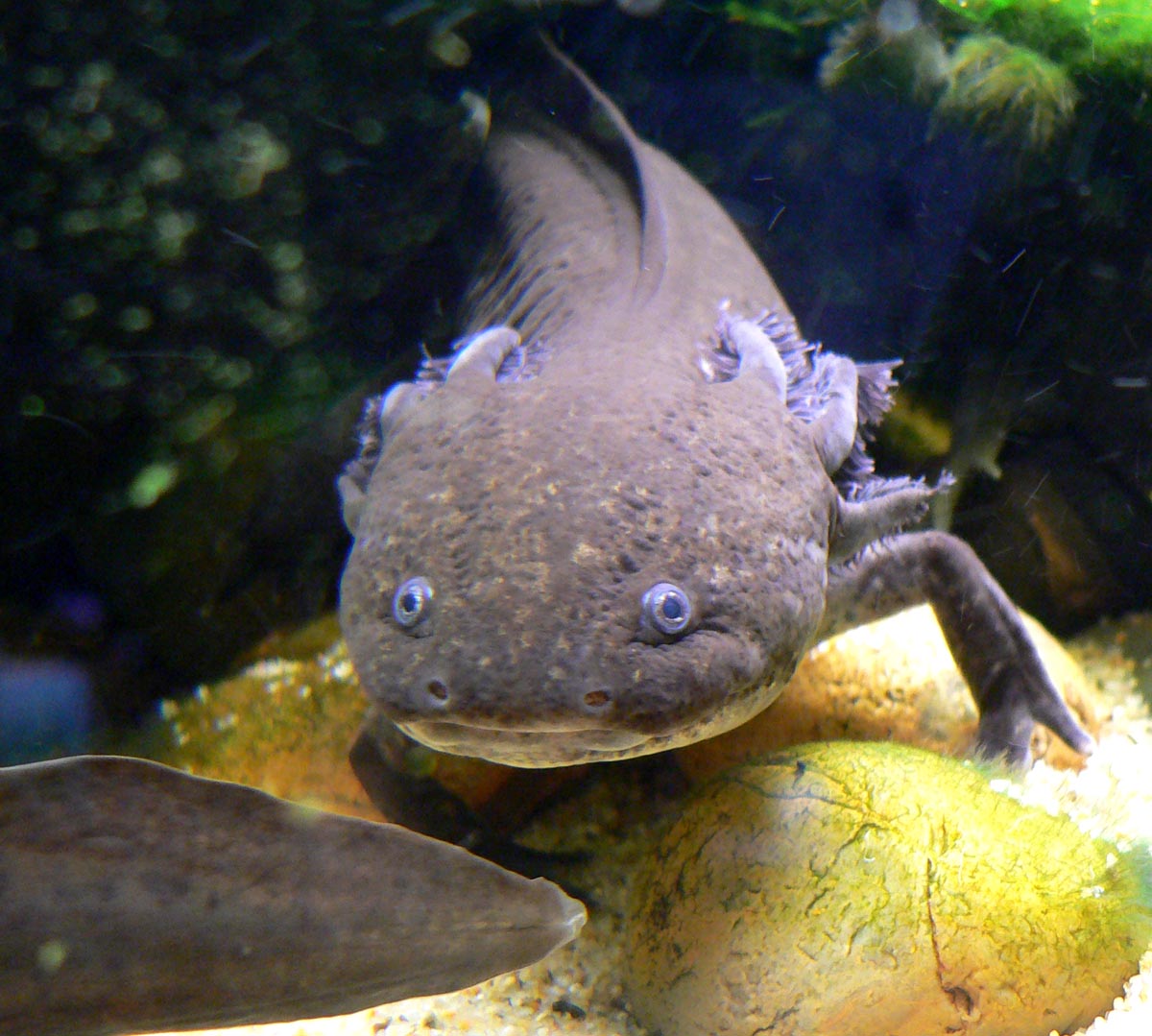

The phenomenon was first recognized in the 1860s, when axolotls sent from Mexico to the Jardin des Plantes in Paris bred in captivity and produced offspring that, to the surprise of the French zoologist Auguste Duméril, included some individuals that subsequently metamorphosed into terrestrial salamanders. Duméril's observation revealed that the axolotl was not a distinct lineage but a developmentally arrested member of a metamorphosing genus.9 The species had been described scientifically by Shaw and Nodder in 1798, and laboratory colonies have been maintained continuously for roughly two centuries, making the axolotl one of the oldest model organisms in biology.9
The proximate cause of axolotl paedomorphosis lies in the hypothalamic-pituitary-thyroid (HPT) axis. In metamorphosing salamanders such as Ambystoma tigrinum, the hypothalamus releases corticotropin-releasing hormone, which stimulates the pituitary to secrete thyroid-stimulating hormone, which in turn drives the thyroid gland to produce thyroxine. Rising thyroxine triggers the cascade of tissue remodeling that destroys the gills, resorbs the tailfin, and converts the larva into a terrestrial adult. In the axolotl, the thyroid gland is functional and the peripheral tissues retain working thyroid hormone receptors, but the hypothalamus does not activate the axis at the appropriate time. Administering exogenous thyroxine to an adult axolotl reliably induces metamorphosis, demonstrating that paedomorphosis is a regulatory failure rather than a loss of metamorphic competence.9
The ultimate, evolutionary cause of axolotl paedomorphosis has been mapped genetically. Quantitative trait locus (QTL) studies in hybrid crosses between the paedomorphic axolotl and its metamorphosing relative the eastern tiger salamander have identified a major-effect locus, met1, that regulates metamorphic timing, together with two additional moderate-effect loci that act additively to determine whether an individual will undergo metamorphosis or remain paedomorphic.10 These loci segregate in natural populations of the Ambystoma tigrinum complex in western North America, where multiple independent transitions to facultative or obligate paedomorphosis have occurred in lineages that colonized permanent ponds and lakes. The recurrent evolution of paedomorphosis within a single salamander genus illustrates that the developmental trajectory of an organism can be redirected through changes in a small number of regulatory loci, without restructuring the underlying tissue-level machinery.10
Peramorphosis in the fossil record
Peramorphic transformations, in which descendants overshoot the developmental endpoint of their ancestors, are well documented in the deep-time fossil record of marine invertebrates. Kenneth McNamara's 1986 analysis of Cambrian trilobite evolution showed that both paedomorphosis and peramorphosis have been important in trilobite history, but peramorphosis appears to dominate certain lineages, producing descendants with larger body size, more thoracic segments, more elaborate spines, and a more developed cephalon than their ancestors.8 Trilobites are particularly well suited to heterochronic analysis because their growth proceeded by a series of moults that left a discrete and recoverable record of size and shape at successive ontogenetic stages, allowing the entire developmental trajectory of an extinct species to be reconstructed from a single Cambrian shale.4, 8
The most commonly cited peramorphic example outside the trilobites is the giant deer Megaloceros giganteus, the so-called Irish elk, whose adult males carried antlers spanning roughly three to four metres and weighing tens of kilograms. Gould's 1974 morphometric analysis of Megaloceros in the journal Evolution showed that the antler size of the Irish elk falls along the positive allometric line relating antler size to body size in modern deer, indicating that the giant antlers grew “in proportion” via the same allometric rules as in smaller cervids; the spectacular size is a peramorphic consequence of hypermorphic growth in body size combined with the ancestral allometry of antler-to-body proportions.4, 21
Heterochrony is also pervasive in vertebrate skull evolution. The bird skull, characterized by a large rounded braincase, enormous orbits, and a beak in place of teeth, can be reconstructed as a paedomorphic descendant of the theropod dinosaur skull, retaining into adulthood features that occurred only briefly in the embryos and hatchlings of non-avian theropods.14 A geometric morphometric analysis published in Nature in 2012 by Bhullar, Marugán-Lobón, Racimo, and colleagues compared the ontogenetic trajectories of theropod skulls, including Coelophysis, Allosaurus, and modern crocodylians, with adult skulls of modern birds and their fossil relatives such as Archaeopteryx. The analysis identified at least four episodes of paedomorphosis along the line leading from non-avian theropods to crown birds, with localized peramorphosis in the rostrum producing the elongated, toothless beak; the result is a skull whose overall geometry retains the proportions of a theropod hatchling while one part — the beak — has been elaborated beyond the ancestral adult condition.14 The bird example illustrates that heterochrony rarely operates uniformly across an organism. Different developmental modules can change timing independently of one another, producing adults that are mosaics of paedomorphic and peramorphic features.
Heterochrony and human evolution
The idea that humans are essentially neotenic apes, retaining juvenile chimpanzee features into adulthood, has a long history. Louis Bolk proposed it explicitly in the 1920s, and Gould endorsed a modified version of it in Ontogeny and Phylogeny, listing flat faces, small canine teeth, hairlessness, vaginal angle, and the prolonged dependency of human infants among the supposedly neotenic features.1, 12 Modern morphometric analyses have complicated this picture. A 2004 geometric morphometric study by Mitteroecker, Gunz, Bernhard, Schaefer, and Bookstein compared cranial ontogenetic trajectories in humans and the four great ape genera using more than 250 adult and subadult crania and 96 three-dimensional landmarks; it found that neonatal humans are already markedly different in cranial shape from neonatal apes, and that the human and chimpanzee cranial trajectories do not lie on the same path in shape space. Pure heterochrony, in which the human form is a slowed or truncated version of the chimpanzee form, cannot account for the observed pattern of cranial differences.13
The picture is different for gene expression and brain maturation, where evidence for human-specific neoteny is much stronger. In 2009, Mehmet Somel, Philipp Khaitovich, and colleagues at the Max Planck Institute for Evolutionary Anthropology measured messenger RNA expression in the dorsolateral prefrontal cortex and superior frontal gyrus of 39 humans aged 0 to 47 years, 14 chimpanzees aged 0 to 44 years, and 9 rhesus macaques.11 Of the 7,958 genes expressed in the prefrontal cortex, 71 percent showed significant changes in expression with age, and roughly 38 percent of those age-regulated genes followed a human-specific neotenic pattern in which the developmental trajectory is shifted to later ages relative to chimpanzees and macaques. The result is that the prefrontal cortex of an adult human resembles the prefrontal cortex of a juvenile chimpanzee in its expression profile, suggesting that maturation of a substantial subset of the human brain transcriptome is genuinely delayed relative to other primates.11
Eduardo Bufill and colleagues subsequently argued that this prolonged maturation has functional consequences for the human brain, particularly through extended synaptic plasticity. Their 2011 review, “Human neoteny revisited: the case of synaptic plasticity,” collected evidence that synaptogenesis, dendritic arborization, and myelination of association cortices proceed more slowly in humans than in other primates and continue well into the second and third decades of life, providing an extended window during which experience can shape neural circuitry.12 Bufill and colleagues proposed that this delayed maturation is itself a heterochronic shift relative to other apes and that it underwrites the protracted childhood and the high levels of cognitive plasticity characteristic of Homo sapiens.12 The combined morphological and transcriptomic evidence suggests a more nuanced picture than the original Bolk-Gould thesis: gross human cranial shape is not a simple slowdown of the chimpanzee trajectory, but the molecular and cellular maturation of the brain plausibly is.
Developmental milestones in humans and chimpanzees11, 12
| Milestone | Chimpanzee | Human | Approximate delay |
|---|---|---|---|
| Eruption of first permanent molar | ~3.3 yr | ~6 yr | ~2.7 yr |
| End of rapid postnatal brain growth | ~3–4 yr | ~6–7 yr | ~3 yr |
| Female sexual maturity | ~8–9 yr | ~13–14 yr | ~5 yr |
| Peak of cortical synaptic density | Early postnatal | ~3–5 yr | Several years |
| Prefrontal myelination plateau | Adolescence | ~25–30 yr | ~10–15 yr |
The table compares approximate ages at which several developmental milestones are reached in humans and chimpanzees. Sexual maturity, brain volume completion, and the maturation of prefrontal circuitry are all substantially delayed in humans relative to chimpanzees, while early dental milestones such as eruption of the first permanent molar are also shifted, though by a smaller margin. The pattern supports the view that human neoteny is most pronounced in neural maturation rather than in overall skeletal development.11, 12
Sequence heterochrony and modern methods
The Alberch, Gould, Oster, and Wake framework analyses heterochrony in continuous traits whose growth can be plotted against age. Many of the most interesting developmental events — the first appearance of a limb bud, the closure of a neural tube, the eruption of a tooth — are not continuous but discrete, occurring at a specific moment in development that can be assigned a rank within an ordered sequence. Sequence heterochrony, the change in the relative order of such events between an ancestor and a descendant, has emerged as a major focus of comparative developmental biology over the past two decades.5, 19
Kathleen Smith's influential 2002 paper on sequence heterochrony argued that classical heterochronic analysis had unduly restricted the field by treating development as a series of growth curves rather than as a network of interrelated discrete events. Sequence-based methods, by contrast, can ask whether a particular tooth erupts before or after limb ossification, and whether the relative order has been rearranged in different lineages.19 Several methods have been developed to encode such sequences for phylogenetic analysis. The event-pairing approach codes each pair of events as occurring in one of three relative orders (first earlier, second earlier, or simultaneous) and treats the resulting matrix as data for parsimony analysis.6 A refinement called Parsimov, introduced in 2005 by Jeffery, Bininda-Emonds, Coates, and Richardson, identifies for each branch of a phylogeny the smallest set of event movements that can account for all observed event-pair changes, providing an explicit reconstruction of which developmental events have been moved in time on which lineages.6
Sequence heterochrony has revealed pervasive rearrangements in mammalian development. Anjali Goswami's 2007 comparative study of cranial bone ossification across mammals found structured, phylogenetically informative variation in the order in which cranial elements ossify, with bones belonging to the same developmental module tending to shift together.17 Goswami's data showed that marsupial mammals share a derived ossification sequence in which the bones of the anterior masticatory apparatus — the premaxilla, maxilla, and dentary — ossify earlier than in placental mammals. This shift plausibly reflects the functional demand of attaching to the maternal teat shortly after birth in an otherwise altricial neonate. Sequence heterochrony in this case provides a developmental explanation for one of the most distinctive features of marsupial life history.17
The analytical strength of sequence heterochrony comes from its independence of the assumptions underlying continuous-trait analysis. Sequences do not require a putative ancestor with a fully reconstructed growth curve; they require only a phylogenetic tree and a list of events that can be ordered in each species. The approach has been applied to organogenesis in vertebrates, to cell-fate specification in nematodes, and to gene-expression onset in Drosophila embryos, broadening the empirical reach of heterochrony from the morphometric domain in which Gould and Alberch developed it to the molecular and cellular events that govern modern evo-devo.5, 6, 17
Limits of the heterochronic paradigm
Despite its prominence, heterochrony as an explanatory framework has been substantially qualified since the late 1990s. Christian Klingenberg's 1998 review in Biological Reviews argued that the relationship between heterochrony and allometry — the pattern of covariation among morphological traits as size changes — is more complicated than the Alberch et al. scheme implies, and that there is no one-to-one correspondence between a heterochronic process and a specific change in allometric trajectory. Different combinations of ontogenetic shifts can produce indistinguishable adult morphologies, and the same adult shape difference can be produced by multiple developmental routes, so the inference of heterochrony from comparative morphometric data alone is often underdetermined.3
Miriam Zelditch and William Fink raised a more pointed objection in 1996 in their paper “The analysis of ontogenetic trajectories: when a change in size or shape is not heterochrony.” They showed that the language of heterochrony — faster, slower, earlier, later — can only be applied legitimately when the descendant's developmental trajectory lies along the same path through morphospace as the ancestor's, differing only in how far along that path it travels. When the trajectories themselves take different shapes, the differences cannot be described as a simple acceleration or deceleration: they reflect a change in the developmental program itself, not merely in its tempo.20 Mitteroecker and colleagues' 2004 finding that human and chimpanzee crania follow different paths in shape space is precisely such a case: the differences cannot be reduced to heterochronic shifts and require an explanation in terms of evo-devo processes that change the spatial pattern of developmental fields rather than merely their timing.13
Webster and Zelditch's 2005 review “Evolutionary modifications of ontogeny: heterochrony and beyond” extended this critique to the fossil record. They reanalysed several trilobite case studies that had been cited as classic examples of heterochrony and concluded that, in the trilobite genera Nephrolenellus geniculatus and N. multinodus, the descendant ontogeny differs from the ancestral one in the spatial pattern of shape change rather than its temporal extent, and is better described as a case of allometric repatterning than as pure heterochrony.7 They proposed a sixfold typology of ontogenetic modification — rate change, timing change, heterotopy (spatial repositioning), heterotypy (qualitative change in cell or tissue type), heterometry (change in amount), and allometric repatterning — of which heterochrony in the strict Alberch et al. sense is just one.7 The contemporary view, articulated by McNamara, Smith, and others, is that heterochrony remains a useful and well-defined category of evolutionary change but that it does not exhaust the ways in which development can be modified, and that careful empirical work is needed to distinguish heterochronic shifts from heterotopic, heterometric, and allometric ones.4, 5, 7
Heterochrony in plants and other lineages
Heterochrony is most often illustrated with animal examples, but the same logic applies to plants and to single-celled and colonial organisms. In plants, the developmental events that are reordered or rescaled include the transition from juvenile to adult vegetative leaves, the timing of flowering, the abscission of cotyledons, and the production of reproductive structures. Buendía-Monreal and Gillmor's 2018 review of plant heterochrony documented examples drawn from Arabidopsis, Cardamine hirsuta, Eucalyptus globulus, marsileaceous ferns, and many other lineages, in which paedomorphic or peramorphic shifts in the timing of vegetative phase change, flower formation, or leaf shape have produced major morphological diversifications.16
The molecular mechanism underlying vegetative phase change in flowering plants is now understood in considerable detail. The transition from juvenile to adult shoots is regulated by a gradual decline in the abundance of two microRNAs, miR156 and miR157, which repress a family of transcription factors called SQUAMOSA PROMOTER BINDING-LIKE (SBP/SPL) proteins. As miR156 declines through the life of the plant, SPL proteins accumulate and activate downstream targets that produce adult leaf morphologies and prime the plant for flowering. Heterochronic shifts in the timing of the miR156-SPL transition — produced experimentally by altering the expression of miR156 or its targets — can convert a plant into a paedomorphic form in which adult leaf morphologies are delayed or skipped, or into a peramorphic form in which adult features arise prematurely.16 The miR156-SPL system is conserved across angiosperms and provides one of the clearest molecular accounts of how a developmental clock can be tuned to alter adult morphology.
The island rule, first described by J. Bristol Foster in a 1964 Nature paper based on a survey of 116 insular mammal species and subspecies, provides a striking ecological setting in which heterochrony recurs.15 Foster found that small-bodied mammals such as rodents tend to evolve larger size on islands while large-bodied mammals such as carnivores and artiodactyls tend to evolve smaller size, and a 2021 global analysis by Benitez-Lopez and colleagues confirmed that the same pattern holds across mammals, birds, reptiles, and amphibians once phylogenetic and environmental confounders are taken into account.15, 18 Many of the dwarfed island forms display paedomorphic features in skeletal proportion, including shortened limbs and earlier reproductive maturity than their mainland ancestors, consistent with progenetic shortening of the somatic growth period under the energetic and ecological constraints of small islands. The dwarf elephants of the Pleistocene Mediterranean are among the most frequently cited fossil examples of this island dwarfism, and a similar interpretation has been advanced for the dwarfed dinosaurs of the Cretaceous Hateg Island in present-day Romania.18
Genetic and developmental mechanisms
The classical formulation of heterochrony is phenomenological: it describes patterns of change in growth curves and developmental sequences without specifying the molecular machinery responsible. Modern evo-devo has made substantial progress in identifying the genes and signalling systems whose alteration produces heterochronic phenotypes. In the salamander system, the major-effect met1 locus and additional loci met2 and met3 control responsiveness to thyroid hormone and account for much of the variation in metamorphic timing among populations of the Ambystoma tigrinum complex.10 In the nematode Caenorhabditis elegans, mutations in the heterochronic gene lin-4 alter the timing of larval-stage transitions, and a network of related regulatory genes coordinates the orderly progression of cell fates through the larval stages of nematode development. Heterochronic mutants such as lin-4 and lin-14, characterized in the laboratory of H. Robert Horvitz from the 1980s onward, provided some of the earliest molecular evidence that developmental timing is under direct genetic control.4
In flowering plants, the miR156-SPL module described above plays an analogous role, with the additional layer that sugar produced by photosynthesis represses miR156 and thereby links the developmental clock to the metabolic state of the shoot.16 Other heterochronic regulators include the gene FRIGIDA and the floral repressor FLOWERING LOCUS C, which together control the vernalization-dependent timing of flowering in Arabidopsis and many other plants. In vertebrate limb development, the rate of segmentation of the somites — the embryonic blocks of tissue that give rise to vertebrae — is set by a molecular oscillator whose period varies among species, accounting in part for the very different vertebral counts of mice and snakes.4
These mechanistic findings recast heterochrony as a phenomenon emerging from changes in the parameters of regulatory networks rather than as a primitive feature of evolution. The pace at which a developmental clock ticks, the threshold at which a transcription factor is activated, or the responsiveness of a tissue to a hormonal signal can all be altered by mutations of small effect, and such alterations are the genetic raw material out of which the heterochronic patterns described by Gould and Alberch are built.3, 4, 10 The continued expansion of comparative genomics, single-cell transcriptomics, and developmental imaging is steadily replacing the phenomenology of growth curves with explicit molecular accounts of how developmental timing is generated and altered.
Evolutionary significance and current debates
The reason heterochrony has held the attention of evolutionary biologists for nearly a century and a half is that it offers a parsimonious explanation for major morphological change. A small genetic alteration that retunes the timing of a single developmental clock can in principle remodel an entire body plan, sidestepping the difficulty of evolving every affected trait independently.1, 4 Lineages in which this occurs can therefore traverse large regions of morphospace by changes that are individually small but collectively transformative, providing one mechanism for the rapid origin of morphological novelty during episodes such as the Cambrian explosion or the radiation of cichlid fishes in African rift lakes.4, 8
How important heterochrony actually is, relative to other developmental modes of evolution such as heterotopy, heterometry, and the evolution of new gene-regulatory connections, remains a subject of active debate. The 1980s saw extravagant claims that heterochrony was the master key to evolutionary morphology, but contemporary reviews are more cautious. Studies that have applied rigorous morphometric methods to ostensibly heterochronic transformations frequently find that the descendant trajectory is not a pure rescaling of the ancestral one and that the differences require additional explanatory components, such as changes in the spatial layout of developmental fields or in the magnitude of growth in particular regions.3, 7, 13, 20 The molecular evidence supports a similar conclusion: changes in developmental timing are real, common, and consequential, but they are usually accompanied by other kinds of regulatory and genetic change, and a complete account of evo-devo cannot collapse into the timing axis alone.4, 5
Heterochrony nevertheless retains a central place in modern evolutionary developmental biology because it links three otherwise disparate domains: the embryology that generates phenotypes, the population genetics that determines which phenotypes spread, and the palaeontology that records the resulting historical patterns. The framework Alberch, Gould, Oster, and Wake set out in 1979 still organizes the way biologists think about the relationship between development and evolution, even as it has been refined, qualified, and embedded in a richer set of mechanisms. Salamanders that never grow up, birds with skulls of baby dinosaurs, plants that flower as juveniles, and humans whose brains keep maturing into the third decade of life are all reminders that the timing of development is not a fixed scaffold but an evolving variable, one whose evolution has shaped much of the biological diversity around us.1, 2, 4, 11, 14
References
The island rule explains consistent patterns of body size evolution in terrestrial vertebrates
The analysis of ontogenetic trajectories: when a change in size or shape is not heterochrony
The origin and function of 'bizarre' structures: antler size and skull size in the 'Irish elk,' Megaloceros giganteus