Overview
- Evolutionary developmental biology (evo-devo) demonstrated that animals as different as insects, vertebrates, and cnidarians share a deeply conserved genetic toolkit of transcription factors and signalling pathways — including Hox genes, Pax6, and the Hedgehog, Wnt, and BMP cascades — inherited from a common ancestor more than 600 million years ago.
- Morphological evolution arises predominantly from changes in cis-regulatory elements that alter when, where, and how much toolkit genes are expressed, rather than from changes to the protein-coding sequences of the genes themselves, explaining how a conserved genome can produce radically different body plans.
- Developmental mechanisms such as modularity, heterochrony, heterotopy, and the co-option of toolkit genes into novel contexts account for major evolutionary innovations including insect wings, vertebrate limbs, and butterfly eyespots.
Evolutionary developmental biology, commonly known as evo-devo, is the field of biology that investigates how changes in developmental processes produce evolutionary changes in morphology. The central insight of evo-devo, which emerged in the 1980s and 1990s from the convergence of molecular genetics, embryology, and evolutionary biology, is that the vast diversity of animal body plans is generated not by an equally vast diversity of genes but by the differential regulation of a surprisingly conserved set of developmental genes shared across the animal kingdom.1, 4 A fruit fly, a mouse, and a human deploy many of the same master regulatory genes during embryonic development, yet the outcomes are radically different — not because the genes themselves differ greatly in their protein-coding sequences, but because the instructions governing when, where, and how intensely those genes are expressed have diverged over hundreds of millions of years of evolution.14
Before evo-devo, evolutionary biology and developmental biology were largely separate disciplines. The Modern Synthesis of the mid-twentieth century unified Darwinian selection with Mendelian genetics but said little about how genetic variation translates into morphological variation through development. Evo-devo filled this gap by revealing the molecular mechanisms that connect genotype to phenotype, demonstrating that the evolution of form is overwhelmingly an evolution of gene regulation rather than gene content.4, 23
The genetic toolkit
The discovery that launched evo-devo was the finding that the Hox genes — a family of homeobox-containing transcription factors that specify segment identity along the anterior-posterior axis — are shared across nearly all bilateral animals and are arranged in clusters whose gene order on the chromosome corresponds to the order of body regions they pattern along the body axis, a property called colinearity.2, 3 In Drosophila, Hox genes such as Ultrabithorax and Antennapedia determine whether a segment develops wings, legs, or antennae. In vertebrates, four paralogous Hox clusters (HoxA through HoxD) pattern the vertebral column, limbs, and hindbrain with strikingly similar logic.3 The conservation of Hox gene structure, sequence, and chromosomal organisation across phyla separated by more than 600 million years of evolution demonstrated that the genetic architecture underlying body plan specification is ancient and shared by common descent.1, 2
Beyond the Hox genes, a broader genetic toolkit of transcription factors and signalling pathways governs the construction of animal body plans. The transcription factor Pax6, for instance, is required for eye development in organisms as different as Drosophila, mice, and humans. When the mouse Pax6 gene is experimentally expressed in Drosophila, it induces the formation of ectopic compound eyes on the fly's legs and wings — demonstrating that the gene's role as a master regulator of eye development has been conserved for at least 500 million years, despite the profound structural differences between vertebrate camera eyes and arthropod compound eyes.5, 6 Other toolkit components include the signalling pathways Hedgehog, Wnt, BMP (bone morphogenetic protein), Notch, and FGF (fibroblast growth factor), which are used repeatedly in different developmental contexts — limb patterning, neural tube specification, gut formation, heart development — across the animal kingdom.4, 23
The toolkit concept fundamentally changed how biologists understand morphological diversity. The number of genes in an animal's genome does not correlate with its anatomical complexity: a nematode worm, a fruit fly, and a human have roughly similar numbers of protein-coding genes (approximately 20,000). The diversity of animal form instead reflects the combinatorial deployment of a shared set of regulatory genes in different spatial and temporal patterns during development.4, 14
Deep homology
The concept of deep homology refers to the sharing of genetic regulatory mechanisms across organisms whose last common ancestor lacked the morphological structures that those mechanisms now build. Eyes, appendages, and hearts in arthropods and vertebrates are not homologous as structures — they evolved independently — but the genetic circuits that pattern them are homologous, inherited from a common bilaterian ancestor that possessed those regulatory genes in a simpler developmental context.7 The Pax6 gene controls eye development in flies and mice not because their eyes are derived from the same ancestral eye, but because the common ancestor of bilaterians already used Pax6 in light-sensitive cells, and this ancient regulatory relationship was independently elaborated in different lineages to build structurally distinct visual organs.5, 7
Deep homology extends well beyond eyes. The transcription factor Distal-less (Dll/Dlx) is deployed in the development of appendages across arthropods, vertebrates, and echinoderms, suggesting that the gene regulatory circuit for outgrowth was present in the bilaterian ancestor even if that ancestor lacked limbs in the modern sense.20 Similarly, the Nkx2-5/tinman transcription factor specifies cardiac precursor cells in both Drosophila and vertebrates, despite the vast structural differences between the insect dorsal vessel and the vertebrate four-chambered heart.4 These deep homologies reveal that evolution frequently builds new structures not from scratch but by redeploying ancient genetic circuits in new contexts.7
Modularity and gene regulatory networks
A key feature of animal development that enables evolutionary change is its modularity: the organisation of the body into semi-independent developmental units — segments, limbs, organs, tissue layers — that can be modified by selection without necessarily disrupting the development of other modules.8, 9 Modularity allows evolution to tinker with individual parts of the body plan while leaving the rest intact. The independent evolution of forelimbs into wings in birds, bats, and pterosaurs, while hindlimbs retained locomotory function, illustrates how limb modules can be modified individually.9, 17
At the molecular level, modularity is encoded in gene regulatory networks (GRNs) — hierarchical circuits of transcription factors, signalling molecules, and their cis-regulatory DNA elements that collectively control the spatial and temporal expression of downstream genes during development. Eric Davidson and Douglas Erwin proposed that GRNs have a layered architecture: a deeply conserved "kernel" of interconnected transcription factors that specifies fundamental body plan features (such as the endomesoderm in bilaterians), underlain by more evolutionarily labile "plug-in" subcircuits and peripheral "battery" genes that control terminal differentiation.10 The kernel is highly resistant to evolutionary change because perturbation of any component collapses the entire network, whereas the peripheral layers can be rewired more freely, producing morphological variation without destabilising core patterning.10, 11
This network architecture explains a longstanding puzzle in evolutionary biology: how can the same toolkit genes be used to build wildly different structures? The answer lies in the combinatorial logic of GRNs. A given toolkit gene does not have a single fixed function; its role depends on which other transcription factors are present in the same cell, which enhancers are accessible in the local chromatin environment, and which signalling pathways are active. The same gene can therefore participate in patterning eyes, limbs, and guts in different developmental contexts, because its regulatory inputs and outputs differ in each context.10, 4
Cis-regulatory evolution versus coding changes
One of the most influential conclusions of evo-devo research is that morphological evolution proceeds predominantly through changes in cis-regulatory elements (CREs) — the enhancers, promoters, silencers, and insulators that control gene expression — rather than through changes in the protein-coding sequences of toolkit genes.14 Because toolkit transcription factors and signalling molecules are pleiotropic, meaning they are used in many different developmental processes, mutations that alter the protein itself tend to have widespread deleterious effects. A mutation in the DNA-binding domain of Pax6, for example, would disrupt eye development, pancreas function, and brain patterning simultaneously. By contrast, a mutation in a single enhancer of Pax6 can alter its expression in one tissue at one developmental stage without affecting its function elsewhere.14, 15
Empirical surveys of the genetic basis of morphological differences between and within species have confirmed that cis-regulatory changes account for the majority of evolutionary changes in form. A comprehensive analysis by Stern and Orgogozo found that, among cases where the molecular basis of morphological evolution had been identified, cis-regulatory mutations were significantly more common than coding mutations, particularly for interspecific differences.15 Classic examples include the loss of pelvic spines in freshwater stickleback fish, where Shapiro and colleagues showed that independent pelvic reduction in multiple lake populations traced to deletions of a tissue-specific enhancer of the Pitx1 gene rather than to any change in the protein-coding sequence itself.27, 15 Similarly, changes in trichome (body hair) patterns in Drosophila species result from modifications of enhancer elements controlling the shavenbaby gene.14, 15
Research on Darwin's finches in the Galápagos has provided one of the most vivid demonstrations of how regulatory changes in toolkit genes generate morphological diversity. Abzhanov and colleagues found that the transcription factor Bmp4 (bone morphogenetic protein 4) is expressed earlier and at higher levels in the embryonic beak primordia of ground finch species (Geospiza) with deep, broad beaks compared to species with narrow beaks. Experimental overexpression of Bmp4 in developing chicken embryos produced broader, deeper beak morphologies, confirming a causal role for this single regulatory change in shaping one of the most iconic examples of adaptive radiation.25 In insects, the evolution of the leg-suppressing function of the Hox gene Ultrabithorax (Ubx) was traced by Galant and Carroll to the acquisition of a novel polyalanine domain in the Ubx protein, which confers the ability to repress the limb-patterning gene Distal-less. This protein-coding change—a rare exception to the predominance of cis-regulatory evolution—is responsible for the restriction of legs to thoracic segments in insects, a fundamental feature of the insect body plan.26
The predominance of cis-regulatory evolution has profound implications. It means that the raw material for morphological diversification already exists in every animal genome in the form of modular enhancer elements, each of which can be independently gained, lost, or modified by mutation. New morphological features can evolve through the gain of a new enhancer that activates an existing toolkit gene in a novel tissue or developmental stage, without requiring the invention of a new gene.14
Heterochrony and heterotopy
Heterochrony — evolutionary change in the timing of developmental events — is one of the most pervasive mechanisms by which development is modified to produce new morphologies.
_(13532447665).jpg)
_(13532447665).jpg)
Stephen Jay Gould, drawing on earlier work by Ernst Haeckel and Gavin de Beer, formalised the modern framework for heterochrony in his 1977 work Ontogeny and Phylogeny, distinguishing two broad categories.13 Paedomorphosis produces adult organisms that retain juvenile features of the ancestor, either by slowing the rate of development (neoteny), truncating development prematurely (progenesis), or delaying its onset (postdisplacement). Peramorphosis produces adult organisms that extend beyond the ancestral adult form, by accelerating development, prolonging it, or initiating it earlier.12, 13
The axolotl (Ambystoma mexicanum) is the textbook example of paedomorphosis through neoteny: it reaches sexual maturity while retaining larval features such as external gills and an aquatic lifestyle, never undergoing the metamorphosis typical of other salamanders. At the molecular level, this is attributable to reduced thyroid hormone signalling; experimentally administering thyroid hormone induces metamorphosis.12, 13 Human evolution has also been interpreted in heterochronic terms: the relatively flat face, large braincase, and delayed skeletal maturation of adult humans resemble juvenile features of other great apes, suggesting that changes in developmental timing contributed to the evolution of human cranial morphology.13
Heterotopy — evolutionary change in the spatial location of a developmental event — is the complementary mechanism. Where heterochrony modifies when a structure develops, heterotopy modifies where. The expression of Hox genes in novel body regions, the activation of limb-patterning genes in new positions, or the deployment of pigmentation circuits in previously unpigmented tissues are all instances of heterotopy that can generate evolutionary novelties.4, 13
Modes of heterochrony and their morphological outcomes12, 13
| Mode | Category | Developmental change | Classic example |
|---|---|---|---|
| Neoteny | Paedomorphosis | Slower rate of somatic development | Axolotl retaining larval gills |
| Progenesis | Paedomorphosis | Earlier offset (truncated development) | Miniaturised frogs and salamanders |
| Postdisplacement | Paedomorphosis | Delayed onset of development | Delayed ossification in some fish lineages |
| Acceleration | Peramorphosis | Faster rate of somatic development | Exaggerated horn growth in Irish elk |
| Hypermorphosis | Peramorphosis | Later offset (extended development) | Prolonged brain growth in humans |
| Predisplacement | Peramorphosis | Earlier onset of development | Precocious tooth eruption in some mammals |
Toolkit gene co-option
One of the most powerful concepts in evo-devo is co-option (sometimes called recruitment or exaptation at the genetic level): the process by which an existing gene or gene regulatory circuit that originally evolved for one function is redeployed in a new developmental context to serve a different function.16, 4 Co-option is the primary mechanism by which evolutionary novelties arise, because it allows organisms to build new structures from pre-existing genetic components rather than evolving new genes from scratch.
Butterfly eyespots provide one of the best-studied examples of toolkit gene co-option. The concentric rings of coloured scales on butterfly wings are patterned by the deployment of genes that originally functioned in entirely different developmental contexts. The transcription factor Distal-less, which primitively patterns the distal tip of arthropod appendages, was co-opted to mark the future centres of eyespots on developing butterfly wing imaginal discs.19 Hedgehog signalling, the engrailed transcription factor, and other components of the limb and segment-patterning toolkit were subsequently recruited to refine the concentric ring pattern and specify the colour of each ring.18, 19 The eyespot is therefore not built by novel "eyespot genes" but by the reuse of ancient developmental circuitry in a new spatial and temporal context on the wing surface.
Insect wings themselves may represent an ancient co-option event. Molecular evidence has shown that the genetic programme for wing development in Drosophila shares regulatory components with the gill-like appendages (epipodites) of crustaceans, supporting the hypothesis that insect wings evolved through the co-option of an ancestral gill-patterning circuit into the dorsal body wall.21 The vertebrate limb provides another example: the deployment of the HoxD cluster in both the axial skeleton and the developing limb bud suggests that the distal limb programme was co-opted from an ancestral role in body axis patterning.3, 20
The evolution of body plans
The major animal body plans that define the phyla — the segmented body of arthropods, the notochord-bearing body of chordates, the radial symmetry of cnidarians — were established during or shortly before the Cambrian explosion, approximately 540 to 520 million years ago.

The Hox gene cluster played a central role in the evolution and diversification of bilaterian body plans. Comparative genomic studies have shown that the ancestral bilaterian possessed a single Hox cluster, which was duplicated in the vertebrate lineage to produce the four paralogous clusters found in most jawed vertebrates. These duplications are thought to have provided the raw genetic material for the increased morphological complexity of the vertebrate body plan, by allowing duplicated Hox genes to acquire new regulatory roles through subfunctionalisation and neofunctionalisation.1, 3 In arthropods, changes in Hox gene expression boundaries have been directly linked to the diversification of segment identity: the suppression of limb development in abdominal segments of insects, for example, is controlled by the posterior Hox genes Ultrabithorax and abdominal-A, whose expression domains differ between insects and crustaceans in ways that correspond to the different patterns of appendage distribution in these groups.21
The Cambrian explosion itself may reflect the assembly of the complete bilaterian toolkit. Molecular clock estimates suggest that the divergence of major animal lineages preceded the Cambrian by tens of millions of years, but the fossil record shows an abrupt appearance of diverse body plans in the early Cambrian. One interpretation is that the genetic toolkit components were evolving and being assembled during the Ediacaran, and the Cambrian explosion represents the point at which the full complement of toolkit interactions and GRN architectures reached a threshold that permitted the rapid generation and stabilisation of distinct body plans in response to ecological opportunities.22
Key examples of evo-devo in action
The power of evo-devo lies in its ability to provide mechanistic explanations for specific evolutionary transformations. Three case studies illustrate the principles of toolkit conservation, cis-regulatory change, and co-option in generating morphological diversity.


Insect wings. The evolutionary origin of insect wings has been debated for over a century. Evo-devo evidence has supported a dual-origin model in which wings incorporate genetic contributions from both the dorsal body wall (tergum) and an ancestral proximal leg branch (exite or epipodite). Averof and Patel demonstrated that the crustacean epipodite, a gill-like appendage branch, expresses the same set of genes that pattern insect wings, including apterous and nubbin.21 The Hox gene Ultrabithorax, which specifies the identity of the third thoracic segment, represses wing formation in the hindwing of Drosophila to produce the reduced haltere; mutations in Ultrabithorax produce the famous four-winged fly, a homeotic transformation that revealed the role of Hox genes in controlling segment-specific appendage morphology.2
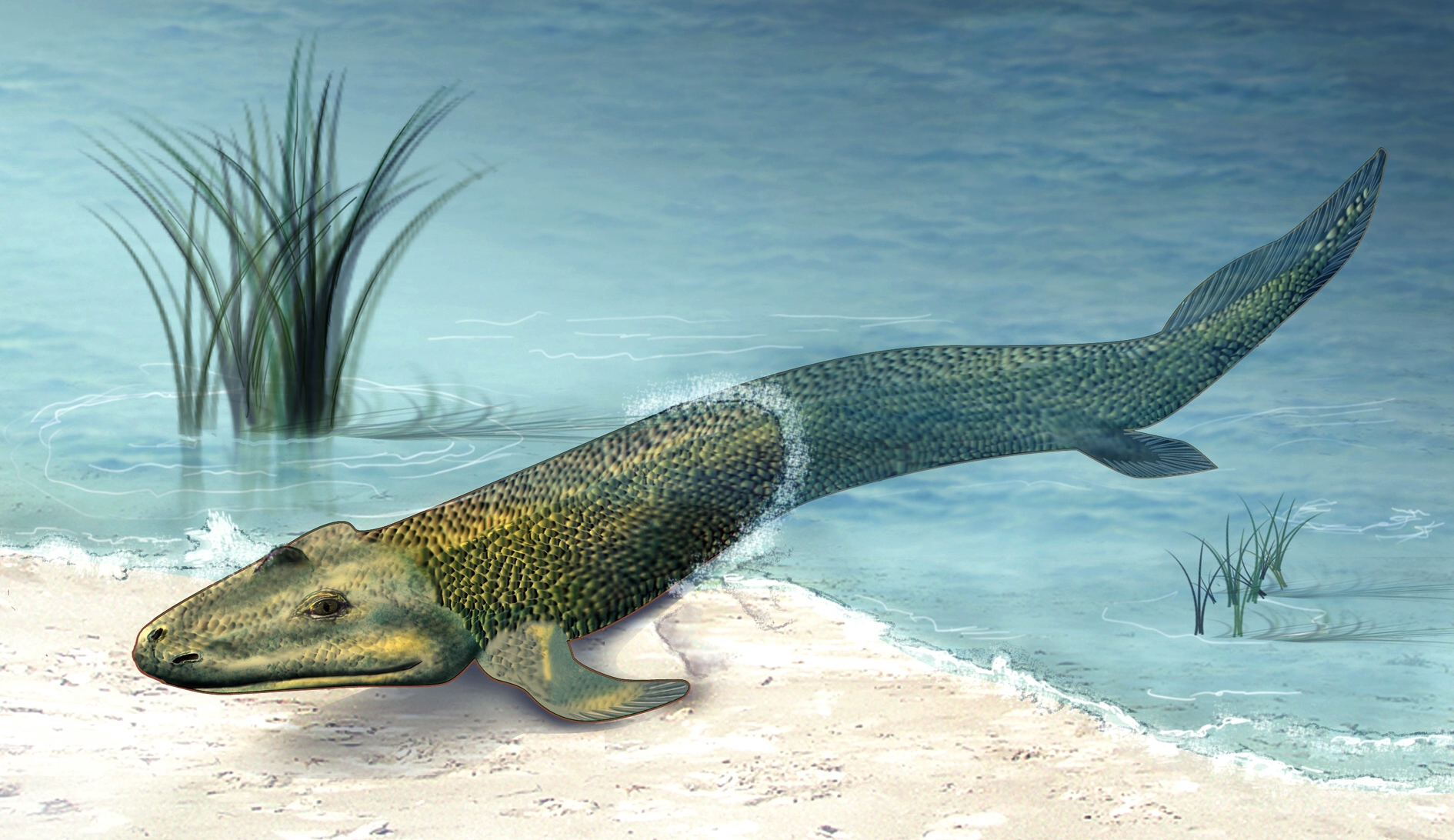
Vertebrate limbs. The tetrapod limb evolved from the pectoral and pelvic fins of lobe-finned fishes approximately 375 million years ago. Evo-devo studies have shown that the developmental programme patterning the limb bud is conserved between fish fins and tetrapod limbs, with shared expression of Hox genes, Sonic hedgehog (Shh), and FGFs in the zone of polarising activity and apical ectodermal ridge.20 The elaboration of the distal autopod (hand and foot) appears to involve a novel regulatory phase of HoxD gene expression driven by cis-regulatory elements that are present in tetrapods but absent or inactive in ray-finned fishes, illustrating how the gain of new enhancer elements can extend an existing developmental programme to produce novel structures.3, 20
Butterfly eyespots. Eyespots on the wings of nymphalid butterflies are a relatively recent evolutionary innovation, having originated approximately 90 million years ago. The eyespot is patterned by a focal signalling centre at the future eyespot location, which secretes morphogens that induce concentric rings of pigmentation in surrounding scale cells. As described above, the focal signal involves co-opted expression of Distal-less, hedgehog, engrailed, and other toolkit genes.18, 19 Crucially, artificial selection experiments have demonstrated that eyespot size, colour composition, and number can be rapidly modified by selecting on variation in the expression levels and spatial extent of these co-opted regulatory circuits, confirming that the developmental system generates heritable variation upon which natural selection can act.18
Significance for evolutionary theory
Evo-devo has enriched evolutionary theory in several fundamental ways. First, it explained the long-standing puzzle of how a relatively small genome can encode the instructions for building a complex organism: the answer lies in the combinatorial, context-dependent regulation of a shared toolkit, not in a one-to-one mapping of genes to structures.4, 23 Second, it provided a mechanistic basis for understanding evolutionary constraints — the reason why certain body plan features are conserved across hundreds of millions of years is that they are encoded by deeply entrenched GRN kernels whose perturbation is lethal.10 Third, it revealed that evolutionary novelty typically arises not through the invention of new genes but through the regulatory redeployment of existing ones, a process that is both more probable and more rapid than de novo gene evolution.7, 14
The field has also provided a molecular framework for classical concepts in evolutionary biology. Homology, convergence, constraint, and novelty can now be understood in terms of shared versus independently deployed GRN components, cis-regulatory changes versus coding changes, and kernel conservation versus peripheral rewiring.7, 10 Deep homology, in particular, has revealed that cases previously classified as convergent evolution — such as the independent evolution of eyes in arthropods and vertebrates — involve the reuse of shared ancestral genetic circuitry, blurring the classical boundary between homology and convergence and suggesting that the universe of possible evolutionary outcomes may be more constrained by developmental genetics than was previously appreciated.7, 24
References
Homology of the eyeless gene of Drosophila to the Small eye gene in mice and Aniridia in humans
Evolution of transcription factor function as a mechanism for changing metazoan developmental gene regulatory networks
Evolution of the amino acid repetition in Ubx correlates with functional changes in Drosophila