Overview
- The molecular clock hypothesis, first proposed by Zuckerkandl and Pauling in the early 1960s, holds that DNA and protein sequences accumulate substitutions at approximately constant rates over time, allowing scientists to estimate when species diverged by measuring genetic differences between them.
- Modern relaxed clock methods, particularly the uncorrelated lognormal model implemented in Bayesian software such as BEAST, have replaced the strict clock assumption by allowing each branch of a phylogenetic tree to evolve at its own rate, dramatically improving the accuracy of molecular divergence time estimates.
- Molecular clocks have dated key events in evolutionary history—including the human-chimpanzee split at roughly 6–7 million years ago and the Cretaceous origins of placental mammal orders—but remain subject to uncertainties from calibration choice, rate variation across lineages and genes, and substitution saturation at deep timescales.
The molecular clock is the observation that DNA and protein sequences accumulate mutations at roughly constant rates over evolutionary time, allowing biologists to estimate when two species last shared a common ancestor by measuring the genetic distance between them. First articulated by Emile Zuckerkandl and Linus Pauling in the early 1960s through comparisons of haemoglobin amino acid sequences across vertebrates, the molecular clock has become one of the most powerful tools in evolutionary biology, providing a temporal framework for the tree of life that is independent of, and complementary to, the fossil record.1, 2 Over six decades the concept has evolved from a simple assumption of rate constancy into a sophisticated family of statistical models that accommodate rate variation among lineages, genes, and time periods, implemented in Bayesian computational frameworks that integrate molecular data with fossil calibrations to produce dated phylogenies with quantified uncertainty.7, 14
Molecular clock analyses have dated pivotal events in evolutionary history, from the divergence of humans and chimpanzees to the origin of flowering plants to the radiation of placental mammals across the Cretaceous–Paleogene boundary. Yet the method remains subject to genuine limitations: substitution rates vary across lineages in ways that correlate with generation time, metabolic rate, and body size; calibration depends on the fossil record, which is itself incomplete; and at deep timescales, substitution saturation erodes the phylogenetic signal that clocks require.6, 9, 11 Understanding both the power and the limitations of the molecular clock is essential for interpreting the dated trees that now permeate comparative biology, genomics, and paleontology.
Origins and the strict clock hypothesis
The molecular clock concept emerged from the earliest comparisons of protein sequences between species. In 1962, Zuckerkandl and Pauling observed that the number of amino acid differences between haemoglobin sequences of different vertebrate lineages appeared to increase in rough proportion to the time since their divergence, as inferred from the fossil record.1 By 1965, after examining additional proteins including cytochrome c and fibrinopeptides, they formalized the hypothesis: homologous protein sequences diverge at an approximately constant rate over evolutionary time, such that the degree of sequence difference between two species can serve as a "molecular evolutionary clock" for estimating the time of their divergence.2 The metaphor was deliberate — just as a mechanical clock ticks at a regular interval, the molecular clock was proposed to "tick" through the steady accumulation of amino acid (and later nucleotide) substitutions.
The strict clock hypothesis assumes a single, uniform substitution rate across all lineages of a phylogenetic tree. Under this model, if species A and species B differ at 10 percent of their aligned sequence positions and the substitution rate is known, the divergence time follows by simple division. The strict clock was the only available model for the first three decades of molecular dating, and its simplicity made it attractive for early applications.6 Almost immediately, however, empirical data began to reveal deviations. Different proteins evolved at vastly different rates — fibrinopeptides accumulated substitutions roughly ten times faster than cytochrome c, and histones were virtually invariant across the same timescales — suggesting that functional constraints on protein structure imposed different "clock speeds" on different molecules.2, 20
A critical early application of the molecular clock came in 1967, when Vincent Sarich and Allan Wilson used immunological distances between serum albumin proteins of primates to estimate that humans and the African great apes diverged approximately 5 million years ago.5 This estimate was dramatically younger than the 15–30 million year divergence favoured by most palaeontologists at the time, who had interpreted the Miocene ape Ramapithecus as a direct human ancestor. Sarich and Wilson argued that if the molecular clock was valid, the fossils had been misinterpreted — a prediction subsequently vindicated when Ramapithecus was reclassified as an orangutan relative and the discovery of Sahelanthropus tchadensis (approximately 6–7 million years old) and Orrorin tugenensis (approximately 6 million years old) confirmed a late Miocene human-ape split consistent with the molecular estimate.5, 12
Neutral theory and the theoretical foundation
The molecular clock initially lacked a mechanistic explanation: why should substitutions accumulate at a constant rate, given the unpredictability of natural selection? The theoretical foundation was provided by Motoo Kimura's neutral theory of molecular evolution, introduced in 1968. Kimura proposed that the vast majority of substitutions observed at the molecular level are selectively neutral — neither beneficial nor deleterious — and are fixed in populations by random genetic drift rather than by natural selection.3
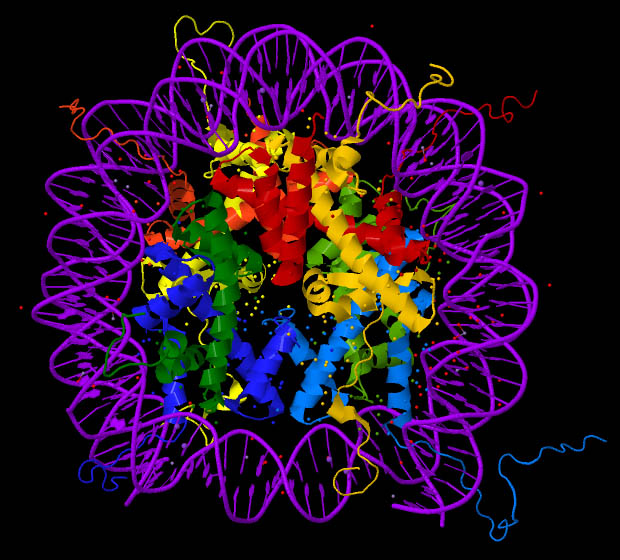

Kimura demonstrated mathematically that for neutral mutations, the rate of substitution in a population equals the rate of mutation per individual per generation, regardless of population size.3, 4 This result is elegant in its simplicity: if most mutations are neutral, and the mutation rate per generation is roughly constant within a lineage, then the substitution rate should be approximately constant over time, producing the clock-like accumulation of differences that Zuckerkandl and Pauling had observed. The neutral theory thus provided the molecular clock with a solid theoretical grounding, transforming it from an empirical curiosity into a prediction of population genetics.4
Kimura's formulation also explained why different molecules evolve at such different rates. Proteins under strong functional constraint — where most mutations are deleterious and eliminated by purifying selection — have a small proportion of neutral sites and therefore a slow clock. Proteins under weak constraint, such as fibrinopeptides, have a large proportion of neutral sites and a fast clock. Pseudogenes, which have lost their function entirely and are free from selective constraint, evolve at rates close to the raw mutation rate and represent the fastest molecular clocks available.4, 6 This relationship between functional constraint and evolutionary rate has been confirmed across thousands of genes and remains a cornerstone of molecular evolution.
Calibrating the clock
Molecular sequences alone record only relative amounts of divergence, not absolute time. To convert genetic distances into calendar years, the clock must be calibrated against events of known age, most commonly fossil first appearances or well-dated geological events such as continental separations or island emergence. Calibration is simultaneously the most essential and the most contentious step in molecular clock analysis.14, 15
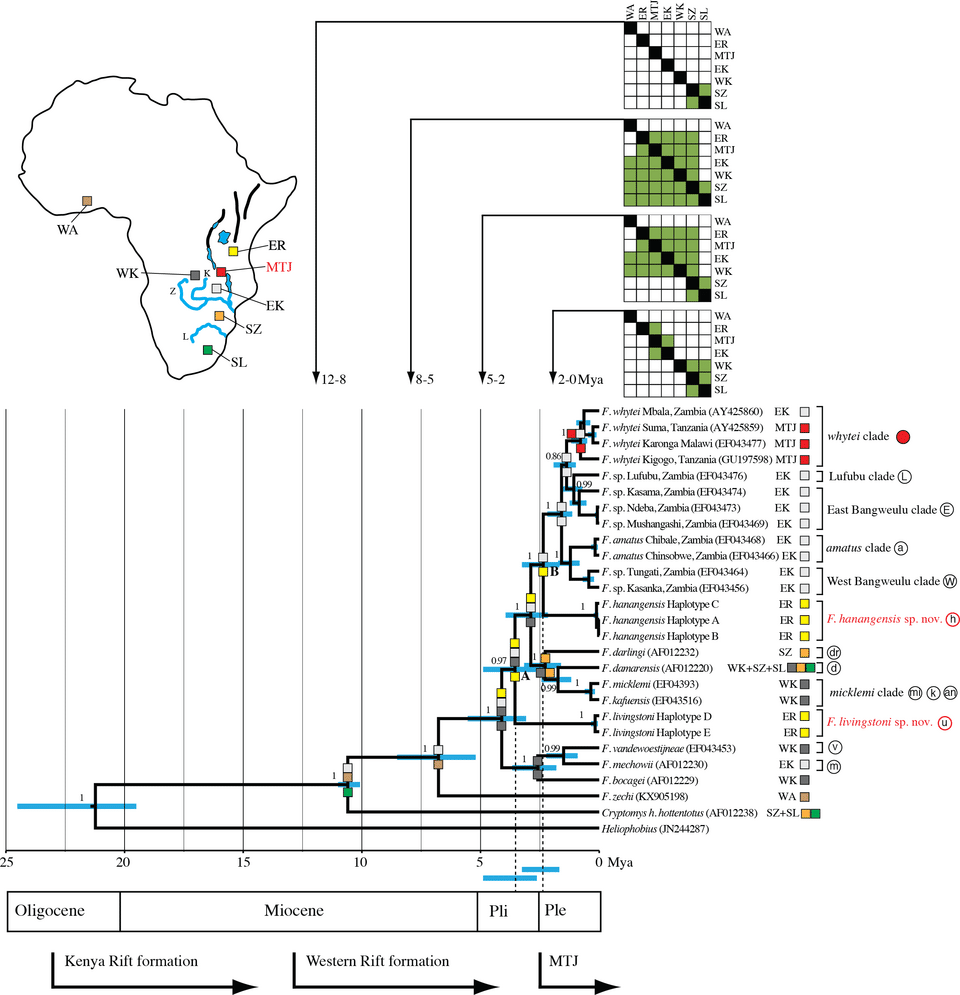

In node dating, the most widely used calibration approach, one or more nodes in the phylogenetic tree are assigned age constraints derived from the fossil record. Because a fossil documents the minimum age of the lineage to which it belongs — the true divergence must be at least as old as the oldest known fossil of that clade — calibrations are typically specified as minimum age bounds. Maximum age bounds are harder to justify from the fossil record (the absence of a fossil does not prove the absence of a lineage) but are necessary to prevent divergence time estimates from inflating to unrealistically ancient dates. In Bayesian analyses, these bounds are represented as probability distributions (uniform, exponential, lognormal, or gamma) that encode prior beliefs about the likely range of the true divergence time.14, 15
The quality of calibration fossils is paramount. A landmark set of best practices established by Parham and colleagues in 2012 requires that each calibration fossil be identified by a museum accession number, assigned to a node on the basis of explicit phylogenetic evidence (not merely overall similarity), and dated by direct radiometric methods or by well-constrained stratigraphic correlation.15 Despite these standards, calibration remains a major source of uncertainty in molecular dating: studies using different fossil calibrations for the same dataset can produce divergence time estimates that differ by tens of millions of years.14
An alternative approach, tip dating (also called total-evidence dating), incorporates fossil taxa directly as tips in the phylogenetic tree, rather than using them only as age constraints on internal nodes. In this framework, both morphological and molecular data are analysed simultaneously, and the placement of fossil taxa in the tree — along with their known stratigraphic ages — provides the temporal calibration. The fossilized birth–death (FBD) model, developed by Heath, Huelsenbeck, and Stadler in 2014, provides a coherent probabilistic framework for tip dating by modelling speciation, extinction, and fossil preservation as a single macroevolutionary process, eliminating the need for ad hoc calibration prior distributions.16 The FBD model allows fossils to be placed not only at the tips of the tree but also along internal branches as direct ancestors of living taxa, a biologically realistic scenario that traditional node dating cannot accommodate.16
Relaxed clock models
By the 1990s, it was clear that the strict clock assumption was violated in most real datasets: substitution rates vary substantially among lineages, even for the same gene.6, 11 This recognition motivated the development of relaxed clock models, which allow the evolutionary rate to vary across the branches of a phylogenetic tree while still estimating divergence times.
The first relaxed clocks were autocorrelated models, in which the rate on a daughter branch is drawn from a distribution centred on the rate of the parent branch. Thorne and Kishino developed an influential autocorrelated lognormal model in which the logarithm of the rate changes along each branch according to a Brownian motion process, so that closely related lineages tend to have similar rates while distant lineages can differ substantially.8 The degree of autocorrelation is governed by a variance parameter: when this parameter is zero, the model collapses to a strict clock; as it increases, rates become progressively more variable across the tree.8
A fundamentally different approach was introduced by Drummond, Ho, Phillips, and Rambaut in 2006 with the uncorrelated lognormal (UCLN) relaxed clock. In this model, each branch draws its rate independently from a shared lognormal distribution, with no correlation between the rates of adjacent branches.7 The UCLN model was attractive for two reasons: it makes fewer assumptions about the evolutionary process (rates need not be heritable along lineages), and its variance parameter provides a built-in test of clock-likeness — when the posterior estimate of the variance approaches zero, the data are consistent with a strict clock, and when it is large, the data demand substantial rate variation.7 Drummond and colleagues demonstrated that the UCLN model produced divergence time estimates with accuracy comparable to autocorrelated models but with narrower credibility intervals, and it has since become the most widely used relaxed clock model in molecular phylogenetics.7, 11
Other relaxed clock approaches include local clock models, which assign a small number of distinct rates to different parts of the tree (for example, one rate for rodents and another for primates), and random local clocks, which allow rate changes at a subset of nodes chosen by the model during analysis.11 The choice among these models depends on the dataset and the biological question: autocorrelated models may be appropriate when rate variation is expected to track heritable life-history traits, while uncorrelated models offer greater flexibility when the causes of rate variation are unknown or complex.11, 14
Bayesian inference and computational tools
Modern molecular clock analyses are conducted almost exclusively within a Bayesian statistical framework, which provides a natural way to combine multiple sources of information — sequence data, clock models, tree topologies, and fossil calibrations — into a single coherent analysis with fully quantified uncertainty. Bayesian methods use Markov chain Monte Carlo (MCMC) algorithms to sample from the joint posterior distribution of all parameters, including divergence times, evolutionary rates, tree topology, and the parameters of the substitution model.7, 14
The software package BEAST (Bayesian Evolutionary Analysis by Sampling Trees), first released in the early 2000s and substantially updated through versions 1.10 and 2.x, has become the dominant tool for Bayesian molecular clock dating. BEAST integrates phylogenetic tree inference with divergence time estimation under a range of strict and relaxed clock models, coalescent and birth–death tree priors, and flexible calibration schemes.17 The software has been applied to problems ranging from the dating of ancient divergences among animal phyla to the real-time molecular epidemiology of rapidly evolving viruses such as influenza and SARS-CoV-2, demonstrating the breadth of the molecular clock framework.17
Other widely used Bayesian dating programs include MCMCTree (part of the PAML package), which implements the approximate likelihood method of dos Reis and Yang for efficient analysis of large phylogenomic datasets, and MrBayes, which supports molecular clock dating alongside Bayesian phylogenetic inference.14 The development of these tools has been accompanied by the creation of curated databases of molecular divergence time estimates, most notably the TimeTree resource, which compiles published timetrees for over 97,000 species from thousands of independent studies, providing a community consensus on the temporal framework of the tree of life.21
Determinants of rate variation
The molecular clock does not tick at the same speed in all organisms. Substitution rates vary by orders of magnitude across the tree of life, and understanding the causes of this variation is both a fundamental question in molecular evolution and a practical necessity for accurate divergence time estimation.9, 10
The generation time effect is one of the best-documented correlates of molecular evolutionary rate. Organisms with short generation times — and therefore more DNA replication events per unit calendar time — accumulate mutations faster than organisms with long generation times. In mammals, rodents evolve significantly faster than primates, which in turn evolve faster than whales, a pattern that holds for both nuclear and mitochondrial DNA.9 The generation time effect is expected under the neutral theory: if most substitutions arise from replication errors, then lineages that replicate their genomes more frequently per year will accumulate more substitutions per year.4, 6
The metabolic rate effect offers a complementary explanation. Organisms with high metabolic rates produce more reactive oxygen species as by-products of aerobic respiration, and these mutagenic molecules can damage DNA and increase the mutation rate independently of replication. Martin and Palumbi demonstrated in 1993 that body size, which correlates inversely with mass-specific metabolic rate, is a strong predictor of substitution rate in vertebrates, with small-bodied, high-metabolism species evolving faster than large-bodied, low-metabolism species.9 In practice, generation time, metabolic rate, and body size are tightly correlated in many animal groups, making it difficult to disentangle their individual contributions to rate variation.9, 10
Other factors that influence molecular evolutionary rates include population size (small populations may fix slightly deleterious mutations more readily through genetic drift, increasing the observed substitution rate), DNA repair efficiency, and the specificity of the mutation spectrum (for example, CpG dinucleotides in mammalian genomes mutate at much higher rates than other dinucleotides due to spontaneous deamination of methylcytosine).10 The interplay of these factors means that no single molecular clock rate applies universally, and that accurate dating requires either calibrating the clock within the lineage of interest or employing relaxed clock models that accommodate rate heterogeneity.10, 11
Representative substitution rates across organisms and genetic markers6, 9, 11
| Lineage / marker | Substitution rate (per site per year) | Primary rate determinant |
|---|---|---|
| Mammalian mtDNA (rodents) | ~2–4 × 10⁻⁸ | Short generation time, high metabolic rate |
| Mammalian mtDNA (primates) | ~1–2 × 10⁻⁸ | Moderate generation time |
| Mammalian mtDNA (whales) | ~0.5–1 × 10⁻⁸ | Long generation time, large body size |
| Mammalian nuclear DNA (average) | ~1–5 × 10⁻⁹ | Variable by gene and lineage |
| Plant chloroplast DNA | ~1–3 × 10⁻⁹ | Low replication rate |
| RNA viruses (e.g., influenza) | ~1–5 × 10⁻³ | Error-prone replication, short generation time |
Major applications in evolutionary biology
Molecular clock analyses have produced some of the most consequential findings in modern evolutionary biology, resolving debates that the fossil record alone could not settle and revealing temporal patterns invisible to morphological analysis.
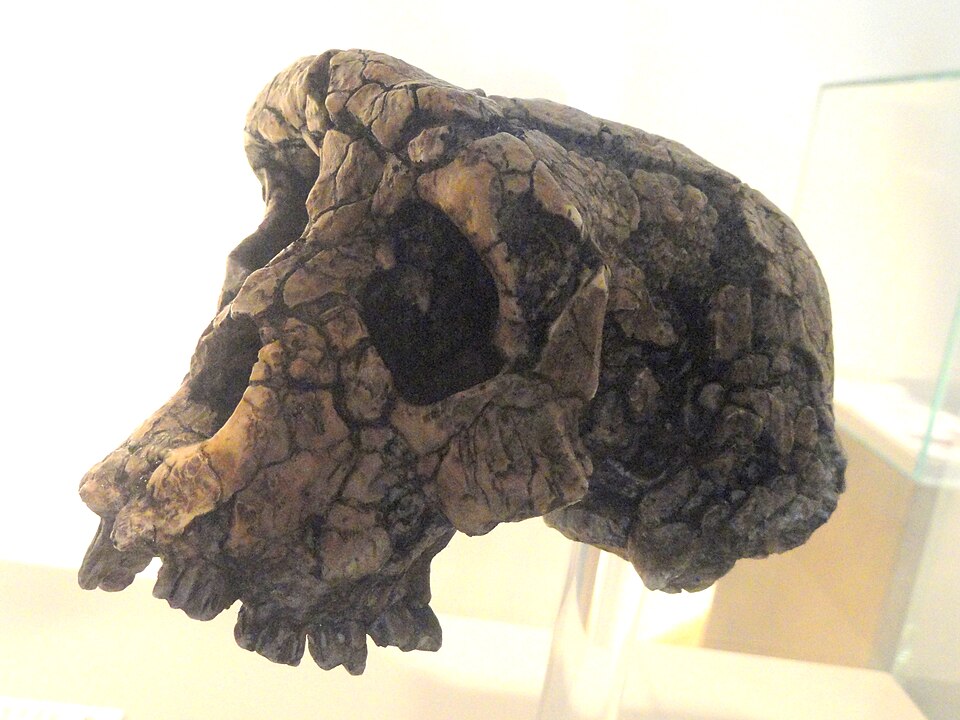

The human–chimpanzee divergence has been one of the most intensively studied molecular clock questions since Sarich and Wilson's pioneering 1967 estimate. Subsequent analyses using genomic data have consistently placed the split between humans and chimpanzees at approximately 5–8 million years ago, with most estimates clustering around 6–7 million years.5, 12 Glazko and Nei, using a comprehensive dataset of nuclear genes calibrated against the well-dated primate–rodent divergence, estimated the human–chimpanzee split at approximately 5.0–7.0 million years, a range consistent with the stratigraphic ages of the earliest hominins.12 The convergence of molecular and fossil evidence on this timescale stands as one of the clearest validations of the molecular clock approach.
The radiation of placental mammals relative to the Cretaceous–Paleogene (K–Pg) mass extinction 66 million years ago has been a more contentious application. The fossil record of unambiguous crown-group placentals begins only after the K–Pg boundary, consistent with an "explosive model" in which mammalian orders diversified rapidly in the ecological vacuum left by the extinction of non-avian dinosaurs.23 Molecular clock studies, however, have almost universally placed the origins of most placental orders in the Late Cretaceous, 75–100 million years ago, implying tens of millions of years of cryptic pre-K–Pg diversification that left no recognized fossil record.13, 22 A major phylogenomic analysis by dos Reis and colleagues, using 36 nuclear genomes with multiple carefully justified fossil calibrations, estimated that Placentalia originated approximately 88–90 million years ago, but that the diversification of present-day orders occurred primarily in a 20 million year window following the K–Pg event, offering a partial reconciliation between molecular and palaeontological evidence.13
The origin of angiosperms (flowering plants) presents an analogous debate. The oldest unambiguous angiosperm fossils date to the Early Cretaceous, approximately 130–135 million years ago, yet molecular clock analyses have repeatedly pushed the origin of crown-group angiosperms back into the Triassic or even the Permian, more than 200 million years ago.18, 19 Smith, Beaulieu, and Donoghue used an uncorrelated relaxed clock with 33 fossil calibrations and found angiosperm origins in the Late Triassic, while Magallon and colleagues, using a metacalibrated approach with denser taxon sampling, recovered an Early Cretaceous origin more consistent with the fossil record.18, 19 The discrepancy remains unresolved and illustrates how different calibration strategies and clock models can yield materially different conclusions for the same evolutionary question.
The interplay between fossils and molecules
The relationship between molecular clock estimates and the fossil record is one of mutual dependence and occasional tension. Molecular clocks require fossil calibrations to anchor their timescale, yet they frequently produce age estimates that exceed the oldest known fossils of a given group, implying gaps in the fossil record. Conversely, the fossil record provides the only direct evidence of organisms that actually existed at particular times and places, a form of evidence that molecular data cannot replicate.14, 15
In node dating, fossils serve only as calibration constraints on the ages of internal nodes, and the quality of the results depends critically on the choice, number, and implementation of those constraints. Studies have shown that increasing the number of well-justified calibration points generally improves the accuracy and precision of divergence time estimates, while reliance on a single calibration can introduce systematic bias if that calibration is inaccurate.14, 15 The practice of assigning probability distributions to calibration constraints, rather than fixed ages, allows uncertainty in the fossil record to propagate through the analysis, yielding wider but more honest credibility intervals on estimated dates.14
The tip dating approach and the fossilized birth–death model represent a conceptual shift in the fossil–molecule relationship. Rather than treating fossils as external constraints on a molecular tree, these methods integrate fossil specimens as data points alongside molecular sequences, jointly estimating phylogenetic relationships, divergence times, and macroevolutionary parameters such as speciation and extinction rates.16 This integrated approach has been argued to make fuller use of the available palaeontological information and to reduce the sensitivity of results to subjective choices about calibration priors, although it introduces new challenges related to modelling morphological evolution and fossil preservation probability.16
The persistent discrepancies between molecular and fossil-based divergence times for some groups — notably placental mammals and angiosperms — have generated an active debate between "timetree" and "fossil-first" perspectives. Proponents of the timetree approach argue that molecular estimates, when properly calibrated and modelled, provide a more complete temporal record than the inherently incomplete fossil record. Proponents of the fossil-first approach counter that molecular dates are only as reliable as their calibrations and their clock models, both of which involve assumptions that may not hold for all groups and all timescales.14, 23 Most current practitioners view the two approaches as complementary rather than competing, with the most robust conclusions emerging when molecular and fossil evidence converge on similar timescales.14
Limitations and ongoing challenges
Despite its power, the molecular clock is subject to several fundamental limitations that must be understood and managed in any dating analysis.
Substitution saturation is the most basic challenge at deep timescales. As evolutionary time increases, the same nucleotide position may undergo multiple substitutions, but only the most recent change is visible in the extant sequence. The result is that the observed number of differences between two sequences underestimates the true number of substitutions that have occurred, causing the apparent rate of evolution to plateau. Sophisticated substitution models (such as the general time-reversible model and its extensions) attempt to correct for multiple hits, but at very deep divergences — hundreds of millions to billions of years — saturation can overwhelm the phylogenetic signal entirely, rendering molecular clock estimates unreliable.6, 20
Rate variation across lineages remains a challenge even with relaxed clock models. The choice between autocorrelated and uncorrelated models, and among different rate distributions within each class, can substantially affect estimated divergence times. Model selection criteria exist — including Bayes factors and posterior predictive simulations — but they do not always yield decisive results, and different datasets may favour different models.7, 11 Rate variation across genes adds an additional layer of complexity: different genomic regions may evolve at different rates for reasons unrelated to lineage-specific effects, such as variation in selective constraint, recombination rate, or proximity to functional elements. Multigene analyses attempt to address this by estimating gene-specific rate parameters, but they require that the gene tree topologies be concordant with the species tree, an assumption violated by incomplete lineage sorting and horizontal gene transfer.8, 11
Calibration uncertainty propagates directly into divergence time estimates and is often the dominant source of error. The incompleteness of the fossil record means that minimum age constraints may substantially underestimate the true divergence times, while maximum constraints are inherently difficult to justify from negative evidence. Different choices of calibration prior distributions — uniform, exponential, lognormal — encode different assumptions about the relationship between fossil age and true divergence time, and the results can be sensitive to these choices, particularly when calibrations are few or poorly constrained.14, 15
Time-dependent rate variation adds a further complication. Studies comparing substitution rates estimated from ancient calibrations (millions of years) with those estimated from recent calibrations (thousands of years or less, as in viral evolution or human pedigree data) have found that rates appear to decline with the timescale of measurement. This "time-dependency of molecular rates" may reflect the transient persistence of slightly deleterious mutations at short timescales before purifying selection removes them, or methodological artefacts related to calibration and model choice. The practical consequence is that a rate calibrated over one timescale may not be directly applicable to another.11, 20
These limitations do not invalidate the molecular clock, but they do demand careful methodology. The most reliable molecular dates emerge from analyses that use multiple well-justified fossil calibrations, test the sensitivity of results to different clock models and prior distributions, employ datasets of many genes or whole genomes to average over gene-specific rate variation, and interpret their results in explicit comparison with the independent evidence of the fossil record.14, 15
References
Watching the clock: studying variation in rates of molecular evolution between species
Phylogenomic datasets provide both precision and accuracy in estimating the timescale of placental mammal phylogeny
The fossilized birth–death process for coherent calibration of divergence-time estimates
A metacalibrated time-tree documents the early rise of flowering plant phylogenetic diversity
An uncorrelated relaxed-clock analysis suggests an earlier origin for flowering plants
Genomic evidence reveals a radiation of placental mammals uninterrupted by the KPg boundary