Overview
- W. D. Hamilton's selfish herd theory proposes that animals aggregate in groups not for the collective benefit of the group but because each individual reduces its own predation risk by positioning itself near other individuals, using neighbours as shields against predators.
- The theory predicts that individuals at the margins of a group face higher predation risk than those in the centre, a pattern called the marginal predation effect, which has been confirmed empirically in taxa ranging from fish schools to bird flocks to ungulate herds.
- The selfish herd framework demonstrates that apparently cooperative group behaviours can arise from purely selfish individual strategies, providing an alternative to group-selectionist explanations and complementing related concepts such as the dilution effect and predator confusion.
Hamilton's original model
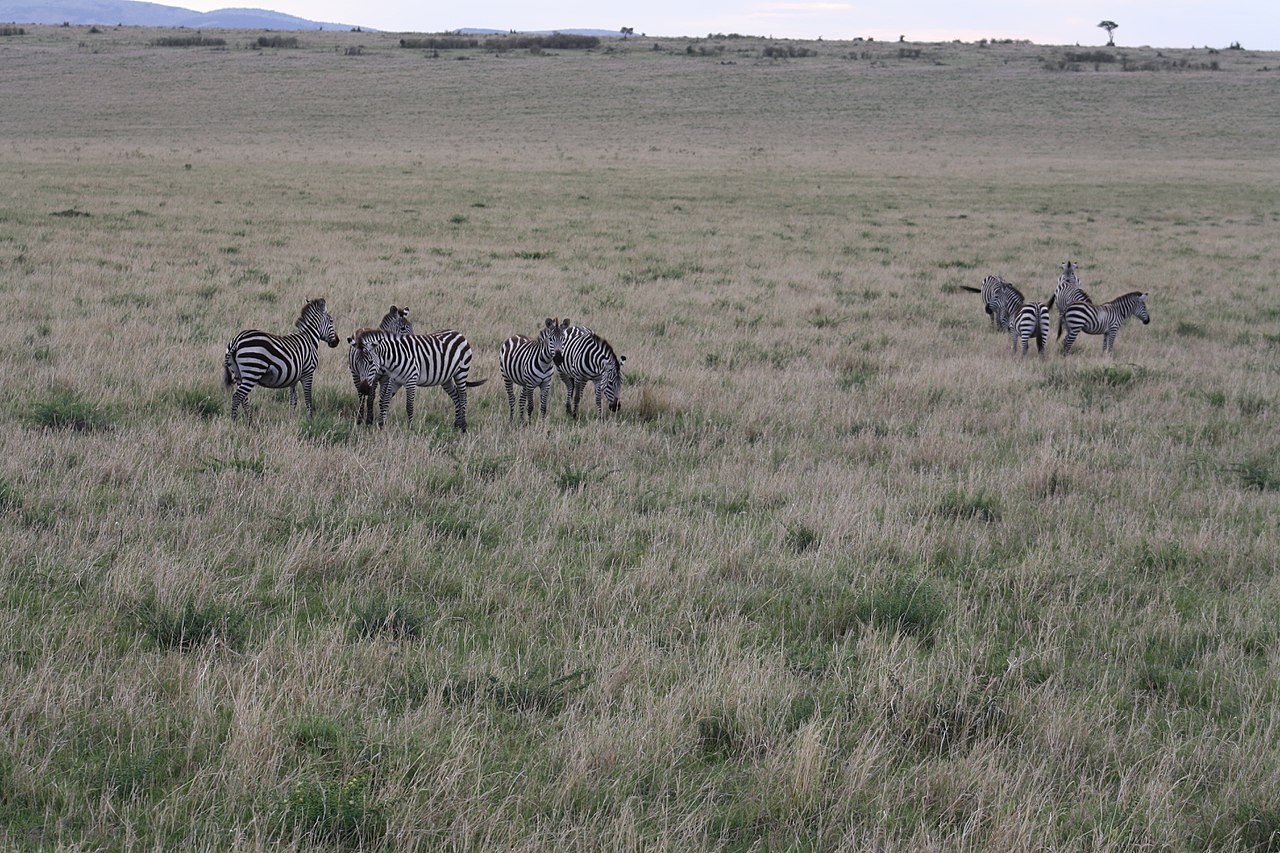
In 1971, W. D. Hamilton published "Geometry for the Selfish Herd," one of the most influential papers in behavioural ecology. Hamilton asked a deceptively simple question: why do animals aggregate in groups? The prevailing explanation at the time invoked group benefit — herding, flocking, and schooling were assumed to be cooperative strategies that protected the group as a whole from predators. Hamilton proposed a radically different answer: aggregation arises because each individual animal selfishly reduces its own predation risk by moving toward other individuals, using its neighbours as a shield between itself and potential predators.1
.jpg)
Hamilton formalised his argument using a geometric model. He imagined a population of prey animals distributed on a one-dimensional plane (a circle) and a predator that attacks the nearest prey animal. Each individual can reduce its probability of being the nearest animal to the predator by closing the gap between itself and its neighbours. The result is that individuals converge on one another, forming tight clusters — herds, flocks, or schools — not because aggregation benefits the group, but because each individual is selfishly minimising its own "domain of danger," the region of space in which a predator would be closer to it than to any other prey animal.1 The domain of danger is smallest for individuals surrounded by neighbours on all sides and largest for individuals on the periphery of the group. Aggregation is thus the collective outcome of individual selfish strategies rather than a group-level adaptation.
Hamilton's model was significant not only for its specific predictions about animal grouping behaviour but also for its conceptual approach. By showing that an apparently cooperative behaviour — group formation — could arise from entirely selfish individual actions, it exemplified the gene-centred view of natural selection that was becoming increasingly influential in evolutionary biology during the 1970s. Richard Dawkins later cited the selfish herd as a prime example of how apparently altruistic or cooperative behaviour can emerge without invoking group selection or altruistic intent.2
The marginal predation effect
A central prediction of the selfish herd theory is that individuals on the margins of a group face higher predation risk than those in the centre. This follows directly from the geometry of Hamilton's model: peripheral individuals have larger domains of danger because they are not surrounded by neighbours on all sides, and they are therefore more likely to be the nearest prey animal to an approaching predator. The resulting pattern, in which predation falls disproportionately on peripheral individuals, is known as the marginal predation effect or, more informally, the "edge effect."1, 10
Empirical evidence for marginal predation has been documented across a wide range of taxa. Scheel's study of lion predation on herds of wildebeest and zebra in the Serengeti showed that lions preferentially attacked individuals on the periphery of herds rather than those in the interior, consistent with the prediction that edge positions carry elevated risk.11 In colonial nesting birds, nests on the periphery of the colony suffer higher rates of predation than central nests. Horn documented this pattern in Brewer's Blackbird colonies, where eggs and chicks in peripheral nests were more likely to be taken by predators than those in the densely packed centre of the colony.7 Quinn and Cresswell tested Hamilton's selfish herd model directly in a colonial population of Common Redshanks and found that birds in peripheral positions within the flock experienced significantly higher attack rates from sparrowhawks than birds in central positions, providing quantitative support for the marginal predation effect under natural conditions.6
The marginal predation effect creates strong selection for individuals to compete for central positions within groups. This competition has observable behavioural consequences. In many species, dominant or higher-quality individuals tend to occupy central positions, while subordinate individuals are displaced to the riskier periphery. The result is that group structure reflects the outcome of an intragroup competition for safety, with the costs of group living falling disproportionately on the weakest or lowest-ranking members.4, 10
The dilution effect and confusion effect
The selfish herd theory is complemented by two related mechanisms that also favour group formation: the dilution effect and the confusion effect. Although these mechanisms were developed somewhat independently of Hamilton's geometric model, they address the same fundamental question of why grouping reduces individual predation risk, and in practice all three mechanisms often operate simultaneously.3, 10
The dilution effect is the simplest of the three: when a predator attacks a group, each individual's probability of being the one captured decreases as group size increases, assuming the predator can only capture one prey item per attack. If a predator attacks one fish from a school of ten, each fish has a 10 percent chance of being the victim; in a school of one hundred, the risk drops to 1 percent. Foster and Treherne demonstrated the dilution effect experimentally in marine insects (Halobates robustus), showing that individual predation risk declined with increasing group size exactly as the dilution model predicted.14 Turner and Pitcher integrated the dilution effect with Hamilton's selfish herd model into a unified "attack abatement" framework, showing that both mechanisms contribute to the overall reduction in predation risk experienced by group members, with the relative importance of each depending on predator attack strategy and prey group geometry.3
The confusion effect describes the reduction in predator attack efficiency when confronted with a large number of potential targets moving in coordinated fashion. A predator attempting to single out and track one individual in a dense, moving group may become confused by the visual complexity of many similar-looking individuals moving simultaneously, reducing its capture success rate. Milinski demonstrated the confusion effect experimentally using stickleback fish as predators and Daphnia as prey: sticklebacks took significantly longer to capture individual Daphnia when the water fleas were presented in large swarms than when presented singly or in small groups.8 Landeau and Terborgh showed that the confusion effect is enhanced when prey are phenotypically uniform, because a predator can more easily single out an individual that looks different from the rest of the group — the "oddity effect" — providing an additional selective pressure for within-group phenotypic conformity.13
Empirical tests and extensions
Hamilton's original model made several simplifying assumptions — a two-dimensional or one-dimensional space, a single predator attacking the nearest individual, and instantaneous movement — that raised questions about its applicability to real animal groups in complex three-dimensional environments. Subsequent theoretical and empirical work has both tested these assumptions and extended the model to more realistic conditions.5, 16
Viscido, Miller, and Wethey used computational simulations to test the selfish herd model with more realistic movement rules and multiple predator attack strategies. They found that the core prediction — that selfish movement toward neighbours reduces individual predation risk and produces aggregation — held across a range of conditions, but that the strength of the aggregation effect depended on predator behaviour. When predators attacked randomly rather than targeting the nearest prey, the advantage of central positions was reduced, though the dilution effect continued to favour grouping.5
Morrell, Ruxton, and James developed a more sophisticated computational model that explored how different individual movement rules produced selfish herd dynamics. They showed that relatively simple behavioural rules — such as moving toward the nearest neighbour, moving toward the centroid of nearby individuals, or moving away from the group edge — all produced aggregation patterns consistent with Hamilton's predictions, but the specific structure of the resulting groups (density, shape, degree of clustering) varied depending on which rule individuals followed.16 The robustness of the selfish herd result to different modelling assumptions strengthens confidence that the underlying principle — selfish risk reduction through proximity to others — is a genuine and general mechanism for the evolution of grouping behaviour.
King and colleagues provided a particularly elegant empirical demonstration using domestic sheep. By tracking the movements of individual sheep in a flock exposed to a herding dog (simulating a predator), they showed that sheep moved closer to the centre of the flock as the threat approached, with the response being strongest in the individuals closest to the dog. The movement patterns matched the predictions of Hamilton's model quantitatively, with each sheep reducing its domain of danger by moving toward the interior of the group.15
Chorusing frogs and acoustic aggregation
The selfish herd principle extends beyond spatially aggregating animals to include acoustic aggregation in calling species. Male frogs in breeding choruses face predation from bats and other predators that locate prey by their mating calls. Ryan, Tuttle, and Taft demonstrated that individual frogs in larger choruses experienced lower per-capita predation rates from the fringe-lipped bat (Trachops cirrhosus), consistent with a dilution effect. Moreover, males on the periphery of the chorus, whose calls were more spatially isolated, were disproportionately targeted by bats, exactly as the marginal predation effect predicts.9
The selfish herd framework thus applies to any aggregation in which individuals can reduce their risk by positioning themselves among conspecifics, whether the "position" is physical (location in a herd) or perceptual (being one voice among many in a chorus). The generality of the principle across such disparate contexts — from ungulate herds on the Serengeti to frog choruses in tropical forests to colonial seabird colonies — attests to the power of Hamilton's insight that superficially cooperative grouping can arise from fundamentally selfish individual strategies.10
Costs and trade-offs of group living
While the selfish herd theory explains the antipredator benefits of aggregation, it also implicitly highlights the costs. Competition for central positions means that not all individuals benefit equally from group living. Subordinate individuals displaced to the periphery bear a disproportionate share of the predation risk, and in some cases their risk may be no lower than that of a solitary individual.4, 10
Group living also entails costs unrelated to the selfish herd mechanism, including increased competition for food, elevated transmission of parasites and disease, and greater conspicuousness to predators at the group level. Krause and Ruxton provided a comprehensive treatment of the trade-offs of group living, arguing that the net benefit of aggregation depends on the balance between antipredator advantages (dilution, confusion, selfish herd geometry, collective vigilance) and ecological costs (resource competition, disease, intragroup aggression).10 Colonial nesting birds, for example, gain protection from the marginal predation effect but suffer costs from nest parasitism, increased competition for nesting sites, and the risk of disease outbreaks in dense colonies.7, 12
The selfish herd theory does not predict that all species should live in groups. It predicts that grouping is favoured when the predation-risk reduction from proximity to others outweighs the costs of aggregation. Species that face low predation pressure, that feed on dispersed resources incompatible with group living, or that possess alternative antipredator strategies (such as camouflage, armour, or chemical defences) may be better served by solitary living. The diversity of social organisation observed across the animal kingdom reflects the diversity of ecological conditions in which these trade-offs play out.4, 10
Broader significance
Hamilton's selfish herd theory is significant beyond its specific predictions about animal grouping because it illustrates a general principle in evolutionary biology: complex collective behaviours can emerge from simple, selfish individual rules. The formation of herds, flocks, and schools does not require coordinated planning, altruistic intent, or group-level adaptation. It requires only that each individual follows a self-interested strategy of minimising its own predation risk, and the group-level pattern emerges as an unplanned consequence of many individuals pursuing the same selfish logic simultaneously.1, 2
This insight connects the selfish herd to broader themes in the study of cooperation and social evolution. Together with kin selection, reciprocal altruism, and by-product mutualism, the selfish herd provides one of the principal mechanisms by which apparently cooperative phenotypes can be explained without invoking group selection. The individuals in a herd are not cooperating; they are competing for the safest positions, and the group structure is an emergent property of that competition.2, 4 The theory thus reinforces the gene-centred view of evolution, in which the unit of selection is ultimately the gene and the individual, and group-level patterns are understood as consequences of individual-level strategies shaped by natural selection.
Modern research continues to build on Hamilton's foundation, integrating selfish herd dynamics with computational models of collective motion, agent-based simulations, and high-resolution tracking data from wild animal groups. These approaches are revealing the fine-grained behavioural rules that individual animals follow when aggregating and how those rules produce the diverse forms of group structure observed in nature — from the tight, polarised schools of herring to the loose, sprawling herds of wildebeest. In each case, the fundamental insight remains Hamilton's: the geometry of fear, operating through selfish individual choices, is a powerful and general force shaping the social organisation of animal life.1, 10, 16
References
Do selfish herds exist? A test of Hamilton's 'selfish herd' hypothesis in a colonial nesting bird