Overview
- When multiple independent radioactive decay systems — each with different parent isotopes, different half-lives, and different chemical behaviours — yield the same age for a single rock, the probability that all are wrong in the same way is vanishingly small.
- Uranium-lead concordia diagrams provide a built-in two-clock cross-check using the parallel decay of uranium-238 and uranium-235, while potassium-argon, rubidium-strontium, samarium-neodymium, and lutetium-hafnium systems serve as wholly independent chronometers.
- Case studies from the Acasta Gneiss, Apollo lunar samples, and primitive meteorites demonstrate that three to six independent dating systems routinely converge on the same age within analytical uncertainty, ruling out systematic error and confirming the reliability of deep-time geochronology.
Radiometric dating methods each rely on the decay of a specific radioactive parent isotope into a stable daughter isotope at a rate characterised by a unique half-life. Because different isotopic systems involve entirely different elements, different crystal chemistries, and half-lives spanning orders of magnitude, the probability that two or more independent systems would yield the same age for a rock by coincidence or systematic error is extraordinarily small. When they do agree, as they routinely do for well-preserved geological samples, the result constitutes one of the most powerful forms of scientific cross-validation in all of the natural sciences.1, 2 This article examines the principle behind such concordance, describes the major isotopic systems used as independent chronometers, and reviews case studies in which multiple systems converge on the same age for the same rock.
The principle of concordance
The fundamental logic of radiometric cross-validation rests on a simple statistical argument. Each radioactive decay system is governed by different physics: uranium-238 decays through a chain of alpha and beta emissions with a half-life of 4.468 billion years, while potassium-40 decays by electron capture and beta emission with a half-life of 1.25 billion years, and rubidium-87 decays by beta emission with a half-life of 49.6 billion years.1, 17 These parent isotopes reside in different minerals, partition differently during crystallisation, and respond differently to thermal and chemical disturbances. If any systematic error were present in the underlying nuclear physics, in the assumed decay constants, or in the geological interpretation, it would have to affect each of these unrelated systems in precisely the right way to produce a spurious agreement. The odds of such a coincidence are negligible.2, 3
Concordance, in geochronological usage, refers to the condition in which two or more isotopic systems yield statistically indistinguishable ages for the same geological event. A concordant age from a single mineral grain means that the uranium-lead system records the same crystallisation time regardless of which uranium isotope is used as the parent. A multi-system concordance means that entirely different chronometers — potassium-argon, rubidium-strontium, samarium-neodymium, or lutetium-hafnium — applied to the same rock or suite of co-genetic rocks all return the same date.1, 19 The greater the number of independent systems that agree, the stronger the confirmation, because each additional concordant result multiplies the improbability of systematic error.
It is important to recognise that discordance — the failure of two systems to agree — is also informative rather than problematic. Discordant ages typically indicate that the rock has experienced a secondary event such as metamorphism, partial melting, or fluid infiltration that reset one chronometer but not another. Because different isotopic systems have different closure temperatures (the temperature below which a mineral becomes a closed system with respect to parent and daughter migration), a thermal event will preferentially disturb the system with the lowest closure temperature while leaving higher-temperature systems intact.1, 8 Geologists exploit this differential sensitivity to reconstruct complex thermal histories, extracting not just the original crystallisation age but also the timing of subsequent metamorphic overprints.
Uranium-lead concordia diagrams
The uranium-lead system is unique among radiometric chronometers because it contains a built-in cross-check. Natural uranium consists of two long-lived radioactive isotopes: uranium-238, which decays to lead-206 with a half-life of 4.468 billion years, and uranium-235, which decays to lead-207 with a much shorter half-life of 0.704 billion years.1, 17 Because both isotopes begin decaying at the moment a uranium-bearing mineral crystallises, every such mineral contains two independent clocks running simultaneously. If the mineral has remained a closed system since its formation, the two clocks must yield the same age.

George Wetherill formalised this insight in 1963 by introducing the concordia diagram, a plot in which the ratio of lead-206 to uranium-238 is graphed on one axis against the ratio of lead-207 to uranium-235 on the other.4 On this diagram, all possible closed-system compositions define a single curved line called the concordia curve. A mineral grain that has remained undisturbed since its crystallisation will plot directly on this curve at a point corresponding to its true age. A grain that has experienced lead loss or uranium gain at some later time will be displaced below the concordia curve, plotting in the region of discordance.
The power of the concordia diagram lies in its ability to extract meaningful ages even from disturbed samples. When a suite of co-genetic zircon grains has experienced partial lead loss during a single metamorphic event, the data points define a straight line called a discordia line whose upper intercept with the concordia curve gives the original crystallisation age and whose lower intercept gives the age of the lead-loss event.4, 1 This geometric property means that the uranium-lead system can recover two dates from a single disturbed population of grains — a capability that no other isotopic system possesses. The concordia approach has become the gold standard of geochronology, and modern analyses of individual zircon grains by secondary ion mass spectrometry or laser ablation routinely achieve precisions better than one percent on ages spanning the entire history of the Earth.6, 7
Potassium-argon and argon-argon dating
The potassium-argon system provides an independent chronometer based on entirely different chemistry from the uranium-lead method. Potassium-40, a naturally occurring radioactive isotope of one of the most abundant elements in the Earth's crust, decays to argon-40 by electron capture with a half-life of approximately 1.25 billion years.9, 17 Because potassium is a major constituent of common rock-forming minerals such as biotite, muscovite, hornblende, and feldspar, the potassium-argon system can be applied to a wide range of igneous and metamorphic rocks. The daughter product, argon-40, is a noble gas that is retained in the crystal lattice only below the mineral's closure temperature, which varies from approximately 150 degrees Celsius for feldspar to over 500 degrees Celsius for hornblende.8
The conventional potassium-argon method requires separate measurements of potassium and argon concentrations on different aliquots of the same sample, introducing potential errors from sample inhomogeneity. The argon-argon method, developed in the 1960s and refined over subsequent decades, overcomes this limitation by irradiating the sample with fast neutrons in a nuclear reactor, converting a known fraction of potassium-39 into argon-39.8 Both the radiogenic argon-40 and the reactor-produced argon-39 are then measured simultaneously on the same grain by stepwise heating in a mass spectrometer. Each temperature step releases argon from progressively more retentive sites within the crystal, producing an age spectrum — a plot of apparent age versus the cumulative fraction of argon-39 released. A sample that has remained undisturbed since crystallisation yields a flat age spectrum, or plateau, in which successive heating steps return the same age.8, 9
The argon-argon method is chemically and physically independent of the uranium-lead system. It uses a different parent element (potassium rather than uranium), a different daughter element (a noble gas rather than a metal), different host minerals, and a different half-life. When an argon-argon age agrees with a uranium-lead age from the same rock, the two results have been obtained from systems that share no common source of potential systematic error, making the concordance exceptionally strong evidence that the measured age is correct.2, 8
Rubidium-strontium isochrons
The rubidium-strontium system offers yet another independent clock. Rubidium-87, an alkali metal, decays to strontium-87 by beta emission with a half-life of approximately 49.6 billion years — more than ten times the age of the Earth.3, 17 This extremely long half-life makes the rubidium-strontium system particularly well suited for dating ancient rocks, where even a small amount of radiogenic strontium-87 has had sufficient time to accumulate to measurable levels. Rubidium substitutes readily for potassium in micas, feldspars, and other potassium-bearing minerals, while strontium follows calcium into plagioclase feldspar and apatite, creating natural fractionation between parent and daughter during crystallisation.9
The rubidium-strontium method employs the isochron technique, which provides both an age and a built-in test for closed-system behaviour. Multiple mineral separates or whole-rock samples from a co-genetic suite are analysed for their ratios of strontium-87 to strontium-86 and rubidium-87 to strontium-86. If all samples crystallised at the same time from a reservoir with a uniform initial strontium-87/strontium-86 ratio, and if they have remained closed systems since then, the data points define a straight line on an isochron diagram. The slope of this line is a direct function of the elapsed time, and the y-intercept gives the initial isotopic ratio of the magma source.3, 9
The beauty of the isochron method is that it does not require any assumption about the initial concentration of the daughter isotope, a requirement that plagues single-sample dating approaches. Furthermore, if any of the samples have been disturbed — for example by strontium exchange with fluids — the data points will scatter off the isochron, immediately signalling that the age is unreliable.3 A well-defined isochron with low scatter and a geologically reasonable initial ratio is itself evidence of closed-system behaviour. When a rubidium-strontium isochron age agrees with a uranium-lead concordia age from the same rock body, the convergence involves two completely different element pairs, two different types of minerals, and two different half-lives, reinforcing the reliability of both results.1, 2
Samarium-neodymium system
For the oldest rocks on Earth and in the solar system, the samarium-neodymium system provides a particularly robust chronometer. Samarium-147, a rare earth element, decays to neodymium-143 by alpha emission with a half-life of approximately 106 billion years.1, 10 Both samarium and neodymium are members of the lanthanide series and have very similar ionic radii and chemical properties, which means they are far less susceptible to redistribution by fluids and metamorphic processes than the rubidium-strontium system. When a rock has been altered enough to disturb its rubidium-strontium systematics, its samarium-neodymium system often remains intact, preserving the original crystallisation age.10, 19
Like the rubidium-strontium method, samarium-neodymium dating uses the isochron approach, plotting neodymium-143/neodymium-144 against samarium-147/neodymium-144 for multiple co-genetic samples. The technique was pioneered in the late 1970s and was rapidly applied to some of the oldest known terrestrial rocks. Hamilton and colleagues used the samarium-neodymium method to date dunites from the 3.8-billion-year-old Isua supracrustal belt in Greenland, confirming the great antiquity of these rocks independently of the uranium-lead ages that had been obtained from associated zircons.10
The samarium-neodymium system is also invaluable for studying the early differentiation of planetary bodies. Because samarium and neodymium fractionate during mantle melting — neodymium is preferentially concentrated in the melt relative to samarium — the neodymium isotopic composition of a rock carries information about the history of its mantle source. Model ages derived from neodymium isotopes constrain when a given piece of continental crust was first extracted from the mantle, providing a window into crustal growth over Earth's entire history.1, 19
Lutetium-hafnium constraints on crustal evolution
The lutetium-hafnium isotopic system has emerged over the past three decades as a powerful complement to samarium-neodymium for studying the formation and evolution of the Earth's crust. Lutetium-176, the heaviest naturally occurring rare earth element, decays to hafnium-176 by beta emission with a half-life of approximately 37.2 billion years.13, 21 Like samarium-neodymium, the lutetium-hafnium pair involves refractory elements that are resistant to mobilisation by aqueous fluids and low-grade metamorphism, making the system particularly useful for ancient and polymetamorphic terranes where more mobile systems have been disturbed.
A major advantage of the lutetium-hafnium system is that hafnium is concentrated in zircon, the same mineral that is the primary target for uranium-lead geochronology. Modern analytical techniques allow the uranium-lead age and the hafnium isotopic composition to be measured on the same zircon grain, or even on the same growth zone within a single crystal, enabling a direct comparison between the two systems without any ambiguity about whether the analysed materials are co-genetic.21 This pairing has proved especially valuable for detrital zircon studies, where individual grains eroded from multiple source rocks are dated and their crustal residence history assessed simultaneously.
Blichert-Toft and Albarede applied the lutetium-hafnium system to meteorites in 1997, demonstrating that the hafnium isotopic evolution of chondrites is consistent with the ages derived from lead-lead and samarium-neodymium systematics for the same samples.13 This triple concordance — three independent decay systems based on three different parent-daughter pairs, all hosted in different mineral phases, all yielding the same formation age — is among the strongest demonstrations that the measured decay constants are correct and that radiometric dating provides accurate absolute ages for solar system materials.13, 22
Case studies in multi-system concordance
The most compelling evidence for the reliability of radiometric dating comes from rocks and meteorites that have been dated by three or more independent isotopic systems. Several landmark examples illustrate the power of this approach.
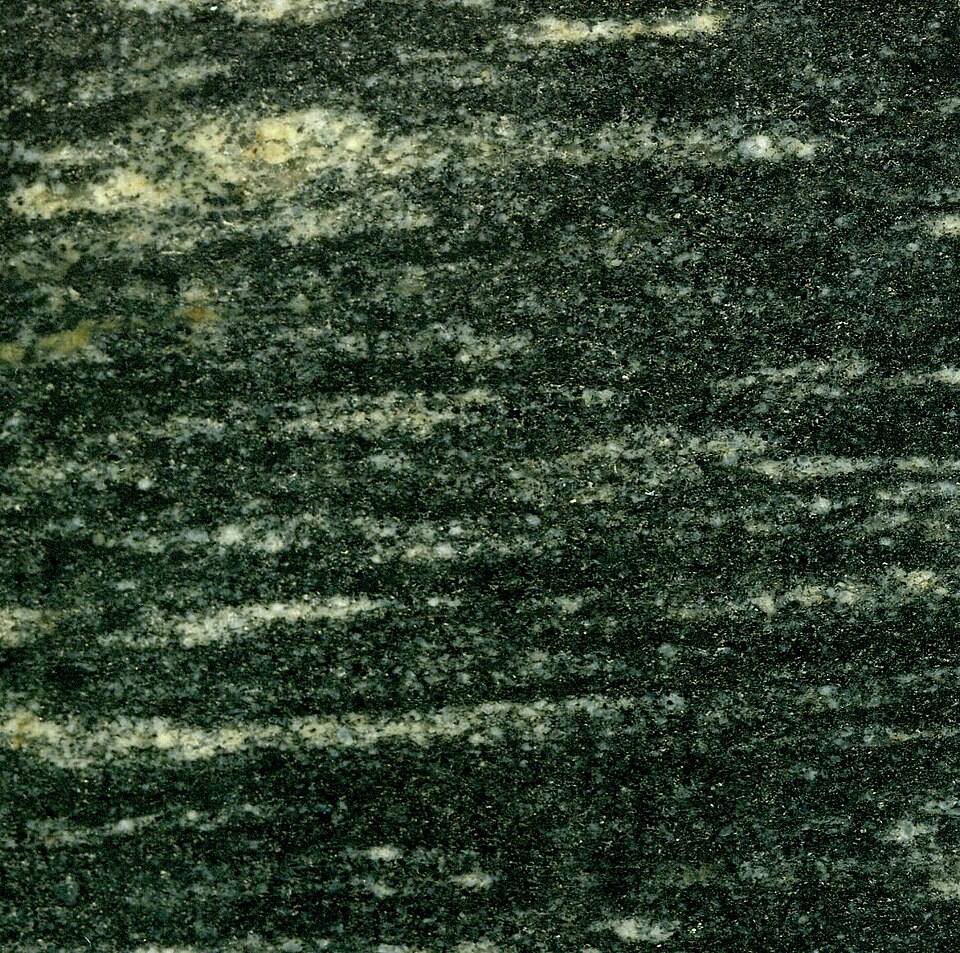

The Acasta Gneiss of the Slave Province in northwestern Canada is the oldest known intact rock unit on Earth. Bowring and Williams reported uranium-lead zircon ages of approximately 4.03 billion years for the oldest components of this complex, making it nearly 90 percent as old as the Earth itself.11 Subsequent work using the samarium-neodymium and lutetium-hafnium systems on the same lithologies confirmed this antiquity, with model ages and isochron dates clustering around 4.0 billion years across all three independent chronometers.11, 12 The agreement is all the more striking because the Acasta Gneiss has experienced multiple episodes of metamorphism and partial melting over its four-billion-year history, yet the primary crystallisation age has been preserved in the most robust isotopic systems.
The Apollo lunar samples provide another powerful demonstration. Rocks returned from the lunar highlands by the Apollo missions have been dated using uranium-lead, rubidium-strontium, samarium-neodymium, lutetium-hafnium, and argon-argon methods. Borg and colleagues analysed ferroan anorthosite samples and found concordant ages from rubidium-strontium, samarium-neodymium, and lutetium-hafnium isochrons, all pointing to crystallisation of the lunar crust between approximately 4.3 and 4.5 billion years ago.14 The hafnium-tungsten system, which is sensitive to the timing of metal-silicate differentiation, independently constrains the formation of the Moon to within approximately 60 million years of solar system formation, consistent with the other chronometers.23 These results from an entirely different planetary body, analysed in different laboratories using different instruments, converge on the same timeline established for the Earth.
Primitive meteorites, particularly chondrites and their calcium-aluminium-rich inclusions, have been subjected to the most exhaustive multi-system dating campaigns in geochronology. Lead-lead dating of calcium-aluminium-rich inclusions from the Allende and Efremovka meteorites yields ages of 4.567 to 4.568 billion years.6, 7 Samarium-neodymium and lutetium-hafnium analyses of bulk chondrites and their mineral separates produce model ages that are concordant with the lead-lead results within analytical uncertainty.13, 22 The agreement among these systems for meteoritic materials is particularly significant because meteorites have experienced minimal geological processing since their formation, meaning that the concordance cannot be attributed to a shared metamorphic resetting event but must reflect a true common origin.
Martian meteorites offer a further test. The Allan Hills 84001 meteorite, a fragment of Mars ejected by impact, has been dated by rubidium-strontium, samarium-neodymium, and potassium-argon methods. Nyquist and colleagues reported concordant ages of approximately 4.5 billion years for the primary crystallisation of this orthopyroxenite, consistent with the lead-lead and samarium-neodymium ages obtained for the same sample in independent laboratories.15, 16 The fact that multiple isotopic systems yield the same age for a rock that formed on a different planet, using the same decay constants measured on Earth, demonstrates that radioactive decay rates are universal constants, not local terrestrial peculiarities.
Multi-system concordance in key geological and planetary samples6, 11, 14, 15
| Sample | U-Pb age (Ga) | Rb-Sr age (Ga) | Sm-Nd age (Ga) | Other system |
|---|---|---|---|---|
| Acasta Gneiss (Canada) | 4.03 | — | ~4.0 | Lu-Hf: ~4.0 Ga |
| Allende CAIs (meteorite) | 4.567 | — | ~4.56 | Lu-Hf: ~4.56 Ga |
| Apollo highlands anorthosite | ~4.4 | ~4.4 | ~4.4 | Lu-Hf: ~4.4 Ga |
| ALH 84001 (Mars) | — | ~4.5 | ~4.5 | K-Ar: ~4.5 Ga |
| Canyon Diablo (meteorite) | 4.55 | ~4.55 | — | Re-Os: ~4.55 Ga |
Why concordance rules out systematic error
Critics of radiometric dating have occasionally suggested that the decay constants used in geochronology might be wrong, or that some unknown process could have altered decay rates in the past. The multi-system concordance documented above provides the definitive rebuttal to such proposals. For altered decay rates to produce the observed agreement, the rates of uranium-238 decay, uranium-235 decay, potassium-40 decay, rubidium-87 decay, samarium-147 decay, and lutetium-176 decay would all have had to change by precisely correlated amounts — despite the fact that these decays involve fundamentally different nuclear processes (alpha emission, beta emission, electron capture) governed by different fundamental forces.2, 19
The decay constants themselves have been measured in the laboratory by direct counting experiments, in which a known quantity of the parent isotope is monitored for the accumulation of daughter atoms or the emission of decay particles over a measured time interval. These laboratory determinations, conducted under controlled conditions at room temperature and pressure, agree with the constants inferred from the geological concordance of ancient rocks, confirming that the rates have not changed over geological time.17, 2 Furthermore, astrophysical observations of the isotopic compositions of distant stars and of the nucleosynthetic signatures in presolar grains found in meteorites indicate that the same nuclear decay processes have operated at the same rates throughout the observable universe.19
Another potential source of systematic error is contamination — the introduction of extraneous parent or daughter isotopes after the rock formed. Each isotopic system is vulnerable to different types of contamination because each involves different elements with different chemical behaviours. Lead is mobile in hydrothermal fluids; argon, being a noble gas, can diffuse out of minerals at elevated temperatures; strontium is soluble in water. The fact that all of these chemically dissimilar systems yield the same age for the same rock means that none of them has been significantly contaminated, because there is no plausible geological process that would introduce exactly the right amount of each contaminant to produce a false concordance across all systems simultaneously.1, 3
The mathematical improbability of spurious concordance can be illustrated by analogy. If one clock in a room shows noon, it might be broken and stuck at twelve. If five clocks of different makes, running on different mechanisms — a pendulum clock, a quartz watch, a sundial, an atomic clock, and a water clock — all independently show noon, the overwhelming inference is that it is, in fact, noon. Radiometric cross-validation works on precisely the same principle, applied to clocks whose mechanisms are governed by the fundamental constants of nuclear physics.2
Practical significance and ongoing refinements
The principle of multi-system concordance is not merely an academic exercise in confirming what geochronologists already believe.


It has practical consequences for the construction and calibration of the geological time scale, for the exploration of mineral resources (many ore deposits are dated by multiple methods to establish their formation history), and for understanding the thermal evolution of orogenic belts and sedimentary basins.1, 19
Modern geochronological practice increasingly exploits the complementary strengths of different systems. A typical study of a polymetamorphic terrane might use uranium-lead zircon ages to establish the primary igneous crystallisation age, argon-argon ages on hornblende and biotite to date successive metamorphic cooling events, and lutetium-hafnium isotopic compositions to constrain the crustal residence time of the source material.8, 21 The resulting multi-system dataset provides a far richer and more reliable geological history than any single method could deliver alone.
Ongoing refinements continue to improve the precision and accuracy of inter-system comparisons. The EARTHTIME initiative and related international efforts have focused on producing high-purity isotopic reference materials, improving the precision of decay constant determinations, and developing inter-calibration protocols that allow uranium-lead, argon-argon, and other systems to be compared at the sub-percent level.17 As analytical precision improves, minor discrepancies between systems that were previously within error are being resolved, either by refining the decay constants themselves or by identifying subtle geological processes that perturbed one system without affecting the others. Each such refinement strengthens rather than undermines the framework, because the resolution of small discordances reinforces the expectation that truly undisturbed samples should yield perfect concordance.1, 19
The Jack Hills zircons of Western Australia illustrate this interplay beautifully. Individual detrital zircon grains as old as 4.404 billion years have been dated by uranium-lead methods, and their hafnium isotopic compositions confirm derivation from a source that had already differentiated from the primitive mantle by that time.20, 21 The concordance between the uranium-lead crystallisation age and the lutetium-hafnium model age for these grains — the oldest terrestrial minerals known — demonstrates that even at the extreme limit of Earth's preserved geological record, multiple independent isotopic systems tell a consistent story. The Earth is ancient, its rocks record that antiquity faithfully, and the independent nuclear clocks built into those rocks all agree.18, 20
References
The age of the Solar System redefined by the oldest Pb–Pb age of a meteoritic inclusion
Subcommission on geochronology: convention on the use of decay constants in geo- and cosmochronology
Evidence from detrital zircons for the existence of continental crust and oceans on the Earth 4.4 Gyr ago