Overview
- The Earth is 4.54 billion years old, a value established by Clair Patterson in 1956 through uranium-lead dating of meteorites and confirmed by dozens of independent radiometric systems applied to meteorites, lunar samples, and terrestrial rocks.
- Multiple independent radiometric dating methods — uranium-lead, potassium-argon, rubidium-strontium, samarium-neodymium, and lutetium-hafnium — consistently yield concordant ages for the same geological materials, providing a powerful cross-validation that rules out systematic error.
- Non-radiometric chronometers including ice cores, tree rings, lake varves, and coral growth bands independently confirm deep time by providing continuous annual records extending hundreds of thousands of years into the past.
The Earth is approximately 4.54 billion years old, an age determined through the radiometric dating of meteorites, lunar samples, and the oldest terrestrial minerals. This figure was first established by the geochemist Clair Cameron Patterson in 1956, who analysed lead isotope ratios in the Canyon Diablo iron meteorite and in terrestrial lead ores to derive an age of 4.55 ± 0.07 billion years for the Earth and the solar system as a whole.1 Subsequent refinements using improved analytical techniques and additional meteorite samples have converged on a best estimate of 4.54 ± 0.05 billion years, a value that has remained stable for decades and is accepted as definitive by the international geoscience community.2, 3
The determination of Earth's age draws on multiple independent lines of evidence. Radiometric methods exploiting the decay of uranium to lead, potassium to argon, rubidium to strontium, and samarium to neodymium yield concordant ages when applied to the same samples, providing a powerful internal consistency check.6, 7 The oldest known terrestrial minerals — zircon crystals from the Jack Hills of Western Australia — have been dated to 4.374 billion years, demonstrating that solid crust existed within 170 million years of Earth's formation.14, 15 Lunar samples returned by the Apollo missions, meteorites representing the primordial building blocks of the solar system, and non-radiometric annual-layer chronometers such as ice cores, tree rings, and lake varves all independently corroborate the immense antiquity of the planet.4, 11, 13
Historical development
The scientific quest to determine the age of the Earth spans more than two centuries and reflects some of the most consequential debates in the history of science. Before the discovery of radioactivity, estimates of Earth's age were constrained by the physical principles available at the time — thermodynamics, sedimentation rates, and the salinity of the oceans — and were consistently too low by orders of magnitude.

In the late eighteenth century, the Scottish geologist James Hutton articulated the principle of uniformitarianism — the concept that the same geological processes operating in the present have operated throughout Earth's history — and concluded that the planet's age was effectively immeasurable, writing that he could find "no vestige of a beginning, no prospect of an end."21 Hutton's qualitative insight that Earth required vast spans of time to produce its observed geological features was foundational but lacked a quantitative framework.
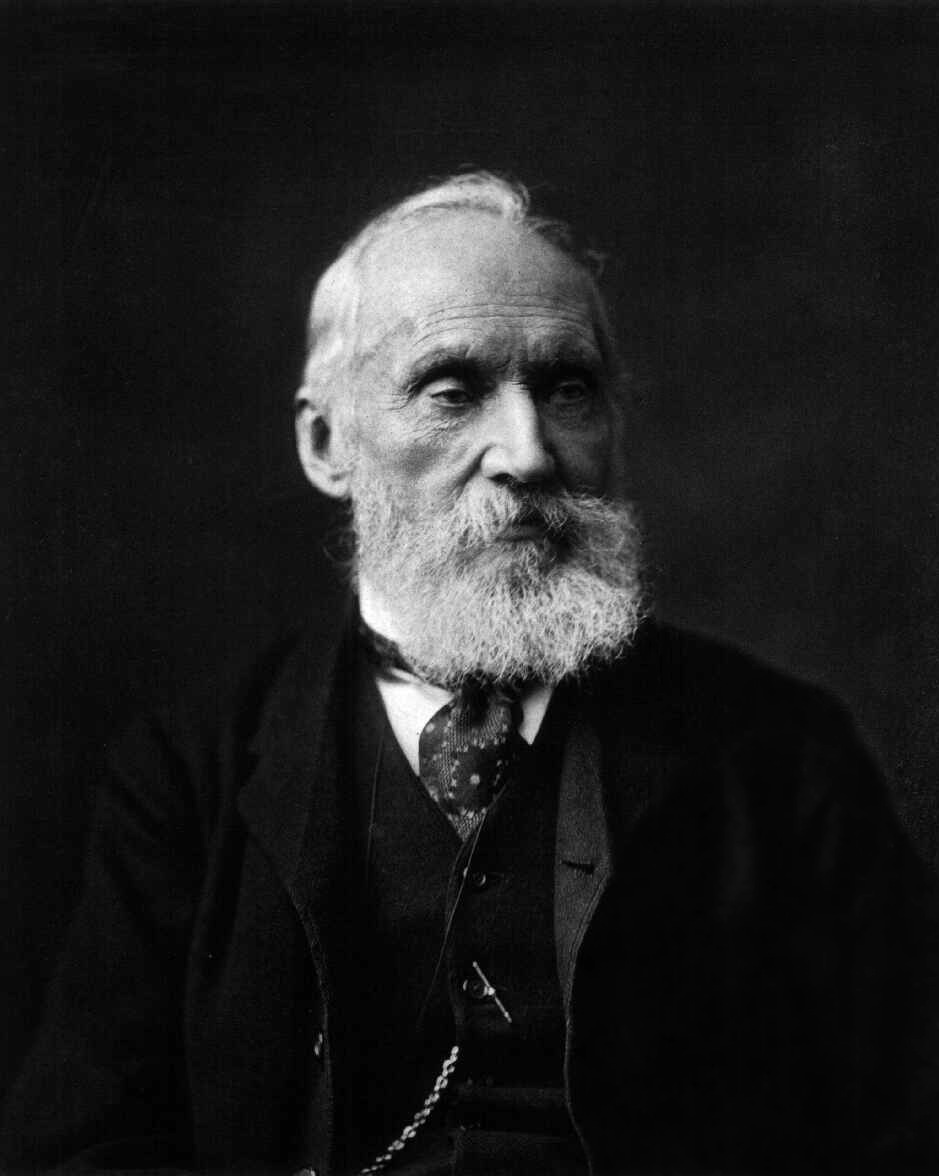
The most influential nineteenth-century attempt to quantify Earth's age came from the physicist William Thomson, later Lord Kelvin. Beginning in 1864, Thomson modelled the Earth as an initially molten body cooling by conduction and calculated that no more than 20 to 400 million years had elapsed since the surface solidified, with his preferred estimate settling around 100 million years in later publications.20 Thomson's calculation, though physically rigorous given the knowledge of the time, rested on a critical unrecognised assumption: that the Earth had no internal heat source beyond its original thermal endowment. This placed Thomson in direct conflict with geologists and evolutionary biologists who argued that the geological and palaeontological records demanded far more time than 100 million years.3, 19
The resolution came from an entirely unexpected direction. In 1902, Ernest Rutherford and Frederick Soddy demonstrated that radioactive elements undergo spontaneous transmutation, releasing energy in the process.5 This discovery had two immediate consequences for the age-of-the-Earth debate. First, it revealed that the Earth contains an internal heat source — the decay of uranium, thorium, and potassium distributed throughout the crust and mantle — that had invalidated Kelvin's cooling calculation from the outset.32 Second, and more profoundly, it provided a quantitative tool for measuring geological time directly.
In 1907, the radiochemist Bertram Boltwood recognised that the lead found in uranium-bearing minerals was a stable end product of radioactive decay, and he used the ratio of lead to uranium in a suite of mineral samples to calculate ages ranging from 400 million to 2.2 billion years — the first radiometric dates ever published.22 Although Boltwood's ages were rough by modern standards, they shattered the Kelvin timescale and demonstrated that the Earth was at least billions of years old.
The British geologist Arthur Holmes built on Boltwood's work throughout the early twentieth century, publishing the first book-length treatment of geological timekeeping in 1913 and progressively refining his estimates of Earth's age as analytical methods improved.23 By the 1940s, Holmes had arrived at an age of approximately 3.35 billion years for the oldest known rocks and suggested that the planet itself was substantially older still. The definitive measurement came in 1956 when Patterson, working at the California Institute of Technology, developed an ultra-clean laboratory to eliminate lead contamination and measured the isotopic composition of lead in the Canyon Diablo meteorite and in modern ocean sediment, establishing an age of 4.55 billion years for the Earth-meteorite system.1
Radiometric dating methods
Radiometric dating exploits the predictable decay of naturally occurring radioactive isotopes to determine the time elapsed since a mineral or rock last crystallised. Each radioactive parent isotope decays into a stable daughter isotope at a rate characterised by a half-life — the time required for half of the parent atoms in a sample to decay. Because decay rates are governed by quantum-mechanical processes within the atomic nucleus, they are unaffected by temperature, pressure, chemical environment, or any other external condition, making them exceptionally reliable clocks.6, 8
The uranium-lead system is the most precise and widely used method for dating ancient rocks. It exploits two independent decay chains: uranium-238 decays to lead-206 with a half-life of 4.468 billion years, while uranium-235 decays to lead-207 with a half-life of 703.8 million years. Because these two clocks run simultaneously in the same mineral grain, the ages derived from each chain can be compared directly. When both chains yield the same age, the date is said to be concordant, providing a powerful internal consistency check that is unique to the uranium-lead system.6, 7 The mineral zircon (zirconium silicate) is especially well suited to uranium-lead dating because it incorporates uranium into its crystal lattice at the time of formation while strongly excluding lead, ensuring that any lead measured in a zircon crystal is radiogenic — produced by radioactive decay — rather than inherited from the surrounding magma.6
The potassium-argon system relies on the decay of potassium-40 to argon-40, with a half-life of 1.25 billion years. Because argon is a noble gas and escapes from minerals at high temperatures, the potassium-argon clock is reset by heating events, making it useful for dating volcanic rocks and for constraining the timing of metamorphic events. The refined argon-argon variant, in which the sample is irradiated to convert potassium-39 to argon-39, allows the parent-to-daughter ratio to be measured in a single mass-spectrometric analysis and provides more precise dates with better-controlled systematic uncertainties.24
The rubidium-strontium system exploits the beta decay of rubidium-87 to strontium-87, with a half-life of approximately 48.8 billion years. This long half-life makes rubidium-strontium dating particularly suited to very old rocks. Isochron plots, in which multiple co-genetic samples are analysed, allow the initial strontium isotopic composition to be determined simultaneously with the age, eliminating the need to assume a particular starting ratio.25, 34
The samarium-neodymium system is based on the alpha decay of samarium-147 to neodymium-143, with a half-life of 106 billion years. Because samarium and neodymium are both rare-earth elements with similar geochemical behaviour, their ratio is resistant to disturbance by weathering and low-grade metamorphism, making samarium-neodymium dating useful for rocks whose rubidium-strontium systematics have been disturbed.26 Additionally, the hafnium-tungsten system (hafnium-182 decaying to tungsten-182, with a half-life of only 8.9 million years) has proven invaluable for constraining the earliest events in solar system history, including the timing of core formation in planetary bodies and the Moon-forming impact.28, 42
The critical point underlying all of these systems is that they are physically and chemically independent of one another. Each involves different elements, different decay mechanisms (alpha decay, beta decay, or electron capture), and different half-lives spanning four orders of magnitude. When multiple independent systems are applied to the same geological sample and yield the same age, the probability that all are simultaneously wrong is vanishingly small. This principle of radiometric cross-validation is the foundation of modern geochronology.6, 7
Meteorite evidence
Meteorites provide the most direct evidence for the age of the solar system and, by extension, for the age of the Earth. Because the Earth is a geologically active planet whose surface is continuously recycled by plate tectonics, volcanism, and erosion, no rock from the planet's original formation has survived intact. Meteorites, by contrast, are fragments of asteroids and other small bodies that formed in the earliest stages of the solar nebula and have remained essentially unaltered for billions of years.3, 11
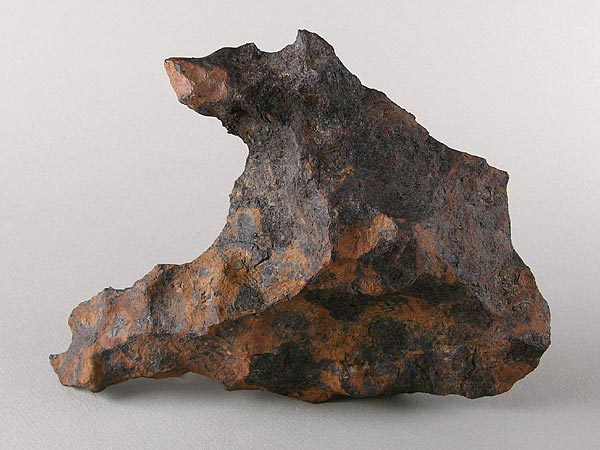

Patterson's 1956 determination used the Canyon Diablo meteorite, an iron meteorite associated with Meteor Crater in Arizona. By measuring the lead isotopic ratios in troilite (iron sulphide) inclusions within the meteorite — which contained primordial lead with no radiogenic contribution — Patterson established the initial lead isotopic composition of the solar system. Comparing this primordial ratio with the isotopic composition of modern terrestrial lead ores, he calculated the time that had elapsed since the Earth-meteorite system formed: 4.55 ± 0.07 billion years.1 This elegant approach, known as the lead-lead isochron method, remains one of the most robust techniques in geochronology.
Subsequent analyses of a wide variety of meteorite types have consistently confirmed and refined Patterson's result. Calcium-aluminium-rich inclusions (CAIs), the small white nodules found in carbonaceous chondrite meteorites, are understood to be the very first solids to have condensed from the cooling solar nebula. Lead-lead dating of CAIs from the Allende and NWA 2364 meteorites has yielded ages of 4.5672 ± 0.0006 billion years, representing the best current estimate for the time of solar system formation.11, 12 Chondrules — the small, formerly molten silicate spherules that constitute the bulk of chondritic meteorites — yield ages approximately 1 to 3 million years younger than CAIs, consistent with a brief interval of solid-body accretion and heating in the early solar nebula.11
The concordance of meteorite ages across multiple radiometric systems is striking. Samarium-neodymium isochrons for chondritic meteorites yield formation ages of approximately 4.56 billion years, in agreement with uranium-lead and lead-lead determinations.26, 27 Hafnium-tungsten chronometry, which constrains the timing of metal-silicate differentiation (core formation) in planetary bodies, indicates that the parent asteroids of iron meteorites differentiated within the first 1 to 3 million years of solar system history, again consistent with the CAI-defined age.28 The agreement among these physically independent methods eliminates any possibility that the meteorite ages are artefacts of a single flawed technique.
Key radiometric ages for solar system and Earth materials1, 11, 12, 14, 29, 33
| Material | Age (billion years) | Method |
|---|---|---|
| CAIs (NWA 2364 meteorite) | 4.5672 ± 0.0006 | Pb–Pb |
| Canyon Diablo meteorite | 4.55 ± 0.07 | Pb–Pb isochron |
| Earth (Pb isotope model age) | 4.54 ± 0.05 | Pb–Pb isochron |
| Oldest lunar highlands rocks | 4.44 ± 0.02 | Sm–Nd, Pb–Pb |
| Jack Hills zircons (Earth) | 4.374 ± 0.006 | U–Pb (SIMS) |
| Acasta Gneiss (Earth) | 4.031 ± 0.003 | U–Pb |
Lunar evidence
The Moon preserves a geological record that complements and extends the terrestrial and meteoritic evidence for the age of the Earth. Because the Moon lacks plate tectonics, a substantial atmosphere, and liquid water, its surface has not been recycled in the way Earth's has, and rocks from the earliest epochs of solar system history survive at the lunar surface.13, 29
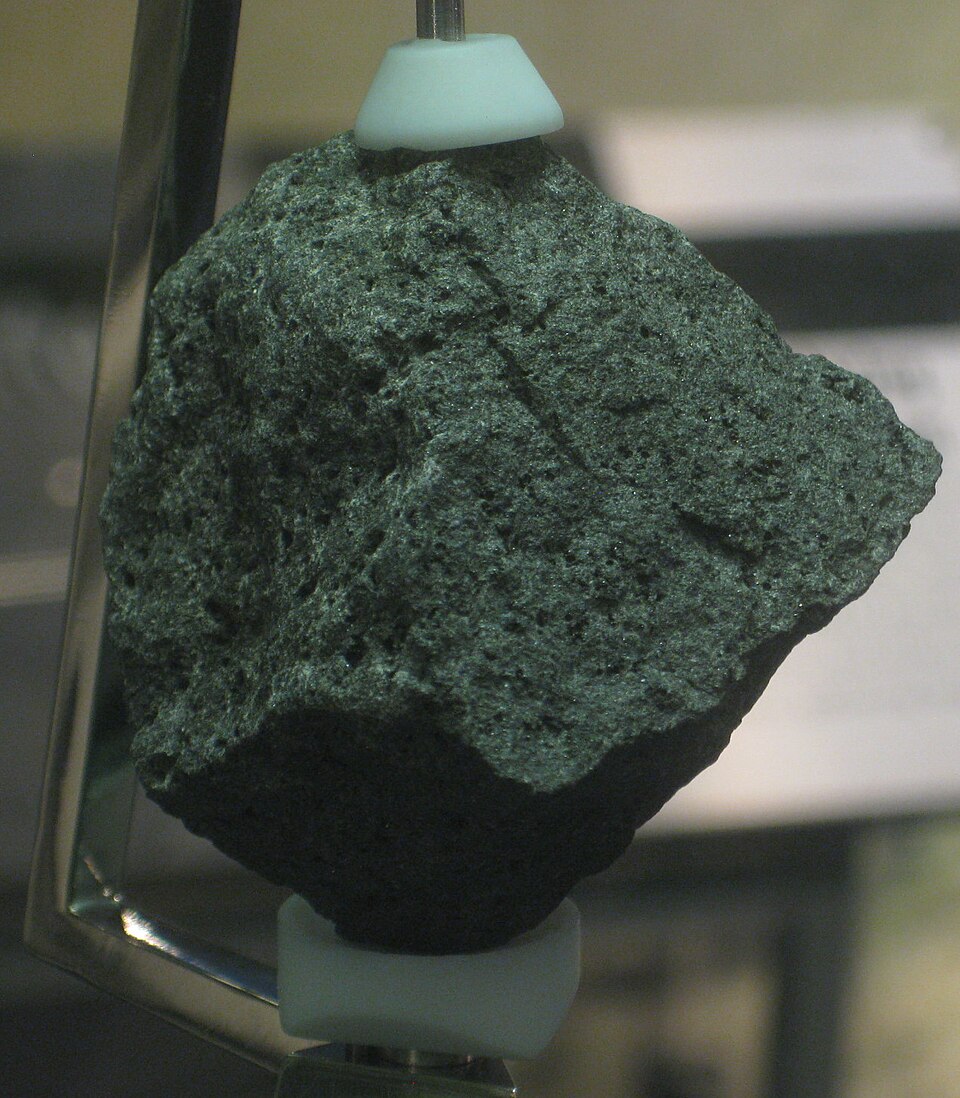

Between 1969 and 1972, the six crewed Apollo missions returned 382 kilograms of lunar rock and soil to Earth. Radiometric dating of these samples using uranium-lead, rubidium-strontium, samarium-neodymium, and potassium-argon methods has yielded ages spanning from approximately 3.1 billion years for the youngest mare basalts (the dark volcanic plains visible from Earth) to 4.44 billion years for the oldest anorthositic highlands samples.13, 29 The highlands rocks, composed primarily of the calcium-rich plagioclase mineral anorthite, are interpreted as the surviving crust of the Moon's original magma ocean — a global shell of molten rock that formed during the Moon's accretion and subsequently crystallised over tens of millions of years.
Hafnium-tungsten isotope systematics in lunar samples have further constrained the timing of the Moon-forming giant impact. The tungsten isotopic composition of lunar rocks indicates that the Moon formed no earlier than approximately 60 million years after the start of solar system condensation, placing the giant impact at roughly 4.51 billion years ago.42 The samarium-neodymium model ages of the oldest ferroan anorthosites returned by Apollo 16 yield crystallisation ages of approximately 4.44 to 4.46 billion years, consistent with the solidification of the lunar magma ocean shortly after the Moon's formation.29
The lunar evidence is significant not only for establishing the Moon's age but for confirming the antiquity of the Earth-Moon system as a whole. The Moon is understood to have formed from debris generated by a collision between the proto-Earth and a Mars-sized impactor, meaning that the Earth must have existed as a differentiated body prior to the Moon-forming impact. The concordance of lunar rock ages with meteorite ages and terrestrial zircon ages provides independent corroboration of the 4.54-billion-year age of the Earth.28, 29, 42
Terrestrial evidence
Although no terrestrial rock dates to the very formation of the Earth — the planet's geological activity has long since recycled its original crust — remarkably old materials survive at several localities, providing direct evidence that the Earth has existed for billions of years.
.jpg)
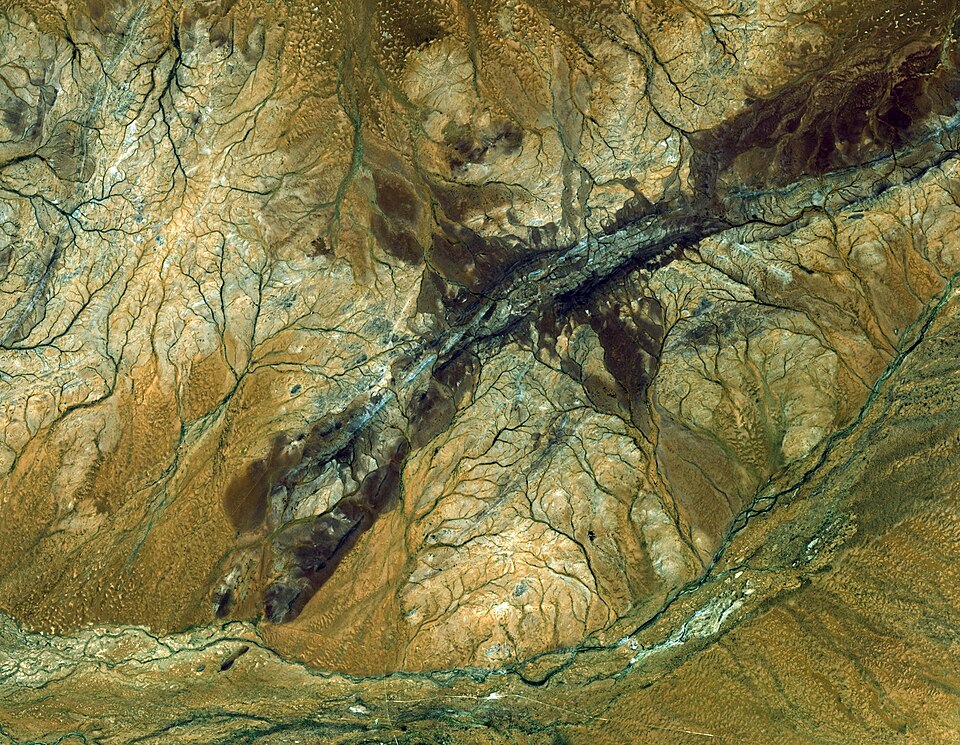
The oldest known terrestrial material consists of detrital zircon crystals recovered from the Jack Hills metaconglomerate in the Narryer Gneiss Terrane of Western Australia. Ion-microprobe uranium-lead dating of these zircons, first reported by Wilde and colleagues in 2001, yielded crystallisation ages of up to 4.404 billion years.14 In 2014, Valley and colleagues used atom-probe tomography to confirm that the oldest of these grains — a zircon designated W74/2-36 — preserves a primary crystallisation age of 4.374 ± 0.006 billion years, ruling out the possibility that lead mobility within the crystal had produced a spuriously old date.15 The oxygen isotope ratios preserved in these zircons indicate that they crystallised from magmas that had interacted with liquid water, suggesting that oceans may have existed on Earth's surface within 170 million years of the planet's formation.14, 15
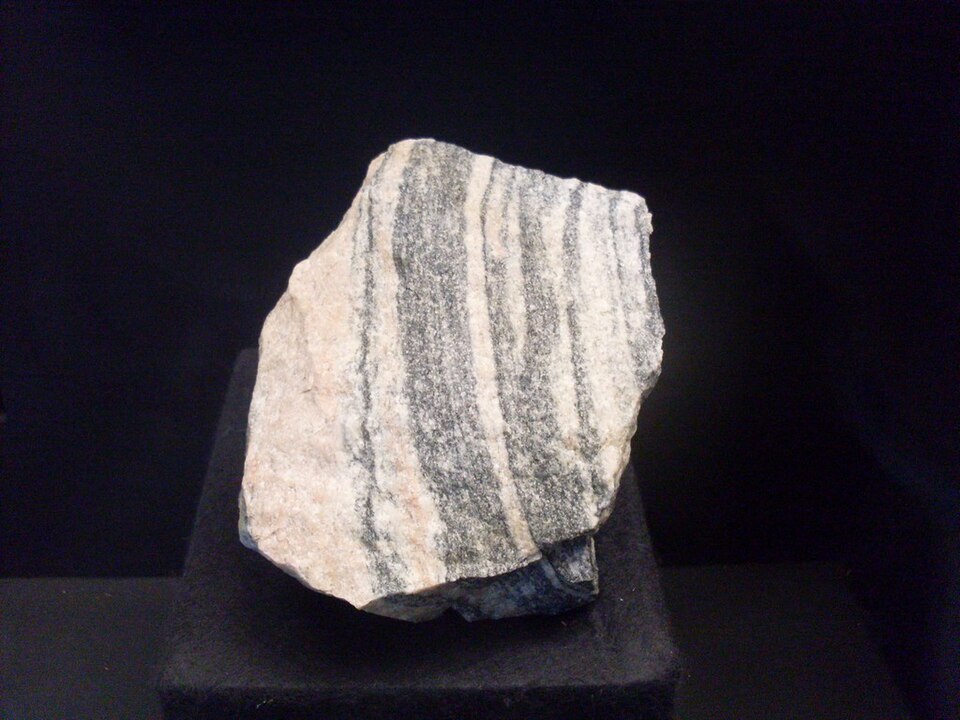

The oldest known intact rock on Earth is the Acasta Gneiss, a tonalitic gneiss exposed along the Acasta River in the Slave Province of Canada's Northwest Territories. Uranium-lead dating of zircons extracted from the Acasta Gneiss has yielded crystallisation ages of 4.031 ± 0.003 billion years, confirmed by both conventional thermal-ionisation mass spectrometry and secondary-ion mass spectrometry.30, 33 The Acasta Gneiss is interpreted as a fragment of early Hadean continental crust that has survived more than four billion years of tectonic reworking.
Other exceptionally ancient terranes include the Isua Greenstone Belt of southwestern Greenland, where metasedimentary and metavolcanic rocks have been dated to approximately 3.7 to 3.85 billion years.31 The Isua rocks are significant not only for their age but because they include banded iron formations and pillow basalts indicative of an early ocean and active volcanism. Possible biogenic carbon isotope signatures and microfossil-like structures in Isua-aged rocks from northern Canada (the Nuvvuagittuq Greenstone Belt, with a disputed minimum age of 3.77 billion years) have been interpreted as evidence for life in the earliest Archean, though this interpretation remains debated.40
The distribution of ancient rocks across multiple continents — the Pilbara Craton in Australia, the Kaapvaal Craton in South Africa, the Superior Province in Canada, the North China Craton, and the Baltic Shield in Scandinavia — demonstrates that the formation of continental crust has been a global process operating for at least 4.0 billion years. The progressive increase in the volume of preserved crust with decreasing age reflects the cumulative effects of geological recycling: older crust is continuously consumed by subduction, weathering, and metamorphic reworking, so that only the most geologically stable cratons preserve rocks older than 3.5 billion years.16, 31
Independent chronometers
Radiometric methods are not the only means of measuring geological time. Several non-radiometric techniques based on the counting of annual layers provide independent, high-resolution chronologies that extend tens to hundreds of thousands of years into the past. While these records do not directly measure the full 4.54-billion-year age of the Earth, they confirm that deep time is real by demonstrating continuous, unbroken records far older than any historical civilisation.
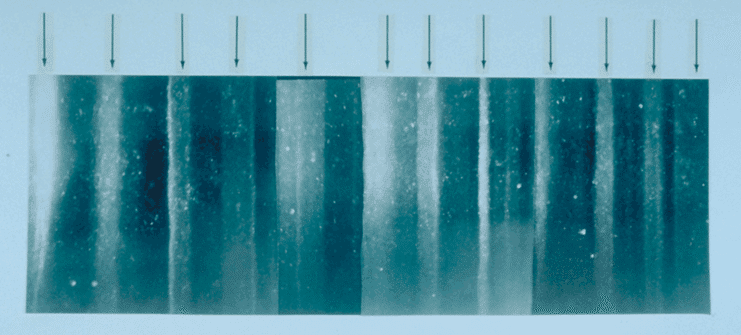

Ice cores drilled from the Antarctic and Greenland ice sheets preserve annual layers of compressed snow (firn) that can be counted individually, much as tree rings record annual growth. Each year's snowfall produces a distinct chemical and physical signature: summer layers contain higher concentrations of dust and different ratios of oxygen isotopes than winter layers, and volcanic eruptions deposit identifiable horizons of sulphate aerosols that serve as independent chronological markers.4, 36 The EPICA Dome C ice core from East Antarctica extends to a depth of 3,270 metres and preserves a continuous climate record spanning approximately 800,000 years — eight complete glacial-interglacial cycles.35 The Greenland GISP2 ice core provides an annually resolved record extending approximately 110,000 years, with individual annual layers countable to a depth of more than 2,800 metres.4
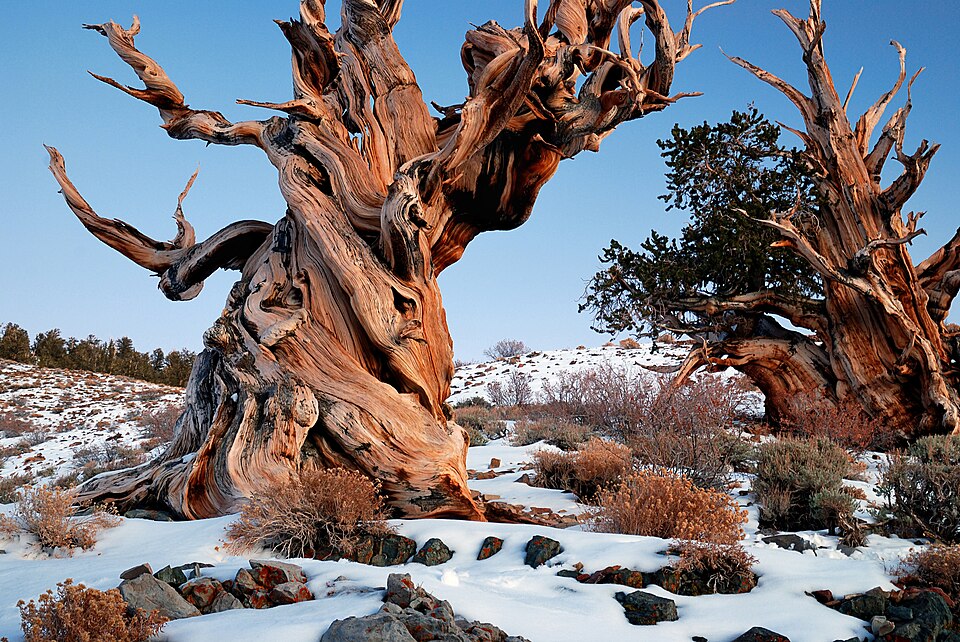

Dendrochronology — the science of tree-ring dating — exploits the fact that trees in temperate climates produce one visible growth ring per year. The Great Basin bristlecone pines (Pinus longaeva) of the White Mountains of California include living individuals more than 5,000 years old, and by cross-matching the distinctive patterns of wide and narrow rings between living trees and overlapping dead wood samples, researchers have constructed a continuous bristlecone pine chronology extending over 9,000 years.17 Independent European oak and pine chronologies extend beyond 12,000 years. These chronologies serve as an independent calibration standard for radiocarbon dating, confirming and correcting the radiocarbon timescale over the full range of tree-ring coverage.9
Lake varves — annually laminated sediments deposited on lake beds — provide yet another independent annual-layer record. Lake Suigetsu in Japan has yielded a continuous varve sequence extending approximately 52,800 years, which has been used to construct a high-precision radiocarbon calibration curve independent of the tree-ring record.10 Coral growth bands, produced by the annual variation in skeletal density of reef-building corals, have been used to construct chronologies extending several centuries, with X-ray densitometry confirming the annual periodicity of the banding.37, 38 The geomagnetic polarity timescale, calibrated against radiometric dates, records hundreds of reversals of Earth's magnetic field over the past 160 million years, providing an independent framework for correlating marine sediment cores and seafloor spreading magnetic anomalies.16
Each of these annual-layer chronometers is physically independent of radiometric decay. Their agreement with radiometric dates over the intervals where both are available provides a stringent external check on the radiometric timescale. The fact that ice-core layer counts, tree-ring chronologies, and varve sequences all yield ages consistent with independently derived radiometric dates reinforces the reliability of the entire geochronological framework.9, 10, 35
Annual-layer records extending beyond historical time4, 9, 10, 17, 35
Convergence of evidence
The age of the Earth is not established by any single measurement but by the convergence of multiple independent lines of evidence, each resting on different physical principles and applied to different materials from different locations in the solar system. This convergence constitutes one of the most robust conclusions in all of the natural sciences.
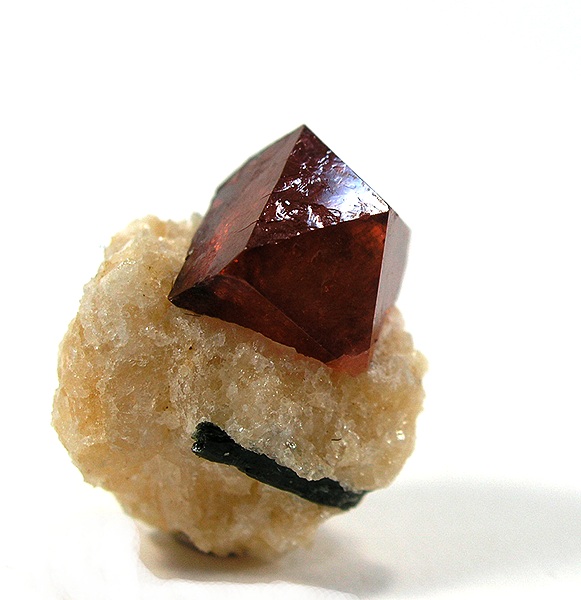

Uranium-lead, potassium-argon, rubidium-strontium, samarium-neodymium, lutetium-hafnium, and rhenium-osmium dating all yield concordant ages when applied to the same geological samples.6, 7 Meteorites from dozens of different parent bodies — chondrites, achondrites, iron meteorites, and stony-iron meteorites — consistently produce ages between 4.53 and 4.57 billion years, regardless of their chemical composition or the radiometric method employed.3, 11, 12 Lunar samples returned from six different landing sites yield ages spanning from 3.1 to 4.44 billion years, entirely consistent with a Moon that formed shortly after the 4.54-billion-year-old Earth.13, 29 The oldest terrestrial zircons and rocks fill in the remaining gap, confirming that Earth's crust began forming within the first few hundred million years of solar system history.14, 15, 30
The power of this convergence can be appreciated by considering what would be required for the age to be incorrect. Each radiometric system would need to have been systematically biased in exactly the same way — despite relying on different elements, different decay mechanisms, and different half-lives — and this bias would need to produce the same erroneous result across meteorites, lunar samples, and terrestrial rocks originating from entirely different parts of the solar system. The non-radiometric annual-layer records would additionally need to be flawed in a manner that independently produced the same deep-time chronology. No known physical process could produce such a universal, correlated error across so many independent systems.3, 7, 19
The cross-validation between independent methods is not merely a theoretical expectation but an empirically demonstrated reality. The Geological Survey of Canada, the United States Geological Survey, and laboratories worldwide routinely apply multiple radiometric systems to the same samples and report concordant results. The International Commission on Stratigraphy's Geologic Time Scale, the authoritative reference for geological time, is calibrated using radiometric dates from dozens of laboratories employing multiple independent methods, and the resulting timescale is internally consistent to better than 1 percent for most of the Phanerozoic eon.16 The cosmic chronometers derived from stellar nucleosynthesis models provide yet another independent constraint, yielding estimates for the age of the Milky Way's oldest stars (approximately 13 billion years) that are fully consistent with a 4.54-billion-year-old solar system embedded within a 13.8-billion-year-old universe.
Radiocarbon dating and its limits
A common misconception conflates the various radiometric methods, particularly confusing radiocarbon dating with the techniques used to determine the age of the Earth. Radiocarbon dating, based on the decay of carbon-14 to nitrogen-14 with a half-life of 5,730 years, is applicable only to organic materials younger than approximately 50,000 years.9 It is emphatically not used to date rocks or to establish the age of the Earth. The methods that constrain the age of the Earth — uranium-lead, potassium-argon, rubidium-strontium, and samarium-neodymium — exploit isotopes with half-lives measured in billions of years, making them sensitive to geological timescales that radiocarbon cannot access.
Radiocarbon dating is, however, relevant to the broader framework of deep time in two important ways. First, the radiocarbon timescale has been independently calibrated against tree-ring chronologies (to approximately 12,000 years) and lake varve sequences (to approximately 52,800 years), confirming that the decay rate of carbon-14 has remained constant over the calibrated interval and that the fundamental assumptions of radiometric dating are sound.9, 10 Second, the very fact that radiocarbon dating has an effective upper limit of approximately 50,000 years — beyond which virtually all carbon-14 has decayed below detectable levels — itself constitutes evidence for deep time. The geological formations in which ancient fossils are found contain no detectable carbon-14, exactly as expected if those formations are millions to billions of years old.6
Deep time in perspective
The span of 4.54 billion years is difficult to comprehend in human terms. One widely used pedagogical device compresses the entire history of the Earth into a single 24-hour day, beginning at midnight. On this scale, the oldest known evidence of life — possible microbial structures dating to approximately 3.77 to 4.28 billion years ago — appears before 4:00 AM.40 The first complex multicellular animals do not appear until approximately 9:00 PM, during the Ediacaran period.39 The entire Phanerozoic eon — the age of visible animal life, encompassing the fossil record of trilobites, fish, amphibians, reptiles, dinosaurs, mammals, and birds — occupies only the final three hours of the day.16 Dinosaurs dominate from roughly 10:40 PM to 11:39 PM, when the end-Cretaceous asteroid impact extinguishes all non-avian dinosaur lineages. The entire history of the genus Homo — spanning approximately 2.8 million years of hominin evolution — falls within the final 37 seconds before midnight. All of recorded human civilisation occupies less than the final 0.2 seconds.3, 16
This temporal vastness is not merely an abstract curiosity; it is a necessary precondition for the processes of biological evolution that have produced the diversity of life observed today. The evolution of complex metabolic pathways, multicellular body plans, and the radiation of animal phyla required hundreds of millions to billions of years of cumulative genetic change driven by mutation, natural selection, genetic drift, and other evolutionary mechanisms.41 Laboratory experiments with microbial populations have demonstrated that novel metabolic capabilities can evolve within decades under strong selective pressure, providing a directly observable confirmation that evolution can produce significant functional innovation on experimentally accessible timescales.41 Extrapolated across billions of years and trillions of generations, such processes are more than sufficient to account for the observed complexity and diversity of the biosphere.
The geological timescale also places human existence in its proper context within Earth's history. The planet's internal heat engine, driven by residual accretional energy and radioactive decay, has sustained plate tectonics, volcanism, and magnetic field generation for more than four billion years. The long-term carbon cycle, modulated by the weathering of silicate rocks and the subduction of carbonate sediments, has regulated atmospheric CO2 concentrations and surface temperatures over geological time, maintaining conditions broadly hospitable to life despite dramatic changes in solar luminosity and continental configuration.18 The age of the Earth is thus not a single isolated datum but the temporal foundation upon which the entire narrative of planetary and biological history is built.
Earth’s 4.54-billion-year history compressed to 24 hours3, 16, 39, 40
References
Radiometric dating, geologic time, and the age of the Earth: a reply to 'scientific' creationism
Subcommission on geochronology: convention on the use of decay constants in geo- and cosmochronology
The age of the Solar System redefined by the oldest Pb–Pb age of a meteoritic inclusion
Evidence from detrital zircons for the existence of continental crust and oceans on the Earth 4.4 Gyr ago
A 7,104-year annual tree-ring chronology for bristlecone pine, Pinus aristata, from the White Mountains, California
Old age for the world’s oldest crustacean: Pb–Pb zircon geochronology of the Acasta Gneiss Complex, northwestern territories
Annually resolved ice core records of tropical climate variability over the past ~1800 years
Historical contingency and the evolution of a key innovation in an experimental population of Escherichia coli