Overview
- Fossils form through several preservation pathways—permineralization, molds and casts, amber entombment, and trace fossil formation—each biased toward organisms with hard parts in low-energy depositional environments.
- The concept of deep time, developed by James Hutton and Charles Lyell in the 18th and 19th centuries, established that the Earth is incomprehensibly old and that slow, uniform geological processes can produce the rock formations and fossil sequences we observe today.
- Despite well-understood taphonomic biases, the fossil record preserves a coherent and consistent history of life, including the Cambrian explosion, major adaptive radiations, and five mass extinction events spanning 541 million years.
The fossil record is the totality of all preserved remains, traces, and chemical signatures of organisms that lived in the geological past. It constitutes the primary empirical foundation for understanding the history of life on Earth over the last 3.7 billion years.15 Fossils are recovered from sedimentary rocks worldwide, and their systematic study—a discipline called paleontology—has allowed scientists to reconstruct ancient ecosystems, trace evolutionary lineages, identify the timing and magnitude of mass extinctions, and calibrate the tempo of evolution across geological time.1, 15 Integral to interpreting the fossil record is the concept of deep time: the recognition that Earth is approximately 4.54 billion years old and that geological and biological change operates across timescales that vastly exceed ordinary human experience.24
How fossils form
Fossilization is a rare and contingent process. The vast majority of organisms that have ever lived left no fossil trace whatsoever; soft tissues decay within days to weeks under normal conditions, and even hard skeletal material is typically destroyed by biological scavenging, chemical dissolution, and physical abrasion before burial can occur.1, 2 The pathways by which organic remains are occasionally preserved constitute the field of taphonomy—from the Greek taphos (burial) and nomos (law)—and understanding these pathways is essential to interpreting what the fossil record can and cannot tell us.1
The most common form of preservation is permineralization, in which minerals dissolved in groundwater gradually infiltrate the pore spaces of bone, shell, or wood after burial. Over geological time, the original organic material may be partially or entirely replaced by silica, calcite, iron pyrite, or other minerals, creating a faithful three-dimensional replica of the original structure at the microscopic level.2, 3 Many of the best-known dinosaur fossils are permineralized bone, where the original hydroxyapatite of the skeleton has been reinforced or replaced by secondary mineralization that renders the specimen rock-hard and resistant to further decay.
Molds and casts represent a related but distinct pathway. When a shell or bone is buried in sediment and subsequently dissolves, it leaves a void—an external mold—that preserves a precise negative impression of the organism's outer surface. If this void is later filled by a different mineral, the result is a cast, a solid replica of the original structure.3 Molds and casts are especially common among marine invertebrates such as bivalves and gastropods, whose calcareous shells are susceptible to dissolution in acidic groundwater.
Amber preservation occurs when organisms become entrapped in sticky tree resin that hardens over millions of years into the gemstone amber. This mode of preservation is extraordinary in its fidelity: insects, arachnids, feathers, plant matter, and even drops of ancient atmosphere have been recovered in near-perfect cellular detail from Cretaceous amber deposits in Burma, Canada, and the Baltic region.4 Amber inclusions routinely preserve surface ornamentation, internal organs, and behavioral postures that would be invisible in any other preservational mode, providing a window into ancient ecological interactions that sedimentary fossils simply cannot replicate.
Trace fossils (or ichnofossils) are the preserved records of organismal behavior rather than the organisms themselves. They include footprints, burrows, feeding trails, coprolites (fossilized feces), and bite marks.23 Trace fossils are often more informative about the life habits, locomotion, and ecological roles of ancient organisms than body fossils, because they capture the animal in the act of living. Importantly, trace fossils can be preserved even when no body fossil is found, extending the known temporal range of behavioral repertoires beyond what body fossil evidence alone would suggest.23
Taphonomic bias and the incompleteness of the record
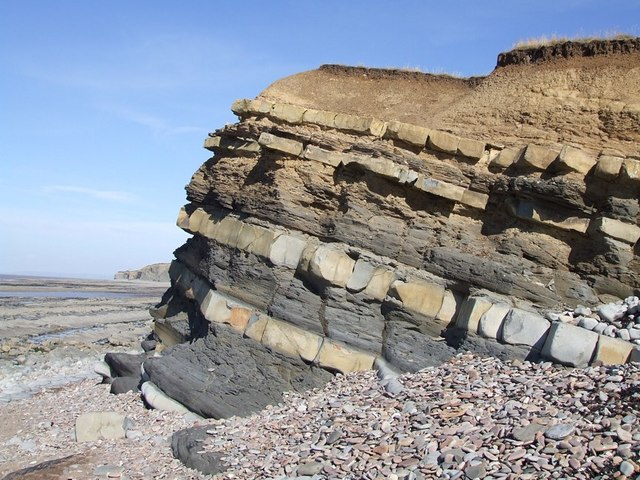
Because fossilization is a filter rather than a faithful recording device, the fossil record is systematically biased in ways that paleontologists have worked to characterize and correct for. The nature of these biases is well understood, and far from undermining the evidentiary value of the fossil record, their identification actually strengthens it: scientists can reason about what should be missing and how the preserved sample relates to the original living community.1, 13
Preservation is heavily skewed toward organisms with mineralized hard parts—shells, bones, teeth, and woody plant tissue. Entirely soft-bodied organisms such as jellyfish, worms, and most fungi leave no skeletal remains and are effectively invisible to the fossil record under ordinary conditions.2 Similarly, organisms that inhabit environments where sediment rarely accumulates—upland forests, rocky mountain streams, wind-swept desert surfaces—are poorly represented because the basic precondition of burial is absent.1
Preservation potential also varies with environment. Low-energy depositional settings such as calm marine shelves, lake basins, and river flood plains accumulate fine-grained sediment that can gently bury and seal organisms against scavenging and oxidative decay.1, 20 High-energy environments such as river channels and wave-swept coastlines tend to destroy organic material before burial can preserve it. As a result, the shallow marine shelf record is far richer and more complete than the terrestrial record for most of Phanerozoic time.15
Time averaging presents a further complication. A single sedimentary layer may contain shells or bones deposited over hundreds or even thousands of years, mixing organisms from different seasons, climate states, or community configurations into a single apparent assemblage.20 Despite these limitations, statistical analyses of the fossil record have shown that, for well-skeletonized marine invertebrates in particular, preservation is sufficiently complete that observed patterns of first and last occurrences closely approximate true patterns of origination and extinction.13

Lagerstätten: windows of exceptional preservation
At certain times and places, the normal filters of taphonomy were temporarily bypassed by unusual depositional conditions, producing Lagerstätten (German for "storage places" or "mother lodes")—fossil deposits of extraordinary diversity, abundance, and preservation quality.2 These exceptional sites are disproportionately important to our understanding of ancient life because they preserve soft tissues, color patterns, fine anatomical structures, and ecological relationships that are entirely absent from ordinary assemblages.
The Burgess Shale of British Columbia, Canada, formed approximately 508 million years ago during the Cambrian period, is among the most celebrated Lagerstätten in the world.5

Deposited in fine-grained anoxic muds at the base of an underwater cliff, the Burgess Shale preserves the soft-bodied anatomy of a spectacular array of early animal life, including the segmented predator Anomalocaris, the five-eyed Opabinia, and dozens of organisms representing early stem-groups of modern animal phyla.5, 6 The preservation mechanism likely involved rapid burial by sediment flows and the exclusion of scavenging organisms in the oxygen-depleted bottom waters, possibly augmented by microbial mats that sealed specimens against decay.19 The Burgess Shale and related Cambrian Lagerstätten such as the Chengjiang biota of Yunnan, China, provide the primary evidence for the diversification of animal body plans during the Cambrian explosion.21
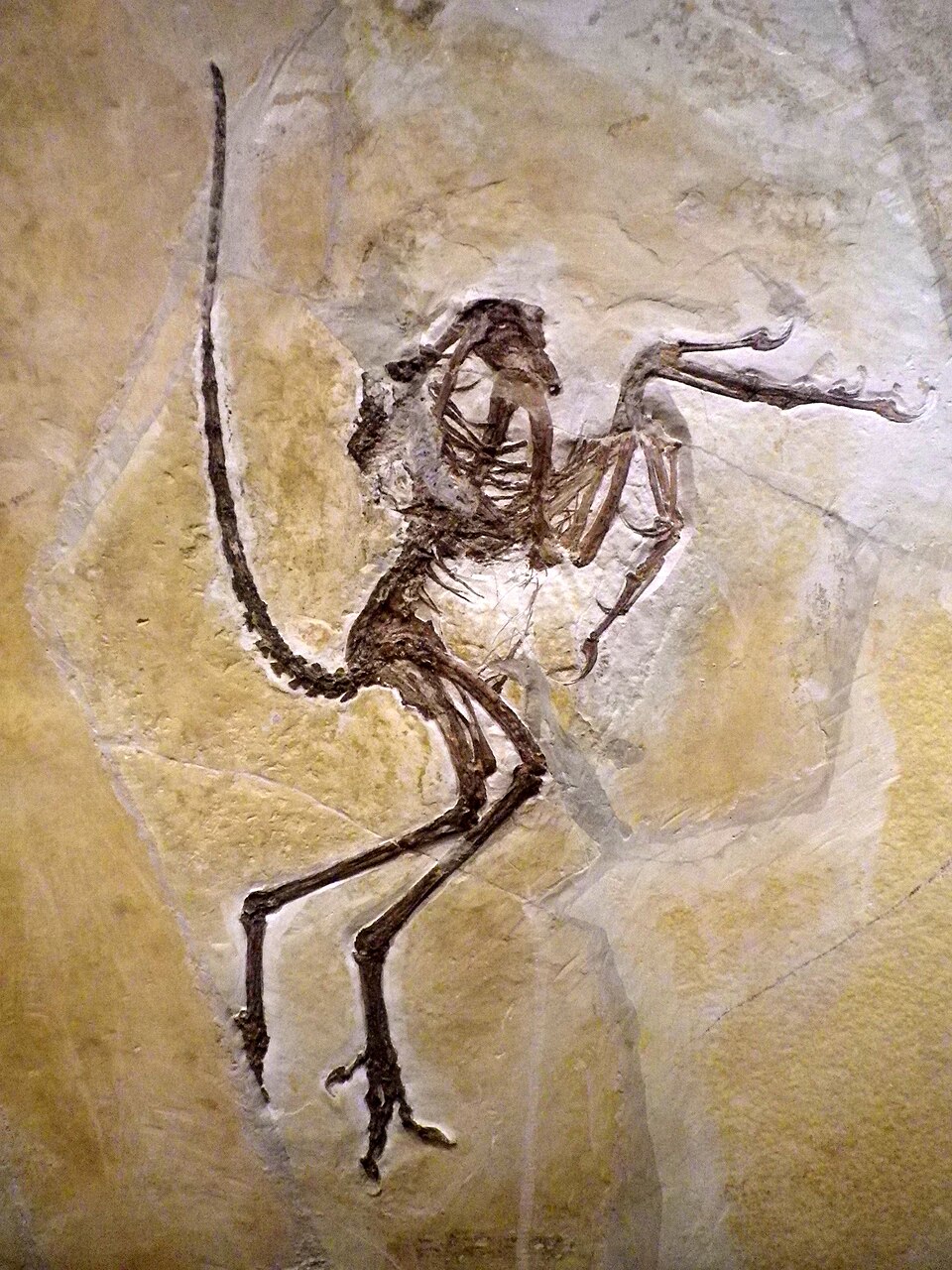
The Solnhofen Limestone of Bavaria, Germany, formed in a shallow, hypersaline lagoon during the Late Jurassic, approximately 150 million years ago.7 The lagoon's extreme salinity excluded bacteria and scavengers, allowing organisms that fell into the water to settle to the bottom and be preserved in exquisite detail in the fine-grained lithographic limestone. Solnhofen yielded the first specimens of Archaeopteryx lithographica, the famous transitional fossil between non-avian theropod dinosaurs and modern birds, preserving individual feather impressions alongside the unmistakably reptilian skeleton beneath.7
The Messel Pit of Hessen, Germany, a UNESCO World Heritage Site, is an Eocene lake deposit approximately 47 million years old.8 Its anoxic lake-bottom sediments preserve mammals, birds, reptiles, insects, and plants with remarkable completeness, including stomach contents, fur impressions, feather coloration precursors, and even the iridescent scales of ancient fish. The Messel fauna provides one of the most detailed snapshots of an early Eocene terrestrial ecosystem known anywhere, and includes the early primate Ida (Darwinius masillae) as well as ancestral horses, pangolins, and bats.8
Selected Lagerstätten and their scientific significance5, 7, 8, 21
| Lagerstätte | Age (Ma) | Preservation mechanism | Key taxa |
|---|---|---|---|
| Chengjiang, China | ~520 | Rapid burial in fine muds, anoxia | Soft-bodied Cambrian animals, early chordates |
| Burgess Shale, Canada | ~508 | Anoxic basin, microbial mat sealing | Anomalocaris, Opabinia, early arthropods |
| Solnhofen, Germany | ~150 | Hypersaline lagoon, exclusion of scavengers | Archaeopteryx, pterosaurs, early lizards |
| Messel Pit, Germany | ~47 | Anoxic lake bottom | Early mammals, bats, birds with color pigments |
| Baltic & Burmese amber | 45–99 | Tree resin entombment | Insects, spiders, feathers, plant material |
The development of deep time as a concept
For most of recorded human history, the age of the Earth was assumed to be measured in thousands, not billions, of years. In Western intellectual tradition, biblical genealogies and cosmological narratives suggested an Earth created within the recent past; the Irish archbishop James Ussher's 1650 calculation placing creation in 4004 BCE was influential but hardly unique in its short-timescale assumptions. The conceptual revolution that replaced this framework with the modern understanding of geological deep time was among the most consequential developments in the history of science.10
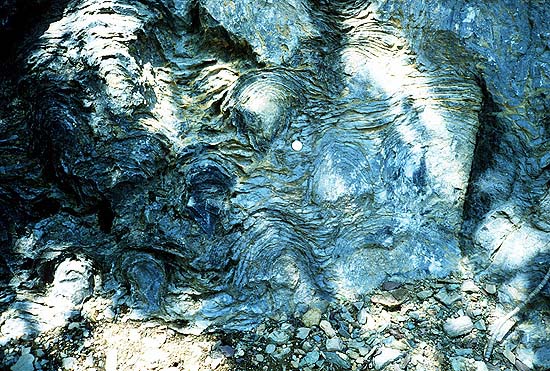

The Scottish geologist James Hutton is generally credited with the first rigorous scientific articulation of geological deep time. In his 1788 paper "Theory of the Earth," read before the Royal Society of Edinburgh, Hutton argued that the processes he observed operating in the present—river erosion, sediment deposition, volcanic uplift—were sufficient to explain the rock formations he studied, provided that sufficient time had elapsed.9 He recognized what are now called unconformities: surfaces where vastly different rock strata meet at sharp angles, indicating that an older sequence had been tilted, eroded to a nearly flat surface, and then buried beneath new sediments. These structures required immense periods of time to form. Hutton famously concluded that he could find "no vestige of a beginning, no prospect of an end"—a rhetorical statement of the apparent eternity of geological processes rather than a literal claim, but one that powerfully conveyed the inadequacy of a young-Earth timescale.9
Hutton's ideas were clarified and systematized by Charles Lyell, whose three-volume Principles of Geology (1830–1833) laid the foundations of modern geology.10 Lyell championed uniformitarianism: the principle that the laws of nature and the rates of geological processes have remained essentially constant throughout Earth history, and that the present is therefore a key to the past. This principle was not merely philosophical; it provided a methodology. By measuring modern rates of deposition, erosion, and uplift, geologists could, in principle, calculate how long specific rock formations had taken to accumulate. Those calculations invariably demanded timescales of millions of years.10
Charles Darwin absorbed Lyell's framework deeply before writing On the Origin of Species (1859), and he explicitly cited geological time as a prerequisite for his theory of evolution by natural selection.11 Darwin recognized that the gradual accumulation of small heritable variations required vast spans of time to produce the diversity of life he observed, and he was honest about the imperfection of the fossil record, which he correctly attributed to the rarity of preservation rather than to any failure of the theory.11 The subsequent development of radiometric dating in the 20th century placed the intuitions of Hutton, Lyell, and Darwin on a rigorous quantitative footing, assigning numerical ages in billions of years to rocks that had previously been ordered only relatively.24
Biostratigraphy and index fossils
Before radiometric dating was available, geologists had already developed a remarkably precise method for correlating rock sequences across continents based entirely on their fossil content. Biostratigraphy is the branch of stratigraphy that uses the vertical distribution of fossils in rock layers to establish the relative ages of those layers and to correlate strata across geographically separated outcrops.12
The foundational insight of biostratigraphy, developed empirically by William Smith in England in the early 19th century, is that specific assemblages of fossil species occur in a consistent and predictable vertical sequence in rock exposures around the world.12 A sandstone deposited during the Jurassic period, whether in England, Germany, or Argentina, will contain Jurassic fossils and not Cretaceous ones. This superposition of faunas and floras is a direct consequence of evolution: species originate at specific moments in geological time, persist for characteristic durations, and then go extinct, never to return. The sequence of first and last appearances is therefore a global chronometer encoded in the rocks themselves.12, 15
Index fossils are taxa of particular utility in biostratigraphy because they meet several criteria: they were geographically widespread, existed for a relatively short duration before going extinct, are morphologically distinctive and easy to identify, and are sufficiently abundant to be commonly encountered in the rock record.12 Ammonites, whose coiled shells evolved rapidly into dozens of distinguishable genera over the Mesozoic, are among the most powerful index fossils for dating marine rocks of that era. Graptolites, colonial organisms that floated in Paleozoic seas, serve a similar function for Ordovician and Silurian sequences. Foraminifera—single-celled organisms with mineralized tests—are so rapidly evolving and globally distributed that they allow stratigraphers to subdivide the Cenozoic into zones as fine as a few hundred thousand years in duration.12
The power of biostratigraphy as an independent method is confirmed by its agreement with radiometric dating wherever the two can be directly compared. When a volcanic ash layer, datable by uranium-lead or argon-argon methods, is found interbedded with fossil-bearing sediments, the radiometric age consistently corresponds to the biostratigraphic zone established on fossil evidence alone.24 This convergence of independent methods is one of the strongest lines of evidence that both the fossil sequence and the radiometric timescale are accurately representing real geological history.
Major patterns in the history of life
Despite its incompleteness, the fossil record reveals coherent and reproducible large-scale patterns in the history of life that have been confirmed by independent molecular phylogenetic analyses. The most prominent of these patterns are the Cambrian explosion, the major adaptive radiations, and the five mass extinction events of the Phanerozoic eon.14, 15
The Cambrian explosion, approximately 538 to 518 million years ago, marks the geologically rapid appearance of most of the major animal body plans (phyla) that persist to the present day.6 Fossils from immediately preceding Ediacaran strata document a world dominated by soft-bodied organisms of uncertain phylogenetic affinity; within a few tens of millions of years, the record transitions to one containing representatives of arthropods, mollusks, echinoderms, chordates, and numerous groups with no surviving descendants.6, 21 The causes of this diversification remain an active area of research, with proposed drivers including rising oceanic oxygen levels, ecological cascades triggered by the evolution of predation, and developmental genetic changes that increased morphological evolvability.6
The Great Ordovician Biodiversification Event, approximately 485 to 450 million years ago, represents a second major pulse of diversification in which marine invertebrate genera roughly tripled in number over a comparatively short geological interval.18 Unlike the Cambrian explosion, which primarily produced novel body plans, the Ordovician radiation filled ecological space within already-established phyla, producing a high diversity of genera and species within groups such as brachiopods, crinoids, bryozoans, and graptolites.18
Against this background of diversification, the fossil record also preserves five intervals of anomalously elevated extinction, collectively termed the Big Five mass extinctions.16 These events—at the end of the Ordovician (~443 Ma), Late Devonian (~372 Ma), end-Permian (~252 Ma), end-Triassic (~201 Ma), and end-Cretaceous (~66 Ma)—are defined by the simultaneous loss of large proportions of genera and families across many taxonomic groups and geographic regions within geologically brief intervals.16 The end-Permian event was the most severe, eliminating an estimated 80–96 percent of marine species and approximately 70 percent of terrestrial vertebrate families in a geologically brief interval likely triggered by massive Siberian volcanic eruptions and the associated cascade of atmospheric and oceanic perturbations.17 The end-Cretaceous event, which eliminated non-avian dinosaurs and approximately three-quarters of all species, was caused primarily by the impact of a roughly 10-kilometer asteroid at Chicxulub on the Yucatan Peninsula, as evidenced by a global iridium anomaly and shocked quartz layer at the Cretaceous-Paleogene boundary.16
Approximate percentage of marine genera lost in each Big Five mass extinction16, 17
What the record reveals about life's history
Taken as a whole, the fossil record provides several lines of evidence with direct bearing on evolutionary theory. First, it demonstrates temporal ordering: simpler organisms consistently precede more complex ones in the geological column. Bacterial microfossils appear in rocks over 3.5 billion years old; multicellular algae are found in rocks approximately 1.2 billion years old; animals with hard skeletons appear only in the latest Precambrian and Cambrian.15 No mammal has ever been found in Cambrian rocks; no trilobite has ever been found in Cenozoic strata. This consistent ordering is incompatible with chance and fully consistent with a branching evolutionary history in which later forms descended from earlier ones.11, 15
Second, the record documents anatomical continuity across geological time. In many well-sampled lineages, the fossil sequence shows gradual or punctuated morphological change linking ancestral and descendant forms. The transition from fish to tetrapods in the Late Devonian is documented by a sequence of fossils—including Tiktaalik roseae—that show the stepwise acquisition of limb-like fins, necks, and ribs appropriate for life in shallow water and on land.22 Similar sequences have been documented for the whale lineage, horses, and the origin of birds from theropod dinosaurs.22
Third, the fossil record is internally consistent across independent disciplines. Molecular phylogenetics, which uses genetic sequence data to reconstruct evolutionary relationships without reference to fossils, consistently produces branching patterns and divergence time estimates that agree with the fossil record's evidence about when major groups first appeared.13 When molecular clocks and fossil calibration points are combined, the resulting chronology of life coheres across the entire tree of life, from bacteria to vertebrates, providing powerful confirmation that both lines of evidence are tracking the same underlying evolutionary history.13, 15
The fossil record is not a complete archive of life's history, and no paleontologist claims otherwise. It is, however, a vast, cross-validated, and continuously growing body of evidence whose large-scale patterns are as well-established as any empirical finding in the natural sciences. The concept of deep time provides the temporal scaffolding within which that record makes sense: given 3.7 billion years of life on Earth, the diversity, complexity, and transformation documented in the rocks is not merely plausible—it is expected.11, 15
References
A new model for the origination of Burgess Shale-type preservation through extensive mucinous microbial mats
Bias in the fossil record of species and genera: stratigraphic ranges of gastropods and bivalves at the end of the Pliocene