Overview
- Taphonomy, the study of how organisms transition from the biosphere to the lithosphere, reveals that fossilization is an extraordinarily rare event requiring rapid burial, specific geochemical conditions, and durable biological materials, producing a record profoundly biased toward marine organisms with mineralized hard parts.
- Exceptional preservation sites called Konservat-Lagerstätten, including the Burgess Shale, Chengjiang, Solnhofen, and Messel, provide irreplaceable windows into soft-bodied organisms and ancient ecosystems that the normal fossil record almost entirely misses.
- Systematic biases such as the Signor-Lipps effect, time averaging, and the preferential destruction of soft tissue mean that understanding taphonomic processes is essential to correctly interpreting evolutionary patterns, extinction events, and the true diversity of ancient life.
The fossil record is the primary archive of the history of life on Earth, yet the vast majority of organisms that have ever lived left no trace in the geological record. The study of why and how some organisms become fossils while most do not is called taphonomy, a term coined by the Soviet paleontologist Ivan Efremov in 1940 to describe the laws governing the transition of organic remains from the biosphere into the lithosphere.1 Taphonomy encompasses every process that affects an organism after death — decay, disarticulation, transport, burial, chemical alteration, and diagenesis — and understanding these processes is essential to interpreting the fossil record accurately. Without taphonomic awareness, paleontologists risk mistaking preservation artifacts for biological signals: apparent patterns of diversity, extinction, and morphological change may reflect the vagaries of fossilization rather than the true history of life.2, 4
Fossilization is not a single process but a family of distinct preservation pathways, each favoured by particular biological, chemical, and sedimentary conditions. From the silica-infused cell walls of petrified wood to the exquisite carbonaceous compressions of the Burgess Shale, each mode of preservation captures different aspects of an organism's anatomy and biochemistry while inevitably losing others. The recognition that the fossil record is filtered through these taphonomic processes — collectively termed the taphonomic filter — has transformed paleontology from a purely descriptive discipline into one that critically evaluates the quality and completeness of its own data.4
Modes of fossilization
Fossils form through several distinct pathways, each governed by the interaction between the composition of the original organism and the geochemical environment of burial. The most common modes of fossilization are permineralization, mineral replacement, the formation of molds and casts, carbonization, and entombment in chemically inert media such as amber or ice. In practice, these processes often overlap: a single fossil may show evidence of both permineralization and partial replacement, for example, and the boundaries between categories are not always sharp.3, 12
_1_(49004642997).jpg)
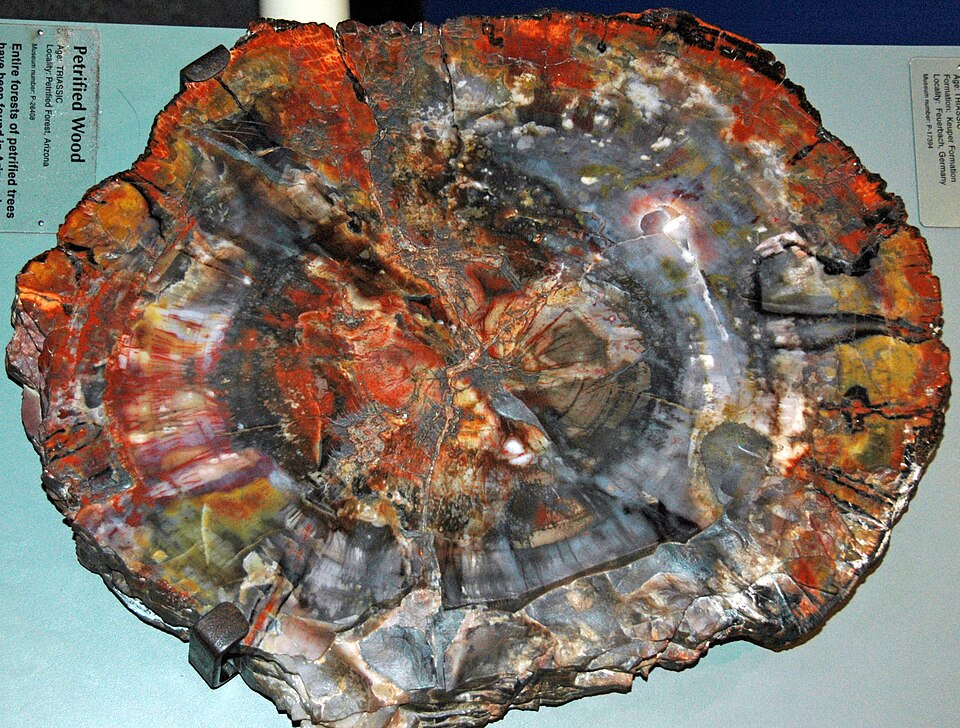
Permineralization occurs when mineral-laden groundwater infiltrates the pore spaces of buried biological material — bone, shell, or wood — and precipitates minerals within those spaces while the original organic or mineral framework remains largely intact. The most familiar example is petrified wood, in which silica (commonly in the form of opal or chalcedony) fills the cellular structure of the wood so completely that individual cells, growth rings, and even fungal hyphae within the tissue can be resolved under a microscope. Recent analytical work has shown that permineralization and mineral replacement often occur simultaneously during diagenesis, with silica both infilling pore spaces and progressively replacing the original cellulose and lignin of the cell walls.12 Calcium carbonate, pyrite, and phosphate minerals are other common permineralizing agents, each producing fossils with different preservation characteristics and analytical possibilities.3
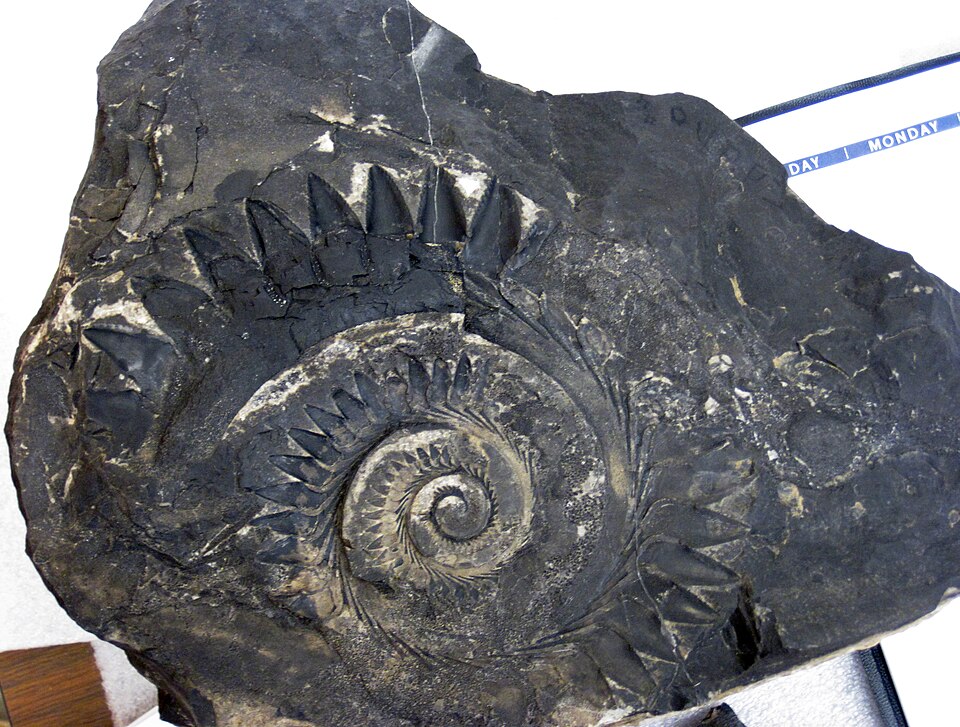
Mineral replacement (also called pseudomorphism) involves the wholesale dissolution of the original biological material and its simultaneous or subsequent replacement by a different mineral. The replacement can be remarkably faithful, preserving fine anatomical detail at the micrometre scale if the dissolution and precipitation occur in close spatial and temporal coupling. Pyritization, in which iron sulfide replaces soft tissues under anoxic conditions rich in dissolved iron and sulfate-reducing bacteria, has produced spectacularly detailed fossils of trilobites, brachiopods, and plant tissues. Phosphatization, in which calcium phosphate replaces soft tissues, is particularly important for the preservation of embryos, larvae, and other minute organisms, as seen in the Ediacaran and Cambrian phosphorite deposits of China.3, 19
Molds and casts form when the original organic material dissolves entirely, leaving a cavity in the surrounding sediment (the mold) that may subsequently be filled by a different mineral, producing a cast. External molds preserve the outer surface of an organism; internal molds (or steinkerns) preserve the shape of the interior, such as the internal cavity of a gastropod shell. This mode of preservation is especially common in limestone and sandstone, where the original aragonite or calcite shell dissolves during diagenesis while the surrounding rock retains a precise negative impression.2
Carbonization (also called compression or coalification) occurs when the volatile components of organic tissue — hydrogen, oxygen, nitrogen — are driven off by heat and pressure during burial, leaving behind a thin film of carbon that records the outline and sometimes the fine anatomical detail of the original organism. Carbonization is the principal mode of preservation for fossil leaves, insects, and other thin or delicate structures, and it is responsible for many of the spectacular plant fossils in Carboniferous coal deposits. The degree of detail preserved depends on the grain size of the enclosing sediment and the rate of compression relative to decay.3
Amber preservation occurs when organisms, most commonly insects, arachnids, and plant fragments, become entrapped in tree resin that subsequently polymerizes into a stable, chemically inert solid. Amber fossils can preserve three-dimensional morphology, including delicate structures such as compound eyes, wing venation, setae, and internal parasites, with a fidelity unmatched by any other preservation mode. The oldest amber with biological inclusions dates to the Triassic, approximately 230 million years ago, but the most prolific amber deposits are Cretaceous and Cenozoic in age, including the famous Baltic amber (Eocene), Dominican amber (Miocene), and Burmese amber (Cretaceous).13, 20 Experimental taphonomic studies have demonstrated, however, that amber introduces its own preservation biases: the chemical composition of the resin affects the rate of internal decay, and organisms with robust exoskeletons are more likely to be preserved intact than soft-bodied forms.13
Freezing and desiccation represent additional preservation pathways in which extremely cold or dry conditions arrest decay before significant decomposition occurs. Frozen specimens, such as woolly mammoths in Siberian permafrost, can retain soft tissue, hair, stomach contents, and even identifiable proteins and DNA fragments. Desiccation (natural mummification) in arid environments can preserve skin, tendons, and other soft tissues for thousands of years, as demonstrated by the Chinchorro mummies of Chile and naturally mummified ground sloths in arid caves of the Americas.4
The taphonomic filter
The central insight of taphonomy is that the fossil record is not a random sample of past life but a systematically biased one. The chain of events between an organism's death and its eventual discovery as a fossil constitutes a series of filters, each of which preferentially removes certain categories of organisms and biological information. Understanding these filters is essential to any attempt to reconstruct past biodiversity, ecology, or evolutionary dynamics from fossil data.2, 4
The first and most severe filter is decay. Within hours to days of death, autolysis (self-digestion by the organism's own enzymes) and microbial decomposition begin to destroy soft tissues. Unmineralized organisms — those lacking shells, bones, teeth, or other hard parts — are overwhelmingly destroyed before burial can occur. This means that the fossil record is massively biased toward organisms that possess biomineralized skeletons: molluscs, brachiopods, echinoderms, corals, and vertebrates are disproportionately represented relative to worms, jellyfish, nematodes, and other soft-bodied groups that constitute the majority of animal diversity in modern ecosystems.2, 3
The second major filter is burial. Fossilization generally requires that remains be buried in sediment rapidly enough to shield them from scavengers, weathering, and further microbial attack. Environments characterized by active sediment deposition — such as river floodplains, deltas, lake bottoms, and continental shelves — are far more likely to produce fossils than erosional environments such as mountain slopes and upland plateaux. This creates a strong environmental bias: marine organisms, which live and die in depositional settings, are far better represented in the fossil record than terrestrial organisms, which inhabit landscapes dominated by erosion and sediment transport.2, 4
Subsequent filters include diagenesis (the physical and chemical changes that occur in sediment after burial, which can destroy or alter fossils), tectonic recycling (the subduction and metamorphism of fossil-bearing rocks over geological time), and exposure and discovery (the requirement that fossil-bearing rocks be brought to the surface by erosion and found by a collector). Each of these steps further reduces the proportion of past life that enters the scientific record. Quantitative estimates suggest that far fewer than one percent of all species that have ever lived are represented by even a single known fossil specimen.8
_in_phosphatic_limestone_(Phosphoria_Formation,_mid-Permian;_Waterloo_Mine,_near_Montpelier,_Idaho,_USA)_1_(34367874135).jpg)
Preservation bias and the structure of the record
The differential preservation of organisms with hard parts versus those without creates a systematic bias that profoundly shapes our perception of the history of life. Studies of modern marine death assemblages — the shells and skeletal remains that accumulate on the seafloor after organisms die — have provided quantitative measures of this bias. Kidwell and Flessa showed that most species with preservable hard parts in modern marine communities are represented in local death assemblages in approximately correct rank abundance, demonstrating that the fossil record captures community composition reasonably well for organisms that do possess mineralized skeletons.2 However, the entirely soft-bodied component of those communities — which in modern marine environments constitutes a substantial fraction of species diversity — is almost entirely absent from the death assemblages and, by extension, from the conventional fossil record.2, 6
The bias extends beyond anatomy to habitat. Organisms living in nearshore marine environments with high sedimentation rates have higher preservation potential than those inhabiting the deep sea, where sedimentation is slow and the calcium carbonate compensation depth dissolves calcareous shells before burial. Terrestrial environments are particularly hostile to preservation: the processes of weathering, soil formation, and fluvial transport disarticulate and destroy skeletal remains far more efficiently than the quieter depositional environments of the seafloor. As a result, the marine invertebrate fossil record is orders of magnitude richer in species and specimens than the terrestrial vertebrate record for most of geological time.4, 21
Body size introduces yet another bias. Large organisms, with their more robust and voluminous skeletal elements, are more likely to be preserved and discovered than small ones. Microorganisms, despite their overwhelming numerical dominance in all ecosystems, are dramatically underrepresented in the macrofossil record, although microfossil groups such as foraminifera, radiolaria, and diatoms have excellent records of their own because their mineralized tests accumulate in enormous numbers in marine sediments.4
Preservation potential by organism type and environment2, 4
| Organism type | Skeleton | Primary habitat | Preservation potential |
|---|---|---|---|
| Shelled marine invertebrates (molluscs, brachiopods) | Calcite / aragonite shell | Shallow marine | High |
| Reef-building corals | Aragonite / calcite | Tropical marine | High |
| Vertebrates (mammals, reptiles) | Bone (hydroxyapatite) | Terrestrial | Moderate |
| Insects | Chitin exoskeleton | Terrestrial | Low (except in amber or fine lacustrine sediment) |
| Soft-bodied marine invertebrates (worms, jellyfish) | None | Marine | Very low (Lagerstätten only) |
| Land plants (leaves, wood) | Lignin, cellulose | Terrestrial | Moderate (carbonization, permineralization) |
| Bacteria, protists | Variable | All | Very low (except microfossils with mineral tests) |
Lagerstätten and exceptional preservation
The German term Lagerstätte (plural Lagerstätten), meaning "storage place," was introduced into paleontology by Adolf Seilacher in 1970 to describe fossil deposits that are unusually rich in paleontological information.17
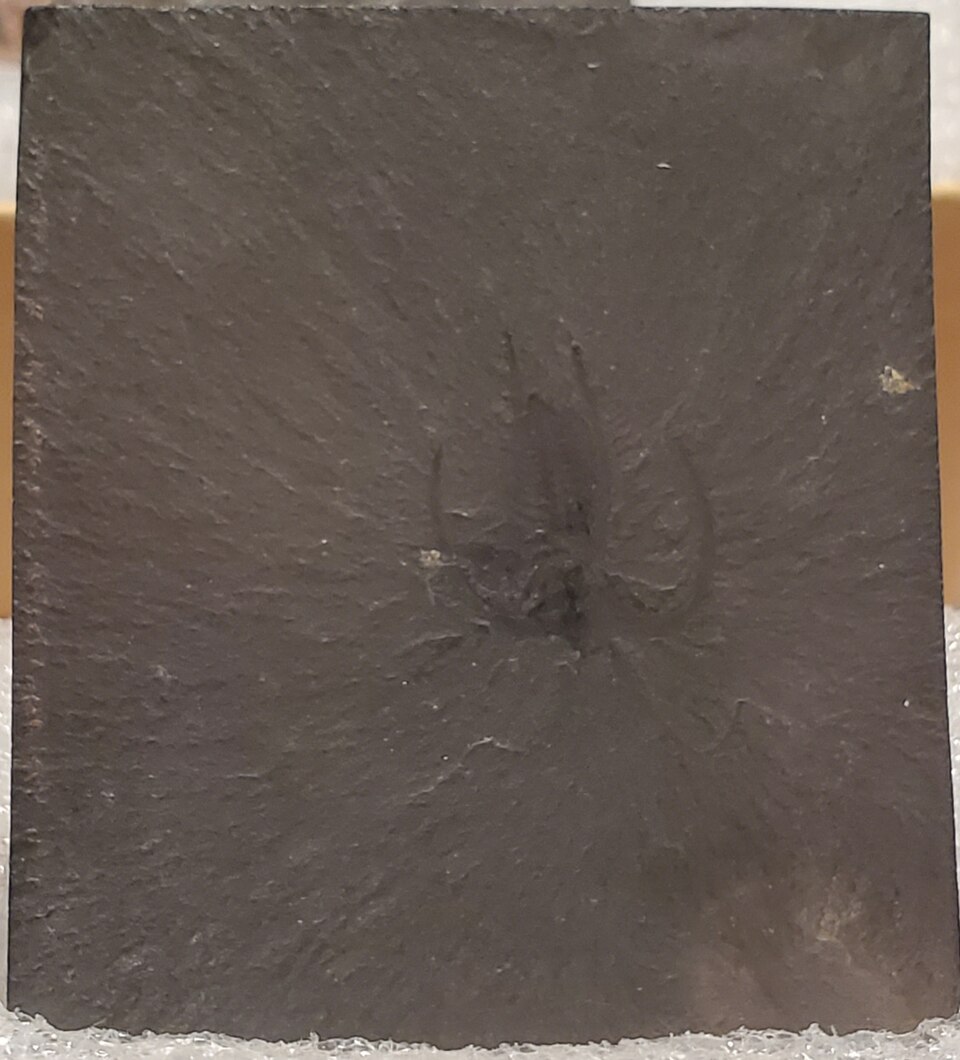

Seilacher distinguished two categories: Konzentrat-Lagerstätten, in which fossils are unusually concentrated (as in bone beds or shell beds) but not necessarily well preserved, and Konservat-Lagerstätten, in which the quality of preservation is exceptional, often including soft tissues, gut contents, or other features that are normally destroyed during decay.14, 17 It is the Konservat-Lagerstätten that have provided some of the most transformative discoveries in paleontology, revealing entire categories of organisms that are invisible in the normal fossil record.
Allison and Briggs classified the mechanisms responsible for Konservat-Lagerstätten into three broad categories: obrution (rapid burial by sediment), stagnation (anoxic bottom-water conditions that inhibit scavenging and aerobic decay), and microbial sealing (the formation of microbial mats or early diagenetic minerals that encapsulate remains before decay can destroy them).14 In practice, most exceptionally preserved deposits result from a combination of these factors. Experimental taphonomic studies, in which carcasses of modern organisms are placed in controlled environments and their decay monitored, have greatly refined our understanding of the specific geochemical conditions required for exceptional preservation.19
The Burgess Shale of British Columbia, Canada (Middle Cambrian, approximately 508 million years old), discovered by Charles Walcott in 1909, is perhaps the most famous Konservat-Lagerstätte in the world. It preserves a diverse assemblage of soft-bodied marine organisms — including arthropods, priapulid worms, chordates, and organisms of uncertain affinity such as Anomalocaris and Hallucigenia — as thin carbonaceous films on fine-grained shale. Geochemical analysis has demonstrated that Burgess Shale-type preservation resulted from the early inhibition of microbial decay through oxidant deprivation: low sulfate concentrations in the Cambrian ocean combined with anoxic bottom waters restricted the supply of electron acceptors to sediment microbes, while rapid burial in fine-grained mud and early cementation by carbonate minerals sealed the fossils from further oxidant flux.5
The Chengjiang biota (Maotianshan Shales) of Yunnan Province, China (Early Cambrian, approximately 518 million years old), preserves a similarly spectacular soft-bodied assemblage that is approximately ten million years older than the Burgess Shale. Because the Chengjiang fossils predate those of the Burgess Shale, they provide even more direct evidence of the rapid diversification of animal body plans during the Cambrian Explosion. Soft parts are preserved as aluminosilicate films, often with iron-rich coatings, and the taphonomic pathway appears broadly similar to that of the Burgess Shale, involving rapid burial and early diagenetic mineralization under low-oxygen conditions.5, 6
The Solnhofen Limestone of Bavaria, Germany (Late Jurassic, approximately 150 million years old), preserves a remarkable assemblage of organisms from a tropical lagoon, including pterosaurs, fish, crustaceans, insects, and the iconic feathered dinosaur Archaeopteryx. The extraordinary fine-grained lithographic limestone captured the impressions of feathers, wing membranes, and even jellyfish outlines — structures that are almost never preserved. The preservation mechanism involved rapid burial in extremely fine micritic carbonate mud under hypersaline, anoxic lagoonal conditions that excluded scavengers and inhibited microbial decay.3, 14
The Messel Pit near Darmstadt, Germany (middle Eocene, approximately 47 million years old), preserves a complete tropical lake ecosystem with extraordinary fidelity. Mammals are preserved with fur, stomach contents, and even structural coloration in beetle exoskeletons. Preservation at Messel is attributed to the anoxic, stratified waters of a volcanic maar lake (a crater lake formed by a phreatomagmatic explosion), where organisms that fell or washed into the lake sank through the anoxic water column and were buried in fine-grained oil shale with minimal disturbance.14
The La Brea Tar Pits of Los Angeles, California (Pleistocene, approximately 50,000 to 11,000 years old), represent a different type of Konzentrat-Lagerstätte: a concentration trap. Natural asphalt seeping to the surface formed sticky pools that entrapped animals, often in a cascading predator-prey sequence in which herbivores became mired and attracted carnivores and scavengers that were in turn trapped. The assemblage is dominated by large mammals (saber-toothed cats, dire wolves, ground sloths, mammoths) and provides an exceptionally detailed snapshot of the Pleistocene megafauna of western North America. The asphalt preserves bones in three dimensions and also entraps plant material, insects, and pollen, enabling comprehensive paleoenvironmental reconstruction.4
The Signor-Lipps effect and apparent extinction patterns
One of the most important insights to emerge from the intersection of taphonomy and evolutionary paleobiology is the Signor-Lipps effect, described by Philip Signor and Jere Lipps in 1982.7 Signor and Lipps demonstrated that because the fossil record is incomplete, the last appearance of a species in the stratigraphic record almost certainly predates its actual extinction. The probability of finding the very last individual of a species as a fossil is vanishingly small; instead, the last known fossil will typically occur some distance below the true extinction horizon, creating a gap between the recorded and actual range endpoints.
The consequences of this observation for the study of mass extinctions are profound. If a mass extinction was truly sudden — all affected species going extinct simultaneously at a single horizon — the Signor-Lipps effect predicts that the last appearances of those species in the fossil record will be scattered through the strata below the extinction horizon, creating the false impression of a gradual, stepwise decline.7 This means that paleontologists cannot simply read the stratigraphic pattern of last occurrences at face value to distinguish between sudden and gradual extinction scenarios. Sophisticated statistical methods are required to test whether an observed pattern of last appearances is consistent with a simultaneous extinction filtered through incomplete sampling or whether it genuinely records a protracted interval of elevated extinction.7, 16
The Signor-Lipps effect has been particularly influential in debates over the end-Cretaceous mass extinction. Early studies of the fossil record across the Cretaceous-Paleogene boundary appeared to show that many groups, including ammonites and rudist bivalves, declined gradually in the millions of years before the asteroid impact at 66 million years ago. Recognition of the Signor-Lipps effect raised the possibility that these apparent gradual declines were artifacts of incomplete sampling rather than evidence of a prolonged extinction episode. Subsequent high-resolution stratigraphic studies, incorporating statistical corrections for sampling bias, have confirmed that the extinction of many marine groups was indeed more abrupt than the raw fossil record suggests.7, 16
Holland and Patzkowsky have extended the analysis of extinction signatures by demonstrating that not only random sampling but also systematic changes in facies (rock types) and sedimentation rates across extinction boundaries can distort the stratigraphic distribution of last occurrences. At mass extinction boundaries, sea-level changes and shifts in depositional environment often coincide with the biological crisis, introducing additional taphonomic artifacts that must be disentangled from the biological signal.16
Time averaging and temporal resolution
A fossil assemblage found in a single bed of rock does not necessarily represent a community that lived at a single moment in time. The process of time averaging mixes the remains of organisms that lived at different times into a single stratigraphic layer, blurring the temporal resolution of the fossil record. In marine environments, radiocarbon dating of individual shells from modern death assemblages has revealed that the remains in a single surficial sediment layer can span hundreds to tens of thousands of years, even when the sediment itself appears to be a single, homogeneous unit.15
Time averaging arises because the processes of sediment accumulation, reworking, and bioturbation (mixing of sediment by burrowing organisms) continuously blend older and younger material. The degree of time averaging varies enormously depending on the depositional environment: high-energy nearshore settings may mix shells over centuries to millennia, while quiet offshore settings may produce assemblages averaged over tens of thousands of years. At the extreme end, condensed sections — stratigraphic intervals representing very slow net sedimentation — may compress millions of years of biological input into a thin rock layer, generating severe overcompleteness in which more time is represented in the fossils than in the sediment that contains them.22
Time averaging has both negative and positive consequences for paleontological inference. On the negative side, it inflates apparent species richness by mixing species from different time intervals into a single assemblage, obscures short-term ecological dynamics, and can create the illusion of species coexistence where none existed. On the positive side, time averaging acts as a natural filter that smooths out the noise of short-term ecological fluctuations and seasonal or annual variability, producing assemblages that are robust summaries of the long-term average composition of a community — precisely the kind of information needed for studies of macroevolutionary and macroecological patterns over geological timescales.15, 22
Completeness of the fossil record
The question of how complete the fossil record is — what proportion of the species, genera, and families that have ever existed are represented by at least one known fossil — has been debated since Darwin expressed concern about the "imperfection of the geological record" in On the Origin of Species. Darwin viewed the gaps in the fossil record as a serious challenge to his theory, arguing that the apparent sudden appearance of new forms in the stratigraphic column reflected the incompleteness of preservation and discovery rather than an absence of evolutionary intermediates.8
Quantitative approaches to measuring completeness developed in the late twentieth century have provided more optimistic assessments. Foote and Sepkoski measured the proportion of living marine animal families that have at least one representative in the fossil record and found that approximately 63 percent of living marine families with mineralized hard parts possess a known fossil record.8 They also estimated the per-interval probability of genus preservation for major marine animal groups, finding values that, while variable across taxa, were high enough to support the inference that the broad patterns of marine animal diversification and extinction documented in the Phanerozoic fossil record reflect genuine biological history rather than preservation artifacts.8
Benton and colleagues provided independent support for the reliability of the fossil record by comparing the order of branching events in cladistic phylogenies (derived from anatomical analysis) with the order of first appearances in the stratigraphic column. For many groups, the stratigraphic and phylogenetic sequences are statistically congruent, meaning that the fossil record generally recovers ancestor-descendant relationships in the correct temporal order — a result that would be improbable if the record were dominated by random noise.21
These findings do not mean that the fossil record is complete in an absolute sense. Entire phyla of soft-bodied organisms may have originated and diversified long before their first appearance in the fossil record. The Cambrian Explosion, for example, records the apparently sudden appearance of most major animal phyla in the span of roughly 20 million years, but molecular clock estimates consistently place the divergence of these lineages tens of millions of years earlier, in the Ediacaran or even the Tonian period. The discrepancy is most parsimoniously explained by the absence of biomineralized skeletons in the earliest members of these lineages, rendering them invisible to the normal fossil record until the independent evolution of hard parts in the early Cambrian brought them into the taphonomic window.6, 8
Molecular taphonomy
The preservation of biological molecules in fossils — a field sometimes called molecular taphonomy — has expanded dramatically since the development of techniques capable of detecting and sequencing ancient DNA and proteins. The survival of biomolecules in geological materials is governed by the same principles that control macroscopic preservation: the rate of molecular degradation must be slower than the rate at which stabilizing conditions (low temperature, low water activity, mineral encapsulation) are established.9, 23
Ancient DNA is the most fragile of the biomolecules that have been recovered from fossils. Allentoft and colleagues measured the decay kinetics of mitochondrial DNA in radiocarbon-dated moa bones from New Zealand and estimated a half-life of approximately 521 years for a 242-base-pair DNA fragment at an effective burial temperature of 13.1°C. Extrapolation of this decay rate implies that at an ideal preservation temperature of −5°C, every bond in a DNA molecule would be destroyed after approximately 6.8 million years, setting a firm theoretical upper limit on the survival of identifiable DNA sequences.9 In practice, the oldest authenticated ancient DNA recovered to date consists of environmental DNA fragments from approximately two-million-year-old sediments in northern Greenland, preserved in permafrost at sustained subfreezing temperatures.10
Proteins, particularly collagen, are considerably more resistant to degradation than DNA. Collagen is the most abundant structural protein in vertebrate bone and is stabilized by the mineral matrix of hydroxyapatite that surrounds and encases collagen fibrils. Schweitzer and colleagues reported the recovery of flexible, transparent soft tissue — including structures resembling blood vessels and osteocytes — from a 68-million-year-old Tyrannosaurus rex femur after demineralization of the surrounding bone matrix.11 Subsequent studies confirmed the presence of collagen-derived peptide sequences in this and other Cretaceous dinosaur specimens, although the mechanisms by which proteins survive over such vast timescales remain debated.18 Iron-mediated cross-linking and the shielding effect of the mineral matrix have been proposed as factors that may slow protein degradation far beyond the rates predicted by in vitro experiments.11, 18
The selective preservation of certain molecular classes over others is itself a form of taphonomic bias. Lipids and other highly resistant organic compounds, particularly those in plant cuticles and the outer walls of spores and pollen grains, survive diagenesis far more readily than proteins or nucleic acids. Briggs documented the selective preservation of cuticle-derived aliphatic polymers in fossil arthropods and plants, demonstrating that the molecular composition of a fossil reflects not the original biochemistry of the organism but the differential resistance of its molecular constituents to degradation.23
Estimated maximum survival time of biomolecules under optimal conditions9, 10, 11, 23
Taphonomy and the interpretation of evolutionary history
The cumulative effect of taphonomic processes is that the fossil record is not a neutral mirror of past life but a distorted image that must be interpreted with care. Awareness of taphonomic bias has led to fundamental revisions in our understanding of major evolutionary events. The apparent "explosion" of animal diversity in the early Cambrian, for example, is partly a taphonomic artifact: the independent evolution of biomineralized skeletons in multiple lineages during the early Cambrian dramatically increased the preservability of those lineages, creating the appearance of a sudden radiation where a more protracted diversification of soft-bodied precursors had likely been underway for millions of years previously.6
Taphonomic awareness has also reshaped the study of mass extinctions. The recognition that facies changes, sea-level fluctuations, and variable sampling intensity can all mimic or mask genuine biological signals has driven the development of sophisticated statistical methods — including sampling standardization, shareholder quorum subsampling, and gap analysis — designed to separate taphonomic noise from evolutionary signal.16, 21 These methods have confirmed that the five major Phanerozoic mass extinctions are robust biological events, not artifacts of variable preservation, but they have also revealed that many apparent minor extinction pulses and diversity fluctuations in the raw fossil record are at least partly driven by variation in rock availability and sampling effort rather than by genuine changes in biodiversity.21
At the most fundamental level, taphonomy teaches that absence of evidence is not evidence of absence. The failure to find a particular taxon in a given stratigraphic interval does not mean that taxon was absent; it may simply mean that conditions were unfavourable for its preservation. Conversely, the apparent sudden appearance of a new group does not necessarily indicate a rapid evolutionary origin; it may reflect the crossing of a preservational threshold, such as the acquisition of a mineralized skeleton or the expansion into a habitat with higher fossilization potential. By making these biases explicit and quantifiable, taphonomy provides the intellectual framework that allows paleontologists to extract reliable evolutionary information from an inherently imperfect record.2, 4, 8
References
Unlocking preservation bias in the amber insect fossil record through experimental decay
Time-averaging and fidelity of modern death assemblages: building a taphonomic foundation for conservation palaeobiology
Stratigraphic signatures of mass extinctions: ecological and sedimentary determinants
Soft tissue and cellular preservation in vertebrate skeletal elements from the Cretaceous to the present
Molecular taphonomy of animal and plant cuticles: selective preservation and diagenesis