Overview
- Five major mass extinctions have punctuated the history of animal life, each eliminating more than 75% of species on Earth and permanently redirecting the trajectory of evolution.
- The End-Permian extinction (~252 million years ago), driven by catastrophic volcanism, was the most severe, erasing an estimated 96% of marine species and resetting complex ecosystems globally.
- Mass extinctions are not merely disasters; by eliminating dominant groups they open ecological space for surviving lineages to diversify, most famously enabling the rise of mammals after the End-Cretaceous event.
The history of animal life on Earth has not been a smooth, continuous escalation of diversity. Instead, it has been punctuated by episodes of catastrophic loss in which the vast majority of species were eliminated over geologically brief intervals, followed by millions of years of recovery and diversification. These episodes are known as mass extinctions, and they represent the most consequential events in the history of complex life. Paleontologists formally distinguish five such events in the Phanerozoic Eon — the half-billion-year window during which hard-bodied, readily fossilized animals have existed. Each of the Big Five eliminated at least 75 percent of species on Earth within a geologically instantaneous span, a threshold proposed by paleontologists David Raup and J. John Sepkoski in their foundational 1982 analysis of the marine fossil record.2 Their subsequent work quantified background extinction rates and demonstrated conclusively that these five events stood apart from ordinary, ongoing species turnover.1, 3
Defining a mass extinction
Species loss is a normal feature of the living world. The fossil record shows that roughly 99 percent of all species that have ever existed are now extinct, the vast majority having disappeared through a continuous low-level process called background extinction. Under normal conditions, the estimated marine background extinction rate is roughly two to five families per million years.2, 25 What distinguishes a mass extinction is not simply the number of species lost, but the rate at which that loss occurs and its taxonomic breadth across multiple unrelated groups simultaneously. Raup introduced the concept of a "kill curve" to illustrate that a handful of events in the fossil record required losses so large and so rapid that they could not be explained by the ordinary mechanisms driving background extinctions.25
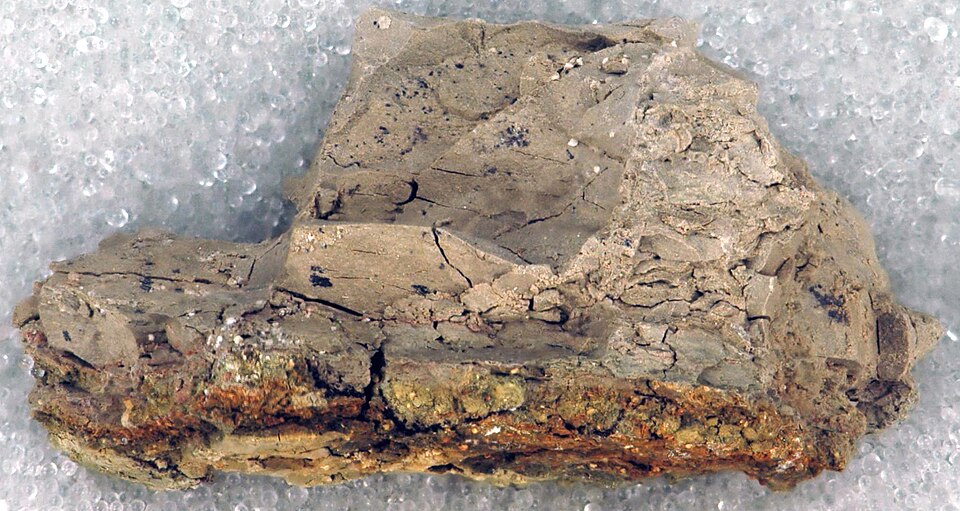
_boundary_clay_(65_Ma,_Quipar-Jorquera_Formation;_Agost-Castalia_Road,_southeastern_Spain)_(14617961128).jpg)
Sepkoski's monumental compendium of fossil marine genera, compiled across decades of literature surveys, provided the quantitative backbone for distinguishing these events. His data, posthumously completed and published in 2002, catalogued tens of thousands of genera and allowed researchers to calculate per-lineage extinction rates through geologic time.4 The five peaks that emerge from this dataset — at the end of the Ordovician, the Late Devonian, the end of the Permian, the end of the Triassic, and the end of the Cretaceous — form the canonical Big Five. Subsequent re-analyses by Bambach and others confirmed the statistical robustness of this list and showed that only three of the five (the End-Ordovician, End-Permian, and End-Cretaceous) qualify as true global crises under the most rigorous criteria, while the Late Devonian and End-Triassic events, though severe, show more geographic or taxonomic patchiness.26
The Big Five at a glance
The following table summarizes the five major mass extinctions, their approximate timing, estimated magnitude, and the most widely supported causal mechanisms. Estimates of species loss are derived from genus-level data in the marine fossil record and carry inherent uncertainty; species-level losses are typically inferred to be higher than genus-level losses because a genus can persist after losing some of its constituent species.2, 26
The Big Five mass extinctions of the Phanerozoic2, 26
| Event | Age (Ma) | Est. species loss | Primary cause(s) |
|---|---|---|---|
| End-Ordovician | ~443 | ~85% | Glaciation, sea-level fall, ocean cooling |
| Late Devonian (F–F) | ~372 | ~75% | Ocean anoxia, cooling, possible volcanism |
| End-Permian ("The Great Dying") | ~252 | ~96% | Siberian Traps volcanism, ocean anoxia, warming |
| End-Triassic | ~201 | ~75% | CAMP volcanism, CO&sub2; spike, ocean acidification |
| End-Cretaceous (K–Pg) | ~66 | ~76% | Chicxulub asteroid impact, Deccan Traps volcanism |
The End-Ordovician extinction (~443 Ma)
The earliest of the Big Five struck at the close of the Ordovician Period, approximately 443 million years ago. Life at this time was almost entirely marine; the land had been colonized only by simple plants and invertebrates, and the oceans were populated by trilobites, brachiopods, graptolites, crinoids, and the first jawless fish. The extinction unfolded in two discrete pulses separated by perhaps half a million years, making it unique among the Big Five in this double-peak structure.5 Together the two pulses eliminated approximately 85 percent of marine species, making it the second most severe event in the fossil record by some estimates.2
The cause of the End-Ordovician extinction is closely tied to the Gondwanan glaciation. The supercontinent Gondwana drifted over the South Pole during the Late Ordovician, and a major ice sheet expanded across what is now North Africa and Arabia. Glaciation drew down sea levels globally, draining the shallow epicontinental seas that served as the primary habitat for most marine life. Simultaneously, ocean temperatures plummeted. The first extinction pulse corresponds to the onset of glaciation and the associated sea-level fall; the second pulse corresponds to the rapid warming and sea-level rise that accompanied deglaciation, which simultaneously flooded low-oxygen bottom waters onto the newly available shallow shelves.5, 6 Geochemical isotope work by Finnegan and colleagues confirmed that the magnitude and duration of the glaciation was sufficient to drive the observed extinction pattern without requiring any additional astronomical or volcanic trigger.6 The groups most affected were those restricted to shallow tropical shelf environments, while deep-water taxa and those with broader environmental tolerances fared comparatively better.
The Late Devonian extinction (~372 Ma)
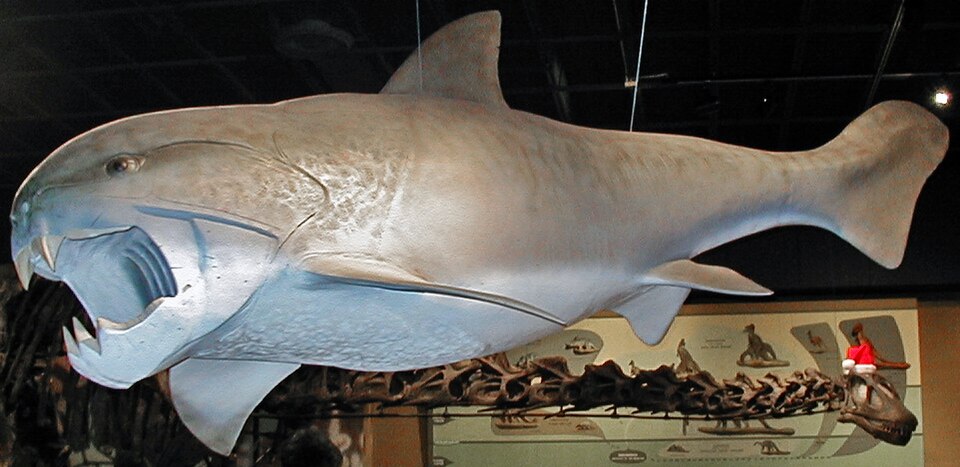
The Late Devonian crisis, centered on the Frasnian–Famennian (F–F) boundary approximately 372 million years ago, is the most prolonged and complex of the Big Five. Rather than a single catastrophic event, it comprised a series of extinction pulses spread across perhaps 20 million years, with the most acute phase at the F–F boundary itself. The event eliminated roughly 75 percent of marine species, with particularly devastating losses among reef-building organisms: the stromatoporoid and tabulate coral reefs that had dominated shallow tropical seas through much of the Devonian largely disappeared, and would not be rebuilt for roughly 100 million years.7
_(Late_Devonian;_Cleveland,_Ohio,_USA)_1_(34189080296).jpg)
The cause of the Late Devonian crisis remains the most contested among the Big Five. Ocean anoxia — the widespread depletion of dissolved oxygen from seawater — is consistently identified as a proximate kill mechanism. Black shale sequences deposited at the F–F boundary around the world record the chemical signatures of anoxic and even euxinic (hydrogen sulfide-rich) bottom waters that would have been lethal to most marine life.7, 8 The ultimate driver of this anoxia is debated. The most widely favored hypothesis invokes the rapid spread of land plants during the Devonian, which would have dramatically increased the delivery of nutrients and organic matter to shallow seas through terrestrial weathering, triggering algal blooms and oxygen depletion in a process analogous to modern eutrophication. Cooling episodes and possible volcanic episodes have also been implicated, and a consensus remains elusive.8 Notably, the Late Devonian extinction had a profound effect on vertebrate evolution: the heavily armored placoderms that had dominated Devonian seas were eliminated, and the surviving lineages of cartilaginous and bony fish would diversify into the vertebrate groups familiar today.
The end-Permian extinction: the Great Dying (~252 Ma)
The End-Permian extinction, which occurred approximately 252 million years ago at the boundary between the Permian and Triassic periods, stands without parallel in the history of animal life. Conservative estimates place marine species losses at 96 percent; terrestrial losses were similarly catastrophic, with more than 70 percent of terrestrial vertebrate species eliminated.9, 10 The event has been called The Great Dying by paleontologists to distinguish it from all other extinction events. Complex marine ecosystems that had taken hundreds of millions of years to assemble — including diverse reef communities, brachiopod-dominated seafloors, and elaborately structured food webs — were dismantled almost completely. The Earth did not recover a comparable level of marine biodiversity for roughly 10 million years.11
The proximate cause of The Great Dying is the eruption of the Siberian Traps, one of the largest flood basalt provinces in Earth history. Between approximately 252 and 248 million years ago, enormous volumes of basaltic lava were extruded across what is now Siberia, originally covering an estimated 7 million square kilometers.12 The eruptions injected massive quantities of carbon dioxide, sulfur dioxide, and halogen gases into the atmosphere over geologically short timescales. The carbon dioxide drove rapid global warming — paleotemperature proxies indicate tropical sea-surface temperatures may have risen by 8 to 10 degrees Celsius — while sulfur aerosols caused episodic acid rain and the halogens contributed to stratospheric ozone depletion.9, 10 The combined effects devastated both terrestrial and marine ecosystems simultaneously. In the oceans, warming drove widespread anoxia and ocean acidification, dissolving the calcareous shells of invertebrates and collapsing carbonate-producing ecosystems. On land, forests disappeared from large parts of the globe, replaced by a brief "Lycopod spike" of opportunistic plants.
The pace of the End-Permian extinction has been a subject of intense research. Geochronological work constrains the main phase of marine extinctions to less than 200,000 years, and possibly to less than 60,000 years in some sections — effectively instantaneous on geologic timescales.11 The selectivity of the extinction is also informative: organisms with limited ability to buffer internal pH (such as calcified invertebrates) were far more vulnerable than those with physiological flexibility (such as burrowing worms), a pattern consistent with ocean acidification as a key stressor.
Estimated species loss in the Big Five mass extinctions2, 26
The End-Triassic extinction (~201 Ma)
The End-Triassic extinction, approximately 201 million years ago, cleared the ecological stage for the dinosaurian dominance of the Mesozoic Era. Prior to the event, terrestrial ecosystems were populated by a diverse assemblage of archosaurs, mammal-like therapsids, and large-bodied amphibians. In the oceans, reef ecosystems had recovered from the End-Permian catastrophe and conodonts — a long-lived and diverse group of eel-like vertebrates that serve as important biostratigraphic markers — were approaching the end of their 300-million-year history. The extinction eliminated roughly 75 percent of species and specifically removed the crurotarsans (crocodile-line archosaurs) and most non-dinosaurian archosaurs that had been the dominant large terrestrial animals, leaving the ecological space for dinosaurs to expand and diversify through the Jurassic.13
The cause of the End-Triassic extinction is closely analogous to that of the End-Permian event. The eruption of the Central Atlantic Magmatic Province (CAMP) — the largest continental flood basalt province known, associated with the rifting of Pangaea as the Atlantic Ocean began to open — injected enormous quantities of carbon dioxide into the atmosphere over a geologically brief interval. High-precision radiometric dating by Blackburn and colleagues demonstrated that the initial CAMP eruptions and the onset of the marine extinction were synchronous to within tens of thousands of years, establishing a causal link comparable to that between the Siberian Traps and the End-Permian event.14 Carbon isotope excursions in marine and terrestrial sections around the world document the atmospheric perturbation, and proxy records indicate rapid global warming and ocean acidification consistent with a volcanic CO2 forcing. The End-Triassic extinction, like its predecessor, thus illustrates a recurring pattern in Earth history: the emplacement of a large igneous province can trigger cascading environmental changes severe enough to collapse global ecosystems.13, 14
The End-Cretaceous extinction (~66 Ma)
The End-Cretaceous extinction, occurring approximately 66 million years ago at the Cretaceous–Paleogene (K–Pg) boundary, is the best-studied and most famous of the Big Five, primarily because it eliminated the non-avian dinosaurs and paved the way for the diversification of mammals. It destroyed approximately 76 percent of species globally, including all non-avian dinosaurs, all non-avian flying reptiles (pterosaurs), all marine reptiles (mosasaurs and plesiosaurs), and the ammonites — a group of shelled cephalopods that had been common in the world's oceans for more than 300 million years.17
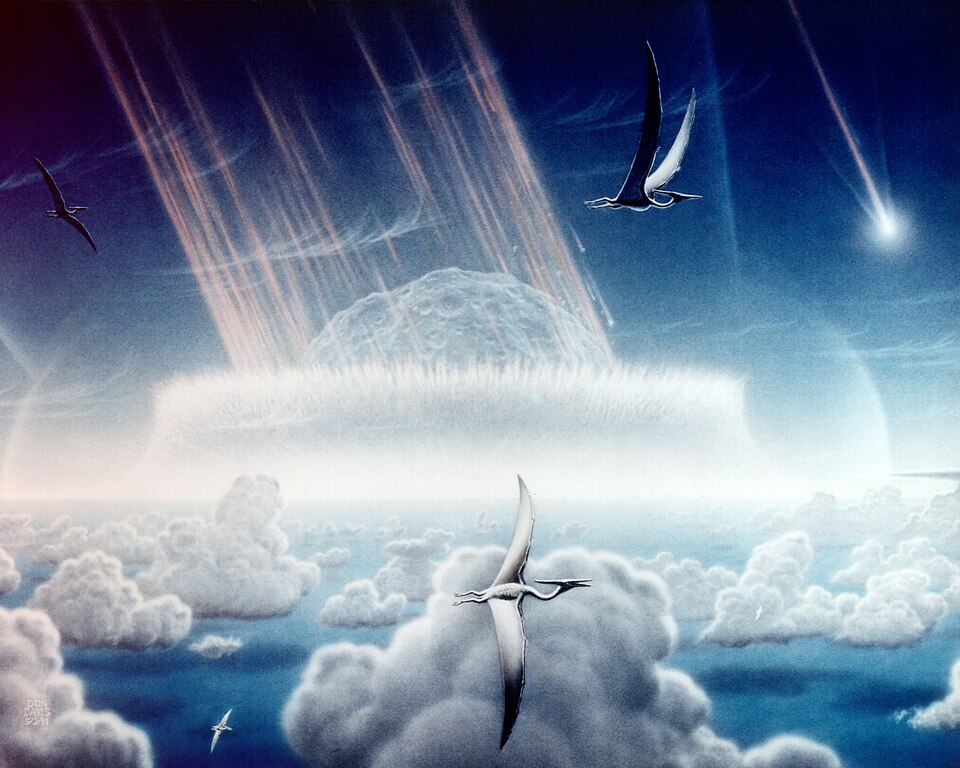

The hypothesis that the K–Pg boundary extinction was caused by a large asteroid impact was proposed in 1980 by physicist Luis Alvarez, his geologist son Walter Alvarez, and colleagues, based on the discovery of anomalously high concentrations of iridium — an element rare in Earth's crust but abundant in extraterrestrial material — in a thin clay layer precisely at the K–Pg boundary at sites around the world.15 The impact crater itself, the Chicxulub structure buried beneath the Yucatán Peninsula of Mexico, was identified a decade later. Geophysical surveys revealed a multi-ring impact structure approximately 180 kilometers in diameter — the product of an asteroid or comet roughly 10 to 15 kilometers in diameter striking at high velocity.16
The mechanisms by which the Chicxulub impact caused global extinctions are well-characterized. The impact released an estimated 1023 joules of energy, ejecting massive quantities of vaporized rock and dust into the stratosphere. The resulting global darkness, persisting for months to years, would have shut down photosynthesis worldwide, collapsing terrestrial and marine food webs from the bottom up. Wildfires triggered by re-entering ejecta particles may have consumed vast areas of forest. Sulfur dioxide released from the impact-heated sulfate rocks of the Yucatán produced sulfuric acid aerosols that further reduced insolation and caused acid rain.17 A comprehensive review published in Science in 2010 examined all available evidence and concluded that the Chicxulub impact was the primary cause of the K–Pg mass extinction, with the Deccan Traps flood basalts of India — active around the same time — playing a secondary role.17 A minority of researchers had previously argued for a primarily volcanic cause based on the timing of Deccan activity, but the global synchrony of extinctions with the iridium layer and shocked quartz rather than with volcanic horizons has led most of the scientific community to accept the impact hypothesis.18
Kill mechanisms: common threads
Although each mass extinction has a distinct proximate trigger, comparing the Big Five reveals a set of recurring kill mechanisms through which environmental disruptions translate into species loss. The most frequently implicated are: rapid climate change (both warming and cooling), ocean anoxia, ocean acidification, loss of habitat through sea-level change, and collapse of primary productivity (the base of the food chain).26 These mechanisms are not independent; they tend to operate in cascades. Volcanic eruptions deliver CO2 that warms the climate, warming reduces oxygen solubility in seawater driving anoxia, and anoxic waters produce hydrogen sulfide that rises to the surface and is lethal to aerobic life. The asteroid impact at the K–Pg boundary short-circuited primary productivity globally through darkness rather than chemistry, but the downstream consequences — collapse of planktonic food webs, starvation of large vertebrates — were analogous.
The severity of any given extinction appears to correlate with the degree to which multiple kill mechanisms operate simultaneously. The End-Permian event was the worst in part because warming, anoxia, acidification, and toxic sulfide gases acted together at global scale.9, 10 The End-Ordovician event, by contrast, involved primarily glaciation-driven habitat loss and was followed by rapid recovery, perhaps in part because the kill mechanisms were fewer and the causal chain was more reversible once the glaciers retreated.5 Large igneous province (LIP) eruptions are the common geological thread for three of the five events (End-Permian, End-Triassic, and arguably parts of the Late Devonian), underscoring the role of the solid Earth — the movement of tectonic plates and the mantle plumes that drive flood basalt volcanism — as an ultimate driver of biotic crises.26
Recovery dynamics and evolutionary consequences
Mass extinctions are not merely destructive; they are profoundly constructive for the long-term trajectory of evolution. By eliminating ecologically dominant groups, they release the ecological space those groups occupied, enabling surviving lineages to diversify rapidly into vacant niches. This phenomenon, known as adaptive radiation, has produced some of the most spectacular diversifications in the history of life.27 The most celebrated example is the diversification of placental and marsupial mammals following the End-Cretaceous extinction. Mammals had existed alongside dinosaurs for over 160 million years but remained largely small-bodied and ecologically restricted. The removal of non-avian dinosaurs from terrestrial ecosystems opened virtually every large-body ecological niche on land, and within 10 to 15 million years, mammals had radiated into whales, bats, horses, elephants, and hundreds of other forms.29
Recovery timescales differ dramatically between events and depend on both the severity of the initial loss and the environmental conditions during the recovery window. Chen and Benton's 2012 study showed that the End-Permian extinction required approximately 10 million years for marine ecosystems to recover full ecological complexity — far longer than previous estimates — and that even after taxonomic diversity rebounded, the functional structure of ecosystems (the variety of ecological roles being played) lagged behind species counts by millions of years.11 Twitchett's work on the Early Triassic recovery interval documented repeated setbacks in marine ecosystem reconstruction during this period, likely caused by continuing environmental instability following the Siberian Traps eruptions.20 In contrast, the End-Cretaceous recovery was relatively swift; many lineages of mammals, birds, lizards, and teleost fish had diversified substantially within 5 million years, aided by a more stable post-impact climate.19
Jablonski's research on the evolutionary consequences of mass extinctions demonstrated that the selectivity of normal (background) extinctions differs fundamentally from that of mass extinctions. Traits and biological properties that confer survival advantages under normal conditions — geographic range restriction, specialized ecology, complex life histories — do not consistently predict survival during mass extinctions. Instead, broad geographic distribution and the ability to exploit a wide range of food sources are among the few traits that predict survival across multiple events.27, 28 This means that the groups that survive mass extinctions and seed the subsequent radiations are not necessarily those best adapted to the pre-extinction world, but those with the right accidental combination of traits for enduring global catastrophe. The result is that mass extinctions can redirect evolutionary history along trajectories that would never have been reached through ordinary selection — a principle sometimes called the contingency of mass extinctions on macroevolutionary outcomes.
The sixth extinction
Whether Earth is currently experiencing a sixth mass extinction is a question that has moved from the margins of conservation biology to the center of scientific debate. The evidence for an ongoing biodiversity crisis is extensive. Current global species extinction rates are estimated to be 100 to 1,000 times the geological background rate, a disparity large enough to qualify as mass extinction by the quantitative criteria established for the Big Five.23 Ceballos and colleagues demonstrated in a landmark 2015 analysis that even using the most conservative assumptions about background rates, vertebrate species are being lost at a pace that is unprecedented in the last 65 million years.23 A 2023 follow-up study using a broader dataset of vertebrate population and range data concluded that the evidence for a sixth mass extinction has grown stronger, not weaker, in the intervening years.24
The primary drivers of the current extinction crisis differ from the geologically mediated causes of previous events. Habitat destruction — particularly tropical deforestation and the conversion of grasslands to agriculture — is the leading cause of species loss worldwide.22 Overexploitation of species through hunting and fishing, the introduction of invasive species that outcompete or prey upon native fauna, pollution, and disease amplification through habitat fragmentation all contribute. Anthropogenic climate change adds an accelerating long-term pressure: a 2015 analysis in Science by Urban estimated that 16 percent of species face elevated extinction risk from climate change alone under current trajectories, rising to over 26 percent under high-warming scenarios.21 The term "defaunation" — coined by Dirzo and colleagues in a 2014 review — captures the fact that even species not yet formally extinct are experiencing catastrophic reductions in population size and geographic range, presaging future extinctions even if immediate extinction rates are moderated.22
The scientific debate about the sixth extinction does not concern whether biodiversity is declining rapidly — that is not disputed — but whether the losses will meet the formal threshold of 75 percent species loss that defines the Big Five. Most researchers argue that the comparison to past mass extinctions is already justified by the rate of loss alone, regardless of final totals, and that the relevant lesson from the fossil record is the timeframe of recovery: even partial mass extinctions required millions of years to reverse.19, 23 The fossil record of previous events thus provides not just historical context for the current crisis but a sobering quantitative benchmark for its potential irreversibility.
References
The Late Devonian biodiversity crisis: insights into the Frasnian–Famennian extinction event
Rates of species loss and recovery following a major extinction event in the history of life
The timing and extent of the eruption of the Siberian Traps large igneous province: Implications for the end-Permian environmental crisis
The Central Atlantic Magmatic Province as the driver of the end-Triassic mass extinction
Chicxulub Crater: A possible Cretaceous/Tertiary boundary impact crater on the Yucatán Peninsula, Mexico
The Chicxulub Asteroid Impact and Mass Extinction at the Cretaceous–Paleogene Boundary