Overview
- The end-Ordovician extinction (~445–444 Ma) was the first of the Big Five mass extinctions, eliminating roughly 85% of marine species in two distinct pulses separated by approximately one million years during the Hirnantian Stage.
- The extinction was driven primarily by the rapid growth and subsequent melting of a massive Gondwanan ice sheet, which caused severe sea-level fall, tropical ocean cooling, habitat loss on continental shelves, and the spread of anoxic and euxinic deep waters during deglaciation.
- Recovery was comparatively rapid, with marine ecosystems rebuilding within one to three million years during the early Silurian, though the taxonomic composition of post-extinction communities differed markedly from those of the Late Ordovician.
The end-Ordovician extinction, occurring approximately 445 to 444 million years ago at the boundary between the Ordovician and Silurian periods, was the first of the five great mass extinctions in the Phanerozoic Eon. It eliminated an estimated 85 percent of all marine species and roughly 26 percent of marine families, making it one of the most severe biodiversity crises in the history of life.1, 2 The event is distinctive among the Big Five for being the only mass extinction clearly linked to a glaciation rather than to large-scale volcanism or bolide impact, and for its unusual structure: the extinction unfolded in two discrete pulses separated by approximately one million years, each driven by a different set of environmental stresses associated with the growth and subsequent melting of a vast ice sheet centred on the Gondwana supercontinent.2, 3
The recognition that the end-Ordovician crisis comprised two temporally and mechanistically distinct phases emerged from detailed biostratigraphic and geochemical work during the late twentieth century. David Raup and Jack Sepkoski first identified the event as statistically significant in their landmark 1982 analysis of family-level extinction rates across the Phanerozoic.1 Subsequent studies refined the picture, demonstrating that the two pulses targeted different ecological groups and were driven by contrasting environmental perturbations — the first by cooling and sea-level fall, the second by warming and the expansion of oxygen-depleted waters.2, 3, 7
The Late Ordovician world
_(44702899525).jpg)
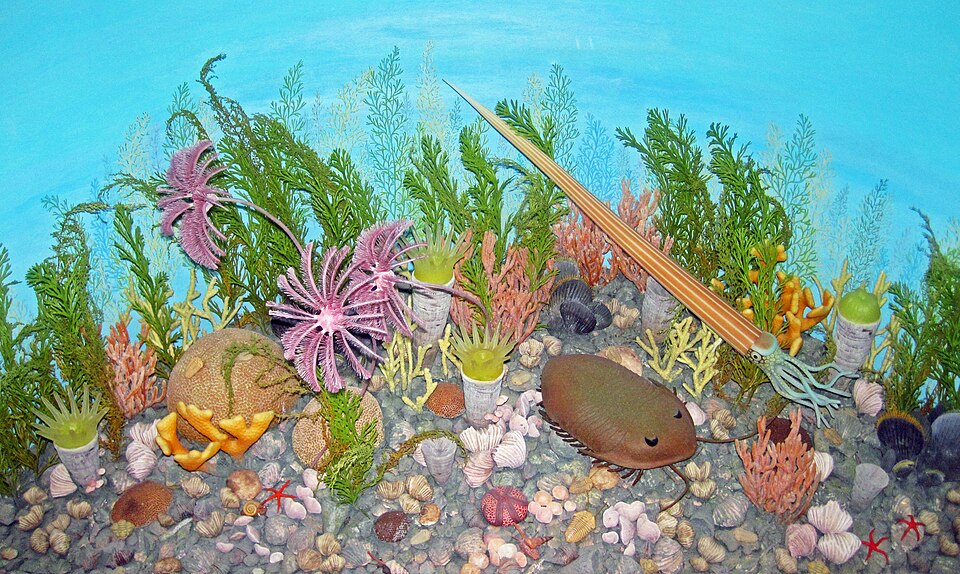
The Late Ordovician was a time of remarkable marine biodiversity. The preceding hundred million years had witnessed the Great Ordovician Biodiversification Event (GOBE), a sustained radiation that tripled or quadrupled the number of marine animal families and produced the most diverse marine ecosystems the planet had yet seen.9, 20 Shallow epicontinental seas teemed with brachiopods, trilobites, bryozoans, crinoids, tabulate and rugose corals, graptolites, gastropods, nautiloid cephalopods, and conodonts. Reef ecosystems, built primarily by stromatoporoids, tabulate corals, and calcareous algae, were widespread across the tropical shelves of Laurentia, Baltica, and the margins of Gondwana.9 The GOBE represented a fundamental restructuring of marine ecosystems, establishing the basic community types that would persist through the remainder of the Paleozoic Era.20
The palaeogeography of the Late Ordovician was dominated by the supercontinent Gondwana, a vast landmass comprising what are now Africa, South America, Antarctica, Australia, India, and Arabia. Gondwana straddled the South Pole, with modern-day North Africa and the Sahara positioned directly over the polar region.2, 10 The smaller continents of Laurentia (North America), Baltica (northern Europe), and Siberia lay at tropical to subtropical latitudes, surrounded by extensive shallow seas that supported the bulk of marine biodiversity. The Iapetus Ocean separated Laurentia from Baltica, and the Rheic Ocean lay between Gondwana and the terranes of Avalonia.10 Life on land was extremely limited: the earliest land plants — non-vascular bryophyte-like organisms — were only beginning to colonise terrestrial surfaces, and no vertebrates had yet ventured ashore.13
Atmospheric carbon dioxide concentrations during the Late Ordovician are estimated to have been substantially higher than modern levels, perhaps eight to sixteen times the pre-industrial value, creating greenhouse conditions that kept global temperatures warm despite a solar luminosity roughly four percent lower than today.5, 14 The paradox of an intense glaciation occurring under such elevated CO2 levels was one of the central puzzles of Ordovician palaeoclimatology and drove intensive research into the mechanisms that could have drawn atmospheric CO2 down rapidly enough to trigger continental-scale ice-sheet growth.5, 14
The Hirnantian glaciation
The terminal stage of the Ordovician Period, the Hirnantian (approximately 445.2 to 443.8 Ma), was marked by the rapid growth of a massive continental ice sheet on Gondwana. Geological evidence for this glaciation is exceptionally well preserved in North Africa, where the modern Sahara Desert conceals thick sequences of glacial diamictites, striated pavements, tunnel valleys, esker ridges, and dropstones that record the passage of ice across what was then a polar landscape.8, 2 Similar glaciogenic deposits have been identified in South America, southern Africa, and the Arabian Peninsula, collectively demonstrating that the Hirnantian ice sheet rivalled or exceeded the size of the Pleistocene Antarctic ice sheet.4, 8
Carbonate clumped-isotope palaeothermometry has provided quantitative constraints on the magnitude of the Hirnantian glacial event. Tropical ocean surface temperatures, which had been approximately 32 to 37 degrees Celsius through much of the Late Ordovician, cooled by roughly 5 degrees Celsius during the glacial maximum, bringing them closer to modern tropical values.4 This cooling, while modest by the standards of Pleistocene glacial-interglacial cycles, occurred in oceans that had been consistently warm for tens of millions of years and whose inhabitants were adapted to stable, high-temperature conditions. Oxygen isotope data from brachiopod shells independently confirm a substantial positive excursion during the Hirnantian, consistent with both cooling and the growth of continental ice.5, 21
The glaciation triggered a eustatic sea-level fall of 50 to more than 100 metres as vast volumes of water were locked up in the Gondwanan ice sheet.2, 4 This regression drained the extensive epicontinental seas that had blanketed the tropical and subtropical continents, catastrophically reducing the available shallow-marine habitat. The sea-level drop was geologically rapid, occurring over a few hundred thousand years, and its effects were amplified by the palaeogeographic configuration of the time: because much of Ordovician marine biodiversity was concentrated on broad, gently sloping continental shelves, even a modest vertical change in sea level could expose enormous areas of seafloor.2, 11
The driving mechanism for the glaciation under high-CO2 greenhouse conditions has been debated extensively. One influential hypothesis proposes that the intense chemical weathering of fresh silicate rocks exposed by the Taconic orogeny — the mountain-building event produced by the collision of volcanic arcs with Laurentia — consumed atmospheric CO2 at rates sufficient to cross a glacial threshold.14 The newly uplifted mountains lay in the tropical weathering belt, where warm temperatures and abundant rainfall would have maximised the rate of silicate dissolution. An alternative or complementary hypothesis suggests that the earliest non-vascular land plants accelerated weathering through biological soil formation and organic acid production, further drawing down CO2 and contributing to global cooling.13 Recent sedimentary reconstructions indicate that the Hirnantian glaciation was not a single monotonic event but rather comprised at least three glacial-interglacial cycles, analogous in structure to the Cenozoic Ice Age, with the extinction pulses occurring at specific transitions within this glacial history.8
Two pulses of extinction
The defining feature of the end-Ordovician mass extinction is its two-pulse structure. The two episodes of elevated extinction were separated by approximately one million years and were driven by distinct environmental mechanisms, a pattern that sets this crisis apart from the other Big Five events.2, 3
The first pulse coincided with the onset of glaciation and the associated regression of sea level during the early Hirnantian. As the Gondwanan ice sheet expanded and eustatic sea level dropped, the vast epicontinental seas that had supported the majority of marine biodiversity were drained. Organisms inhabiting shallow tropical shelves — the most species-rich environments of the Late Ordovician — lost their habitat on a massive scale.2, 11 Simultaneously, tropical ocean temperatures declined by roughly 5 degrees Celsius, placing thermal stress on warm-adapted faunas that had evolved under stable greenhouse conditions for millions of years.4 The equatorward shift of the polar front compressed mid-latitude climate zones, reducing the geographic range of temperature-sensitive organisms and intensifying competitive pressures in the shrinking belt of tropical habitat.12 Graptolites, which were planktonic colonial organisms that inhabited the open ocean water column, were devastated during this first pulse, with most species eliminated.2, 6
The second pulse occurred during the late Hirnantian as the ice sheet melted and sea level rose rapidly. Counterintuitively, the return to warmer conditions proved equally lethal. Deglaciation brought renewed transgression of the oceans across the continental shelves, but the rising waters were fundamentally different from those that had occupied the shelves before the glaciation. Deep ocean waters that had become anoxic or euxinic (enriched in hydrogen sulfide) during the glacial interval now spread onto the shelves as sea level rose, poisoning benthic habitats that were being recolonised by surviving organisms.2, 7 This second pulse was particularly damaging to brachiopods and to the cold-adapted Hirnantia fauna that had briefly flourished during the glacial interval.3, 16
The carbon isotope record captures the environmental upheaval of the Hirnantian in a large positive excursion in δ13C values, known as the Hirnantian Isotopic Carbon Excursion (HICE). This excursion, one of the largest in the Phanerozoic, reflects a major perturbation of the global carbon cycle driven by enhanced organic carbon burial, changes in ocean circulation, and the expansion and contraction of the ice sheet. High-resolution isotope stratigraphy has shown that the HICE correlates with the interval between the two extinction pulses and reaches its peak during the deglaciation phase rather than at the glacial maximum.8, 21
Kill mechanisms
The end-Ordovician extinction was not caused by a single environmental catastrophe but by a cascade of interacting stresses, each of which contributed to the destruction of marine ecosystems. The principal kill mechanisms differed between the two pulses, reflecting the contrasting environmental conditions of glaciation and deglaciation.3
Habitat loss through sea-level regression was the most straightforward driver of the first pulse. The draining of epicontinental seas eliminated the shallow-water habitats on which the majority of Ordovician marine species depended. Because the tropical continental shelves were broad and gently sloping, the sea-level fall of 50 to 100+ metres exposed a disproportionately large area of seafloor, fragmenting populations and reducing the total habitable area for shelf-dwelling organisms by a substantial fraction.2, 11
Climatic cooling compounded the effects of habitat loss. The ~5-degree drop in tropical sea-surface temperatures was sufficient to stress warm-adapted organisms, particularly those with narrow thermal tolerances. The equatorward migration of the polar front from approximately 55–70 degrees south to roughly 40 degrees south latitude compressed the subtropical and tropical climate zones, reducing the geographic extent of warm-water habitats and forcing latitudinal range contractions.4, 12
Ocean anoxia and euxinia were the dominant kill mechanisms of the second pulse. Geochemical proxies including iron speciation, molybdenum concentrations, and sulphur isotopes demonstrate that anoxic and sulphidic (euxinic) conditions expanded dramatically during the late Hirnantian.7, 19 Uranium isotope records from marine carbonates reveal an abrupt shift toward more reducing seawater conditions coinciding with the second extinction pulse, indicating that the expansion of anoxia was a global phenomenon rather than a local or regional perturbation.18 The upwelling of oxygen-depleted, nutrient-rich deep waters onto the newly re-flooded shelves created toxic conditions for benthic organisms and narrowed the habitable water column for nektonic and planktonic species.7, 19
Volcanic activity may have played an underappreciated role. Anomalously high mercury concentrations in marine strata from both South China and Laurentia, deposited immediately before and during the Hirnantian glacial maximum, have been interpreted as evidence for the emplacement of a large igneous province (LIP) coincident with the extinction.15 Volcanism could have contributed to the extinction through multiple pathways: initial CO2 release causing warming, followed by enhanced weathering of volcanic deposits drawing down CO2 and triggering glaciation, and the injection of toxic metals and aerosols into the atmosphere and oceans. The mercury data made the end-Ordovician the last of the Big Five to be linked to volcanic activity, suggesting that volcanism and glaciation may have acted in concert rather than independently.15
Selectivity and victims
The end-Ordovician extinction was not ecologically random. It targeted specific taxonomic groups and ecological modes of life with varying intensity, and the selectivity differed between the two pulses.2, 11
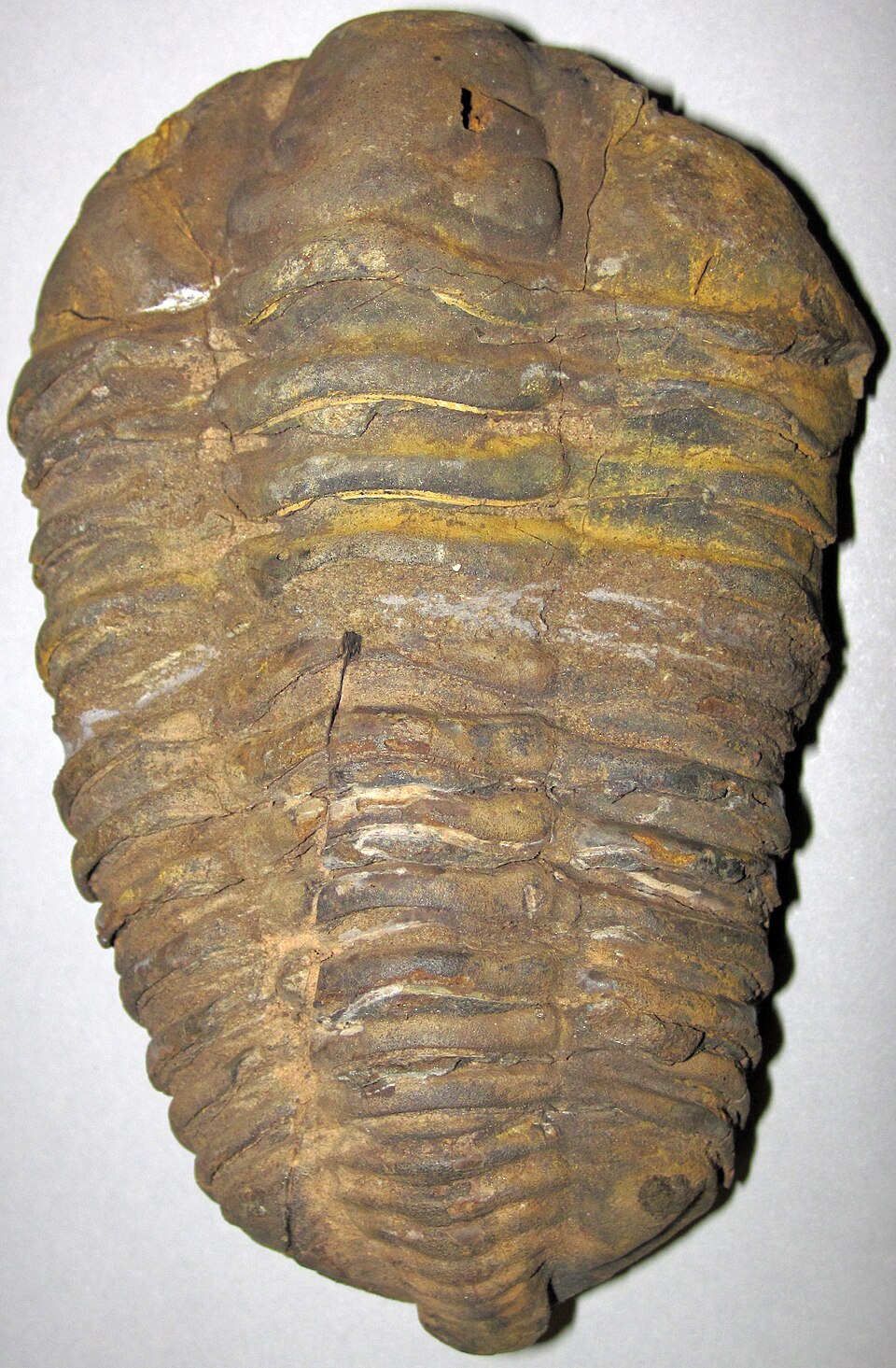
Trilobites, among the most iconic Ordovician organisms, suffered catastrophic losses. Approximately half of all trilobite families were eliminated across the extinction interval, and at the genus level the losses were even more severe, approaching 70 percent.
_1.jpg)
Groups with planktonic larval stages, such as the asaphine trilobites, were particularly vulnerable and were almost entirely wiped out, with only a single genus surviving into the Silurian.2, 22
Brachiopods, which were the dominant filter-feeding organisms on Ordovician seafloors, were severely affected in both pulses. The diverse pre-extinction brachiopod communities of the Katian Stage were decimated during the first pulse, and those that survived the glacial interval were further reduced during the second pulse as anoxic waters spread across the shelves.3, 10 Between the two pulses, a distinctive cold-adapted brachiopod assemblage known as the Hirnantia fauna briefly colonised the shelves at intermediate to low latitudes. This fauna, characterised by a low-diversity suite of genera including Hirnantia, Dalmanella, Eostropheodonta, and Plectothyrella, represents a classic "crisis fauna" — an assemblage of stress-tolerant generalists that proliferated opportunistically in the ecological vacuum created by the first extinction pulse.16 The Hirnantia fauna achieved a remarkably widespread distribution, with occurrences documented on every major palaeocontinent, but it was itself eliminated during the second pulse of extinction when deglaciation restored warmer but anoxic conditions.3, 16
Graptolites, planktonic colonial organisms that are among the most important biostratigraphic index fossils of the early Paleozoic, were nearly annihilated. The diverse graptolite communities of the Late Ordovician were reduced to just two surviving lineages, from which the entire subsequent Silurian graptolite radiation would emerge. The severity of graptolite losses during the first pulse, when the open-ocean habitats they depended upon were disrupted by cooling and circulation changes, was particularly striking.2, 6
Reef ecosystems collapsed across the tropics. The stromatoporoid-coral-algal reefs that had flourished during the Late Ordovician were destroyed during the extinction, and true reef-building communities did not recover for approximately five to six million years, well into the Silurian.9 Conodonts, small marine animals with mineralised tooth-like elements, experienced substantial losses but survived as a group into the Triassic. Several major conodont families were eliminated during the Hirnantian, and the survivors underwent significant evolutionary turnover in the early Silurian.2
Estimated extinction severity across major Late Ordovician marine groups2, 17, 22
| Taxonomic group | Estimated genus-level loss | Ecological role | Primary pulse(s) affected |
|---|---|---|---|
| Trilobites | ~70% | Benthic & pelagic arthropods | Both |
| Brachiopods | ~60% | Sessile filter feeders | Both |
| Graptolites | >90% | Planktonic colonial organisms | First |
| Bryozoans | ~40–50% | Colonial filter feeders | Both |
| Conodonts | ~50% | Nektonic microfauna | Both |
| Corals (tabulate & rugose) | ~50–60% | Reef builders | First |
| Crinoids | ~40% | Sessile filter feeders | Both |
Geochemical signatures
The end-Ordovician extinction left a rich geochemical record that has been instrumental in reconstructing the environmental conditions that drove the crisis. The most prominent signal is the Hirnantian Isotopic Carbon Excursion (HICE), a positive shift of up to 7 per mil in δ13C values recorded in marine carbonates worldwide.21 This excursion, which is one of the largest of the entire Phanerozoic, indicates a massive perturbation of the global carbon cycle. Increased burial of isotopically light organic carbon, driven by enhanced biological productivity or the sequestration of organic matter in expanding anoxic basins, preferentially removed 12C from the ocean-atmosphere system, leaving the dissolved inorganic carbon pool enriched in 13C.6, 21
High-resolution stratigraphic studies have demonstrated that the HICE does not align precisely with either extinction pulse but rather spans the interval between them, reaching its peak during the deglaciation phase. This temporal relationship suggests that the carbon cycle perturbation was a consequence of the glacial event itself — reflecting the interplay of sea-level change, ocean circulation, and productivity shifts — rather than an independent trigger of the extinction.8, 21
Oxygen isotope records from brachiopod shells and whole-rock carbonates reveal a positive excursion synchronous with the HICE, consistent with both ocean cooling and the growth of continental ice. The combined carbon and oxygen isotope signals provide a distinctive geochemical fingerprint that permits correlation of the Hirnantian event across widely separated sections on different continents, from Anticosti Island in Canada to the Baltic region, South China, and North Africa.5, 21
Iron speciation and sulphur isotope data from black shales deposited during the late Hirnantian demonstrate that euxinic conditions — waters enriched in dissolved hydrogen sulphide — expanded significantly during the second phase of the extinction. The euxinia was concentrated in deeper shelf and slope environments but periodically impinged on shallower settings, creating a toxic chemical barrier to recolonisation of the shelves during the deglacial transgression.7, 19 Uranium isotope measurements from marine carbonates on Anticosti Island have further confirmed that the expansion of anoxia was global in scale, with the onset of reducing conditions correlating precisely with the second extinction pulse.18
Recovery and the early Silurian world
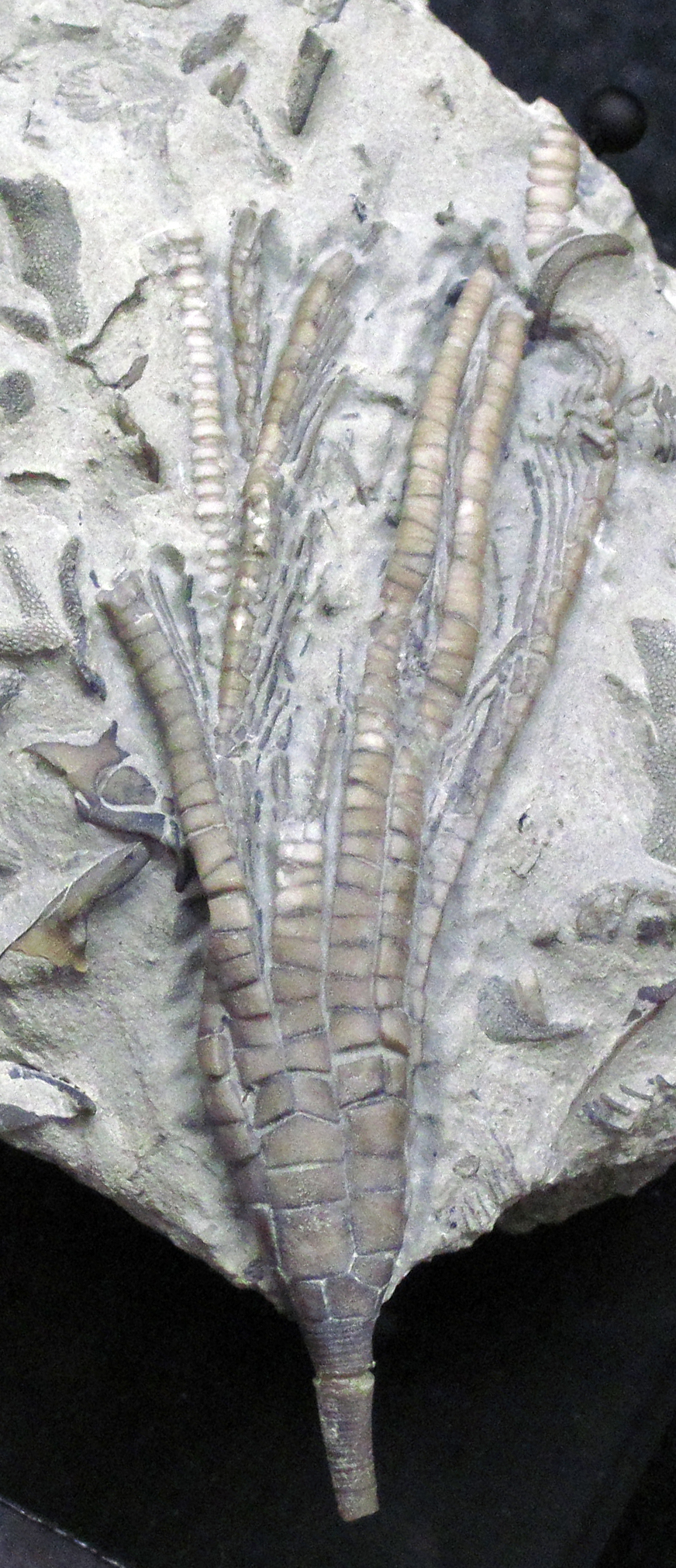
Compared with the protracted recovery that followed the end-Permian extinction, which lasted roughly ten million years, the post-Ordovician recovery was relatively swift. Marine biodiversity began to rebound within one to three million years of the extinction, and by the mid-Llandovery Epoch (early Silurian, approximately 440–438 Ma), genus-level diversity had returned to near pre-extinction levels in many taxonomic groups.2, 6
_(Kope_Formation,_Upper_Ordovician;_northern_Kentucky,_USA).jpg)
The recovery was not, however, a simple restoration of pre-extinction ecosystems. The taxonomic composition of early Silurian marine communities differed substantially from those of the Late Ordovician. Graptolites staged a remarkable recovery and radiation from their two surviving lineages, rapidly diversifying into a new suite of forms that dominated the Silurian planktonic realm. The speed and magnitude of this recovery from near-total annihilation make the graptolites one of the most striking examples of rapid evolutionary radiation following a mass extinction.2, 6
Brachiopod communities reorganised substantially. The distinctive Hirnantia fauna vanished entirely, and the brachiopod assemblages that replaced it in the early Silurian were dominated by different families and genera from those that had characterised the Katian. Many of the ecological niches previously occupied by Ordovician incumbents were filled by new lineages that had been minor components of the pre-extinction fauna.3, 10
Reef ecosystems were among the slowest elements of the marine biota to recover. The stromatoporoid-coral reefs of the Late Ordovician were effectively destroyed, and a reef gap of approximately five to six million years ensued before new reef-building communities, dominated by tabulate and rugose corals along with stromatoporoids, became established in the mid-Llandovery. By the late Llandovery and Wenlock epochs, reefs had spread globally across the tropical shelves of Laurentia, Baltica, Siberia, and South China, initiating an 80-million-year interval of reef prosperity that would persist through the Devonian.9
The relative rapidity of the post-Ordovician recovery has been attributed to several factors. The environmental stresses that caused the extinction — glaciation, sea-level fall, and anoxia — were geologically short-lived, lasting approximately one to two million years rather than the hundreds of thousands to millions of years of environmental degradation that accompanied the end-Permian crisis. Once the ice sheet melted and ocean conditions stabilised, the surviving lineages found vacant ecological space and diversified quickly. The fundamental structure of marine ecosystems — the Paleozoic Evolutionary Fauna dominated by brachiopods, crinoids, corals, and bryozoans — survived the crisis intact and continued to define marine communities for another 200 million years.2, 17
Significance for extinction science
The end-Ordovician extinction occupies a distinctive place in the study of mass extinctions. It is the only one of the Big Five clearly driven by glaciation, a mechanism more commonly associated with biodiversity change on shorter timescales. It demonstrates that rapid climate cooling, when imposed on a biosphere adapted to prolonged greenhouse warmth, can be as destructive as the volcanic catastrophes that drove the end-Permian and end-Cretaceous events.3, 17
The two-pulse structure of the extinction has provided important insights into the ways that environmental stresses interact to amplify biodiversity loss. The first pulse, driven by cooling and habitat loss, and the second pulse, driven by warming and anoxia, together eliminated a larger fraction of biodiversity than either perturbation would have achieved alone. The concept of a "coincidence of causes," advanced by Harper and colleagues, has become an influential framework for understanding how multiple, individually survivable environmental changes can combine to produce a catastrophic outcome.3
The end-Ordovician extinction also illustrates the importance of palaeogeographic context in determining extinction severity. The concentration of marine biodiversity on broad, shallow epicontinental shelves made the Late Ordovician biosphere exceptionally vulnerable to sea-level change: a 100-metre regression that would cause modest habitat loss on a planet with steep continental margins was devastating on a planet where much of the marine realm consisted of inland seas only tens of metres deep.2, 11 This insight has direct relevance to understanding modern biodiversity vulnerability, as many present-day marine species are concentrated in shallow coastal habitats that are sensitive to sea-level change, temperature shifts, and deoxygenation.3
References
Bathymetric and isotopic evidence for a short-lived Late Ordovician glaciation in a greenhouse period
Environmental changes in the Late Ordovician–early Silurian: Review and new insights from black shales and nitrogen isotopes
Polar front shift and atmospheric CO₂ during the glacial maximum of the Early Paleozoic Icehouse
A weathering hypothesis for glaciation at high atmospheric pCO₂ during the Late Ordovician
A volcanic trigger for the Late Ordovician mass extinction? Mercury data from south China and Laurentia
Abrupt global-ocean anoxia during the Late Ordovician–early Silurian detected using uranium isotopes of marine carbonates
Ocean euxinia and climate change ‘double whammy’ drove the Late Ordovician mass extinction
High-resolution stable isotope stratigraphy of Upper Ordovician sequences: Constraints on the timing of bioevents and environmental changes associated with mass extinction and glaciation