Overview
- The Great Ordovician Biodiversification Event (GOBE) was the most sustained increase in marine biodiversity in Earth's history, tripling the number of marine families and quadrupling genera between roughly 485 and 444 million years ago, filling the ecological framework established by the Cambrian explosion with an extraordinary richness of species.
- The radiation was driven by a confluence of environmental factors including high sea levels flooding vast continental shelves, the greatest continental dispersal of the Paleozoic creating isolated biogeographic provinces, progressive ocean cooling, a revolution in marine plankton that restructured the base of the food web, and possibly nutrient pulses from intense volcanic activity.
- The diversification established the Paleozoic Evolutionary Fauna—dominated by brachiopods, bryozoans, crinoids, tabulate and rugose corals, and cephalopods—which would dominate marine ecosystems for the next 250 million years until the Permian-Triassic extinction brought it to an end.
The Great Ordovician Biodiversification Event (GOBE) was the most sustained and dramatic increase in marine biodiversity in the history of life on Earth. During the Ordovician period, spanning approximately 485 to 444 million years ago, the number of marine families tripled and the number of genera more than quadrupled, transforming the relatively sparse post-Cambrian oceans into complex, densely populated ecosystems.2, 3 Whereas the preceding Cambrian explosion had established nearly all major animal body plans (phyla), the Ordovician radiation filled these architectural templates with an extraordinary profusion of species, genera, and families, diversifying at lower taxonomic levels within the frameworks already in place.3, 4 The result was the establishment of the Paleozoic Evolutionary Fauna — the suite of organisms that would dominate marine ecosystems for the next 250 million years — and the construction of ecological communities of a complexity not seen before in Earth's history.1
The GOBE was not a single punctuated event but rather a protracted series of overlapping diversifications, beginning with a plankton revolution in the late Cambrian and Early Ordovician and culminating in the elaboration of complex reef and level-bottom benthic communities by the Middle to Late Ordovician.5, 6 Its causes remain debated, but the consensus view implicates a convergence of environmental drivers: high sea levels flooding vast continental shelves, the greatest continental dispersal of the Paleozoic creating biogeographic isolation, progressive ocean cooling from greenhouse to icehouse conditions, and fundamental changes in the marine food web driven by the rise of diverse phytoplankton.7, 8, 9
The scale of the diversification
The quantitative magnitude of the Ordovician radiation is best appreciated through the framework established by Jack Sepkoski's landmark 1981 analysis of the Phanerozoic marine fossil record. Using factor analysis of family-level diversity data across 91 metazoan classes, Sepkoski identified three great evolutionary faunas that successively dominated the oceans: a Cambrian Fauna dominated by trilobites, inarticulate brachiopods, and hyoliths; a Paleozoic Fauna dominated by articulate brachiopods, crinoids, corals, bryozoans, and cephalopods; and a Modern Fauna dominated by gastropods, bivalves, and bony fishes.1 The transition from the first to the second of these faunas occurred during the Ordovician, and it was accompanied by a massive increase in overall diversity at every taxonomic level below the phylum.1, 3
_1.jpg)
At the ordinal level, marine diversity approximately doubled during the Ordovician. At the family level, it tripled, rising from roughly 160 families at the start of the period to nearly 500 by the Late Ordovician. At the genus level, diversity increased by a factor of four or more.2, 3 Sampling-standardised analyses using the Paleobiology Database have confirmed that these increases are not artefacts of differential preservation or collecting effort but reflect a genuine and dramatic expansion of marine life.15 This diversification was unique in the Phanerozoic: no subsequent radiation, including the recovery after the Permian-Triassic extinction, produced a comparable rate of sustained diversity increase across so many clades simultaneously.4, 15
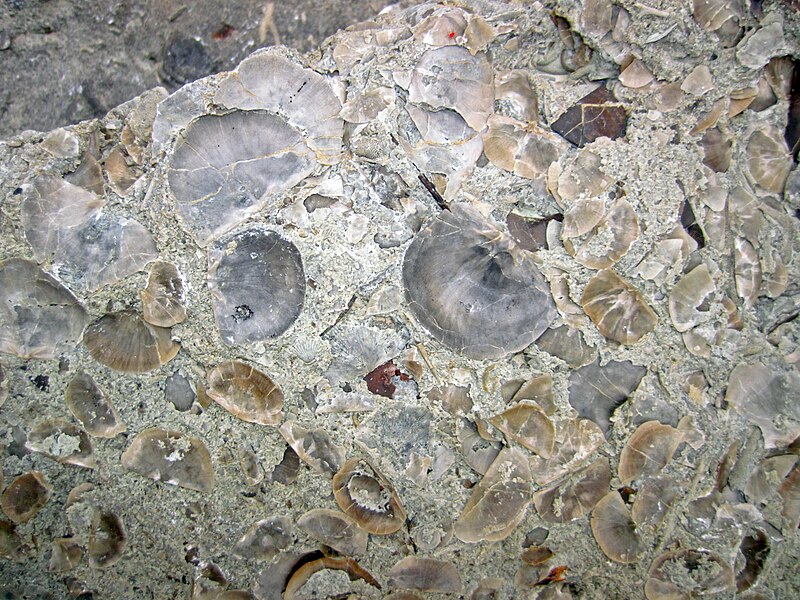
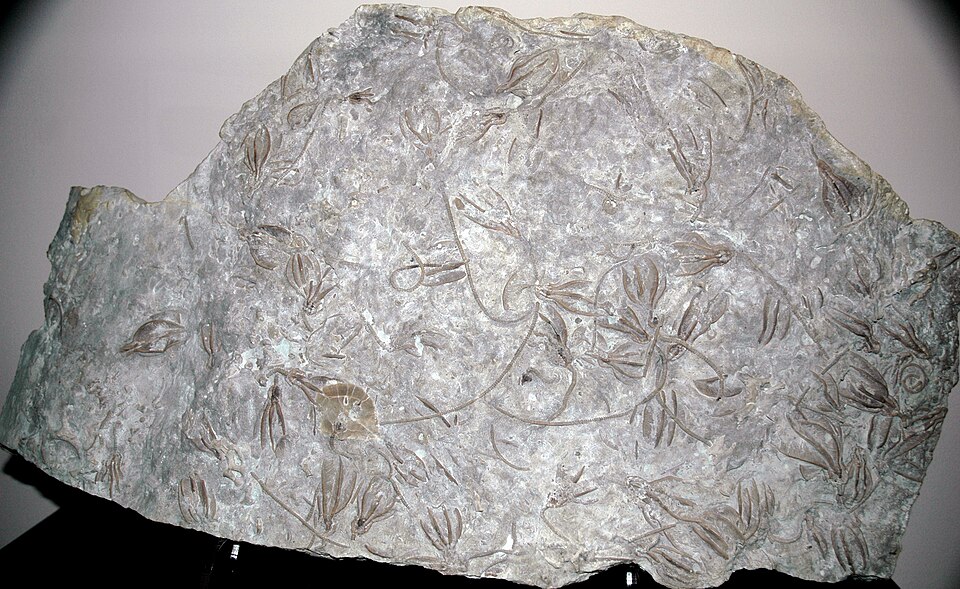
The GOBE affected virtually every major marine group. Brachiopods diversified from a handful of Cambrian lineages into thousands of species across dozens of families, becoming the dominant shelly organisms on Ordovician seafloors. Bryozoans, entirely absent from the Cambrian, appeared and radiated explosively, forming dense colonies on hard and soft substrates alike. Crinoids and other echinoderms expanded to create the elaborate "crinoid gardens" that characterised many Ordovician carbonate platforms. Tabulate and rugose corals diversified to become major reef builders for the first time. Nautiloid cephalopods evolved into the largest predators in Ordovician seas, with some straight-shelled forms reaching several metres in length. Graptolites diversified enormously in the plankton, becoming key biostratigraphic markers for the period.2, 7, 14
From Cambrian to Paleozoic fauna
The ecological significance of the Ordovician radiation extends far beyond raw counts of taxa. The diversification fundamentally restructured the composition and functioning of marine ecosystems, replacing the Cambrian Evolutionary Fauna with the Paleozoic Evolutionary Fauna that would persist as the dominant assemblage until the end-Permian extinction, roughly 250 million years later.1, 7
The Cambrian Fauna was dominated by trilobites, which constituted up to half of all individuals in many Cambrian marine communities, alongside inarticulate brachiopods, monoplacophoran molluscs, and hyoliths. These organisms occupied a relatively limited range of ecological roles: most were mobile or semi-mobile deposit feeders and scavengers living on or just above the sediment surface, and food webs were comparatively simple.1, 3 During the Ordovician, the relative dominance of trilobites declined sharply as new groups radiated into ecological space that had previously been unoccupied or sparsely populated.
The Paleozoic Fauna that replaced it was far more ecologically complex. Articulate brachiopods became the dominant suspension feeders on soft substrates, exploiting a wider range of feeding strategies than their Cambrian predecessors. Bryozoans and crinoids added extensive three-dimensional structure to the seafloor through their colonial and tiered growth forms, creating habitats for other organisms in a manner analogous to modern coral reefs. Rugose and tabulate corals, together with stromatoporoids, constructed the first large metazoan reef frameworks since the archaeocyathid reefs of the Early Cambrian, which had collapsed by the Middle Cambrian.2, 7 The Ordovician seas thus acquired a vertical complexity — a tiering of organisms from deep burrowers through surface dwellers to elevated suspension feeders — that had no Cambrian parallel.3
_4_(15278775616).jpg)
Major groups diversifying during the Great Ordovician Biodiversification Event2, 7, 14
| Group | Cambrian status | Ordovician diversification | Ecological role |
|---|---|---|---|
| Articulate brachiopods | Present, low diversity | Hundreds of genera by Late Ordovician | Dominant benthic suspension feeders |
| Bryozoans | Absent | First appeared and radiated rapidly in Early–Middle Ordovician | Colonial encrusters and reef builders |
| Crinoids | Rare or absent | Major radiation from Middle Ordovician | Elevated tiered suspension feeders |
| Tabulate & rugose corals | Absent or very rare | Diversified through Middle–Late Ordovician | Reef framework builders |
| Nautiloid cephalopods | Present, low diversity | Explosive radiation; largest Ordovician predators | Apex pelagic and nektobenthic predators |
| Graptolites | First appeared in Late Cambrian | Major pelagic diversification in Early–Middle Ordovician | Planktonic colonial filter feeders |
| Ostracods | Present, low diversity | Substantial diversification | Small benthic to pelagic arthropods |
| Stromatoporoids | Absent | Appeared in Middle Ordovician | Massive reef-building sponges |
The plankton revolution
One of the most fundamental changes underpinning the Ordovician radiation occurred not on the seafloor but in the water column. During the late Cambrian and Early Ordovician, marine phytoplankton — principally acritarchs, the organic-walled microfossils that served as the dominant primary producers in Paleozoic oceans — underwent a dramatic increase in diversity, disparity, and geographic range. This event, termed the "Ordovician Plankton Revolution" by Servais and colleagues, restructured the base of the marine food web and may have been a prerequisite for the broader GOBE.6, 7
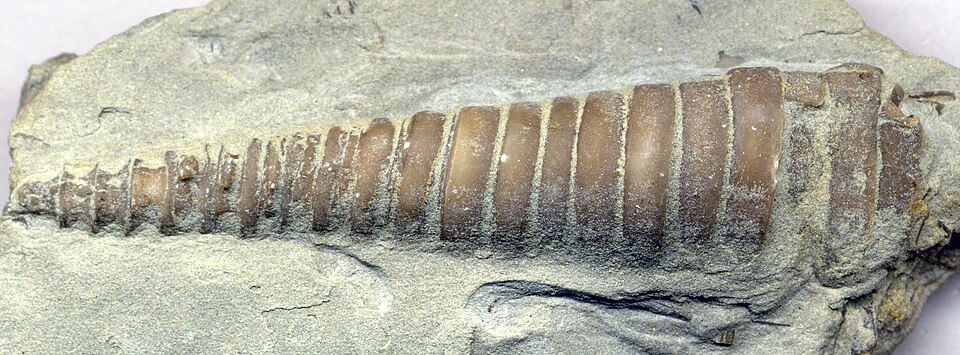

The diversification of phytoplankton had cascading consequences up the trophic chain. A richer and more abundant planktonic food base supported the evolution of diverse zooplankton, including graptolites, small arthropods, and the larvae of many benthic invertebrates. The emergence of a productive pelagic food web in turn enabled the rise of larger pelagic consumers. Nautiloid cephalopods, which had been a minor component of Cambrian faunas, underwent explosive diversification during the Early and Middle Ordovician, evolving a wide range of shell morphologies — straight, curved, and coiled — adapted to different swimming modes and predatory strategies. By the Middle Ordovician, large endocerid and orthoconic nautiloids had become the apex predators of the open ocean, some exceeding three metres in total length.14
On the seafloor, the increased delivery of organic matter from the enriched plankton sustained an expansion of suspension-feeding organisms. Brachiopods, bryozoans, and crinoids all depend on filtering food particles from the water column, and the proliferation of these groups during the Ordovician is consistent with a substantial increase in the availability of suspended organic material. The plankton revolution thus connected primary production in the surface ocean to community transformation on the benthos, linking the diversification of microscopic algae to the macroevolutionary restructuring of entire marine ecosystems.6, 7
Environmental drivers
No single cause explains the Ordovician radiation; rather, the GOBE appears to have been driven by a convergence of environmental factors that collectively created conditions uniquely favourable to marine diversification.7, 17
Sea level and shelf area. The Ordovician was a time of generally high global sea levels, with extensive transgression flooding the low-lying interiors of continents and creating vast epicontinental seas. These shallow marine environments provided enormous areas of habitable shelf, particularly in the tropics, where carbonate platforms developed across the drowned margins of Laurentia, Baltica, and the many smaller terranes fringing Gondwana. The eustatic sea-level curve for the Paleozoic shows the Ordovician as one of the intervals of highest sea-level stand, with some estimates placing sea level 200 metres or more above present levels.10 The availability of extensive, shallow, well-lit marine habitat is widely considered a necessary condition for the diversification of benthic communities.4, 10
Paleogeography and biogeographic provincialism. The configuration of the continents during the Ordovician was characterised by the greatest dispersal of the Paleozoic. The supercontinent Gondwana, which included present-day Africa, South America, Antarctica, India, and Australia, stretched from the South Pole across low southern latitudes, while the smaller continents of Laurentia (North America), Baltica (northern Europe), and Siberia were isolated from one another and from Gondwana by wide ocean basins.22 Numerous smaller terranes and microcontinents, including Avalonia, which rifted away from Gondwana during the Early Ordovician, added further geographic complexity.22 This fragmentation created multiple isolated marine provinces, each with its own distinct fauna, and the resulting biogeographic provincialism is thought to have elevated global diversity by allowing independent evolutionary trajectories on separate continents — a mechanism analogous to the role of island isolation in promoting speciation in modern biogeography.4, 17
Ocean cooling. Oxygen isotope analyses of conodont apatite have demonstrated that tropical sea surface temperatures declined steadily through the Early Ordovician, falling from approximately 42°C in the latest Cambrian to values comparable to modern tropical oceans (approximately 30–35°C) by the Middle Ordovician, where they remained through the Late Ordovician.8 This progressive cooling may have been critical for diversification, as many marine invertebrate groups show higher diversity and speciation rates in cooler waters. The onset of Mid-Ordovician icehouse conditions, evidenced by geochemical and sedimentological proxies, coincides closely with the peak phase of the GOBE, supporting the hypothesis that cooling was a major driver of diversification.9
Volcanic nutrient input. The Ordovician was a period of intense volcanic activity associated with the closure of the Iapetus Ocean and subduction along multiple convergent margins. Volcanic eruptions deposited enormous volumes of ash across marine environments, and the weathering of this ash released phosphorus and other biolimiting nutrients into the ocean. Biogeochemical modelling has shown that elevated phosphorus delivery from volcanic ash weathering could have stimulated marine primary productivity, supporting the diversification of plankton and, through trophic cascading, the broader GOBE.16 The exceptionally thick and widespread Ordovician bentonite (altered ash) beds preserved across Laurentia and Baltica testify to the scale of this volcanism.17
The asteroid breakup hypothesis
One of the most provocative hypotheses for the trigger of the GOBE involves an extraterrestrial mechanism. Approximately 466 million years ago, in the Middle Ordovician, the L-chondrite parent body — an asteroid roughly 150 kilometres in diameter — was catastrophically disrupted in the asteroid belt, in what remains the largest documented asteroid breakup event of the past three billion years. The collision produced vast quantities of dust and debris, a significant fraction of which was swept into the inner solar system. The signature of this event is preserved in Ordovician sedimentary rocks worldwide as a dramatic spike in the abundance of fossil meteorites and extraterrestrial chromite grains.11
Schmitz and colleagues proposed in 2008 that the influx of dust into Earth's atmosphere following the breakup may have increased albedo and triggered or reinforced global cooling, while the elevated rate of meteorite impacts on Earth may have created new habitats and accelerated environmental change, collectively promoting biodiversification.11 A subsequent study by the same group argued that the extraordinary quantities of fine dust dispersed through the inner solar system over the two million years following the breakup could have reduced insolation sufficiently to trigger Mid-Ordovician icehouse conditions.13
However, this hypothesis has been challenged by improved geochronological data. A 2017 study using high-precision uranium-lead zircon dating demonstrated that the timing of the asteroid breakup, refined to approximately 468 million years ago, preceded the main pulse of the GOBE by several million years, suggesting the two events were not causally linked.12 Further work using astrochronological methods confirmed that the meteorite bombardment post-dated the onset of icehouse conditions by approximately 800,000 years, and that the bombardment actually interrupted rather than initiated the biodiversification.12 The asteroid breakup hypothesis thus remains intriguing but unproven, and most researchers now regard terrestrial environmental factors — sea level, paleogeography, cooling, and nutrient cycling — as more likely primary drivers of the GOBE.5, 17
Comparison with the Cambrian explosion
The Ordovician radiation is often described as the second great diversification of animal life, following the Cambrian explosion that occurred some 50 to 70 million years earlier. The two events are complementary but fundamentally different in character. The Cambrian explosion was primarily an event of morphological innovation: it produced nearly all the major animal body plans (phyla) that exist today, along with several that are now extinct, within a geologically brief interval of roughly 20 million years. The Ordovician radiation, by contrast, was primarily an event of ecological filling: it produced a vast proliferation of families, genera, and species within the phyla that had been established during the Cambrian, without generating significant new body plans at the phylum level.3, 4
Droser and Finnegan characterised this distinction by noting that while the Cambrian saw the origin of virtually all metazoan phyla, the Ordovician witnessed ordinal-level diversity doubling, family-level diversity tripling, and genus-level diversity quadrupling — all within phyla that already existed.3 The Cambrian explosion established the architectural possibilities of animal life; the Ordovician radiation explored those possibilities, filling ecological niches and building complex communities that far exceeded anything the Cambrian had produced in terms of species richness and ecological complexity.3, 7
The two events also differed in their ecological signatures. The Cambrian explosion was characterised by the rapid appearance of disparate morphologies and the colonisation of fundamentally new modes of life, from burrowing infauna to pelagic predators. The Ordovician radiation was characterised by the progressive intensification of ecological interactions: more species competing for space and food, more complex predator-prey relationships, more elaborate reef structures, and a denser packing of organisms into available habitats.7 Together, the Cambrian explosion and the Ordovician radiation represent two phases of a single grand narrative — the construction and then the furnishing of the marine biosphere.5
Marine diversity through the early Paleozoic: families by evolutionary fauna1, 15
The end-Ordovician glaciation and mass extinction
The great diversification of the Ordovician did not end with a gradual decline but was terminated abruptly by one of the most severe biotic crises in Earth's history. During the Hirnantian Stage, the final stage of the Ordovician (approximately 445–444 million years ago), a massive ice sheet developed over Gondwana, which was centred on the South Pole. This glaciation was remarkably intense but geologically brief, lasting roughly one to two million years, and it drove the first of the "Big Five" mass extinctions in the Phanerozoic record.19, 20, 21
The end-Ordovician extinction occurred in two distinct pulses. The first pulse, coinciding with the onset of glaciation and a major drop in sea level, devastated organisms adapted to warm, shallow tropical seas. As ice sheets expanded and sea level fell by an estimated 50 to 100 metres, vast areas of continental shelf that had been home to the rich communities built during the GOBE were exposed, destroying habitat on a continental scale. Tropical sea surface temperatures dropped by approximately 5°C during this glacial maximum, and the contraction of tropical climate zones compressed the geographic ranges of warm-water species.19, 20
The second pulse of extinction occurred during the subsequent deglaciation, as melting ice sheets returned freshwater and nutrients to the oceans, causing rapid sea-level rise, the spread of anoxic and euxinic (hydrogen-sulfide-rich) bottom waters across the shelves, and further environmental instability. Organisms that had survived the initial cooling by migrating to deeper or higher-latitude refugia were now subjected to radically altered ocean chemistry.20 In total, the two pulses eliminated approximately 85 percent of marine species and roughly 60 percent of marine genera, making the end-Ordovician extinction the second-most severe in terms of species loss after the Permian-Triassic event.20, 21
The end-Ordovician extinction was not taxonomically random. It disproportionately struck the groups that had diversified most spectacularly during the GOBE. Brachiopods, bryozoans, corals, crinoids, and graptolites all suffered devastating losses. Trilobites, already in long-term decline, lost further diversity. Yet the Paleozoic Evolutionary Fauna that had been assembled during the Ordovician was not destroyed; it was diminished but not replaced. Recovery during the Early Silurian, which proceeded relatively rapidly over one to three million years, rebuilt marine communities along broadly similar ecological lines, and the Paleozoic Fauna continued to dominate the oceans for another 200 million years.18, 20
Significance in Earth's history
The Great Ordovician Biodiversification Event occupies a pivotal position in the history of life. It was during the Ordovician that the basic structure of marine ecosystems as they would exist for the remainder of the Paleozoic era was established: tiered benthic communities with suspension feeders at multiple heights above the substrate, complex reef ecosystems built by corals and stromatoporoids, productive pelagic food webs linking phytoplankton to large predatory cephalopods, and biogeographically differentiated faunal provinces distributed across a fragmented continental geography.2, 7
The GOBE also provides a natural laboratory for studying the drivers of biodiversification on geological timescales. The event demonstrates that diversity increases need not be driven by evolutionary novelty at the highest taxonomic levels; the Ordovician radiation produced no new phyla, yet it generated a greater increase in species and genus richness than the Cambrian explosion itself.3, 23 Instead, the radiation was driven by ecological opportunity — the filling of empty niches, the intensification of biotic interactions, and the geographic fragmentation of populations by plate tectonics and sea-level change. The interplay of these abiotic and biotic factors during the GOBE continues to inform modern understanding of what controls biodiversity at planetary scales.5, 17
The abrupt termination of the GOBE by the end-Ordovician mass extinction underscores the vulnerability of even the most diverse and seemingly stable ecosystems to rapid environmental change. The Ordovician radiation and its extinction bookend a period of roughly 40 million years in which the marine biosphere was assembled, flourished, and was nearly destroyed — a pattern that would repeat, with variations, throughout the remainder of Earth's history.18, 21
References
The Great Ordovician Biodiversification Event (GOBE): definition, concept and duration
Did cooling oceans trigger Ordovician biodiversification? Evidence from conodont thermometry
Onset of main Phanerozoic marine radiation sparked by emerging Mid Ordovician icehouse
Refined Ordovician timescale reveals no link between asteroid breakup and biodiversification
An extraterrestrial trigger for the mid-Ordovician ice age: Dust from the breakup of the L-chondrite parent body
Late Ordovician climate change and extinctions driven by elevated volcanic nutrient supply
Coordinated biotic and abiotic change during the Great Ordovician Biodiversification Event: Darriwilian assembly of early Paleozoic building blocks
Cascading trend of Early Paleozoic marine radiations paused by Late Ordovician extinctions
Baltica from the late Precambrian to mid-Palaeozoic times: The gain and loss of a terrane's identity
The Great Ordovician Biodiversification Event: Reviewing two decades of research on diversity's big bang illustrated by mainly brachiopod data