Overview
- Between roughly 50,000 and 10,000 years ago, Earth lost the majority of its large-bodied terrestrial mammals, birds, and reptiles, with the losses concentrated on continents and islands reached by human colonizers during that interval.
- Two principal hypotheses dominate debate: Paul Martin's overkill model attributes the extinctions primarily to human hunting, while the climate-change model emphasizes habitat disruption from rapid glacial–interglacial transitions. Most researchers now favor a synergy of the two.
- Africa and southern Asia retained far more megafauna than other continents, likely because large animals there co-evolved with hominins over millions of years and developed behavioral defenses against human predation.
Overview
The late Pleistocene megafaunal extinction was one of the most dramatic episodes of biological loss in the last 66 million years. Between approximately 50,000 and 10,000 years ago, Earth lost the great majority of its terrestrial animals weighing more than 44 kilograms, a threshold commonly used to define megafauna.9 Woolly mammoths, mastodons, ground sloths, saber-toothed cats, giant armadillos, cave bears, diprotodontids, and dozens of other lineages vanished from continent after continent, reshaping ecosystems in ways that persist to the present day. The losses were global in scope but strikingly uneven in their geographic and temporal distribution: Australia's extinctions preceded those of the Americas by tens of thousands of years, while Africa and parts of southern Asia retained most of their large-bodied fauna. Understanding why has driven one of the most sustained and contentious debates in all of paleontology.
Scale and definition
Estimates of the total losses vary depending on the body-mass cutoff used, but the broad pattern is consistent. For mammals above 44 kilograms, North America lost approximately 35 of 51 genera (roughly 72 percent), South America lost about 52 of 64 genera (83 percent), and Australia lost every genus above 100 kilograms and most above 44 kilograms.9, 11 Eurasia experienced substantial but somewhat less catastrophic losses, retaining more large ungulates and carnivores. Africa, by contrast, lost comparatively few genera during the same period. The extinctions were not limited to mammals: giant birds such as the Australian mihirung and New Zealand's moa, giant reptiles including the megalania lizard and the horned tortoise of Madagascar, and oversized invertebrate-feeders all disappeared.3
The selectivity of the event is one of its defining features. Small-bodied species were largely spared. Plants, marine organisms, and freshwater fauna experienced no parallel crisis. This size-biased pattern distinguishes the late Pleistocene event from the five canonical mass extinctions, which struck across body sizes and ecological niches alike, and it has guided hypothesis formation since the debate's earliest stages.12
Timing and geography
The late Pleistocene extinctions did not happen simultaneously. Their staggered timing across continents and islands is among the strongest lines of evidence bearing on causation, because the pattern tracks human arrival far more closely than it tracks climatic oscillations.
Australia
Australia's megafaunal collapse is the earliest well-documented continental event. Optically stimulated luminescence dating and uranium-series analyses across multiple sites indicate that the majority of large-bodied species disappeared by approximately 46,000 years ago, within a few thousand years of the earliest secure evidence for human colonization of Sahul.6, 18 The giant marsupials Diprotodon (a wombat relative the size of a hippopotamus), the short-faced kangaroos of the genus Procoptodon, the marsupial lion Thylacoleo, the giant flightless bird Genyornis, and the seven-meter varanid Megalania all vanished during this window. Crucially, these species had survived multiple prior glacial cycles of comparable or greater severity during the preceding two million years, which weakens purely climatic explanations for their final disappearance.4
The ecological consequences in Australia were profound. Sediment cores from Lynch's Crater in northeastern Queensland show that Sporormiella spores, a proxy for megaherbivore dung, declined sharply around 41,000 years ago, followed by a transition from mixed rainforest to fire-adapted sclerophyll vegetation, and then by increased charcoal deposition indicating more frequent burning.4 The sequence suggests that the removal of large browsers altered fuel loads and vegetation structure, triggering a fire-regime shift that persists in the Australian landscape today.
Northern Eurasia
The Eurasian extinctions were more protracted and complex. Woolly mammoths, woolly rhinoceroses, cave bears, cave lions, cave hyenas, giant deer (Megaloceros), and steppe bison all disappeared between roughly 50,000 and 10,000 years ago, though many of these species persisted in refugia far longer than their continental ranges might suggest. Woolly mammoths survived on Wrangel Island in the Arctic Ocean until approximately 4,000 years ago, and on St. Paul Island in the Bering Sea until around 5,600 years ago, long after the mainland populations had vanished.7 The staggered extinction of Eurasian species across diverse climatic zones and through multiple Dansgaard-Oeschger warming events has been interpreted as evidence that neither climate nor humans alone can account for the losses; instead, the interaction of shrinking habitats with expanding human populations may have pushed already-stressed species past demographic tipping points.9
North America
North America's extinction pulse was comparatively sudden and devastating. The great majority of losses occurred between about 13,000 and 11,500 years ago, broadly coinciding with the arrival of Clovis and pre-Clovis peoples south of the continental ice sheets and with the climatic upheaval of the Younger Dryas cold reversal.9, 11 The roster of casualties includes some of the most iconic Pleistocene animals: the Columbian mammoth, the American mastodon, three species of ground sloth (Megalonyx, Paramylodon, and Eremotherium), the saber-toothed cat Smilodon fatalis, the American lion Panthera atrox, the dire wolf Aenocyon dirus, the short-faced bear Arctodus simus, the giant beaver Castoroides, several species of horse, two species of camel, the stag-moose Cervalces, and all North American proboscideans.2
The temporal coincidence with human arrival has long been cited as the single most persuasive argument for the overkill hypothesis on this continent. However, the near-simultaneous Younger Dryas cooling event complicates the picture and has made North America the most contested case study in the debate.8, 19
South America
South America's losses were proportionally the most severe of any continent. Dozens of genera vanished, including giant ground sloths of the family Megatheriidae (some exceeding five metric tons), glyptodonts the size of small cars, native horses, gomphotheres, toxodontids, and macraucheniids.15 The timing of these extinctions broadly mirrors that of North America, clustering between about 12,000 and 8,000 years ago, though some lineages may have lingered in Patagonia and on Caribbean islands until considerably later. Ground sloths of the genus Megalocnus persisted on Cuba until roughly 4,400 years ago, well after mainland populations had collapsed.15
Islands
Oceanic and continental islands experienced their own extinction waves, often thousands of years after the nearest mainland event, in each case tracking closely with the date of first human landfall. Madagascar lost its giant lemurs, elephant birds (Aepyornithidae), pygmy hippopotamuses, and giant tortoises within the last 2,000 years, following Austronesian and Bantu colonization.14 New Zealand's moa species were extirpated within approximately two centuries of Polynesian settlement around 1280 CE. The Caribbean megafauna, including giant ground sloths and large rodents, vanished at dates consistent with successive waves of Amerindian colonization.15 This island pattern has been called the strongest single argument for anthropogenic causation, because each island constitutes a quasi-independent natural experiment with its own arrival date and its own extinction date, and the two consistently correlate.1
The overkill hypothesis
The anthropogenic explanation for late Pleistocene megafaunal extinctions was most influentially articulated by Paul S. Martin in the 1960s and refined over the following four decades.2 Martin argued that large, slow-reproducing animals on continents with no prior hominin presence were ecologically naive, meaning they lacked evolved fear responses to bipedal predators. When skilled human hunters arrived, megafauna populations collapsed faster than they could reproduce, a process Martin compared to a "blitzkrieg" sweeping from point of entry across the continent.1
Several lines of evidence support the overkill model. First, the global timing of extinctions correlates more tightly with modern human dispersal than with any specific climatic event: Australia lost its megafauna during a period of relative climatic stability, not during a glacial maximum, while North America's losses coincided with first human colonization rather than with earlier, equally severe ice ages and glaciation.9 Second, the size selectivity of the extinctions matches predation models better than climate models, because large animals are more attractive and more vulnerable to hunters than small ones, whereas climate shifts tend to affect species regardless of body mass.3 Third, Africa and southern Asia, where hominins and megafauna co-evolved for millions of years, retained far more large-bodied species, consistent with the idea that long coexistence allowed prey species to develop antipredator behaviors.9
A comprehensive statistical analysis by Sandom and colleagues in 2014 modeled extinction intensity as a function of both human arrival and climatic variables across all continents. The study found that hominin presence was the only variable that consistently predicted extinction severity, while the effect of glacial-interglacial climate variability was statistically weak once human presence was accounted for.9
The climate-change hypothesis
The competing explanation holds that rapid climate change at the Pleistocene-Holocene boundary disrupted the habitats on which megafauna depended. Proponents note that the transition from the last glacial maximum to the Holocene involved a dramatic reorganization of vegetation belts: the mammoth steppe, a vast, highly productive grassland that stretched from western Europe to eastern Beringia, contracted and fragmented as forests and tundra expanded, removing the grazing habitat on which mammoths, horses, bison, and other large herbivores relied.8
In North America, Dale Guthrie documented a pronounced decline in body size among Alaskan horses and bison in the millennia preceding their final extinction, which he interpreted as evidence of nutritional stress caused by habitat deterioration rather than hunting pressure.8 Similarly, some researchers have argued that the Younger Dryas cold reversal, beginning around 12,900 years ago, imposed severe ecological stress on already-declining populations by rapidly shifting precipitation patterns and vegetation zones.
However, the climate hypothesis faces serious difficulties. The late Pleistocene megafauna had survived dozens of glacial-interglacial transitions of similar or greater magnitude during the preceding two million years without suffering comparable losses.11 If the terminal Pleistocene warming was uniquely destructive, it should have affected species uniformly across body sizes, yet small mammals, birds, and reptiles experienced negligible extinction rates during the same interval. Moreover, climate change cannot readily explain the staggered continental timing: Australia's extinctions around 46,000 years ago occurred during a glacial period, not a warming event, while the island extinctions of Madagascar and New Zealand occurred in the Holocene under relatively stable climatic conditions.6, 14
Synergy models
Most contemporary researchers favor explanations that integrate both human and climatic drivers, recognizing that the two forces likely operated together and may have been individually insufficient to cause the observed extinction pattern.9, 11 In these synergy models, climate change reduced and fragmented megafaunal habitats, shrinking populations and severing gene flow between subpopulations. Human hunters then delivered the final blow to populations already below viable thresholds. Neither factor alone would have been sufficient: climate shifts of similar magnitude had occurred repeatedly without causing mass extinction, and human populations were too small and dispersed to exterminate continent-spanning species in the absence of environmental stress.
Koch and Barnosky outlined a framework in which the relative importance of humans and climate varied by continent.9 In Australia, where extinctions preceded the last glacial maximum and climate was relatively stable at the time of human arrival, anthropogenic factors appear dominant. In North America, where extinctions coincided with both human arrival and a major climatic disruption, disentangling the two causes is more difficult, and a synergy of the two provides the best fit to the data. In Eurasia, where humans and megafauna coexisted for tens of thousands of years before the terminal extinctions, climate-driven habitat loss may have played a larger proximate role, with human hunting accelerating declines that were already under way.
Key extinct species
The roster of lost megafauna spans every major mammalian order and several non-mammalian lineages. Among the proboscideans, the woolly mammoth (Mammuthus primigenius) ranged across the northern Holarctic and was among the last to disappear, with relict populations surviving on Wrangel Island until roughly 2000 BCE.7 The American mastodon (Mammut americanum), a browser of spruce forests and swampy woodlands, vanished from eastern North America around 11,000 years ago. South America's gomphotheres, the last proboscideans in the southern hemisphere, disappeared at approximately the same time.9
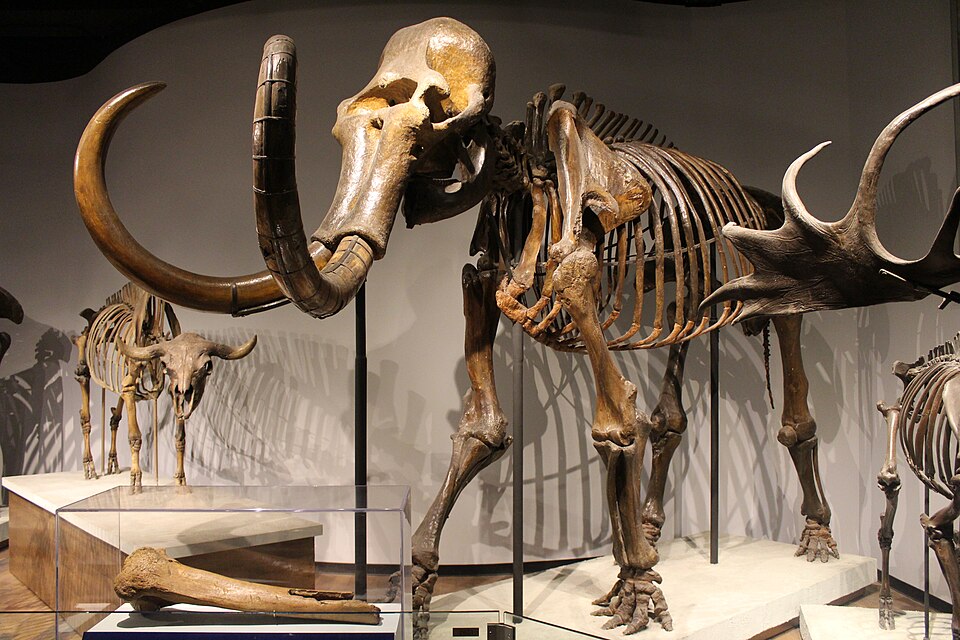

The ground sloths constituted one of the most diverse megafaunal radiations in the Americas. Megatherium americanum, the largest, stood roughly six meters tall when rearing on its hind legs and weighed up to four metric tons. Smaller relatives such as Megalonyx jeffersonii (Jefferson's ground sloth) and Mylodon darwinii occupied habitats from temperate forests to Patagonian grasslands. All mainland ground sloth species were extinct by about 10,000 years ago, though as noted, island populations persisted several millennia longer.15
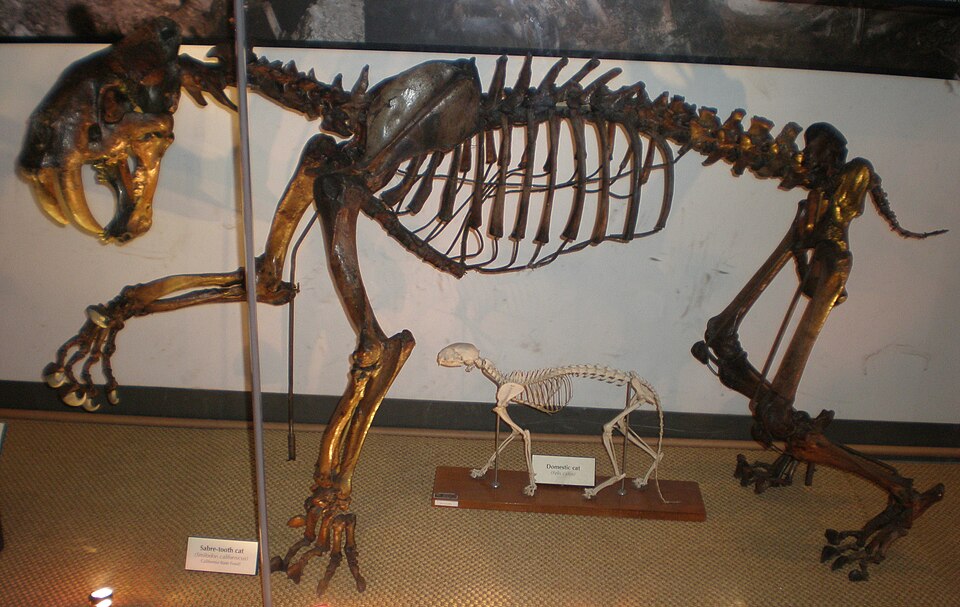
Among carnivores, the saber-toothed cat Smilodon fatalis was the apex predator of Pleistocene North and South America. Its elongated upper canines, reaching up to 28 centimeters in length, were adapted for dispatching large, thick-skinned prey, and its extinction has been linked to the collapse of the megaherbivore populations on which it depended.11 The dire wolf, the most common large carnivore in the La Brea tar pits, disappeared around the same time, as did the short-faced bear Arctodus simus, which may have been the largest terrestrial mammalian carnivore of the Pleistocene at up to 900 kilograms.

In Australia, the most striking losses included Diprotodon optatum, a three-ton herbivorous marsupial; Thylacoleo carnifex, the marsupial lion, whose powerful shearing premolars gave it the strongest bite force relative to body size of any known mammal; and the giant short-faced kangaroo Procoptodon goliah, which stood over two meters tall and weighed more than 200 kilograms.6
Africa's relative survival
Africa stands as the great exception to the pattern of late Pleistocene megafaunal loss. The continent retains elephants, rhinoceroses, hippopotamuses, giraffes, buffalo, and a full guild of large carnivores including lions, leopards, hyenas, and wild dogs. This persistence is generally attributed to the deep evolutionary history of hominin-megafauna coexistence on the continent. Hominins have been present in Africa for at least six million years, and tool-using species of the genus Homo for more than two million years.9 Over this immense span, African megafauna had the opportunity to evolve behavioral and demographic responses to human predation, including heightened vigilance, flight responses, and habitat shifts that buffered them against the hunting pressure that proved lethal to naive faunas elsewhere.
This is not to say that Africa was unaffected. The continent did lose several large species during the late Pleistocene, including the giant buffalo Pelorovis, the giant gelada Theropithecus oswaldi, and several large carnivores.3 But the overall pattern of loss was far less severe than on other continents, and Africa today retains a megafaunal community that, though diminished, is qualitatively similar to the global norm before the late Pleistocene collapse.
Southern and Southeast Asia present a partially analogous case. The region lost several large species, including the giant ape Gigantopithecus and the stegodonts, but retained elephants, rhinoceroses, tigers, water buffalo, and gaur.10 As with Africa, the long coexistence of Asian megafauna with Homo erectus and other hominin species may have provided a measure of protection through co-evolutionary adaptation.
Ecological consequences
The loss of megafauna transformed terrestrial ecosystems in ways that are still being quantified. Large herbivores are disproportionately important as ecosystem engineers: they suppress woody vegetation, maintain open grasslands, disperse seeds over long distances, cycle nutrients through dung deposition, and create physical disturbances such as wallows and trails that increase habitat heterogeneity.17 Their removal set off cascading ecological changes across multiple continents.
Doughty, Wolf, and Malhi estimated that the extinction of Pleistocene megafauna reduced the lateral transport of nutrients (particularly phosphorus) by more than 90 percent across much of the Americas, contributing to long-term soil nutrient depletion in regions far from floodplains and coasts.17 In the Amazon basin, the decline in megaherbivore-mediated nutrient dispersal may partially explain the relatively low soil fertility of many interfluvial regions, a pattern that has long puzzled ecologists.
Vegetation shifts are among the best-documented consequences. In Australia, the post-extinction transition from mosaic vegetation to fire-prone sclerophyll scrubland fundamentally altered the continent's fire regime and landscape ecology.4 In North America, the extinction of mammoths and mastodons may have facilitated the spread of previously browsed tree species such as Osage orange (Maclura pomifera), honey locust (Gleditsia triacanthos), and Kentucky coffeetree (Gymnocladus dioicus), all of which produce large fruits and seeds that no extant North American animal is well adapted to disperse, suggesting coevolution with now-extinct megaherbivores.1
The predator guild was equally affected. The extinction of large herbivores deprived hypercarnivores of their prey base, leading to secondary extinctions among species such as Smilodon and the dire wolf that were too specialized to switch to smaller prey. The rise of mammals following earlier mass extinctions had produced diverse large-bodied communities over tens of millions of years; the late Pleistocene event erased much of that diversity in a geological instant, and no comparable radiation has occurred since.13
Evidence and methods
Reconstructing the timing and causes of the extinctions relies on multiple independent lines of evidence. Radiocarbon dating of bones, teeth, and dung provides direct estimates of last-appearance dates for individual species, though the incompleteness of the fossil record means that true extinction dates were almost certainly later than the youngest dated specimens.11 Sporormiella analysis of lake and bog sediments provides a continuous proxy for megaherbivore abundance over time, and has been particularly informative in Australia, Madagascar, and North America.4, 14
Ancient DNA extracted from permafrost-preserved bones, teeth, and sediments has revolutionized understanding of population dynamics in the millennia preceding extinction. Studies of mammoth, horse, and bison aDNA have revealed that many species experienced severe population bottlenecks and loss of genetic diversity thousands of years before their final disappearance, consistent with gradually deteriorating conditions rather than a single catastrophic event.7 Stable isotope analysis of tooth enamel and bone collagen provides information about diet, habitat use, and climate conditions experienced by individual animals, allowing researchers to track ecological changes leading up to extinction.8
Archaeological evidence for human hunting of megafauna remains surprisingly sparse, a point frequently raised by critics of the overkill hypothesis. In North America, only about a dozen sites preserve direct associations between Clovis artifacts and megafaunal remains, and most of those involve mammoths or mastodons rather than the full spectrum of extinct species.19 Grayson and Meltzer argued that this paucity of kill sites is difficult to reconcile with a continent-wide hunting-driven extinction, though proponents counter that low archaeological visibility is expected given the short duration of the event and the rapid decomposition of organic materials.19
Ongoing debates and modern relevance
The late Pleistocene megafaunal extinction remains one of the most actively debated topics in paleontology and paleoecology. While the broad outlines are well established, fundamental questions persist. Why did some large species survive while closely related ones did not? Was the timing of human arrival truly sufficient to explain the pattern, or are there unrecognized climatic or ecological variables at play? Could disease, introduced by humans or their commensals, have contributed to the losses? Each question has generated its own research program, and the availability of increasingly precise dating methods, ancient DNA, and computational modeling continues to refine understanding.9, 11
The debate carries implications far beyond the Pleistocene. Smith and colleagues demonstrated that the size-selective pattern of late Quaternary extinctions has continued into the present, with ongoing losses of large-bodied mammals in Africa and Asia driven by habitat destruction and hunting reprising the dynamics of the Pleistocene collapse.12 If current trends continue, they projected that the mean body mass of terrestrial mammals will decline to levels not seen since the aftermath of the end-Cretaceous extinction 66 million years ago. The Pleistocene extinction, in this view, was not a singular event confined to the distant past but the opening chapter of an ongoing process whose modern manifestation is the current biodiversity crisis.3, 12
Rewilding proposals, which seek to restore ecological functions lost with the megafauna by introducing large herbivores and predators to landscapes from which they have been absent, draw explicitly on Pleistocene ecology. Whether through the reintroduction of bison to North American grasslands, elephants to regions where proboscideans once roamed, or Przewalski's horses to the Eurasian steppe, these initiatives reflect a growing recognition that the ecological architecture of modern landscapes cannot be fully understood without reckoning with the animals that shaped them for millions of years and vanished only yesterday in geological terms.13, 16
References
The aftermath of megafaunal extinction: ecosystem transformation in Pleistocene Australia
New ages for the last Australian megafauna: continent-wide extinction about 46,000 years ago
Quantitative global analysis of the role of climate and people in explaining late Quaternary megafaunal extinctions
Functionally unique, specialised, and endangered (FUSE): a new framework for conservation priorities
Humans rather than climate the primary cause of Pleistocene megafaunal extinction in Australia