Overview
- In science, evolution is both an observed fact—populations change over time and all life shares common ancestry—and a theory, meaning the comprehensive explanatory framework that accounts for how and why these changes occur.
- Evolution is unguided but not random: while mutations arise without regard to an organism's needs, natural selection is a non-random process that systematically favors variants that improve survival and reproduction, producing adaptation without foresight or purpose.
- Evolution and the origin of life are distinct scientific questions, and both operate within the context of deep time—the Earth is 4.54 billion years old, as established by multiple independent radiometric dating methods.
Understanding evolution requires clarity about several foundational concepts that are often confused in public discourse. The word "theory" in science does not mean a guess or a hunch; it refers to a comprehensive explanatory framework supported by extensive evidence, tested predictions, and wide scientific consensus—placing evolutionary theory in the same epistemic category as the germ theory of disease, atomic theory, and the theory of general relativity.1, 3 Evolution is simultaneously an observed fact and a theory: the fact that populations change over time and that all life shares common ancestry is supported by direct observation and an overwhelming body of evidence, while the theory of evolution is the explanatory framework—integrating natural selection, genetic drift, mutation, and gene flow—that accounts for how and why these changes occur.1
Two other conceptual foundations are frequently misunderstood. First, evolution is unguided but not random. While mutations arise without regard to an organism's needs, natural selection is the opposite of random: it systematically favors variants that improve survival and reproduction, producing the close fit between organisms and their environments that we call adaptation.2, 3 Second, evolutionary theory and the origin of life are distinct scientific questions. Evolution explains how life changes and diversifies after it exists; the origin of life (abiogenesis) investigates how living systems first arose from non-living chemistry. The two fields overlap at their boundary but employ different methods and address different problems, and the validity of evolutionary theory does not depend on solving the question of how life began.3 Both questions operate within the context of deep time: the Earth is 4.54 billion years old, as established by multiple independent radiometric dating methods, providing the vast temporal canvas across which biological evolution has unfolded.5, 6
Fact, theory, and the meaning of scientific terms
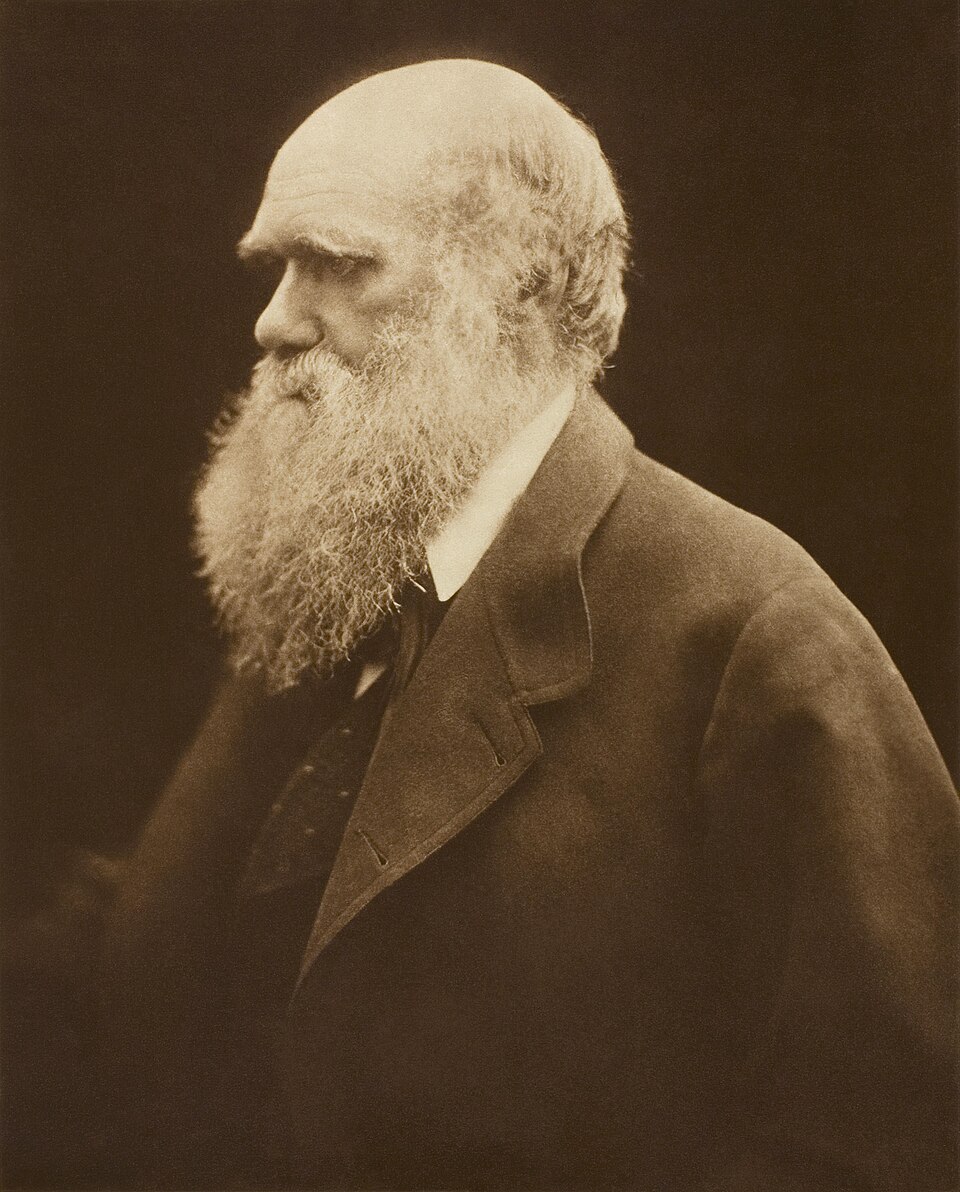

In everyday English, "theory" often means little more than speculation—an untested idea or personal opinion. In science, the word carries a fundamentally different meaning. A scientific theory is a well-substantiated explanation of some aspect of the natural world, based on a body of facts that have been repeatedly confirmed through observation and experiment.3 The germ theory of disease, for example, does not mean that germs are merely hypothesized to cause disease; it means that the causal relationship between microorganisms and infectious illness has been so thoroughly established that it constitutes a foundational principle of medicine. The same is true of evolutionary theory.1, 3
Stephen Jay Gould clarified the fact/theory distinction with particular force in a 1981 essay. Facts and theories, he argued, are different things, not rungs in a hierarchy of certainty. Facts are the world's data—confirmed observations about the natural world. Theories are structures of ideas that explain and interpret those facts. Evolution qualifies as both: the fact of evolution is that organisms have changed over time and share common ancestry, supported by the fossil record, comparative anatomy, molecular biology, and direct observation; the theory of evolution is the explanatory framework—centering on natural selection, mutation, drift, and gene flow—that accounts for how and why those changes occur.1 To say that evolution is "just a theory" misunderstands the word in the same way that calling gravity "just a theory" would misunderstand the science of physics.3
Unguided but not random
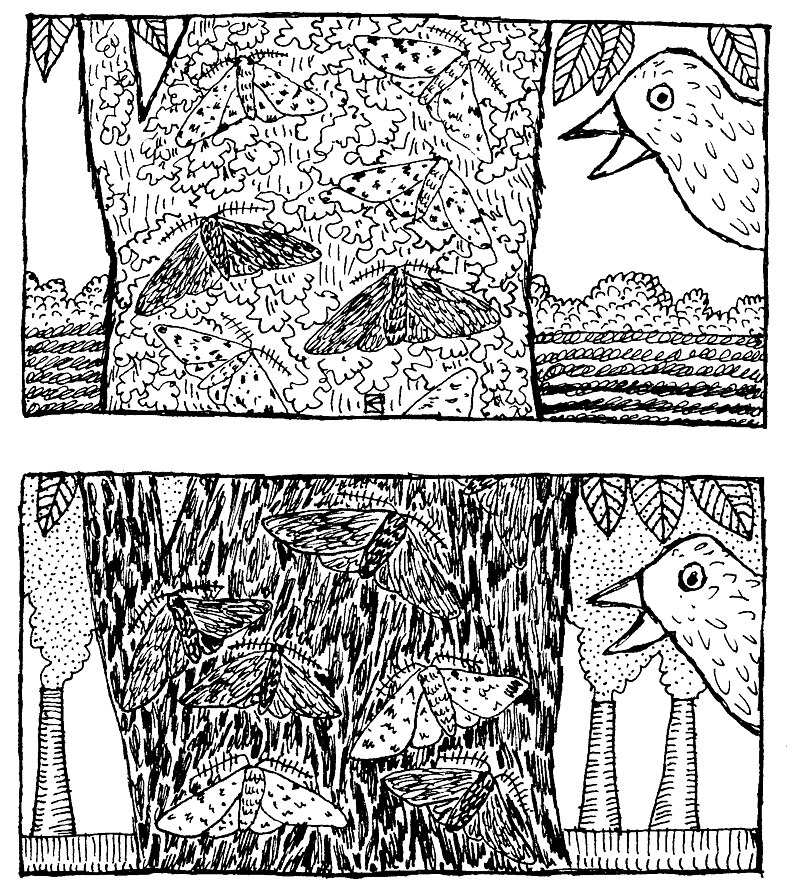

A persistent misconception holds that evolution is a purely random process—that it relies on chance alone to produce the complex adaptations observed in living organisms. This misunderstanding typically conflates the generation of variation with the process of selection. Mutation, the ultimate source of genetic variation, is indeed undirected: mutations arise as errors in DNA replication, as damage from environmental agents, or as consequences of mobile genetic elements, without regard to whether they will be useful, harmful, or neutral to the organism.2 But natural selection, the mechanism that sorts and amplifies this variation, is the opposite of random. It is a systematic, non-random process that consistently favors heritable traits that improve survival and reproduction in a given environment.4, 2
The distinction matters because it is the combination of undirected variation and non-random selection that gives evolution its creative power. A single beneficial mutation among millions of neutral or harmful ones would be lost to chance in the absence of selection. But because organisms carrying the beneficial variant survive and reproduce at higher rates, selection amplifies that variant across generations. When subsequent beneficial mutations arise, they build on the previous improvements. This cumulative ratchet—undirected variation filtered by directed selection, compounded over geological time—is what produces the extraordinary complexity and apparent design observed in the living world, from the lens of the eye to the coiled cochlea of the inner ear.2, 9
Empirical studies confirm that selection is pervasive. A meta-analysis by Kingsolver and colleagues, compiling more than 2,500 estimates of selection strength from 63 studies across 62 species, found that directional selection is ubiquitous in natural populations, with a median standardized selection gradient of 0.16—modest in any single generation but sufficient, compounded over thousands or millions of generations, to produce large cumulative change.9 Evolution is therefore not random in any meaningful sense. It is an unguided process—proceeding without conscious intent or teleological purpose—but one whose primary mechanism, natural selection, is deeply and demonstrably non-random.2, 3
The origin of life and deep time
Evolutionary theory explains how life changes and diversifies once it exists. The separate scientific question of how life first arose from non-living chemistry—abiogenesis—is an active area of research in chemistry and biochemistry, but it is not part of evolutionary theory per se. The distinction is important: even if the precise chemical pathway from prebiotic chemistry to the first self-replicating molecule were never fully elucidated, the evidence for biological evolution—the descent with modification of all living organisms from common ancestors—would remain exactly as strong as it is today.3
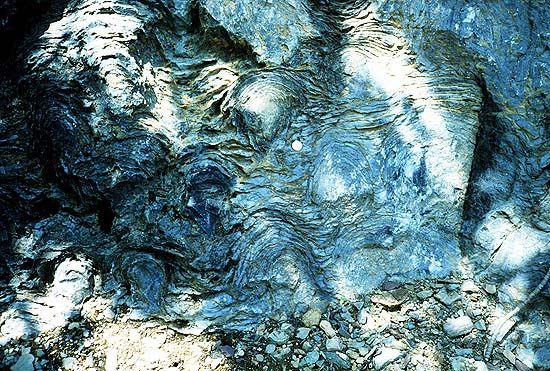

Research on the origin of life has nonetheless made significant progress. The RNA World hypothesis, proposed by Walter Gilbert in 1986, suggests that early life may have been based on RNA molecules that served both as carriers of genetic information and as catalysts for chemical reactions, before DNA and proteins assumed those roles separately.7 Laboratory experiments have demonstrated that RNA molecules can catalyze their own replication and can evolve through natural selection in vitro, and prebiotic chemistry experiments have shown plausible pathways for the synthesis of nucleotides, amino acids, and lipids under conditions thought to have existed on the early Earth.8 The oldest evidence for life on Earth—stromatolite-like structures in 3.7-billion-year-old rocks from Greenland—indicates that life arose within the first billion years of Earth's history, though the exact timing and mechanism remain subjects of ongoing investigation.10
Both evolution and the origin of life operate within the context of deep time. The Earth is 4.54 billion years old, a figure established by Clair Patterson in 1956 through uranium-lead dating of meteorites and confirmed by multiple independent methods, including rubidium-strontium, potassium-argon, samarium-neodymium, and lutetium-hafnium dating of terrestrial and extraterrestrial samples.5, 6 This immense timescale is essential context for understanding evolution: the complexity of the living world is the product not of a few thousand years but of nearly four billion years of cumulative change, acted upon by natural selection in populations of organisms reproducing across trillions upon trillions of generations.2, 3