Overview
- Uranium-lead dating exploits the two independent decay chains of uranium (²³⁸U to ²⁰⁶Pb and ²³⁵U to ²⁰⁷Pb) to produce two simultaneous age determinations from a single mineral, providing a built-in cross-check that makes it the most precise and reliable radiometric method for deep geological time.
- Zircon is the ideal mineral for U-Pb geochronology because it incorporates uranium into its crystal lattice while strongly excluding lead at the time of crystallization, and its extreme physical and chemical durability allows it to survive billions of years of geological recycling essentially intact.
- U-Pb dating of the Jack Hills zircons (4.4 Ga) and meteoritic calcium-aluminum-rich inclusions (4.567 Ga) has established the age of the oldest terrestrial material and the Solar System itself, anchoring the absolute chronology of Earth and planetary science.
Uranium-lead (U-Pb) dating is the most precise and reliable radiometric method for determining the ages of rocks and minerals across geological time. It exploits two independent radioactive decay chains — the decay of uranium-238 to lead-206 and uranium-235 to lead-207 — each with well-characterised half-lives, to produce two simultaneous and independent age determinations from a single mineral grain.1 Because both decay systems operate on the same sample, any disturbance to the isotopic system (such as lead loss or uranium gain) can be detected through the disagreement between the two ages, giving U-Pb dating a built-in cross-check that no single-decay-chain method possesses.1, 2 The method has been applied to materials ranging from 4.567-billion-year-old meteoritic inclusions that record the birth of the Solar System to geologically young volcanic zircons only a few million years old, and its precision — routinely better than 0.1 percent for well-behaved samples — underpins the absolute calibration of the geologic time scale.1, 16
The uranium decay chains
The physical basis of U-Pb dating rests on the radioactive decay of two naturally occurring uranium isotopes. Uranium-238 (238U), which constitutes approximately 99.27 percent of natural uranium, decays through a chain of fourteen intermediate steps — eight alpha decays and six beta decays — to the stable isotope lead-206 (206Pb), with a half-life of 4.468 billion years.4 Uranium-235 (235U), which makes up approximately 0.72 percent of natural uranium, decays through eleven intermediate steps — seven alpha decays and four beta decays — to the stable isotope lead-207 (207Pb), with a half-life of 703.8 million years.4 These half-lives were measured with high precision by Jaffey and colleagues in 1971 and remain the standard values adopted by the international geochronological community.4, 5
The shorter half-life of 235U means that this isotope decays roughly six times faster than 238U. Early in Earth's history, when both isotopes were more abundant relative to their daughter products, the 207Pb/235U system accumulated radiogenic lead much more rapidly and is therefore particularly sensitive for dating very old (Archean and Hadean) materials. Conversely, the slower-decaying 238U/206Pb system provides better age resolution for younger samples where the accumulation of 207Pb from the now-depleted 235U is too small to measure precisely.1, 23 The combination of both systems in a single analysis is what gives U-Pb geochronology its unique diagnostic power.
A critical assumption underlying U-Pb dating is that the intermediate daughter products in each decay chain are in secular equilibrium with their parent isotope — that is, they are produced and destroyed at the same rate, so the overall parent-to-daughter transformation can be treated as a single-step decay. For minerals older than a few hundred thousand years, this assumption is well satisfied, because the longest-lived intermediate daughter in either chain (234U, with a half-life of 245,000 years) reaches equilibrium on a timescale negligible compared to the age being measured.1
The concordia-discordia diagram
The most important graphical tool in U-Pb geochronology is the concordia diagram, introduced by George Wetherill in 1956.2 In the Wetherill concordia diagram, the ratio 206Pb*/238U is plotted on the horizontal axis against 207Pb*/235U on the vertical axis, where the asterisk denotes radiogenic lead only (that is, lead produced by radioactive decay, excluding any initial or common lead present at the time of mineral formation). For a mineral that has remained a perfectly closed system since crystallisation — neither gaining nor losing uranium or lead — both ratios independently yield the same age. The locus of all such concordant points defines a curved line called the concordia, which is parameterised by time: each point along the curve corresponds to a specific age, from zero at the origin to the age of the Earth at the upper end.1, 2
A sample that plots directly on the concordia is said to be concordant, and its age can be read directly from the curve. However, many natural minerals have experienced some degree of open-system behaviour — most commonly the loss of radiogenic lead due to radiation damage, thermal events, or fluid interaction — and plot below the concordia. These discordant analyses are not useless; if a suite of co-genetic samples has experienced lead loss at a single time, the discordant points will define a straight line called the discordia. The upper intercept of the discordia with the concordia gives the original crystallisation age, while the lower intercept gives the age of the lead-loss event.1, 2 This capacity to extract two geologically meaningful ages from a set of disturbed samples is one of the most powerful features of U-Pb geochronology.
An alternative representation, the Tera-Wasserburg concordia diagram, plots 238U/206Pb on the horizontal axis against 207Pb/206Pb on the vertical axis.3 This formulation is particularly useful when dealing with samples that contain a significant component of non-radiogenic (common) lead, because the mixing line between radiogenic and common lead compositions is linear in Tera-Wasserburg space, simplifying the correction for initial lead. The Tera-Wasserburg diagram has become the standard presentation format for in situ U-Pb analyses by ion microprobe and laser ablation, where common lead contamination from the sample surface or the mounting medium can be a significant concern.1, 3
Zircon as the ideal U-Pb chronometer
Although U-Pb dating can be applied to a range of uranium-bearing minerals including monazite, titanite, baddeleyite, rutile, and apatite, the mineral zircon (ZrSiO4) is by far the most widely used and most trusted geochronometer in the U-Pb system.1, 6 Zircon possesses a unique combination of properties that make it almost perfectly suited to radiometric dating.
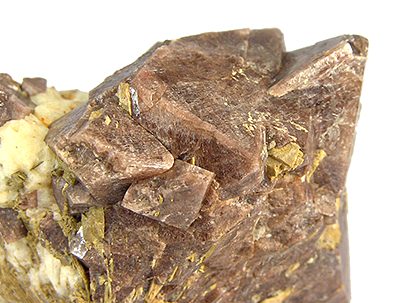

First, zircon readily incorporates uranium (typically 10 to 1,000 parts per million) and thorium into its crystal lattice during crystallisation, substituting for zirconium in the tetragonal crystal structure. At the same time, it strongly excludes lead: the ionic radius of Pb2+ is too large to fit comfortably into the zircon lattice sites occupied by Zr4+, so virtually all lead measured in a zircon grain today is radiogenic, produced by the in situ decay of uranium and thorium since the crystal formed.1, 6 This near-zero initial lead content eliminates the largest source of uncertainty that affects other U-Pb minerals and is the fundamental reason why zircon yields the most precise U-Pb ages.
Second, zircon is extraordinarily resistant to chemical and physical weathering. It has a hardness of 7.5 on the Mohs scale, is insoluble in most natural fluids, and survives conditions that destroy virtually all other minerals, including high-grade metamorphism, anatexis (partial melting of rocks), and prolonged sedimentary transport.6 Detrital zircon grains can be recycled through multiple generations of sedimentary rocks, each time preserving their original isotopic signature, which is why zircon grains as old as 4.4 billion years have been recovered from much younger sedimentary host rocks.11, 20
Third, the closure temperature of lead in zircon — the temperature below which the crystal lattice retains lead quantitatively — exceeds 900 degrees Celsius, higher than for virtually any other commonly dated mineral.6 This extremely high closure temperature means that zircon records the time of original magmatic crystallisation even in rocks that have subsequently been subjected to high-grade metamorphism, making it an invaluable chronometer for the deep crust and for ancient terranes where other isotopic systems have been partially or completely reset.
Analytical methods
Three principal analytical techniques are used for U-Pb zircon geochronology, each offering a different balance of precision, spatial resolution, and throughput. All share the same physical principles but differ in how the mineral is sampled and how the isotopic ratios are measured.
Isotope dilution thermal ionisation mass spectrometry (ID-TIMS) is the highest-precision technique, capable of determining 206Pb/238U ages with uncertainties of 0.01 to 0.1 percent on individual zircon grains or fragments.7, 22 In this method, individual zircon crystals are dissolved in hydrofluoric acid, mixed with a precisely calibrated isotopic tracer (spike) enriched in artificial isotopes of uranium and lead (such as 205Pb and 233U), and the resulting solution is loaded onto a metal filament and ionised in a thermal ionisation mass spectrometer.7, 21 The development by Thomas Krogh in 1973 of a low-contamination zircon dissolution technique was a watershed moment for the method, reducing lead blanks by an order of magnitude and making single-grain analyses feasible for the first time.7 A further major advance was the chemical abrasion (CA-TIMS) method introduced by Mattinson in 2005, in which zircon grains are first annealed at high temperature (approximately 900 degrees Celsius) to repair radiation damage and then partially dissolved in hydrofluoric acid to selectively remove domains that have experienced lead loss.8 CA-TIMS is now the standard preparation technique for high-precision U-Pb geochronology and routinely produces concordant analyses with age uncertainties of a few tens of thousands of years on Phanerozoic zircons.8, 21
The sensitive high-resolution ion microprobe (SHRIMP), developed at the Australian National University in the early 1980s, was the first instrument to enable in situ U-Pb dating of individual spots within polished zircon grains.9 The SHRIMP focuses a primary beam of oxygen ions onto a 10-to-30-micrometre spot on the zircon surface, sputtering secondary ions that are separated by mass and counted. This approach preserves the textural context of the dated domain, allowing the analyst to target specific growth zones, inherited cores, or metamorphic rims within complexly zoned zircon crystals.1, 9 SHRIMP analyses typically achieve precisions of 1 to 2 percent on individual spots, considerably lower than ID-TIMS but sufficient for most geological applications. It was SHRIMP analysis that first identified the 4.4-billion-year-old Jack Hills zircons and the 4.0-billion-year-old Acasta Gneiss, demonstrating the instrument's capacity to resolve the earliest events in Earth history.11, 13
Laser ablation inductively coupled plasma mass spectrometry (LA-ICP-MS) emerged in the late 1990s as a faster and less expensive alternative to SHRIMP for in situ U-Pb dating.10 In this technique, a pulsed laser (typically 193 nanometres excimer) ablates a pit 10 to 50 micrometres in diameter on the zircon surface, and the vaporised material is carried by a stream of helium gas into an inductively coupled argon plasma, where it is ionised and analysed by a quadrupole or sector-field mass spectrometer. LA-ICP-MS achieves precisions of 1 to 3 percent on individual spots and can analyse a zircon grain in under a minute, making it the method of choice for detrital zircon studies and other applications requiring large numbers of analyses.10, 20
Comparison of U-Pb zircon analytical methods1, 8, 9, 10
| Method | Spot size | Typical precision | Analysis time | Primary use |
|---|---|---|---|---|
| CA-ID-TIMS | Whole grain | 0.01–0.1% | Hours–days | High-precision calibration |
| SHRIMP | 10–30 µm | 1–2% | 15–20 min | Complex zircon, ancient terranes |
| LA-ICP-MS | 10–50 µm | 1–3% | < 1 min | Detrital studies, rapid surveys |
Dating the oldest terrestrial materials
Some of the most consequential applications of U-Pb zircon geochronology have been the dating of Earth's oldest surviving minerals and rocks, which constrain the timing of the planet's earliest crust formation and the conditions of the Hadean eon.
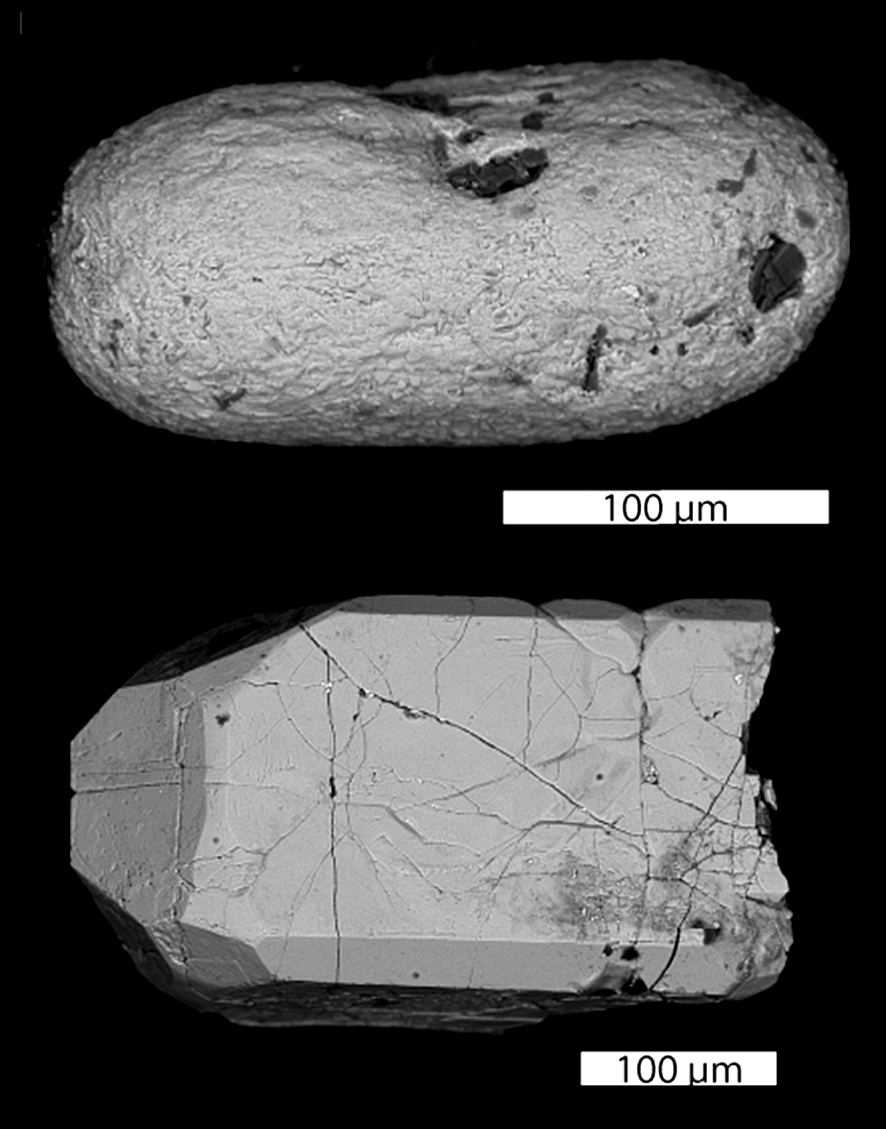

The Jack Hills zircons of Western Australia are detrital grains recovered from Archean quartzites in the Narryer Gneiss Terrane of the Yilgarn Craton. In 2001, Wilde, Valley, Peck, and Graham reported a SHRIMP U-Pb age of 4,404 ± 8 million years for a single Jack Hills zircon — approximately 130 million years older than any previously identified terrestrial material.11 Oxygen isotope analysis of this and other Hadean zircons from the locality revealed elevated δ18O values (up to 7.4 per mil), inconsistent with derivation from a melt that interacted only with anhydrous mantle material and suggesting instead that liquid water and water-rock interaction existed on Earth's surface as early as 4.4 billion years ago.11, 12 In 2014, Valley and colleagues used atom-probe tomography to confirm that the 4.4-billion-year age of the oldest Jack Hills zircon was not an artefact of lead mobility within the crystal: the lead atoms were distributed homogeneously within individual growth domains rather than concentrated in clusters that would indicate post-crystallisation redistribution.12
The oldest known intact rocks on Earth are the Acasta Gneisses of the western Slave Province in Canada's Northwest Territories. Bowring and Williams (1999) used SHRIMP U-Pb dating to determine igneous crystallisation ages of 4,031 ± 3, 4,012 ± 6, and 4,002 ± 4 million years for tonalitic and granodioritic gneisses from the Acasta River locality.13 These ages establish that evolved, silica-rich continental crust existed within the first 550 million years of Earth's history, placing a firm constraint on the rate at which crustal differentiation proceeded on the early Earth.13
Dating the age of the Solar System
The U-Pb method, and its derivative the Pb-Pb method, has provided the definitive determination of the age of the Solar System. In 1956, Clair Patterson measured lead isotope ratios in samples from five meteorites, including the iron-sulfide (troilite) phase of the Canyon Diablo meteorite from Meteor Crater, Arizona, and used them to construct a lead-lead isochron that yielded an age of 4.55 ± 0.07 billion years for the Earth and meteoritic parent bodies.14 Patterson's insight was that the troilite contained primordial lead with negligible uranium, preserving the initial lead isotopic composition of the Solar System, while other meteorite phases and terrestrial samples had evolved to higher 206Pb/204Pb and 207Pb/204Pb ratios through the accumulation of radiogenic lead from uranium decay.14, 24
Subsequent work has refined this age with increasing precision. The oldest directly dated Solar System solids are calcium-aluminium-rich inclusions (CAIs), millimetre-scale refractory objects found in primitive chondritic meteorites such as the Allende CV3 chondrite. Amelin and colleagues (2002) used Pb-Pb dating of CAIs to establish ages approaching 4.566 billion years.17 Bouvier and Wadhwa (2010) reported a 207Pb-206Pb age of 4,568.2 ± 0.4 million years for a CAI from the Northwest Africa 2364 meteorite, the oldest age obtained for any Solar System object at that time.15 Connelly and colleagues (2012), using improved corrections for the variable 238U/235U ratio in meteoritic materials, determined a CAI formation age of 4,567.30 ± 0.16 million years, which is currently accepted as the best estimate for the age of the Solar System.16
Landmark U-Pb and Pb-Pb ages in Earth and Solar System history12, 13, 14, 16
Common lead correction
A universal challenge in U-Pb geochronology is the presence of common lead (also called initial lead or non-radiogenic lead) — lead that was incorporated into the mineral at the time of its formation rather than produced by subsequent radioactive decay. Common lead has a characteristic isotopic composition reflecting the integrated decay history of uranium and thorium in the source region up to the time of mineral crystallisation. If not identified and corrected for, common lead will cause the measured 206Pb/238U and 207Pb/235U ratios to appear too high, yielding an erroneously old apparent age.1, 18
Several approaches exist for correcting common lead contamination. The most direct method measures the abundance of 204Pb, a stable isotope of lead that has no radioactive parent and therefore serves as a proxy for the non-radiogenic component. Because all 204Pb in a sample is common lead, its measured abundance, combined with an assumed or independently constrained isotopic composition of the common lead, allows the radiogenic 206Pb and 207Pb to be calculated by subtraction.1, 23 The isotopic composition of the common lead is often estimated using the two-stage terrestrial lead evolution model of Stacey and Kramers (1975), which calculates the expected lead isotope ratios for a given geological age based on the integrated decay of uranium and thorium in a model bulk Earth reservoir.18
In practice, 204Pb is extremely scarce in zircon and difficult to measure precisely, particularly by in situ techniques where isobaric interferences from 204Hg in the argon carrier gas can be problematic. Alternative approaches include the 207Pb correction method, which assumes concordance of the 206Pb/238U and 207Pb/235U systems and uses the measured 207Pb/206Pb ratio to estimate the common lead fraction, and the Tera-Wasserburg intercept method, which projects a regression through the data to the concordia to bypass the common lead correction entirely.1, 3 For high-precision ID-TIMS work, the common lead contribution is minimised by careful sample selection, rigorous clean-laboratory chemistry, and the use of the CA-TIMS preparation method, which preferentially removes high-common-lead domains during partial dissolution.8, 21
Applications in calibrating the geologic time scale
The absolute calibration of the geologic time scale depends critically on U-Pb zircon ages from volcanic ash beds (bentonites and tuffs) interbedded with fossiliferous sedimentary strata. Because volcanic eruptions produce zircon crystals that record the time of eruption and deposit ash layers that can be correlated with biostratigraphic zones, U-Pb dating of these zircons provides the primary tie-points that convert the relative sequence of geological periods, established by fossil succession, into an absolute chronology measured in millions of years.1, 20
The EARTHTIME initiative, an international consortium of geochronology laboratories, has worked since the mid-2000s to develop and distribute shared isotopic tracer solutions and reference materials, with the explicit goal of eliminating inter-laboratory systematic biases and achieving the accuracy needed to resolve geological events at the level of tens of thousands of years.21, 22 The EARTHTIME mixed 205Pb-233U-235U tracer, calibrated against primary gravimetric standards, allows laboratories worldwide to produce U-Pb ages that are directly traceable to SI units, ensuring that dates determined in different countries and on different instruments are directly comparable.21
The power of high-precision U-Pb geochronology for time-scale calibration is well illustrated by its application to the end-Cretaceous boundary. CA-ID-TIMS U-Pb dating of ash beds bracketing the Cretaceous-Paleogene boundary has constrained the age of this mass extinction event, and the Chicxulub impact, to 66.052 ± 0.043 million years ago, with a total uncertainty of fewer than 100,000 years on an event that occurred 66 million years in the past.1, 8 Similar precision has been achieved for numerous other period and stage boundaries throughout the Phanerozoic, and the ongoing programme of high-precision U-Pb dating continues to tighten the temporal framework within which all of Earth history is understood.
Detrital zircon geochronology, primarily using LA-ICP-MS, has also become an essential tool in tectonic and sedimentary provenance studies. By dating large populations of zircon grains extracted from sandstones and other clastic sedimentary rocks, geologists can identify the source terranes that supplied sediment to ancient basins, reconstruct paleodrainage patterns, and constrain the timing of tectonic events such as mountain building and continental collision.20
Limitations and sources of uncertainty
Despite its exceptional power, U-Pb dating is not without limitations.


The most pervasive problem is lead loss, the partial escape of radiogenic lead from the crystal lattice due to radiation damage, thermal diffusion, or interaction with fluids. Alpha decay of uranium and thorium produces energetic recoil nuclei that damage the zircon crystal structure over time, a process called metamictisation. Heavily radiation-damaged domains become amorphous, porous, and susceptible to lead leaching, causing analyses to plot below the concordia.1, 6 The chemical abrasion method was developed specifically to address this problem by dissolving radiation-damaged domains prior to analysis, and it has dramatically improved the concordance of U-Pb zircon data.8
A second source of uncertainty arises from the 238U/235U ratio. For decades, geochronologists assumed a universal, invariant ratio of 137.88 for all terrestrial and meteoritic materials. Hiess and colleagues (2012) demonstrated that this ratio varies by more than 5 per mil among natural uranium-bearing minerals, with zircon yielding a mean value of 137.818 ± 0.045.19 This variation introduces a systematic uncertainty into 207Pb/235U ages and Pb-Pb ages unless the 238U/235U ratio is measured directly for each sample. For high-precision CA-ID-TIMS work, the EARTHTIME tracer is now designed to measure the uranium isotope ratio simultaneously with the U-Pb age, effectively eliminating this source of bias.19, 21
Additional challenges include the presence of inherited zircon cores — older zircon crystals entrained in a younger magma that may not be completely dissolved during crystallisation — which can yield spuriously old ages if sampled unknowingly. In situ techniques such as SHRIMP and LA-ICP-MS mitigate this problem by allowing the analyst to image zircon internal structure using cathodoluminescence or backscattered electron microscopy and to target individual growth domains for analysis.1, 9 The precision of the method is also ultimately limited by the accuracy of the decay constants themselves: the 238U half-life is known to 0.05 percent and the 235U half-life to 0.07 percent, and these uncertainties propagate directly into the absolute age.4, 5 Improving the precision of the uranium decay constants remains an active area of experimental physics with direct consequences for geochronology.
Finally, while zircon's chemical durability is generally an advantage, it means that the mineral is difficult to dissolve for wet-chemical analysis, requiring the use of concentrated hydrofluoric acid and specialised high-pressure dissolution vessels. The development of improved dissolution protocols and ultra-clean laboratory techniques has been essential to reducing procedural lead blanks to the sub-picogram levels required for high-precision single-grain analyses.7, 22
References
U-Th-Pb systematics in three Apollo 14 basalts and the problem of initial Pb in lunar rocks
Subcommission on geochronology: convention on the use of decay constants in geo- and cosmochronology
A low-contamination method for hydrothermal decomposition of zircon and extraction of U and Pb for isotopic age determinations
Zircon U–Pb chemical abrasion (“CA-TIMS”) method: combined annealing and multi-step partial dissolution analysis for improved precision and accuracy of zircon ages
U–Pb geochronology of zircons from lunar breccia 73217 using a sensitive high mass-resolution ion microprobe
Evidence from detrital zircons for the existence of continental crust and oceans on the Earth 4.4 Gyr ago
The age of the Solar System redefined by the oldest Pb–Pb age of a meteoritic inclusion
The absolute chronology and thermal processing of solids in the solar protoplanetary disk
Metrology and traceability of U–Pb isotope dilution geochronology (EARTHTIME Tracer Calibration Part I)
Derivation of isotope ratios, errors, and error correlations for U–Pb geochronology using ²⁰⁵Pb-²³⁵U-(²³³U)-spiked isotope dilution thermal ionization mass spectrometric data