Overview
- Radiometric dating of samples returned by the Apollo and Luna missions has established that the Moon formed approximately 4.51 billion years ago, within about 60 million years of Solar System formation, providing an independent confirmation of the 4.5-billion-year age derived from meteorites and terrestrial zircons.
- Multiple isotopic systems — uranium-lead, rubidium-strontium, samarium-neodymium, and argon-argon — applied to lunar rocks yield a consistent chronology spanning from 4.44-billion-year-old ferroan anorthosites of the primordial crust to 3.1-billion-year-old mare basalts that record the final stages of widespread lunar volcanism.
- The ages of the oldest lunar samples constrain the timing of the giant impact that formed the Moon and the duration of the lunar magma ocean, anchoring models of early Solar System dynamics and providing a calibration standard for crater-counting chronologies used across the inner planets.
Lunar rock dating is the application of radiometric dating methods to samples returned from the Moon, providing one of the most direct lines of evidence for the age of the Earth-Moon system and the early history of the Solar System. Between 1969 and 1976, the American Apollo programme and the Soviet Luna programme collectively returned approximately 382 kilograms of lunar material to Earth, enabling laboratory measurements of unprecedented precision on rocks formed during the first billion years of Solar System history.15, 21 Multiple independent isotopic systems — including uranium-lead, rubidium-strontium, samarium-neodymium, and argon-argon — have been applied to these samples, yielding ages that range from approximately 3.1 billion years for the youngest mare basalts to more than 4.4 billion years for the ferroan anorthosites of the lunar highlands.1, 4, 22 These ages independently corroborate the approximately 4.5-billion-year age of the Solar System established by meteorite dating and terrestrial zircon geochronology, and they provide critical constraints on the timing of the giant impact that formed the Moon, the crystallisation of the lunar magma ocean, and the bombardment history of the inner Solar System.9, 17, 19
The Apollo and Luna sample return missions
The Apollo programme returned lunar samples from six landing sites between July 1969 and December 1972. Apollo 11 and Apollo 12 landed on the relatively flat mare basalt plains of the Sea of Tranquillity and the Ocean of Storms, respectively, returning dark, fine-grained volcanic rocks that had flooded ancient impact basins. Apollo 14 sampled the Fra Mauro formation, an ejecta blanket from the Imbrium basin impact, providing breccias — rocks composed of fragments cemented together by impact processes — that record some of the oldest datable events in the lunar sample collection.1, 21 Apollo 15, 16, and 17 targeted progressively more geologically diverse terrain: the Hadley-Apennine region at the rim of the Imbrium basin, the ancient highlands of the Descartes formation, and the Taurus-Littrow valley on the southeastern rim of the Serenitatis basin. Apollo 16 returned the largest proportion of highland rocks, including the ferroan anorthosites that represent the earliest-formed lunar crust.21
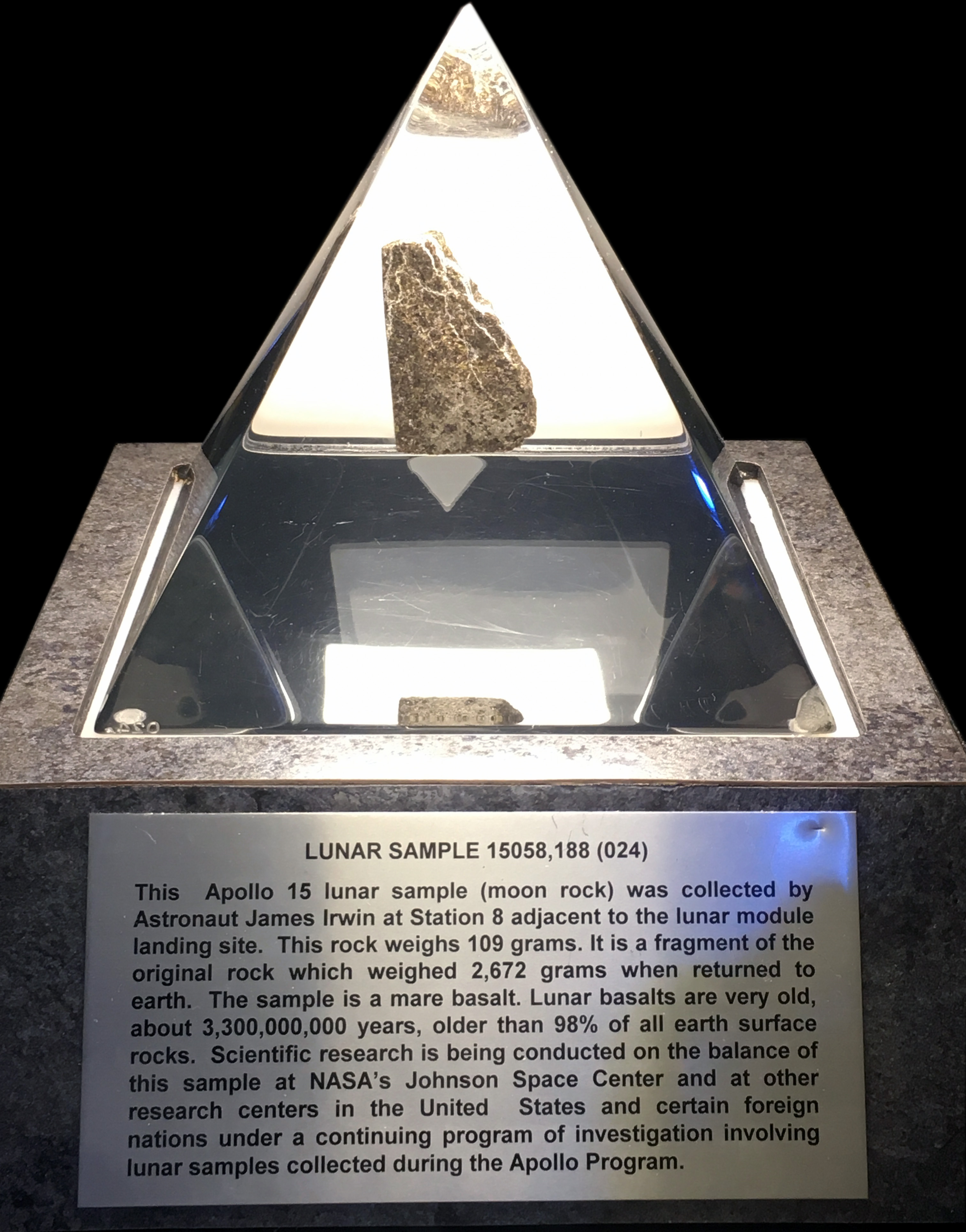

The Soviet Luna programme complemented Apollo with three robotic sample-return missions. Luna 16 (1970) returned 101 grams from the Sea of Fertility, Luna 20 (1972) collected 30 grams from the Apollonius highlands, and Luna 24 (1976) drilled a core and returned 170 grams from the Sea of Crises.21 Although the Luna samples were far smaller in mass than the Apollo collections, they extended the geographic coverage of sampled sites and provided additional mare basalts whose ages filled gaps in the lunar chronological record. Together, the Apollo and Luna collections remain the foundation of lunar geochronology, and virtually all absolute age determinations for the Moon derive from laboratory analysis of these materials.16, 21
Isotopic dating systems applied to lunar samples
Four principal radiometric systems have been applied to lunar rocks, each exploiting the decay of a different parent isotope to a stable daughter and each offering distinct advantages depending on the rock type and the geological question being addressed.
The uranium-lead (U-Pb) system is the most precise chronometer available for ancient materials. It exploits the independent decay of 238U to 206Pb (half-life 4.468 billion years) and 235U to 207Pb (half-life 703.8 million years), providing two simultaneous age determinations from a single sample and a built-in check for open-system behaviour. Tera and Wasserburg applied this system to Apollo 14 breccias and basalts, developing the Tera-Wasserburg concordia diagram that remains standard for lunar U-Pb work, and identified ages clustering near 3.95 billion years for the Fra Mauro breccias.1, 2 More recently, U-Pb dating of zircon grains separated from lunar breccias has yielded crystallisation ages as old as 4.417 billion years, among the oldest directly dated materials from the Moon.20
The rubidium-strontium (Rb-Sr) system was the first isotopic method applied to lunar samples. Within months of the Apollo 11 return, Papanastassiou, Wasserburg, and Burnett measured Rb-Sr isochron ages of 3.63 to 3.71 billion years for the Sea of Tranquillity basalts, establishing for the first time that the lunar maria were ancient by terrestrial standards but significantly younger than the Moon itself.22 The Rb-Sr system exploits the beta decay of 87Rb to 87Sr with a half-life of 48.8 billion years and is particularly useful for dating mafic rocks with variable rubidium-to-strontium ratios.22
The samarium-neodymium (Sm-Nd) system is especially valuable for lunar geochronology because both samarium and neodymium are refractory rare-earth elements that are resistant to mobilisation by shock, thermal metamorphism, and fluid interaction — processes ubiquitous on the heavily impacted lunar surface. Carlson and Lugmair applied Sm-Nd dating to lunar highlands samples and obtained ages of approximately 4.44 billion years for ferroan anorthosites, interpreted as recording the crystallisation of the plagioclase-rich flotation crust from the lunar magma ocean.5, 6 The robustness of the Sm-Nd system in the face of impact disturbance makes it the preferred chronometer for constraining the age of the earliest lunar crust.4
The argon-argon (40Ar/39Ar) system measures the decay of 40K to 40Ar (half-life 1.25 billion years) using neutron-irradiated samples and stepwise heating to release argon from progressively higher-temperature mineral sites. Because argon is a noble gas that diffuses readily at elevated temperatures, 40Ar/39Ar ages in lunar samples often record the time of the last major thermal event — typically a large impact — rather than original crystallisation. This property makes the system invaluable for dating impact basin formation and constraining the bombardment history of the Moon.7, 8 Norman and colleagues used 40Ar/39Ar dating of impact melt rocks from Apollo 16 to evaluate the timing and intensity of the proposed late heavy bombardment.8
The age spectrum of lunar rocks
Radiometric dating has revealed that the lunar sample collection spans more than 1.3 billion years of geological history, from the oldest ferroan anorthosites to the youngest sampled mare basalts. This age range reflects the major stages of lunar evolution: the solidification of the primordial crust from the magma ocean, the excavation of giant impact basins, and the eruption of flood basalts that filled those basins to create the dark maria visible from Earth.
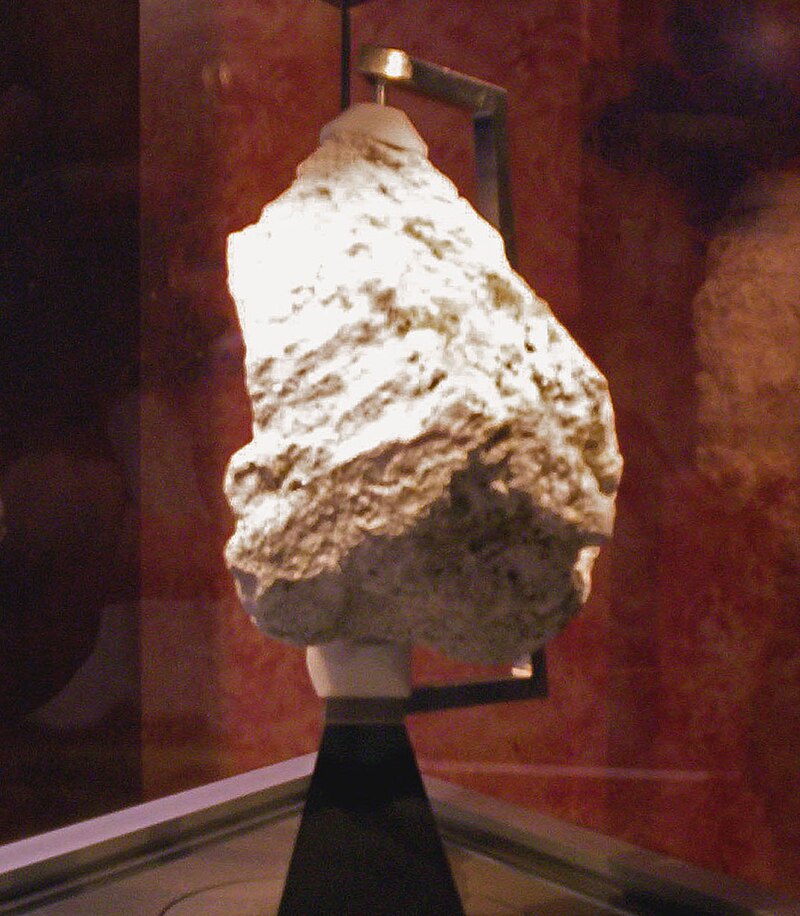

The oldest reliably dated lunar materials are the ferroan anorthosites (FANs), nearly monomineralic rocks composed almost entirely of calcium-rich plagioclase feldspar. These rocks are interpreted as cumulates that crystallised from and floated to the top of the lunar magma ocean. Sm-Nd and U-Pb ages for FANs cluster between approximately 4.36 and 4.44 billion years, with the oldest Sm-Nd isochron ages reaching 4.44 billion years.4, 5, 6 Borg and colleagues reported a younger Sm-Nd age of approximately 4.36 billion years for ferroan anorthosite sample 60025, prompting debate over whether the lunar magma ocean crystallised more slowly than previously assumed or whether some anorthosites record later magmatic events.4
The magnesian-suite rocks — norites, troctolites, and dunites found predominantly in the Apollo 15 and 17 collections — yield ages of approximately 4.1 to 4.4 billion years and are thought to represent intrusions into the solidified anorthositic crust by magmas generated from mantle sources.6, 21 The KREEP-rich breccias (named for their enrichment in potassium, rare-earth elements, and phosphorus) from the Apollo 14 and 15 sites record ages of approximately 3.85 to 3.95 billion years, closely associated with the formation of the Imbrium basin.1, 2
The mare basalts represent the youngest major rock type in the lunar collection. These volcanic rocks erupted from mantle sources and flooded the floors of pre-existing impact basins. The oldest sampled mare basalts, from the Apollo 14 high-alumina group, yield ages of approximately 3.9 to 4.0 billion years.14 The Apollo 11 and 17 basalts range from approximately 3.55 to 3.75 billion years, the Apollo 12 and 15 basalts from approximately 3.15 to 3.35 billion years, and the youngest directly dated mare basalt samples are approximately 3.1 billion years old from the Apollo 12 site.16, 22 Remote sensing data suggest that some mare volcanism continued as recently as approximately 1 billion years ago, but no samples of such young lavas have yet been returned to Earth for radiometric analysis.16
Radiometric ages of representative lunar samples1, 4, 16, 21, 22
| Sample / rock type | Mission | Age (Ga) | Method |
|---|---|---|---|
| Ferroan anorthosite 60025 | Apollo 16 | 4.36 ± 0.03 | Sm-Nd |
| Ferroan anorthosite (highlands avg.) | Apollo 16 | ~4.44 | Sm-Nd |
| Zircon in breccia 72215 | Apollo 17 | 4.417 ± 0.006 | U-Pb |
| Mg-suite norite 78236 | Apollo 17 | ~4.33 | Sm-Nd |
| KREEP basalt (Apollo 14 breccias) | Apollo 14 | 3.93 ± 0.04 | U-Pb |
| High-Ti mare basalt 70135 | Apollo 17 | 3.70 ± 0.02 | Rb-Sr |
| Mare basalt (Sea of Tranquillity) | Apollo 11 | 3.63 ± 0.05 | Rb-Sr |
| Low-Ti mare basalt 12002 | Apollo 12 | 3.16 ± 0.04 | Rb-Sr |
The giant impact hypothesis and the age of the Moon
The leading model for the Moon's origin holds that it formed from the debris ejected by a collision between the proto-Earth and a Mars-sized impactor, conventionally called Theia, in the final stages of terrestrial planet accretion.11 Numerical simulations by Canup and Asphaug (2001) demonstrated that an oblique impact at roughly 4 kilometres per second could place sufficient material into Earth orbit to accrete into a body with the Moon's mass and angular momentum, and that the resulting disk would be composed predominantly of mantle material, consistent with the Moon's low iron content and low bulk density.11 Subsequent refinements by Canup (2012) explored higher-energy collisions between roughly equal-sized bodies, which better explain the near-identical oxygen and tungsten isotopic compositions of the Earth and Moon.10
Constraining the timing of this event is one of the central objectives of lunar geochronology. The hafnium-tungsten (182Hf-182W) isotopic system, which has a half-life of only 8.9 million years, is particularly sensitive to events in the first approximately 60 million years of Solar System history. Kleine and colleagues (2005) analysed tungsten isotopes in lunar metals and found that the Moon's mantle has a small but resolvable excess of 182W relative to the terrestrial mantle, indicating that the giant impact and subsequent core formation on the Moon occurred no earlier than approximately 30 million years and no later than approximately 55 million years after the formation of calcium-aluminium-rich inclusions (CAIs) at 4.567 billion years ago.13 This places the Moon-forming impact at approximately 4.51 to 4.54 billion years ago.9, 13
Independent support for this timing comes from U-Pb dating. Barboni and colleagues (2017) applied uranium-lead geochronology to zircon and baddeleyite grains extracted from Apollo 14 breccias and obtained a weighted mean age of 4.51 billion years, which they interpreted as the age of the Moon's initial differentiation following the giant impact.3 The convergence of the Hf-W and U-Pb constraints on an age of approximately 4.51 billion years for the Moon represents one of the most robust results in planetary geochronology, placing the Moon-forming event roughly 60 million years after the birth of the Solar System.3, 13, 17
The lunar magma ocean and crustal crystallisation
The giant impact is thought to have generated sufficient energy to melt the outer several hundred kilometres of the newly accreted Moon, producing a global lunar magma ocean (LMO). As this magma ocean cooled and crystallised, denser mafic minerals such as olivine and pyroxene sank to form a cumulate mantle, while buoyant plagioclase feldspar floated to the surface, accumulating into the anorthositic crust that still constitutes the bright lunar highlands visible from Earth.12 The final residual liquid, enriched in incompatible elements including potassium, rare-earth elements, and phosphorus, became trapped between the cumulate mantle and the flotation crust and is the source of the distinctive KREEP chemical signature found in many Apollo samples.12, 14
The duration of magma ocean solidification has been the subject of extensive debate. Thermal models by Elkins-Tanton and colleagues (2011) predicted that a 1,000-kilometre-deep magma ocean could solidify within approximately 10 to 200 million years, depending on whether an insulating lid formed early in the process.12 If the flotation crust formed rapidly and acted as a thermal blanket, the underlying magma ocean could have persisted for over 100 million years, a scenario consistent with the spread of anorthosite ages from approximately 4.44 to 4.36 billion years.4, 12
Nemchin and colleagues (2009) used U-Pb dating of zircon grains from lunar breccias to argue that KREEP-rich residual magmas persisted until at least 4.417 billion years ago, implying that the magma ocean took roughly 100 million years to reach its final stages of crystallisation.20 Borg and colleagues (2011), however, obtained a younger Sm-Nd age of 4.36 billion years for ferroan anorthosite 60025 and argued that this required either a more protracted solidification or a later formation age for the Moon itself.4 The resolution of this debate has significant implications for the thermal and chemical evolution of the early Moon and for the initial conditions assumed in models of lunar mantle dynamics and subsequent volcanism.
Lunar ages and the bombardment history of the inner Solar System
.jpg)
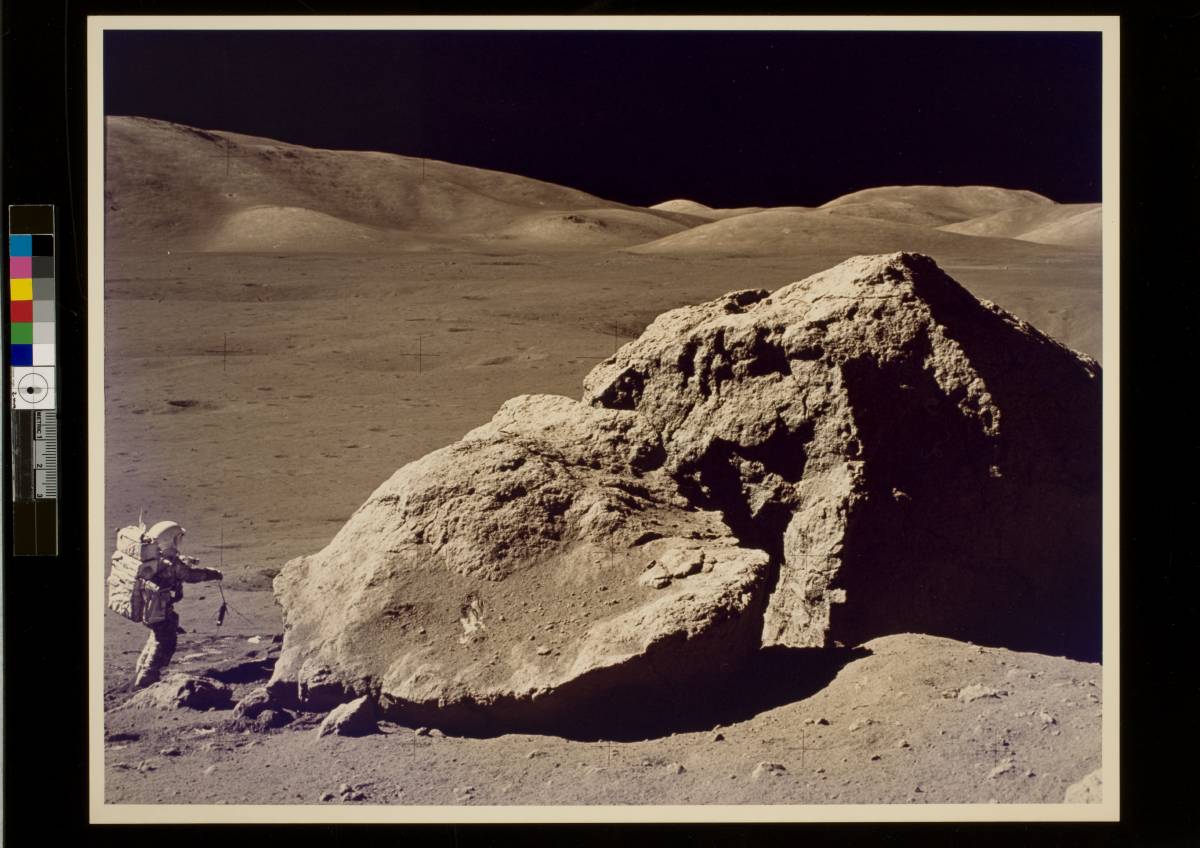
The radiometric ages of impact-related lunar samples have been central to understanding the bombardment history of the inner Solar System. In the early 1970s, Tera and Wasserburg noted that many lunar highland breccias yielded ages clustering near 3.9 billion years and proposed a terminal lunar cataclysm — a spike in the impact rate approximately 3.8 to 4.0 billion years ago, sometimes called the Late Heavy Bombardment (LHB).1 This hypothesis gained broad influence because it implied that the inner Solar System experienced a period of relative calm after initial accretion, followed by a sudden resurgence of impacts perhaps triggered by orbital rearrangements of the giant planets.23
More recent reanalysis of the 40Ar/39Ar data has challenged the cataclysm model. Boehnke and Harrison (2016) demonstrated that the apparent age clustering near 3.9 billion years can be an artefact of partial resetting of argon systematics by a single large impact — specifically the Imbrium basin formation — rather than evidence for a global bombardment spike.7 Norman and colleagues (2003) showed that Apollo 16 impact melt rocks exhibit a wider spread of 40Ar/39Ar ages than previously recognised, with some ages significantly older than 3.9 billion years, suggesting a more gradual decline in the impact flux rather than a sharp cataclysm.8 Bottke and Norman (2017) reviewed the accumulated evidence and concluded that while a modest increase in impact rates may have occurred around 4.0 to 4.2 billion years ago, the data do not require a sudden, short-lived bombardment spike, and the concept of a discrete late heavy bombardment is increasingly viewed as an oversimplification.23
Regardless of the temporal pattern of bombardment, the radiometrically dated lunar samples provide the only absolute calibration points for crater-counting chronology — the method by which the ages of planetary surfaces throughout the inner Solar System are estimated from the density of impact craters. By correlating the measured crater densities on surfaces of known radiometric age (the Apollo and Luna landing sites), researchers have constructed a crater production rate function that can be extrapolated to undated surfaces on the Moon, Mars, Mercury, and other bodies.16 The reliability of this extrapolation depends entirely on the accuracy and representativeness of the lunar radiometric anchor points, making the dating of additional lunar samples — from sites not yet sampled, such as the South Pole-Aitken basin — a high priority for future missions.16, 23
New sample return missions and future prospects
After a hiatus of nearly five decades, lunar sample return resumed in December 2020 when China's Chang'e 5 mission collected approximately 1,731 grams of regolith and drill core from the Mons Rümker region of Oceanus Procellarum, a young volcanic province on the Moon's western nearside.24 Ar-Ar and Pb-Pb dating of basalt fragments from the returned samples yielded eruption ages of approximately 2.0 billion years, making them the youngest igneous rocks yet directly dated from the Moon and extending the known duration of lunar volcanism by more than one billion years beyond the youngest Apollo basalts.24 This result filled a critical gap in the crater-counting calibration curve between the 3.1-billion-year Apollo 12 basalts and the present, significantly improving the reliability of crater-based age estimates for young planetary surfaces across the inner Solar System.16, 24
In June 2024, Chang'e 6 accomplished the first sample return from the lunar farside, collecting material from the Apollo basin within the South Pole-Aitken (SPA) structure — the largest and oldest recognised impact basin on the Moon.25 The SPA basin is a high-priority target for geochronology because constraining its formation age would anchor the earliest portion of the lunar bombardment record and test whether a discrete late heavy bombardment occurred. Preliminary analyses of the Chang'e 6 samples are ongoing, and radiometric ages from this material are expected to provide the first absolute date for a farside basin.25
Future missions, including NASA's Artemis programme and additional Chang'e missions, aim to return samples from permanently shadowed polar craters, from unsampled mare units of intermediate age, and from the central SPA basin floor. Each new radiometric anchor point will refine the crater-counting chronology, tighten constraints on the bombardment flux, and deepen understanding of how the Moon — and by extension the Earth — evolved during the first two billion years of Solar System history.16, 23
Corroboration with meteorite and terrestrial evidence
The ages obtained from lunar samples do not stand in isolation. They form one vertex of a triangle of evidence — together with meteorite ages and terrestrial zircon geochronology — that independently and consistently points to a Solar System age of approximately 4.567 billion years and an Earth-Moon system that formed within the first 100 million years of that history.
Clair Patterson's 1956 lead-lead isochron from meteorites established an age of 4.55 billion years for the Earth and meteoritic parent bodies.19 Subsequent U-Pb and Pb-Pb dating of calcium-aluminium-rich inclusions in chondritic meteorites has refined the age of the Solar System's oldest solids to 4,567.30 ± 0.16 million years.17 The lunar Hf-W and U-Pb constraints place the Moon-forming giant impact at approximately 4.51 billion years ago, roughly 60 million years after CAI formation — consistent with the timescale predicted by models of terrestrial planet accretion.3, 13
On Earth, the oldest known mineral grains are the Jack Hills zircons of Western Australia, with uranium-lead ages reaching 4.404 billion years.18 These zircons demonstrate that solid, differentiated continental crust existed on Earth by 4.4 billion years ago — an observation fully consistent with the lunar geochronological framework, which places the solidification of the Moon's anorthositic crust in the same time interval.4, 5, 18 The concordance of these independent lines of evidence — meteoritic, lunar, and terrestrial — each derived from different isotopic systems applied to different materials from different bodies, constitutes one of the most robust results in all of Earth and planetary science: the Solar System is approximately 4.567 billion years old, and the Earth and Moon formed and differentiated within the first 150 million years of that history.3, 17, 19
References
U-Th-Pb systematics in three Apollo 14 basalts and the problem of initial Pb in lunar rocks
Chronological evidence that the Moon is either young or did not have a global magma ocean
A samarskite-type phase in lunar highland breccia and the Sm-Nd systematics of lunar anorthosites
⁴⁰Ar/³⁹Ar age of plagioclase from Apollo 16 and implications for the thermal history of the lunar highlands
The lunar magma ocean: reconciling the solidification process with lunar petrology and geochronology
The absolute chronology and thermal processing of solids in the solar protoplanetary disk
Evidence from detrital zircons for the existence of continental crust and oceans on the Earth 4.4 Gyr ago