Overview
- Igneous rocks form by the cooling and solidification of magma or lava, and are classified by texture (intrusive versus extrusive) and chemical composition (ultramafic, mafic, intermediate, and felsic), with the IUGS QAPF diagram and the total alkali-silica (TAS) diagram serving as the standard classification frameworks.
- Magmatic differentiation through fractional crystallization, partial melting, magma mixing, and crustal assimilation generates the enormous compositional diversity of igneous rocks from a relatively uniform mantle source, a process first systematized by Norman Bowen's reaction series in the 1920s.
- Igneous rocks constitute the bulk of Earth's crust and upper mantle, with basalt forming the entire ocean floor at mid-ocean ridges and granite dominating the upper continental crust, making igneous processes the primary mechanism by which the planet's solid surface is created, recycled, and chemically differentiated.
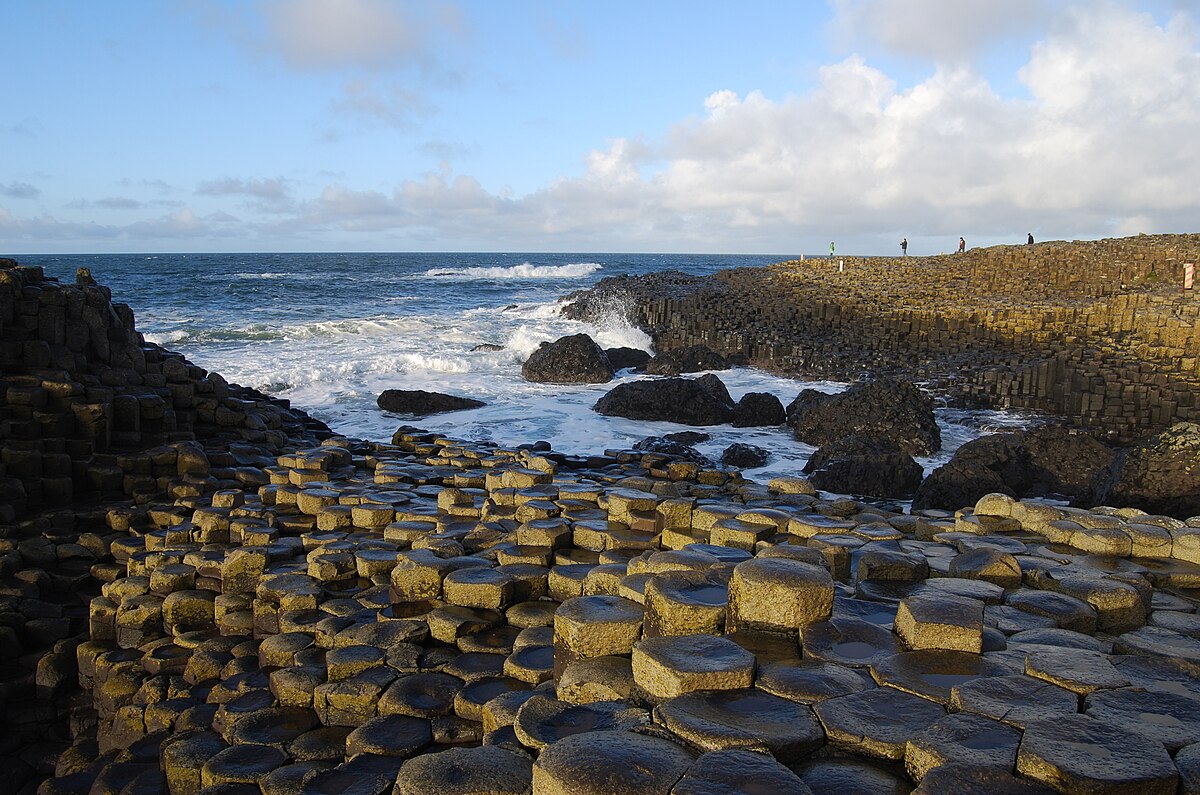
Igneous rocks are rocks formed by the cooling and solidification of molten material, either magma beneath Earth's surface or lava erupted at the surface. The term derives from the Latin ignis, meaning fire. They are the most abundant rock type on Earth by volume, constituting the entirety of the oceanic crust and the great majority of the lower continental crust, though sedimentary rocks blanket much of the continental surface.1, 6 Igneous rocks are the starting point of the rock cycle: they are the primary material from which sedimentary and metamorphic rocks are ultimately derived, and they are the direct product of the heat engine that drives plate tectonics, volcanism, and the long-term chemical differentiation of the planet.
The diversity of igneous rocks is enormous, ranging from the dark, iron-rich basalts that pave the ocean floor to the light-coloured, silica-rich granites that form the cores of continents, and from the glassy obsidian quenched instantaneously at a volcanic vent to the colossal granite batholiths that cooled over millions of years deep in the crust. Understanding how this diversity arises from a relatively uniform mantle source is one of the central achievements of igneous petrology, the branch of geology devoted to the study of magma and its crystalline products.1, 2
.JPG)
Formation of igneous rocks
All igneous rocks originate from magma, a silicate melt generated within Earth's interior. The upper mantle, composed predominantly of the rock peridotite, is solid under normal conditions despite temperatures exceeding 1,000 degrees Celsius, because the enormous pressures at depth raise the melting point of rock above the ambient temperature. Magma forms only when specific conditions perturb this thermal equilibrium, and three principal mechanisms are responsible for nearly all magma generation on Earth.1, 9
Decompression melting occurs when hot mantle rock rises toward the surface and encounters progressively lower pressure. Because the solidus temperature of peridotite decreases with decreasing pressure, rising mantle material can begin to melt without any addition of heat. This mechanism operates at mid-ocean ridges, where diverging tectonic plates draw mantle material upward, and at mantle plumes, where columns of anomalously hot material ascend from the deep mantle. Experimental studies on peridotite have established that the anhydrous solidus lies at approximately 1,120 to 1,270 degrees Celsius at pressures equivalent to upper-mantle depths of 30 to 100 kilometres, and that the degree of partial melting increases with continued decompression.8, 9
Flux melting occurs when volatile compounds, principally water and carbon dioxide, are introduced into hot mantle rock. These volatiles dramatically lower the solidus temperature, enabling melting at temperatures that would otherwise be too low. This mechanism dominates at subduction zones, where the descending oceanic slab releases water from hydrous minerals as it heats up, and the rising fluids infiltrate the overlying mantle wedge and trigger partial melting. The resulting magmas are characteristically more silica-rich and volatile-laden than those produced by decompression melting alone.13
Heat-transfer melting occurs when an unusually hot mass of mantle material, such as a plume head arriving at the base of the lithosphere, transfers sufficient thermal energy to the surrounding rock to cause it to melt. This mechanism contributes to the magmatism associated with hotspot volcanism, such as the Hawaiian chain, and with the emplacement of large igneous provinces.10, 14
In all three mechanisms, the mantle does not melt completely. Instead, it undergoes partial melting, in which a fraction of the rock (typically 1 to 30 percent) liquefies while the remainder stays solid. The composition of the partial melt differs from that of the source rock because different minerals have different melting temperatures and contribute different elements to the liquid. Low degrees of partial melting of peridotite produce magmas enriched in silica, alkalis, and incompatible elements relative to the source; higher degrees of melting produce magmas closer to the bulk composition of the source. This principle is fundamental to understanding the compositional range of igneous rocks.1, 8, 17
Texture and the intrusive-extrusive distinction
The texture of an igneous rock, defined as the size, shape, and arrangement of its constituent mineral grains, is determined primarily by the rate at which the magma cooled. This single variable produces the most fundamental division in igneous rock classification: the distinction between intrusive (plutonic) and extrusive (volcanic) rocks.1, 5
Intrusive igneous rocks form when magma cools slowly beneath Earth's surface, insulated by the surrounding rock. Slow cooling allows atoms in the melt ample time to migrate and attach themselves to growing crystal faces, producing rocks with large, interlocking mineral grains visible to the unaided eye. This coarse-grained texture is termed phaneritic (from the Greek phaneros, visible). Granite, gabbro, and diorite are common phaneritic rocks. Intrusive bodies range in size from thin sheets a few centimetres thick, called sills when concordant with surrounding strata and dykes when they cut across layering, to enormous masses of plutonic rock called batholiths, which may extend over thousands of square kilometres and represent the crystallised roots of ancient magmatic systems.1, 11
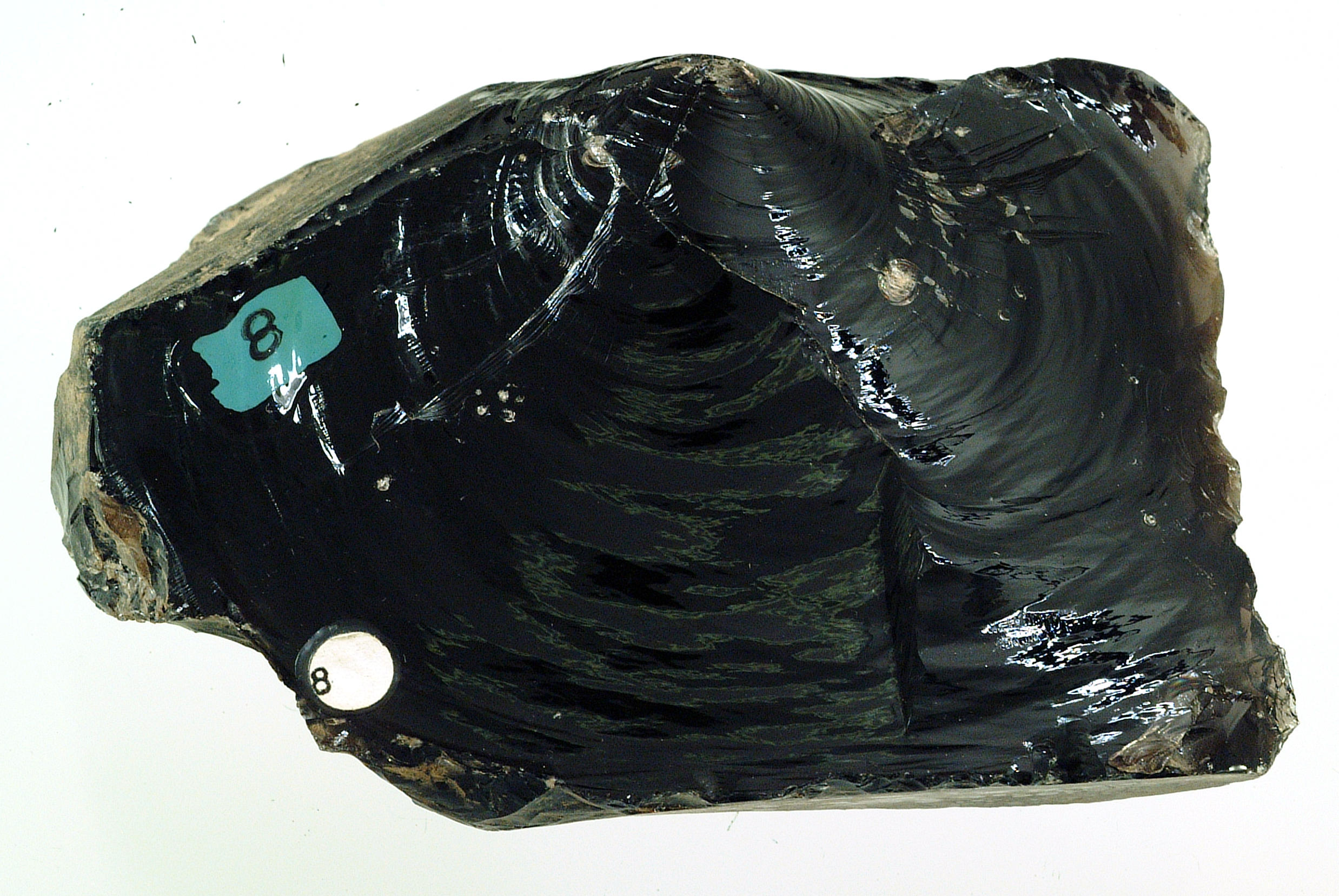
Extrusive igneous rocks form when magma erupts at the surface as lava or is explosively ejected as pyroclastic material. Rapid cooling in contact with air or water does not allow time for large crystals to develop, so extrusive rocks are typically fine-grained, with mineral crystals too small to be seen without magnification. This fine-grained texture is termed aphanitic (from the Greek aphanes, invisible). Basalt, andesite, and rhyolite are common aphanitic rocks. When cooling is extremely rapid, as when lava is quenched in water or erupted as thin sheets, no crystalline structure develops at all, and the result is a natural volcanic glass such as obsidian.1, 5
Several additional textures are diagnostically important. Porphyritic texture, in which large crystals called phenocrysts are embedded in a finer-grained matrix or groundmass, records a two-stage cooling history: slow initial cooling at depth allowed the phenocrysts to grow, followed by rapid cooling after eruption that produced the fine-grained groundmass. Pegmatitic texture refers to exceptionally coarse-grained rocks, termed pegmatites, in which individual crystals may reach metres in length. Pegmatites typically form from the final, volatile-rich residual melts of granitic magma systems, where the high concentration of water and other fluxing agents dramatically lowers melt viscosity and enhances crystal growth rates.1, 12 Vesicular texture, characterised by holes (vesicles) left by gas bubbles trapped during solidification, is common in volcanic rocks such as pumice and scoria. Pyroclastic texture describes rocks composed of fragments ejected during explosive eruptions, such as volcanic tuff and ignimbrite.1, 22
Compositional classification
Beyond texture, igneous rocks are classified by their chemical and mineral composition along a spectrum from ultramafic through mafic and intermediate to felsic, a progression that reflects decreasing content of iron and magnesium and increasing content of silica and aluminium.1, 5
Ultramafic rocks contain less than approximately 45 percent silica by mass and are dominated by olivine and pyroxene, with little or no feldspar. Peridotite, the dominant rock of Earth's upper mantle, is the most important ultramafic rock. Komatiite, an ultramafic volcanic rock erupted at extremely high temperatures (above 1,600 degrees Celsius), is found almost exclusively in Archean terranes older than 2.5 billion years and is interpreted as evidence for higher mantle temperatures in the early Earth.1, 19
Mafic rocks contain approximately 45 to 52 percent silica and are rich in ferromagnesian minerals such as pyroxene, olivine, and calcium-rich plagioclase feldspar. Basalt, the fine-grained extrusive form, is the most voluminous igneous rock on Earth, constituting the entire oceanic crust and forming major continental flood basalt provinces. Gabbro is the coarse-grained intrusive equivalent. Mafic magmas are generated primarily by decompression melting of the mantle at mid-ocean ridges and hotspots, and by flux melting in the mantle wedge above subduction zones.1, 7
Intermediate rocks contain approximately 52 to 63 percent silica and are characterised by mixtures of plagioclase feldspar, amphibole, and pyroxene, with subordinate quartz. Andesite (extrusive) and diorite (intrusive) are the principal intermediate rock types. Andesite is the characteristic lava of continental volcanic arcs and island arcs above subduction zones, and the average composition of the continental crust as a whole is broadly andesitic.6, 13
Felsic rocks contain more than approximately 63 percent silica and are dominated by quartz, alkali feldspar, and sodium-rich plagioclase, with minor amounts of biotite, muscovite, or amphibole. Rhyolite (extrusive) and granite (intrusive) are the principal felsic rock types. Granite is the most abundant rock in the upper continental crust, and large granitic batholiths form the structural backbone of mountain belts and the ancient cratonic cores of continents.6, 11
Major igneous rock types classified by composition and texture1, 5
| Compositional class | SiO₂ content | Intrusive (plutonic) | Extrusive (volcanic) | Dominant minerals |
|---|---|---|---|---|
| Ultramafic | < 45% | Peridotite, pyroxenite | Komatiite | Olivine, pyroxene |
| Mafic | 45–52% | Gabbro | Basalt | Pyroxene, Ca-plagioclase, olivine |
| Intermediate | 52–63% | Diorite | Andesite | Amphibole, Na-Ca plagioclase, pyroxene |
| Felsic | > 63% | Granite | Rhyolite | Quartz, K-feldspar, Na-plagioclase, mica |
Formal classification systems
The systematic classification of igneous rocks has been standardised by the International Union of Geological Sciences (IUGS) Subcommission on the Systematics of Igneous Rocks, which has published recommendations used by geologists worldwide. Two complementary classification schemes are employed, depending on whether the mineral content of a rock can be directly observed.3, 5
For coarse-grained intrusive rocks whose mineral constituents can be identified and their proportions estimated under a microscope or by point-counting in thin section, the standard classification tool is the QAPF diagram, introduced by Albert Streckeisen in 1976 and subsequently adopted by the IUGS. The QAPF diagram is a double-triangle plot based on the modal proportions of four mineral groups: Q (quartz), A (alkali feldspar, including albite with less than 5 percent anorthite), P (plagioclase feldspar with more than 5 percent anorthite), and F (feldspathoids such as nepheline and leucite). Because quartz and feldspathoids cannot coexist in an equilibrium igneous assemblage, the diagram is split into two triangles: QAP for silica-saturated and silica-oversaturated rocks, and FAP for silica-undersaturated rocks. The position of a rock sample within the diagram determines its name: granite occupies the quartz-rich, alkali-feldspar-rich field; gabbro falls in the plagioclase-rich, quartz-poor field; syenite sits in the alkali-feldspar-dominated region with low quartz; and so on.3, 5
For fine-grained volcanic rocks whose individual minerals cannot be reliably identified and quantified in hand specimen, the IUGS recommends the total alkali-silica (TAS) diagram, established by Le Bas, Le Maitre, Streckeisen, and Zanettin in 1986. The TAS diagram plots the weight percentage of total alkali oxides (Na2O + K2O) on the vertical axis against the weight percentage of silica (SiO2) on the horizontal axis. The diagram is divided into fifteen fields containing seventeen root names, including basalt, basaltic andesite, andesite, dacite, rhyolite, trachyte, and phonolite. The TAS classification was designed to be consistent with the QAPF modal classification, so that the chemical name assigned by the TAS diagram agrees with the mineralogical name that would be obtained from the QAPF diagram if the modal mineralogy were known.4, 5
In addition to the QAPF and TAS systems, igneous rocks are informally classified using the colour index, or M value, which is the volume percentage of dark (mafic) minerals in the rock. Leucocratic rocks have M less than 35 percent, mesocratic rocks have M between 35 and 65 percent, and melanocratic rocks have M greater than 65 percent. Ultramafic rocks, with M exceeding 90 percent, are classified using a separate IUGS diagram based on the proportions of olivine, orthopyroxene, and clinopyroxene.5
Bowen's reaction series and fractional crystallization
The fundamental framework for understanding how a single parent magma can give rise to a wide range of igneous rock compositions was established by the Canadian petrologist Norman Levi Bowen through a series of experimental studies conducted at the Geophysical Laboratory of the Carnegie Institution of Washington in the 1910s and 1920s. Bowen demonstrated that when a basaltic melt cools, minerals do not crystallize simultaneously but instead form in a predictable sequence governed by their thermodynamic stability at progressively lower temperatures. He published his synthesis in the landmark 1928 monograph The Evolution of the Igneous Rocks.2
Bowen's reaction series describes two parallel tracks of mineral crystallization. The discontinuous series traces the sequence of ferromagnesian (mafic) minerals that crystallize with decreasing temperature: olivine forms first at the highest temperatures (approximately 1,200 to 1,300 degrees Celsius in basaltic melts), followed by pyroxene, then amphibole, and finally biotite mica at relatively low temperatures. Each mineral in the discontinuous series has a distinct crystal structure and composition, and the transition from one to the next involves a reaction in which the earlier mineral is consumed or armoured by the later one. The continuous series describes the crystallization of plagioclase feldspar, which changes composition continuously from calcium-rich (anorthite) at high temperatures to sodium-rich (albite) at lower temperatures, without abrupt structural changes.1, 2
The reaction series is the foundation of fractional crystallization, the process by which early-formed crystals are physically separated from the remaining melt, thereby changing the composition of the liquid. If olivine crystals that formed at high temperatures settle to the bottom of a magma chamber under the influence of gravity, the remaining melt is depleted in the elements that were incorporated into the olivine (magnesium and iron) and enriched in the elements that were excluded (silica, sodium, potassium, and aluminium). With continued fractionation, a basaltic parent magma can evolve through andesitic to dacitic and ultimately rhyolitic compositions.1, 2, 16
Laboratory experiments on crystal settling in convecting magma chambers have shown that the efficiency of crystal separation depends on the relative density of crystals and melt, the viscosity of the magma, and the vigour of convective stirring. In low-viscosity basaltic magmas, dense olivine and pyroxene crystals can settle rapidly, promoting efficient fractionation. In high-viscosity silicic magmas, crystal settling is far less effective, and other mechanisms such as filter pressing and boundary-layer fractionation may dominate.16
Bowen's reaction series: crystallization temperature sequence1, 2
Other differentiation processes
While fractional crystallization is the single most important mechanism of magmatic differentiation, several additional processes contribute to the compositional diversity of igneous rocks, and in many magmatic systems multiple processes operate simultaneously.1
Partial melting of source rocks is itself a powerful differentiating process. Because the first liquids produced during partial melting are enriched in silica and incompatible elements relative to the source, even small differences in the degree of melting can produce magmas of substantially different composition from the same source rock. The wide range of basalt compositions erupted along the global mid-ocean ridge system, from enriched to depleted varieties, reflects in part the variation in the degree and depth of partial melting of the underlying mantle.7, 9
Crustal assimilation occurs when ascending magma melts and incorporates material from the surrounding country rock through which it passes. Because continental crustal rocks are typically more silica-rich and enriched in certain trace elements and isotopes relative to mantle-derived magmas, assimilation of crustal material shifts the composition of the magma toward more felsic values and imparts a characteristic crustal geochemical signature. The energy required to melt country rock is drawn from the latent heat released by crystallization of the magma itself, a coupled process described quantitatively by the assimilation-fractional crystallization (AFC) model.1, 15
Magma mixing occurs when two compositionally distinct magmas come into contact and blend, either within a magma chamber that receives a fresh injection of primitive melt or during the ascent of magma through conduits that intersect other magma bodies. Evidence for magma mixing is commonly preserved in volcanic rocks as bands of differently coloured glass, resorbed and mantled phenocrysts, and hybrid mineral assemblages that are not in equilibrium with any single melt composition. Mixing between mafic and felsic end-members is a particularly effective mechanism for generating the intermediate compositions, such as andesite, that are abundant in volcanic arcs.1, 13
Major igneous rock types in detail
Basalt is the most abundant igneous rock on Earth's surface. It is a fine-grained, dark-coloured mafic rock composed principally of plagioclase feldspar and pyroxene, with or without olivine. The oceanic crust, which covers approximately 60 percent of Earth's surface, is composed almost entirely of basalt and its intrusive equivalent gabbro, produced by decompression melting of the mantle at mid-ocean ridges. A comprehensive global compilation of mid-ocean ridge basalt (MORB) compositions, weighted by ridge segment length and spreading rate, reveals that the average MORB has approximately 50.5 weight percent SiO2, 8.0 percent FeO, and 10.4 percent MgO.7 Basalt is also the dominant product of hotspot volcanism and continental flood basalt eruptions, and it constitutes the bulk of the volcanic edifices of shield volcanoes such as Mauna Loa and Kilauea in Hawaii.14
.jpg)
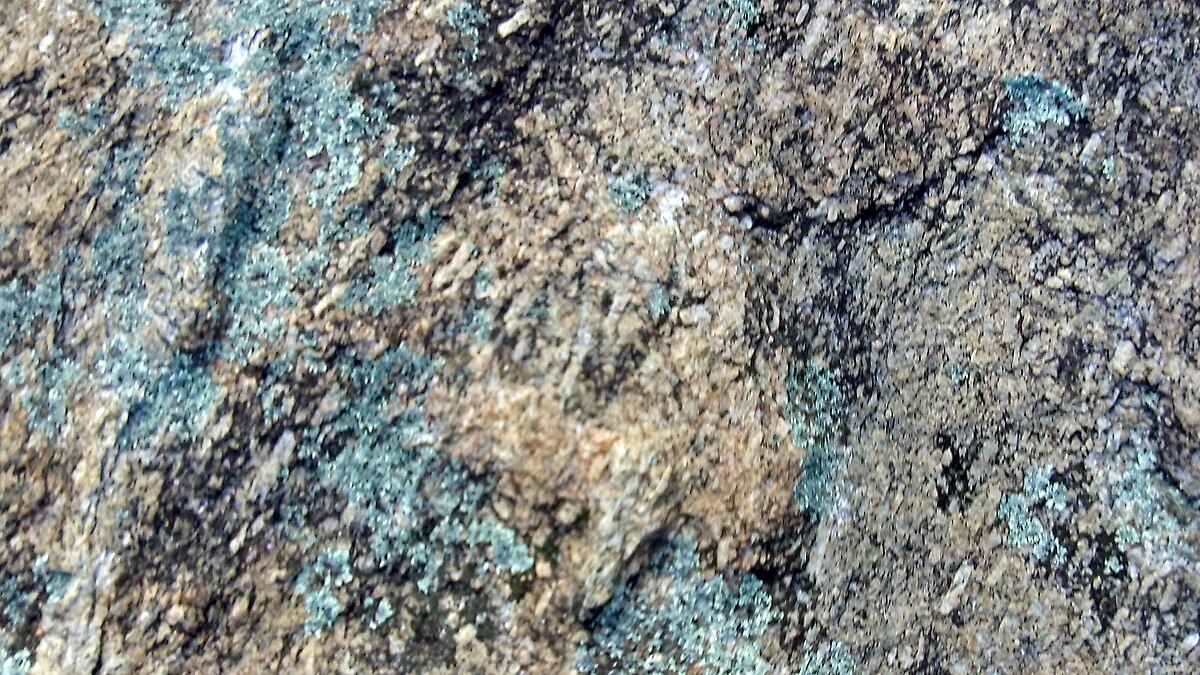
Granite is the most familiar plutonic rock and the dominant component of the upper continental crust. It is a coarse-grained felsic rock composed of quartz (typically 20 to 60 percent by volume), alkali feldspar, plagioclase feldspar, and minor amounts of biotite, muscovite, or hornblende. Granites are classified in the QAPF diagram as rocks in which quartz constitutes 20 to 60 percent of the total QAP content and alkali feldspar exceeds plagioclase.3 Granite magmas are generated by partial melting of pre-existing crustal rocks (producing so-called S-type granites, rich in aluminium) or by extreme fractional crystallization of mantle-derived basaltic magmas (producing I-type granites, more metaluminous in character), or by some combination of both processes. Large granite batholiths, such as the Sierra Nevada batholith of California and the Cordilleran batholiths of western North and South America, are composite bodies assembled from hundreds of individual plutons emplaced over tens of millions of years, and they preserve a detailed record of the magmatic and tectonic evolution of convergent plate margins.11, 15
Gabbro is the coarse-grained, intrusive equivalent of basalt, composed of calcium-rich plagioclase and clinopyroxene, with or without olivine and orthopyroxene. It forms the lower layer of the oceanic crust and occurs as large layered intrusions on the continents. The Bushveld Complex of South Africa, the world's largest layered igneous intrusion, is a gabbroic to ultramafic body approximately 2.06 billion years old that extends over 66,000 square kilometres and reaches 9 kilometres in thickness. It hosts the world's largest reserves of platinum-group elements, as well as major deposits of chromium and vanadium, concentrated in discrete layers formed by crystal settling and magma replenishment processes.21
Andesite is an intermediate volcanic rock named after the Andes of South America, where it is the dominant lava type. Composed of plagioclase feldspar, pyroxene, and often amphibole, andesite is the characteristic volcanic rock of convergent plate margins. The average chemical composition of the bulk continental crust, determined from geochemical surveys and crustal cross-section studies, closely approximates that of andesite, with approximately 57 to 60 weight percent SiO2.6 This observation, sometimes called the "andesite model" of continental crust composition, implies that the processes of arc magmatism at subduction zones have been the primary mechanism of continental crustal growth throughout Earth history.6, 13
.jpg)
Rhyolite is a fine-grained felsic volcanic rock, the extrusive equivalent of granite, with a composition typically exceeding 70 percent SiO2. Because of its high silica content, rhyolitic magma is extremely viscous and tends to trap dissolved gases, making rhyolitic eruptions among the most violently explosive on Earth. The catastrophic eruptions that produced large calderas such as Yellowstone, Toba, and the Taupo Volcanic Zone in New Zealand were driven by rhyolitic magma.1, 22 When rhyolitic lava cools sufficiently quickly, it forms volcanic glass rather than a crystalline rock. Obsidian, a black, lustrous natural glass prized by prehistoric peoples for toolmaking, is the most familiar example.1
Pegmatites are exceptionally coarse-grained igneous rocks, usually of granitic composition, in which individual crystals routinely exceed one centimetre and may reach several metres in length. They form from the final residual melts produced during the crystallization of granitic magma bodies. These residual melts are enriched in water, boron, fluorine, lithium, and other volatile and incompatible elements that were progressively excluded from the crystallizing minerals. The presence of these fluxing agents dramatically reduces melt viscosity and suppresses nucleation of new crystals while promoting the rapid growth of existing ones, producing the characteristically enormous crystal sizes. Pegmatites are the primary source of lithium, tantalum, niobium, beryllium, caesium, and many other rare elements critical to modern technology.12
Tectonic settings of igneous activity
The composition, volume, and eruptive style of igneous rocks are intimately linked to the tectonic setting in which they form. The global distribution of igneous activity is not random but is concentrated along plate boundaries and above mantle plumes, with each setting producing a characteristic suite of rock types.1, 20
At divergent plate boundaries, principally the global mid-ocean ridge system, decompression melting of rising asthenospheric mantle produces tholeiitic basalt, the most voluminous magma type on Earth. The mid-ocean ridge system, approximately 65,000 kilometres in total length, generates an estimated 3 to 4 cubic kilometres of new basaltic crust per year. This basalt solidifies as pillow lavas on the seafloor, as sheeted dyke complexes within the crust, and as gabbro in the lower oceanic crust, forming the three-layer structure of the oceanic lithosphere documented by marine seismic surveys and exposed in ophiolite complexes on land.1, 7
At convergent plate boundaries, flux melting of the mantle wedge above subducting slabs produces a broader compositional range of magmas, from basalt through andesite to dacite and rhyolite. The volatile-rich character of subduction-related magmas accounts for the explosive eruption styles characteristic of volcanic arcs, and the progressive differentiation of these magmas through fractional crystallization and crustal assimilation is the primary mechanism by which new continental crust is generated. The volcanic arcs of the Pacific Ring of Fire, the Andes, the Cascades, and the island arcs of the western Pacific are all products of subduction-related igneous activity.13, 20
At intraplate hotspots, mantle plumes rising from the deep mantle produce voluminous basaltic magmatism that can occur far from any plate boundary. The Hawaiian-Emperor seamount chain, stretching over 6,000 kilometres across the Pacific Plate, records the passage of the plate over a nearly stationary hotspot over approximately 80 million years.14 When plume heads first arrive at the base of the lithosphere, they can generate prodigious volumes of magma in geologically brief intervals, creating large igneous provinces (LIPs). The Siberian Traps, emplaced approximately 252 million years ago, erupted an estimated 2 to 3 million cubic kilometres of basalt and are closely correlated in time with the end-Permian mass extinction, the most severe biotic crisis in the fossil record.10, 18
In continental rift zones, where tectonic extension thins the lithosphere, decompression melting of the upwelling mantle produces alkaline basalts, trachytes, and phonolites that are compositionally distinct from the tholeiitic basalts of mid-ocean ridges. The East African Rift, the Rhine Graben, and the Rio Grande Rift are modern examples of continental rifting accompanied by distinctive alkaline igneous activity.1
Forms of intrusive igneous bodies
Magma that does not reach the surface solidifies within the crust as intrusive igneous bodies, whose geometry reflects the mechanical interaction between the magma and the surrounding host rock. These bodies are classified primarily by their shape, size, and orientation relative to the layering of the country rock.1
Dykes are tabular, discordant intrusions that cut across the bedding or foliation of the surrounding rocks. They form when magma is injected into fractures under pressure, and they range from a few centimetres to tens of metres in width and may extend for kilometres along strike. Dyke swarms, in which hundreds to thousands of parallel or radiating dykes are emplaced in a single magmatic episode, are associated with continental rifting, volcanic centres, and the feeder systems of large igneous provinces.1
Sills are tabular, concordant intrusions that are emplaced parallel to the bedding of the host rock. Like dykes, they range widely in thickness, from centimetres to hundreds of metres. The Palisades Sill, a 300-metre-thick gabbroic sill exposed along the western bank of the Hudson River in New Jersey and New York, is one of the best-studied sill intrusions in the world and preserves a textbook example of gravitational crystal settling and fractional crystallization within a single cooling unit.1
Laccoliths are concordant intrusions in which the magma has domed up the overlying strata, producing a mushroom-shaped body with a flat floor and an arched roof. They typically form at relatively shallow depths where the overburden pressure is insufficient to prevent upward inflation of the magma body. Lopoliths are the inverse: large, saucer-shaped intrusions that sag downward under the weight of dense accumulated crystals. The Bushveld Complex of South Africa is the archetypal lopolith.1, 21
Batholiths are the largest intrusive bodies, defined as plutonic masses with an exposed surface area exceeding 100 square kilometres. They are typically composed of granite or granodiorite and represent the solidified roots of ancient magmatic arcs. The Coast Plutonic Complex of British Columbia, the Sierra Nevada batholith of California, and the Andean batholiths of South America are among the largest exposed batholiths on Earth, each consisting of hundreds of individual plutons emplaced over time spans of 50 to 100 million years. Studies of granite batholith emplacement have shown that these enormous bodies are not injected as single massive intrusions but are assembled incrementally through the repeated injection of relatively small magma pulses, each of which crystallizes before the next arrives.11
Igneous rocks and the growth of continental crust
The continental crust, which supports virtually all terrestrial life and human civilisation, is fundamentally an igneous product. The processes by which the continents have grown over Earth's 4.5-billion-year history are dominated by the generation, transport, and emplacement of igneous rocks, primarily through arc magmatism at subduction zones and secondarily through the accretion of oceanic plateaus and other igneous terranes.6, 15
The upper continental crust has an average composition closely approximating that of granodiorite, with approximately 66 weight percent SiO2, while the bulk crust averages approximately 57 to 60 percent SiO2, closer to andesite.6 This vertical stratification, with more felsic rocks concentrated in the upper crust and more mafic rocks in the lower crust, reflects the long-term operation of igneous differentiation: mantle-derived basaltic magma underplates or intrudes the base of the crust, where it undergoes fractional crystallization and partial melting of the surrounding rocks to produce the intermediate to felsic magmas that rise and solidify at shallower levels.
Geochemical studies of the age distribution of preserved continental crust have revealed that crustal generation has not been uniform through time but has occurred in episodic pulses, with major growth events in the late Archean (approximately 2.5 to 3.0 billion years ago), the late Paleoproterozoic (approximately 1.8 to 2.0 billion years ago), and the Neoproterozoic to early Phanerozoic (approximately 0.5 to 1.0 billion years ago). These pulses correlate broadly with episodes of supercontinent assembly, during which widespread subduction and arc magmatism generated large volumes of new igneous crust.15 At the same time, continental crust is continuously being destroyed by sediment subduction, tectonic erosion of continental margins, and delamination of dense lower-crustal material back into the mantle. The net balance between crustal addition and recycling determines whether the total volume of continental crust is growing, shrinking, or approximately stable at the present day, a question that remains a subject of active geochemical research.15
The Archean rock record preserves distinctive igneous associations that are rare or absent in younger terranes, including komatiites, which are ultramafic lavas that erupted at mantle temperatures estimated at 1,600 to 1,800 degrees Celsius, several hundred degrees hotter than any modern volcanic eruption. The restriction of komatiites almost entirely to terranes older than 2.5 billion years is widely interpreted as evidence that the mantle was significantly hotter in the Archean, a consequence of greater radiogenic heat production from the decay of potassium-40, uranium-235, uranium-238, and thorium-232, which were more abundant in the early Earth.19 The secular cooling of the mantle over geological time has progressively lowered the temperatures of magma generation, contributing to the evolution of igneous activity from the ultramafic volcanism of the Archean to the more compositionally diverse magmatism of the Phanerozoic.
Igneous rocks thus occupy a central position in the geological sciences, not merely as one of three rock types in the rock cycle but as the primary product of the planet's internal heat, the material from which the continents have been built, the driver of volcanic hazards and climate perturbations, and the medium through which the chemical evolution of the solid Earth is recorded. From the basalt columns of the Giant's Causeway to the granite peaks of Yosemite, from the glassy obsidian of volcanic calderas to the gem-bearing pegmatites of the world's great mining districts, igneous rocks display the full creative range of the processes that operate within a geologically active planet.1, 6
References
Near-solidus melting of the shallow upper mantle: partial melting experiments on depleted peridotite
Volcanic Explosivity Index (VEI): an estimate of explosive magnitude for historical volcanism