Overview
- The grandmother hypothesis proposes that post-menopausal longevity evolved in humans because grandmothers who helped provision and care for weaned grandchildren increased their own inclusive fitness, providing a selective advantage for genes promoting survival well beyond the end of female fertility.
- Kristen Hawkes developed the hypothesis in 1998 based on data from the Hadza hunter-gatherers of Tanzania, showing that grandmothers' foraging effort—particularly in digging tubers—significantly improved the nutritional status and survival of their grandchildren.
- The hypothesis remains debated: critics argue that male provisioning, paternal investment, and embodied capital models provide alternative or complementary explanations for human longevity, while mathematical models and comparative evidence from orcas have provided support for grandmother effects on fitness.
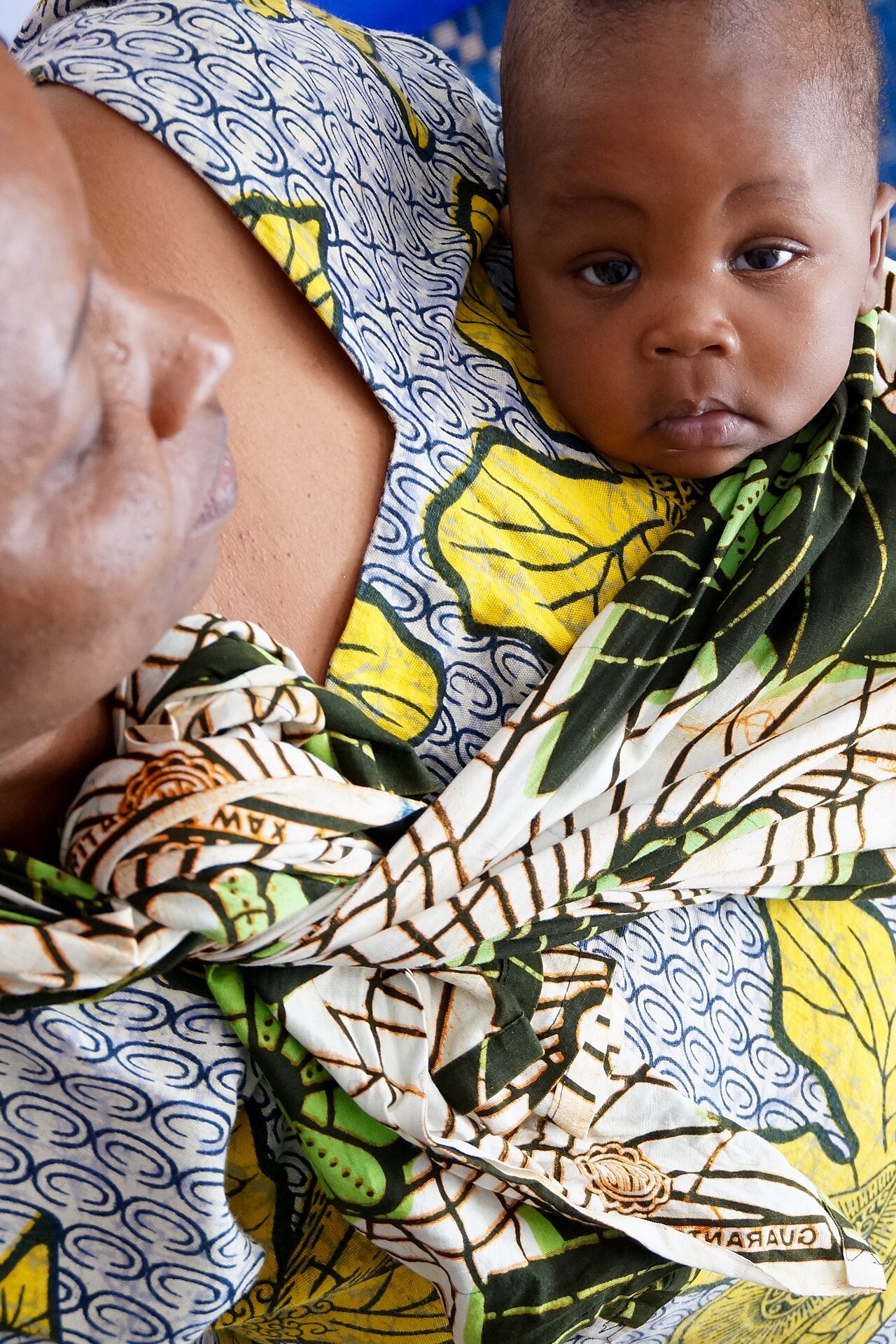
Human females are unusual among primates in living for decades after the cessation of reproductive capacity. In most mammals, reproductive senescence and death occur in close succession, and female fertility tracks lifespan closely. In humans, however, menopause typically occurs around age 50, yet women in foraging societies routinely survive into their sixties and seventies—a post-reproductive lifespan that is not merely an artifact of modern medicine but appears to be a genuine feature of human life history.1, 16 The grandmother hypothesis offers an evolutionary explanation for this pattern, proposing that post-menopausal women who invested in provisioning and caring for their grandchildren increased the survival and reproductive success of their descendants, thereby selecting for genes that promoted extended female longevity beyond the end of fertility.1

The puzzle of menopause
The existence of menopause poses an evolutionary puzzle because natural selection generally favors continued reproduction for as long as survival permits. George C. Williams, in a foundational 1957 paper on the evolution of senescence, proposed that menopause could be explained by antagonistic pleiotropy—genes that enhance reproductive success early in life but impose costs later could spread through a population if the early-life benefits outweigh the late-life costs, because the force of natural selection weakens with age.2 Williams specifically suggested that the cessation of female reproduction might be adaptive if the risks of continued pregnancy and childbirth at advanced maternal age exceeded the fitness gains from producing additional offspring, particularly given the extended dependency of human children.2
The comparative rarity of menopause among mammals sharpens the puzzle. Among primates, only humans exhibit a prolonged post-reproductive lifespan as a consistent species-typical feature. While captive individuals of some other primate species occasionally survive past reproductive cessation, wild populations of chimpanzees, gorillas, and other great apes show no evidence of a systematically extended post-reproductive life.15 This uniqueness demands an explanation rooted in the specific life history and social ecology of the human lineage.1, 15
Hawkes and the Hadza evidence
The grandmother hypothesis in its modern form was articulated most influentially by Kristen Hawkes, James O'Connell, and Nicholas Blurton Jones, based on their long-term fieldwork with the Hadza, a population of hunter-gatherers in northern Tanzania. In a 1997 study, they documented the foraging activities and time allocation of Hadza women across all age classes and found that post-menopausal women were among the most productive foragers in the group, particularly in the collection of deeply buried tubers that required considerable strength and endurance to extract.3
The critical observation was that grandmother foraging effort was directed not primarily toward the grandmothers' own consumption but toward provisioning their weaned grandchildren, particularly when the children's mothers were occupied with nursing new infants.3 Among the Hadza, the birth of a new sibling creates a nutritional crisis for the recently weaned child, who is no longer receiving breast milk but is too young to forage effectively for itself. Hawkes and colleagues documented that the foraging productivity of grandmothers was significantly correlated with the nutritional status and weight gain of their grandchildren during this vulnerable period.3
In their 1998 paper in the Proceedings of the National Academy of Sciences, Hawkes, O'Connell, and Blurton Jones formalized this observation into an evolutionary hypothesis. They proposed that ancestral females who survived past menopause and allocated their foraging effort toward grandchildren would have increased the survival of those grandchildren, thereby enhancing the transmission of the grandmother's own genes through kin selection (Hamilton's inclusive fitness).1 Because the grandmother shares one-quarter of her genes with each grandchild, the fitness gains from improving grandchild survival can, under certain demographic conditions, exceed the fitness gains from continued reproduction, especially given the increasing risks and declining fertility of advanced maternal age.1
Demographic evidence for grandmother effects
The grandmother hypothesis generates testable predictions about the relationship between grandmother survival and grandchild fitness. If grandmothering is an evolved strategy, then the presence of a living grandmother should be associated with measurably improved survival and reproductive outcomes for grandchildren, even after controlling for other variables.
Mirkka Lahdenperä and colleagues tested this prediction using detailed demographic records from pre-industrial Finland and Canada, spanning the eighteenth and nineteenth centuries. Their analysis, published in Nature in 2004, found that the presence of a post-menopausal maternal grandmother was associated with a significant increase in grandchild survival to adulthood and in the number of grandchildren who themselves reproduced successfully.4 Women who had a living mother during their childbearing years produced more surviving offspring than women whose mothers had died, and the effect was strongest for maternal grandmothers rather than paternal grandmothers, consistent with the hypothesis that direct provisioning and caregiving by the mother's mother was the primary mechanism.4, 17
Ronald Lee's intergenerational transfer models provided additional theoretical support. Lee analyzed the flow of resources between generations in both foraging and agricultural societies and found that in traditional human populations, older post-reproductive individuals are net producers of surplus resources that flow downward to younger generations.6 This pattern of downward intergenerational resource flow is uncommon among primates and is consistent with the hypothesis that post-reproductive longevity evolved in a context where older individuals made substantial contributions to the fitness of their descendants.6
Mathematical models
A critical question for the grandmother hypothesis is whether the fitness effects of grandmothering are quantitatively sufficient to drive the evolution of extended post-reproductive longevity through natural selection. Peter Kim, James Coxworth, and Kristen Hawkes addressed this question with an agent-based simulation model published in 2012.7
Their model began with a population having an ape-like life history, in which adult lifespan was approximately 25 years with no post-reproductive period. They then introduced a simple grandmothering benefit: post-reproductive females who assisted in the care of weaned dependents increased those dependents' survival. The simulation demonstrated that even a modest grandmothering benefit could drive the evolution of substantially increased adult longevity over a few hundred thousand generations, shifting the population from an ape-like life history to a human-like one with an expected adult lifespan of approximately 70 years and a prolonged post-reproductive period.7 The model showed that grandmothering alone, without invoking hunting, male provisioning, or brain-size increases, was sufficient to produce the extended longevity characteristic of humans.7
The Kim, Coxworth, and Hawkes model was not without critics. Some researchers noted that the model assumed relatively strong grandmother effects and that the demographic conditions required for grandmothering to be the primary driver of longevity evolution are sensitive to assumptions about population structure, dispersal, and the availability of resources that grandmothers can provision.16 Nevertheless, the model demonstrated that the grandmother hypothesis is mathematically plausible as a mechanism for life history evolution, even if it may not be the sole mechanism.7, 16
Comparative evidence: orcas and other species
The grandmother hypothesis gains comparative support from the observation that prolonged post-reproductive lifespans occur in a small number of other social mammal species, most notably killer whales (orcas). Female orcas cease reproducing in their thirties or forties but can live into their eighties or nineties, producing a post-reproductive lifespan that, proportional to total lifespan, is comparable to that of humans.11
Stuart Nattrass and colleagues, analyzing over 36 years of demographic data from resident orca populations in the Pacific Northwest, demonstrated in 2019 that the presence of a post-reproductive grandmother significantly increased the survival of her grandoffspring, particularly during years of low salmon availability when food resources were scarce.11 Post-reproductive grandmother orcas are known to lead their family groups to productive foraging areas and to share prey with younger group members, behaviors functionally analogous to the grandmother provisioning documented in human foragers.11
Rufus Johnstone and Michael Cant proposed a related but distinct model for the evolution of menopause in social species, emphasizing reproductive conflict between generations rather than grandmothering benefits per se. Their 2010 model showed that when females disperse from their natal group upon mating (as in ancestral human populations), older females become increasingly related to the group over time while younger incoming females are unrelated, creating an asymmetry in the costs and benefits of continued reproduction that favors reproductive cessation in older females.12 This intergenerational conflict model complements the grandmother hypothesis by providing a mechanism for the cessation of reproduction, while grandmothering provides the selective advantage for survival after cessation.12
Alternative hypotheses and critiques
The grandmother hypothesis has attracted several alternative and complementary explanations for the evolution of human longevity and menopause. The "mother hypothesis" argues that the primary selective advantage of post-reproductive survival lies not in grandmothering but in continued maternal investment in already-born offspring. Because human children have an exceptionally prolonged period of dependency, a mother's death before her youngest child is self-sufficient carries severe fitness costs. On this view, menopause evolved to prevent the risk of maternal death in childbirth from orphaning dependent children, and post-reproductive survival is maintained by selection for continued maternal care.15
Frank Marlowe proposed the "patriarch hypothesis" in 2000, arguing that extended longevity evolved primarily in males through sexual selection, with females gaining longevity as a correlated response because the genes influencing lifespan are largely shared between the sexes.14 On this model, older males in ancestral populations maintained or even increased their reproductive success through accumulated social status, resource control, and mating opportunities, providing a selective advantage for genes promoting survival into old age that was then expressed in both sexes.14 Marlowe's hypothesis addresses a limitation of the grandmother hypothesis: it explains male longevity, which the grandmothering model does not directly account for, since male fitness contributions in old age are more difficult to demonstrate in the ethnographic record.14
Hillard Kaplan and colleagues proposed the "embodied capital" model, which frames human longevity as an outcome of selection for a life history strategy emphasizing heavy investment in learning, skill acquisition, and brain development.13 On this view, the extended human lifespan evolved because the caloric returns from skilled foraging—including hunting, which peaks in productivity in the thirties and forties—are so high that they more than compensate for the long period of juvenile dependency required to develop those skills.13 The embodied capital model does not deny a role for grandmothering but embeds it within a broader framework that emphasizes male hunting contributions and the coevolution of intelligence, skill, and longevity.13
Hawkes and Rebecca Bliege Bird have also challenged the interpretation of male hunting as straightforward family provisioning, arguing instead that much of men's big-game hunting functions as costly signaling—a form of status display that enhances the hunter's mating opportunities rather than reliably provisioning his mate and offspring.8 O'Connell, Hawkes, and Blurton Jones extended this critique by noting that in many foraging societies, meat from large game is widely shared and does not preferentially benefit the hunter's own family, undermining the assumption that male hunting evolved primarily for paternal provisioning.9
Current status
The grandmother hypothesis remains one of the most productive frameworks for understanding the evolution of human life history, though no single hypothesis is likely to explain the full suite of distinctive human traits. The empirical evidence for grandmother effects on grandchild survival is strong across multiple populations and is supported by comparative evidence from orcas, the only other well-documented case of prolonged post-reproductive female lifespan in a social mammal.4, 11, 16 Mathematical models have demonstrated that grandmothering can, in principle, drive the evolution of human-like longevity from an ape-like baseline.7
However, the hypothesis does not operate in isolation. The evolution of human longevity was almost certainly shaped by multiple, reinforcing selective pressures, including continued maternal investment, the economics of intergenerational resource transfer, the embodied capital returns from skilled foraging, and possibly sexual selection on male lifespan.13, 14, 16 The most comprehensive models of human life history evolution will likely integrate grandmother effects with these complementary mechanisms rather than treating them as competing alternatives. What the grandmother hypothesis has accomplished most decisively is to establish that post-menopausal women are not evolutionary dead ends but active agents whose contributions to kin fitness have shaped one of the most distinctive features of the human species.1, 16
References
Hadza women's time allocation, offspring provisioning, and the evolution of long postmenopausal life spans
Intergenerational wealth flows and the economics of the extended family: The grandmother hypothesis revisited
Ecological dominance, social competition, and coalitionary arms races: Why humans evolved extraordinary intelligence
Postreproductive killer whale grandmothers improve the survival of their grandoffspring
Grandmothers and the evolution of human longevity: A review of findings and future directions