Overview
- Human life history is anomalous among primates in combining a prolonged, costly childhood with a late age at first reproduction, a uniquely rapid pace of offspring production given that investment, and a substantial post-reproductive lifespan — features that only make sense in the context of cooperative breeding, where grandmothers and other alloparents subsidize the enormous caloric demands of dependent young.
- The six-stage model of human development proposed by Barry Bogin — infant, child, juvenile, adolescent, adult, and aged — sets humans apart from other great apes, which lack a distinct childhood phase; the human childhood is a period of continued brain growth and skill acquisition during which a child is nutritionally dependent on adults despite being weaned.
- Evidence from fossil hominins, including growth-line counts in tooth enamel and the developmental stage of famous specimens such as Turkana Boy and the Mojokerto child, suggests that Homo erectus had a life history faster than that of modern humans but measurably slower than that of modern chimpanzees, pointing to a gradual extension of the human developmental schedule over the past two million years.
Among the roughly 300 species of living primates, humans occupy an extreme statistical outlier in nearly every measure of life history. We are born more helpless than any other ape, take longer to reach reproductive maturity, live dramatically longer after reproduction ceases, and yet — paradoxically — produce offspring at a faster rate than our body size and investment costs would predict. Understanding how and why this peculiar cluster of traits evolved has become one of the central problems in paleoanthropology, evolutionary biology, and human behavioral ecology. The answer points toward a deep interdependence between our developmental biology, our unusually large brains, and the distinctive social arrangements — cooperative breeding, pair-bonding, grandmothering — that may have coevolved with the human developmental schedule over the last two million years.1, 5

Life history theory
Life history theory is the branch of evolutionary biology concerned with how organisms allocate finite time and energy across the major tasks of survival, growth, and reproduction. Because resources are limited, any energy or time invested in one task cannot be invested in another, generating fundamental tradeoffs that natural selection must resolve differently in different environments and for different body plans.12 The three canonical currencies of life history are somatic growth (building and maintaining the body), maintenance and survival (immune function, tissue repair, predator avoidance), and reproduction (producing and rearing offspring). Investment in any one of these demands comes at the expense of the others.
These tradeoffs produce predictable patterns across species. Fast life history species — mice, rabbits, small passerine birds — grow quickly, reproduce early, produce large litters, invest little per offspring, and die young. Slow life history species — elephants, great apes, albatrosses — grow slowly, delay reproduction, produce few offspring with high individual investment, and live long lives. Broadly, the pace of a species’ life history scales with body size, metabolic rate, and the degree of ecological risk: high adult mortality selects for earlier reproduction before death intervenes, while low adult mortality and high juvenile learning demands select for delayed reproduction and extended development.12, 5
Brain size interacts with life history pace in a particularly important way. Large brains are expensive to build — neural tissue has one of the highest metabolic costs per gram of any body tissue — and they take a long time to wire correctly.18 Species with large brains relative to body size consistently show slower life histories: longer gestation, longer periods of juvenile dependency, later age at first reproduction, and longer maximum lifespans. Within primates, this correlation is tight enough that brain size alone predicts many life history parameters with considerable accuracy.18 Humans sit at the extreme slow end of this continuum — but, as the sections below show, not quite where a simple extrapolation from ape relatives would place us.
Bogin’s six-stage model
The developmental biologist Barry Bogin proposed an influential six-stage model of the human life cycle that carves the human lifespan into phases distinguished by their biology, ecology, and social function: infancy, childhood, the juvenile period, adolescence, adulthood, and old age (sometimes termed the “senescent” phase).1, 2 The model’s principal analytical contribution is not the existence of these stages per se but the identification of two that are absent or vestigial in our closest relatives: childhood and adolescence.
Infancy in Bogin’s scheme is the period from birth until weaning. In humans this lasts roughly two to three years, shorter than in chimpanzees (four to five years) and gorillas (three to four years) despite the much greater absolute dependence of the human infant at birth. Human infants are born in a dramatically altricial state — with only about 25% of adult brain volume compared to roughly 40% in newborn chimpanzees — a consequence of the obstetric dilemma imposed by bipedal locomotion and a narrow pelvis.13 The extended postnatal brain growth that follows is energetically demanding and requires intensive maternal investment throughout infancy.
What makes humans unusual is what happens after weaning. In all non-human apes, the end of nursing coincides with, or shortly precedes, the end of nutritional dependence on the mother — the juvenile can forage for itself. In humans, weaning opens a phase Bogin calls “childhood” — a period of two to four years (roughly ages two to six or seven) during which the child is weaned but remains entirely dependent on adults for food.1 The child’s small body and still-developing dentition make it unable to process and acquire the calorie-dense foods that sustain adult humans, particularly animal protein and hard tubers. During this phase, brain growth continues at a rapid rate while the child acquires linguistic and social skills. Childhood is only possible in a social environment that guarantees food provisioning by adults other than the mother — it is structurally dependent on alloparenting.9
The juvenile period (roughly ages seven to ten in girls, seven to twelve in boys) follows. At this stage, children can contribute meaningfully to their own caloric needs but remain pre-reproductive and socially dependent. The Homo sapiens juvenile period is proportionally similar to that of other apes. What follows it, however, is not. Adolescence in Bogin’s model is a distinct phase characterized by the adolescent growth spurt — a rapid acceleration in height velocity tightly coupled to sexual maturation — which is absent or only weakly expressed in other great apes.2 Human adolescence typically spans ages ten to eighteen in girls and twelve to twenty-one in boys; other apes show a much more gradual transition into reproductive maturity without a comparable acceleration in linear growth.
Adulthood is the reproductive phase, followed in women — and only in women, and only in humans among primates — by a post-reproductive senescent phase of considerable length. The average age at menopause in women is approximately fifty years, leaving decades of post-reproductive life during which women remain highly active contributors to the social group. This configuration — a long post-reproductive lifespan — has no parallel among non-human primates in the wild and demands a specific evolutionary explanation.
The paradox of slow development and fast reproduction
The most striking feature of human life history is not any single trait but the combination of traits that appear, at first glance, to be contradictory. By the standards of great apes, humans invest more per offspring, take longer to develop, and live longer. All of this points toward a slow life history. Yet humans achieve shorter interbirth intervals than chimpanzees: a !Kung San woman in a traditional foraging context gives birth approximately every three to four years, while a wild chimpanzee mother averages five to six years between births.4 This is especially striking given that the human offspring is considerably more expensive than a chimpanzee offspring in terms of total caloric investment. How can humans take longer to grow up yet reproduce faster?
The answer proposed by Kristen Hawkes, Kim Hill, Hillard Kaplan, and others working in human behavioral ecology is that human reproduction is heavily subsidized by individuals other than the biological mother.4, 5 When a human mother gives birth to a new infant, she does not necessarily cease feeding her previous child; the older child’s caloric needs are increasingly met by other group members, particularly post-menopausal grandmothers. By effectively offloading the subsistence costs of older children onto alloparents, a human mother can shorten the interval between successive births without increasing per-offspring mortality risk. This is the cooperative breeding model of human life history, and it links the fast-within-slow paradox directly to social organization.
Kaplan and colleagues proposed a complementary embodied capital model in which the prolonged human juvenile period is best understood as an investment in learning.5 Unlike chimpanzees, whose adult diet can be more or less fully mastered by adolescence, human adults in foraging economies depend on calorie-dense, highly variable, and skill-intensive resources — large game, deeply buried tubers, foods requiring complex processing. Acquiring the foraging skill to fully exploit these resources takes decades. On this account, the long human juvenile period is not a cost but a capital investment: slow development buys a lifetime of high-yield, skill-intensive foraging that more than compensates for the delay in reproduction.
Menopause and the grandmother hypothesis
Menopause — the permanent cessation of ovarian cycling in mid-life — is one of the most evolutionarily anomalous features of human life history. In nearly all mammals, females remain reproductively capable until shortly before death. The observation that human women routinely outlive their reproductive function by decades seems, at face value, maladaptive: natural selection should favor continued reproduction until death, not premature reproductive shutdown followed by a long sterile period.4
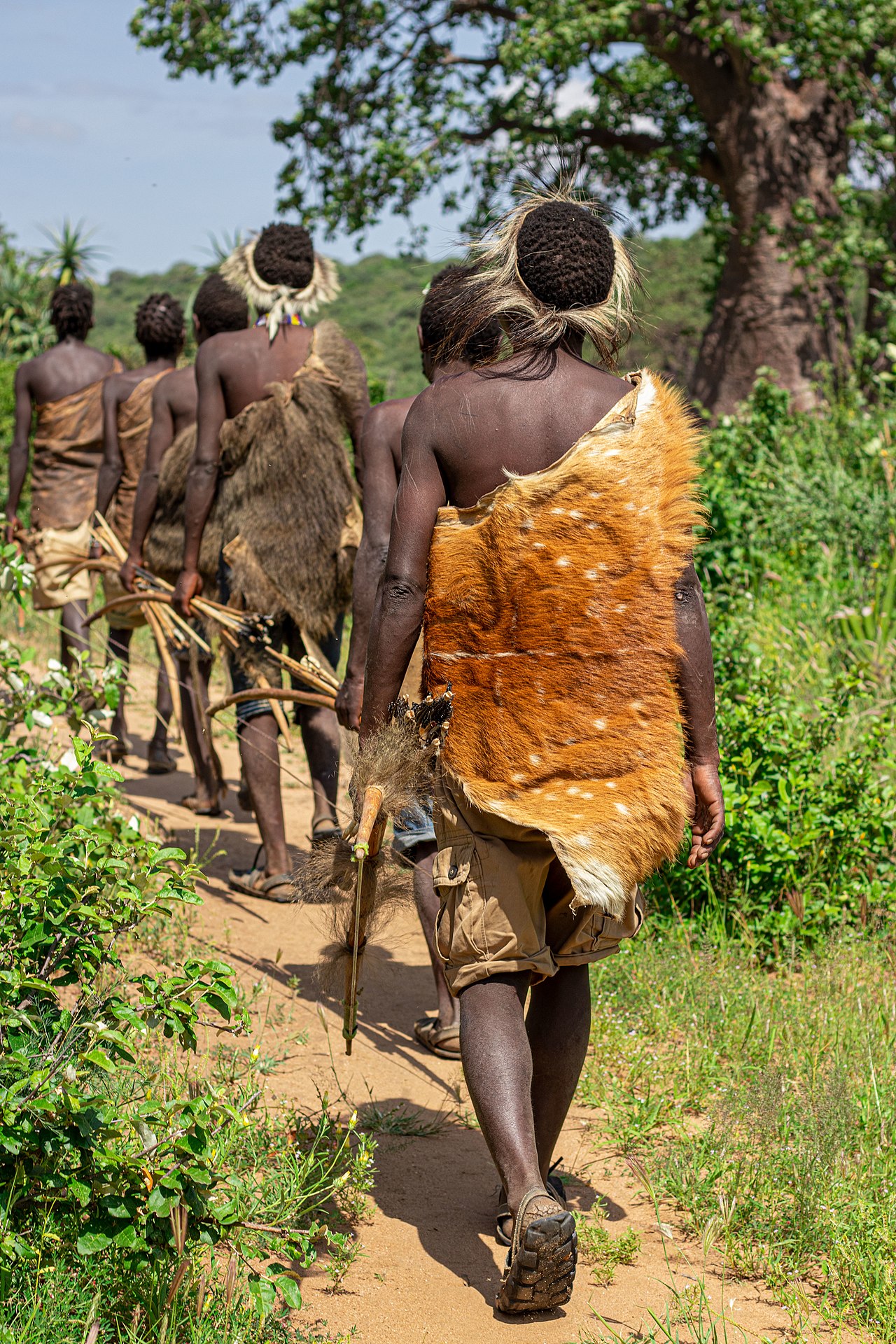
The grandmother hypothesis, developed principally by Hawkes and colleagues, offers the most widely discussed resolution of this puzzle.4, 14 The hypothesis proposes that post-menopausal women achieve greater inclusive fitness by provisioning grandchildren than by continuing to reproduce directly. An older woman’s probability of producing a healthy infant and surviving long enough to rear it to independence declines with age; meanwhile, her ability to gather calorie-dense plant foods does not decline at the same rate. By redirecting her foraging effort from direct reproduction to grandchild support, she can underwrite the shorter interbirth intervals of her daughters, increasing the number of surviving grandchildren she contributes to the gene pool.4 Ethnographic data from the Hadza of Tanzania and other foraging peoples show that grandmothers’ foraging effort correlates positively with grandchildren’s nutritional status and survival, consistent with this prediction.16
Agent-based models have shown that grandmother effects can, over plausible evolutionary timescales, drive a population from a chimpanzee-like post-reproductive lifespan to a human-like one — suggesting that the grandmother’s role was not merely facilitated by post-reproductive longevity but may have actively selected for it.3 The hypothesis remains debated: alternative models emphasize male provisioning, pair bonding, or ecological variability as drivers of the extended female lifespan. But the core insight — that human reproductive rates are only possible because offspring costs are distributed across the social group — is broadly accepted.
Evidence from fossil hominins
Inferring life history pace from skeletal remains is methodologically challenging. Soft-tissue indicators of development — hormonal changes, behavioral transitions, onset of reproductive cycling — leave no direct trace in bone or stone. However, two lines of skeletal evidence provide relatively robust proxies for developmental pace: dental development timing and long-bone growth patterns.
Teeth are the most useful archive of developmental timing in fossil hominins because tooth enamel is deposited incrementally in a series of daily and weekly growth lines, called striae of Retzius or perikymata, that are preserved even after death and can be counted with synchrotron or microCT imaging. The timing of first molar eruption is particularly informative because it marks the transition from infant to juvenile feeding in most primates and correlates tightly with life history pace across species: faster life history species erupt their first molars earlier.7
In a landmark 2001 study, Dean and colleagues analyzed perikymata counts in the teeth of early Homo fossils, including specimens attributed to Homo erectus and Homo heidelbergensis, and compared them to modern humans and chimpanzees.7 They found that early Homo specimens showed dental development substantially faster than that of modern humans — closer to the ape pattern — suggesting that the full extension of the human developmental schedule was not yet in place early in the genus. This was a significant finding because it implied that the distinctively slow human life history was not an ancient hominin trait but evolved gradually over the Pleistocene.
The Turkana Boy (KNM-WT 15000), a remarkably complete skeleton of a young male Homo erectus from Kenya dated to approximately 1.5–1.6 million years ago, is the most intensively studied fossil for life history inference.8 Estimates of the individual’s age at death have ranged from 7–8 years (based on dental development patterned on the modern human schedule) to 11–12 years (based on stature and long-bone maturation). The discrepancy arises precisely because H. erectus had a dental developmental schedule intermediate between modern humans and chimpanzees, making it difficult to apply modern human age charts directly.8, 9 Most analyses now agree that if dental development is used as the primary clock, the Turkana Boy was developmentally closer to an eight- or nine-year-old modern human at death, implying a faster developmental tempo than living humans but a slower one than apes — a life history in transition.
The Mojokerto child, a juvenile calvaria from Java dated to approximately 1.8 million years ago and attributed to early Asian Homo erectus, provides a similarly informative data point. Analysis of dental microstructure and estimated brain growth trajectory in this specimen suggests that its rate of early brain growth, while rapid, was slower than in a comparably aged chimpanzee and may have already shown some extension toward the modern human pattern.15 Together, these fossil cases suggest a mosaic, gradual evolution of the human life history schedule within the genus Homo, with the full modern pattern — distinct childhood, prolonged adolescence, very late first reproduction — emerging relatively recently in anatomically modern Homo sapiens.
Brain size, metabolic rate, and developmental pace
The correlation between brain size and life history pace in primates is well established, but the causal mechanism underlying it has been debated. One interpretation holds that large brains require longer developmental periods simply because they take more time to build and wire: the slow life history is the developmental cost of the large brain. A competing interpretation holds that the slow life history came first — or at least co-evolved dynamically — and that the extended juvenile period created the ecological opportunity for investing in a larger, more capable brain because the longer period of learning justified the neural investment.18
Pontzer and colleagues added a metabolic dimension to this debate with a 2016 comparative study showing that humans have substantially higher total energy expenditure than other great apes of similar body mass — not primarily because of larger brains, but because humans sustain higher metabolic throughput overall.11 This elevated metabolic rate supports both the energetic demands of the large human brain and a faster pace of somatic growth during development, despite the slower schedule. The implication is that human life history evolution involved not merely slowing down ape-like development but reconfiguring the entire metabolic infrastructure, with a higher-throughput energetic system underwriting a brain that would be impossible to sustain at chimpanzee metabolic rates.
This metabolic remodeling almost certainly required a dietary shift. Kaplan’s embodied capital model links the extended juvenile learning period to the exploitation of high-quality, skill-intensive foods, particularly animal protein.5 The cooking hypothesis proposed by Richard Wrangham argues that the shift to thermally processed food, beginning perhaps as early as 1.8 million years ago with Homo erectus, dramatically increased the caloric yield of the hominin diet and may have provided the energetic substrate necessary to sustain both a larger brain and a faster pace of offspring production.11 Whether cooking was cause or consequence of the emerging human life history pattern remains contested, but the two transitions — dietary and developmental — are almost certainly linked.
Cooperative breeding and cultural transmission
The human developmental schedule only functions within a specific social context. The childhood phase, the adolescent investment in skill acquisition, the shortened interbirth interval, and the post-reproductive grandmother are all features that presuppose an extended network of cooperative investment in offspring — what Sarah Blaffer Hrdy has called cooperative breeding.9 Unlike the great apes, in which offspring care is almost exclusively maternal, human infants and children receive food, protection, and social learning from fathers, grandmothers, older siblings, and unrelated group members. This distributes the enormous cumulative cost of human offspring across multiple individuals and makes possible a reproductive rate that a single mother could not sustain alone.
Hrdy has argued that cooperative breeding had profound consequences not only for life history but for human cognition.9 An infant born into a cooperative breeding system faces selection pressure to be appealing and legible to multiple potential caregivers, not just the mother. This may have selected for the heightened social intelligence, emotional attunement, and joint attention abilities that characterize human infants from a very early age and that underlie the cultural learning capacities so central to human behavioral ecology. Piantadosi and Kidd have formalized a related argument, showing that cognitive sophistication correlates with altriciality and helplessness across species, and proposing that the very helplessness of human infants created the conditions for the adult attentiveness and teaching behaviors that support cultural transmission.10
The extended juvenile period also serves as the primary window for cultural transmission. Henrich and colleagues have shown that human behavioral competence depends heavily on accumulated cultural knowledge that cannot be reinvented within a single lifetime — skills, norms, technologies, and ecological knowledge that are learned slowly from knowledgeable elders and peers.17 The prolonged human childhood and adolescence provide the time window in which this cultural inheritance is acquired. On this account, the slow human developmental schedule is not merely a side effect of brain size but an active adaptation to a highly cultural niche: learning is the work of childhood, and a longer childhood means more learning.5, 17
The full picture that emerges from this convergence of life history theory, comparative anatomy, paleoanthropology, and behavioral ecology is one of co-evolution among several interlocking systems. A larger brain demanded more developmental time and energy; more developmental time required alloparental support; alloparental support relaxed the constraint on interbirth interval; shorter interbirth intervals increased the benefits of post-reproductive grandmothering; and the social complexity of cooperative breeding selected for the inter-individual attentiveness that makes cultural learning possible. No single trait drove the others; instead, the distinctive human life history appears to have bootstrapped itself into existence through a web of mutually reinforcing selective pressures, each enabled by the others. The result — a species that grows up slowly, learns prodigiously, reproduces with surprising frequency given its investment costs, and lives long enough after reproduction to subsidize grandchildren — has no parallel in the primate order.
References
Growth processes in teeth distinguish modern humans from Homo erectus and earlier hominids
Ontogeny and phylogeny of the pelvis-birth canal complex in humans, apes and australopithecines