Overview
- Homo antecessor is a hominin species known from the Gran Dolina cave at Atapuerca, Spain, with fossils dated to approximately 800,000–900,000 years ago, making them among the oldest known inhabitants of western Europe.
- The juvenile face ATD6-69 displays a strikingly modern-looking midface, which led the discoverers to propose that H. antecessor might represent the last common ancestor of Neanderthals, Denisovans, and modern humans, though this hypothesis remains contested.
- A 2020 ancient protein study confirmed that H. antecessor falls outside the Neanderthal–Denisovan–modern human clade as a closely related sister lineage, and the Gran Dolina assemblage provides some of the earliest unambiguous evidence for hominin cannibalism.
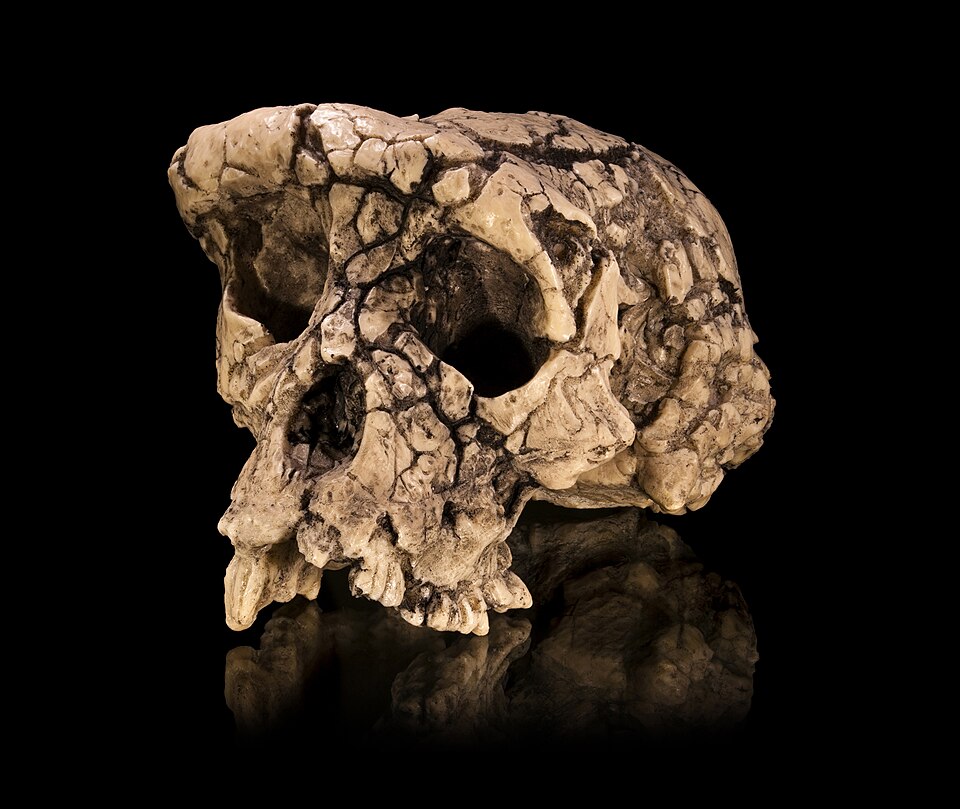
Homo antecessor is an extinct hominin species known almost exclusively from the Gran Dolina cave within the Atapuerca karst complex in the province of Burgos, northern Spain. The fossils, recovered from a stratum designated TD6, were formally described and named by José María Bermúdez de Castro and colleagues in 1997, who proposed that the species represented the last common ancestor of modern humans, Neanderthals, and Denisovans.1 Dated to approximately 800,000 to 900,000 years ago by a combination of paleomagnetism and electron spin resonance, they constitute some of the oldest hominin remains found anywhere in western Europe.1, 2 The fossils attracted immediate scientific attention because the partial face of one juvenile individual, catalogued as ATD6-69, displayed a midface architecture strikingly similar to that of modern Homo sapiens, juxtaposed against a cranium retaining many primitive features.1, 21
The taxonomic status and phylogenetic position of H. antecessor have been debated continuously since the species was named. Some researchers have argued that it is a valid species occupying a pivotal position in human evolution; others have proposed that the fossils represent a juvenile form of Homo heidelbergensis, or alternatively, an early variant of Homo erectus that dispersed into Europe. A breakthrough came in 2020, when Frido Welker and colleagues published an ancient protein analysis of H. antecessor dental enamel that placed the species as a sister lineage to the clade uniting Neanderthals, Denisovans, and modern humans, offering the first biomolecular evidence bearing directly on the question.14 Beyond phylogenetics, the Gran Dolina site has contributed uniquely to the study of early hominin behavior, providing unambiguous evidence for cannibalism in a pre-Neanderthal European population.11, 12
The Atapuerca archaeological complex
The Sierra de Atapuerca is a low limestone ridge roughly 14 kilometers east of the city of Burgos in Castilla y León, Spain. Its scientific importance derives from an extraordinary concentration of cave sites that together have yielded hominin fossils spanning nearly 1.2 million years of human occupation in Europe, the longest continuous record of its kind on the continent.7, 16 The sites were first brought to scientific attention in the late nineteenth century when a railway trench was cut through the ridge for a mining operation, exposing the entrances to several cave systems. Systematic archaeological excavation began in earnest in the 1970s under the direction of Emiliano Aguirre, and the research program has since expanded into one of the largest and most productive paleoanthropological projects in the world.7
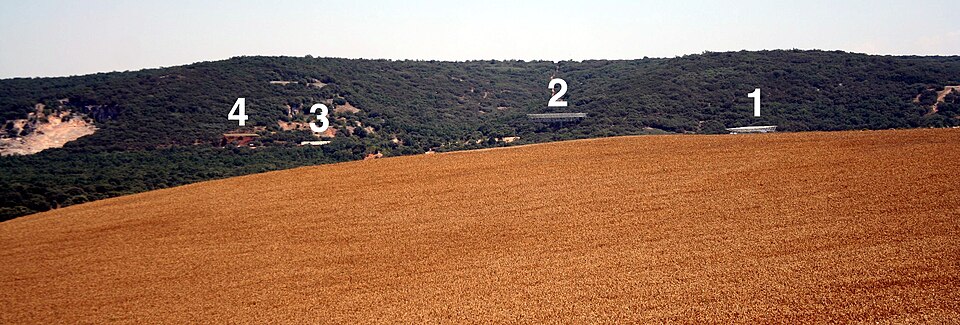

Three principal sites within Atapuerca are relevant to human evolution. Gran Dolina is a sediment-filled cave shaft whose lower levels contain the fossils attributed to H. antecessor; its upper levels contain younger Acheulean and Mousterian deposits. The Sima de los Huesos, or "Pit of Bones," is a small chamber at the base of a 13-meter vertical shaft within the Cueva Mayor cave system; it has yielded more than 7,000 fossils representing at least 28 Middle Pleistocene hominins dated to approximately 430,000 years ago, now understood through ancient DNA analysis to be early Neanderthals.15, 24 The Sima del Elefante is a third site whose lowermost levels, designated TE9, have produced hominin remains and Mode 1 stone tools dated to approximately 1.2 million years ago, making them the oldest confirmed evidence of hominin presence in western Europe.9
The Atapuerca sites were inscribed as a UNESCO World Heritage Site in 2000 in recognition of their outstanding contribution to the understanding of human evolution. Research there continues under the leadership of Eudald Carbonell, Juan Luis Arsuaga, and Bermúdez de Castro, whose teams publish findings from each excavation season.16
Sima del Elefante and the oldest Europeans
Before the Gran Dolina fossils can be placed in context, it is necessary to understand the older record at Sima del Elefante. In 2008, Carbonell and colleagues reported the discovery of a hominin mandible fragment and isolated tooth from level TE9 of Sima del Elefante, accompanied by simple Oldowan-style (Mode 1) flaked pebble tools.9 Paleomagnetic analysis of the sediments placed the fossil-bearing layer within the Matuyama chron, a period of reversed magnetic polarity, prior to a magnetostratigraphic event associated with the Jaramillo subchron. Combined with biostratigraphic evidence from the associated rodent fauna, the best age estimate for the TE9 level is approximately 1.1 to 1.2 million years ago.9
The TE9 mandible, catalogued as ATE9-1, is a left mandibular body preserving several teeth. In 2017, Bermúdez de Castro and colleagues published additional mandible remains from Sima del Elefante and examined the morphology of the ATE9-1 specimen in detail.10 They noted that its characteristics are not fully consistent with the Gran Dolina H. antecessor material and left open the question of whether the 1.2-million-year-old Sima del Elefante hominins belong to the same species or represent an earlier, distinct wave of dispersal into Europe.10 The Sima del Elefante fossils thus document European hominin presence some 300,000 to 400,000 years before the Gran Dolina population and may indicate that multiple colonization events brought hominins into Europe during the Early Pleistocene.9
Gran Dolina and the TD6 stratum
Gran Dolina is a sediment-filled vertical shaft approximately 20 meters in diameter whose exposed fill has been divided into eleven stratigraphic units, designated TD1 through TD11 from bottom to top.4 The hominin-bearing level, TD6, lies near the base of the exposed section and is separated from the overlying TD7 unit by a distinctive clay layer. The first recognition of hominin fossils in TD6 came during excavation in 1994, when a partial tibia and dental remains were recovered.4 The 1995 excavation season, reported by Carbonell and colleagues in Science, yielded a substantially larger collection of more than 80 hominin fragments from at least six individuals, along with thousands of stone tools and faunal remains.4

The age of TD6 has been determined through multiple independent methods. Paleomagnetic analysis of the sediments shows a normal polarity signature consistent with the Brunhes chron, separated from the reversed Matuyama polarity of the underlying TD5 unit by the Brunhes-Matuyama boundary, which is radiometrically dated to approximately 780,000 years ago.17 The fossils therefore postdate this reversal. Electron spin resonance (ESR) and uranium-series dating of mammalian tooth enamel from the same unit yielded ages in the range of 780,000 to 857,000 years, with most estimates clustering around 800,000 to 850,000 years.17 A more refined magnetostratigraphic study published in 2015 by Parés and colleagues further constrained the age to the early Brunhes, between approximately 772,000 and 949,000 years ago, with the hominin-bearing horizon falling toward the younger end of that range.18
The stone tool assemblage from TD6 consists exclusively of simple, unretouched flakes, cores, and occasional chopping tools, a technology known as Mode 1 or Oldowan.22 The absence of the symmetrically shaped handaxes and cleavers that characterize the Acheulean (Mode 2) technology — which was being produced in Africa by hominins at this time and would later appear in Europe in Sima de los Huesos-associated levels — is a notable feature of the Gran Dolina assemblage. Whether this reflects a distinct cultural tradition, a colonizing population that had not yet brought Acheulean technology from Africa, or simply an expedient toolkit suited to the available raw materials remains a matter of ongoing investigation.22
Discovery and naming
The formal description of Homo antecessor was published by Bermúdez de Castro and six colleagues in Science on 30 May 1997.1 The name was derived from the Latin antecessor, meaning "pioneer" or "one who goes before," reflecting the authors' hypothesis that the species represented an early colonizer of Europe and a potential ancestor to both Neanderthals and modern humans.1 The holotype was designated as ATD6-5, a juvenile maxillary fragment. The hypodigm included cranial and postcranial fragments from at least six individuals, ranging in age from juvenile to young adult.1
The species diagnosis centered on three features that the authors considered to distinguish H. antecessor from all other known hominins. First, a modern-looking midface: the infraorbital region and zygomaticoalveolar crest of ATD6-69, the most complete facial fragment recovered, showed a canine fossa and the overall geometry of the midface that closely resembled Homo sapiens rather than Neanderthals or H. erectus.1, 21 Second, the frontal bone and supraorbital torus of other fragments from the assemblage had a morphology more reminiscent of Homo erectus than of later European hominins, suggesting a mosaic of modern and primitive traits within the same taxon.1 Third, the dental morphology, analyzed in detail by Bermúdez de Castro and Martinón-Torres, showed features shared with H. sapiens and Neanderthals but also characteristics that appeared unique to the TD6 sample.20
The discovery attracted wide attention partly because the proposal that a species with a modern-looking midface lived 800,000 years ago in Europe seemed to challenge prevailing models of human evolution, which placed the emergence of modern facial anatomy much later, in Africa.21 The Science article's cover featured a reconstruction of the ATD6-69 face, and Ann Gibbons's accompanying News Focus piece in the same issue noted that the find "gives evolution a new face," highlighting the unexpected combination of primitive and derived features.21
Anatomy and morphology
The hominin sample from TD6 comprises remains from at least six and possibly as many as eleven individuals, all of them subadults or young adults, with no definitive remains of mature adults preserved.19 This skewing of the sample toward younger individuals may be a taphonomic artifact of the cannibalism that produced the assemblage, since subadults would have offered less nutritional return and may have been processed differently, or it may reflect demographic features of the original population. The absence of old adult crania limits the ability to characterize the full range of morphological variation in the species.19
ATD6-69, a partial juvenile face preserving the upper central incisors, the nose, and both cheekbones, remains the most informative specimen. Geometric morphometric analysis of ATD6-69 published by Martinón-Torres and colleagues in 2014 confirmed that the infraorbital morphology of H. antecessor was genuinely modern in several quantifiable respects: the canine fossa is present, the cheekbone (zygoma) descends obliquely rather than horizontally, and the subnasal plane is angled similarly to H. sapiens.13 These traits distinguish ATD6-69 clearly from both Neanderthals, who show midfacial prognathism and lack a canine fossa, and from classic H. erectus, whose midface is flat and projecting.13
Other parts of the skull, however, are far more primitive. ATD6-15, a frontal bone fragment, bears a prominent supraorbital torus comparable in thickness to that of H. erectus. The mandibles recovered from TD6 are robust, with wide ascending rami and no trace of a chin, features shared with H. erectus and Neanderthals alike.3 The dental morphology includes a combination of traits: the incisors and canines have a shoveled morphology shared with Asian H. erectus, while the premolars and molars show a reduction in cusp complexity that is more derived than typical H. erectus teeth.20
Postcranial remains from TD6 are fragmentary but informative. Lorenzo and colleagues published an analysis of these remains in 2002, finding that a partial tibia and femur fragments indicated a body size comparable to later European Neanderthals, with estimated stature in the range of 165 to 175 centimeters.23 Limb proportions appeared elongated relative to the trunk, a configuration associated with warm-adapted body plans in later hominins, though the sample size is too small to draw confident conclusions.23
Key Homo antecessor fossils from Gran Dolina TD61, 3, 19
| Catalogue number | Element | Individual | Significance |
|---|---|---|---|
| ATD6-5 | Juvenile maxilla | Individual I | Holotype of the species |
| ATD6-15 | Frontal bone fragment | Individual II | Primitive thick supraorbital torus |
| ATD6-69 | Partial juvenile face | Individual VI | Modern-looking midface; most cited specimen |
| ATD6-1 | Partial tibia | Unknown | First hominin bone recovered from TD6 (1994) |
| ATD6-43 | Mandible fragment | Individual IV | Robust jaw with no mentum osseum (chin) |
Evidence of cannibalism
One of the most remarkable features of the Gran Dolina TD6 assemblage is the evidence for systematic cannibalism. The hominin bones are not isolated curiosities embedded in a normal archaeological matrix; they are mixed indiscriminately with the butchered remains of other large mammals, including deer, rhinoceros, and bear, in a manner that suggests the hominins were processed as a food resource in the same way as hunted game.11
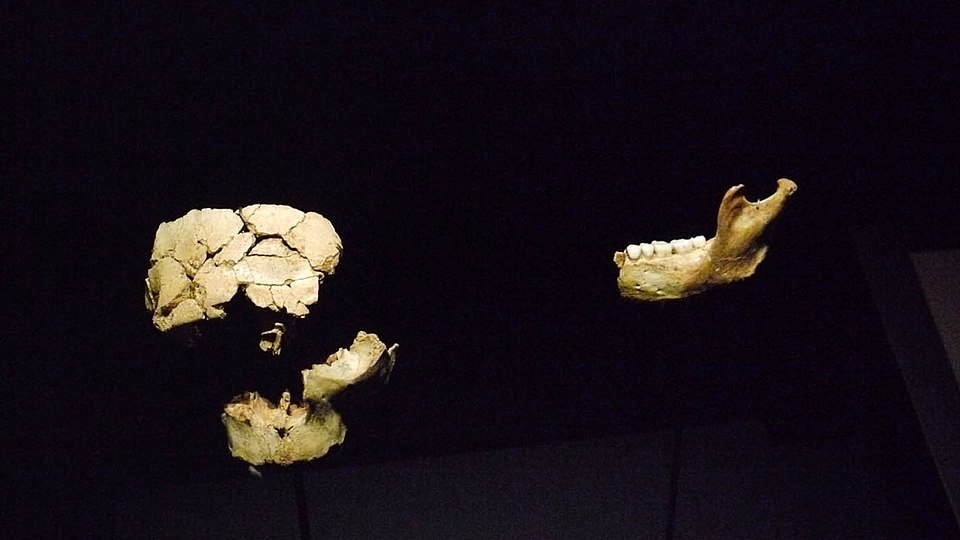

The taphonomic analysis by Fernández-Jalvo and colleagues, published in 1999 in the Journal of Human Evolution, documented cut marks, percussion marks, and impact points on more than half of the hominin bone fragments from TD6.12 The cut marks occur in positions consistent with deliberate defleshing: on the temporal and parietal bones of the skull, on the mandible at points where the masseter and temporalis muscles attach, on the shafts of long bones at points where large muscle groups originate or insert, and on ribs and vertebrae.12 Percussion marks and internal striae on long bone shafts indicate that the bones were broken open to extract marrow, a behavior consistently associated with nutritional processing in the archaeological record.12
The pattern of modification is strikingly similar to what is observed on the non-human animal bones from the same layer, implying that the hominins were processed using the same sequence of behaviors applied to any other prey animal: skinning, defleshing, disarticulation, and marrow extraction.11 Fernández-Jalvo and colleagues distinguished this pattern from the kind of ritualistic or mortuary defleshing seen at some later sites, arguing that the Gran Dolina evidence represents straightforward nutritional cannibalism, the consumption of conspecifics primarily for caloric gain.12
The identity of the cannibals is unresolved. The processing hominins may have belonged to the same population as the consumed individuals, making the behavior endocannibalism, or they may represent a different, competing group engaged in exocannibalism. Given that all the TD6 hominin fossils appear to belong to the same species on morphological grounds, endocannibalism within a social group is one plausible interpretation, though the evidence cannot distinguish between these scenarios.12 The Gran Dolina cannibalism predates the next oldest unambiguous hominin cannibalism evidence in Europe by several hundred thousand years, placing it at the earliest known horizon of this behavior in the continent's archaeological record.11
Taxonomic status and phylogenetic debate
The taxonomic validity of Homo antecessor has been challenged on several grounds since the species was named. The most persistent objection concerns the juvenile status of the key specimen. Because ATD6-69 is the partial face of a subadult individual, critics have argued that its modern-looking midface may simply reflect the underdeveloped morphology of an immature skeleton that would have acquired more primitive, projected features as the individual aged, rather than representing a genuinely derived adult trait.19 Bermúdez de Castro and colleagues have addressed this critique by arguing that certain aspects of the infraorbital morphology, particularly the canine fossa, are ontogenetically stable and do not disappear with age in any known hominin, making the juvenile status irrelevant to the key diagnostic features.19
A second line of criticism holds that the TD6 fossils are morphologically insufficient to sustain a new species diagnosis given the fragmentary nature of the sample. Because no adult cranium is preserved, it is impossible to characterize the braincase fully. Some researchers have proposed that the TD6 fossils could represent an early form of Homo heidelbergensis, the broad Middle Pleistocene European taxon, or could be accommodated within an expansively defined H. erectus.5, 6 Proponents of H. antecessor counter that the facial morphology of ATD6-69 is genuinely unlike anything seen in H. heidelbergensis specimens and that the combination of traits found in TD6 has no parallel in the known sample of either H. erectus or H. heidelbergensis.8
The original 1997 paper proposed that H. antecessor was the last common ancestor (LCA) of Neanderthals and modern humans, implying a split between the two lineages before 800,000 years ago.1 This hypothesis attracted skepticism because molecular clock analyses from ancient DNA, when they became available in subsequent decades, placed the Neanderthal–modern human divergence at approximately 550,000 to 765,000 years ago, making an LCA at 800,000 years ago possible but uncomfortably old for many phylogenetic models.25 An alternative position, articulated by Bermúdez de Castro and colleagues in their 2014 review, retreated from the strong LCA claim, describing H. antecessor instead as a member of the stem population from which the Neanderthal–Denisovan–modern human clade eventually emerged, rather than the specific ancestral node itself.19
Proposed phylogenetic positions of Homo antecessor in the literature1, 14, 19, 25
Ancient protein analysis and the 2020 breakthrough
For the first two decades after the species was named, the phylogenetic debate over H. antecessor could not be resolved by molecular evidence because no DNA has survived in the TD6 fossils. At approximately 800,000 years old, they lie far beyond the effective temporal limit of ancient DNA recovery under even ideal preservation conditions, which is generally considered to be around 500,000 years in cold or frozen environments and far less in warmer temperate climates such as northern Spain.14
Ancient proteins, however, survive considerably longer than DNA because the collagen and enamel matrix proteins in bone and tooth enamel are physically protected by the mineral matrix and are chemically more stable than nucleic acids. Frido Welker and colleagues at the Natural History Museum of Denmark and the Max Planck Institute for Evolutionary Anthropology developed methods for extracting and sequencing protein fragments (peptides) from ancient dental enamel using liquid chromatography coupled to mass spectrometry.14 In 2020, they applied this technique to H. antecessor tooth enamel from Gran Dolina, recovering sufficient peptide sequences from the enamel protein amelogenin to reconstruct the phylogenetic affinity of the species.14
The results placed H. antecessor outside the clade that unites Neanderthals, Denisovans, and modern humans. Specifically, the H. antecessor amelogenin sequence was more similar to the outgroup sequences and diverged from the Neanderthal–Denisovan–modern human clade prior to the last common ancestor of those three lineages.14 This finding is consistent with two interpretations: either H. antecessor is a sister lineage that diverged before the Neanderthal–modern human common ancestor lived, or it represents the ancestral population from which the entire Neanderthal–Denisovan–modern human clade descended. The protein data alone cannot discriminate between these two possibilities, but they decisively rule out the scenario in which H. antecessor is a member of the Neanderthal lineage or a late-surviving form of H. erectus with no special relationship to the sapiens-Neanderthal-Denisovan clade.14
The Welker et al. (2020) study also recovered sequences from other enamel proteins including ameloblastin and enamelin. The H. antecessor variants of these proteins showed amino acid substitutions at positions that differ from both modern humans and Neanderthals, consistent with their deep divergence from the ancestor of those lineages.14 The study thus established paleoproteomics as a viable tool for resolving phylogenetic questions in the deep hominin record where DNA is not accessible, and it validated the general picture of H. antecessor as an archaic hominin closely related to, but distinct from, the ancestors of all living humans.14
Significance and context in European prehistory
The Gran Dolina fossils occupy a pivotal position in understanding the pattern of early hominin dispersal into Europe. The question of when and how hominins first colonized Europe from Africa is one of the most actively debated topics in paleoanthropology. Prior to the Atapuerca discoveries, the earliest generally accepted European hominin evidence was approximately 500,000 to 600,000 years old. The Sima del Elefante fossils from Atapuerca pushed this back to 1.2 million years, and the TD6 assemblage adds a well-documented occupation at approximately 800,000 years ago, filling a critical gap in the record.9, 4
The Mode 1 stone tool technology at Gran Dolina raises the question of the relationship between tool technology and dispersal routes. The earliest hominins to reach Europe may have carried only simple flake-and-core technologies and arrived before the full Acheulean tradition had spread out of Africa. This suggests that Early Pleistocene European hominin populations were largely culturally isolated from the Acheulean-producing populations in Africa and the Levant during the same period, though the mechanisms of isolation — geographic barriers, population density, or cultural inertia — remain unclear.22, 6
The position of H. antecessor relative to the broader European Middle Pleistocene record raises a further question about continuity. After the Gran Dolina occupation at ~800,000 years ago, the next well-documented hominin presence in Europe consists of fossils and Acheulean tools dating to approximately 600,000 to 500,000 years ago, associated with populations typically assigned to Homo heidelbergensis. Whether the H. antecessor lineage survived through this interval and gave rise to the later populations, or whether there was a discontinuity representing a new colonization event from Africa or the Near East, cannot be determined from the available fossil record.8, 19
The Atapuerca project as a whole, encompassing Gran Dolina, Sima de los Huesos, Sima del Elefante, and several additional sites, has transformed the understanding of European human evolution. In the span of roughly three decades, it has yielded the oldest known western European hominins, the largest Middle Pleistocene hominin assemblage in the world, the first retrieval of ancient DNA from a Middle Pleistocene hominin, and the first successful ancient protein analysis of a pre-500,000-year-old hominin.5, 14, 24 Each of these milestones has forced a revision of existing models of human evolution, and the site continues to yield new material with each excavation season.16
The status of Homo antecessor as a recognized species will likely continue to be refined as additional fossils are recovered and as paleogenomic and proteomic techniques improve. The 2020 proteomics study represents the current state of the art in resolving its evolutionary affinities, but its placement as a sister lineage rather than a confirmed ancestor of the Neanderthal–Denisovan–modern human clade leaves open the question of which hominin population actually occupied the ancestral role at approximately 800,000 years ago.14, 25 For now, H. antecessor stands as a distinctive and ancient member of the human family, evidence that Europe was home to morphologically varied hominins far earlier than was appreciated a generation ago, and a reminder that the deep history of the genus Homo is still being written.2, 16
References
A hominid from the Lower Pleistocene of Atapuerca, Spain: possible ancestor to Neandertals and modern humans
The Atapuerca sites and their contribution to the knowledge of human evolution in Europe
Evidence of early Pleistocene hominid activity in the Sierra de Atapuerca (Burgos, Spain)
Earliest evidence of hominid presence at Atapuerca, Spain: the data from the Sima del Elefante cave site
New mandible remains from the Sima del Elefante (Atapuerca) Early Pleistocene cave site
Taphonomy of the Gran Dolina-TD6 hominin fossils from the Early Pleistocene of Sierra de Atapuerca
Human cannibalism in the Early Pleistocene of Europe (Gran Dolina, Sierra de Atapuerca, Burgos, Spain)