Overview
- Discovered in 2001 in the Djurab Desert of Chad and dated to approximately 7 million years ago, Sahelanthropus tchadensis is the oldest known potential hominin, represented primarily by a near-complete cranium nicknamed 'Toumaï.'
- Its combination of a small, non-honing canine, an anteriorly positioned foramen magnum, and a mosaic of primitive and derived cranial features places it close to the divergence point of the human and chimpanzee lineages.
- The 2022 description of postcranial remains—a femur and two ulnae—ignited a vigorous scientific debate about whether Sahelanthropus was a habitual biped, with competing analyses reaching opposing conclusions through 2026.
Sahelanthropus tchadensis is the oldest known potential hominin, dated to approximately 7 million years ago and known primarily from a near-complete cranium discovered in the Djurab Desert of northern Chad.1, 6 The species was formally described in 2002 by Michel Brunet and colleagues, who named it after the Sahel region of Africa and the Republic of Chad. The cranium, nicknamed "Toumaï" (meaning "hope of life" in the Dazaga language of Chad), preserves a striking mosaic of ape-like and hominin-like features that has made it one of the most debated fossils in paleoanthropology.1
The significance of Sahelanthropus extends beyond its antiquity. Its discovery in central Africa, roughly 2,500 kilometers west of the East African Rift Valley, challenged the long-standing assumption that early human evolution was confined to eastern Africa.1, 2 And the two-decade delay in describing its postcranial remains—followed by sharply conflicting analyses of those fossils—has made the question of whether Sahelanthropus walked upright one of the most actively contested issues in the study of human origins.12, 13
Discovery and naming
The first fossils of Sahelanthropus tchadensis were recovered on 19 July 2001 from the Toros-Menalla 266 (TM 266) locality in the Djurab Desert of northern Chad.1 The discovery team included Ahounta Djimdoumalbaye, Fanoné Gongdibé, and Mahamat Adoum of Chad's Centre National d'Appui à la Recherche (CNAR), along with French researcher Alain Beauvilain.15 The most important find was a nearly complete but heavily distorted cranium (TM 266-01-060-1), which became the holotype specimen. In addition to the cranium, the initial collection included a mandibular fragment with tooth sockets, isolated teeth, and jaw fragments, bringing the total to six specimens.1
Brunet and colleagues published the formal description in July 2002 in Nature, erecting both a new genus and species.1 The genus name Sahelanthropus combines "Sahel" (the semiarid belt south of the Sahara) with the Greek anthropos (human), while the species epithet tchadensis honors the country of discovery. The nickname "Toumaï" was bestowed by Chad's then-president Idriss Déby, drawing on the Dazaga name traditionally given to infants born just before the dry season—children whose survival is uncertain—as a metaphor for the fragile fossil and its precarious interpretive status.1, 15
By 2005, additional dental and mandibular material had been recovered from three Toros-Menalla localities (TM 247, TM 266, and TM 292), representing six to nine individuals in total.5 The new specimens included a lower canine consistent with a non-honing canine–premolar complex, additional post-canine teeth, and mandibular fragments that helped clarify the species' dental morphology and reinforced its distinction from extant apes.5
Geological context and dating
The TM 266 fossil locality lies in the Djurab Desert of northern Chad, approximately 500 kilometers northeast of present-day Lake Chad.2 The fossils were found in perilacustrine sandstones of the anthracotheriid unit, a geological horizon named for the abundance of anthracotheriid fossils (an extinct family of hippopotamus-like artiodactyls) that characterizes its deposits.2, 17 Unlike many East African hominin sites, the Toros-Menalla area lacks volcanic deposits, which meant that the standard argon-argon dating method used at most African hominin localities could not be applied.6
The initial age estimate relied on biochronology—correlating the associated mammalian fauna with better-dated assemblages elsewhere in Africa—which placed the deposits at approximately 7 million years ago.2 In 2008, Lebatard and colleagues applied cosmogenic nuclide dating using the ratio of atmospherically produced beryllium-10 to stable beryllium-9 (10Be/9Be) in authigenic sediments. Twenty-eight 10Be/9Be measurements from the anthracotheriid unit bracketed the age of Sahelanthropus between 6.8 and 7.2 million years ago, with a central estimate of 7.04 ± 0.18 Ma.6 This placed the species squarely at or just before the estimated divergence of the human and chimpanzee lineages, which molecular clock analyses have placed between approximately 5 and 8 million years ago.7, 8
Cranial anatomy
The Toumaï cranium is remarkable for its combination of primitive and derived features—a mosaic that does not fit neatly into either the ape or the later hominin pattern.1, 9 The braincase is small, with an estimated endocranial volume of 360 to 370 cubic centimeters, comparable to that of a modern chimpanzee and far smaller than the 400 to 550 cc typical of later australopithecines.1, 10 The cranial vault is long and low, and the nuchal crest (the bony ridge at the back of the skull for neck muscle attachment) is prominent, both features characteristic of great apes.1
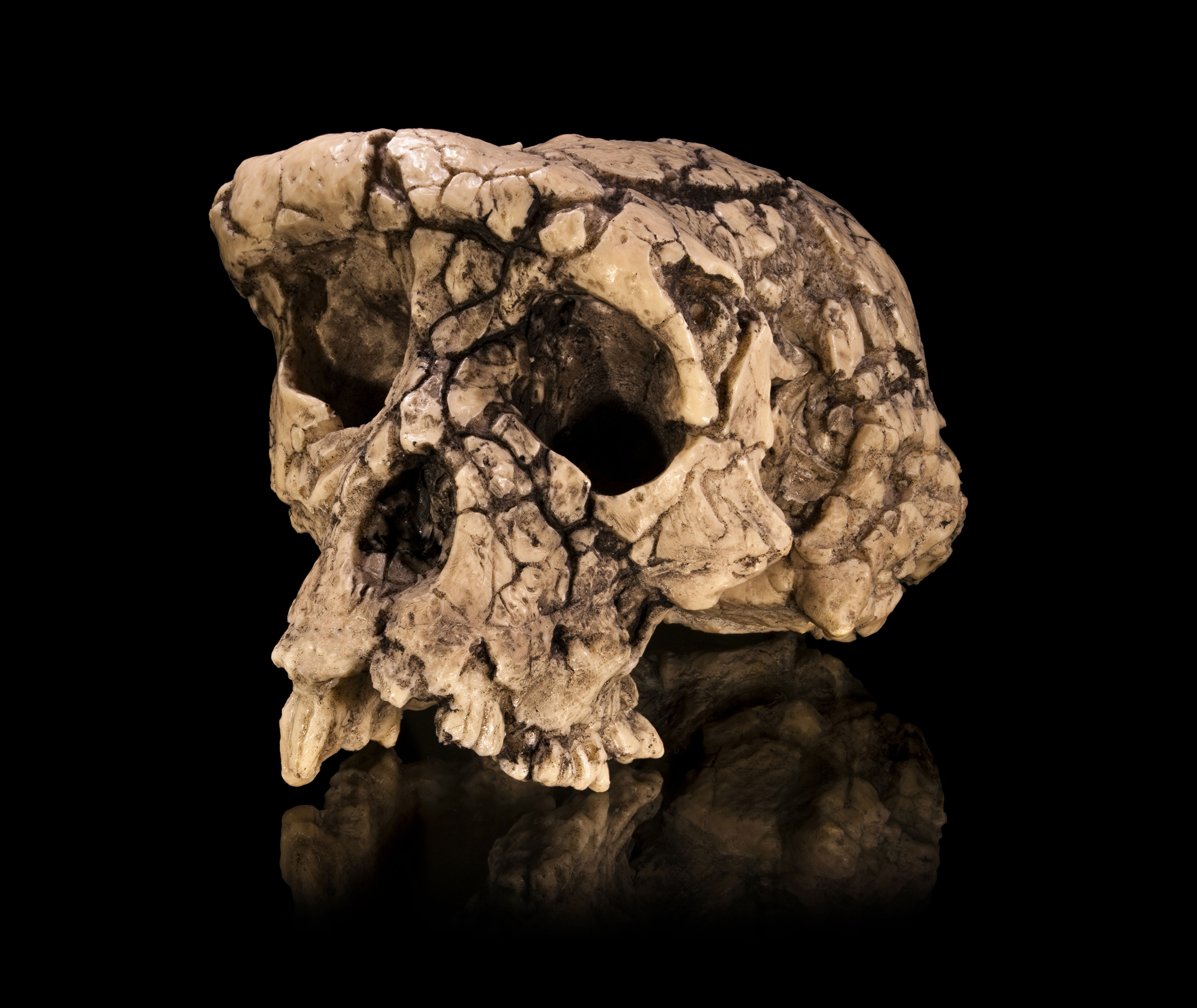
Yet several cranial features depart dramatically from the ape condition. The face is relatively flat and orthognathic (vertically oriented) compared with the pronounced forward projection (prognathism) of chimpanzee and gorilla faces.1, 10 The supraorbital torus (brow ridge) is massive and continuous across the frontal bone, exceeding the condition seen in any known great ape and more closely resembling the heavy brow ridges of some later hominins.1 Most critically, the foramen magnum—the opening at the skull base through which the spinal cord passes—is positioned anteriorly (toward the front of the skull base), rather than posteriorly as in quadrupedal apes.1, 9 An anteriorly placed foramen magnum is associated with an upright head posture and is one of the primary anatomical indicators of bipedal locomotion in the hominin fossil record.9, 18
Key cranial measurements of Sahelanthropus compared with other taxa1, 9, 10
| Feature | Sahelanthropus | Chimpanzee | Australopithecus |
|---|---|---|---|
| Endocranial volume | 360–370 cc | 300–400 cc | 400–550 cc |
| Canine honing complex | Absent | Present | Absent |
| Foramen magnum position | Anterior | Posterior | Anterior |
| Supraorbital torus | Massive, continuous | Moderate | Variable |
| Facial prognathism | Reduced | Pronounced | Moderate |
Dental morphology
The dental remains of Sahelanthropus, expanded substantially by the 2005 recovery of additional mandibular and dental specimens from TM 247, TM 266, and TM 292, reveal a dentition that combines primitive root morphology with derived crown features.5 The canine teeth are small and lack the large, interlocking canine–premolar honing complex that characterizes extant great apes, in which the upper canine is continuously sharpened against the lower third premolar.1, 5 The absence of this honing complex is a hallmark of the hominin lineage, and its loss in Sahelanthropus is one of the strongest arguments for hominin status.16
The post-canine teeth display intermediate enamel thickness—thicker than that of chimpanzees but thinner than the heavy enamel of later australopithecines.5 This intermediate condition is consistent with a generalized diet, perhaps incorporating harder or more abrasive foods than a typical ape frugivore but not yet adapted to the heavily masticatory diets of later hominins such as Paranthropus. Tooth root morphology remains primitive, resembling the pattern seen in Miocene apes rather than the derived root configurations of Australopithecus.5
Critics have noted that the small canines could reflect sex rather than taxonomy—if the cranium belonged to a female ape, the canines would naturally be smaller than those of a male of the same species.3, 4 However, Brunet and colleagues argued that the canine morphology, particularly the wear pattern and the absence of the honing complex, distinguishes Sahelanthropus from both male and female great apes.1, 5 The 2005 recovery of a lower canine from a separate individual (TM 292) confirmed the non-honing condition in more than one specimen, weakening the single-specimen objection.5
Virtual reconstruction
The Toumaï cranium suffered extensive taphonomic distortion during fossilization—fracturing, displacement of fragments, and plastic deformation that altered the skull's original geometry.9 To address these problems, Zollikofer and colleagues (2005) produced a detailed virtual reconstruction using high-resolution computed tomography (CT) scanning and digital correction algorithms.9 Each displaced fragment was digitally repositioned using mirror-imaging of the better-preserved side and comparative anatomical models drawn from extant apes and hominins.9
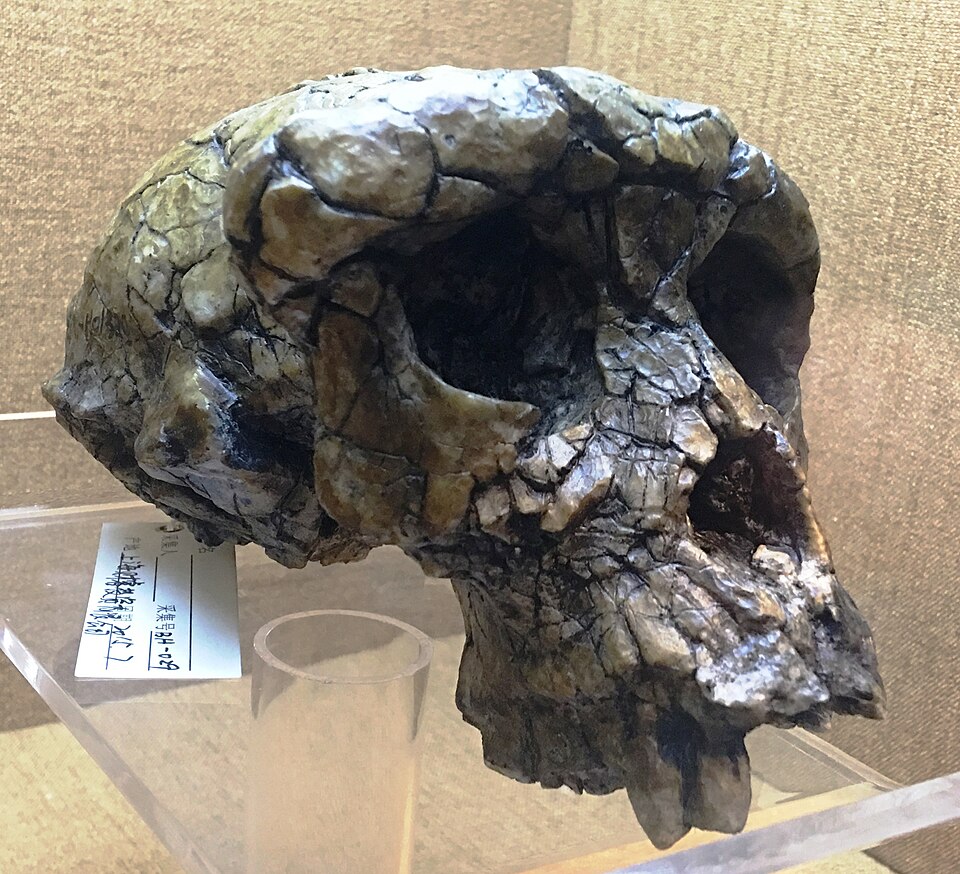

The virtual reconstruction confirmed several of the original observations and clarified others. The angle between the foramen magnum and the orbital plane (the plane defined by the eye sockets) in the reconstructed cranium was closer to values typical of Homo sapiens than to those of australopithecines or extant apes, strengthening the case for upright head carriage.9 The basicranium (the skull base) showed a suite of features intermediate between apes and later hominins, and principal component analysis placed the reconstructed skull closer to Australopithecus than to any living great ape.10
Guy and colleagues (2005) extended this work with a geometric morphometric analysis comparing the TM 266 cranium with a broad sample of African ape and hominin crania.10 Their principal component analysis, in which the first component accounted for 78% of variance, found that TM 266 shared many primitive features with chimpanzees but was overall most similar to Australopithecus, particularly in basicranial morphology.10 The analysis revealed a unique mosaic: a short subnasal region combined with a vertical upper face that projected substantially in front of the neurocranium—a configuration not seen in any other known taxon.10
The postcranial debate
For nearly two decades after the cranium's description, the question of whether Sahelanthropus was a biped rested entirely on cranial evidence—specifically, the forward position of the foramen magnum. Postcranial remains, including a partial left femur (TM 266-01-063) and two ulnae (forearm bones), had been recovered from the TM 266 site but were not formally described until 2020 and 2022, a delay that generated considerable controversy in the field.11, 12
The first postcranial analysis came from Macchiarelli and colleagues in 2020, who had access to photographs and measurements of the femur but not the physical specimen itself. Their preliminary functional analysis concluded that the femoral shaft belonged to an individual that was not habitually bipedal, finding its morphology more consistent with quadrupedal locomotion.11 The study argued that the femur lacked the cortical bone asymmetries and other structural features that characterize habitual bipeds.11
In 2022, Daver and colleagues published a comprehensive analysis of the femur and two ulnae in Nature, reaching the opposite conclusion.12 Their study identified several features of the femur as hallmarks of bipedal locomotion, while the ulnae showed morphology consistent with arboreal climbing. They concluded that Sahelanthropus combined habitual bipedalism on the ground with substantial tree-climbing, a locomotor pattern similar to what has been proposed for other early hominins.12
Cazenave and colleagues (2025) published a detailed rebuttal in the Journal of Human Evolution, arguing that none of the "hallmarks" of bipedalism identified by Daver and colleagues were unique to hominin bipeds, and that several of the femur's attributes are found only in great apes among hominids.13 They further noted that the ulnar shaft contours and the deep, keeled trochlear notch of the ulna comprised a suite of traits signaling African ape-like quadrupedalism.13
In January 2026, Williams and colleagues published a study in Science Advances that applied 3D geometric morphometrics to the femur and ulnae, comparing them with a broad sample of living and fossil species.14 While acknowledging that the overall external limb bone shape of Sahelanthropus most closely resembles chimpanzees, the study identified three features that the authors argued strongly indicate adaptation to bipedalism: the presence of a femoral tubercle (an attachment point for the iliofemoral ligament found only in hominins), strong femoral antetorsion within the hominin range, and morphological correlates of a derived gluteal complex.14 The study also found that Sahelanthropus had a relatively long femur compared to its ulna—limb proportions that differed from those of apes and more closely resembled Australopithecus.14
Timeline of Sahelanthropus research milestones1, 12, 14
Paleoenvironment
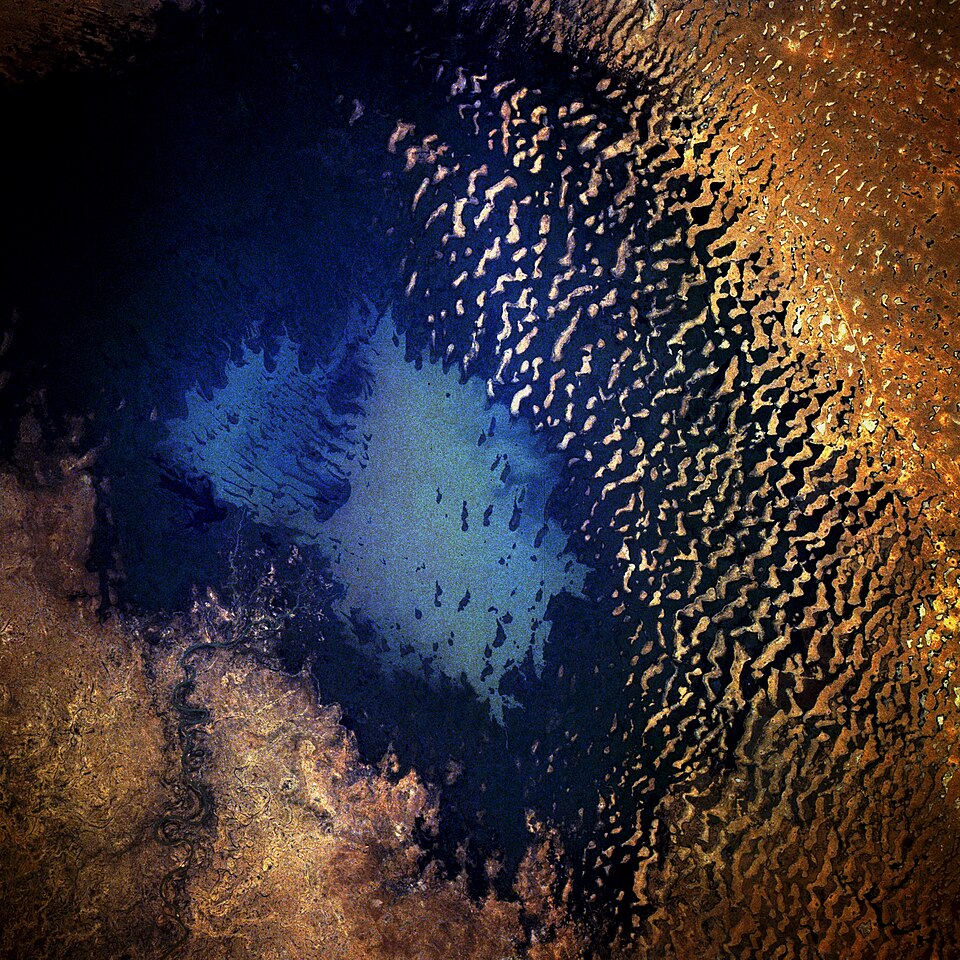
The Toros-Menalla deposits preserve a rich late Miocene fauna that allows reconstruction of the environment in which Sahelanthropus lived.2 Vignaud and colleagues (2002) described the faunal assemblage as including a significant aquatic component—fish, crocodiles, turtles, and amphibious mammals such as anthracotheriids and hippopotamids—alongside terrestrial taxa associated with both gallery forest and savanna, including primates, rodents, elephants, equids, and bovids.2
.jpg)
This faunal evidence points to a mosaic landscape bordering a large freshwater body, probably a predecessor of Lake Chad that was far more extensive during the late Miocene than the present-day lake.2, 17 Otero and colleagues (2014) analyzed the mammalian paleocommunities from multiple Toros-Menalla localities and found that the hominin-bearing assemblages were taxonomically richer and ecologically more diverse than other assemblages from the same area, with a wider spectrum of habitats represented.17 Dental mesowear analysis of the bovids from the TM deposits indicated that Sahelanthropus inhabited a mosaic environment with patches of both forest and grassland, consistent with a lakeside or gallery-forest setting rather than either dense closed forest or open savanna.19
This environmental reconstruction has important implications for understanding early hominin ecology. The mosaic habitat documented at Toros-Menalla is broadly similar to the woodland and wooded-grassland environments reconstructed for other early hominin sites, including the Lukeino Formation of Kenya (where Orrorin tugenensis was found) and the Middle Awash of Ethiopia (home of Ardipithecus).2, 16 The emerging pattern is that the earliest hominins consistently occupied mosaic landscapes rather than either pure forest or open grassland.16
Taxonomic controversy
The classification of Sahelanthropus as a hominin was challenged almost immediately after its description. In a 2002 Nature commentary, Milford Wolpoff, Brigitte Senut, Martin Pickford, and John Hawks argued that the Toumaï cranium was not a hominin at all but rather an extinct ape, and they proposed that it should be reclassified under the informal name "Sahelpithecus."3 Senut suggested the specimen resembled "the skull of a female gorilla."3, 15
The critics raised several specific objections.3, 4 First, they argued that the small canines could simply reflect sex (a female ape) rather than taxonomy. Second, they contended that the apparently anterior position of the foramen magnum was an artifact of the cranium's severe taphonomic distortion. Third, they noted that without postcranial evidence demonstrating clear adaptations for bipedal walking—such as a pelvis or leg bones—any locomotor inference drawn from the skull alone was premature.4 In a 2006 analysis, Wolpoff and colleagues further argued that even after virtual correction for distortion, the foramen magnum's position remained ambiguous and could be consistent with a quadrupedal head posture.4
Brunet's team and allied researchers responded on multiple fronts. The 2005 virtual reconstruction by Zollikofer and colleagues directly addressed the distortion objection, demonstrating that even after correcting for taphonomic deformation, the foramen magnum remained anteriorly positioned.9 Guy and colleagues' morphometric analysis confirmed that the cranium's overall shape grouped with hominins rather than with any known ape taxon.10 And the 2005 recovery of additional dental specimens from multiple individuals reinforced the non-honing canine condition across the sample, undermining the single-female-ape hypothesis.5
The controversy was compounded by interpersonal and institutional rivalries. The discoverers of Orrorin tugenensis, Senut and Pickford, were both critics of Sahelanthropus and rivals in the competition for the title of "oldest hominin."15 The dispute involved competing claims to scientific priority, disagreements over access to fossil material, and tensions between French-speaking research groups working in different parts of Africa. Despite these complications, the majority of paleoanthropologists have provisionally accepted Sahelanthropus as a probable hominin or at least as a taxon very close to the human-chimpanzee divergence, though its precise phylogenetic position remains unresolved.16, 11
Biogeographic significance
Before the discovery of Sahelanthropus, virtually all known hominin fossils older than 2 million years came from eastern or southern Africa, and models of early human evolution were heavily centered on the East African Rift Valley as the cradle of the hominin lineage.15 The Djurab Desert of Chad lies far to the west of the Rift, in the intracratonic Chad Basin of central Africa, and the discovery of a 7-million-year-old potential hominin there fundamentally expanded the geographic scope of early human evolution.1, 2
The Chad Basin discovery, combined with the roughly contemporaneous finds of Orrorin tugenensis in Kenya (approximately 6 Ma) and Ardipithecus kadabba in Ethiopia (5.2–5.8 Ma), indicates that the earliest hominins were geographically widespread across the African continent within a few hundred thousand years of their divergence from the last common ancestor with chimpanzees.1, 20, 21 This pattern suggests that early hominins were ecologically flexible and capable of dispersing across diverse African environments, from lakeside woodlands in Chad to rift valley forests in Ethiopia.16
Estimated ages of the earliest hominin candidates1, 6, 20, 21
Evolutionary significance
Whether or not Sahelanthropus tchadensis is ultimately confirmed as a hominin, its blend of derived and primitive traits demonstrates that the period near the human-chimpanzee divergence was one of considerable morphological experimentation.1, 9 The mosaic pattern seen in Toumaï—a chimpanzee-sized brain paired with reduced canines and an anteriorly positioned foramen magnum—shows that different anatomical systems evolved at different rates, a phenomenon known as mosaic evolution that characterizes the entire early hominin fossil record.16
The protracted debate over Sahelanthropus also illustrates a fundamental challenge of paleoanthropology at the deepest time depths. Near the divergence point of two lineages, the morphological differences between earliest members of each are expected to be subtle, making it inherently difficult to determine whether a given fossil belongs to the human stem, the ape stem, or their common ancestor.16, 11 This difficulty is compounded by the rarity of postcranial fossils from this period and the severe taphonomic distortion that affects the few specimens available.11
Despite these uncertainties, Sahelanthropus has permanently altered the framework within which early human evolution is understood. Its age demonstrates that the hominin fossil record now extends continuously from the present to within a few hundred thousand years of the molecular divergence from chimpanzees, spanning some 7 million years of evolutionary history.6, 7 Its central African provenance has dismantled the notion that human origins were confined to a narrow geographic corridor in East Africa.1, 15 And the ongoing scientific contest over its postcranial remains has generated a wealth of CT data, morphometric analyses, and methodological advances that are advancing the entire field of hominin paleobiology, regardless of how the bipedalism question is ultimately resolved.12, 13, 14
References
Cosmogenic nuclide dating of Sahelanthropus tchadensis and Australopithecus bahrelghazali: Mio-Pliocene hominids from Chad
Generation times in wild chimpanzees and gorillas suggest earlier divergence times in great ape and human evolution
Morphological affinities of the Sahelanthropus tchadensis (Late Miocene hominid from Chad) cranium
Postcranial evidence does not support habitual bipedalism in Sahelanthropus tchadensis: A reply to Daver et al. (2022)
Toros-Menalla (Chad, 7 Ma), the earliest hominin-bearing area: How many mammal paleocommunities?
Dental mesowear analysis of the late Miocene Bovidae from Toros-Menalla (Chad) and early hominid habitats in Central Africa