Overview
- Primates first appear in the fossil record during the Paleocene, roughly 65 million years ago, with the plesiadapiforms representing an archaic radiation closely related to or ancestral to true primates; the order diversified explosively during the Eocene as global temperatures peaked.
- Anthropoid primates — the lineage leading to monkeys, apes, and humans — emerged in Africa and Asia during the Eocene–Oligocene transition, with the Fayum Depression of Egypt yielding decisive fossils including Aegyptopithecus, an early catarrhine that links earlier primate radiation to the ape and human lineage.
- The Miocene saw an extraordinary radiation of hominoid apes across Africa and Eurasia before a contraction left only a few surviving lineages; molecular clock analyses, calibrated against the fossil record, place the divergence of the human and chimpanzee lineages at approximately 6–8 million years ago.
The evolutionary history of the order Primates spans roughly 65 million years and encompasses one of the most consequential adaptive radiations in vertebrate history. From unassuming insectivore-like ancestors that survived the end-Cretaceous catastrophe, the primate lineage diversified into more than 500 living species—lemurs, lorises, tarsiers, monkeys, apes, and humans—occupying a vast range of ecological niches across tropical and subtropical regions of the globe. The story of primate origins connects directly to the broader mammalian adaptive radiation that followed the extinction of the non-avian dinosaurs, and its culmination leads inevitably toward the emergence of earliest hominins and eventually our own species. Reconstructing that story has required integrating evidence from comparative anatomy, the fossil record across five continents, and, increasingly, the molecular record encoded in the genomes of living species.
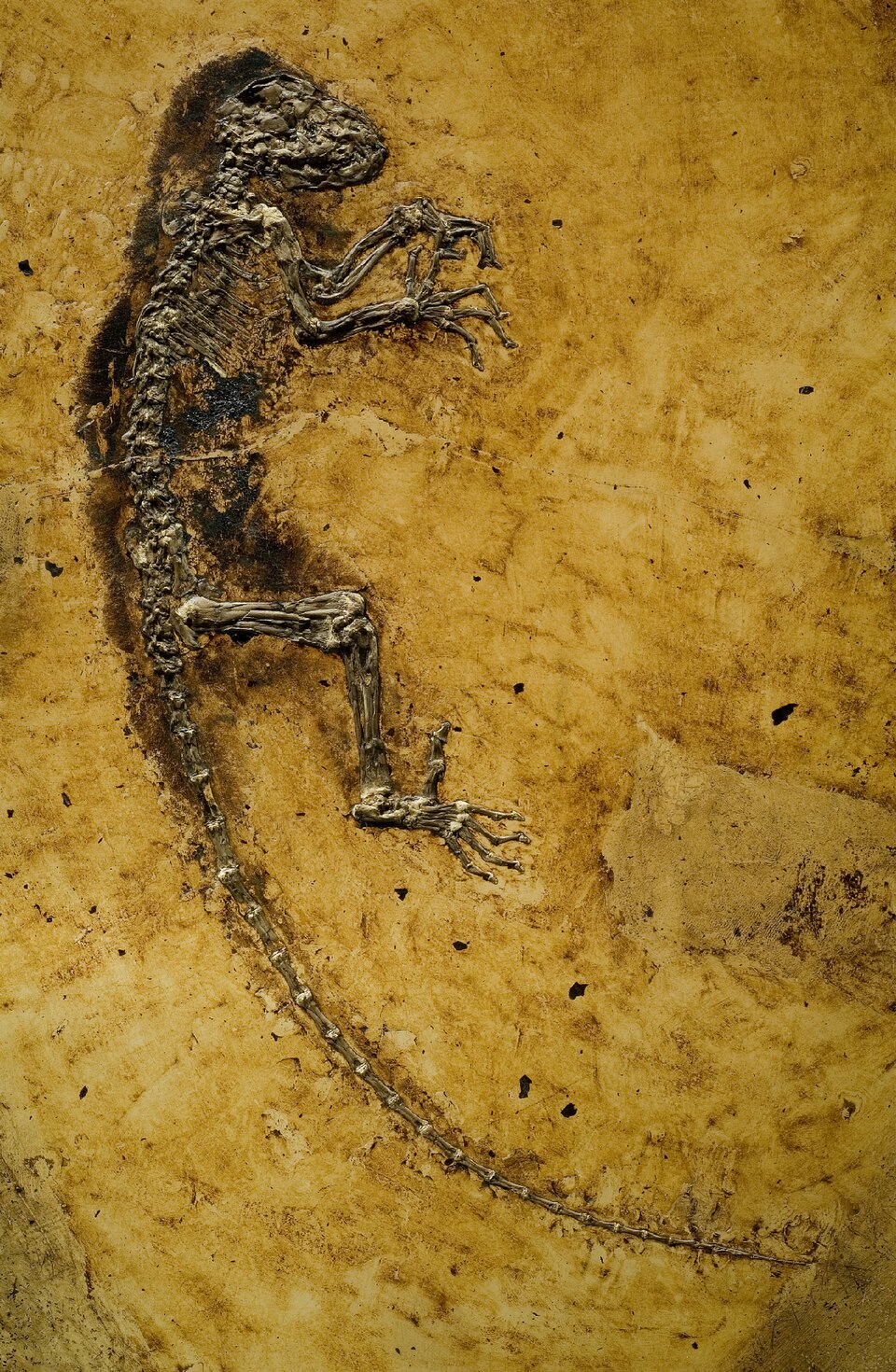

Paleocene origins and the plesiadapiforms
The order Primates is conventionally divided into two suborders: the Strepsirrhini, which includes lemurs and lorises, and the Haplorhini, which includes tarsiers and the anthropoids (monkeys, apes, and humans). Both groups descended from a common ancestor that almost certainly lived in the Paleocene epoch, between approximately 66 and 56 million years ago, in the aftermath of the mass extinction that ended the Mesozoic Era.2, 14
The earliest relatives of primates that appear in the fossil record are the plesiadapiforms, an archaic assemblage sometimes called “archaic primates” or “plesiadapimorph primates.” These small, mostly arboreal mammals first appear in North American and European faunas dating to approximately 65 million years ago and persisted into the Eocene.2 The most speciose plesiadapiform family, Plesiadapidae, possessed elongated incisors reminiscent of rodents and lacked the distinctive grasping hands and forward-facing eyes that define crown primates. Debate has long persisted about their precise relationship to true primates (crown Primates). Detailed studies of the ankle anatomy of several plesiadapiform genera—particularly Carpolestes simpsoni—recovered by Jonathan Bloch and Doug Boyer demonstrated grasping digits with nails rather than claws, strongly linking plesiadapiforms to the primate stem lineage.1 The working consensus today places plesiadapiforms as either the immediate outgroup of crown primates or as stem members of the order itself.
The ecological context of early primate origins has been debated under competing hypotheses. The arboreal hypothesis, championed by Frederic Wood Jones, holds that primate characteristics—grasping feet, stereoscopic vision, reduced olfaction—evolved in response to life in the trees. A competing visual predation hypothesis, proposed by Matt Cartmill, argues that forward-facing eyes evolved primarily to facilitate prey capture in dimly lit, fine-branch environments, analogous to the visual systems of owl and cat. A third hypothesis, the angiosperm coevolution hypothesis, links primate hand and eye anatomy to foraging for flowers, nectar, and fruit in the terminal branches of flowering trees, which were themselves diversifying rapidly during the Paleocene and Eocene.2 These hypotheses are not mutually exclusive, and the current consensus emphasizes that multiple selection pressures likely acted in concert during the earliest stages of primate evolution.
The Eocene radiation: Adapidae and Omomyidae
The Eocene epoch (56–34 million years ago) brought warmer global climates and the expansion of tropical and subtropical forests across latitudes that are today temperate. In this thermally permissive world, primates underwent their first major diversification, producing two great families—the Adapidae and the Omomyidae—that together represent the most taxonomically diverse primate radiation of the Paleogene.2, 4
The Adapidae were medium-to-large primates with lemur-like dentition and elongated snouts. Best known from European and North American deposits, genera such as Adapis, Notharctus, and Smilodectes possessed spatulate lower anterior teeth and elongated snouts, and most analyses place adapids as stem strepsirrhines or as close relatives of the lemur–loris lineage.4 Their diversity in Europe during the Early Eocene is directly linked to the Paleocene–Eocene Thermal Maximum (PETM), a transient episode of extreme global warming approximately 56 million years ago that opened dispersal corridors between North America and Europe; the earliest Eocene primate Teilhardina appears nearly simultaneously on both continents, suggesting rapid intercontinental dispersal at this time.17
The Omomyidae were generally smaller and more tarsier-like, with large orbits indicating enhanced nocturnality and reduced facial skeletons suggesting diminished reliance on olfaction. North American omomyids such as Shoshonius and Tetonius share key features with living tarsiers, including the fused tibia and fibula and the unusually large orbital cavities that accommodate enormous eyes, and most phylogenetic analyses affiliate omomyids with the haplorhine (tarsier + anthropoid) lineage rather than with lemurs.3 The spectacular fossil Archicebus achilles from China—dated to approximately 55 million years ago and described by Ni and colleagues in 2013—is the oldest known skeletal primate and has been recovered as the earliest known haplorhine, providing a hard minimum calibration point for the strepsirrhine–haplorhine split deep in the Eocene.3
The origin of anthropoids
The origin of anthropoid primates—the group that includes all monkeys and apes—is one of the most intensively studied problems in paleoanthropology. Early anthropoids must have existed by the Eocene, but the fossil record for this transition was sparse until discoveries in China and Egypt began to fill critical gaps.5, 18
Among the most important of these discoveries was Eosimias sinensis, an extraordinarily small primate from the middle Eocene of China described by Beard and colleagues in 1994 from isolated teeth and jaw fragments.5 Eosimias, which weighed approximately 100 grams, possessed a distinctive combination of anthropoid and primitive features. Its premolar morphology and mandibular fusion align it with early anthropoids rather than with adapids or omomyids, suggesting that the anthropoid lineage had already diverged from other haplorhines before the middle Eocene, roughly 45 million years ago. Additional Asian eosimians have since been described from Myanmar, Oman, and Libya, collectively pointing to a probable Asian origin for early anthropoids, though the debate between an Asian and an African origin for crown anthropoids has not been definitively resolved.18
The Egyptian Fayum Depression, a hyperarid landscape today, preserves Late Eocene and Early Oligocene sediments of the Jebel Qatrani Formation that have yielded the densest collection of early anthropoid fossils anywhere in the world. Among the Fayum’s earliest anthropoids is Catopithecus browni, dated to approximately 36–37 million years ago at the close of the Eocene.6 Catopithecus is a small primate with fully fused mandibular symphysis and postorbital closure—two diagnostic features of anthropoids—and its dental formula matches that of early catarrhines (Old World monkeys and apes). Its recovery confirmed that recognizable anthropoids had established themselves in Africa well before the Eocene–Oligocene transition and provided a firm morphological anchor for the base of the catarrhine radiation.
The Fayum primates and the Oligocene catarrhines
The most celebrated inhabitant of the Fayum is Aegyptopithecus zeuxis, a cat-sized primate from the Early Oligocene, roughly 29–33 million years ago, first formally described by Elwyn Simons in the 1960s.7 Aegyptopithecus possessed a mosaic of ancestral and derived features that places it near the base of the catarrhine radiation, predating the split between cercopithecoids (Old World monkeys) and hominoids (apes and humans). It had a relatively small brain with a long, prognathic snout, yet its dentition, with the catarrhine dental formula of two incisors, one canine, two premolars, and three molars on each side, clearly aligns it with the catarrhine stem. Subsequent work by Erik Seiffert and colleagues revealed additional Fayum taxa including Biretia and Apidium, further illuminating the diversity of the early anthropoid radiation in Africa.8
The Fayum fauna also includes parapithecids, a family whose phylogenetic placement has shifted considerably with new discoveries. Some analyses recover parapithecids as stem catarrhines; others place them as stem anthropoids outside the catarrhine–platyrrhine split. Resolving their position matters because it bears directly on the timing of the split between Old World and New World monkeys—one of the signature events in primate biogeographic history.8
The Old World–New World split and platyrrhine origins
New World monkeys (Platyrrhini) are found today only in Central and South America, yet their closest living relatives are the Old World catarrhines of Africa and Asia. Bridging that geographical chasm required a dispersal event across the proto-Atlantic Ocean, which during the Oligocene was narrower than today but still a formidable marine barrier. The molecular clock places the platyrrhine–catarrhine divergence at approximately 35–40 million years ago, consistent with the oldest South American primate fossils, which date to approximately 36 million years ago from the Peruvian Amazon.9, 14
The mechanism of transatlantic dispersal has been debated for decades. The most widely accepted model invokes rafting on vegetation mats dislodged from African river systems—a process known to have carried other taxa, including caviomorph rodents that colonized South America at roughly the same time. Equatorial currents during the Oligocene may have been more favorable for westward drift than today, and the shorter crossing distance of the proto-Atlantic makes the journey marginally more plausible than for later periods.16 A remarkable 2015 study by Bond and colleagues described a new platyrrhine from the Oligocene of Peru—Perupithecus ucayalensis—and argued on the basis of its morphology that it represents an early immigrant from Africa rather than a member of any established South American radiation, lending further fossil support to the African-origin hypothesis.16
Once established in South America, platyrrhines underwent their own extensive radiation entirely independent of Old World primate evolution, producing callitrichids (marmosets and tamarins), cebids (capuchins and squirrel monkeys), and atelids (spider monkeys, howler monkeys, and woolly monkeys), among others. Their evolutionary trajectory proceeded in geographic isolation for more than 30 million years, making the platyrrhine radiation one of the clearest examples of allopatric diversification among primates.9
The Miocene ape radiation
The Miocene epoch (23–5 million years ago) was the golden age of hominoid apes. Global temperatures, while cooling from their Eocene peak, remained warmer and more equable than today, and extensive subtropical forests stretched across Africa and into Eurasia. In this environment, apes—collectively the superfamily Hominoidea—diversified into a diversity of forms far exceeding anything seen among living great apes.10, 12
The earliest well-characterized hominoid is Proconsul, a medium-to-large frugivorous ape from Early Miocene deposits of East Africa, approximately 17–23 million years ago. Described from specimens recovered at Rusinga Island in Lake Victoria, Kenya, Proconsul heseloni and its congeners possessed a combination of monkey-like postcranial features (absence of a bony tail but no suspensory adaptations of the shoulder) with ape-like cranial and dental anatomy.10 Proconsul lacked the broad thorax, shortened lumbar spine, and mobile shoulder girdle that characterize living apes, suggesting these hallmarks of hominoid locomotion evolved independently in multiple lineages after the initial hominoid diversification.
As the Miocene progressed and the Tethys Sea contracted, faunal exchanges between Africa and Eurasia became possible, and African apes dispersed into Europe and Asia beginning roughly 17 million years ago. European Miocene hominoids include Dryopithecus, recovered from France, Spain, and Hungary, which possessed a thinner enamel more similar to African apes than to the thick-enameled Asian lineage; and Ouranopithecus macedoniensis from Greece, a large-bodied hominoid with massive jaws and thick molar enamel that some researchers have proposed as a stem hominid, though its precise phylogenetic position remains contested.12 In South Asia, Sivapithecus—recovered from the Siwalik Hills of Pakistan and India in strata dating to approximately 8–12 million years ago—shares distinctive facial features with the living orangutan, including a narrow interorbital region, oval orbits, and a high-domed palate, and is now widely regarded as a member of the orangutan lineage (Ponginae) or its stem group.11
The late Miocene saw a dramatic contraction of the ape radiation, correlated with the expansion of C4 grasslands and the retreat of tropical forests in response to global cooling and aridification. Most Miocene ape lineages disappeared from the fossil record without known descendants. The survivors were restricted to the reduced forest refugia of sub-Saharan Africa and Southeast Asia, and it is from this reduced pool of lineages that all living apes—gibbons, orangutans, gorillas, chimpanzees, and humans—are descended.12, 13
The hominoid–cercopithecoid divergence
Among the most critical branching events in primate evolution is the divergence between hominoids (apes) and cercopithecoids (Old World monkeys), which together constitute the catarrhine primates. Molecular clock analyses, anchored against key fossil calibration points in the Fayum and elsewhere, consistently place this divergence at approximately 25–30 million years ago, near the Oligocene–Miocene boundary.15 The earliest fossil record of unambiguous cercopithecoids begins in the Early Miocene of East Africa, approximately 20 million years ago, consistent with this molecular estimate. The oldest putative cercopithecoid, Nsungwepithecus gunnelli from Tanzania, has been dated to approximately 25 million years ago, closely matching the molecular divergence date.8
The two groups pursued markedly different evolutionary strategies after their divergence. Cercopithecoids evolved bilophodont molars—teeth with two transverse ridges highly efficient for shearing leaves—and diversified explosively into Old World environments; today there are more than 130 living cercopithecoid species, outnumbering living hominoids by more than twenty to one. Hominoids, by contrast, retained the more generalized Y-5 molar cusp pattern (the Dryopithecus pattern) and evolved larger bodies, more complex brains, and longer developmental periods, a suite of life-history traits associated with increased behavioral flexibility but reduced reproductive rate.14, 15
Molecular clock evidence and the great ape divergences
The molecular clock has transformed the study of primate phylogeny, providing time estimates for divergence events that the fossil record cannot always resolve. The foundational work of Sarich and Wilson in the 1960s used immunological distance to propose that humans and African apes diverged as recently as 5–7 million years ago, a figure initially resisted by paleoanthropologists but now accepted as broadly correct. Subsequent analyses using nuclear DNA sequence data and Bayesian relaxed-clock methods have refined these estimates considerably.13, 14
A comprehensive molecular phylogeny of 186 primate species published by Perelman and colleagues in 2011, drawing on 54 nuclear gene segments, recovered robust support for all major primate groupings and calibrated against multiple fossil minima to produce a timed tree in which the strepsirrhine–haplorhine split is estimated at approximately 74 million years ago, the platyrrhine–catarrhine divergence at approximately 43 million years ago, and the hominoid–cercopithecoid split at approximately 29 million years ago.14 These molecular estimates are generally concordant with, but slightly older than, the oldest unambiguous fossil representatives of each group, a pattern consistent with the expectation that the first fossil of any lineage will postdate the lineage’s actual origin.
Within hominoids, the molecular clock places the split between the gibbon lineage (Hylobatidae) and the great ape and human lineage (Hominidae) at approximately 17–20 million years ago; the orangutan lineage (Ponginae) diverged from the African ape and human lineage (Homininae) at approximately 12–14 million years ago; gorillas separated from the human–chimpanzee lineage at approximately 8–10 million years ago; and chimpanzees and humans last shared a common ancestor at approximately 6–8 million years ago.13, 14 These divergence dates bracket and complement the fossil record of early hominins: Sahelanthropus tchadensis from Chad, dated to approximately 7 million years ago, sits at or near the base of the hominin lineage as defined by its upright posture and reduced canines, consistent with the molecular estimate for the human–chimpanzee divergence.
Molecular analyses have also illuminated the internal structure of Old World monkey phylogeny, confirming a deep split between the colobines (leaf monkeys and langurs) and cercopithecines (macaques, baboons, mangabeys, and guenons) at approximately 15–18 million years ago, consistent with early Miocene cercopithecoid fossils from East Africa.15 The integration of molecular clock evidence with the stratigraphic fossil record has created a framework in which virtually every major node in the primate tree has at least an approximate temporal estimate, even where morphological fossils are absent or ambiguous.
Biogeographic patterns and dispersal events
The geographic distribution of primate lineages reflects a complex history of vicariance—separation of populations by geographic barriers—and dispersal. The first primates evolved on the northern supercontinent of Laurasia, where plesiadapiforms and earliest euprimates are known from North America and Europe. Africa, still largely isolated during the Paleocene and Early Eocene, received its first primates either via a transatlantic route from South America or, more plausibly, via the intermittently emergent Tethyan island chains linking southern Europe to North Africa.17
The collision of the African plate with Eurasia during the early Miocene, approximately 18–20 million years ago, opened a continuous land route between the two regions and triggered a massive interchange of terrestrial faunas, including the dispersal of African hominoids into Europe and Asia. The subsequent closure of the Tethys seaway and the establishment of the Paratethys further shaped primate distributions across Eurasia during the Miocene. Asian hominoids—ultimately producing only the orangutan lineage today—diverged from African hominoids early in the Miocene dispersal and evolved in relative isolation thereafter, accounting for many of the distinctive derived features of orangutan anatomy that make them the most morphologically divergent of the living great apes.11, 12
The biogeographic isolation of Madagascar, separated from Africa for at least 130 million years, meant that lemurs—which colonized the island from Africa in a single dispersal event approximately 47–54 million years ago—evolved entirely free of competition from monkeys and apes. The resulting lemur radiation, comprising more than 100 species today, is one of the most spectacular examples of island adaptive radiation in mammalian evolution and preserves in living form a broad sample of the morphological diversity that characterized early strepsirrhines before cercopithecoids and hominoids displaced them from mainland Africa and Asia.14
The full arc of primate evolution—from Paleocene plesiadapiforms scrambling through the understories of a world still warm with the aftermath of the K–Pg extinction, through the Eocene diversification of adapids and omomyids, the Oligocene consolidation of the anthropoid lineage in Africa, the Miocene explosion of ape diversity, and the eventual contraction that left the hominin lineage as a small and geographically restricted twig of a once-luxuriant hominoid tree—illustrates how profoundly contingent the history of any lineage is on the interplay of geology, climate, and chance dispersal events. The molecular clock, calibrated against that fossil history, has shown that the roots of human ancestry reach not 6 million years into the past but more than 60 million years, back to the first small mammals to make the branch their primary domain.
References
New early Eocene adapiform primate from western North America and the origin of crown-group primates
Eosimias, a new genus and species of tarsiiform primate from the middle Eocene of China
Late Miocene hominoids from the Mediterranean region and the origins of the great ape and human clade
Molecular phylogeny of the hominoids: inferences from multiple independent DNA sequence data sets
Rapid Asia–Europe–North America geographic dispersal of earliest Eocene primate Teilhardina during the Paleocene–Eocene Thermal Maximum