Overview
- The argument from miracles contends that the occurrence of genuine miracles — events that cannot be explained by natural causes — constitutes evidence for the existence of God, with the resurrection of Jesus serving as the central case in the Christian tradition and the focus of most philosophical discussion
- David Hume’s 1748 critique remains the most influential challenge: he argued that the evidence for a miracle must overcome the massive weight of uniform human experience supporting the relevant law of nature, and that testimony for miracles invariably falls short of this standard — a position that has generated centuries of debate over whether Hume’s argument is circular, question-begging, or sound
- Contemporary defenders such as Richard Swinburne argue that the probability of a miracle depends on background evidence for God’s existence and that Bayesian analysis shows miracle testimony can constitute strong evidence, while critics maintain that naturalistic explanations — including hallucination, legend development, and cognitive biases — are always more probable than a genuine violation of natural law
The argument from miracles holds that the occurrence of genuine miracles — events that exceed the productive power of nature and are brought about by God — constitutes evidence for theism. If a miracle has occurred, the existence of a being capable of overriding or suspending natural law is demonstrated. The argument has been debated for centuries, with the resurrection of Jesus serving as the central test case in the Western philosophical tradition. David Hume’s critique in Section X of An Enquiry Concerning Human Understanding (1748) set the terms of the modern discussion, and the debate continues in contemporary philosophy of religion over whether miracle testimony can ever constitute strong evidence for a divine act.4, 1
Defining miracles
The philosophical literature distinguishes several concepts of miracle. Hume defined a miracle as “a transgression of a law of nature by a particular volition of the Deity, or by the interposition of some invisible agent.” This definition combines two elements: a violation of natural law and a divine cause. Critics have noted that the violation concept is problematic — if a law of nature is a description of what always happens, then an apparent exception may simply show that the original formulation of the law was incomplete rather than that the law was violated.1, 4
Swinburne defines a miracle as “an event of an extraordinary kind, brought about by a god, and of religious significance.” He distinguishes between a violation of a law of nature (an event that the law, if complete, would have precluded) and a non-repeatable counter-instance to a law. On this view, a miracle is a genuine exception to a natural regularity, not evidence that the regularity was wrongly formulated. Swinburne argues that we should accept the best-established formulation of a natural law and recognize that some events, though they violate it, are best explained by divine agency rather than by revising the law.2
Other definitions are broader. Some philosophers define miracles as events that are religiously significant and caused by God, without requiring that natural laws be violated — God could work through natural processes in an extraordinary way. Aquinas distinguished miracles from nature on the basis of efficient causation rather than law violation: a miracle is an event produced directly by God rather than through secondary (natural) causes. The diversity of definitions affects the structure of the argument, since narrower definitions (requiring law violation) face different challenges than broader ones (requiring only divine causation and religious significance).4, 7
The argument’s structure
The argument from miracles can be formulated in several ways, but the core structure is evidential:
P1. If God exists, God has the power and may have reason to perform miracles.
P2. There is credible evidence that at least one miracle has occurred.
P3. The best explanation of a genuine miracle is divine agency.
C. The occurrence of miracles constitutes evidence for the existence of God.
The argument is typically presented as a cumulative case rather than a deductive proof. Miracle claims, if sufficiently well-evidenced, are said to raise the probability of theism. The argument is strongest when combined with independent reasons to think God exists — if there is already some probability that God exists based on cosmological or teleological arguments, then the prior probability of a miracle is not negligible, and strong testimony can push the total probability higher. If the prior probability of God’s existence is zero or negligibly low, even strong miracle testimony will not suffice.6, 4
Early history of the argument
The use of miracles as evidence for divine authority has a long history in Christian theology. The New Testament presents the miracles of Jesus, especially the resurrection, as signs confirming his divine mission. Early Christian apologists such as Justin Martyr, Origen, and Augustine cited the fulfillment of prophecy and the occurrence of miracles as evidence for the truth of Christianity. Augustine argued in The City of God that the rapid spread of Christianity was itself a miracle that confirmed the faith’s divine origin.8, 4
During the Enlightenment, miracle arguments became central to the debate between deists and orthodox Christians. Joseph Butler’s Analogy of Religion (1736) argued that if we accept the general order of nature as evidence for God, we should also accept particular deviations from that order as evidence for God’s particular acts. Butler contended that the same analogy of experience that makes us trust the regularity of nature also makes us trust testimony about exceptional events, provided the testimony is sufficiently strong. His argument anticipated several moves in the later Bayesian discussion of miracles.15, 10

Hume’s critique
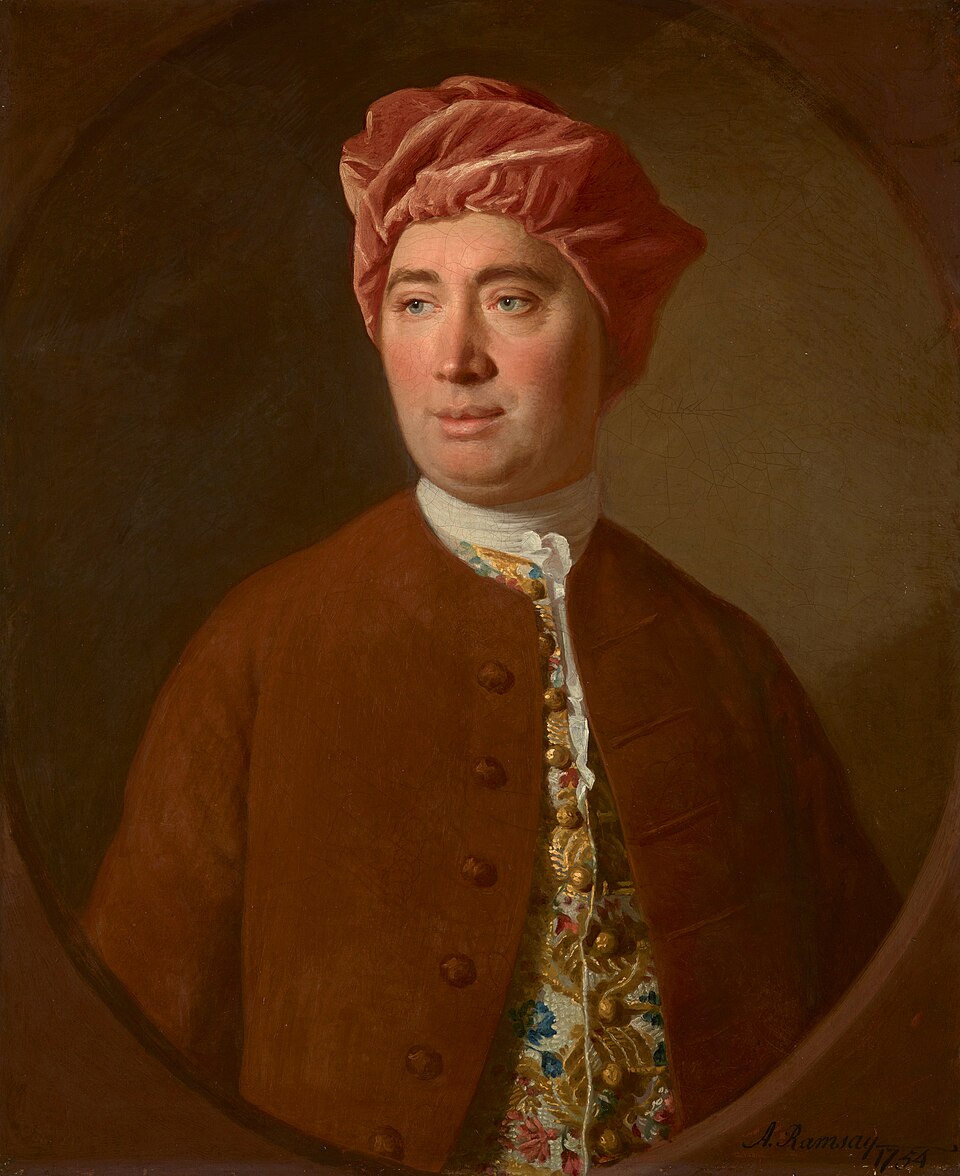
Hume’s argument against miracles, presented in Section X of the Enquiry (1748), is the most influential critique in the philosophical literature. His argument has two parts. The first (“Part 1”) establishes a general principle about the evidence for miracles. The second (“Part 2”) argues that no miracle claim has ever met the evidential standard required.1
In Part 1, Hume argues that our confidence in a law of nature is based on uniform experience — repeated, exceptionless observation. A miracle, by definition, is a violation of a law of nature. Therefore, the evidence against a miracle is as strong as evidence can be: the entire weight of human experience supporting the regularity in question. Testimony in favor of a miracle must overcome this massive evidential weight. Hume formulates the principle: “No testimony is sufficient to establish a miracle, unless the testimony be of such a kind, that its falsehood would be more miraculous, than the fact, which it endeavours to establish.” The rational person should always believe whichever option is less miraculous — that the testimony is false, or that the miracle occurred.1
In Part 2, Hume offers four empirical observations about miracle testimony. First, no miracle “is attested by a sufficient number of men, of such unquestioned good-sense, education, and learning, as to secure us against all delusion in themselves.” Second, human nature delights in wonder and surprise, creating a psychological bias toward believing miraculous reports. Third, miracle claims “are observed chiefly to abound among ignorant and barbarous nations.” Fourth, the miracle claims of different religions cancel each other out, since each religion’s miracles are used to support incompatible theological systems.1
Responses to Hume
Hume’s argument has generated an enormous secondary literature. Earman, in Hume’s Abject Failure (2000), argues that Hume’s Part 1 argument is fundamentally flawed as a matter of probabilistic reasoning. Using Bayesian probability theory, Earman shows that Hume conflates the prior probability of a miracle (which may indeed be very low) with the posterior probability given the evidence (which depends on the strength of the testimony). If testimony is sufficiently strong — if the probability of having that testimony given that the miracle did not occur is very low — then even a very low prior probability can be overcome. Earman concludes that Hume offers no valid a priori argument against the evidential force of testimony for miracles.5
Fogelin defends Hume, arguing that Earman misreads Hume’s argument. Fogelin contends that Hume’s point is not a formal probabilistic claim but a practical epistemic maxim: given the general unreliability of miracle testimony and the strength of the evidence for natural regularities, the wise person should always withhold belief. Fogelin argues that Hume’s Part 2 observations about the quality of miracle testimony do the real work — it is the empirical deficiencies of actual testimony, not an a priori principle, that make miracle claims incredible.12
Mackie offered a sympathetic reconstruction of Hume’s argument in The Miracle of Theism (1982). Mackie argued that the case against miracles is strongest when framed in terms of competing explanations: given a report of a miraculous event, we must weigh the probability that a genuine miracle occurred against the probability that the report is mistaken — due to fraud, hallucination, legend formation, or misperception. Since natural explanations of testimony are always available and do not require suspending laws of nature, they will always be more probable than the miraculous explanation. This “competing explanations” approach has been widely adopted by critics of the argument from miracles.7
Bayesian analysis
Much of the contemporary debate over miracles has been conducted in Bayesian terms. The question is framed as: given testimony T that a miracle M occurred, what is the posterior probability P(M|T)? By Bayes’ theorem:
P(M|T) = P(T|M) × P(M) / P(T)
The probability of the miracle given the testimony depends on three factors: the prior probability of the miracle P(M), the probability of getting the testimony if the miracle occurred P(T|M), and the total probability of the testimony P(T). Swinburne argues that the prior probability of a miracle is not negligibly low if there is independent evidence for God’s existence. If cosmological, teleological, and moral arguments together make God’s existence moderately probable, then a miracle is not antecedently incredible, and strong testimony can make it more probable than not.6, 3
Holder has formalized Swinburne’s argument and shown that under reasonable assumptions about the reliability of testimony, the Bayesian calculation can yield a high posterior probability for miracles even with a relatively low prior. The crucial variable is the ratio of the probability of the testimony given the miracle to the probability of the testimony given no miracle. If witnesses are generally reliable and the testimony is specific and detailed, this ratio can be very large, overwhelming a low prior probability.13
Critics respond that the prior probability of a law of nature being violated is so low that no realistic testimony can overcome it. Oppy argues that the Bayesian framework, correctly applied, supports Hume rather than Swinburne: the evidence for a law of nature is based on billions of observations, and the evidence for any particular miracle is based on the testimony of a handful of witnesses. No plausible reliability estimate for the witnesses can overcome this evidential asymmetry.11
The resurrection as test case
The resurrection of Jesus has been the central test case for the argument from miracles in Western philosophy. The argument typically begins with the claim that certain historical facts are well-established: the discovery of an empty tomb, the post-mortem appearances of Jesus to multiple individuals and groups, and the origin of the disciples’ belief in the resurrection. The question is whether these facts are best explained by an actual resurrection or by naturalistic alternatives.9, 10
Wright argues in The Resurrection of the Son of God (2003) that no naturalistic explanation adequately accounts for the early Christian belief in bodily resurrection. The Jewish concept of resurrection was a corporate, end-time event — no Jewish expectation envisioned the resurrection of a single individual in the middle of history. The disciples’ conviction that Jesus had been raised requires an explanation, and Wright contends that the simplest explanation is that the resurrection actually occurred. Craig has developed similar arguments, contending that the convergence of multiple independent lines of evidence (empty tomb, appearances, origin of belief) is best explained by the resurrection hypothesis.9, 10
Ehrman and other historians argue that historical methodology cannot, in principle, establish that a miracle has occurred. Historical method works by identifying the most probable explanation of the evidence, and a miracle, by definition, is the least probable explanation. Even if we cannot identify the specific naturalistic explanation, the general category of naturalistic explanations is always more probable than a supernatural one. This methodological point does not depend on atheism — it reflects the working assumptions of historical investigation, which evaluates evidence in terms of natural causes and effects.14
Major positions on the evidential force of miracles4
| Position | Key proponent | Claim | On Hume |
|---|---|---|---|
| Strong evidentialist | Swinburne | Miracle testimony can make theism probable | Hume’s argument fails as Bayesian reasoning |
| Moderate evidentialist | Holder, Craig | Miracles are evidence when combined with background theism | Hume overstates the prior against miracles |
| Humean skeptic | Mackie, Fogelin | Natural explanations of testimony are always more probable | Hume’s core insight is correct |
| Probabilistic critic | Earman | Hume’s argument is formally invalid, but miracles remain improbable | Hume’s reasoning is flawed, though his conclusion may be right |
| Methodological naturalist | Ehrman | Historical method cannot establish supernatural events | The issue is methodological, not probabilistic |
Contemporary debate
The contemporary discussion of the argument from miracles centers on two questions. The first is the correct interpretation and evaluation of Hume’s argument. Earman’s critique has shown that Hume’s Part 1 argument, read as a theorem of probability theory, is invalid. But defenders of Hume respond that the argument is better read as an epistemic maxim about the weight of evidence rather than a formal probabilistic proof. Whether Hume’s argument succeeds depends substantially on how it is interpreted, and the interpretive question remains contested.5, 12
The second question is whether the prior probability of a miracle can be assessed independently. Swinburne argues that if the cumulative case for theism — from cosmological, teleological, moral, and experiential arguments — makes God’s existence at least moderately probable, then miracles are not antecedently incredible and strong testimony can make specific miracles more probable than not. Oppy responds that the prior probability of God’s existence is itself disputed and cannot be assumed as a premise in the miracle argument without circularity. If the argument from miracles is used to establish God’s existence, it cannot presuppose that God already probably exists.6, 11
The argument from miracles remains one of the most contested areas in philosophy of religion. Unlike the problem of evil, where the logical formulation is widely regarded as resolved, the miracle debate has produced no comparable consensus. The disagreement runs deep, touching on the nature of natural law, the epistemology of testimony, the methodology of historical investigation, and the proper role of prior probabilities in evaluating extraordinary claims.4