Overview
- Compatibilism holds that free will and determinism are not mutually exclusive — a person can act freely even in a deterministic universe, provided the action flows from the agent’s own desires, deliberation, and character rather than from external coercion, compulsion, or manipulation.
- Harry Frankfurt’s hierarchical theory defines free will in terms of higher-order desires (wanting to want what you want), while John Martin Fischer and Mark Ravizza’s reasons-responsive theory defines it in terms of the agent’s capacity to recognize and respond to reasons — both offering accounts of moral responsibility that do not require the ability to have done otherwise.
- Compatibilism has implications for philosophy of religion through its bearing on the free will defense against the problem of evil and the puzzle of divine foreknowledge, where it provides a framework in which human freedom is consistent with God’s omniscience and providential governance of the world.
Compatibilism is the philosophical thesis that free will is compatible with determinism — that a person can act freely, and be morally responsible for her actions, even if every event in the universe, including every human decision, is the inevitable consequence of prior causes operating according to natural laws. The view stands between two rival positions: hard determinism, which holds that determinism is true and free will is therefore impossible, and libertarianism (in the metaphysical sense), which holds that free will requires indeterminism and that some human actions are not fully determined by prior causes. Compatibilism has been the majority position among professional philosophers in the modern era, with roots extending back to the Stoics, and it was given its classical modern formulation by Thomas Hobbes and David Hume.1, 7, 11

Classical compatibilism
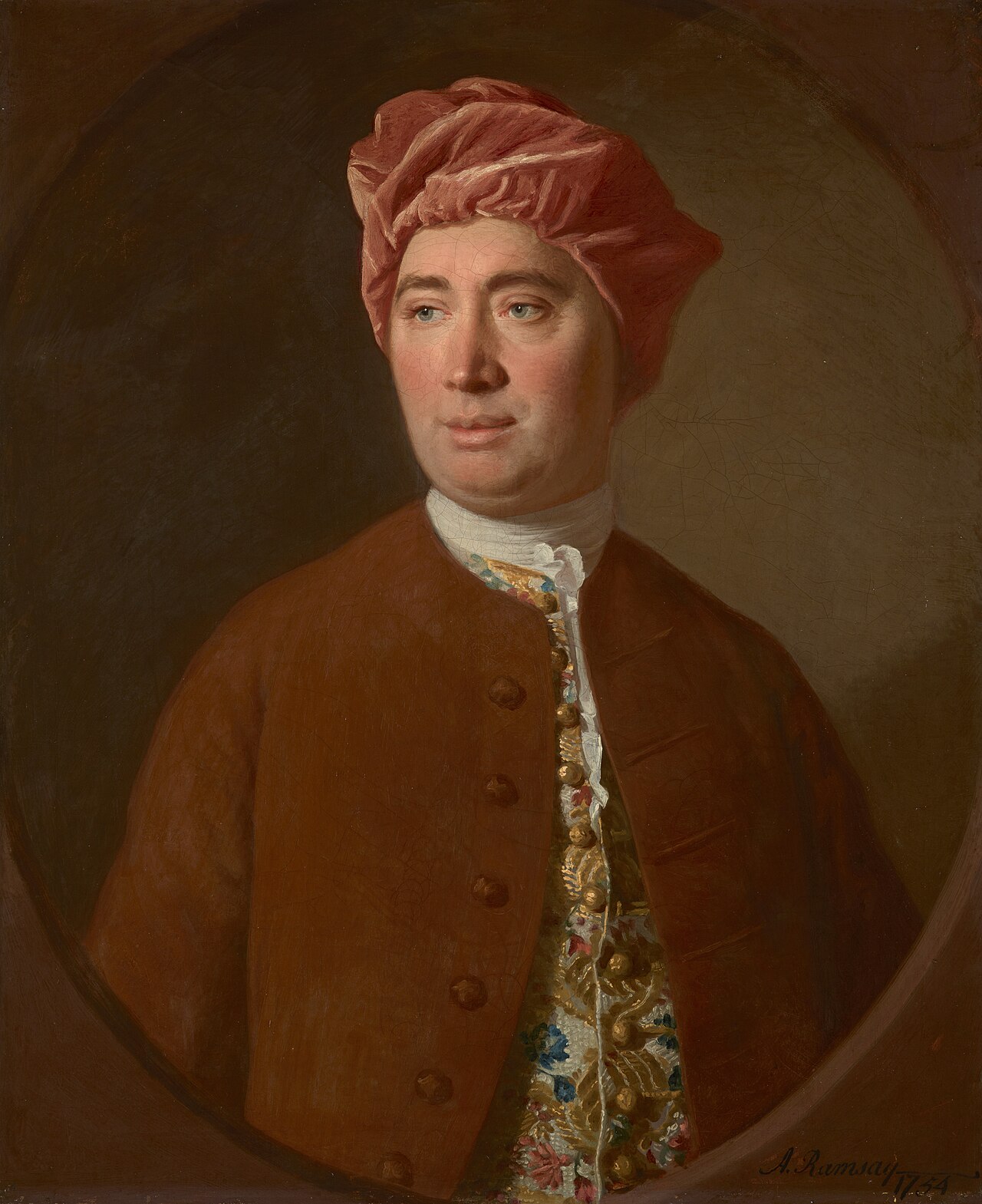
David Hume’s treatment of free will in An Enquiry Concerning Human Understanding (1748) remains the starting point for compatibilist thinking. Hume argued that the traditional dispute over free will rests on an ambiguity in the word “liberty.” When we say a person acts freely, we do not mean that her action is uncaused or indeterminate; we mean that her action flows from her own will — her own desires and deliberation — rather than being compelled by external force. A prisoner in chains is unfree because an external constraint prevents him from doing what he wills. A person who walks to the market is free because no external constraint prevents her from doing what she wills, even though her will is itself determined by her character, desires, and circumstances. Freedom, on Hume’s account, is not the absence of causation but the absence of coercion.1
Classical compatibilism thus offers a conditional analysis of the ability to do otherwise: to say that a person could have done otherwise is to say that she would have done otherwise if she had willed to do otherwise. The “if” is crucial. The compatibilist does not claim that the person could have willed differently given the exact same prior conditions (that would be a libertarian claim); rather, she claims that the person’s action was responsive to her will, and that a different will would have produced a different action. This analysis captures the sense of freedom that matters for moral responsibility: we hold people responsible for actions that flow from their will and excuse them for actions produced by coercion, compulsion, or ignorance.1, 8
The classical compatibilist position was challenged in the twentieth century by the consequence argument, formulated most rigorously by Peter van Inwagen in An Essay on Free Will (1983). Van Inwagen argued that if determinism is true, then our actions are the consequences of the laws of nature and events in the remote past. We have no control over the laws of nature, and we have no control over events in the remote past. Therefore, we have no control over the consequences of these things — including our own actions. The consequence argument targets the conditional analysis directly: even if we would have done otherwise had we willed otherwise, we could not have willed otherwise, because our will is itself determined by prior causes beyond our control. This argument forced compatibilists to develop more sophisticated accounts of freedom and responsibility.9
Frankfurt cases and the rejection of alternative possibilities
Harry Frankfurt’s 1969 paper “Alternate Possibilities and Moral Responsibility” attacked the principle that had long been assumed to underlie moral responsibility: the principle of alternative possibilities (PAP), which holds that a person is morally responsible for an action only if she could have done otherwise. Frankfurt devised a thought experiment — now known as a Frankfurt case — to show that PAP is false. Suppose Jones decides, entirely on his own, to vote for candidate A. Unbeknownst to Jones, a neuroscientist named Black has implanted a device in Jones’s brain that monitors his neural activity. If Jones were about to decide to vote for candidate B, Black’s device would intervene and cause Jones to vote for A instead. As it happens, the device never activates, because Jones votes for A on his own. Jones could not have done otherwise (the device would have prevented it), yet he seems morally responsible for his vote, since the device played no role in his actual decision.2
Frankfurt cases purport to show that moral responsibility does not require the ability to do otherwise. If this is correct, then the consequence argument — which shows that determinism eliminates alternative possibilities — is irrelevant to moral responsibility. A person can be morally responsible for a determined action, provided the action flows from the right kind of internal source, even if the person could not have acted differently. The debate over Frankfurt cases remains one of the most active in contemporary philosophy. Libertarians have responded with “flicker of freedom” strategies, arguing that even in Frankfurt cases the agent retains some minimal alternative possibility (such as the possibility of showing a sign of wanting to do otherwise), and that this flicker is sufficient to ground responsibility. Frankfurt and his defenders reply that the flicker, if it exists, is too thin to do any moral work.2, 10
Hierarchical and reasons-responsive theories
Frankfurt developed his positive account of free will in “Freedom of the Will and the Concept of a Person” (1971). He proposed a hierarchical theory according to which free will consists in a structural feature of the agent’s motivational system. Human beings, unlike other animals, have not only first-order desires (desires to do things) but also second-order desires (desires about their desires). A person has free will when her first-order desires are endorsed by her second-order desires — when she wants to want what she wants. A drug addict who desires the drug but wishes she did not desire it lacks free will in the relevant sense: her first-order desire conflicts with her second-order volition. A person who acts from desires she reflectively endorses acts freely, even if her desires are determined by prior causes.3
Frankfurt’s hierarchical theory faces the regress problem: if free will requires that first-order desires be endorsed by second-order desires, what about the second-order desires themselves? Do they need to be endorsed by third-order desires, and so on ad infinitum? Frankfurt responded that at some point the agent simply identifies with a desire — she endorses it wholeheartedly, with no further reservation — and this identification terminates the regress. Critics have found this answer unsatisfying, arguing that identification is itself a psychological event that stands in need of the same kind of authentication Frankfurt demands for first-order desires.3, 11
John Martin Fischer and Mark Ravizza developed an alternative compatibilist account focused on reasons-responsiveness. On their theory, an agent acts freely when her action is produced by a mechanism that is moderately reasons-responsive — that is, the mechanism is regularly receptive to reasons (it can recognize that different reasons apply in different circumstances) and at least weakly reactive to reasons (it sometimes acts on the reasons it recognizes). The moderate reasons-responsiveness requirement is weaker than demanding that the agent would have done otherwise in the actual circumstances; it requires only that the agent’s deliberative mechanism is the kind of mechanism that responds to reasons across a suitable range of counterfactual scenarios. This approach grounds moral responsibility in the agent’s rational capacities rather than in alternative possibilities or hierarchical desire structures.4, 10
Objections to compatibilism
Libertarians object that compatibilism redefines “free will” in a way that abandons what matters most about freedom. Robert Kane has argued that genuine free will requires ultimate responsibility: the agent must be the ultimate source of her actions, in the sense that the causal chain leading to the action traces back to the agent herself rather than to factors beyond her control. If determinism is true, every action traces back ultimately to events before the agent existed, and the agent is never the ultimate source of anything she does. The compatibilist’s “free will” — action that flows from the agent’s desires and deliberation — is not the free will that grounds genuine moral desert but a domesticated substitute that lacks the metaphysical substance of the real thing.13
Derk Pereboom’s hard incompatibilism challenges compatibilism from a different direction. Pereboom presents a series of cases in which an agent’s action is determined by progressively more remote causes: manipulation by a neuroscientist, manipulation by social conditioning, manipulation by genetic programming, and finally determination by ordinary natural causes. Pereboom argues that there is no principled distinction between the first case (in which most people deny the agent is responsible) and the last case (in which compatibilists affirm responsibility). If manipulation by a neuroscientist undermines responsibility, then determination by natural causes should also undermine responsibility, since the causal structure is relevantly similar in both cases.16, 12
Daniel Dennett has defended compatibilism against both libertarian and hard incompatibilist objections. In Elbow Room (1984) and Freedom Evolves (2003), Dennett argued that the libertarian’s demand for metaphysical indeterminacy in the will is confused: random events in the brain would not give us more control over our actions but less. What we want from free will is the ability to be the kind of agents who can evaluate options, deliberate rationally, and act on our considered judgments — and this is exactly what compatibilism provides. Dennett further argued that the concept of free will, like other concepts, should be evaluated by its pragmatic utility rather than by its correspondence to some metaphysical ideal, and that compatibilist free will is the only variety of free will worth wanting.5, 6
Implications for philosophy of religion
Compatibilism has direct consequences for several problems in the philosophy of religion. The free will defense against the problem of evil, most influentially formulated by Alvin Plantinga, argues that God permits evil because the existence of creatures with free will is a great good that justifies the risk of its misuse. Plantinga formulated the defense using a libertarian conception of free will, arguing that even an omnipotent God cannot cause a free creature to choose rightly, because a caused choice is not free. If compatibilism is correct, however, this argument is undermined: God could have determined creatures to always choose rightly while preserving their compatibilist freedom. The fact that God did not do so would require a different theological explanation — or would count as evidence against the existence of an omnipotent, omnibenevolent God.14, 7
The puzzle of divine foreknowledge and free will is also shaped by the compatibilism debate. If God infallibly knows the future, then the future is fixed, and no one can do otherwise than what God foreknows. Incompatibilists conclude that divine foreknowledge eliminates free will. Compatibilists deny this: foreknowledge fixes what will happen but does not determine it (God may know what the agent will freely choose without causing the choice), and in any case the inability to do otherwise does not undermine freedom or responsibility, as Frankfurt cases demonstrate. William Lane Craig and others have argued that middle knowledge (Molinism) provides a way for God to have comprehensive foreknowledge while human agents retain libertarian freedom, but compatibilists maintain that no such elaborate metaphysics is needed — foreknowledge and freedom are straightforwardly compatible once we adopt the right account of what freedom is.15, 4
Compatibilism also connects to the moral argument for God’s existence through the question of whether moral responsibility requires a particular kind of free will. If moral responsibility requires only compatibilist freedom — action that flows from the agent’s deliberation and character — then moral responsibility is secure in a deterministic, naturalistic universe, and the moral argument cannot appeal to the need for a metaphysically robust free will as evidence for theism. If moral responsibility requires libertarian freedom — an undetermined will that is the ultimate source of its own choices — then the existence of such freedom may itself require explanation, and theism may provide a more natural home for it than naturalism. The question of which conception of free will is correct thus bears directly on the plausibility of theistic arguments from morality and human agency.13, 14