Overview
- Philosophy of religion is the branch of philosophy that examines religious claims through the tools of logic, conceptual analysis, and argumentation, evaluating whether premises are well-supported and whether conclusions follow from them with deductive or inductive force.
- The major families of theistic arguments — cosmological, teleological, ontological, and moral — each take a different starting point (existence, order, conceivability, and morality) but share the common structure of reasoning from observable or conceptual premises to conclusions about the existence or nature of God.
- The discipline distinguishes sharply between an argument's validity (whether the conclusion follows from the premises) and its soundness (whether the premises are also true), a distinction that determines whether the logical force of an argument translates into a compelling case for its conclusion.
Philosophy of religion is the branch of philosophy that subjects religious beliefs, concepts, and arguments to rigorous logical analysis. Rather than presupposing the truth or falsehood of any religious position, the discipline examines the internal structure of arguments, assesses whether premises are adequately supported by evidence and reasoning, and determines whether conclusions follow from their premises with deductive or inductive force.1 Its central questions include whether the existence of God can be established through reason alone, what the relationship is between faith and evidence, and whether the attributes traditionally ascribed to God — omnipotence, omniscience, perfect goodness — are logically coherent. Philosophy of religion is not theology, which typically operates within the framework of a particular religious tradition; it is a philosophical enterprise that applies the same standards of logical rigor to religious claims that epistemology applies to claims about knowledge or that ethics applies to claims about morality.1, 3
The arguments examined in philosophy of religion fall into several major families, each approaching the question of God's existence from a different starting point. Cosmological arguments begin with the existence of the universe and reason to a cause or explanation beyond it. Teleological arguments begin with the order, regularity, or apparent design observed in nature and reason to an intelligent source. Ontological arguments begin with the very concept of God and attempt to demonstrate that a being of maximal greatness must exist by logical necessity. Moral arguments begin with the existence of objective moral values or duties and reason to a transcendent ground of morality.1, 5 Each family has ancient roots, medieval formulations, modern critiques, and contemporary reformulations, and the interplay among them constitutes one of the longest-running intellectual conversations in Western thought.
Scope and method
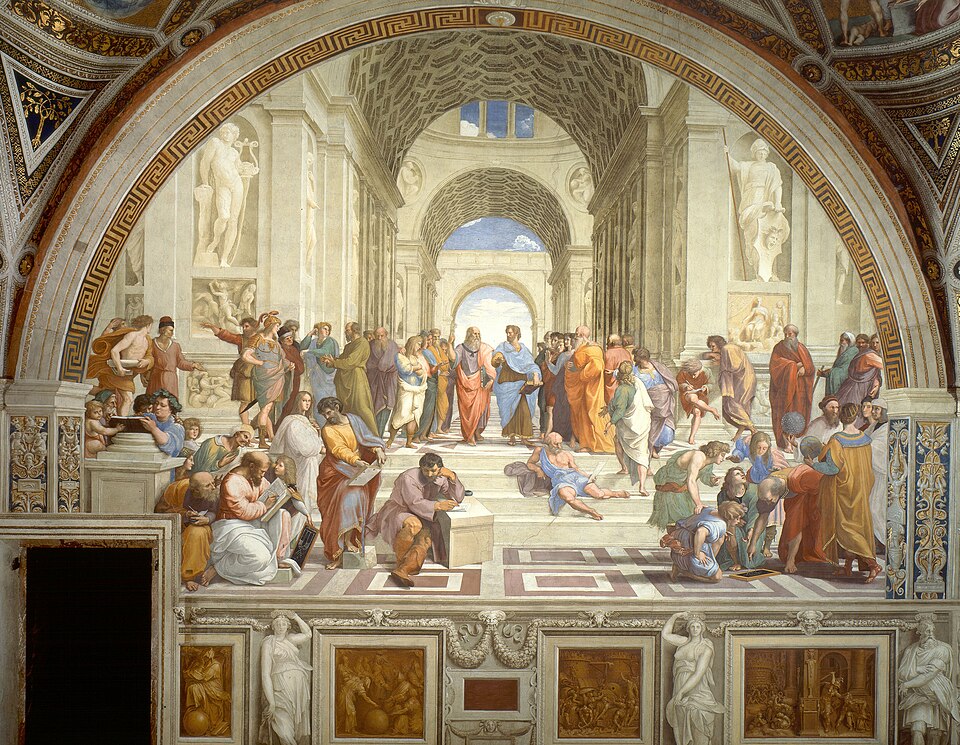

Philosophy of religion emerged as a distinct subdiscipline during the Enlightenment, but the practice of subjecting religious claims to philosophical scrutiny extends to the earliest period of Western philosophy. What distinguishes the discipline from theology on one side and from the natural sciences on the other is its method: the construction and evaluation of deductive and inductive arguments using the tools of formal and informal logic.1 A philosopher of religion does not conduct experiments or appeal to revelation; instead, the philosopher formulates premises, examines whether each premise is supported by evidence or sound reasoning, and determines whether the conclusion follows logically from those premises.
The central methodological commitment of the field is that arguments must be evaluated on their logical merits alone. The social standing of a claim's proponents, the historical longevity of a belief, and the psychological comfort a conclusion may provide are all irrelevant to whether an argument is logically valid and whether its premises are true.3 This commitment applies equally to arguments for and against religious claims. A theistic argument is assessed by the same logical standards as an atheistic one: are the premises well-supported? Does the conclusion follow? Are there counterexamples or defeaters?
The scope of the discipline extends beyond arguments for and against God's existence. Philosophers of religion also examine the coherence of divine attributes (can a being be simultaneously omnipotent and perfectly good?), the relationship between divine action and human free will, the epistemology of religious experience, the problem of religious diversity, and the rationality of faith in the absence of conclusive proof.1, 5 This article focuses on the argument families that form the discipline's core — cosmological, teleological, ontological, and moral — and on the logical framework used to evaluate them.
Validity, soundness, and logical structure
Before any argument in philosophy of religion can be properly assessed, the distinction between validity and soundness must be clear. A deductive argument is valid if and only if it is impossible for the premises to be true and the conclusion false — that is, the conclusion follows necessarily from the premises by the rules of logic.3 Validity is a property of an argument's logical form, not of its content. An argument can be valid even if its premises are false, and an argument with true premises can be invalid if the conclusion does not follow from them.
A deductive argument is sound if and only if it is both valid and all of its premises are true.3 Soundness is the stronger property: a sound argument guarantees the truth of its conclusion. The practical consequence is that any critic of a valid argument must identify at least one premise that is false or insufficiently supported; merely disliking the conclusion is not a logical response. Conversely, any proponent of a valid argument bears the burden of defending every premise, since the argument's persuasive force depends entirely on whether the premises are accepted as true.
Consider the following argument form:
P1. If A, then B.
P2. A.
C. Therefore, B.
This is a valid argument form known as modus ponens. Regardless of what A and B represent, the conclusion follows necessarily from the premises. Whether the argument is sound depends on whether P1 and P2 are true for the particular A and B in question. This distinction is foundational to philosophy of religion because every major theistic and atheistic argument is a deductive or inductive argument whose force depends on the truth of its premises, and much of the philosophical literature consists of debates over whether specific premises are adequately supported.3, 12
Not all arguments in philosophy of religion are deductive. Some are inductive or abductive, offering premises that make the conclusion probable rather than certain. Richard Swinburne's cumulative case for theism, for example, treats each theistic argument as providing evidence that raises the probability of God's existence, with the combined weight of multiple lines of evidence yielding a high cumulative probability.5 An inductive argument with true premises and a conclusion that is more probable than not is called cogent. The distinction between deductive soundness and inductive cogency matters because it determines whether an argument, if successful, establishes its conclusion with certainty or merely with probability.
Historical development
The philosophical examination of divine existence began in ancient Greece. Plato's Laws (c. 350 BCE) contains an argument from motion: the existence of self-moving souls is required to explain the motion observed in the natural world, and behind all particular souls there must be a supreme soul responsible for the orderly motion of the heavens.2 Aristotle's Metaphysics and Physics developed this line of reasoning into the concept of an Unmoved Mover — a being of pure actuality that causes all motion in the universe without itself being moved, existing necessarily and eternally as the final cause toward which all natural processes are directed.2 These Greek arguments established two features that would persist throughout the history of natural theology: the practice of reasoning from observable features of the natural world to a transcendent cause, and the conviction that such reasoning could proceed through logical demonstration rather than appeal to authority or tradition.
The medieval period produced the most systematic and rigorous formulations of theistic arguments in the pre-modern era. In the eleventh century, Anselm of Canterbury formulated what Kant would later call the "ontological argument" — an attempt to demonstrate God's existence from the concept of God alone, without appeal to any empirical premise about the natural world.10 In the thirteenth century, Thomas Aquinas presented five ways (quinque viae) of demonstrating God's existence in the Summa Theologiae, drawing on Aristotelian metaphysics to argue from motion, efficient causation, contingency, degrees of perfection, and the directedness of natural processes to a first mover, first cause, necessary being, maximally perfect being, and intelligent director of nature.9 Aquinas rejected Anselm's ontological argument on the grounds that human beings cannot know God's essence directly, but he held that God's existence could be demonstrated through effects observed in the natural world — a posteriori rather than a priori.
The early modern period saw both the refinement and the systematic critique of these arguments. Gottfried Wilhelm Leibniz (1646–1716) formulated the cosmological argument in terms of the Principle of Sufficient Reason: every contingent fact must have an explanation, and the chain of explanations for contingent beings must ultimately terminate in a necessary being whose existence is explained by its own nature.2 René Descartes (1596–1650) offered a reformulated ontological argument in the Meditations, arguing that existence is contained in the concept of a supremely perfect being just as having three angles is contained in the concept of a triangle. William Paley (1743–1805) gave the teleological argument its most famous popular expression in Natural Theology (1802), arguing that the complexity of biological organisms — exemplified by the human eye — implies a designer just as the complexity of a watch implies a watchmaker.4
The most formidable Enlightenment critiques came from David Hume (1711–1776) and Immanuel Kant (1724–1804). Hume's Dialogues Concerning Natural Religion (published posthumously in 1779) subjected the teleological argument to sustained critical examination, questioning whether the analogy between human artifacts and natural organisms is strong enough to support the inference to a designer, and whether the observed order in nature might be explained by natural principles rather than intentional design.8 Kant's Critique of Pure Reason (1781) argued that all speculative proofs of God's existence ultimately reduce to the ontological argument, which Kant rejected on the grounds that existence is not a predicate — that is, saying that something exists does not add a property to the concept of that thing in the way that saying it is red or heavy does.11 Kant held that the concept of a necessary being is indispensable as a regulative idea of reason but cannot be established by theoretical proof.
The twentieth and twenty-first centuries have witnessed a renewal of philosophical interest in theistic arguments, driven largely by developments in modal logic, probability theory, and analytic philosophy. Alvin Plantinga's modal ontological argument (1974) reformulated the ontological argument using possible-worlds semantics, arguing that if it is possible that a maximally great being exists, then such a being exists in every possible world, including the actual world.14 William Lane Craig revived the kalam cosmological argument, an argument with roots in medieval Islamic philosophy, defending the premise that the universe began to exist on both philosophical and scientific grounds.2 Richard Swinburne developed a cumulative probabilistic case for theism using Bayesian reasoning.5 On the critical side, J. L. Mackie's The Miracle of Theism (1982) provided a comprehensive philosophical assessment of theistic arguments, and Graham Oppy's Arguing About Gods (2006) offered a systematic evaluation of every major argument family from a naturalist perspective.7, 12
Cosmological arguments
Cosmological arguments constitute the oldest and most diverse family of theistic arguments. Their shared structure is an inference from some general feature of the world — the existence of things, the occurrence of change, the contingency of the universe — to a first cause, ultimate explanation, or necessary ground of all that exists.2 What unites the family is the conviction that the existence of the universe (or some pervasive feature of it) requires an explanation that cannot be found within the universe itself.
The Aristotelian-Thomistic argument from motion begins with the observation that things in the world are in a state of change (or "motion" in the Aristotelian sense, which encompasses any transition from potentiality to actuality). Aquinas argued that whatever is moved must be moved by another, that this chain of movers cannot extend to infinity (since an infinite regress of dependent movers would leave the motion unexplained), and that there must therefore exist a first mover that is itself unmoved — pure actuality with no unrealized potential.9 The argument from efficient causation follows a parallel structure: every effect has a cause, the chain of causes cannot regress infinitely, and there must therefore be a first uncaused cause.
The Leibnizian cosmological argument takes a different approach, grounding itself not in the impossibility of infinite causal regress but in the Principle of Sufficient Reason (PSR) — the thesis that every fact has an explanation, whether in the causal activity of another being or in the necessity of its own nature.2 Even if the chain of contingent causes were infinite, Leibniz argued, the entire chain would still be contingent and would therefore require an explanation outside itself. That explanation must be a being whose existence is necessary — a being that exists by the necessity of its own nature and serves as the sufficient reason for the entire series of contingent beings.
The kalam cosmological argument, originating with medieval Islamic theologians such as al-Kindi and al-Ghazali and revived in contemporary philosophy by William Lane Craig, takes a more direct approach. Its structure is:
P1. Everything that begins to exist has a cause.
P2. The universe began to exist.
C. Therefore, the universe has a cause.
The first premise is defended on both intuitive and metaphysical grounds: the idea that something could come into existence from nothing, without any cause whatsoever, is held to be metaphysically absurd. The second premise is defended both philosophically (through arguments that an actually infinite temporal past is impossible) and scientifically (through the standard Big Bang cosmological model, which implies that the universe had a temporal beginning approximately 13.8 billion years ago). Critics have challenged both premises: some argue that the causal principle may not apply to the origin of the universe as a whole, and others question whether the Big Bang represents an absolute beginning or merely a transition from a prior state.2, 7, 12
What is common to all cosmological arguments is that they are a posteriori — they begin with an observed feature of the world (existence, change, contingency, temporal origination) and reason to a transcendent cause. Their logical structure is typically deductively valid; the philosophical debate centers on whether the premises are true.2
Teleological arguments
Teleological arguments — from the Greek telos, meaning "end" or "purpose" — infer the existence of an intelligent designer from the order, regularity, or apparent purposiveness observed in the natural world. Like cosmological arguments, they are a posteriori: they begin with an empirical observation and reason to an explanatory hypothesis. Unlike cosmological arguments, which focus on the bare existence of things, teleological arguments focus on the specific character of existing things — the fact that the universe exhibits a particular kind of order that seems to call for explanation.4, 5
The argument has ancient roots. Plato's Timaeus presented the cosmos as the product of a divine craftsman (the Demiurge) who imposed rational order on pre-existing matter. The Stoics argued that the rational structure of nature pointed to a governing intelligence. In the medieval period, Aquinas's fifth way argued that natural bodies act for an end even though they lack cognition, and that this directedness implies an intelligent being who directs them — as an arrow requires an archer.9
The classic modern formulation is William Paley's watchmaker analogy. If one found a watch on a heath, Paley argued, the intricate arrangement of its parts toward the function of timekeeping would compel the inference that the watch had been designed by an intelligent agent. Biological organisms exhibit a complexity and functional integration far exceeding that of any watch, and by the same reasoning, they too must be the product of intelligent design.4 Hume's Dialogues had already anticipated and criticized this line of reasoning: the analogy between artifacts and organisms is weak, the universe is a unique case from which generalizations are hazardous, and order might arise from principles inherent in matter rather than from external intelligence.8 Charles Darwin's theory of evolution by natural selection later provided a detailed mechanism by which biological complexity could arise through unguided natural processes, substantially altering the landscape for biological design arguments.
The contemporary form of the teleological argument has shifted from biological complexity to cosmological fine-tuning. The observation at issue is that the fundamental physical constants and initial conditions of the universe appear to be exquisitely calibrated for the existence of complex structure and life. Relatively small changes to the values of the gravitational constant, the strong nuclear force, the cosmological constant, or the matter-antimatter asymmetry would result in a universe incapable of producing stars, planets, chemistry, or any form of organized complexity.5 Proponents argue that this fine-tuning is best explained by intelligent design. Critics point to the anthropic principle (observers can only exist in a universe compatible with their existence), the possibility of a multiverse that realizes all possible combinations of constants, and the difficulty of assigning meaningful probabilities to the values of fundamental constants.7, 12
Ontological arguments
Ontological arguments are unique among theistic arguments in that they are entirely a priori: they attempt to demonstrate God's existence from the concept of God alone, without any appeal to empirical observations about the natural world. The family's distinctive and controversial claim is that the very concept of a maximally great or perfect being entails that such a being exists.10, 15
Anselm of Canterbury formulated the original ontological argument in the Proslogion (c. 1077–1078). Anselm defined God as "that than which nothing greater can be conceived" and argued as follows: even the fool who denies God's existence understands the concept of such a being, so that being exists at least in the understanding. But a being that exists in reality is greater than a being that exists only in the understanding. Therefore, if that than which nothing greater can be conceived existed only in the understanding, it would not in fact be that than which nothing greater can be conceived — a contradiction. Hence, that than which nothing greater can be conceived must exist in reality.10
The argument provoked immediate criticism. Anselm's contemporary, the monk Gaunilo of Marmoutiers, objected that the same form of reasoning could be used to prove the existence of a perfect island — an island than which no greater island can be conceived — which is absurd. Anselm responded that the argument applies only to a being of unsurpassable greatness, not to entities within limited categories such as islands, which have no intrinsic maximum of perfection.10, 15
Kant's objection targets the argument's deepest assumption. Kant argued that "existence is not a real predicate" — that is, to say that something exists is not to attribute a property to it in the way that calling it wise or powerful does. When we say that a hundred real dollars contain no more content than a hundred possible dollars, we mean that the concept is the same whether the object exists or not; existence adds nothing to the concept. If existence is not a property, then it cannot be part of the definition of a maximally great being, and the argument's central move — that a being existing in reality is greater than one existing only in the understanding — is blocked.11
Plantinga's modal ontological argument (1974) sidesteps Kant's objection by reformulating the argument in the framework of possible-worlds semantics. Plantinga defines a maximally great being as one that possesses maximal excellence (omnipotence, omniscience, and moral perfection) in every possible world. He then argues:
P1. It is possible that a maximally great being exists.
P2. If it is possible that a maximally great being exists, then a maximally great being exists in some possible world.
P3. If a maximally great being exists in some possible world, then it exists in every possible world.
C. Therefore, a maximally great being exists in every possible world, including the actual world.
The argument is logically valid in the modal logic system S5, where possibility of necessity entails necessity. Its soundness turns entirely on whether P1 is true — whether it is genuinely possible, in the broadly logical sense, that a maximally great being exists. Plantinga himself acknowledged that the argument does not constitute a proof of God's existence, since a person who denies the possibility premise is not irrational in doing so. The argument does, however, establish that the existence of God is either necessary or impossible, with no middle ground: if maximal greatness is possible, it is actual; if it is not actual, it is not even possible.6, 14, 15
Moral arguments
Moral arguments for the existence of God take the existence of objective moral values, duties, or moral knowledge as their starting point and argue that theism provides the best or only adequate explanation of these moral phenomena. The core intuition is that if objective moral truths exist — if it is objectively wrong to torture the innocent, regardless of what any individual or culture believes — then there must be a transcendent ground or source of moral reality, and that ground is best identified with God.13
Kant's moral argument takes a distinctive form. Kant argued that pure theoretical reason cannot demonstrate God's existence, but practical reason requires the postulation of God as a condition for the possibility of the highest good (summum bonum) — a state in which virtue and happiness are perfectly proportioned. Since morality commands us to pursue the highest good, and since the highest good requires that virtue be rewarded with proportionate happiness, we must postulate a being with the power and the moral nature to ensure that this proportioning occurs. God is thus a necessary postulate of moral reason, even though God's existence cannot be theoretically proved.11
Contemporary moral arguments typically take a more straightforward form. The argument from moral realism, for instance, proceeds as follows: if objective moral values and duties exist, then God exists (because objective moral values require a transcendent, personal ground); objective moral values and duties do exist; therefore, God exists.13 The first premise is defended by arguing that in a purely naturalistic universe — a universe of matter, energy, and natural law, without any transcendent moral authority — there is no adequate basis for genuinely objective moral obligations. Natural facts about human psychology or social cooperation can explain why humans have moral beliefs, but they cannot ground the objective truth of those beliefs in the way that a transcendent moral lawgiver can. The second premise is defended by appeal to deep moral intuitions: the conviction that torturing children for amusement is genuinely wrong, not merely culturally disfavored, is a foundational moral datum that any adequate metaethical theory must accommodate.13, 5
Critics challenge both premises. Against the first, some argue that objective moral values can be grounded in natural facts about human flourishing, rational agency, or social contracts, without any appeal to a transcendent being. Against the second, moral anti-realists argue that what appear to be objective moral truths are actually the products of evolutionary psychology, cultural conditioning, or subjective attitudes projected onto the world. Still others invoke the Euthyphro dilemma (from Plato's Euthyphro): is something good because God commands it, or does God command it because it is good? If the former, morality seems arbitrary (God could have commanded cruelty); if the latter, the moral standard is independent of God, and God is not needed to ground it.7, 12 Defenders of the moral argument respond to the Euthyphro dilemma by arguing that God's nature, rather than God's will, is the standard of goodness — that God is essentially good, and moral values flow necessarily from the divine nature rather than from arbitrary divine commands.13
Relationships among the arguments
The four major argument families are logically independent — each can be assessed on its own merits without reference to the others — but they are also related in several important respects. Understanding these relationships is essential for evaluating the overall philosophical landscape.
First, the arguments differ in their starting points and in what they attempt to establish. Cosmological arguments start from the existence of the universe and conclude to a first cause or necessary being. Teleological arguments start from the order or fine-tuning of the universe and conclude to an intelligent designer. Ontological arguments start from the concept of God and conclude to a necessarily existing being. Moral arguments start from the existence of objective moral values and conclude to a personal moral ground.1, 5 No single argument, even if sound, establishes the full range of attributes traditionally ascribed to God. The cosmological argument, for instance, establishes a first cause but does not by itself show that this cause is personal, intelligent, or morally good. The teleological argument establishes intelligence but does not by itself demonstrate that the designer is the unique necessary being of the cosmological argument.
This is why some philosophers, following Swinburne, treat the arguments as cumulative evidence rather than as standalone demonstrations. On this approach, each argument contributes a piece of the overall case, and the question is whether the combined evidence makes theism more probable than its rivals. The cosmological argument provides evidence for a transcendent cause; the teleological argument provides evidence that this cause is intelligent; the moral argument provides evidence that this cause is personal and good; and the ontological argument, if its possibility premise is granted, provides evidence that this being exists necessarily.5 The cumulative approach has the advantage of not depending on the conclusive success of any single argument, but critics argue that aggregating individually inconclusive arguments does not necessarily produce a conclusive case.7, 12
Second, the arguments are connected by shared vulnerabilities. Kant argued that the cosmological argument, when pressed to identify the necessary being it posits, inevitably invokes the ontological argument's claim that existence belongs to the concept of a supremely perfect being — a claim Kant rejected. If Kant's analysis is correct, then the cosmological argument's success depends on the soundness of the ontological argument, and the failure of the latter undermines the former.11 This claim remains contested: defenders of the cosmological argument argue that the necessary being it posits need not be identified through the ontological argument's conceptual analysis but can be arrived at through independent metaphysical reasoning about contingency and necessity.2
Third, the arguments face a common challenge in the gap problem: even if an argument succeeds in establishing its conclusion, there remains a logical gap between the entity it establishes (a first cause, an intelligent designer, a necessary being, a moral ground) and the God of traditional theism — a personal being who is omnipotent, omniscient, perfectly good, and who sustains an ongoing relationship with creation. Bridging this gap requires additional philosophical reasoning beyond what any single argument provides.7, 12
The four major argument families compared1, 5, 12
| Family | Starting point | Type | Conclusion | Key figures |
|---|---|---|---|---|
| Cosmological | Existence, change, contingency | A posteriori | First cause or necessary being | Aristotle, Aquinas, Leibniz, Craig |
| Teleological | Order, design, fine-tuning | A posteriori | Intelligent designer | Paley, Swinburne, Collins |
| Ontological | Concept of God | A priori | Necessarily existing being | Anselm, Descartes, Plantinga |
| Moral | Objective moral values | A posteriori | Transcendent moral ground | Kant, Sorley, Craig, Adams |
Common objections and critical perspectives
In addition to the specific objections raised against each argument family, several general critiques apply across the discipline. These do not target individual premises but challenge the enterprise of natural theology as a whole.
The problem of evil is the single most extensively discussed objection to theism in the philosophical literature. In its logical form, the argument contends that the existence of evil is logically incompatible with the existence of an omnipotent, omniscient, and perfectly good God: such a being would have the power to prevent evil, the knowledge to be aware of it, and the goodness to want to eliminate it, yet evil exists.7 Plantinga's free will defense argues that a world containing creatures with genuine free will — and the moral good that free will makes possible — may be of greater value than a world without evil, and that it is logically possible that God cannot create a world with free creatures who never choose evil.6 The evidential form of the problem of evil, advanced by William Rowe and others, takes a more modest approach: it argues not that evil is logically incompatible with God, but that the sheer quantity and distribution of suffering in the world — including the suffering of sentient animals over millions of years before humans existed — constitutes strong evidence against the existence of an omnipotent, perfectly good being.7 Responses include skeptical theism (the claim that human cognitive limitations prevent us from discerning God's reasons for permitting evil) and greater-good theodicies (the claim that some goods, such as compassion, courage, or soul-making, require the existence of evil as a necessary condition).5, 6
The problem of divine hiddenness, developed by J. L. Schellenberg, argues that if a perfectly loving God existed, there would be no nonresistant nonbelief — no sincere seekers who fail to find evidence of God. Yet such nonbelief exists; therefore, a perfectly loving God does not. The argument challenges the moral argument's premise that God is perfectly good and the ontological argument's premise that maximal greatness includes moral perfection.1
A methodological objection questions whether the concept of God is sufficiently coherent to be the conclusion of any argument. If the attributes traditionally ascribed to God — omnipotence, omniscience, perfect goodness, timelessness, simplicity — are individually or jointly incoherent, then no argument for the existence of such a being can be sound, because the conclusion is necessarily false. Debates over the coherence of omnipotence (can God create a stone so heavy that God cannot lift it?), the compatibility of omniscience with human free will, and the tension between divine timelessness and divine action in time all bear on this question.7, 12
The contemporary landscape
Philosophy of religion in the twenty-first century is characterized by increasing technical sophistication and by a plurality of approaches that extends well beyond the classical argument families. The field has benefited from developments in formal epistemology, decision theory, and the philosophy of science, all of which have provided new tools for evaluating old questions.1
Bayesian approaches, exemplified by Swinburne's work, treat the question of God's existence as a problem in probabilistic reasoning. Each piece of evidence — the existence of the universe, its fine-tuning, the existence of consciousness, the occurrence of religious experience, the reality of moral obligations — is assigned a likelihood ratio reflecting how probable it is on theism versus on naturalism, and these ratios are combined using Bayes' theorem to yield a posterior probability for God's existence.5 Critics of this approach question whether meaningful prior probabilities can be assigned to hypotheses as broad as theism and naturalism, and whether the Bayesian framework is an appropriate tool for metaphysical questions that may not be amenable to probabilistic treatment.12
Reformed epistemology, developed by Plantinga and others, challenges the assumption that belief in God requires the support of arguments at all. On this view, belief in God can be "properly basic" — a foundational belief that does not require inferential support from other beliefs, analogous to belief in the reality of the external world or belief in the reliability of memory. If theistic belief can be properly basic, then the failure of all theistic arguments would not render theism irrational, because arguments were never the sole or primary warrant for the belief in the first place.6 This position does not render the arguments irrelevant — they may still serve as confirming evidence or as responses to objections — but it changes the epistemic role that arguments play in the overall case for theism.
The field also engages with questions arising from the natural sciences. The relationship between evolutionary biology and teleological arguments, between Big Bang cosmology and the kalam cosmological argument, between quantum mechanics and the principle of causation, and between cognitive science of religion and the evidential value of religious experience are all areas of active philosophical investigation.1, 5 These interdisciplinary connections ensure that philosophy of religion remains responsive to developments in empirical knowledge while maintaining its distinctive commitment to logical rigor and conceptual clarity.
Philosophy of religion, as a discipline, does not deliver verdicts. It maps the logical terrain: it identifies which arguments are valid, which premises are contested, where the strongest objections lie, and what the best available responses are. The question of whether any theistic argument is sound — whether its premises are not only logically consistent but true — remains an open philosophical question on which careful, informed thinkers continue to disagree. What the discipline provides is not a settlement of that question but the tools and the rigor necessary for pursuing it honestly.1, 3
References
Natural Theology: Or, Evidence of the Existence and Attributes of the Deity, Collected from the Appearances of Nature