Overview
- Ontological arguments attempt to demonstrate God's existence through a priori reasoning alone, arguing from the very concept of God — a being than which nothing greater can be conceived — to the conclusion that such a being must exist in reality.
- The argument originates with Anselm of Canterbury in the eleventh century, was reformulated by Descartes and Leibniz in the early modern period, and received rigorous modal restatements by Kurt Godel and Alvin Plantinga in the twentieth century, each version addressing objections raised against its predecessors.
- The central philosophical dispute concerns whether existence (or necessary existence) is a genuine property that can be included in the concept of a being, with Kant's objection that existence is not a real predicate and Plantinga's modal reformulation representing the two poles of this ongoing debate.
An ontological argument is any argument for the existence of God that proceeds entirely from a priori reasoning — that is, from the analysis of concepts and logical relations alone, without appeal to empirical observation of the world. What distinguishes ontological arguments from cosmological arguments and teleological arguments is this purely conceptual starting point: rather than inferring God's existence from features of the physical universe such as causation, contingency, or apparent design, ontological arguments begin with the concept of God itself and attempt to show that a being matching that concept must exist as a matter of logical or metaphysical necessity.8 The term "ontological argument" was coined by Immanuel Kant in the eighteenth century, though the form of reasoning it describes originates with Anselm of Canterbury nearly seven hundred years earlier.5, 8
The core intuition underlying all ontological arguments can be stated simply: if God is defined as a maximally great or maximally perfect being, then the very concept of such a being entails its existence, because a being that lacked existence would not be maximally great or maximally perfect. The philosophical dispute, which has persisted for nearly a millennium, concerns whether this move from concept to reality is logically legitimate. Defenders argue that God is a unique case in which the concept genuinely entails existence; critics contend that the argument illicitly treats existence as a property that can be built into a definition. This article surveys the major versions of the ontological argument, the objections raised against them, and the responses those objections have generated.8, 9
Historical development
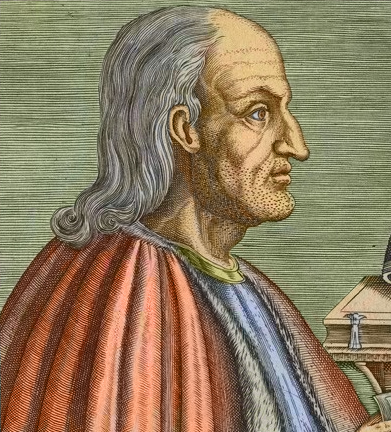

The ontological argument first appeared in Anselm of Canterbury's Proslogion, written in 1077–1078. Anselm was a Benedictine monk and later Archbishop of Canterbury who sought a single argument that would establish God's existence without relying on multiple premises drawn from observation of the world. In Chapter 2 of the Proslogion, he defined God as "that than which nothing greater can be conceived" (aliquid quo nihil maius cogitari possit) and argued that even the fool who denies God's existence in Psalm 14:1 must have this concept in the understanding, and that a being existing both in the understanding and in reality would be greater than one existing in the understanding alone. Therefore, God must exist in reality.1
The argument attracted an immediate response. Gaunilo, a monk at the abbey of Marmoutiers, composed a reply titled On Behalf of the Fool in which he argued that Anselm's reasoning could be applied to establish the existence of a perfect island or any other maximally great thing, and since such conclusions are absurd, the argument must be flawed.2 Anselm responded that his argument applied uniquely to a being than which nothing greater can be conceived, because only such a being possesses necessary existence as part of its nature, whereas islands and other contingent things do not.1
The argument received little sustained philosophical attention during the medieval period after Anselm, though Thomas Aquinas rejected it in the Summa Theologiae on the grounds that humans cannot know God's essence directly and therefore cannot determine whether existence belongs to it.8 Interest revived in the early modern period when René Descartes presented a new version in the Fifth Meditation of his Meditations on First Philosophy (1641). Descartes argued that existence belongs to the essence of a supremely perfect being just as having three angles belongs to the essence of a triangle: one cannot conceive of a supremely perfect being that lacks existence any more than one can conceive of a triangle that lacks three angles.3
Gottfried Wilhelm Leibniz refined the Cartesian version by arguing that Descartes had left an implicit premise undefended: that the concept of a supremely perfect being is logically coherent. If the concept harboured a hidden contradiction, the argument would fail at the outset. Leibniz attempted to supply the missing premise by arguing that perfections are simple, purely positive qualities admitting of no negation, and that simple positive qualities cannot be mutually incompatible. He concluded that a being possessing all perfections is logically possible and that, given this possibility, Descartes's argument then establishes that such a being actually exists.4
The ontological argument faced its most influential historical criticism when Kant devoted a section of the Critique of Pure Reason (1781) to rejecting it. Kant's central claim was that "being is obviously not a real predicate" — that is, existence is not a property that adds anything to the concept of a thing. To say that a thing exists is not to attribute a new quality to it but simply to assert that the concept is instantiated. If existence is not a real predicate, then it cannot be included among God's perfections, and the core move of the ontological argument collapses.5
In the twentieth century, the ontological argument was revived in modal logic. Norman Malcolm argued in 1960 that while Anselm's first argument (in Proslogion Chapter 2) is vulnerable to Kant's objection, a second argument in Chapter 3 — concerning not mere existence but necessary existence — escapes it, because necessary existence, unlike mere existence, is a genuine property.13 Alvin Plantinga developed this line of reasoning into a rigorous modal ontological argument in The Nature of Necessity (1974), employing the framework of S5 modal logic to argue from the possible existence of a maximally great being to its actual existence.6 Around the same period, Kurt Gödel developed a formal ontological proof using higher-order modal logic, which circulated among logicians beginning in the 1970s and was published posthumously in 1995.12
Anselm's original argument
Anselm's argument in Proslogion Chapter 2 can be reconstructed in formal structure as follows:1
P1. God is defined as "that than which nothing greater can be conceived."
P2. This concept exists at least in the understanding (even the fool who denies God's existence grasps the concept).
P3. Existing in reality is greater than existing in the understanding alone.
P4. If God existed only in the understanding, then a being greater than God could be conceived — namely, a being with all of God's qualities that also exists in reality.
P5. But this contradicts the definition of God as that than which nothing greater can be conceived.
C. Therefore, God must exist both in the understanding and in reality.
The argument has the form of a reductio ad absurdum: it assumes the negation of the conclusion (that God exists only in the understanding), derives a contradiction (that something greater than that-than-which-nothing-greater-can-be-conceived can be conceived), and concludes that the assumption must be false. If the argument is logically valid — meaning the conclusion follows necessarily from the premises — then its soundness depends entirely on whether the premises are true. An argument is valid when its conclusion follows necessarily from its premises regardless of whether those premises are actually true; it is sound when it is both valid and its premises are in fact true.8
P1 functions as a stipulative definition, and P2 asserts that anyone considering the argument at least entertains the concept in question. The critical premise is P3: the claim that existing in reality is greater than existing in the understanding alone. Anselm appears to treat this as self-evident, and the argument depends on accepting a background principle that reality confers a kind of greatness or perfection that mere conceptual existence does not.1, 9
In Proslogion Chapter 3, Anselm extended the argument by contending that God not only exists but exists necessarily — that is, God cannot even be conceived not to exist. His reasoning was that a being that cannot be conceived not to exist is greater than one that can be conceived not to exist, and since God is that than which nothing greater can be conceived, God must possess this stronger mode of existence. This second argument introduces the concept of necessary existence and has been identified by Malcolm and Plantinga as a logically distinct line of reasoning from the Chapter 2 argument.1, 13
Descartes's and Leibniz's versions
Descartes's version of the ontological argument, presented in the Fifth Meditation, proceeds from the concept of a supremely perfect being rather than from Anselm's formula of "that than which nothing greater can be conceived." Descartes argued that just as the essence of a triangle necessarily includes having interior angles summing to 180 degrees, the essence of a supremely perfect being necessarily includes existence. To conceive of a supremely perfect being that lacks existence is as incoherent as conceiving of a triangle without three sides. Existence, on this account, is one of the perfections that define what it means to be a supremely perfect being, and it cannot be separated from that concept any more than a mountain can be separated from a valley.3
The Cartesian formulation shifts the argument's ground from the comparative logic of "greater than" to the constitutive logic of essential properties. Where Anselm argued by reductio that denying God's existence leads to contradiction, Descartes argued by analogy that existence is contained within the concept of supreme perfection just as geometric properties are contained within the concepts of geometric figures. The analogy, however, raised questions about whether existence functions the same way as essential geometric predicates — a question that Kant would later press forcefully.3, 5
Leibniz identified what he considered a gap in Descartes's reasoning. The argument assumes that the concept of a supremely perfect being is logically coherent — that all perfections can coexist in a single being without contradiction. If two perfections were mutually incompatible, the concept would be incoherent, and no conclusions about its instantiation could follow. Leibniz therefore set out to prove that the concept is consistent. His proof relied on the claim that perfections are "simple qualities which are positive and absolute, or which express whatever they express without any limits."4 Since perfections are purely positive and contain no negation, Leibniz argued, they cannot contradict one another, because contradiction requires that one property negate what another affirms. If all perfections are mutually compatible, then the concept of a being possessing all perfections is coherent, and Descartes's argument proceeds.4, 8
Whether Leibniz's proof succeeds has been debated. Critics have questioned whether all divine attributes are purely positive: omniscience, for instance, might entail knowing truths about negation, and omnipotence might involve the capacity to bring about states that negate other states, raising the question of whether these attributes are truly "purely positive" in the required sense. The coherence of the concept of a maximally perfect or maximally great being remains an open question in contemporary philosophy of religion.9, 11
Gödel's ontological proof
Kurt Gödel, one of the twentieth century's foremost logicians, developed a formal version of the ontological argument using the apparatus of higher-order modal logic. The proof circulated in manuscript form among logicians beginning in the 1970s — Gödel reportedly hesitated to publish it for fear that it would be taken as evidence that he actually believed in God, rather than as an exercise in formal logic — and was published posthumously in his Collected Works in 1995.12
Gödel's proof defines a "positive property" as one whose possession does not entail any limitation and then proves, through a series of axioms and theorems, that a being possessing all positive properties (a "God-like" being) necessarily exists. The proof proceeds through several stages: first establishing that positive properties are possibly instantiated, then that the property of being God-like is itself positive, then that if a God-like being is possible it is necessary, and finally that a God-like being therefore necessarily exists.12
The formal proof has been examined for logical validity by several logicians. In 2013, Christoph Benzmüller and Bruno Woltzenlogel Paleo verified the proof's logical validity using automated theorem provers, confirming that the conclusion does follow from the axioms in a suitable modal logic system.11 The question, as with all ontological arguments, is whether the axioms are true. Critics have raised two principal concerns: first, that Gödel's axiom system suffers from "modal collapse" — the consequence that every true proposition is necessarily true, which would eliminate contingency from the world entirely; and second, that the axioms, while logically consistent, are not independently motivated and amount to assuming the conclusion in a formal disguise.11, 12
The modal ontological argument
The most widely discussed contemporary version of the ontological argument is the modal formulation developed by Alvin Plantinga in The Nature of Necessity (1974) and presented in a more accessible form in God, Freedom, and Evil (1977). Plantinga's argument employs the S5 system of modal logic, in which the accessibility relation between possible worlds is reflexive, symmetric, and transitive — meaning that if a proposition is possibly necessary, then it is necessary. The argument defines a maximally excellent being as one that possesses omnipotence, omniscience, and moral perfection, and a maximally great being as one that is maximally excellent in every possible world.6, 7
P1. It is possible that a maximally great being exists. (That is, there is a possible world in which a maximally great being exists.)
P2. If it is possible that a maximally great being exists, then a maximally great being exists in some possible world.
P3. If a maximally great being exists in some possible world, then it exists in every possible world. (By definition, a maximally great being is maximally excellent in every possible world.)
P4. If a maximally great being exists in every possible world, then it exists in the actual world.
P5. If a maximally great being exists in the actual world, then a maximally great being exists.
C. Therefore, a maximally great being exists.
The argument is logically valid in S5 modal logic.6 The crucial step is P1, the possibility premise. In the framework of S5, if it is even possible that a necessarily existing being exists, then that being exists necessarily — and therefore actually. The entire weight of the argument rests on whether P1 is true: whether it is genuinely possible, in the broadly logical sense, that a maximally great being exists.6, 7
Plantinga himself acknowledged that the argument does not constitute a proof of God's existence in the sense of establishing the conclusion from premises that no rational person could deny. The possibility premise, he noted, is not self-evident, and a person who denies God's existence can equally well deny that a maximally great being is possible. What the argument does establish, Plantinga argued, is that belief in God can be rational: if P1 is accepted — and Plantinga argued it has at least as much intuitive support as its negation — then theism follows deductively.7
Kant's objection: existence is not a predicate
The most historically influential objection to the ontological argument comes from Immanuel Kant's Critique of Pure Reason (1781). In the section titled "The Impossibility of an Ontological Proof of the Existence of God," Kant argued that "being is obviously not a real predicate, that is, a concept of something that could be added to the concept of a thing."5 By "real predicate," Kant meant a property that genuinely enlarges or determines a concept. Saying that a thing exists does not add any property to the concept of that thing; it merely asserts that the concept has an instance in reality.
Kant illustrated the point with his famous example of a hundred thalers (a German silver coin). The concept of a hundred real thalers contains nothing more than the concept of a hundred possible thalers. The real thalers have exactly the same properties as the merely conceived thalers — they are the same denomination, the same weight, the same metal. The only difference is that the real thalers exist, and existence, Kant argued, is not an additional property but rather the positing of the thing with all its properties.5
If Kant's analysis is correct, it undermines the central move in both Anselm's and Descartes's formulations. In Anselm's argument, P3 asserts that existing in reality is "greater than" existing in the understanding alone — but if existence is not a real predicate, then a being that exists and a being that is merely conceived possess the same intrinsic properties, and the existing being is not genuinely "greater." In Descartes's argument, existence is treated as a perfection that belongs to the essence of a supremely perfect being — but if existence is not a predicate, it cannot function as a perfection.5, 8
Defenders of ontological arguments have responded to Kant's objection in several ways. Some have argued that Kant's thesis, while correct for first-order existence, does not apply to necessary existence, which is a genuine modal property. A being that exists necessarily differs in a real way from a being that exists contingently: the former cannot fail to exist, while the latter might not have existed. If necessary existence is a real property, then the modal ontological argument escapes Kant's objection even if the classical versions do not.6, 13 Others have challenged Kant's thesis directly, arguing that existence does function as a predicate in ordinary language and logic — when one says "tigers exist but unicorns do not," one is predicating something of tigers that one denies of unicorns.9
Gaunilo's objection and the parody problem
Gaunilo of Marmoutiers raised the first objection to the ontological argument, and his strategy — now called the "parody objection" or "overgeneration objection" — remains one of the most discussed in the literature. In On Behalf of the Fool, Gaunilo asked the reader to consider a "lost island" that is more excellent than any other island. By Anselm's reasoning, this island must exist in reality, because an island that exists in reality is more excellent than one that exists merely in the understanding. Since the conclusion that a perfect island must exist is absurd, the reasoning that leads to it must be flawed — and the same flaw, Gaunilo argued, infects Anselm's argument for God's existence.2
Anselm replied that the argument applies only to "that than which nothing greater can be conceived" and not to items like islands, which by their nature admit of indefinite improvement. An island could always be improved by adding more palm trees, better weather, or more coastline; there is no intrinsic maximum for island-excellence. But a being than which nothing greater can be conceived, by definition, cannot be improved, and so the argument applies uniquely to it. Only a being whose greatness admits of no upper bound is such that the denial of its existence generates a contradiction.1, 8
The parody strategy has been extended beyond islands to "maximally great" versions of many things: a maximally great pizza, a maximally great number, or a maximally great evil being. In each case, the critic argues that Anselm's reasoning would establish the existence of the item in question, and since such items obviously do not exist, the argument form must be invalid.9 Defenders respond that these parodies fail because the proposed items are not the kind of thing whose concept entails necessary existence. An island is a contingent material object by nature; no amount of conceptual manipulation can generate necessary existence from a concept that is inherently contingent. God, by contrast, is defined as a necessary being, and the argument depends on this unique feature of the divine concept.6, 8
Whether this response is adequate depends on a prior question: whether the concept of a necessarily existing being is coherent in the first place. If it is, then parodies involving contingent objects indeed fail. If it is not, then the ontological argument fails at the possibility premise rather than through parody. The debate therefore returns to the fundamental question of whether maximal greatness is genuinely possible.9, 11
Further objections and responses
Beyond Kant's predicate objection and Gaunilo's parody, several additional lines of criticism have been directed at ontological arguments across their history.
The conceivability objection targets the possibility premise of the modal ontological argument. The argument requires that it be possible — in the sense of broadly logical possibility — that a maximally great being exists. But a critic can argue that the nonexistence of a maximally great being is equally conceivable. If it is possible that no maximally great being exists, then by the same S5 logic that powers Plantinga's argument, it follows necessarily that no maximally great being exists. The modal ontological argument and its negation are thus symmetric: each is valid, and each rests on a possibility premise that the other side denies. The argument does not provide independent grounds for accepting the theistic possibility premise over its atheistic counterpart.7, 9
The many-gods objection argues that the modal ontological argument, if successful, would establish the existence of any necessarily existing being whose possibility is granted. A critic might propose a maximally great being that is omnipotent and omniscient but morally indifferent, or a necessarily existing being with a different set of essential attributes. If the possibility of such a being is as defensible as the possibility of the traditional theistic God, then the ontological argument proves too much — it generates mutually incompatible conclusions from structurally identical reasoning.14 The defender responds that there can be at most one maximally great being, since two omnipotent beings is a logical impossibility (each would have the power to override the other, which contradicts omnipotence), and that the specific attributes in question — omnipotence, omniscience, and moral perfection — are the attributes that maximise greatness.6, 14
The question-begging objection holds that the ontological argument assumes its conclusion in its premises. If to accept that a maximally great being is possible is already to accept, implicitly, that such a being exists (since in S5 possible necessity entails necessity), then the argument's key premise presupposes the very thing it purports to prove. The premise "it is possible that a maximally great being exists" may appear modest, but in the S5 framework it is logically equivalent to "a maximally great being exists," which means accepting the premise just is accepting the conclusion.9, 11 Plantinga has responded that while the premise is logically equivalent to the conclusion in S5, it is not epistemically equivalent: a person might have intuitive grounds for accepting the possibility of maximal greatness without realizing that this commits them to its actuality. The argument, on this view, reveals a logical commitment that is already implicit in a reasonable-seeming belief.7
The Humean objection draws on David Hume's principle that no matter of fact can be demonstrated by a priori reasoning alone. If it is always conceivable that any being does not exist, then no being's existence can be logically necessary, and the concept of a necessary being is incoherent. This objection strikes at the root of all ontological arguments by denying that there is any such thing as a being whose nonexistence is logically impossible.8, 9 Defenders distinguish between logical necessity (truth by definition or logical form alone) and metaphysical necessity (truth in all possible worlds), arguing that a being can be metaphysically necessary without its existence being derivable from logic alone.6
Comparison of major versions
The ontological argument has taken substantially different forms across its history. Though all versions share the strategy of arguing from concept to existence through a priori reasoning, they differ in their logical structure, their key premises, and the objections to which they are primarily vulnerable.
Major versions of the ontological argument1, 3, 6
| Version | Key concept | Logical form | Central premise | Primary vulnerability |
|---|---|---|---|---|
| Anselm (1078) | That than which nothing greater can be conceived | Reductio ad absurdum | Existence in reality is greater than existence in the understanding alone | Kant's objection (existence is not a predicate) |
| Descartes (1641) | Supremely perfect being | Analogy with essential properties | Existence is a perfection belonging to the essence of a supremely perfect being | Kant's objection; coherence of the concept (Leibniz's gap) |
| Plantinga (1974) | Maximally great being | S5 modal logic | It is possible that a maximally great being exists | Conceivability objection; question-begging |
The table illustrates how each successive formulation addresses weaknesses in its predecessors. Descartes moved from Anselm's comparative "greater than" to the constitutive language of essential properties. Plantinga shifted from existence to necessary existence, explicitly designed to sidestep Kant's objection that mere existence is not a real predicate. Each reformulation, however, has introduced new points of contention: Descartes's version raised the coherence question that Leibniz attempted to settle, while Plantinga's version concentrates the dispute on a single possibility premise whose status is fiercely debated.8, 9
The question of validity and soundness
The logical status of the ontological argument varies across its formulations. Anselm's original argument, reconstructed carefully, is valid: if the premises are granted, the conclusion follows. The same is true of Plantinga's modal version, whose validity in S5 has been formally demonstrated. The formal validity of Gödel's proof has been confirmed by automated theorem provers.6, 11, 12 The philosophical debate, therefore, is not primarily about whether these arguments are valid but about whether they are sound — whether their premises are true.
For Anselm's argument, soundness depends on whether existence in reality is genuinely "greater" than existence in the understanding alone, and on whether the concept of that-than-which-nothing-greater-can-be-conceived is coherent. For Descartes's argument, soundness depends on whether existence functions as an essential property and whether the concept of a supremely perfect being is consistent. For Plantinga's argument, soundness depends entirely on the truth of the possibility premise — whether it is genuinely possible that a maximally great being exists.8, 9
The ontological argument occupies a distinctive position among theistic arguments in this respect. Cosmological arguments rest on empirical premises about causation and contingency that can be evaluated against observations of the world. Teleological arguments rest on empirical premises about order, complexity, or fine-tuning in nature. Ontological arguments, by contrast, rest on purely conceptual or modal premises that cannot be tested empirically. Their truth or falsity must be assessed through philosophical analysis of the concepts of existence, necessity, greatness, and perfection — questions on which no empirical evidence bears directly.8, 10
Richard Swinburne, while himself a theist who defends the existence of God on cumulative evidential grounds, has argued that ontological arguments are not the strongest form of theistic argument, precisely because their premises — particularly claims about what is logically or metaphysically possible — are less clearly assessable than the empirical premises of cosmological and teleological arguments.10 Graham Oppy, who has produced the most comprehensive critical survey of ontological arguments, concludes that no version of the argument provides a rationally compelling reason for a nontheist to become a theist, though he acknowledges that the arguments raise deep and unresolved questions about the nature of existence, modality, and the relationship between conceivability and possibility.9
Significance and influence
Whatever one concludes about the soundness of ontological arguments, their influence on the development of Western philosophy has been substantial. Anselm's argument initiated the philosophical investigation of the relationship between concepts and existence that would occupy thinkers from Aquinas through Kant to the present day. Descartes's version became a central exhibit in Enlightenment debates about the scope and limits of a priori reasoning. Kant's objection shaped the subsequent development of the philosophy of existence, influencing Frege's distinction between first-order and second-order predication and the modern logical treatment of existential quantification.5, 8
The modal versions developed by Malcolm, Plantinga, and Gödel contributed to the revival of metaphysics in analytic philosophy during the second half of the twentieth century. Plantinga's argument in particular played a significant role in the resurgence of philosophy of religion as a serious subdiscipline within analytic philosophy, demonstrating that theistic arguments could be formulated with the same logical rigour demanded in other areas of philosophical inquiry. The argument also stimulated productive work on modal epistemology — the question of how we can know what is possible and what is necessary — that has implications far beyond the philosophy of religion.6, 7, 13
The ontological argument continues to generate new research. Formal investigations of Gödel's proof using automated reasoning tools have opened a new frontier in computational philosophy, while debates about the possibility premise of Plantinga's argument have deepened understanding of the epistemology of modality. The argument's capacity to provoke fundamental questions about the nature of existence, the relationship between thought and reality, and the limits of a priori reasoning ensures that it remains a central topic in philosophy of religion and metaphysics alike.9, 11, 12