Overview
- Reformed epistemology holds that belief in God can be 'properly basic' — a foundational belief that does not require inferential support from arguments or evidence to be rationally warranted, in the same way that belief in the external world, the reality of the past, or the existence of other minds is properly basic.
- Alvin Plantinga's warrant trilogy argues that a belief has warrant when it is produced by cognitive faculties functioning properly in an appropriate epistemic environment according to a design plan successfully aimed at truth, and that if God exists, the sensus divinitatis and the internal instigation of the Holy Spirit can produce warranted theistic and Christian belief without the mediation of arguments.
- Critics raise the Great Pumpkin objection (that the approach licenses any belief as properly basic), the problem of religious diversity (that adherents of incompatible religions can make parallel claims to proper basicality), and the concern that the A/C model's warrant is conditional on theism's truth, making it a defensive rather than offensive epistemological project.
Reformed epistemology is a school of thought in the philosophy of religion that holds that belief in God can be rational without being supported by arguments or evidence. The position was developed principally by Alvin Plantinga, Nicholas Wolterstorff, and William Alston beginning in the early 1980s and is rooted in the claim that belief in God can be properly basic — a foundational belief that does not need to be inferred from other propositions in order to be warranted. Just as belief in the reality of the external world, the existence of other minds, and the reliability of memory are commonly held without inferential support and are nonetheless rational, reformed epistemologists argue that theistic belief can occupy the same epistemic status.1, 4
The term “reformed” refers to the Calvinist theological tradition, which holds that human beings possess a natural awareness of God (the sensus divinitatis) that can produce belief in God directly, without the mediation of philosophical arguments. Reformed epistemology is primarily a defensive epistemological project: it aims to show that theistic belief is within its epistemic rights — that it can constitute knowledge — rather than to prove that God exists. The approach has generated extensive debate in analytic philosophy of religion and has reshaped the landscape of religious epistemology since its initial articulation in the 1983 volume Faith and Rationality.1, 9

Historical development
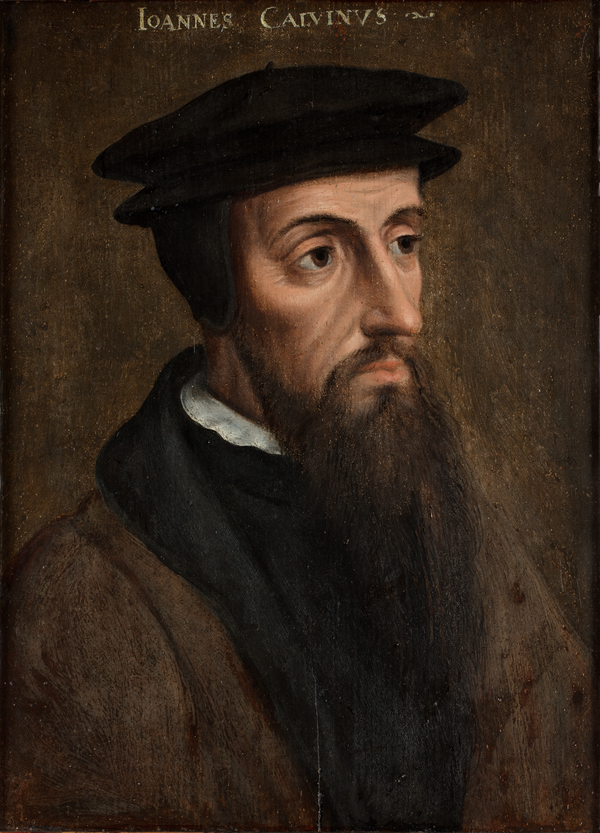
Reformed epistemology emerged from the convergence of two intellectual traditions: the Reformed theological emphasis on the natural knowledge of God and the analytic epistemological critique of classical foundationalism. John Calvin, in the opening chapters of the Institutes of the Christian Religion (1559), argued that God has implanted in every human being a sensus divinitatis — a sense of divinity that spontaneously produces awareness of God under appropriate circumstances. Thomas Aquinas held a related view, maintaining that knowledge of God’s existence is implicitly present in all human beings through the natural light of reason. Both theologians held that belief in God does not arise primarily from arguments but from a cognitive capacity oriented toward the divine.4, 5

The analytic side of reformed epistemology developed in response to the evidentialist challenge to religious belief. In the mid-twentieth century, philosophers such as Antony Flew and Michael Scriven argued that belief in God is irrational because there is insufficient evidence for God’s existence. The underlying assumption was that rational belief requires adequate evidence or argument — a principle sometimes called the evidentialist thesis. W. K. Clifford’s famous dictum captures this position: “It is wrong always, everywhere, and for every one, to believe anything upon insufficient evidence.” If belief in God lacks sufficient evidence, the evidentialist concludes, it is epistemically irresponsible.1, 8
Plantinga’s initial response appeared in his essay “Reason and Belief in God” in the 1983 volume Faith and Rationality, co-edited with Wolterstorff. Plantinga argued that the evidentialist challenge rests on classical foundationalism — the epistemological position that a belief is properly basic only if it is self-evident, evident to the senses, or incorrigible — and that classical foundationalism is self-referentially incoherent. The claim that only self-evident, sense-evident, or incorrigible beliefs are properly basic is itself none of those things; it fails its own test. If classical foundationalism collapses, the evidentialist thesis loses its philosophical foundation, and the door opens for belief in God to be properly basic.1
Wolterstorff developed a parallel critique in Reason within the Bounds of Religion (1976; 2nd ed. 1984), arguing that all reasoning operates under what he called control beliefs — background commitments that shape how a person weighs evidence and constructs theories. On this view, the Enlightenment ideal of presuppositionless inquiry is illusory; every thinker begins from some set of foundational commitments, and religious commitments are no less legitimate starting points than secular ones.7 William Alston contributed to the movement’s development through his work on epistemic justification and, later, through his landmark Perceiving God (1991), which argued that certain forms of religious experience are epistemically analogous to sense perception and can ground justified belief in God.6
The critique of classical foundationalism
The first move in reformed epistemology is destructive: it aims to dismantle classical foundationalism, the epistemological theory that provided the intellectual framework for the evidentialist challenge. Classical foundationalism, as Plantinga defines it, holds that a belief is properly basic — rationally held without inferential support — if and only if it is self-evident (like the laws of logic), evident to the senses (like “I see a tree”), or incorrigible (like “I am in pain”). All other rational beliefs must be inferentially derived from these foundations. Since belief in God is none of these three things, the classical foundationalist concludes that belief in God can be rational only if supported by arguments or evidence.1, 2
Plantinga’s critique proceeds in two stages. The first stage argues that classical foundationalism is too restrictive. Many beliefs that virtually everyone accepts as rational — belief that the world existed five minutes ago, belief that other people have minds, belief in the general reliability of memory — cannot be derived from the three approved categories of basic beliefs. These beliefs are not self-evident, not directly evident to the senses, and not incorrigible, yet rejecting them would be epistemically disastrous. Classical foundationalism thus condemns as irrational the very beliefs on which everyday rational thought depends.1
The second stage argues that classical foundationalism is self-referentially incoherent. The criterion itself — the claim that only self-evident, sense-evident, or incorrigible beliefs are properly basic — is not self-evident, not evident to the senses, and not incorrigible. It cannot be established by appeal to beliefs that do meet the criterion without begging the question. Classical foundationalism therefore fails its own test and cannot coherently be maintained. Plantinga concludes that the evidentialist thesis, insofar as it depends on classical foundationalism, lacks a viable epistemological foundation.1, 2
This critique does not establish that belief in God is properly basic; it only removes the philosophical obstacle that prevented the possibility from being considered. The constructive project — showing how and under what conditions belief in God can be properly basic — required Plantinga to develop a comprehensive theory of epistemic warrant, which he undertook in his three-volume warrant trilogy published between 1993 and 2000.2, 3, 4
Proper function and the theory of warrant
Plantinga’s positive epistemological contribution centers on the concept of warrant, which he defines as the property that, when added to true belief, yields knowledge. In Warrant: The Current Debate (1993), Plantinga surveyed the major contemporary accounts of warrant — including deontologism (warrant as epistemic duty-fulfillment), coherentism (warrant as coherence among beliefs), and reliabilism (warrant as production by reliable cognitive processes) — and argued that none of them adequately captures what makes the difference between mere true belief and genuine knowledge.2
In the companion volume Warrant and Proper Function (1993), Plantinga proposed his own account. A belief has warrant for a person, he argued, if and only if it satisfies four conditions: (1) the cognitive faculties producing the belief are functioning properly — operating as they were designed to operate; (2) the cognitive environment is appropriate for those faculties — the faculties are being used in the kind of environment for which they were designed; (3) the design plan governing the production of the belief is aimed at truth — the purpose of the relevant cognitive module is to produce true beliefs, not merely useful ones; and (4) the design plan is a good one — the objective probability that a belief produced under these conditions is true is high.3
The concept of a design plan is central to the account. Plantinga argues that cognitive faculties operate according to a plan or blueprint that specifies how they should function under various circumstances. The notion of proper function presupposes a design plan, and a design plan presupposes either a literal designer (God) or a naturalistic analogue (natural selection). Plantinga’s proper function account is thus not explicitly theistic in its formulation — it can in principle accommodate naturalistic design plans — but Plantinga has argued elsewhere that naturalism has difficulty accounting for the reliability of cognitive faculties designed by unguided natural selection, a claim he develops in the evolutionary argument against naturalism.3, 5
The proper function account has the consequence that warrant is an externalist property: whether a belief is warranted depends on factors external to the believer’s perspective, such as whether the relevant faculties are in fact functioning properly and whether the design plan is in fact aimed at truth. A person can have a warranted belief without being able to demonstrate its warrant to a skeptic, just as a person can have reliable eyesight without being able to prove it to someone who doubts perception.3, 12
The Aquinas/Calvin model
In Warranted Christian Belief (2000), the culminating volume of the warrant trilogy, Plantinga applies his proper function account to religious belief. He develops what he calls the Aquinas/Calvin (A/C) model — a model inspired by insights from both Thomas Aquinas and John Calvin regarding the natural knowledge of God. On this model, God has created human beings with a cognitive faculty, the sensus divinitatis, that is designed to produce belief in God under a wide range of circumstances: when contemplating the beauty of nature, when reflecting on the starry sky, when experiencing moral obligation, when confronting mortality, or when sensing divine presence in worship or prayer.4, 5
The beliefs produced by the sensus divinitatis are properly basic in Plantinga’s technical sense: they are not inferred from other beliefs but are formed directly in response to experience, much as perceptual beliefs are formed directly in response to sensory input. When a person looks at the night sky and spontaneously forms the belief “God made all this,” that belief is not the conclusion of an argument from design; it is a basic belief produced by a cognitive faculty functioning as designed.4
On the A/C model, beliefs produced by a properly functioning sensus divinitatis in an appropriate cognitive environment satisfy all four conditions for warrant: the faculty is functioning properly (as God designed it), the environment is appropriate (the person is in circumstances that trigger the faculty), the design plan is aimed at truth (God intended the faculty to produce true beliefs about himself), and the design plan is a good one (beliefs produced this way are in fact reliably true, since God exists and has designed the faculty to track that truth). If the model is correct, theistic belief can have enough warrant to constitute knowledge — not because the believer has produced a sound argument for God’s existence, but because the belief is produced by a reliable, properly functioning cognitive faculty.4, 5
Plantinga extends the A/C model to specifically Christian belief through what he calls the extended A/C model. On this extension, the Holy Spirit works through Scripture and the preaching of the Gospel to produce belief in the central claims of Christianity — the incarnation, the atonement, the resurrection — in a way that constitutes a further source of warranted belief. The internal instigation of the Holy Spirit (the testimonium Spiritus Sancti internum of Calvin) supplements the sensus divinitatis by providing warrant for distinctively Christian beliefs that go beyond generic theism.4, 5
The de jure and de facto distinction
A central contribution of Warranted Christian Belief is Plantinga’s distinction between de facto and de jure objections to Christian belief. A de facto objection challenges the truth of Christian belief: it argues that God does not exist, or that Christianity is false. A de jure objection challenges the rationality, justification, or warrant of Christian belief without necessarily claiming it is false: it argues that even if Christianity happens to be true, believing it is epistemically irresponsible, unjustified, or irrational.4
Plantinga argues that there is no viable de jure objection to Christian belief that is independent of a de facto objection. On the A/C model, if Christianity is true, then there is a God who has designed the sensus divinitatis and who works through the Holy Spirit to produce warranted Christian belief. The only way to deny that Christian belief has warrant, on this model, is to deny that Christianity is true — to mount a de facto objection. If you grant, even hypothetically, that Christianity is true, then on the A/C model Christian belief has warrant and can constitute knowledge. The de jure question thus collapses into the de facto question.4, 16
This argument has significant dialectical consequences. It means that those who wish to show that Christian belief is irrational cannot do so merely by pointing to the absence of good arguments for God’s existence; they must show that Christianity is actually false. Freud’s claim that religious belief is a wish-fulfillment illusion, Marx’s claim that religion is an opiate of the masses, and the general evidentialist charge that belief without evidence is irrational all fail as de jure objections, because they do not address the question of truth. If God exists and has designed human cognitive faculties to produce belief in him, then belief in God is warranted regardless of whether it can be supported by arguments that satisfy an evidentialist criterion.4, 5
Plantinga acknowledges that the A/C model does not establish that Christianity is true; it shows only that if Christianity is true, Christian belief is probably warranted. The model is therefore conditional: its soundness depends on the truth of its theistic premise. This conditionality is by design. Plantinga’s project is not to prove Christianity true but to show that the de jure objection — the charge of irrationality — cannot succeed independently of the truth question.4, 12
Alston and the perception of God
William Alston’s Perceiving God: The Epistemology of Religious Experience (1991) represents a distinct but complementary contribution to reformed epistemology. Where Plantinga focuses on the conditions under which belief in God can have warrant, Alston focuses on the epistemological status of religious experience as a source of justified belief. Alston argues that certain forms of mystical or religious experience are best understood as perceptions of God — direct experiential awareness of the divine — and that these perceptions can justify beliefs about God in essentially the same way that sense perception justifies beliefs about the physical world.6
Alston develops the concept of a doxastic practice — a socially established practice of forming beliefs on the basis of certain kinds of experience. Sense perception, introspection, memory, and rational intuition are all doxastic practices: socially embedded, historically continuous ways of forming beliefs that are generally (though not infallibly) reliable. Alston argues that the Christian mystical practice (CMP) — the practice of forming beliefs about God on the basis of mystical and religious experience within the Christian tradition — qualifies as a doxastic practice with the same general epistemological credentials as sense perception.6
The key move in Alston’s argument is the claim that sense perception cannot be non-circularly validated. Any attempt to prove that sense perception is reliable must rely on sense perception at some point, generating an epistemic circle. If we are nonetheless rational in engaging in sense-perceptual belief formation despite this circularity, then we are equally rational in engaging in mystical-perceptual belief formation, provided the practice meets certain conditions: internal consistency, predictive power, self-correction, and integration with other established practices. Alston argues that CMP satisfies these conditions and therefore provides justified belief in God.6, 12
Alston’s approach differs from Plantinga’s in important respects. While Plantinga posits a specialized cognitive faculty (the sensus divinitatis) and develops a theory of warrant in terms of proper function and design plans, Alston works within a more traditional justification framework and focuses on the experiential grounds of religious belief. Nevertheless, both arrive at a shared conclusion: that belief in God can be epistemically well-grounded without requiring inferential support from the traditional arguments of natural theology.6, 9
The Great Pumpkin objection
The most widely discussed objection to reformed epistemology is the Great Pumpkin objection, which takes its name from the Peanuts comic strip in which Linus van Pelt awaits the Great Pumpkin every Halloween. The objection asks: if belief in God can be properly basic, why not belief in the Great Pumpkin, or in Santa Claus, or in the Flying Spaghetti Monster? If the reformed epistemologist has removed the classical foundationalist criteria for proper basicality, what prevents any belief whatsoever from being declared properly basic? The objection charges that reformed epistemology opens the door to epistemic anarchy.1, 10
Plantinga’s response is that rejecting classical foundationalism does not entail rejecting all criteria for proper basicality. It only entails rejecting those particular criteria (self-evidence, sense-evidence, incorrigibility) as the exhaustive list. Alternative criteria can and should be developed, and the proper way to develop them is inductively, by examining actual cases of properly basic beliefs and identifying what they have in common. Belief in the Great Pumpkin fails to meet any plausible set of such criteria: no cognitive faculty produces it, no epistemic community sustains it, and no doxastic practice supports it. Belief in God, by contrast, has been produced across cultures and centuries by what appears (on the theistic hypothesis) to be a cognitive faculty designed for that purpose.1, 4
Michael Bergmann has defended reformed epistemology against the Great Pumpkin objection from a different angle. Bergmann argues that the objection, when pressed rigorously, applies not only to reformed epistemology but to every epistemological position, including evidentialism. The evidentialist faces a parallel problem: any response the evidentialist gives to external-world skepticism can be mimicked by a defender of a silly belief. If the evidentialist says “I am justified in believing in the external world because I have sensory evidence for it,” the Great Pumpkin believer can say “I am justified in believing in the Great Pumpkin because I have Pumpkin-Patch evidence for it.” The Great Pumpkin problem, Bergmann contends, is a general epistemological challenge, not one specific to reformed epistemology.10
The problem of religious diversity
A second major objection concerns the implications of religious diversity. If Christians can claim that their belief in God is properly basic and warranted by a properly functioning sensus divinitatis, then Muslims can claim the same for Allah, Hindus for Brahman, and practitioners of every religion for their own deity or ultimate reality. These claims are mutually incompatible — at most one can be correct — yet the reformed epistemological framework appears to offer no way to adjudicate among them from a neutral standpoint. The objection charges that reformed epistemology leads to a stalemate in which every religious tradition can declare its own beliefs properly basic and none can be shown to be epistemically preferable to the others.11, 12
Plantinga has addressed this objection in several writings. He argues that the existence of disagreement does not automatically constitute a defeater for a belief. The fact that other people hold incompatible beliefs is epistemically relevant, but its significance depends on one’s assessment of those people’s epistemic situation. A Christian who believes that sin damages the sensus divinitatis and that non-Christian religions result from the malfunctioning of that faculty has an explanation for religious diversity that is internal to the Christian worldview. The Christian does not need to concede that Muslim or Hindu claims to proper basicality are on equal epistemic footing, because the Christian model includes an account of why those claims arise and why they are mistaken.4, 5
Critics respond that this reasoning is circular: the Christian invokes the Christian worldview to explain away rival claims, but the Muslim can equally invoke the Islamic worldview to explain away Christian claims. Joseph Kim has argued that reformed epistemology, combined with the fact of religious diversity, leads to a problematic form of religious exclusivism in which each tradition claims epistemic superiority on the basis of its own internal resources, with no way to resolve the dispute from outside.11 The Stanford Encyclopedia of Philosophy notes that the problem of religious diversity remains one of the most active areas of debate in the reformed epistemology literature, with no consensus resolution.12
Alston’s response to the diversity objection follows a different strategy. He argues that the existence of incompatible doxastic practices (Christian mystical practice, Islamic mystical practice, Buddhist contemplative practice) does not show that any of them is unreliable, any more than the existence of incompatible scientific theories shows that science is unreliable. Disagreement calls for further investigation, not for wholesale abandonment of the practices in question. The appropriate response to the fact that multiple religious traditions make conflicting perceptual claims is to continue engaging in one’s own practice while remaining open to further evidence and argument, not to declare all religious perception epistemically worthless.6
Reformed epistemology and cognitive science
A more recent development has been the interaction between reformed epistemology and the cognitive science of religion (CSR). CSR researchers have identified several cognitive mechanisms — including the hypersensitive agency detection device (HADD), theory of mind, and teleological reasoning — that predispose human beings to form religious beliefs. Some scholars have argued that these findings undermine religious belief by providing a purely naturalistic explanation for its prevalence: people believe in gods not because any god exists but because their brains are wired to detect agents and attribute purposes even where none exist.15
Kelly James Clark and Justin Barrett have argued that CSR findings are actually more congenial to reformed epistemology than hostile to it. If human beings are naturally endowed with cognitive mechanisms that produce belief in God or gods, this is precisely what the A/C model predicts: the sensus divinitatis is a cognitive faculty that produces theistic belief under appropriate circumstances. CSR provides empirical evidence for the existence of such a faculty; the question is whether this faculty is reliable (as the theist maintains) or systematically mistaken (as the naturalist maintains). The empirical data alone cannot settle this question; it depends on the metaphysical framework within which the data are interpreted.15
Clark and Barrett note, however, that the cognitive mechanisms identified by CSR are not the specialized “god-faculty” that Plantinga posits. HADD, theory of mind, and teleological reasoning are general-purpose cognitive mechanisms that produce many beliefs, only some of which are religious. This creates what has been called the god-faculty dilemma: either the sensus divinitatis is identified with these general mechanisms (in which case its deliverances include many false beliefs about non-existent agents) or it is a distinct specialized faculty (in which case there is no empirical evidence for its existence). Clark and Barrett opt for the former horn, arguing that general cognitive mechanisms can produce warranted theistic belief even though they also produce some false beliefs, because no cognitive faculty is perfectly reliable.15, 9
Key positions within reformed epistemology9, 12
| Contributor | Key work | Central claim | Epistemic framework |
|---|---|---|---|
| Plantinga | Warranted Christian Belief (2000) | Belief in God is properly basic and can have warrant via the sensus divinitatis | Proper functionalism (externalist) |
| Alston | Perceiving God (1991) | Religious experience is a doxastic practice analogous to sense perception | Doxastic practice (internalist/externalist) |
| Wolterstorff | Reason within the Bounds of Religion (1984) | All reasoning operates under control beliefs; religious beliefs can serve this role | Control belief epistemology |
| Clark & Barrett | “Reformed Epistemology and the CSR” (2010) | CSR mechanisms are the empirical counterpart of the sensus divinitatis | Cognitive science integration |
| Bergmann | “Evidentialism and the Great Pumpkin Objection” (2011) | The Great Pumpkin problem afflicts evidentialism as much as reformed epistemology | Proper functionalism (externalist) |
Relationship to natural theology and other approaches
Reformed epistemology’s relationship to classical natural theology — the enterprise of constructing arguments for God’s existence from reason and observation — is complex. Plantinga does not reject natural theology; he has expressed sympathy for several theistic arguments, including the ontological argument and the fine-tuning argument, and has contributed to the philosophical literature on these topics. His claim is not that natural theology is futile but that it is unnecessary for warranted belief. Theistic belief can be warranted without arguments, even if arguments also exist.4, 14
Richard Swinburne, the foremost contemporary practitioner of natural theology, has expressed reservations about reformed epistemology. Swinburne argues that the traditional theistic arguments provide genuine evidence for God’s existence and that the cumulative case they jointly constitute raises the probability of theism above 0.5. For Swinburne, the project of providing arguments matters because it makes religious belief publicly defensible — it provides reasons that any rational person can assess, regardless of whether they have experienced the sensus divinitatis. Reformed epistemology, Swinburne suggests, risks retreating into a privatized religiosity in which believers declare their belief warranted on grounds that non-believers cannot access or evaluate.13
The relationship between reformed epistemology and presuppositional apologetics is closer but still fraught with tension. Both traditions reject the classical foundationalist demand for evidential support of theistic belief, and both draw on the Reformed theological tradition. However, presuppositionalism (as developed by Cornelius Van Til and Greg Bahnsen) makes the stronger claim that the Christian worldview must be presupposed as the necessary precondition for all rational thought — a claim Plantinga has not endorsed. Plantinga does not argue that non-Christians cannot reason coherently; he argues that Christians can believe rationally without arguments. John Frame has suggested that reformed epistemology and presuppositionalism are more complementary than their respective proponents typically acknowledge, but significant differences remain in their epistemological commitments and apologetic strategies.9, 16
J. L. Mackie, in The Miracle of Theism, offered one of the earliest secular responses to reformed epistemology, arguing that belief in God does not have the epistemic credentials to qualify as properly basic. Mackie contended that basic beliefs such as “I see a tree” have a kind of immediate experiential support that belief in God lacks: when I see a tree, the tree is present to my senses in a way that God is never present to anyone’s senses (or so the naturalist maintains). The reformed epistemologist can respond, with Alston, that God is present in religious experience, but the adequacy of this response depends on the contested question of whether religious experience is genuinely perceptual.8, 6
Assessment and ongoing debates
Reformed epistemology has transformed the landscape of religious epistemology since its articulation in the 1980s. Before Plantinga’s critique of classical foundationalism, the default assumption in much of analytic philosophy was that belief in God requires evidential support to be rational. After Faith and Rationality and the warrant trilogy, the burden of argument shifted: critics of religious belief can no longer simply demand evidence and declare the discussion closed. They must either provide a viable epistemological framework that excludes theistic belief from the foundations or show that theism is false on other grounds.9, 12
Andrew Moon’s 2016 survey of recent work identifies three active fronts of debate. The first concerns the basicality question: under what conditions is belief in God genuinely basic, and how does this relate to the phenomenal experience that accompanies belief formation? Some epistemologists have attempted to undergird reformed epistemology with phenomenal conservatism (the principle that if it seems to a person that something is the case, the person thereby has some justification for believing it is the case), which would provide a general epistemological principle explaining why basic religious beliefs are justified.9
The second front concerns the CSR challenge: do the findings of cognitive science provide a defeater for religious belief or an empirical vindication of the sensus divinitatis? This debate continues to generate new work at the intersection of empirical psychology and philosophical epistemology.15, 9
The third front concerns the conditionality of Plantinga’s model. The A/C model shows that if theism is true, theistic belief is probably warranted. It does not show that theism is true. Some critics view this conditionality as a fundamental limitation: the model provides a defense of theistic belief only for those who already accept theism. Others view it as a genuine philosophical achievement: demonstrating that no de jure objection succeeds independently of a de facto objection is a significant result, even if it does not establish the truth of theism.4, 16
The influence of reformed epistemology extends beyond philosophy of religion into general epistemology, where Plantinga’s proper function account has become one of the standard theories of warrant alongside reliabilism, evidentialism, and virtue epistemology. It has also influenced debates in the epistemology of disagreement, the epistemology of testimony, and the cognitive science of religion. Whatever one’s assessment of its ultimate success, reformed epistemology represents one of the most influential and rigorously developed epistemological programs in contemporary philosophy.9, 14