Overview
- Middle knowledge (scientia media) is the doctrine, first articulated by the sixteenth-century Jesuit theologian Luis de Molina, that God possesses prevolitional knowledge of all true counterfactuals of creaturely freedom — that is, God knows what every possible free creature would freely choose to do in every possible set of circumstances, even before deciding which creatures and circumstances to create.
- The doctrine is situated logically between God’s natural knowledge (knowledge of all necessary truths and possibilities) and God’s free knowledge (knowledge of what will actually occur), and it has been employed by contemporary philosophers including Alvin Plantinga, William Lane Craig, and Thomas Flint to address the problem of evil, the coherence of divine providence, and the compatibility of divine foreknowledge with libertarian free will.
- The most persistent objection to middle knowledge is the grounding objection, which contends that counterfactuals of creaturely freedom lack any metaphysical truthmaker and are therefore neither true nor false prior to the existence of the agents they describe — a challenge that defenders have addressed by appealing to the primitive truth of counterfactuals, possible-worlds semantics, and the denial that all truths require grounding in ontologically prior entities.
Middle knowledge, known in its Latin form as scientia media, is the doctrine that God possesses knowledge of all true counterfactuals of creaturely freedom — propositions of the form "If agent S were placed in circumstances C, S would freely do A." First articulated by the Spanish Jesuit theologian Luis de Molina in his 1588 work Concordia liberi arbitrii cum gratiae donis (A Reconciliation of Free Choice with the Gifts of Grace), middle knowledge is positioned logically between two other categories of divine knowledge: God's natural knowledge of all necessary truths and God's free knowledge of the actual world.1, 2 The doctrine was developed to address one of the most persistent problems in philosophical theology: how an omniscient, providential God can govern the world while preserving the libertarian freedom of creatures. If God knows what every possible free agent would do in every possible circumstance before deciding which agents and circumstances to create, then God can exercise comprehensive providential control without causally determining any creature's choices.6
Middle knowledge generated intense controversy from its inception. The sixteenth-century dispute between Jesuit Molinists and Dominican Thomists, known as the de auxiliis controversy, occupied the Roman Curia for over a decade and ended without a definitive verdict. The doctrine lay largely dormant for centuries before being revived in the second half of the twentieth century by analytic philosophers of religion, most notably Alvin Plantinga, who employed it in his influential free will defense against the logical problem of evil, and William Lane Craig, who has defended Molinism as providing the most comprehensive account of divine providence compatible with human freedom.4, 7 The doctrine remains a subject of active philosophical debate, with objections centering on whether counterfactuals of creaturely freedom can possess truth values prior to the existence of the agents they describe.
The three logical moments of divine knowledge
The Molinist framework divides God's knowledge into three logically ordered categories, which Molina called "moments." These are not temporal stages — God's knowledge is understood as eternal and simultaneous — but rather logical or explanatory priorities that specify which truths are conceptually prior to which others.1, 2
The first moment is natural knowledge (scientia naturalis). This encompasses God's knowledge of all metaphysically necessary truths: the laws of logic, mathematical truths, the essential properties of things, and the full range of possible worlds. Natural knowledge is prevolitional, meaning it is logically prior to any act of God's will. God does not choose for these truths to be true; they are true necessarily and God knows them by virtue of omniscience. The content of natural knowledge includes every possible state of affairs and every possible free creature, together with all the logically possible circumstances in which such creatures might be placed.1, 2
The third moment is free knowledge (scientia libera). This is God's knowledge of the actual world — of what does, has, and will in fact occur. Free knowledge is postvolitional: it is logically subsequent to God's creative decree, the decision by which God selects a particular world to actualize from among the range of feasible alternatives. Free knowledge is contingent because God could have chosen to create a different world, in which case the content of free knowledge would be different.1, 2
The second moment, positioned logically between natural and free knowledge, is middle knowledge (scientia media). Middle knowledge comprises God's knowledge of all true counterfactuals of creaturely freedom — all propositions specifying what any possible free creature would freely do if placed in any fully specified set of circumstances. Like natural knowledge, middle knowledge is prevolitional: God does not determine or choose its content. Unlike natural knowledge, however, its content is contingent rather than necessary. The counterfactuals God knows via middle knowledge could have been different — a given creature might have freely chosen differently in the same circumstances — but whichever counterfactuals happen to be true, God knows them infallibly and prior to any creative decision.1, 6
This tripartite structure is the distinctive contribution of Molinism. By situating counterfactual knowledge before the creative decree, Molina proposed that God can survey all feasible worlds — the subset of possible worlds that are actualizable given the counterfactuals of freedom that happen to be true — and then select which world to create with full knowledge of how every free creature will freely act in it. Providence is thus comprehensive without being deterministic: God controls which circumstances obtain, and middle knowledge tells God what free creatures will do in those circumstances, but the creatures themselves determine the content of the counterfactuals through their (hypothetical) free choices.6, 7
Historical development
The origins of middle knowledge lie in the theological controversies of the Counter-Reformation. Throughout the sixteenth century, Catholic theologians debated how divine grace operates upon the human will — whether grace is efficacious by its own intrinsic nature (as Dominican Thomists held, following the tradition of Thomas Aquinas and Domingo Bañez) or whether its efficacy depends on the free consent of the human recipient (as many Jesuit theologians maintained). The Thomist position relied on the concept of praemotio physica (physical premotion), according to which God moves the will directly and infallibly by an intrinsic motion that determines it to act, while preserving a sense of freedom compatible with this determination. Critics, including Molina, objected that physical premotion was indistinguishable from the Calvinist doctrine of irresistible grace and destroyed genuine creaturely freedom.12, 14
Molina's Concordia, published in Lisbon in 1588, proposed middle knowledge as the key to reconciling divine foreknowledge, providence, predestination, and grace with libertarian free will. By positing that God knows prevolitionally what any free creature would do under any set of circumstances, Molina argued that God could providentially arrange the order of grace — placing individuals in precisely those circumstances where God knows, via middle knowledge, that they will freely accept or reject divine assistance — without causally determining their choices. The efficacy of grace would thus lie not in any intrinsic quality of the divine motion but in God's knowledge of how the creature would respond to it.1, 12
The Concordia immediately provoked fierce opposition from Dominican theologians, particularly Bañez, who in 1594 formally denounced several of its propositions before the Spanish Inquisition. The dispute escalated until Pope Clement VIII convened the Congregatio de auxiliis in Rome in 1597 to adjudicate the matter. After a decade of hearings and deliberations involving dozens of formal sessions, Pope Paul V issued a decision in 1607 that permitted both Molinist and Thomist positions to be taught and forbade either side from condemning the other as heretical.14 The compromise ensured the survival of Molinism as a legitimate theological option within Catholicism, but the underlying philosophical questions about the coherence of middle knowledge remained unresolved.
For roughly three centuries, middle knowledge remained a topic primarily within scholastic theology. Its revival as a subject of analytic philosophy began in the 1970s, when Alvin Plantinga employed the concept of counterfactuals of creaturely freedom in his free will defense against J. L. Mackie's logical problem of evil, without initially using the term "middle knowledge" itself.4, 5 The explicit connection between Plantinga's modal logic apparatus and Molina's historical doctrine was subsequently developed by Alfred Freddoso, who translated Part IV of the Concordia into English in 1988, and by Thomas Flint and William Lane Craig, who produced systematic defenses of Molinism in the 1990s and 2000s.1, 6, 7
The formal structure of middle knowledge
The Molinist account of divine providence can be expressed as a series of logical steps, making explicit the role that middle knowledge plays in God's providential governance. The following represents the core Molinist thesis in premise-conclusion form.2, 6
P1. God possesses natural knowledge of all metaphysically possible worlds and all possible free creatures.
P2. God possesses middle knowledge of all true counterfactuals of creaturely freedom — for every possible free creature S and every possible complete set of circumstances C, God knows whether S would freely do A or not-A in C.
P3. Middle knowledge is prevolitional: its content is not determined by God's will but is given to God as contingent, brute fact.
P4. The conjunction of natural knowledge and middle knowledge determines the set of feasible worlds — those possible worlds that God can actualize, given the counterfactuals of freedom that happen to be true.
P5. God freely selects one feasible world to actualize (the creative decree).
C. Therefore, God exercises comprehensive providential control over the world without causally determining the free choices of creatures.
The argument's logical validity is generally uncontested: if the premises are true, the conclusion follows. The philosophical debate centers on whether the premises — particularly P2 and P3 — are defensible. Premise P2 asserts that counterfactuals of creaturely freedom possess determinate truth values, which critics deny on grounds that will be examined below. Premise P3 asserts that these truths are independent of God's will, which is necessary to preserve creaturely freedom but raises the question of what, if anything, grounds their truth.2, 8
A key concept in the Molinist framework is the distinction between possible worlds and feasible worlds. A possible world is any complete, logically consistent description of how reality might be. A feasible world, by contrast, is a possible world that God can actually bring about, given the counterfactuals of freedom that happen to be true. Not all possible worlds are feasible, because the counterfactuals of freedom constrain what God can achieve through free creatures. If it is true that a particular creature would freely choose evil in a particular circumstance, then God cannot actualize a world in which that creature is placed in that circumstance and freely chooses good. God's creative options are thus limited by the counterfactual truths that God knows but does not control.4, 6
Plantinga's use of middle knowledge
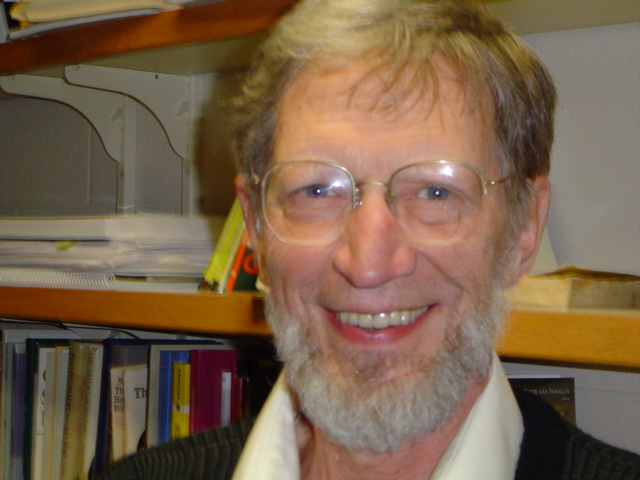
The most influential deployment of middle knowledge in contemporary analytic philosophy is Alvin Plantinga's free will defense, developed in The Nature of Necessity (1974) and the more accessible God, Freedom, and Evil (1974). Plantinga's project was to demonstrate the logical compatibility of God's existence with the existence of evil — to show that there is no formal contradiction between the propositions "An omnipotent, omniscient, perfectly good God exists" and "Evil exists."4, 5
The defense hinges on the concept of transworld depravity. An individual essence suffers from transworld depravity if, in every possible world in which that individual exists and is free with respect to at least one morally significant action, the individual freely performs at least one wrong action. Plantinga argued that it is logically possible that every possible free creature suffers from transworld depravity. If this were the case, then even an omnipotent God could not create a world containing free creatures who always choose rightly, because the counterfactuals of freedom would preclude the feasibility of any such world.4, 5
The concept of transworld depravity depends implicitly on counterfactuals of creaturely freedom and therefore on something functionally equivalent to middle knowledge. For God to know whether a given essence suffers from transworld depravity, God must know what that essence would freely do in every possible set of morally significant circumstances — precisely the kind of counterfactual knowledge that Molina identified as scientia media. Although Plantinga did not initially frame his defense in explicitly Molinist terms, the logical apparatus he employed presupposes that such counterfactuals possess determinate truth values and that God knows them prior to any creative act.3, 5
Plantinga also introduced the concept of weak actualization to describe God's relationship to states of affairs brought about by free creatures. God strongly actualizes a state of affairs when God directly causes it. God weakly actualizes a state of affairs when God creates free creatures and places them in circumstances where, as God knows via middle knowledge, they will freely bring about that state of affairs. In the Molinist framework, God weakly actualizes much of what occurs in the world, exercising genuine providential control through the arrangement of circumstances rather than through causal determination of creaturely choices.5, 6
The contemporary Molinist program
Building on Plantinga's foundational work, Thomas Flint and William Lane Craig have developed Molinism into a comprehensive philosophical account of divine providence, foreknowledge, and action. Flint's Divine Providence: The Molinist Account (1998) provides the most systematic contemporary treatment, arguing that middle knowledge enables a coherent account of God's providential governance that preserves both a robust doctrine of divine sovereignty and a libertarian conception of creaturely freedom.6
Flint identifies what he calls the "twin pillars" of Molinism: a strong doctrine of divine providence (God governs everything that occurs) and a libertarian account of human freedom (agents possess the ability to do otherwise in the same circumstances). These two commitments appear to be in tension, and Flint argues that middle knowledge is the only coherent way to hold both simultaneously. Without middle knowledge, a providential God who governs free creatures would either need to determine their actions (sacrificing libertarian freedom) or lack knowledge of how they will act (sacrificing comprehensive providence). Middle knowledge resolves this tension by giving God counterfactual knowledge of free actions without God's being the cause of those actions.6
Craig has applied the Molinist framework to a wide range of philosophical and theological problems, including the coherence of prophecy, the soteriological problem of evil (why God permits people who would have accepted salvation to die without hearing the gospel), and the doctrine of divine eternity. Craig has also been the most prominent defender of middle knowledge against the grounding objection, arguing that the demand for truthmakers for counterfactuals of creaturely freedom is either unmotivated or can be satisfied within a Molinist framework.7, 8
The scope of Molinism's contemporary application is broad. In the philosophy of religion, middle knowledge has been invoked in discussions of the compatibility of divine foreknowledge and human freedom, the problem of evil (both logical and evidential), the coherence of petitionary prayer, the possibility of divine intervention without violation of natural law, and the relationship between general and special providence. The 2011 volume Molinism: The Contemporary Debate, edited by Ken Perszyk, collects contributions from both defenders and critics and illustrates the range of issues to which the doctrine has been applied in recent decades.10
The grounding objection
The most widely discussed philosophical objection to middle knowledge is the grounding objection, which challenges the assumption that counterfactuals of creaturely freedom possess determinate truth values. The objection can be stated as follows: for a counterfactual of the form "If S were in C, S would freely do A" to be true, something must make it true — some feature of reality must ground or explain its truth. But what could serve as this ground?3, 8, 9
The counterfactual cannot be grounded in God's will, because that would mean God determines what the creature would freely do, which is incompatible with libertarian freedom. It cannot be grounded in the nature or character of the creature, because on a libertarian account, the creature's character does not necessitate any particular action — if it did, the action would not be free in the relevant sense. And it cannot be grounded in the actual occurrence of the action, because the counterfactual describes a non-actual scenario: the creature may never in fact be placed in circumstances C. Since the event described by the counterfactual never occurs, it appears that there is nothing in reality to make the counterfactual true or false.3, 2
Robert Adams formulated an influential version of this objection in his 1977 paper "Middle Knowledge and the Problem of Evil," arguing that if counterfactuals of creaturely freedom lack truthmakers, then they lack truth values, and if they lack truth values, God cannot know them — not because of any limitation in God's cognitive power, but because there is nothing there to be known.3 William Hasker developed a related line of argument in God, Time, and Knowledge (1989), contending that the Molinist position is incoherent because it requires contingent truths that are explanatorily prior to everything that could account for them. On Hasker's analysis, the truth of counterfactuals of freedom would have to be a brute, inexplicable fact — contingent truths with no explanation whatsoever — and the existence of such truths is philosophically unacceptable.9
The grounding objection has generated an extensive secondary literature. Variants of the objection focus on different aspects of the metaphysics of truth: some argue that the truthmaker principle (every truth requires a truthmaker) is independently motivated and that counterfactuals of freedom violate it; others contend that even if not all truths require truthmakers, contingent truths about what agents would do clearly do, since such truths are supposed to be explanatorily relevant to God's creative decisions.8, 10
Responses to the grounding objection
Molinists have offered several lines of response to the grounding objection, representing distinct philosophical strategies for defending the truth of counterfactuals of creaturely freedom.
The first and most direct response is to deny that counterfactuals of freedom require grounding. On this view, some truths are simply true without being made true by any ontologically distinct truthmaker. The counterfactual "If Jones were offered a bribe, Jones would freely refuse it" is true (or false) as a brute contingent fact, and the demand for a further explanation of its truth reflects an overly strong metaphysical principle that can be rejected without incoherence. Craig has pursued this strategy, arguing that the truthmaker principle is itself controversial and that many philosophers accept the existence of contingent truths that lack explanatory grounds — for example, certain truths about the initial conditions of the universe. If brute contingent truths are tolerable elsewhere, they should be tolerable for counterfactuals of freedom as well.8
A second response appeals to possible-worlds semantics. On the standard Lewis-Stalnaker analysis, a counterfactual conditional is true in the actual world if and only if its consequent is true in the closest (most similar) possible world in which its antecedent is true. On this analysis, the truth of a counterfactual of freedom is grounded in facts about the modal structure of reality — specifically, in what obtains at nearby possible worlds. Some Molinists have argued that this provides a sufficient account of what makes counterfactuals of freedom true, though critics respond that the similarity relation among possible worlds is itself in need of grounding and that the appeal to possible worlds merely relocates the problem without solving it.2, 10
A third response contends that the agents themselves ground the counterfactuals, even though the agents do not yet exist at the logical moment of middle knowledge. On this view, the individual essences of possible creatures, as objects of God's natural knowledge, have intrinsic properties or modal features that determine what those creatures would do in specified circumstances. This response is sometimes combined with an appeal to divine ideas or to the essences of creatures as they exist in the divine intellect. Critics object that this strategy risks collapsing into a form of essentialism about action that is incompatible with libertarian freedom: if an essence's intrinsic properties determine what the creature would do, then the creature's action is not free in the libertarian sense.2, 6
A fourth strategy, pursued by some contemporary Molinists, is to reframe the grounding objection as a challenge that applies equally to non-Molinist accounts. If God possesses simple foreknowledge (knowledge of the actual future), then on a libertarian account, those foreknown free actions also lack the kinds of grounds that the grounding objection demands: the future free action has not yet occurred and is not determined by prior causes. If the grounding objection succeeds against middle knowledge, it arguably succeeds against any form of divine foreknowledge of free actions, including the simple foreknowledge accepted by most traditional theists. This tu quoque argument does not establish that counterfactuals of freedom have grounds, but it suggests that the grounding objection, if sound, has far broader implications than its proponents typically acknowledge.8, 11
Adams's objection and the problem of evil
Robert Adams's 1977 paper "Middle Knowledge and the Problem of Evil" introduced not only the grounding objection but also a distinct argument concerning the relationship between middle knowledge and the free will defense against evil. Adams granted, for the sake of argument, that Plantinga's free will defense succeeds in establishing the bare logical possibility of God and evil coexisting. But Adams argued that middle knowledge introduces a new dimension to the problem of evil rather than resolving it.3
Adams's argument proceeds as follows. If God possesses middle knowledge, then God knew before creating that particular creatures would freely commit specific evils if placed in specific circumstances. God then chose to create those creatures and place them in those circumstances, knowing full well what would result. This appears to make God morally responsible for the evils that ensue — not because God causally determined them, but because God knowingly and willingly arranged matters so that they would occur. A human analogy may illuminate the point: a person who knows that leaving a loaded gun on the table in the presence of a particular individual will result in that individual freely choosing to shoot someone, and who leaves the gun there anyway, bears significant moral responsibility for the shooting even though the shooter acted freely.3
Adams concluded that the Molinist's appeal to middle knowledge may make the problem of evil more acute rather than less, because it attributes to God a very specific and detailed foreknowledge of every evil that will result from the creative decision, combined with the power to have chosen differently. Molinists have responded by arguing that God's reasons for creating the actual world — including reasons related to the overall balance of good and evil, the value of a world containing free creatures, and the infeasibility of morally superior alternatives — can justify God's choice even with full counterfactual foreknowledge. Plantinga's concept of transworld depravity is relevant here: if every feasible world containing free creatures also contains some moral evil, then God cannot be faulted for choosing a world in which evil occurs, because no better alternative was available.4, 6
Alternative accounts of divine knowledge
The philosophical landscape of divine foreknowledge includes several alternatives to Molinism, each of which resolves the tension between providence and freedom differently. Understanding these alternatives illuminates why proponents consider middle knowledge the most promising option, and why critics regard it as unnecessary or incoherent.11, 15
Thomism (or the Dominican tradition) holds that God knows future free actions through the divine causal decree. On this view, God's knowledge of what creatures will do is a consequence of God's determining will: God knows what will happen because God causes what will happen. Thomists maintain that divine determination is compatible with genuine freedom, but they define freedom in compatibilist terms — the agent acts voluntarily and in accordance with rational deliberation, even though the act is ultimately determined by divine causality. Molinists object that this account sacrifices libertarian freedom and renders creatures' apparent choices illusory, while Thomists counter that libertarian freedom is itself incoherent or unnecessary.12, 14
Simple foreknowledge is the view that God knows the future directly — God simply sees what will happen — without this knowledge being mediated by either causal decrees or counterfactual conditionals. On this account, God's knowledge of the future is complete and infallible but is not logically prior to God's creative decision in the way that middle knowledge is. Critics, including many Molinists, have argued that simple foreknowledge is providentially useless: if God's knowledge of the future is logically posterior to God's creative decree, then God cannot use it to guide that decree. God would have had to decide what to create before knowing how free creatures would act, making genuine providential governance impossible.6, 11
Open theism denies that God possesses exhaustive knowledge of future free actions. On this view, propositions about future free actions have no determinate truth value until the actions are performed, and God's omniscience does not extend to knowing propositions that are not yet true. God knows all that is logically knowable but does not know the future free actions of creatures, because there is (yet) nothing to know. Open theists accept that this limits divine providence but argue that it better preserves creaturely freedom and better explains the scriptural depiction of God as responsive and interactive. Molinists and classical theists regard open theism as an unacceptable departure from the classical doctrine of divine omniscience.9, 11
Divine timelessness (or the Boethian-Thomistic view) holds that God exists outside of time and apprehends all of temporal reality — past, present, and future — in a single eternal act of knowing. On this account, God does not foreknow events in the sense of knowing them before they happen; rather, God knows all events as eternally present. This approach avoids the problem of foreknowledge determining the future, since God's knowledge is not temporally prior to the events known. However, critics including Linda Zagzebski have argued that the fatalism problem can be reformulated for timeless knowledge and that the appeal to timelessness does not ultimately resolve the tension between omniscience and freedom.11
Comparison of accounts of divine foreknowledge6, 11
| Account | Libertarian freedom | Exhaustive foreknowledge | Comprehensive providence | Key difficulty |
|---|---|---|---|---|
| Molinism | Affirmed | Affirmed | Affirmed | Grounding objection |
| Thomism | Denied (compatibilist) | Affirmed | Affirmed | Determinism charge |
| Simple foreknowledge | Affirmed | Affirmed | Disputed | Providential uselessness |
| Open theism | Affirmed | Denied | Denied | Departure from omniscience |
| Divine timelessness | Disputed | Affirmed (atemporal) | Affirmed | Fatalism reformulated |
The circularity and semantic objections
Beyond the grounding objection, middle knowledge faces several additional philosophical challenges. One prominent objection concerns an alleged circularity in the Molinist account of counterfactual truth. On the standard possible-worlds semantics for counterfactuals (following David Lewis and Robert Stalnaker), a counterfactual "If P were the case, Q would be the case" is true at the actual world if Q is true at the closest possible world where P is true. But which possible world is closest to the actual world depends, among other things, on which world is actual — and which world is actual is determined by God's creative decree, which is logically posterior to middle knowledge. The Molinist thus appears to face a circle: the truth of counterfactuals depends on closeness relations among worlds, closeness relations depend on which world is actual, and which world is actual depends on God's use of counterfactual knowledge.2, 9
Molinists have responded to this objection in two principal ways. First, some deny that the Lewis-Stalnaker semantics provides the correct analysis of counterfactuals of freedom. On this view, the truth conditions for counterfactuals involving free agents are different from those for ordinary counterfactuals about physical events, and the possible-worlds analysis is merely a useful heuristic rather than a metaphysical explanation of counterfactual truth. Second, some Molinists argue that the apparent circularity dissolves once the equivocal use of "depends on" is identified: the truth of counterfactuals of freedom does not depend on which world is actual in the same sense that God's creative decree depends on counterfactual knowledge. The counterfactuals are true independently of any world's being actual; it is God's selection among feasible worlds that depends on the counterfactuals, not the reverse.2, 6
A further objection, sometimes called the "not true soon enough" problem, focuses on the timing of counterfactual truth. If the truth of a counterfactual of freedom ultimately derives from what an agent would do, and the agent does not yet exist at the logical moment of middle knowledge, then the counterfactual is not true "soon enough" for God to use it in the creative decision. This objection is closely related to the grounding objection but emphasizes the temporal or logical order of explanation rather than the metaphysics of truthmaking. Molinists respond that counterfactuals of freedom, like other contingent propositions, are true eternally and do not require temporal or logical priority of the truthmaker over the truth.2
Theological applications
Beyond its role in the free will defense, middle knowledge has been applied to a range of theological problems that involve the intersection of divine sovereignty and creaturely freedom. These applications illustrate the explanatory scope that defenders attribute to the Molinist framework.6, 7
One prominent application concerns biblical prophecy. If God possesses middle knowledge, then God can issue prophecies about the free actions of future individuals without determining those actions. God knows what a given king, prophet, or nation would freely do in given circumstances, and by arranging the relevant circumstances, God ensures that the prophesied outcome occurs through the free choices of the agents involved. This account preserves both the infallibility of prophecy and the freedom of the prophesied agents, a combination that other accounts of divine foreknowledge find difficult to maintain.6, 7
A second application addresses the soteriological problem of evil — the question of why God permits individuals who would have accepted salvation to live and die without ever encountering the relevant religious message. Craig has argued, using middle knowledge, that God has so arranged the world that every individual who would have freely accepted salvation if given the opportunity is, in fact, given the opportunity. Those who never encounter the message are, on this account, individuals whom God knows (via middle knowledge) would not have accepted it under any circumstances in which they could have been placed. This argument attempts to exonerate God from the charge of unfairness in the distribution of salvific opportunities, though critics object that it rests on speculative claims about the distribution of counterfactuals that cannot be independently verified.7, 13
Middle knowledge has also been invoked in discussions of petitionary prayer. If God possesses middle knowledge, then God can arrange the world so that particular outcomes occur in response to prayers that God knew would be offered, without God's needing to intervene miraculously after the prayer is made. God's providential arrangement of initial conditions, guided by middle knowledge, can ensure that the natural course of events produces the outcome that answers the prayer. This account preserves the efficacy of prayer while avoiding the philosophical difficulties associated with God's responding to temporal events from a position of eternal or timeless existence.6
The breadth of these applications constitutes a significant part of the case for Molinism. Defenders argue that no competing account of divine knowledge can simultaneously address the problem of evil, the coherence of prophecy, the compatibility of providence and freedom, and the efficacy of prayer with the same degree of philosophical elegance. Critics respond that the elegance of the framework is illusory if its central concept — counterfactuals of creaturely freedom with prevolitional truth values — is incoherent.10
Contemporary assessment
The debate over middle knowledge remains one of the most active areas of inquiry in analytic philosophy of religion. The publication of Perszyk's Molinism: The Contemporary Debate in 2011 demonstrated that the doctrine continues to attract sustained attention from both its advocates and its critics, with no resolution in sight on the central metaphysical questions.10
The grounding objection retains its status as the principal challenge to Molinism. Critics maintain that the Molinist has not provided a satisfactory account of what makes counterfactuals of creaturely freedom true, and that appeals to brute truth or possible-worlds semantics are evasive rather than explanatory. Defenders maintain that the demand for truthmakers is either unmotivated or can be met, and that the grounding objection, if pressed consistently, would undermine not only middle knowledge but any form of divine foreknowledge of free actions.8, 10
At the same time, the Molinist program has expanded its reach. Recent work has explored the implications of middle knowledge for the philosophy of science (whether God's knowledge of natural laws involves counterfactuals), the philosophy of modality (the relationship between counterfactuals and possible worlds), and formal epistemology (the Bayesian analysis of divine knowledge). The doctrine's influence extends beyond philosophy of religion into metaphysics and philosophy of action, where the status of counterfactuals of freedom bears on general questions about the nature of agency, causation, and modality.10, 15
What is clear is that the doctrine of middle knowledge raises fundamental questions about the nature of truth, the metaphysics of modality, and the limits of divine knowledge. Whether one finds the Molinist account compelling depends in large part on one's prior commitments regarding the truthmaker principle, the coherence of libertarian freedom, and the degree to which brute contingent truths are philosophically tolerable. The debate thus connects the apparently specialized topic of divine knowledge to some of the deepest questions in metaphysics and the philosophy of language, ensuring that middle knowledge will remain a productive site of philosophical inquiry for the foreseeable future.2, 10, 15