Overview
- The Euthyphro dilemma, originating in Plato's dialogue of the same name (c. 399–395 BCE), asks whether something is good because God commands it, or whether God commands it because it is good — presenting two options that each pose difficulties for the claim that morality depends on God.
- The first horn implies that morality is arbitrary (God could have commanded cruelty and it would have been good), while the second horn implies that moral truths are independent of God, making God's role in ethics superfluous — a dilemma that has shaped debates in metaethics for over two millennia.
- The most developed theistic response, advanced by William Alston, Robert Adams, and others, proposes a third option: moral goodness is grounded neither in God's commands nor in a standard external to God, but in God's own nature, which serves as the paradigmatic exemplar of goodness — a response that has itself generated further philosophical analysis.
The Euthyphro dilemma is one of the oldest and most influential challenges in the philosophy of religion and metaethics. It originates in Plato's dialogue Euthyphro (c. 399–395 BCE), in which Socrates asks Euthyphro whether the pious (to hosion) is loved by the gods because it is pious, or whether it is pious because it is loved by the gods.1 Adapted to the monotheistic context of classical theism, the question becomes: is something good because God commands it, or does God command it because it is good? Each option presents a difficulty for the theist who wishes to maintain both that God is the source of morality and that morality is non-arbitrary. If goodness depends entirely on God's will, then morality appears arbitrary — God could have commanded cruelty and it would have been obligatory. If God commands what is independently good, then moral truths exist apart from God, and God's role in ethics becomes superfluous. The dilemma has shaped philosophical discussion of the relationship between God and morality for over two thousand years, and continues to generate sophisticated responses in contemporary analytic philosophy.9, 12
The Euthyphro dilemma bears directly on divine command theory, the moral argument for God's existence, and the broader question of whether objective morality requires a theistic foundation. Understanding the dilemma and the major responses to it is essential for evaluating these interconnected debates in the philosophy of religion.
Plato's dialogue and original context
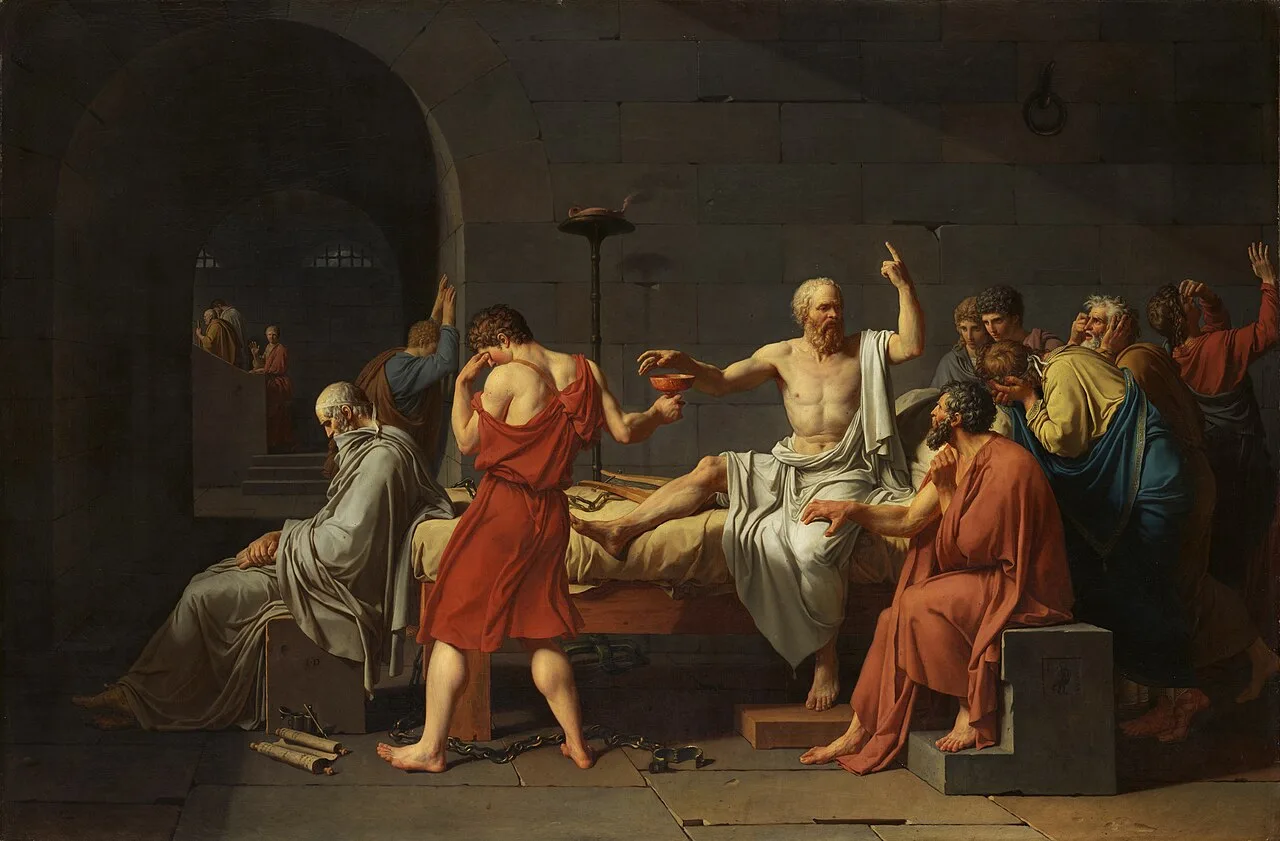
The dialogue Euthyphro is set outside the court of the King Archon in Athens, where Socrates and Euthyphro meet by chance. Socrates is there to answer Meletus's indictment against him for impiety and corrupting the youth — charges that would lead to his trial and execution. Euthyphro, a self-proclaimed religious expert, is at the court to prosecute his own father for the death of a dependent labourer who had killed a household slave. Euthyphro's action strikes ordinary Athenian sensibility as impious — bringing charges against one's own father was considered a violation of familial duty — but Euthyphro claims to possess a superior understanding of what the gods approve and disapprove.1
Socrates seizes on Euthyphro's claim of expertise to press him for a definition of piety (hosiotēs or to hosion). Euthyphro offers several definitions, each of which Socrates subjects to critical examination. His first definition — that piety is prosecuting wrongdoers regardless of kinship — is rejected by Socrates as an example rather than a definition. His second — that piety is what is dear to the gods — faces the objection that the gods disagree with one another, so the same action could be both pious and impious. His revised definition — that piety is what all the gods love — is the one that gives rise to the famous dilemma.1
Socrates poses the question in the following form: "Is the pious loved by the gods because it is pious, or is it pious because it is loved by the gods?" (Euthyphro 10a). This question establishes a distinction between two possible directions of explanation. Either piety is an independent property that the gods recognise and respond to with approval, or piety is constituted by the gods' approval — things become pious precisely by being approved by the gods. Socrates argues that these two options are genuinely different: being loved by the gods is something that happens to the pious thing (an affection or pathos), whereas being pious is what the thing is. The gods' love is a consequence of a thing's piety, not its cause. Therefore, Socrates concludes, the gods' love cannot define what piety is, and Euthyphro has not provided a satisfactory definition.1
In its original polytheistic context, the dilemma served Socrates's broader project of showing that religious authority does not provide genuine moral knowledge, and that moral concepts require philosophical analysis rather than appeals to divine favour. The dialogue ends in aporia — a state of puzzlement — with Euthyphro departing without having arrived at a satisfactory definition. Plato does not explicitly resolve the dilemma; its philosophical power lies in the question it poses rather than in any answer Plato endorses.1
Reformulation for monotheism
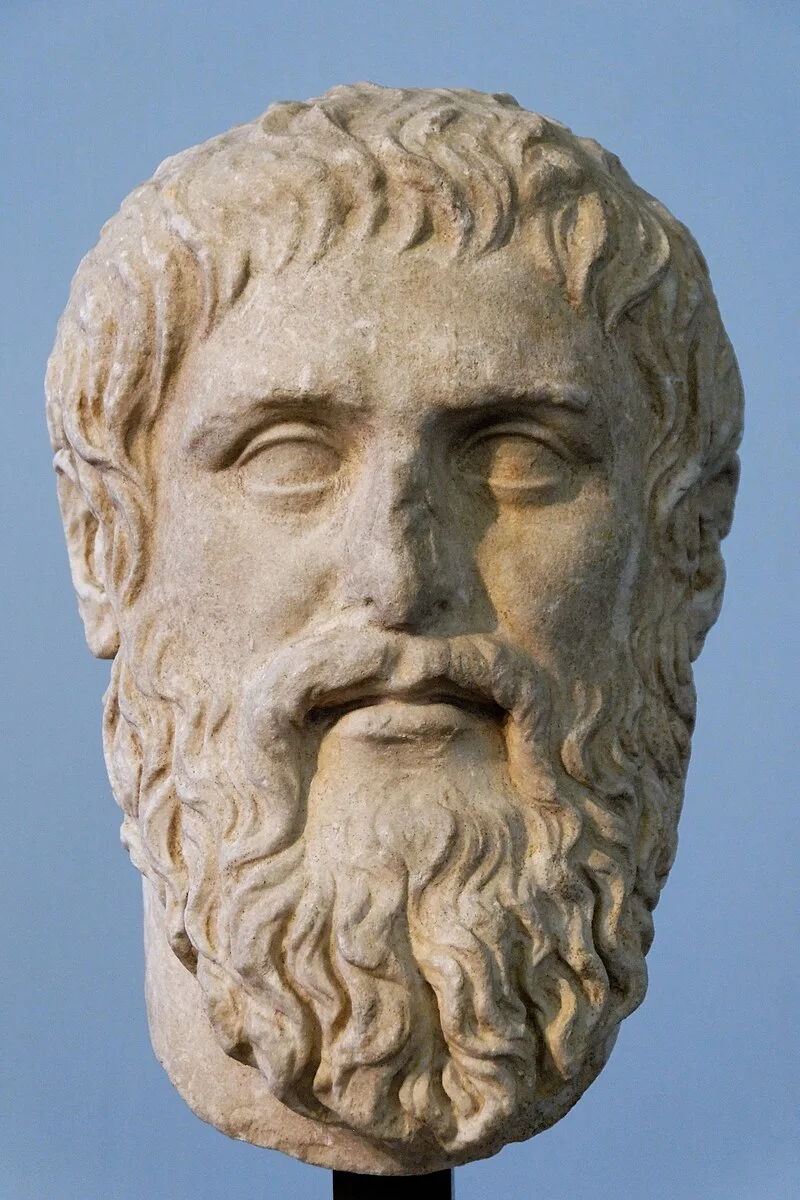

Although Plato's original dilemma concerns the piety of actions in relation to the Greek gods, the argument was adapted for monotheistic theology during the medieval period and has since become the standard form in which the dilemma is discussed. In the monotheistic formulation, the question concerns the relationship between God and moral goodness, not between gods and piety. The dilemma takes the form:9, 21
Horn 1. An action is morally good because God commands (or wills) it.
Horn 2. God commands (or wills) an action because it is morally good.
This reformulation sharpens the dilemma in several ways. First, by replacing a pantheon of potentially disagreeing gods with a single omnipotent, omniscient, and perfectly good God, it eliminates the complication of inter-divine disagreement and focuses the question on the metaphysical relationship between a single divine will and the moral order. Second, it places the dilemma within the context of classical theism, where God is typically held to be the creator and sustainer of all reality, raising the question of whether the moral order is part of the reality God creates or a constraint on God's creative activity. Third, it connects the dilemma directly to divine command theory, the metaethical position that moral obligations are constituted by God's commands, which makes the dilemma an immediate challenge to one of the central theistic approaches to ethics.9, 12
The medieval debate between voluntarism and intellectualism maps onto the two horns. Voluntarists, such as William of Ockham (c. 1287–1347), accepted something close to the first horn: moral obligations are constituted by God's will, and God has the absolute freedom to command or forbid any action. Intellectualists, following the tradition of Thomas Aquinas (1225–1274), leaned toward the second horn: God commands what is in accordance with the rational order of creation, and moral truths reflect the nature of things as God has made them. Aquinas's natural law theory holds that moral truths are grounded in human nature and the teleological order of creation, knowable through reason, and not dependent on arbitrary divine decrees — placing the moral standard in the rational structure of the created order rather than in bare divine volition.9, 16
The first horn: morality as dependent on divine will
The first horn of the dilemma holds that moral goodness is constituted by God's commands or will. An action is good, on this view, because and only because God commands it; an action is wrong because and only because God forbids it. If God had issued different commands, different actions would have been morally required. The appeal of this position for theists is that it preserves God's sovereignty over the moral order — nothing is prior to or independent of God, including moral truth.9
This horn faces several objections. The most prominent is the arbitrariness objection. If there is no standard of goodness independent of God's will, then God's commands are not constrained by any prior moral reality. God could, in principle, have commanded hatred, cruelty, or the torture of innocents, and those actions would then have been morally good. The moral status of any action becomes entirely contingent on divine decision, and the statement "God is good" reduces to the uninformative claim "God does what God commands." Since any set of commands would make God equally "good," moral praise of God becomes vacuous.8, 14
The arbitrariness objection was pressed forcefully by J. L. Mackie, who argued that if morality depends on divine will, then the word "good" in the phrase "God is good" cannot be used in any ordinary sense — it cannot convey genuine moral praise but only the trivially true claim that God conforms to God's own commands. On this reading, the theist who accepts the first horn loses the ability to say anything substantive about God's moral character, because the very concept of moral character presupposes standards that are not themselves products of the character being evaluated.8
A related difficulty is the problem of abhorrent commands. If the first horn is correct, then the wrongness of actions such as genocide, torture, or cruelty is entirely contingent — these actions are wrong only because God happens to have forbidden them, and God could have made them obligatory. William of Ockham accepted this implication with remarkable consistency, holding that if God had commanded hatred of God, then hatred of God would have been morally obligatory. For many philosophers, however, this consequence is a reductio ad absurdum of the position: the conviction that torture is wrong is more firmly held than the theoretical claim that generated it, and a theory that requires abandoning that conviction has a serious problem.9, 21
The first horn also generates a problem of meaningfulness. If "morally good" simply means "commanded by God," then moral language loses its independent content. The sentence "God's commands are morally good" becomes analytically true (equivalent to "God's commands are commanded by God") and therefore trivially uninformative. Moral discourse would be reduced to theological discourse, and the apparent substantiveness of moral judgments would be an illusion. This concern was articulated by Ralph Cudworth in the seventeenth century and has been developed by contemporary critics of divine command theory.9, 12
The second horn: morality as independent of God
The second horn of the dilemma holds that God commands what is morally good because it is independently good — that is, moral truths exist prior to and independent of God's will, and God recognises and commands in accordance with these pre-existing moral facts. On this view, moral truths are necessary and eternal, holding in all possible worlds regardless of what God commands.9, 12
The appeal of the second horn is that it preserves the non-arbitrariness of morality. If moral goodness is an objective feature of reality that God recognises and tracks, then morality is not dependent on any particular act of will and cannot be changed by fiat. The wrongness of torture is a necessary truth, not a contingent product of divine decision. The statement "God is good" has genuine content: it means that God's character and actions conform to an objective moral standard.15
Richard Swinburne has defended a position close to the second horn, at least for what he terms the most fundamental moral truths. He argues that certain moral truths — such as the wrongness of genocide or the torturing of innocents — are necessary truths that hold regardless of whether God exists or what God has commanded. These truths are necessary in the sense that denying them involves a conceptual error, much as denying the laws of logic does. On Swinburne's view, God cannot change these necessary moral truths any more than God can make two plus two equal five. God's commands can, however, generate additional moral obligations in areas where the necessary moral truths leave matters open — for instance, by specifying particular duties of worship or communal practice.15
The principal difficulty with the second horn is that it appears to limit God's sovereignty and render God morally superfluous. If moral truths are independent of God, then the moral order is a reality that constrains even the most powerful conceivable being. God does not create or ground moral truth but merely recognises it, much as God recognises mathematical truths without creating them. For theists who hold that God is the ultimate source of all reality, this is problematic: it implies that there is a realm of truth — the moral order — that exists independently of God and is not subject to God's creative authority.8, 13
A further concern is that the second horn undermines the moral argument for God's existence. If morality is independent of God, then the existence of objective moral facts does not provide evidence for God's existence, because those facts would hold whether or not God exists. The premise that objective moral values and duties require a divine ground is precisely what the second horn denies. Accepting the second horn therefore removes one of the principal arguments in natural theology.6, 13
The second horn also raises a metaphysical question about the nature of independent moral truths. If moral truths are not grounded in God or in the natural world, what kind of entities are they? Mackie argued that objective moral values, if they existed, would be "entities or qualities or relations of a very strange sort, utterly different from anything else in the universe," and that their existence is difficult to account for on any metaphysical framework. This "argument from queerness" applies with particular force to moral truths that are supposed to be both independent of God and independent of the natural world — floating free in a Platonic realm without any explanatory ground.14
The third option: God's nature as the ground of goodness
The most influential contemporary theistic response to the Euthyphro dilemma is to reject it as a false dichotomy and to propose a third option that avoids the difficulties of both horns. This response, developed in different forms by William Alston, Robert Adams, Alvin Plantinga, and William Lane Craig, locates the ground of moral goodness in God's nature rather than in God's will (first horn) or in a standard external to God (second horn).2, 3, 6, 7
William Alston's articulation of this response is among the most philosophically developed. In "Some Suggestions for Divine Command Theorists" (1990) and "What Euthyphro Should Have Said" (2002), Alston argued that God's nature — God's essential goodness, love, justice, faithfulness, and holiness — serves as the paradigmatic exemplar of moral goodness. On this view, God does not conform to an external standard of goodness (which would concede the second horn), nor is goodness constituted by arbitrary divine fiat (which would concede the first horn). Rather, God's nature is the standard of goodness. Things in the created order are good to the extent that they resemble or participate in the relevant aspects of God's nature, just as particular objects are red to the extent that they resemble a paradigm sample of redness.2, 5
Alston distinguished this approach from both divine command theory in its simple form and from moral platonism. Against simple divine command theory, Alston held that God's moral goodness is not constituted by conformity to God's own commands (which would be circular) but by the intrinsic character of God's nature. Against moral platonism, he held that the standard of goodness is not an abstract principle or Form existing independently of God, but the concrete reality of God's own being. Alston argued that adopting God as the supreme moral paradigm is no more arbitrary than adopting a supreme moral principle as the ultimate standard: at some point, any explanatory chain must terminate in a foundational reality, and the concrete being of God is at least as suitable a stopping point as an abstract principle.2
Robert Adams developed a complementary version of this response across several works, including "God and Morality" (1987) and the systematic treatment in Finite and Infinite Goods (1999). Adams distinguished between the ground of moral values (the good) and the ground of moral obligations (the right). Moral values — goodness, virtue, excellence — are grounded in God's nature, which serves as the supreme standard of goodness. Moral obligations — duties, requirements, prohibitions — are constituted by God's commands. But God's commands are not arbitrary, because they flow necessarily from God's nature. God could not command cruelty, because cruelty is contrary to God's essential nature of love and justice. The commands are expressions of the nature, not independent acts of arbitrary will.3, 4, 18
Craig has synthesised these insights into a concise formulation. He distinguishes between the locus of moral values (God's nature, which is the paradigm of goodness) and the locus of moral duties (God's commands, which flow from and are constrained by God's nature). On this view, the Euthyphro dilemma presents a false dichotomy because it assumes that the only options are divine will and an external standard. God's nature is neither the divine will alone (it is what God is, not what God decides) nor an external standard (it is internal to God, identical with God's own being). The dilemma's two horns do not exhaust the logical space.6
Objections to the third option
The proposal that God's nature grounds moral goodness has been subjected to several lines of philosophical criticism. These objections do not deny that the third option is logically distinct from the two original horns, but they question whether it successfully avoids the problems that the Euthyphro dilemma raises.
The most prominent objection is that the third option relocates the dilemma rather than resolving it. One can formulate a structurally identical dilemma at the level of God's nature: is God's nature good because it conforms to some standard of goodness, or is it good simply because it is God's nature? If the former, then there is still an external standard — the problem of the second horn recurs. If the latter, then the goodness of God's nature is a brute fact about God that could, in principle, have been otherwise — and the problem of arbitrariness recurs at a deeper level. The critic contends that the third option merely pushes the dilemma back one step without eliminating it.10, 21
Defenders respond that this regress objection misidentifies the structure of the third option. The claim is not that God's nature conforms to an external standard of goodness (which would be the second horn applied at a deeper level), but that God's nature is necessarily good — it could not have been otherwise. The goodness of God's nature is not contingent or arbitrary but metaphysically necessary: in every possible world, God's nature is supremely good. Since there is no possible world in which God's nature is different, the question "what if God's nature had been cruel?" is not a genuine possibility but an incoherent counterfactual, comparable to asking "what if the number two had been odd?" The necessity of God's nature anchors the moral order in a way that avoids both arbitrariness and external dependence.2, 7
A second objection, developed by Mark Murphy, concerns the relationship between God's nature and God's freedom. If God's commands necessarily flow from God's nature, and God's nature is fixed and necessary, then God has no freedom with respect to moral commands. God cannot choose to issue different commands because God's nature determines what God must command. This raises the question of whether divine commands, on this view, are genuinely acts of will at all. If the commands are necessary consequences of God's nature, they appear to be more like the necessary emanations of a natural process than free, deliberate acts of a personal agent. Murphy argues that this threatens the voluntarist core of divine command theory: if the commands are not free, they are not genuinely commands but something more like logical entailments of a fixed nature.10
Defenders respond by distinguishing between different senses of freedom. God's commands are free in the sense that they issue from God's own being rather than from any external constraint — they are expressions of what God is, not of what something outside God requires. They are not free in the libertarian sense that God could have commanded otherwise while holding God's nature fixed, but defenders argue that this kind of freedom is not necessary for genuine agency. An analogy is sometimes drawn to a perfectly virtuous human agent: such a person could not, given their character, choose to commit a gratuitous act of cruelty, but their actions are nonetheless free in the relevant sense because they flow from who the person is.3, 6
A third objection questions the explanatory adequacy of identifying God's nature with the standard of goodness. Erik Wielenberg has argued that if the theist can appeal to God's nature as a brute, unexplained foundation of moral goodness, then the secular moral realist can equally appeal to brute moral facts as the foundation of goodness without invoking God at all. If the theist is entitled to say "God's nature is good, and this is a foundational fact requiring no further explanation," then the atheist is equally entitled to say "certain moral truths are foundational facts requiring no further explanation." The third option therefore does not provide the theist with any explanatory advantage over the secular moral realist.11, 17
This objection challenges the motivation for the third option rather than its internal coherence. Defenders respond that a concrete, personal being (God) provides a more satisfying explanatory ground for morality than abstract, impersonal brute facts, because moral goodness is inherently personal and relational rather than abstract. Alston argued that a concrete paradigm of goodness — a supremely good being — is at least as intelligible as an abstract supreme moral principle, and that the choice between them cannot be settled by pure logic but involves broader metaphysical commitments about the nature of reality.2, 20
Secular and non-theistic responses
The Euthyphro dilemma has been employed not only as an internal challenge to theistic ethics but as a positive argument for the independence of morality from theology. Several secular philosophers have argued that the dilemma's second horn is the correct one, and that morality is best understood as an autonomous domain of truth not dependent on any divine being.
Mackie argued that the Euthyphro dilemma exposes a fundamental problem with any attempt to ground morality in a divine being. Whether one locates the ground in God's will, God's nature, or God's commands, the same structural question recurs: what makes that ground good? Mackie's own metaethical position was moral anti-realism (or error theory) — the view that there are no objective moral truths at all. On this view, the Euthyphro dilemma is one piece of evidence (among others, including the argument from queerness and the argument from relativity) that objective moral values do not exist, and that moral language, while useful, does not describe any genuine feature of reality.14
A different secular response is offered by non-theistic moral realism, which holds that objective moral truths exist but are not grounded in God. Erik Wielenberg has developed this position in detail, arguing that certain moral truths are necessary, brute facts about the normative structure of reality. On Wielenberg's view, the proposition "suffering caused for no reason is bad" is a necessary truth that holds in every possible world, whether or not God exists. These moral truths are not grounded in any deeper reality — they are foundational, in the same way that logical truths or mathematical truths are foundational. Wielenberg argues that the theist's appeal to God's nature as a brute ground of goodness is structurally parallel to his appeal to brute moral facts, and that neither position has an explanatory advantage over the other.11, 17
Wielenberg has also developed a reverse Euthyphro argument. Just as the theist claims that objective morality requires a divine ground, the secular realist can challenge the theist to explain what makes God's nature good. If the theist says "God's nature is good because it has certain properties (love, justice, kindness)," then those properties appear to be independently good, and the second horn recurs. If the theist says "God's nature is good simply because it is God's nature," then goodness is identified with a particular being's nature in a way that appears arbitrary unless one already accepts that particular being as supremely good. The secular realist argues that this circularity is avoidable only by accepting that goodness is a property that can be identified and evaluated independently of any particular being, including God.17, 20
The natural law tradition, associated with Aquinas and developed by contemporary philosophers such as John Finnis, offers a position that is theistic but closer to the second horn than to the first. Natural law theorists hold that moral truths are grounded in the rational order of creation — in human nature and the teleological structure of the world as God has made it. Moral truths are knowable through reason, not dependent on revelation or divine commands, and they constrain what God can command. On this view, God is the ultimate creator of the natural order from which moral truths derive, so morality is not wholly independent of God; but moral truths are not constituted by divine commands, so the voluntarism of the first horn is rejected.16
Historical influence and transmission
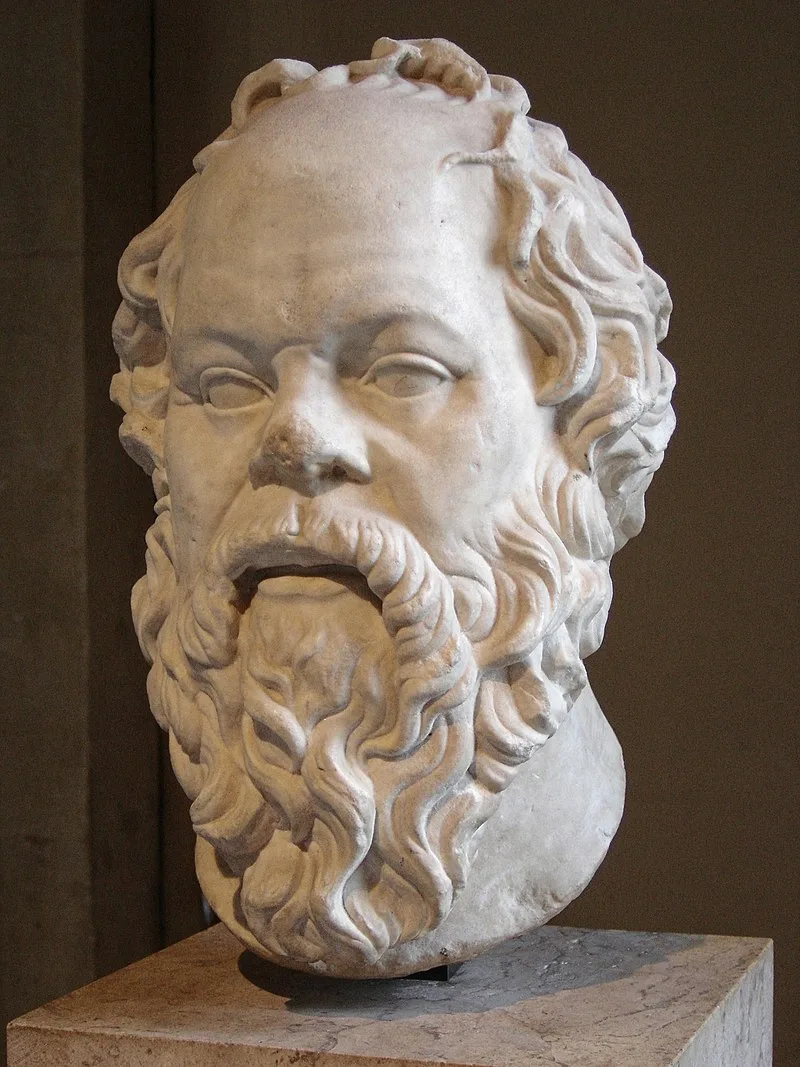

The Euthyphro dilemma has had an unusually long and continuous influence on philosophical thought. From its origin in Plato's Athens, it was transmitted through the Hellenistic philosophical schools and into medieval Islamic, Jewish, and Christian theology, where it intersected with debates over the nature of divine will and the foundations of religious law.
In medieval Islamic philosophy, a structurally identical debate arose between the Ash'arites and the Mu'tazilites. The Ash'arites, including al-Ghazali (1058–1111), held that moral goodness and badness are constituted by divine decree — a position analogous to the first horn. The Mu'tazilites held that actions are good or bad in themselves, and that God commands what is independently good and forbids what is independently bad — a position analogous to the second horn. This debate shaped the development of Islamic jurisprudence (fiqh) and theology (kalam) for centuries.12, 21
In medieval Jewish philosophy, Saadia Gaon (882–942) distinguished between rational commandments (mitzvot sikhliyot), whose rightness can be known through reason, and traditional commandments (mitzvot shimiyot), which are binding only because God has commanded them. This distinction parallels the two horns of the dilemma: some moral truths are independent of divine will (second horn), while others are constituted by it (first horn). Maimonides (1138–1204) developed a more complex position that sought to ground all commandments in rational purposes while maintaining the authority of divine legislation.12
In Christian theology, the debate between voluntarism and intellectualism — the medieval form of the Euthyphro dilemma — reached its sharpest formulation in the fourteenth century, with Ockham defending voluntarism and the Thomistic tradition defending intellectualism. The Reformation intensified voluntarist themes, as Luther and Calvin emphasised the sovereignty and freedom of the divine will. The Enlightenment saw renewed attacks on the voluntarist position, with philosophers such as Ralph Cudworth, Samuel Clarke, and later David Hume arguing for the independence of moral truth from divine will.9, 19
In the twentieth and twenty-first centuries, the dilemma has experienced a philosophical renaissance. The analytic tradition's interest in metaethics has produced a large body of work on the dilemma's logical structure, the adequacy of the various responses, and the implications for both theistic and secular ethics. The dilemma now functions not only as a challenge to divine command theory but as a point of entry into fundamental questions about the nature of moral truth, the grounding relation, and the relationship between metaphysics and ethics.9, 12, 21
Major historical positions on the Euthyphro dilemma9, 12, 21
| Position | Horn accepted | Representative figures | Tradition |
|---|---|---|---|
| Voluntarism | First horn | Ockham, Luther, al-Ghazali | Christian, Islamic |
| Intellectualism / natural law | Second horn (modified) | Aquinas, Finnis, Mu'tazilites | Christian, Islamic |
| God's nature (third option) | Neither horn | Alston, Adams, Craig, Plantinga | Christian analytic |
| Necessary moral truths | Second horn | Swinburne, Cudworth, Clarke | Christian rationalist |
| Moral anti-realism | Dilemma dissolves | Mackie, Nietzsche | Secular |
| Non-theistic moral realism | Second horn | Wielenberg, Huemer | Secular |
Implications for the moral argument
The Euthyphro dilemma has direct implications for the moral argument for God's existence. The moral argument, in its contemporary formulation by Craig and others, typically runs as follows:6, 13
P1. If God does not exist, objective moral values and duties do not exist.
P2. Objective moral values and duties exist.
C. Therefore, God exists.
The Euthyphro dilemma threatens the first premise. If the second horn is correct — if moral truths are independent of God — then P1 is false: objective moral values and duties would exist whether or not God exists. The moral argument therefore requires that the second horn be rejected, and the third option (God's nature as the ground of goodness) provides the framework within which P1 can be defended. On the third option, objective moral values exist because God's nature exists, and objective moral duties exist because God's commands (flowing from God's nature) exist. Without God, neither the paradigm of goodness nor the authoritative commands would obtain, and objective morality would lack its metaphysical ground.6, 13
The dialectical situation is therefore as follows. The moral argument requires a metaethical framework in which morality depends on God. The Euthyphro dilemma challenges every such framework. The third option — grounding values in God's nature and duties in God's commands — is the response that defenders of the moral argument rely upon. The strength of the moral argument is therefore tied to the strength of the third option as a resolution of the Euthyphro dilemma. If the third option is successful, the moral argument has a viable first premise. If the third option fails — because the dilemma recurs at the level of God's nature, or because non-theistic brute moral facts are equally viable — then the moral argument's first premise is undermined.13, 20
The debate remains unresolved. Defenders of the third option contend that a personal, necessarily good being provides a more satisfying ground for morality than impersonal brute facts. Critics contend that the appeal to God's nature does not eliminate the explanatory regress but merely terminates it in a different place — and that terminating the regress in brute moral facts is no less rational. The assessment of the Euthyphro dilemma's force therefore depends on broader commitments in metaphysics, including one's views on the nature of necessity, the admissibility of brute facts, and the comparative explanatory power of theistic and non-theistic ontologies.11, 17, 20
Contemporary philosophical analysis
The Euthyphro dilemma continues to generate new philosophical work across several areas. In addition to the third-option debate treated above, contemporary philosophers have explored the dilemma's implications for several adjacent questions in metaethics and the philosophy of religion.
One area of active analysis concerns the scope of the dilemma. Some philosophers have argued that the dilemma applies with different force to different moral categories. For deontic categories (obligation, prohibition, permission), the dilemma is particularly pressing because obligations seem to require a source of authority — and the question of whether that authority is arbitrary or answerable to an independent standard is unavoidable. For axiological categories (goodness, value, excellence), the dilemma may be less forceful, because goodness can be conceived as a property that things possess in virtue of resembling a paradigm, without any act of commanding being involved. Adams's distinction between values (grounded in God's nature) and duties (constituted by God's commands) can be read as an attempt to defuse the dilemma by restricting its scope to the deontic domain, where the appeal to commands is most natural, while grounding the axiological domain in a non-voluntarist framework.3, 21
A second area concerns the dilemma's relationship to modal metaphysics. The third option's appeal to the necessity of God's nature invokes claims about what is possible and impossible across all possible worlds. If God's nature is necessarily good, then there is no possible world in which God is cruel or unjust, and the counterfactual scenarios that generate the arbitrariness worry are metaphysically impossible. But the strength of this response depends on one's prior commitments regarding the necessity of divine attributes. Plantinga has argued that God possesses essential properties — properties God has in every possible world — and that supreme goodness is among them. If this is correct, the arbitrariness worry is fully addressed. If, however, it is possible that God could have had a different nature (or if the very concept of a necessary nature is problematic), then the third option's appeal to necessity is weakened.7
A third area of analysis concerns what has been called the "sovereignty-aseity" motivation for the first horn. Classical theists hold that God is the source of all reality (the doctrine of divine aseity) and that nothing exists independently of God's creative and sustaining activity. If moral truths are independent of God, this appears to compromise divine aseity by positing a domain of reality that God did not create and cannot alter. The first horn of the Euthyphro dilemma therefore has a theological motivation that goes beyond its philosophical merits: accepting the independence of moral truth may require revising one's concept of God. This tension between divine sovereignty and moral objectivity is a driving force behind much of the ongoing philosophical work on the dilemma.7, 10
The Euthyphro dilemma has proven to be one of the most durable problems in the history of philosophy. Formulated by Plato in the context of Greek polytheism, adapted to monotheistic theology in the medieval period, pressed as a challenge to theistic ethics in the modern era, and subjected to rigorous analytic scrutiny in contemporary philosophy, the dilemma has retained its capacity to illuminate the deepest questions about the relationship between God and morality. The fact that the dilemma continues to generate new philosophical responses — and that each response generates new objections — testifies to the depth of the problem it poses. Whether the third option resolves the dilemma, merely relocates it, or transforms it into a new set of questions remains one of the central open problems in the philosophy of religion.9, 12, 21