Overview
- Moral realism holds that moral facts are objective and mind-independent, and the theistic moral realist contends that the best ontological foundation for such facts is the existence of God — whose nature grounds moral values and whose commands constitute moral obligations.
- Secular alternatives to theistic moral realism include Cornell realism, non-naturalist robust realism, and Kantian constructivism, each of which attempts to anchor objective moral facts without invoking a transcendent being, though each faces the challenge of explaining how purely natural or abstract moral properties can generate binding normative authority.
- The debate over whether moral realism requires theism intersects with the evolutionary debunking argument, the supervenience problem, and the question of moral knowledge, making it one of the most active and technically demanding areas of contemporary metaethics and philosophy of religion.
Moral realism is the view that there are objective moral facts — truths about what is right, wrong, good, or bad that hold independently of what any individual or culture believes about them. The question of whether moral realism requires a theistic foundation is one of the central problems in metaethics and philosophy of religion. The theistic moral realist maintains that the existence of God provides the best or only adequate ontological ground for objective moral facts: God's nature serves as the paradigm of goodness, and God's will or commands constitute the source of moral obligation. On this view, the reality of objective morality is not merely compatible with theism but constitutes positive evidence for it.1, 2
The alternative position — that moral realism can be sustained without theism — has been defended by secular moral realists who argue that moral facts are either natural facts amenable to empirical investigation, irreducible non-natural facts that exist as brute features of reality, or products of rational construction that bind agents through the demands of practical reason itself. The philosophical exchange between these two camps involves some of the deepest questions in metaphysics and epistemology: the nature of normativity, the relationship between natural and moral properties, the reliability of moral intuitions shaped by evolutionary pressures, and the metaphysical adequacy of competing ontological frameworks.3, 5, 9
What moral realism is
Moral realism, in its standard contemporary formulation, is the conjunction of three theses. First, moral sentences express propositions — that is, they are truth-apt statements capable of being true or false, not mere expressions of emotion or prescriptions for action. Second, some of these moral propositions are actually true. Third, the truth of these propositions is objective and mind-independent: their truth does not depend on the attitudes, conventions, or beliefs of any individual or group.9 A moral realist holds, for example, that the proposition "torturing an innocent child for amusement is morally wrong" is true, and that its truth is not constituted by anyone's disapproval of such torture but rather reflects a moral fact that obtains independently of human attitudes.
The contrast between moral realism and its rivals is instructive. Moral anti-realism encompasses a range of positions that deny one or more of the realist's three theses. Error theorists, such as J.L. Mackie, accept that moral sentences are truth-apt but deny that any of them are true: moral claims systematically fail to refer to anything real, much as claims about phlogiston fail to refer to any actual substance.7 Non-cognitivists, such as the emotivists and prescriptivists, deny that moral sentences express propositions at all, holding instead that they function as expressions of attitude or as imperatives. Constructivists, depending on the version, may count as realists in a thin sense — they hold that moral truths exist — but ground those truths in the deliverances of rational agents under specified conditions rather than in mind-independent facts.5, 9
The distinction between moral realism and moral anti-realism is not a distinction between people who take morality seriously and people who do not. Sophisticated anti-realists can and do live by strong moral commitments. The philosophical question is not whether we should be moral but what makes moral claims true — or whether anything does. It is this metaphysical question that connects moral realism to the existence of God: if moral facts are real, objective, and mind-independent, the question arises what grounds them, and the theist contends that the answer is God.10
Historical development
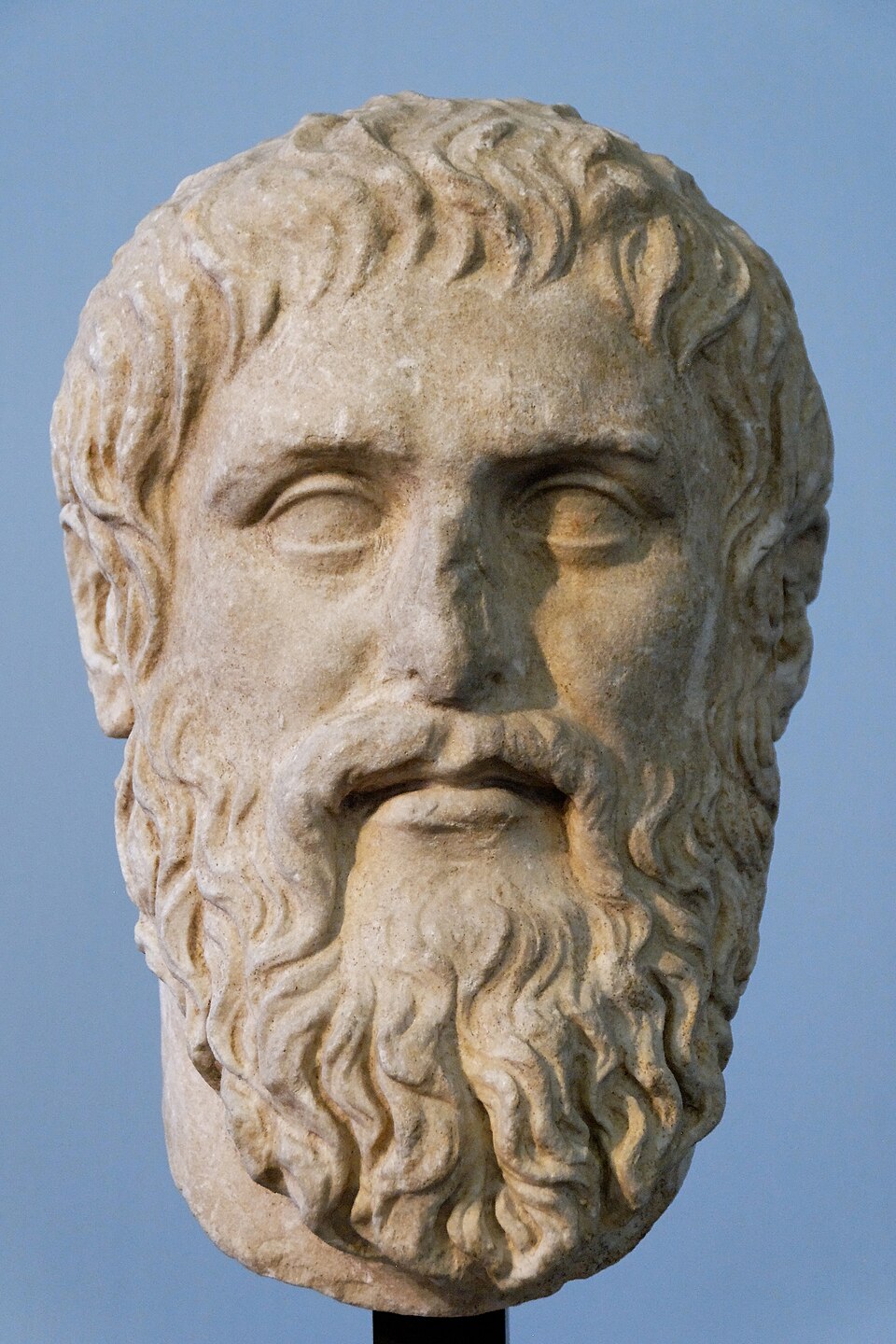

The relationship between objective goodness and a transcendent source has been a subject of philosophical inquiry since antiquity. In the Republic, Plato introduced the Form of the Good as the highest reality in the intelligible realm — the ultimate source of truth and being from which all other forms derive their reality and intelligibility. For Plato, the Good was not merely a moral concept but an ontological principle: it was what made things knowable and what made them exist. The Form of the Good occupied a position in Plato's metaphysics analogous to the role that God would later occupy in theistic moral philosophy — a transcendent, unchanging, and perfect source of all goodness and order.14 Plato himself did not identify the Good with a personal deity, but later Platonists, particularly in the early Christian period, drew the connection explicitly, interpreting the Form of the Good as a philosophical anticipation of the God of theism.
The integration of moral realism with theism received its most systematic medieval treatment in the natural law tradition of Thomas Aquinas. Aquinas held that the moral law is grounded in the eternal law — God's rational plan for creation — and that human beings participate in this eternal law through the natural law, which is accessible to reason. On Aquinas's account, moral truths are objective because they reflect the rational ordering of creation by a perfectly rational and good God. The natural law is not an arbitrary decree imposed by divine fiat but an expression of God's nature and the intrinsic ordering of creation toward its proper ends. Moral obligations arise from the directedness of rational creatures toward the good that God has established as the telos of human nature.15 Aquinas thus provided a framework in which moral realism and theism are not merely compatible but mutually reinforcing: moral realism is true because God exists, and the objectivity of morality is evidence that the universe is the product of a rational moral agent.
In the modern period, Immanuel Kant approached the connection from a different angle. Kant held that the moral law is known through pure practical reason and does not depend on God for its authority. The categorical imperative binds rational agents as such, regardless of whether God exists. However, Kant argued in the Critique of Practical Reason that morality nonetheless leads to theism through a practical postulate: the moral law commands the pursuit of the highest good (summum bonum), a state in which virtue is proportionally rewarded with happiness. Since finite agents cannot guarantee the alignment of virtue and happiness, practical reason requires the postulation of God as the being capable of ensuring that the moral order is ultimately fulfilled. Kant's argument thus preserved the autonomy of morality — its independence from divine authority as a source of moral knowledge — while nonetheless maintaining that theism is rationally required for the coherence of the moral enterprise as a whole.10
The twentieth and twenty-first centuries have seen the debate sharpen into more precise analytical forms. Robert Adams developed a theistic metaethics in which the good is identified with resemblance to God's nature and moral obligations are constituted by divine commands, understood not as arbitrary decrees but as expressions of a necessarily loving character.1 William Lane Craig formulated a streamlined version of the moral argument as a deductive syllogism, contending that theism provides the only adequate foundation for the objective moral values and duties that moral realists affirm.2 Meanwhile, secular moral realists including David Enoch, Christine Korsgaard, and the Cornell realists have developed sophisticated alternatives that attempt to ground moral objectivity without invoking God, generating a philosophical exchange that continues to shape both metaethics and philosophy of religion.3, 5
The theistic argument from moral realism
The central argument connecting moral realism to theism can be formulated as an inference to the best explanation. If moral realism is true — if there really are objective, mind-independent moral facts — then there must be some adequate ontological foundation for those facts. The theistic moral realist contends that God provides the best such foundation, and therefore that the truth of moral realism constitutes evidence for the existence of God. The argument can be stated formally as follows:2, 10
P1. If moral realism is true, there must be an adequate ontological foundation for objective moral facts.
P2. Theism provides the best such foundation.
C. Therefore, moral realism provides evidence for theism.
This formulation differs from the standard Craig-style moral argument, which takes the form of a modus tollens (if God does not exist, objective moral values and duties do not exist; objective moral values and duties do exist; therefore God exists). The present argument is abductive rather than strictly deductive: it argues that theism is the best explanation of moral realism, not that moral realism logically entails theism. The conclusion — that moral realism provides evidence for theism — is accordingly more modest, claiming a probabilistic rather than a demonstrative connection.10
The argument's force depends on the relative adequacy of competing ontological frameworks. If secular moral realism can account for objective moral facts just as well as theism can, then P2 is false and moral realism provides no special evidence for theism. The remainder of this article examines the arguments for and against P1 and P2 by evaluating both theistic and secular approaches to the ontological grounding of moral facts.
Defense of premise one
The first premise asserts that moral realism, if true, requires an ontological foundation — that objective moral facts cannot simply float free as unexplained brute features of reality but must be grounded in something that explains their existence and their normative authority. The case for this premise draws on general principles of metaphysical explanation and on specific features of moral facts that appear to demand grounding.1, 10
The most basic consideration is that objective moral facts, if they exist, are a distinctive and puzzling kind of entity. Unlike physical facts, which describe how the world is, moral facts describe how the world ought to be. They are inherently normative: they prescribe and prohibit, they generate reasons for action, and they apply to agents regardless of their desires or interests. This normative character makes moral facts categorically different from the natural facts studied by the sciences, and the question of how such facts fit into the fabric of reality is a genuine and pressing metaphysical problem. As Bernard Williams observed, the "peculiar action-guiding character" of moral claims distinguishes them from ordinary empirical claims and raises the question of what in reality could make them true.13
The demand for an ontological foundation is strengthened by the observation that moral facts appear to be necessary truths. If it is wrong to torture an innocent child for amusement, it is wrong in every possible world — not contingently wrong, as it might be if morality were a product of social convention, but necessarily wrong as a matter of moral reality. The necessary character of moral truths suggests that they are grounded in something that exists necessarily, which in turn suggests a foundation in something more fundamental than the contingent natural world.1, 2
A further consideration concerns moral authority. Moral obligations are not merely descriptions of what is good or bad but binding requirements on moral agents — genuine oughts that impose duties. Adams argued that the concept of obligation inherently involves a relation to an authoritative source: to be obligated is to be under the authority of something that has the standing to impose requirements. On a theistic account, this authority is located in God — a perfectly good, omniscient, and omnipotent being whose commands carry inherent moral weight. The question for secular moral realism is whether any non-theistic entity or principle can serve as an analogous source of moral authority.1
It is important to note that P1 is not uncontested. Some moral realists hold that moral facts are indeed brute and ungrounded — they are just part of the fundamental furniture of reality, requiring no further explanation. On this view, asking what grounds moral facts is like asking what grounds logical truths or mathematical truths: the question may simply have no informative answer. This position is coherent, but the theistic moral realist will argue that it is explanatorily unsatisfying and that a grounded moral realism is preferable to an ungrounded one, just as an explained regularity is preferable to an unexplained brute fact in science.3, 6
Defense of premise two
The second premise claims that theism provides the best ontological foundation for moral realism. The case for this premise rests on the distinctive explanatory resources that theism brings to bear on the problem of moral grounding — resources that secular alternatives, the theist contends, either lack or can replicate only at the cost of introducing new and equally puzzling metaphysical commitments.2, 10
The theistic account of moral grounding has two components. The first, developed by Adams and others, identifies the good with God's nature. God is not merely a being who happens to be good; rather, God's nature is the ontological standard of goodness itself. Properties like justice, love, and mercy are good because they participate in or resemble the nature of a maximally perfect being. This identification provides a non-arbitrary ground for moral values: the good is objective because it is grounded in a being who exists necessarily and whose nature is not subject to change or contingency.1
The second component concerns moral obligations. Adams's modified divine command theory holds that moral obligations are constituted by the commands of a loving God. What makes it obligatory to keep a promise is that God — a being of perfect love and rationality — commands promise-keeping. The commands are not arbitrary (they flow from a necessarily good nature) and they carry genuine authority (they issue from a being with the standing to impose requirements on the creatures who owe their existence to him). This account provides a unified explanation of both moral values and moral duties: values are grounded in God's nature, and duties are grounded in God's commands.1, 2
Defenders of P2 argue that this theistic framework has several advantages over secular alternatives. First, it explains the necessary character of moral truths by grounding them in a necessarily existent being. If God exists necessarily and is essentially good, then moral truths grounded in God's nature are themselves necessary. Second, it explains moral authority by locating it in a personal agent with the standing to issue commands, rather than in impersonal abstract objects or natural processes. Third, it provides a unified account of moral metaphysics, epistemology, and motivation: moral facts exist because of God's nature, moral knowledge is possible because God has endowed rational creatures with the capacity to apprehend the moral law, and moral motivation is intelligible because the moral order is the creation of a being who cares about its creatures.1, 10
The theistic moral realist also argues that the fine-tuning of the universe for the existence of moral agents — rational beings capable of moral knowledge and moral action — is better explained by theism than by naturalism. On a theistic account, the existence of beings capable of participating in the moral order is part of God's intention for creation. On a naturalistic account, the emergence of moral agents through evolutionary processes is a contingent outcome of blind natural forces, and the correlation between human moral intuitions and objective moral reality is left unexplained.2
Secular alternatives
The adequacy of P2 depends on whether secular moral realism can provide a comparably satisfying ontological foundation for moral facts. Several sophisticated secular frameworks have been developed, each offering a different account of how objective morality can exist without God.
Naturalistic moral realism, associated with the Cornell realists — including Richard Boyd, Nicholas Sturgeon, and Peter Railton — identifies moral properties with natural properties. On this view, moral goodness is identical to (or constituted by) some complex of natural properties such as well-being, human flourishing, or the satisfaction of informed desires. The identification is a posteriori, analogous to the scientific identification of water with H2O: just as we discovered through empirical investigation that water is H2O, we can discover through moral and empirical inquiry that goodness is constituted by certain natural facts about human welfare. If this identification is correct, then moral facts are simply natural facts, and no transcendent ground is needed to explain their existence — they are part of the same natural world studied by the sciences.9, 12
The theistic moral realist raises several objections to naturalistic moral realism. The most fundamental is the normativity objection: even if moral properties are identical to natural properties, the question remains why those natural properties are normative — why they generate reasons for action and binding obligations. The fact that an action promotes human flourishing is a natural fact, but the claim that one ought to promote human flourishing introduces a normative element that the natural fact alone does not seem to contain. The gap between description and prescription — between what is and what ought to be — appears to persist even after moral properties have been identified with natural ones.13
Non-naturalistic robust realism, defended by David Enoch in Taking Morality Seriously (2011), holds that moral facts are irreducibly normative and cannot be identified with or reduced to natural facts. Moral properties are sui generis — they are their own kind of thing, neither physical nor mental, but part of the fundamental structure of reality. Enoch argues that we are rationally entitled to believe in the existence of such properties because they are indispensable to deliberation: any agent engaged in practical reasoning about what to do presupposes that there are objective facts about what one ought to do, and this presupposition cannot be coherently abandoned.3
Enoch's position represents a serious attempt to defend moral realism without theism, and it has generated substantial philosophical discussion. The theistic moral realist, however, presses the question of ontological economy. If moral facts are non-natural, irreducible, and sui generis, they appear to constitute a peculiar addition to one's ontology — a class of mind-independent normative entities that bear no explanatory connection to anything else. Mackie's "queerness" argument, originally deployed against moral realism as such, applies with special force to non-naturalistic versions: properties that are simultaneously objective, normative, and utterly unlike anything else in nature are metaphysically puzzling, and theism offers a way of reducing that puzzlement by locating moral facts in the nature and will of a being whose existence is independently motivated.7, 8
Constructivism, defended by Christine Korsgaard and, in a different form, by John Rawls, holds that moral truths are not discovered but constructed by rational agents through the exercise of practical reason. On Korsgaard's Kantian constructivism, the source of normativity lies in the structure of rational agency itself: to be a rational agent is to be subject to certain requirements of consistency and universalizability, and these requirements generate moral obligations. Moral truths are "constructed" in the sense that they are the deliverances of a procedure of rational reflection, not pre-existing facts that agents must discover.5
The status of constructivism as a form of moral realism is debated. If moral truths depend on the activity of rational agents, they may not be "mind-independent" in the robust sense that moral realism requires. Korsgaard herself distinguishes her position from realism, arguing that the source of normativity is not an external moral reality but the agent's own rational nature. If constructivism is not a form of realism, then it does not provide a secular alternative to theistic moral realism but rather an alternative to moral realism altogether — in which case the debate shifts to whether moral realism or constructivism provides the better account of moral experience.5, 9
The evolutionary debunking argument
One of the most influential challenges to moral realism in recent decades comes from evolutionary biology rather than philosophy of religion. Sharon Street's evolutionary debunking argument contends that Darwinian evolution poses a dilemma for moral realism that undermines the realist's claim to moral knowledge, regardless of whether that realism is theistic or secular.4
Street's argument begins with a claim about the causal history of human moral beliefs. Evolutionary biology indicates that natural selection has profoundly influenced the content of human evaluative attitudes — our dispositions to regard certain things as good, bad, right, or wrong. The hominins who felt loyalty to kin, aversion to incest, concern for reciprocity, and protectiveness toward offspring tended to survive and reproduce more successfully than those who lacked these dispositions. Over evolutionary time, these dispositions became deeply embedded in human psychology and form the basis of many of our basic moral intuitions.4
Street then poses her dilemma. The moral realist must take a position on the relationship between evolutionary influences on our moral beliefs and the independent moral truths that the realist posits. Either there is a significant correlation between evolutionary influences and independent moral truths, or there is not. If there is no significant correlation, then most of our moral beliefs are likely to be false, since they were shaped by forces (reproductive fitness) that bear no systematic relation to moral truth. This would be a catastrophic form of moral scepticism that the realist presumably wants to avoid. If there is a significant correlation, the realist must explain why evolutionary pressures would track moral truths. The most obvious explanation — that natural selection tracked moral truths because doing so was fitness-enhancing — is circular, since the question at issue is precisely whether fitness-enhancing dispositions are correlated with moral truths. And there appears to be no non-circular explanation available to the realist that would account for the correlation.4
The evolutionary debunking argument affects theistic and secular moral realism differently. For the theistic moral realist, there is a straightforward response: God designed the evolutionary process in such a way that it would produce beings whose moral faculties are reliably attuned to objective moral truths. On a theistic worldview, the correlation between evolutionary influences and moral truth is not a coincidence but a feature of providential design. The evolutionary process, guided by God, produced moral agents capable of apprehending the moral law — just as it produced cognitive agents capable of apprehending mathematical and logical truths. This response is unavailable to the secular moral realist, who cannot appeal to providential design and must find some other way of explaining the reliability of evolutionarily shaped moral intuitions.2, 10
Secular moral realists have offered several responses to Street's argument. Enoch argues that moral truths might be such that beings who survive tend to have true moral beliefs, not because natural selection "aimed at" moral truth but because the content of moral truth overlaps significantly with what promotes survival. For example, if well-being is genuinely good (as the realist maintains), and natural selection tends to produce creatures that value well-being, then the correlation between evolutionary influences and moral truth is expected even without design.3 Street, however, argues that this response underestimates the degree to which evolutionary pressures could have led to radically different moral attitudes in different circumstances, and that the apparent alignment between our moral intuitions and putative moral truths may be far more fragile than the realist supposes.4
Can secular moral realism account for moral obligations?
The question of moral obligation — the binding "oughtness" of moral requirements — presents a distinct challenge for secular moral realism, separate from the question of moral values. Even if one grants that there are objective moral truths about what is good and bad, the further question remains whether there are objective moral truths about what agents are obligated to do. The theistic moral realist argues that the concept of obligation is inherently relational — it involves being bound to a source of authority — and that only a personal God can serve as the ultimate source of moral authority.1
Adams developed this point in detail in Finite and Infinite Goods. He argued that moral obligations differ from moral values in their phenomenology and their metaphysical structure. To say that kindness is good is to describe a feature of reality; to say that one is obligated to be kind is to assert that one stands under a binding requirement. Obligations, Adams contended, are constituted by the commands of a competent authority — not just any authority, but one who is perfectly good and who commands out of love rather than caprice. On Adams's account, God's commands are uniquely suited to constitute moral obligations because God alone possesses the perfect goodness, complete knowledge, and ultimate authority that moral obligation seems to require.1
The secular moral realist has several options for responding to this challenge. One approach is to deny that obligations require a personal commander. On this view, moral obligations are grounded not in commands but in the normative force of moral reasons themselves. If there is a sufficient moral reason to help a person in distress — for instance, because their suffering is bad and one has the ability to relieve it — then one is obligated to help, and this obligation holds regardless of whether any authority has commanded it. The normativity of morality is intrinsic to moral facts, not derived from an external source. Korsgaard's constructivism develops this line of thought by arguing that the source of obligation is the structure of rational agency: to act rationally is to act on principles that one can endorse as universal laws, and this structural requirement generates genuine obligations without any need for a divine commander.5
The theistic moral realist presses the question of whether this response adequately captures the phenomenology of moral obligation. The experience of moral obligation, it is argued, is the experience of being bound by something external to oneself — of being under a requirement that one did not create and cannot dissolve by an act of will. If obligations are merely the deliverances of one's own rational nature, then the sense of being bound by something external is illusory, and the authority of morality is ultimately self-imposed. This may be satisfactory for some versions of constructivism, but it appears to fall short of the robust, objective obligations that moral realism aims to capture.1, 10
A second approach for the secular moral realist is to argue that moral obligations are grounded in social relationships and practices. On this view, obligations arise from the requirements of cooperation, trust, and mutual respect that make social life possible. While this approach can explain many specific obligations — the obligation to keep promises, for instance, arises from the social practice of promising — the theistic moral realist objects that it grounds obligations in contingent social arrangements rather than in an objective moral order. If social practices had been different, the obligations would have been different, and this contingency appears incompatible with the moral realist's commitment to objective, mind-independent moral facts.13
The supervenience problem
The supervenience of the moral on the natural is a widely accepted principle in metaethics. It states that there can be no difference in moral properties without some corresponding difference in natural properties: if two situations are identical in all their natural features, they must be identical in their moral features as well. Two acts that are physically, psychologically, and circumstantially identical cannot differ in their moral status. This principle — that moral properties supervene on natural properties — is accepted by moral realists and anti-realists alike, but it generates a distinctive challenge for certain forms of moral realism.11
The problem, as James Dreier and others have articulated it, is that the supervenience of moral on natural properties stands in need of explanation, and different metaethical positions have different resources for providing that explanation. If moral properties are identical to natural properties, as the naturalistic moral realist claims, then supervenience is trivially explained: moral properties supervene on natural properties because they are natural properties. But this explanation is available only to the naturalist, and it comes at the cost of the normativity objection discussed above — the difficulty of explaining how natural properties can be genuinely normative.11
For the non-naturalistic moral realist, supervenience is more puzzling. If moral properties are distinct from natural properties — if they are sui generis, irreducible, and non-natural — then the question arises why they should covary so tightly with natural properties. Why should every change in moral status be accompanied by a change in natural properties? The non-naturalist cannot appeal to identity (moral properties are not natural properties) or to causal determination (non-natural moral properties are not caused by natural properties in the way that physical effects are caused by physical causes). The supervenience relation appears to be a brute, unexplained metaphysical necessity, and some philosophers have argued that positing brute necessities of this kind is a significant theoretical cost.11
The theistic moral realist offers a distinctive solution to the supervenience problem. On a theistic account, moral properties supervene on natural properties because God has established a rational moral order in which natural features of situations determine their moral status. The supervenience relation is not brute but grounded in God's nature and creative activity: God created the natural world and the moral order together, ensuring that the moral properties of situations are determined by their natural features in accordance with a rational and coherent moral law. The tight connection between the natural and the moral is thus explained by the unity of divine wisdom — the same God who created the natural order also established the moral order, and the two are harmonized by the rationality of their common source.1, 10
The secular moral realist can respond that brute supervenience is no more problematic than other brute necessities that we accept in other domains. Logical and mathematical truths supervene on the structure of logical and mathematical objects, and we do not typically demand a further explanation of why they do so. If moral supervenience is analogous, the demand for a theistic explanation may be misplaced. Enoch, for instance, argues that the supervenience of the moral on the natural is simply a constitutive feature of the moral domain, much as the supervenience of the mental on the physical is a constitutive feature of the mind-body relationship, and that demanding a deeper explanation is not a requirement of rationality.3
Comparing theistic and secular foundations
The debate between theistic and secular moral realism can be illuminated by comparing how each framework addresses the central challenges of metaethics. The following table summarises the key points of comparison across several dimensions that any adequate moral ontology must address.1, 3, 5, 9
Theistic vs. secular foundations for moral realism1, 3, 9, 10
| Dimension | Theistic moral realism | Naturalistic realism | Non-naturalistic realism | Constructivism |
|---|---|---|---|---|
| Source of moral values | God's nature as paradigm of goodness | Natural properties (well-being, flourishing) | Irreducible non-natural moral facts | Rational agency under ideal conditions |
| Source of moral obligations | Divine commands from a loving God | Natural facts about reasons | Non-natural normative facts | Requirements of practical reason |
| Explains normativity? | Yes — God's authority grounds oughtness | Contested — naturalistic normativity debated | Posited as primitive | Yes — via rational self-legislation |
| Explains necessity of moral truths? | Yes — grounded in a necessary being | Partially — natural necessities | Yes — as brute moral necessities | Partially — structural features of reason |
| Explains supervenience? | Yes — unified divine creative order | Yes — identity of moral and natural | Accepts as brute | Constructed from natural inputs |
| Response to evolutionary debunking | Providential design of cognitive faculties | Overlap between fitness and moral truth | Pre-established alignment (Enoch) | Morality is constructed, not tracked |
| Chief vulnerability | Euthyphro dilemma; depends on God's existence | Is-ought gap; normativity objection | Metaphysical queerness | May not qualify as genuine realism |
The table illustrates that each framework has distinctive strengths and weaknesses. Theistic moral realism provides a unified account of values, obligations, normativity, and supervenience, but its explanatory power is conditional on the truth of theism and it must address the Euthyphro dilemma. Naturalistic moral realism avoids metaphysical extravagance by identifying moral properties with natural ones, but it faces the persistent challenge of explaining how natural facts can be genuinely normative. Non-naturalistic robust realism preserves the full objectivity and irreducibility of moral facts, but at the cost of positing a metaphysically distinctive category of entities whose relationship to the natural world remains unexplained. Constructivism grounds morality in the structure of rational agency, providing an elegant account of normativity, but its status as a form of genuine moral realism is disputed.1, 3, 5
Objections to the theistic grounding
The theistic claim to provide the best foundation for moral realism faces several important objections. The most venerable is the Euthyphro dilemma, which originates in Plato's dialogue of the same name and can be formulated as follows: is something good because God commands it, or does God command it because it is good? If the former, then morality is arbitrary — God could have made torture good by commanding it — and the claim that morality is grounded in God's nature loses its force. If the latter, then the good is independent of God, and God is not the ultimate ground of morality after all.8
Theistic moral realists have responded to the Euthyphro dilemma by rejecting both horns in favour of a third option: the good is neither arbitrarily commanded by God nor independent of God, but is grounded in God's nature. God commands what is good because God is essentially good — goodness is a necessary feature of God's character, not an arbitrary choice. On this account, God could not have made torture good, because doing so would be inconsistent with God's essential nature of perfect love, justice, and mercy. The moral law is thus neither arbitrary (it flows from God's unchangeable nature) nor independent of God (it has no existence apart from God's nature).1, 2
Critics of this response, however, press further. If God's nature is the standard of goodness, what makes God's nature good rather than merely powerful? The theist answers that God's nature simply is the Good — that goodness and God's nature are identical, not that God's nature measures up to some independent standard. But the anti-theist may argue that this identification is itself a brute posit, no less mysterious than the brute moral facts posited by the non-naturalistic realist. If the theist's advantage over the non-naturalist was supposed to be that theism avoids brute moral facts, then an identification of the Good with God's nature that cannot itself be further explained may undermine that advantage.8
A second objection concerns the epistemic accessibility of a theistically grounded morality. If moral truths are grounded in God's nature and commands, then moral knowledge seems to require some form of access to God — through revelation, religious experience, or natural theology. But people of all religious backgrounds and none appear to have moral knowledge: atheists and agnostics are capable of making correct moral judgements, recognising moral obligations, and acting on moral principles. If moral knowledge does not require belief in God, the connection between morality and theism may be weaker than the theistic moral realist supposes.10
The theistic moral realist responds by distinguishing between the ontological ground of morality and the epistemic access to moral truths. The claim is not that one must believe in God in order to know moral truths, but rather that God's existence is what makes moral truths true. Just as one can know that water boils at 100 degrees Celsius without knowing that water is H2O, one can know that cruelty is wrong without knowing that the wrongness of cruelty is grounded in God's nature. Moral knowledge is available to all rational agents through conscience, moral intuition, and practical reason — faculties that the theist understands as God-given but that function independently of the agent's theological beliefs.1, 2
A third objection concerns the problem of moral diversity. If moral truths are grounded in the nature of a single, perfectly good God, one might expect greater moral agreement across cultures than we actually observe. The persistence of deep moral disagreement — on questions of justice, sexual ethics, the treatment of animals, the permissibility of capital punishment, and many others — might seem to count against the existence of a single, clear moral order grounded in divine nature. The theistic moral realist can respond that moral disagreement is compatible with objective moral truth, just as disagreement about empirical questions is compatible with objective empirical truth: disagreement reflects the difficulty of the subject matter, the distorting effects of self-interest and cultural bias, and the limitations of finite minds, not the absence of moral facts.6, 10
Contemporary assessment
The debate over whether moral realism requires a theistic foundation remains one of the most active and philosophically productive intersections of metaethics and philosophy of religion. The theistic moral realist can point to genuine explanatory advantages: the theistic framework provides a unified account of moral values, obligations, normativity, necessity, and supervenience that no single secular competitor matches in all dimensions simultaneously. The identification of the good with God's nature and of obligations with divine commands offers a metaphysically integrated picture in which the various features of morality that require explanation are all traced to a single source.1, 2
The secular moral realist, however, can argue that these explanatory advantages come at a significant cost: the entire edifice depends on the truth of theism, and if theism is false, the theistic moral realist's account of morality collapses entirely. A secular moral realism that rests on independently plausible philosophical foundations — even if it leaves some features of morality unexplained — may be more robust in the sense that it does not stake the objectivity of morality on a single, contested metaphysical thesis. Enoch, for instance, argues that the willingness to accept some brute moral facts is a reasonable price to pay for a moral realism that does not depend on the resolution of the theism-atheism debate.3
The evolutionary debunking argument has added a new dimension to the exchange. Street's argument poses a challenge to any form of moral realism that posits mind-independent moral facts, but the theistic moral realist has a distinctive response — providential design — that is unavailable to the secular counterpart. Whether this response is successful depends on independent arguments for theism and for the thesis that God would design evolutionary processes to produce reliable moral cognition. The exchange thus illustrates how the moral realism debate connects to broader questions in philosophy of religion and natural theology.4, 10
The supervenience problem similarly favours theism in one respect — theism can explain the tight connection between natural and moral properties — while leaving the advantage less clear-cut than it initially appears, since the naturalistic moral realist can explain supervenience through identity and the non-naturalistic realist can accept it as constitutive of the moral domain. The philosophical significance of supervenience as an argument for theism thus depends on how much weight one assigns to the demand for an explanation of metaphysical necessities, a question that itself remains contested.3, 11
What the debate reveals is that the question of whether moral realism supports theism cannot be settled in isolation from the broader metaphysical and epistemological commitments one brings to the table. A philosopher who is independently drawn to theism on the basis of cosmological, teleological, or other arguments will find in moral realism a natural complement to those arguments — an additional domain of evidence that coheres with and supports the theistic worldview. A philosopher who is independently committed to naturalism will find in the secular alternatives to theistic moral realism resources sufficient to maintain moral objectivity without recourse to God, even if some metaphysical questions remain open. The argument from moral realism to theism is thus best understood not as a standalone proof but as a component in a cumulative case, its force varying with the strength of the surrounding arguments and the plausibility of the competing frameworks.10