Overview
- The claim that evolution undermines objective morality commits the genetic fallacy: explaining the causal origin of moral intuitions is logically independent of the question of whether those intuitions track moral truth, just as explaining the evolutionary origin of mathematical cognition does not show that arithmetic is false.
- Hume’s is-ought distinction establishes that no set of descriptive facts about natural selection, kin selection, or reciprocal altruism can by itself entail a normative conclusion — but this is a constraint on all moral theories equally, not a special problem for secular ethics or a vindication of divine command theory.
- Empirical research consistently fails to support the premise that religious belief produces more moral behaviour; secular democracies rank among the most peaceful, law-abiding, and prosocial societies on earth, and the Euthyphro dilemma exposes a parallel foundational problem for any theory that grounds morality in God.
The relationship between evolutionary biology and morality is one of the most frequently contested intersections of science and philosophy. A recurring claim in creationist and apologetic literature holds that if human beings are the products of unguided natural selection — if we are, in a phrase commonly invoked, “merely evolved animals” — then there is no genuine basis for objective morality, and the entire enterprise of moral reasoning collapses into arbitrary preference or brute power. This claim is philosophically significant and deserves careful examination, but the philosophical consensus is that it rests on several distinct errors: it conflates the causal origin of moral beliefs with their epistemic status, misapplies David Hume’s is-ought distinction, and ignores the extensive philosophical literature on secular moral frameworks that ground morality without any appeal to supernatural authority.17

Understanding why evolution does not undermine morality requires engaging four distinct questions that the objection tends to run together. First, there is the genealogical question: how did human moral psychology come to exist? Second, there is the metaethical question: what grounds the truth of moral claims? Third, there is the normative question: which moral framework — if any — is correct? And fourth, there is the empirical question: does religious belief in practice produce more moral behaviour than secular belief? Each question has a different answer, and the apologetic argument against evolutionary naturalism typically depends on equivocating between them.6
The apologetic argument and its structure
The argument that evolution undermines morality appears in several distinct formulations across creationist and apologetic literature, but its core logical structure is consistent. In its most common form, the argument proceeds roughly as follows: if human beings evolved by unguided natural selection, then human moral beliefs are simply adaptations that enhanced reproductive fitness in ancestral environments — they were not selected because they track moral truth but because they promoted survival and reproduction. On this view, moral beliefs are no more likely to be objectively true than any other biological disposition, and so the claim that any particular moral judgment is objectively binding becomes unfounded. The conclusion typically drawn is that objective morality requires a divine lawgiver, and that evolutionary naturalism leaves human beings with no principled basis for condemning any behaviour as genuinely wrong.14
A representative formal statement of this argument takes the following shape:
P1. If human moral beliefs are products of unguided natural selection, they were selected for fitness, not for tracking moral truth.
P2. If moral beliefs were not selected for tracking moral truth, we have no reason to think they are objectively true.
P3. Human moral beliefs are products of unguided natural selection.
C. Therefore, we have no reason to think our moral beliefs are objectively true.
The argument has a clear logical structure, but each premise is philosophically contestable. The most fundamental problem is that P1 and P2 together assume what requires demonstration: that the only route to reliable moral cognition is direct divine programming. A parallel argument applied to mathematics — our mathematical intuitions are also products of natural selection, shaped by fitness pressures rather than by mathematical truth — would lead to the conclusion that we have no reason to trust arithmetic, which most philosophers regard as a reductio ad absurdum of the argument form rather than a genuine problem for mathematics.14
The genetic fallacy and the origin of moral intuitions
The most basic logical error in the evolutionary debunking argument is a version of the genetic fallacy — the mistake of evaluating the truth or justification of a belief by appealing to its causal origin rather than to evidence or argument. The genetic fallacy occurs whenever someone argues that a belief is false, unjustified, or unreliable simply because of where it came from: dismissing a scientific claim because the scientist was motivated by grant funding, or dismissing a philosophical argument because the philosopher had a difficult childhood. The fallacy does not require that the origin is irrelevant to everything — it merely establishes that origin alone cannot settle questions of truth or justification.17
Applied to morality, the genetic fallacy takes the following form: the fact that our moral intuitions evolved through natural selection tells us about the causal history of those intuitions but does not, by itself, tell us anything about their truth value. Charles Darwin himself recognized this point in The Descent of Man (1871), observing that a being with very different evolutionary origins — one raised as a social insect rather than a primate — might develop radically different moral intuitions. Darwin took this to be a fascinating observation about the contingency of moral psychology, not a demonstration that morality is illusory.2 The observation that our moral beliefs have an evolutionary explanation is compatible with those beliefs being true, just as the observation that our perceptual beliefs have an evolutionary explanation is compatible with our perception being reliable. In both cases, additional philosophical argument is needed to move from “this capacity evolved” to “this capacity is unreliable.”
Philosophers who press the evolutionary debunking argument more rigorously, such as Sharon Street in her influential paper “A Darwinian Dilemma for Realist Theories of Value” (2006), are well aware of this point and attempt to construct a more careful argument. Street argues that if robust moral realism is true — if there are mind-independent moral facts — then it would be an extraordinary coincidence that natural selection, acting on fitness rather than moral truth, produced beliefs that happen to track those facts. On this view, the evolutionary origin of moral beliefs creates a specific problem for realist accounts of morality that does not affect anti-realist or constructivist accounts. This is a philosophically serious challenge, but it is directed at a specific metaethical position (moral realism) rather than at the general possibility of secular ethics, and it does not vindicate the simpler apologetic claim that evolution leaves us with no basis for morality at all.14
Hume’s guillotine and the is-ought gap
A distinct but related point concerns the logical relationship between descriptive facts and normative claims. In A Treatise of Human Nature (1739), David Hume observed that many moral arguments make an illicit transition from statements about what is the case to claims about what ought to be the case, without explaining how this transition is justified. Hume wrote that authors “instead of the usual copulations of propositions, is, and is not, I meet with no proposition that is not connected with an ought, or an ought not” — noting that this shift from “is” to “ought” “seems altogether inconceivable.” This observation, now known as Hume’s guillotine or the is-ought distinction, has become a foundational principle of modern metaethics.1
Applied to the evolutionary context, Hume’s guillotine establishes that no description of what natural selection has produced can by itself entail a normative conclusion. From the fact that humans evolved a disposition toward reciprocal altruism, it does not follow that reciprocal altruism is morally obligatory. From the fact that tribalism and in-group favoritism have evolutionary roots, it does not follow that tribalism is morally permissible. Evolution describes the causal history of moral psychology; it does not constitute a moral standard. This is correct, and defenders of secular ethics fully accept it.1, 6
What apologists sometimes fail to notice, however, is that Hume’s guillotine applies with equal force to theological accounts of morality. The fact that God commands an action — a fact about what is the case in the divine mind — does not, without further argument, establish that one ought to obey that command. The claim that divine commands obligate requires its own normative premise (something like “one ought to obey God’s commands”), which cannot itself be derived from the bare fact of divine command without circularity. The is-ought gap is therefore not a special problem for naturalistic ethics; it is a challenge for every moral theory equally, and pointing to it does not give divine command theory any dialectical advantage over secular alternatives.1, 17
Evolutionary origins of moral behaviour
Setting aside the metaethical debate, the empirical study of how moral behaviour evolved is itself a productive and well-developed field of inquiry. Darwin already recognised in The Descent of Man that the social instincts, feelings of sympathy, and capacity for reason that underpin human morality are continuous with the social behaviours of other animals.2 Contemporary evolutionary biology and primatology have substantially extended this insight through the mechanisms of kin selection, reciprocal altruism, and group selection.
Kin selection, formalized by William D. Hamilton in 1964 through the inequality now known as Hamilton’s rule (rB > C, where r is genetic relatedness, B is the benefit to the recipient, and C is the cost to the actor), explains why organisms reliably behave altruistically toward genetic relatives. When an individual sacrifices personal reproductive success to benefit a relative, it can still increase the representation of shared genes in the population. This mechanism underlies the care of offspring, cooperative behaviour among siblings, and the alarm calls of social animals that warn kin at personal risk. Kin selection does not require any form of conscious intention or moral reasoning; it operates through natural selection acting on genes.16
Reciprocal altruism, introduced by Robert Trivers in 1971, explains cooperation among non-relatives. If individuals repeatedly interact and can condition future cooperation on a partner’s past behaviour, then cooperative strategies can be evolutionarily stable even when cooperating with a particular individual is locally costly. Robert Axelrod’s computer tournaments in the 1980s, reported in The Evolution of Cooperation (1984), demonstrated that the simple strategy of tit-for-tat — cooperate on the first move, then do whatever the partner did last round — reliably outcompetes more exploitative strategies in repeated-interaction environments. These findings provided a mathematical foundation for understanding how cooperation, fairness norms, and the punishment of cheaters can evolve without any top-down design.4
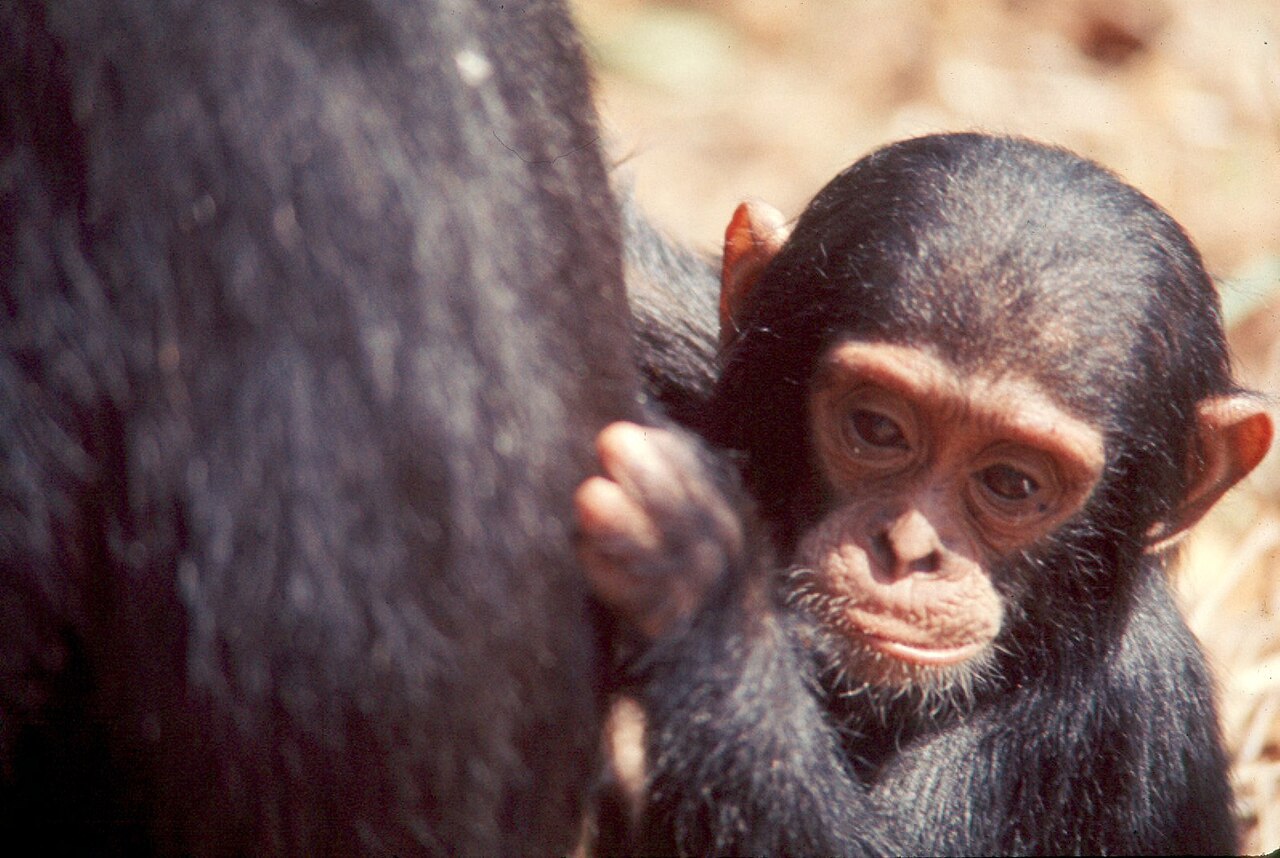
Frans de Waal’s decades of research on chimpanzees, bonobos, and other primates, synthesised in Primates and Philosophers (2006), has documented a rich suite of behaviours that prefigure human moral psychology: consolation of distressed individuals, food sharing, reconciliation after conflict, sensitivity to inequity, and third-party enforcement of social norms. De Waal argues that these behaviours constitute the evolutionary “building blocks” of human morality and that human moral systems are cultural elaborations of capacities that predate religion, language, and philosophical reflection. The implication is not that non-human primates are moral agents in the full philosophical sense, but that the emotional and cognitive substrates of morality — empathy, reciprocity, a sense of fairness — have a natural history grounded in social evolution.5
Elliott Sober and David Sloan Wilson, in Unto Others (1998), extended the analysis to group selection, arguing that selection can operate at the level of groups as well as individuals and genes. Groups composed of altruists can outcompete groups composed of selfish individuals even when altruists are at a disadvantage within any given group. The multilevel selection framework helps explain the evolution of genuinely prosocial dispositions — tendencies to act for the group’s benefit at personal cost — that simple kin selection and reciprocal altruism models have difficulty accounting for. Richard Wrangham’s work on the evolution of human prosociality, presented in The Goodness Paradox (2019), identifies the suppression of reactive aggression through collective action against dominants as a key step in producing the unusually cooperative, norm-sensitive social psychology of modern humans.18, 13
Secular moral frameworks independent of evolution
Even if the evolutionary account of moral psychology were entirely correct and its metaethical implications entirely negative — which is far from established — this would not leave secular ethics without resources. There exist multiple well-developed normative frameworks that ground moral claims in considerations entirely independent of whether those claims have an evolutionary explanation, and each has been defended by leading philosophers in the analytic tradition without any appeal to religious authority.
Utilitarianism, developed by Jeremy Bentham and refined by John Stuart Mill and Peter Singer, grounds moral evaluation in the consequences of actions for the well-being of sentient creatures. The wrongness of causing unnecessary suffering does not depend on the evolutionary history of our capacity to feel pain; it depends on the reality of that suffering and the principle that like interests deserve equal consideration. Singer’s The Expanding Circle (1981) argues that the evolution of moral reasoning has produced a capacity that can outrun its original adaptive context: reason, once in place, drives the progressive extension of moral concern beyond kin and tribe to all sentient creatures, a process constitutive of moral progress.19
Kantian deontology grounds moral obligation not in consequences but in the structure of rational agency itself. Immanuel Kant argued that any rational being, simply by virtue of being a rational agent, is subject to the categorical imperative: act only according to that maxim which you can at the same time will to become a universal law, and treat humanity always as an end in itself and never merely as a means. The binding force of this obligation derives from the fact that to act as a rational agent is to be committed to principles that are universalisable — a consideration entirely independent of whether the capacity for rational agency evolved.17
Contractualism, most fully developed by T. M. Scanlon in What We Owe to Each Other (1998), grounds moral obligations in principles that no one could reasonably reject. On Scanlon’s account, to wrong someone is to act in a way that cannot be justified to that person by principles they have no sufficient reason to reject. This framework locates the source of moral normativity in the value of standing in relations of mutual justification with other rational beings — a relationship that does not presuppose any theistic commitments.11
Virtue ethics, rooted in Aristotle’s Nicomachean Ethics, evaluates actions by reference to the character traits — courage, honesty, compassion, practical wisdom — that enable human beings to flourish as the kind of social, rational animals they are. Neo-Aristotelian philosophers including Philippa Foot and Martha Nussbaum have developed naturalistic accounts of virtue grounded in facts about human nature and human needs that make no appeal to divine commands or revelation. On this view, the virtues are not arbitrary: they are the traits that enable beings like us to live well, and “living well” is not a subjective preference but a condition with objective criteria.12
At the metaethical level, Erik Wielenberg’s Robust Ethics (2014) defends a position he calls “godless normative realism”: the view that there are mind-independent moral facts, that these facts are not grounded in God’s nature or commands, and that the evolutionary origin of moral cognition does not undermine our capacity to access them. Wielenberg argues that certain moral facts are necessarily true — for instance, that gratuitous cruelty is wrong — and that necessarily true propositions do not require causal explanation of the same kind contingent facts do. The claim that moral realism requires theism as its grounding simply assumes what the argument is meant to establish.10
The Euthyphro dilemma and divine command theory
Any claim that evolution undermines secular morality must be evaluated alongside the parallel problem that Plato’s Euthyphro dilemma poses for theistic morality. In the dialogue Euthyphro (c. 399–395 BCE), Socrates asks whether the pious is loved by the gods because it is pious, or whether it is pious because it is loved by the gods. Translated into contemporary terms, the dilemma asks: is something morally good because God commands it, or does God command it because it is morally good?9
Each horn of the dilemma creates a serious problem for divine command theory. If something is good simply because God commands it — the first horn — then morality is arbitrary: God could have commanded cruelty, genocide, or the violation of innocent children, and these would have been morally obligatory. Many apologists find this consequence unacceptable. The standard theistic response is to take the second horn: God commands what is good because it is good, and God’s nature is itself the standard of goodness. But this response concedes that goodness is logically prior to God’s will, which means that morality does not ultimately depend on divine command at all — it depends on a standard of goodness that God’s nature exemplifies but does not constitute. On this view, the theist and the secular moral realist are appealing to the same kind of mind-independent moral standard; the theist simply identifies God as the exemplar of that standard.9, 10
The Euthyphro dilemma does not demonstrate that God does not exist; it demonstrates that divine command theory — the specific view that moral facts are constituted by God’s commands — faces a structural problem that is at least as serious as any problem posed by evolutionary naturalism for secular ethics. If the theist must appeal to a standard of goodness independent of God’s will to escape the arbitrariness horn, then the work in grounding moral objectivity is being done by that standard, not by God. And if the secular moral realist is appealing to the same kind of standard without the theistic superstructure, the theistic addition does not obviously solve any problem that the secular account leaves unresolved.9
Empirical evidence: secular societies and moral behaviour
A further line of response to the claim that evolution undermines secular morality is empirical: if the theistic premise is that genuinely moral behaviour requires grounding in divine command, one would expect religious belief to correlate with prosocial behaviour and secular belief to correlate with its absence. The available evidence does not support this expectation. Sociologist Phil Zuckerman’s comparative research, reported in Society without God (2008), examined Denmark and Sweden — among the least religious societies on earth — and found that they rank near the top of global indices for human development, social trust, low corruption, gender equality, happiness, and charitable giving. Zuckerman’s fieldwork found Danes and Swedes to be thoughtful, ethical, and community-oriented despite — or, he argues, partly because of — their overwhelming secularity.7
Gregory Paul’s cross-national analysis, published in the Journal of Religion & Society (2005), examined 18 prosperous democracies and found that higher levels of religiosity correlated with worse societal outcomes on numerous measures including homicide rates, abortion rates, teen pregnancy, and child mortality, while more secular societies tended to perform better on these indicators. Paul was careful to note that correlation does not establish causation, and the relationship between religious belief and social outcomes is influenced by numerous confounding variables including economic inequality, historical institutions, and social trust. Nevertheless, the data consistently fail to support the claim that religiosity is necessary for moral order; indeed, they suggest a modest inverse relationship in the context of prosperous democracies.8
It is important not to overstate what this evidence shows. These findings do not demonstrate that religious belief causes immoral behaviour, nor that secular belief causes moral behaviour. Many highly religious individuals and societies display admirable moral commitments, and many secular individuals and societies fall short. The point is the narrower one: the empirical record does not support the apologetic premise that divine grounding is a necessary condition for moral behaviour. Human beings appear capable of constructing and sustaining genuinely moral communities through secular means — a finding consistent with the evolutionary and philosophical accounts of morality surveyed above.7, 8
The social Darwinism strawman
Discussions of evolution and morality frequently invoke Social Darwinism as an example of what happens when evolutionary thinking is applied to ethics. Social Darwinism, popularized in the late nineteenth and early twentieth centuries and associated with thinkers such as Herbert Spencer, held that the competitive struggle for survival documented by Darwin justified laissez-faire capitalism, imperialism, and in some formulations, eugenicist policies favouring the reproduction of the “fittest” and the elimination of the “unfit.” The historical consequences of Social Darwinist thinking, particularly its influence on eugenics programmes that culminated in policies of forced sterilisation and eventually provided ideological cover for Nazi racial programmes, are rightly regarded as a moral catastrophe.15
Social Darwinism is, however, a strawman when invoked against secular evolutionary ethics. The central error of Social Darwinism is precisely the naturalistic fallacy — the inference that because competition and differential survival is how evolution works, it is how human societies ought to be organised. This is an instance of the same is-ought fallacy discussed above, and it is rejected by virtually every contemporary evolutionary biologist and secular ethicist. Richard Hofstadter’s classic analysis, Social Darwinism in American Thought (1944), documented that Spencer’s views were not a straightforward application of Darwin’s biology but a pre-existing ideology onto which evolutionary language was grafted after the fact. Darwin himself did not endorse Social Darwinist conclusions, and contemporary evolutionary biologists are explicit that “is” and “ought” are distinct questions.15, 3
Richard Dawkins, whose emphasis on the gene as the unit of selection in The Selfish Gene (1976) is sometimes misread as endorsing a philosophy of selfishness, was unambiguous on this point: “We are built as gene machines and cultured as meme machines, but we have the power to turn against our creators. We, alone on earth, can rebel against the tyranny of the selfish replicators.” The capacity for moral reasoning, once it exists, allows human beings to evaluate and override the dispositions that natural selection has instilled. Evolution explains the origin of those dispositions; it does not determine which of them we ought to act upon. The move from “natural selection produced this tendency” to “we ought to follow this tendency” is precisely the fallacy that serious evolutionary ethics must — and does — reject.3
The charge that evolutionary naturalism leads inevitably to Social Darwinism is therefore doubly mistaken: it attributes to secular evolutionary ethics a fallacy that secular evolutionary ethics explicitly diagnoses and rejects, and it ignores the fact that the most straightforwardly theistic societies in history have been capable of producing moral catastrophes of comparable scale through appeals to divine sanction for slavery, conquest, inquisition, and persecution. The question of what grounds moral claims is logically independent of the question of whether believers in any particular grounding story behave more or less morally in practice — and the empirical evidence on that latter question, as the comparative sociology of secular and religious societies consistently shows, does not favour the theistic premise.7, 15
References
Cross-national correlations of quantifiable societal health with popular religiosity and secularism in the prosperous democracies
The Goodness Paradox: The Strange Relationship between Virtue and Violence in Human Evolution