Overview
- Leibniz’s cosmological argument reasons from the contingency of the universe to the existence of a necessary being, grounding the inference on the principle of sufficient reason (PSR) — the claim that every contingent fact has an explanation — which Leibniz regarded as a fundamental principle of rational thought
- Unlike the kalam cosmological argument, which depends on the universe having a temporal beginning, Leibniz’s argument works even if the universe is eternal: an infinite series of contingent states still requires an explanation for why the series exists at all rather than some other series or nothing, and that explanation must lie outside the series in a necessary being
- The central objection is whether the principle of sufficient reason is true: critics from Hume to van Inwagen argue that it is either self-refuting, leads to unwanted modal consequences (necessitarianism), or that the universe may simply be a brute fact requiring no external explanation — while defenders such as Pruss and Koons have developed restricted versions of the PSR designed to avoid these problems
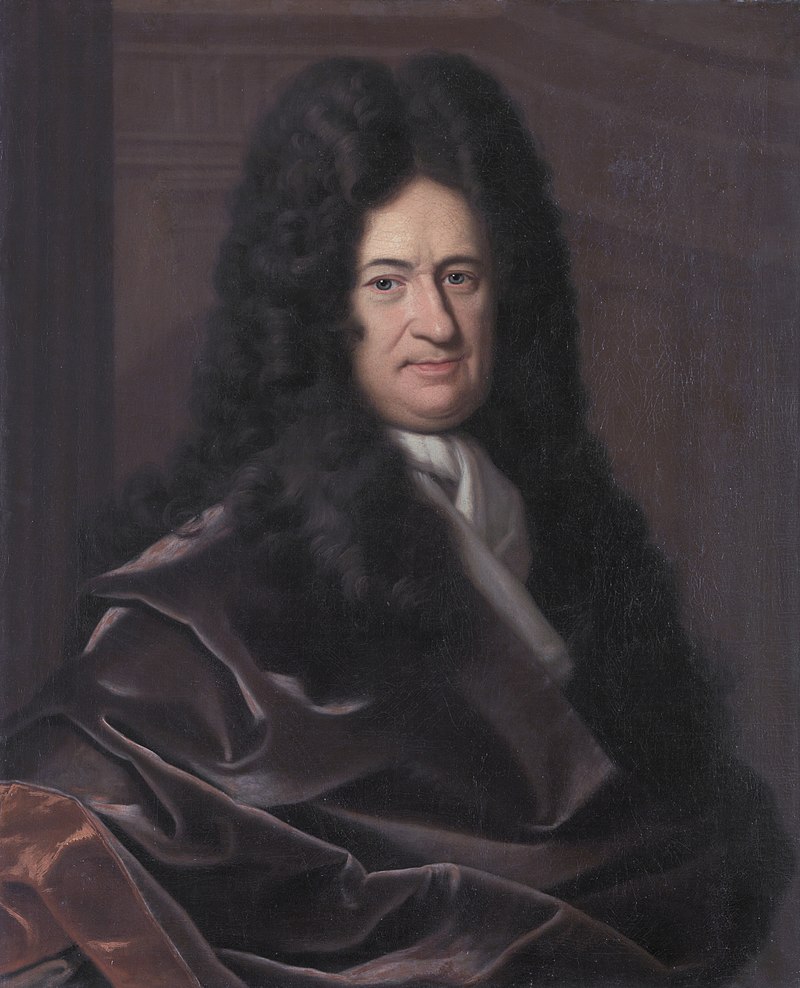
Leibniz’s cosmological argument reasons from the contingency of the universe to the existence of a necessary being whose existence explains why there is something rather than nothing. Developed by Gottfried Wilhelm Leibniz (1646–1716) in the Monadology (1714) and On the Ultimate Origination of Things (1697), the argument rests on the principle of sufficient reason (PSR) — the claim that every contingent fact has an explanation. Unlike the kalam cosmological argument, which depends on the universe having a temporal beginning, Leibniz’s argument works even if the universe is eternal: an infinite series of contingent states still requires an explanation for why the series exists at all. The argument has been refined by contemporary philosophers such as Alexander Pruss and Robert Koons, and it remains one of the most debated arguments in the philosophy of religion.1, 4

The argument
Leibniz’s cosmological argument can be stated as follows:
P1. Every contingent fact has an explanation (the principle of sufficient reason).
P2. The universe (and every state of the universe) is a contingent fact.
P3. The explanation of a contingent fact must ultimately rest on a necessary being — a being whose non-existence is impossible.
C. Therefore, a necessary being exists.
A contingent fact is one that obtains but could have failed to obtain — the universe could have contained different objects, different laws, or no objects at all. A necessary being is one whose existence is not contingent on anything else: it exists in every possible world and could not have failed to exist. Leibniz argued that only a necessary being can serve as the ultimate explanation for the totality of contingent facts, because any contingent explanation would itself require a further explanation, generating either an infinite regress or a circle — neither of which provides a sufficient reason.1, 12
The principle of sufficient reason
The principle of sufficient reason (PSR) is the load-bearing premise of Leibniz’s argument. Leibniz stated the principle in the Monadology (§32): “No fact can be real or actual, and no proposition true, without a sufficient reason for its being so and not otherwise.” The principle comes in several strengths. The strongest version holds that every truth whatsoever has an explanation; a moderate version restricts the principle to contingent truths; a weaker version holds only that every contingent truth has a possible explanation, even if we cannot identify what it is.12, 2
Leibniz regarded the PSR as a fundamental principle of rational thought, on a par with the law of non-contradiction. His reasoning was that if the PSR were false, some contingent facts would obtain for no reason at all — they would be brute facts with no explanation. Leibniz found this unintelligible: if there is no reason why a state of affairs obtains rather than some alternative, then there is nothing that makes it the case that it obtains, and it is mysterious how it could obtain. The intelligibility of the world, Leibniz argued, depends on the PSR being true.1, 3
The PSR has a long history prior to Leibniz. Parmenides argued that nothing comes from nothing (ex nihilo nihil fit). Aristotle held that every change has a cause. Avicenna distinguished between necessary and possible existence and argued that possible beings require a cause. Aquinas’s Third Way argues from the contingency of existing things to a being that exists necessarily. Locke, Leibniz’s contemporary, independently argued in the Essay Concerning Human Understanding (1690) that the existence of thinking beings requires an eternal, most powerful, and most knowing source.13 Leibniz’s distinctive contribution was to formulate the principle explicitly as a general principle of explanation and to apply it to the totality of contingent reality as a whole, not merely to individual objects or events within it.3, 10
The eternal universe and the aggregate
One of the most influential objections to cosmological arguments is that if the universe has always existed, it needs no cause — each state is caused by the previous state, and the series as a whole requires no further explanation. Hume put this objection through the character Cleanthes in the Dialogues Concerning Natural Religion: “In such a chain, too, or succession of objects, each part is caused by that which preceded it, and causes that which succeeds it. Where then is the difficulty? But the WHOLE, you say, wants a cause. I answer that the uniting of these parts into a whole, like the uniting of several distinct countries into one kingdom, or several distinct members into one body, is performed merely by an arbitrary act of the mind, and has no influence on the nature of things.”7
Leibniz anticipated this objection. In On the Ultimate Origination of Things, he argued that an infinite series of contingent states, even if each state is explained by the previous one, does not explain why the series as a whole exists rather than some other series or no series at all. If we imagine an eternal sequence of geometry books, each copied from the previous one, we can explain each individual copy by reference to its predecessor — but we have not explained why geometry books exist at all rather than, say, algebra books, or no books. The explanation of the series must lie outside the series, in something that is not itself a member of the contingent sequence.1
This response depends on the legitimacy of asking for an explanation of the totality of contingent reality. Hume denied that the totality is anything over and above its parts: once each part is explained, the whole is explained. Leibniz insisted that the totality is a legitimate object of explanation: the conjunction of all contingent truths is itself a contingent truth, and the PSR demands an explanation for it. Contemporary defenders of the argument, particularly Pruss, have argued that Leibniz is right: the big conjunctive contingent fact (BCCF) — the conjunction of all contingent truths — is itself contingent and therefore requires a sufficient reason, which can only be a necessary being.2, 4
From necessary being to God
Even if the argument establishes the existence of a necessary being, a further step is needed to identify this being with God. Leibniz held that the necessary being must be a personal, intelligent, and supremely perfect being, because only such a being could serve as the sufficient reason for a universe that contains order, beauty, rational creatures, and moral law. The necessary being chose this world from among all possible worlds as the best — the one that maximizes the ratio of perfection to simplicity. This is Leibniz’s doctrine of the best of all possible worlds.1, 12
Critics have questioned this transition. Even granting the existence of a necessary being, it does not follow that this being is omnipotent, omniscient, or morally perfect. The necessary being could be an impersonal metaphysical principle, a necessary substance like Spinoza’s God-or-Nature, or a necessary physical entity (such as the initial quantum state of the universe, if such a state turns out to be necessary). Mackie argued that the argument establishes at most a necessary cause of the universe, not the God of classical theism, and that the gap between “necessary being” and “God” requires additional arguments that the cosmological argument itself does not provide.5
Swinburne defends the transition on grounds of simplicity. A personal, omnipotent God is the simplest kind of necessary being: one entity with infinite power, knowledge, and goodness is simpler than a brute necessary physical state or an impersonal metaphysical principle that happens to generate a universe. Since simplicity is a theoretical virtue — simpler explanations are, other things being equal, more likely to be true — theism provides the best explanation of why there is a contingent universe at all.9
Objections to the principle of sufficient reason
The most sustained philosophical attacks on Leibniz’s argument target the PSR. If the PSR can be rejected, the argument fails at the first premise. Several distinct objections have been raised.4
The brute fact objection holds that the universe simply exists and requires no external explanation. Bertrand Russell expressed this view in his 1948 BBC debate with Frederick Copleston: “I should say that the universe is just there, and that’s all.” On this view, the demand for an explanation of the universe as a whole is illegitimate — the universe is a brute fact, and the PSR is false. Hume made a similar point: we have no guarantee that reality is fully intelligible, and the demand that every fact have an explanation may simply be a human preference rather than a feature of the world.7, 5
The necessitarianism objection holds that if the PSR is true in its strong form, then every truth has an explanation, which means every truth is necessitated by its explanation, which means there are no genuinely contingent truths — everything that happens is necessary. This collapses the distinction between the contingent and the necessary and implies a Spinozistic determinism in which everything that exists must exist exactly as it does. Van Inwagen has pressed this objection, arguing that the PSR, consistently applied, entails that there is only one possible world — the actual world — and that everything in it exists necessarily.15
Kant objected to cosmological arguments on transcendental grounds. In the Critique of Pure Reason, Kant argued that the cosmological argument covertly depends on the ontological argument: to show that a necessary being exists, one must show that the concept of a necessary being is coherent, and this requires the kind of a priori reasoning from concept to existence that the ontological argument employs and that Kant rejected. Kant also argued that the categories of cause and explanation apply only within the realm of possible experience and cannot be legitimately extended to the totality of reality or to a being outside all experience.16
Contemporary defenses
Alexander Pruss has developed the most comprehensive contemporary defense of the Leibnizian cosmological argument. In The Principle of Sufficient Reason: A Reassessment (2006), Pruss argues for a restricted version of the PSR that avoids the necessitarianism objection while retaining enough strength to power the cosmological argument. Pruss’s restricted PSR holds that every contingent truth has a possible explanation — an explanation that could obtain even if it does not actually obtain. This is weaker than Leibniz’s original PSR but strong enough, Pruss argues, to establish the existence of a necessary being when combined with the principle that the conjunction of all contingent truths is itself contingent.2
Robert Koons has developed a defense based on the notion of a “wholly contingent” state of affairs — a state of affairs every part of which is contingent. Koons argues that the aggregate of all wholly contingent states of affairs requires a cause that is not itself wholly contingent, which can only be a necessary being. Koons’s formulation avoids the aggregation objection by focusing on the mereological structure of contingent reality rather than on the conjunction of contingent propositions, and it avoids the necessitarianism objection by using a causal version of the PSR rather than an explanatory one.14
Richard Gale and Alexander Pruss developed a new cosmological argument (1999) that uses a weak version of the PSR: for every contingent proposition, it is possible that there is an explanation. From this modest premise, together with the S5 system of modal logic, Gale and Pruss argue that a necessary being exists. The argument proceeds by showing that a possible explanation of the big conjunctive contingent fact must include a necessary being, and that a necessary being that possibly exists must actually exist (by the S5 axiom that possibility of necessity entails necessity). Critics, particularly Oppy, have challenged whether the Gale-Pruss argument avoids the modal collapse that threatens the original PSR.11, 6
Comparison with other cosmological arguments
Leibniz’s argument differs from the other two major families of cosmological arguments in its logical structure and its metaphysical commitments. The kalam cosmological argument depends on the universe having a temporal beginning: if the universe began to exist, it has a cause. The kalam argument is therefore vulnerable to the possibility that the universe is eternal or that time itself began with the universe (as in some interpretations of Big Bang cosmology). Leibniz’s argument sidesteps this vulnerability entirely: it works regardless of whether the universe has a temporal beginning, because the argument targets contingency, not temporal origination.3, 4
The Thomistic cosmological argument, as developed in Aquinas’s Third Way, also reasons from contingency but focuses on the ongoing dependence of existing things on a sustaining cause. Aquinas argues that contingent beings, which are capable of not existing, require a being that exists necessarily to sustain them in existence at every moment. The Thomistic argument is closer to Leibniz’s in spirit but differs in its metaphysical framework: Aquinas operates within an Aristotelian framework of act and potency, while Leibniz operates within a rationalist framework of sufficient reason and possible worlds.10, 3
The three arguments are complementary rather than competing. Each approaches the existence of a necessary being from a different angle: the kalam from the beginning of the universe, the Thomistic from the ongoing dependence of contingent beings, and the Leibnizian from the intelligibility of the totality of contingent reality. A cumulative case for theism might employ all three, using the Leibnizian argument to address the eternal-universe scenario, the kalam to address the temporal-beginning scenario, and the Thomistic to address the question of sustaining causation.8, 9
Cosmological argument comparison4
| Feature | Kalam | Thomistic | Leibnizian |
|---|---|---|---|
| Key premise | Universe began to exist | Contingent beings require sustaining cause | Every contingent fact has an explanation (PSR) |
| Works if universe is eternal? | No | Yes | Yes |
| Type of causation | Temporal origination | Sustaining (concurrent) | Explanatory (sufficient reason) |
| Primary vulnerability | Eternality of universe | Rejection of sustaining causation | Rejection of PSR |
| Historical origin | Al-Kindī (9th c.) | Aquinas (13th c.) | Leibniz (17th c.) |
| Key contemporary defender | Craig | Feser | Pruss |
Current state of the debate
Leibniz’s cosmological argument is widely regarded as one of the strongest versions of the cosmological argument, precisely because it does not depend on empirical claims about the age of the universe or on contested Aristotelian metaphysics. Its strength or weakness reduces to the status of the PSR, and the PSR remains a deeply contested principle in contemporary philosophy. Pruss, Koons, and others have developed increasingly sophisticated versions of the argument that attempt to avoid the necessitarianism objection while retaining the PSR’s explanatory power. Oppy, van Inwagen, and others continue to press the objections, arguing that the PSR is either too strong (entailing necessitarianism) or too weak (unable to establish the existence of a necessary being).2, 6, 15
The argument’s central question — whether the existence of the contingent universe requires an explanation in a necessary being, or whether the universe can be a brute fact — remains one of the fundamental questions in metaphysics. Leibniz’s formulation of that question, and his insistence that the intelligibility of the world demands an answer, continues to shape the debate more than three centuries after he posed it.1, 4