Overview
- The logical problem of evil argues that the existence of an omnipotent, omniscient, and perfectly good God is logically incompatible with the existence of evil — that the theist holds a formally contradictory set of beliefs, not merely an improbable one.
- J. L. Mackie’s 1955 formulation in “Evil and Omnipotence” is the most influential modern statement of the argument, contending that theistic belief requires the conjunction of propositions that, together with two quasi-logical connecting principles about goodness and omnipotence, form an inconsistent set.
- Alvin Plantinga’s free will defense (1974) is widely regarded as having demonstrated that God and evil are not logically contradictory, shifting the philosophical debate from the logical to the evidential formulation — from whether God and evil are incompatible to whether the amount and distribution of evil make God’s existence improbable.
The logical problem of evil is the argument that the existence of an omnipotent, omniscient, and perfectly good God is logically incompatible with the existence of evil. Unlike the evidential problem of evil, which argues that evil makes God’s existence improbable, the logical formulation contends that the theist holds a set of beliefs that is formally contradictory — that the conjunction of “God is omnipotent,” “God is perfectly good,” and “evil exists” is as incoherent as asserting that a square circle exists. If the argument succeeds, theism is not merely unlikely but impossible.1, 4
The argument has ancient roots, with versions attributed (possibly incorrectly) to Epicurus and developed through centuries of philosophical and theological debate. Its most rigorous modern formulation appeared in J. L. Mackie’s 1955 paper “Evil and Omnipotence,” which set the terms for the twentieth-century debate. Alvin Plantinga’s free will defense (1974) is widely regarded as having demonstrated that the alleged contradiction does not hold, shifting the center of gravity in the problem of evil from the logical to the evidential formulation.2, 3, 5
Ancient and early formulations
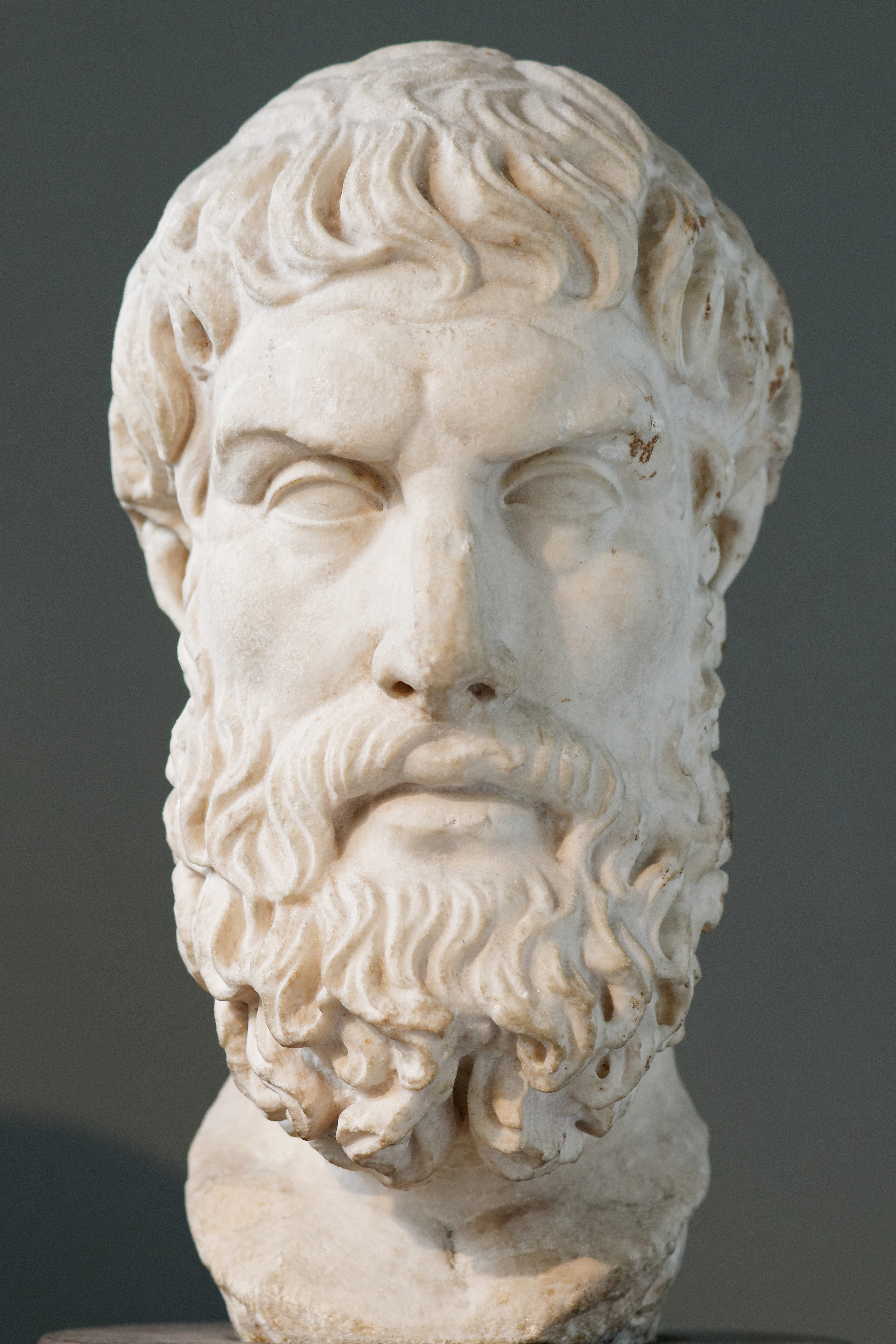

The tension between divine power, divine goodness, and the existence of evil was recognized in antiquity. The earliest known formulation of the problem as a logical dilemma appears in the writings of the skeptic Sextus Empiricus (c. 160–210 CE), who presented the trilemma in his Outlines of Pyrrhonism: a providential deity either wishes to prevent evil but cannot, can prevent evil but does not wish to, or neither wishes to nor can. Each alternative appears to undermine the claim that a deity is both omnipotent and benevolent.20
A closely related formulation is preserved in the Latin apologetic writer Lactantius’s De Ira Dei (c. 313 CE), where it is attributed to Epicurus. Lactantius presents the argument in four-part form: God either wishes to remove evils and cannot, or can and does not wish to, or neither wishes to nor can, or both wishes to and can. The first option implies weakness, the second malice, the third both weakness and malice, and the fourth raises the question of why evil exists at all. Whether Epicurus himself formulated the argument is uncertain — no surviving Epicurean text contains it, and the attribution may reflect Lactantius’s polemical purposes rather than historical accuracy. The argument may derive instead from the broader skeptical tradition in which Sextus Empiricus wrote.8, 20
Augustine of Hippo (354–430 CE) addressed the logical tension directly. In the Confessions, he described the problem as the central obstacle to his conversion: if God is omnipotent and good, whence comes evil? Augustine’s resolution drew on Neoplatonic metaphysics. Evil, he argued in the Enchiridion and The City of God, is not a substance or a positive thing that God created; it is a privation of good (privatio boni), a deficiency or corruption in beings that are themselves good. Just as darkness is the absence of light rather than a thing in itself, evil is the absence of the goodness that a being ought to possess. On this analysis, the premise that God “created evil” is false: God created only good things, and evil entered the world through the free choices of rational creatures who turned away from the good.9, 19
Early modern developments
The logical problem received sustained philosophical attention in the early modern period. Pierre Bayle, in his Historical and Critical Dictionary (1697), argued that no rational theodicy could successfully reconcile the existence of evil with divine omnipotence and goodness. In his articles on the Manicheans and the Marcionites, Bayle contended that the dualistic hypothesis — two opposing principles, one good and one evil — provided a more coherent account of the observed distribution of evil than orthodox Christian theism, even though dualism was itself philosophically unsatisfactory. Bayle’s treatment intensified the problem by arguing that both orthodox and heterodox solutions failed, leaving the logical tension unresolved.18
Gottfried Wilhelm Leibniz responded directly to Bayle in his Essays of Theodicy (1710), a work that coined the term “theodicy” (from the Greek theos, God, and dike, justice). Leibniz argued that this world is the best of all possible worlds: God, being omniscient, surveyed every possible world before creation and, being perfectly good, chose to actualize the world that contained the greatest overall balance of good over evil. Evil exists in this world because no possible world entirely free of evil could contain the same degree of goodness. Leibniz distinguished three categories of evil — metaphysical evil (the finitude and limitation inherent in any created being), physical evil (pain and suffering), and moral evil (sin) — and argued that each is permitted because its prevention would require the elimination of a greater good.10, 11
David Hume, in Dialogues Concerning Natural Religion (1779), presented both the logical and evidential dimensions of the problem through the character Philo. In Parts X and XI, Philo catalogs the miseries of sentient existence — disease, poverty, natural disaster, predation — and argues that this evidence is incompatible with the hypothesis of a benevolent creator. Philo does not claim merely that evil makes God’s existence improbable; he presses the stronger claim that the observed world “could never be inferred” from the hypothesis of an omnipotent, perfectly good deity. If one were to reason from the state of the world to the character of its creator, the conclusion would be moral indifference rather than benevolence.7
Mackie’s formulation


The most influential modern statement of the logical problem of evil appeared in J. L. Mackie’s 1955 paper “Evil and Omnipotence,” published in the journal Mind. Mackie argued that theism is “positively irrational” because several essential doctrines of theism, taken together, are logically inconsistent. The three propositions at the core of the inconsistency are:1
P1. God is omnipotent.
P2. God is perfectly good.
P3. Evil exists.
Mackie acknowledged that these three propositions are not, on their face, formally contradictory. A contradiction emerges only with the addition of what he called “quasi-logical rules” connecting the concepts of goodness and omnipotence to action: a good being eliminates evil as far as it can, and there are no limits to what an omnipotent being can do. With these connecting principles, the conjunction of P1, P2, and P3 yields a contradiction: if God is omnipotent (and therefore able to eliminate all evil) and perfectly good (and therefore motivated to eliminate all evil), then evil should not exist. But evil does exist. Therefore, at least one of the three propositions must be false.1, 4
Mackie anticipated and rejected several theistic responses. Against the claim that evil is necessary as a means to good, he argued that an omnipotent being is not bound by causal necessities — if God can do anything, God can produce good without evil as a precondition. Against the claim that evil results from the misuse of creaturely free will, Mackie argued that an omnipotent God could have created beings who always freely choose the good. Against the claim that evil exists only in contrast to good (the aesthetic analogy), Mackie contended that this reduces God’s goodness to something compatible with the worst horrors of human experience, thereby draining the concept of moral content. Against the claim that the universe is better with some evil in it than it would be without, Mackie responded that this amounts to abandoning the claim that God is opposed to evil, and thus abandoning an essential component of theism.1
The formal structure of the argument
Mackie’s argument can be stated more precisely using the language of formal logic. The argument claims that the following set of propositions is logically inconsistent — that no possible world exists in which all of them are true simultaneously:1, 5
1. God exists and is omnipotent, omniscient, and perfectly good.
2. A perfectly good being would prevent evil if it could.
3. An omnipotent being can do anything logically possible.
4. An omniscient being knows every true proposition.
5. Evil exists.
The alleged inconsistency arises as follows. From (1) and (4), God knows about every instance of evil. From (1) and (3), God has the power to prevent every instance of evil. From (1) and (2), God has the motivation to prevent every instance of evil. If God has the knowledge, power, and motivation to prevent all evil, then no evil should exist. But (5) affirms that evil does exist. Therefore, (1) through (5) cannot all be true, and since (5) is an empirical observation and (2) through (4) are taken to be conceptual truths about perfect goodness, omnipotence, and omniscience, the conclusion is that (1) is false: God does not exist.4, 5
For the argument to succeed as a proof of logical inconsistency, propositions (2) and (3) must be necessarily true — true in every possible world. If there is any possible world in which a perfectly good being has a morally sufficient reason for permitting evil, then (2) is not necessarily true, and the inconsistency dissolves. This is precisely the point that Plantinga targeted in his free will defense.2, 5
Traditional theistic responses
Before Plantinga’s defense, several classical responses attempted to resolve the logical tension. These responses typically challenge one or more of the implicit premises connecting omnipotence and goodness to the elimination of evil.
The privation theory, developed by Augustine, denies that evil is a positive reality that God created. If evil is merely the absence or corruption of good, then the claim that God “created evil” is confused. God created beings with the capacity for goodness, and evil entered the world when those beings freely turned away from the good. The theory addresses the logical problem by reframing the third proposition: evil is not a thing that exists in the way that substances exist, but a deficiency in things that are themselves good. The theory faces the objection that the distinction between a positive reality and a privation does not reduce the force of the logical challenge: whether evil is a substance or a privation, the fact that creatures suffer and die remains, and the question is why an omnipotent, perfectly good God permits it.9, 19, 13
The best-possible-world response, articulated by Leibniz, challenges the premise that a perfectly good God would prevent all evil. If the best possible world — the world with the greatest overall balance of good over evil — necessarily contains some evil, then God’s permission of that evil is consistent with perfect goodness. The response faces two principal objections. First, the concept of a “best possible world” may be incoherent: for any possible world, a better one might always exist, just as there is no largest integer. Second, even if the concept is coherent, the actual world — with its genocides, plagues, and natural disasters — is difficult to identify as the best achievable state of affairs.10, 11
The soul-making response, developed most fully by John Hick, argues that evil is necessary for the moral and spiritual development of human persons. A world without suffering, loss, and challenge would be a world in which genuine virtue, compassion, and courage could not develop. God’s purpose in creating the world is not to produce a finished paradise but to provide an environment in which free beings can grow into mature moral agents. This response challenges the premise that a good God would prevent evil by arguing that certain goods — the goods of character and moral growth — are logically impossible without the existence of genuine hardship.13
Each of these responses, however, was regarded by Mackie and others as insufficient to resolve the logical problem. Mackie argued that an omnipotent God could produce moral growth without suffering, create beings already possessing virtue, or arrange a world that achieves the goods of soul-making without the horrific evils that characterize actual experience. The classical responses seemed to smuggle in limitations on divine power that an omnipotent being, by definition, should not face.1, 6
Plantinga’s free will defense
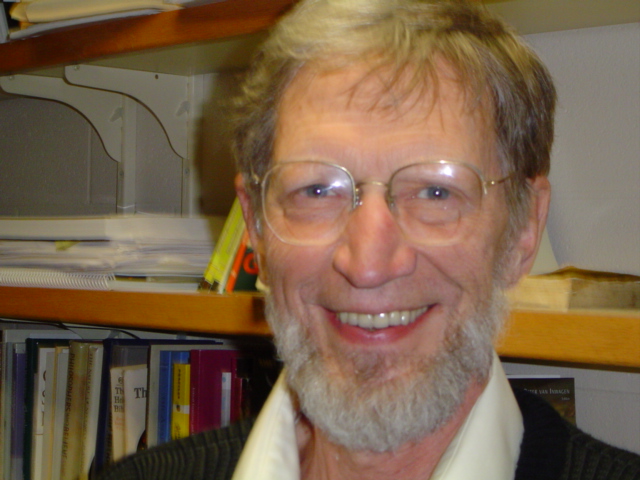

The response to the logical problem that is most widely regarded as successful is Alvin Plantinga’s free will defense, developed in God and Other Minds (1967) and presented in definitive form in The Nature of Necessity and God, Freedom, and Evil (both 1974). Plantinga’s strategy is not to explain why God actually permits evil (that would be a theodicy) but to show that it is logically possible for God and evil to coexist (a defense). A defense succeeds against a logical argument if it identifies even one coherent scenario in which all the propositions in the allegedly inconsistent set are true simultaneously.2, 3
The defense targets premise (2) of the formal argument — the claim that a perfectly good being would prevent evil if it could. Plantinga argues that this premise is not necessarily true. It is logically possible that God could not create a world containing moral good without also permitting moral evil. The argument proceeds through several steps.2, 5
First, Plantinga argues that a world containing creatures with genuine libertarian free will — the ability to choose between alternatives in a way that is not causally determined — is more valuable than a world of beings whose actions are determined by God. If free will of this kind is a great good, then God has reason to create free creatures even though they might misuse their freedom.2
Second, Plantinga introduces the concept of counterfactuals of creaturely freedom: propositions about what each possible free creature would do in every possible set of circumstances. These counterfactuals are true prior to God’s creative act and are not under God’s control. God can decide which creatures to create and which circumstances to place them in, but God cannot determine what a free creature would freely do. This is not a limitation on omnipotence but a logical consequence of what it means for a choice to be free: asking God to determine a free choice is asking for a logically incoherent state of affairs, comparable to creating a round square.2, 3
Third, Plantinga introduces the concept of transworld depravity. A creature suffers from transworld depravity if, in every possible world in which that creature is free, the creature freely chooses wrongly on at least one occasion. Plantinga argues that it is logically possible that every creatable free creature suffers from transworld depravity. If this is so, then no feasible world — no world that God can actualize, given the true counterfactuals of freedom — contains free creatures who always choose rightly. God faces a choice between creating a world with free creatures who sometimes do evil and creating a world without free creatures at all. In such a scenario, God’s permission of moral evil is consistent with perfect goodness.2, 3
P1. It is logically possible that God could not create a world containing moral good without permitting moral evil.
P2. If P1, then the existence of God is logically compatible with the existence of moral evil.
C. The existence of God is logically compatible with the existence of moral evil.
The defense requires only that the scenario it describes is logically possible — coherent, free of internal contradiction. Plantinga does not claim that transworld depravity is actual, probable, or even plausible. He claims only that it is possible, and logical possibility is all that a defense against a charge of logical inconsistency requires.2, 5
The challenge of natural evil
The free will defense in its core form addresses moral evil — evil that results from the free choices of agents. Natural evil, however, — suffering caused by earthquakes, diseases, genetic disorders, predation, and other impersonal natural processes — does not appear to result from creaturely free will. The logical problem of evil encompasses both categories: if God is omnipotent and perfectly good, the existence of any evil, whether moral or natural, stands in need of explanation.1, 4
Plantinga addressed natural evil by suggesting that it is logically possible that natural evil results from the free actions of non-human agents — fallen angels or demons whose rebellion against God disrupted the natural order. This extension is widely regarded as the weakest element of the defense. It requires the assumption that supernatural agents are causally responsible for earthquakes, cancer, and birth defects — a claim that few philosophers find plausible, even as a bare logical possibility.2, 5
Other philosophers have developed alternative responses to natural evil that do not invoke demonic agents. Swinburne has argued that regular natural laws — including laws that occasionally produce natural disasters — are necessary conditions for meaningful moral agency. Without reliable natural regularities, human beings could not predict the consequences of their actions and thus could not make genuinely informed moral choices. The price of a world governed by stable natural laws is that those laws occasionally produce suffering, but this suffering is a logically necessary consequence of the conditions required for moral agency rather than a failure of divine goodness.22
Hick’s soul-making theodicy applies to natural evil more directly than the free will defense. If God’s purpose is to create an environment in which moral and spiritual growth can occur, then a world containing genuine hardship, loss, and danger serves this purpose in a way that a painless paradise could not. Natural evil contributes to the conditions under which virtues such as courage, compassion, and perseverance become possible.13
For the purposes of the logical problem specifically, the question is whether there is any logically possible scenario in which God and natural evil coexist without contradiction. If Swinburne’s or Hick’s accounts describe logically possible states of affairs — even if they are not known to be actual — then the conjunction of divine existence and natural evil is not logically inconsistent, and the logical problem is resolved for natural evil as well as moral evil.4, 5
Objections to the free will defense
Although Plantinga’s defense is widely accepted as having resolved the logical problem, it has attracted significant philosophical criticism on several fronts.
The compatibilist objection challenges the defense’s reliance on libertarian free will. If compatibilism is correct — if free will is compatible with determinism — then God could have determined that all creatures always freely choose the good. On compatibilist assumptions, Mackie’s original challenge stands: an omnipotent God could create free beings whose choices are determined to be good, and the existence of moral evil is gratuitous. Plantinga’s defense presupposes that the morally relevant kind of freedom is libertarian, a position that is itself philosophically contested. Mackie pressed this objection in The Miracle of Theism (1982), arguing that Plantinga’s defense succeeds only if libertarian free will is possible, and that this assumption is debatable.6, 21
The implausibility of universal transworld depravity is another area of concern. The defense requires that it is logically possible for every creatable free creature to suffer from transworld depravity — for every possible free being to go wrong in at least one moral situation in every feasible world. If the space of possible creatures is infinite, the claim that not a single one of them would freely cooperate with God’s purposes in every situation may strike one as extravagantly unlikely. Defenders of Plantinga respond that unlikelihood is irrelevant: a defense requires only logical possibility, not probability. Whether universal transworld depravity is plausible is a question about whether the defense succeeds as a theodicy, not whether it succeeds as a defense against a charge of logical contradiction.3, 14
The grounding objection targets the metaphysical foundations of Plantinga’s argument. Counterfactuals of creaturely freedom are propositions about what a free creature would do in a hypothetical circumstance. If the creature’s choice is genuinely undetermined, what makes such a proposition true? The grounding objection contends that there is no fact of the matter about what a libertarianly free agent would do in a merely possible situation, since nothing determines the outcome. If counterfactuals of freedom lack truth values, the concept of transworld depravity is undefined and the defense collapses. Defenders respond that the grounding objection, if successful, equally undermines Mackie’s argument, since Mackie’s claim that God could have created free beings who always choose rightly also presupposes truths about what free creatures would do.14, 17
The scope objection argues that even if the defense shows that some moral evil is compatible with God’s existence, it does not explain the amount and distribution of evil in the actual world. A world containing one minor moral failing would satisfy the conditions of transworld depravity, but the actual world contains genocide, torture, the suffering of children, and centuries of natural calamity. The defense addresses the logical compatibility of God and evil in the abstract but is silent on why the actual world contains so much evil. This objection, however, is properly addressed to the evidential rather than the logical problem: it concerns probability, not logical consistency.14, 15
Objections to Plantinga’s free will defense and theistic responses4, 5, 14
| Objection | Key proponent(s) | Target | Theistic response |
|---|---|---|---|
| Compatibilist objection | Mackie (1955, 1982) | Assumption of libertarian free will | Libertarian freedom is the kind that confers moral value on choices |
| Implausibility of universal transworld depravity | Otte (2009), Oppy (2006) | Logical possibility vs. plausibility | A defense requires only logical possibility, not probability |
| Grounding objection | Adams (1977), Hasker (1989) | Truth of counterfactuals of freedom | The objection equally undermines Mackie’s premises |
| Scope objection (amount of evil) | Oppy (2006) | Gap between abstract compatibility and actual evil | This is an evidential, not logical, problem |
| Natural evil objection | Mackie (1955), Draper (1989) | Free will does not explain non-agential suffering | Natural-law theodicies or possible demonic agency |
Resolution and philosophical reception
The reception of Plantinga’s defense has been unusually broad for a philosophical argument. In The Miracle of Theism (1982), Mackie himself conceded that the problem of evil “does not, after all, show that the central doctrines of theism are logically inconsistent with one another.” Mackie acknowledged that Plantinga’s scenario — God, free will, and transworld depravity — is logically coherent and that the three propositions in his inconsistent triad are not formally contradictory. This concession from the author of the logical problem’s most influential formulation carried significant weight.6
William Rowe, the most prominent advocate of the evidential problem of evil, accepted the resolution of the logical problem as a starting point for his own argument. Rowe’s 1979 paper “The Problem of Evil and Some Varieties of Atheism” opens from the premise that the logical problem has been resolved and that the debate must shift to the question of probability: not whether God and evil can coexist, but whether the quantity, distribution, and character of actual suffering make God’s existence improbable.15
Both the Stanford Encyclopedia of Philosophy and the Internet Encyclopedia of Philosophy characterize the logical problem as having been adequately answered by Plantinga’s defense, reflecting a broad convergence in the philosophical literature on this point.4, 5
This assessment is not unanimous. Oppy, in Arguing About Gods (2006), argues that the logical problem may not be as thoroughly resolved as the received view suggests. He contends that Plantinga’s defense relies on controversial metaphysical assumptions — libertarian free will, the coherence of transworld depravity, the truth of counterfactuals of freedom — and that philosophers who reject these assumptions may find the logical problem still compelling. The near-universal acceptance of Plantinga’s defense, Oppy suggests, may reflect the predominance of libertarian assumptions among philosophers of religion rather than the inherent force of the argument.14
Defense versus theodicy
A central methodological distinction in the literature on the logical problem is between a defense and a theodicy. A theodicy attempts to identify the actual reason God permits evil — it is a positive philosophical account of divine purposes. A defense aims only to show that it is logically possible for God and evil to coexist — it is a negative refutation of the charge of inconsistency. The standards of success differ accordingly: a theodicy must be plausible, well-supported, and morally satisfactory; a defense must be merely coherent.2, 16
Plantinga was explicit that his argument is a defense, not a theodicy. He did not claim to know why God permits evil, nor did he claim that transworld depravity is actual. He claimed only that the scenario is logically possible and that this possibility is sufficient to refute the charge that theism is internally contradictory. Many objections to the defense — that transworld depravity is implausible, that the fallen-angel hypothesis is far-fetched, that the defense does not address the worst evils — are objections to it as a theodicy. As a defense, it clears the low bar of logical possibility.2, 3
This distinction clarifies why the resolution of the logical problem did not resolve the problem of evil as a whole. The defense shows that God and evil are logically compatible but says nothing about whether God and the specific evils of the actual world are compatible. A defense that posits a single minor moral failing satisfies the logical requirements but leaves untouched the question of why the actual world contains such vast quantities of horrendous suffering. This is the domain of the evidential problem of evil, which operates at the level of probability rather than logical necessity.12, 15
The defense-theodicy distinction has also shaped the philosophical landscape more broadly. Philosophers who find the logical problem resolved have turned their attention to developing theodicies — positive explanations for God’s permission of evil — rather than merely demonstrating logical compatibility. Hick’s soul-making theodicy, Swinburne’s greater-good theodicy, and Adams’s account of divine engagement with horrendous evils all represent attempts to move beyond the minimal success of a defense to a substantive account of why God permits the evils that actually exist.13, 22, 17
The shift to the evidential problem
The resolution of the logical problem of evil produced one of the most significant transitions in the modern philosophy of religion. The debate moved from the question of whether God and evil are logically compatible to the question of whether the actual character of evil makes God’s existence improbable. This shift is reflected in the structure of the literature: the major works on the problem of evil published since the mid-1970s — Rowe’s argument from gratuitous suffering (1979), Draper’s likelihood argument (1989), Howard-Snyder’s edited volume The Evidential Argument from Evil (1996) — all take the logical problem as resolved and focus on the evidential formulation.12, 15
The evidential problem asks not whether any evil is compatible with God’s existence but whether the specific evils of the actual world are. Rowe’s argument focuses on instances of apparently pointless suffering — a fawn dying in agony from a forest fire, a child tortured and killed — and argues that the reasonable inference from the apparent pointlessness of such suffering to its actual pointlessness provides strong evidence against the existence of God. The argument is inductive rather than deductive: it does not claim that God’s existence is impossible but that it is improbable given the evidence.15
The shift from logical to evidential formulations has raised the philosophical stakes. A logical argument can be defeated by showing a single logically possible scenario in which the allegedly contradictory propositions coexist — a low bar. An evidential argument must be assessed against the totality of the evidence, including both the evidence from evil and the evidence from other sources (cosmological, teleological, experiential) that may support theism. This has produced a more nuanced and multifaceted debate, drawing on probability theory, epistemology, and the philosophy of science in addition to traditional metaphysics and theology.4, 12, 17
The transition also introduced new categories of response. Skeptical theism, the most prominent contemporary response to the evidential problem, argues that human cognitive limitations prevent reliable assessments of whether any suffering is truly gratuitous — a response that targets the epistemic assumptions of the evidential argument rather than its logical structure. The development of skeptical theism, the analysis of horrendous evils, and the application of Bayesian reasoning to the problem of evil are all consequences of the post-Plantinga landscape in which the logical problem is regarded as settled and the philosophical action has moved to evidential terrain.4, 17
Timeline of major developments in the logical problem of evil4, 5, 17
| Date | Philosopher | Work | Contribution |
|---|---|---|---|
| c. 200 CE | Sextus Empiricus | Outlines of Pyrrhonism | Earliest extant trilemma formulation |
| c. 313 CE | Lactantius | De Ira Dei | Preserved the “Epicurean” formulation in four-part form |
| c. 420 CE | Augustine | Enchiridion | Evil as privation of good (privatio boni) |
| 1697 | Bayle | Historical and Critical Dictionary | Argued that no rational theodicy can resolve the problem |
| 1710 | Leibniz | Theodicy | Best of all possible worlds; coined “theodicy” |
| 1779 | Hume | Dialogues Concerning Natural Religion | Pressed both logical and evidential dimensions |
| 1955 | Mackie | “Evil and Omnipotence” | Definitive modern formulation of the logical problem |
| 1967 | Plantinga | God and Other Minds | Early version of the free will defense |
| 1974 | Plantinga | God, Freedom, and Evil | Definitive free will defense with transworld depravity |
| 1979 | Rowe | “The Problem of Evil and Some Varieties of Atheism” | Shift to the evidential formulation |
| 1982 | Mackie | The Miracle of Theism | Conceded that theism is not logically inconsistent |
Contemporary assessment
The logical problem of evil occupies a distinctive place in the philosophy of religion. It is an argument that nearly all parties to the contemporary debate regard as having been resolved — yet its resolution, far from ending the philosophical discussion, transformed and deepened it. By establishing that God and evil are not logically contradictory, Plantinga’s defense cleared the ground for a more sophisticated and demanding set of questions about the relationship between divine attributes and actual suffering.4, 5
The argument’s historical significance extends beyond its role in the problem of evil. Mackie’s formulation and Plantinga’s response together illustrate the power and limits of modal logic in philosophical theology. The tools developed in the course of the debate — the distinction between possible and feasible worlds, the analysis of counterfactuals of freedom, the concept of transworld depravity, the methodological distinction between defense and theodicy — have become standard elements of the philosophical toolkit and are applied to other problems in metaphysics, epistemology, and action theory.3, 17
The logical problem also serves as a case study in what counts as resolution in philosophy. Unlike mathematical proofs, philosophical arguments rarely produce universal assent. The broad agreement that Plantinga’s defense succeeds is contingent on accepting libertarian free will, the coherence of counterfactuals of freedom, and the distinction between possible and feasible worlds. Philosophers who reject these assumptions — compatibilists, anti-Molinists, or those skeptical of possible-worlds semantics — may find the logical problem still open. The “resolution” of the logical problem is therefore better understood as a broad philosophical convergence under a particular set of assumptions rather than as a definitive logical proof.14, 17
What is not in dispute is the argument’s enduring importance. From Epicurus (or his ancient interpreters) through Mackie and Plantinga, the logical problem of evil has driven some of the deepest and most rigorous philosophical thinking about the nature of God, the character of evil, and the relationship between the two. Its resolution did not settle the problem of evil but opened the way for the evidential, probabilistic, and Bayesian formulations that constitute the living heart of the contemporary debate.4, 12, 17
References
Essays of Theodicy on the Goodness of God, the Freedom of Man, and the Origin of Evil