Overview
- The evidential problem of evil, unlike the logical problem, does not claim that God and evil are logically incompatible but argues that the amount, distribution, and types of suffering in the world make God's existence improbable — with William Rowe's 1979 formulation and Paul Draper's 1989 likelihood argument constituting the two most influential versions.
- Rowe's argument centers on apparently gratuitous suffering — instances of intense pain, such as a fawn dying in agony from a forest fire, that appear to serve no greater good — and contends that the reasonable inference from apparent pointlessness to actual pointlessness provides strong evidence against the existence of an omnipotent, omniscient, perfectly good God.
- Major theistic responses include skeptical theism (which challenges the inference from apparent to actual pointlessness by citing human cognitive limitations), theodicies that attempt to identify the goods served by suffering, and Bayesian frameworks that dispute the probability assignments underlying the evidential case — the debate remains one of the most active areas in contemporary philosophy of religion.
The evidential problem of evil is the argument that the existence of an omnipotent, omniscient, and perfectly good God is rendered improbable — though not logically impossible — by the amount, distribution, and character of suffering in the world. It emerged in the late 1970s as a successor to the logical problem of evil, after Alvin Plantinga’s free will defense (1974) persuaded most philosophers of religion that God and evil are not strictly contradictory.5, 20 Where the logical formulation claimed that the propositions “God is omnipotent,” “God is perfectly good,” and “evil exists” form an inconsistent set, the evidential formulation concedes their logical compatibility but argues that the specific evils found in the actual world constitute strong evidence against theism. The two most influential versions are William Rowe’s argument from gratuitous suffering (1979) and Paul Draper’s comparative likelihood argument (1989), each of which has generated a substantial philosophical literature and a range of theistic responses.1, 2, 4
The shift from the logical to the evidential formulation is one of the most significant developments in the modern problem of evil. It means that the debate is no longer about whether theism is internally contradictory but about whether it is the best explanation of the world as it actually is — a question that admits of degrees, involves assessments of probability, and resists the kind of decisive resolution that a logical argument might provide.3, 17
From the logical to the evidential formulation
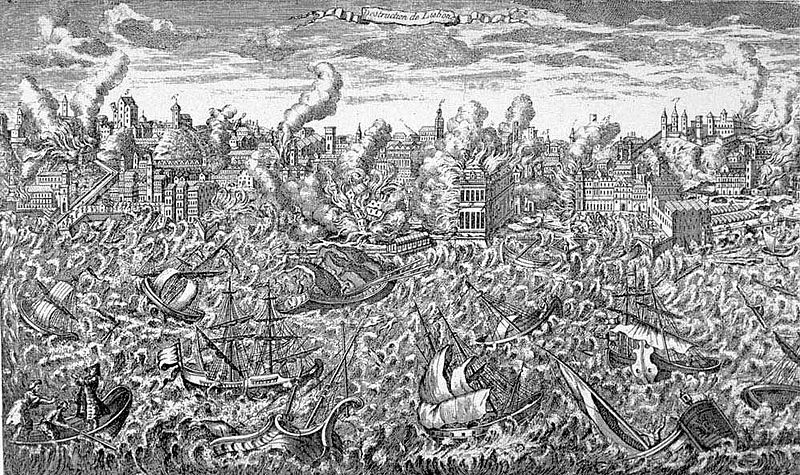
The logical problem of evil, formulated most influentially by J. L. Mackie in 1955, argued that the existence of any evil at all is logically incompatible with the existence of an omnipotent, perfectly good God. Mackie contended that the theist holds an internally contradictory set of beliefs: a good being eliminates evil as far as it can, an omnipotent being can do anything, yet evil exists. The conjunction of these propositions, Mackie argued, is formally inconsistent — not merely improbable but impossible.6
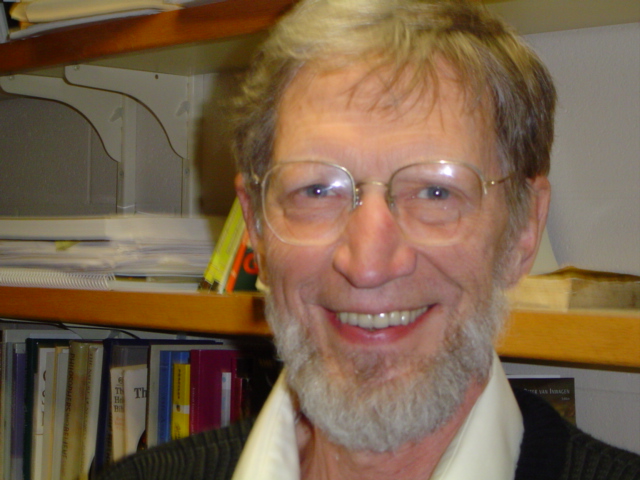
Plantinga’s free will defense responded by demonstrating that the conjunction is not, in fact, logically inconsistent. If it is logically possible that every creatable free creature would freely choose wrongly in at least one morally significant situation (a condition Plantinga called “transworld depravity”), then God could not guarantee a world with moral good and no moral evil. The defense does not claim that transworld depravity is actual or even probable — only that it is logically possible. Since a defense against a logical argument requires only logical possibility, the free will defense succeeds if the scenario it describes is coherent. Mackie himself conceded in 1982 that the logical argument is not “decisive” against theism.5, 16, 20
The resolution of the logical problem left the evidential problem as the principal philosophical challenge. If God and evil are logically compatible, the question becomes whether the actual evils observed in the world — their quantity, their severity, their distribution among sentient beings, their apparent pointlessness — constitute evidence against theism. This is a probabilistic question, not a deductive one, and answering it requires a different set of philosophical tools.3, 4
Rowe’s argument from gratuitous suffering
The most influential formulation of the evidential problem of evil appeared in William Rowe’s 1979 paper “The Problem of Evil and Some Varieties of Atheism,” published in the American Philosophical Quarterly. Rowe presented the argument as follows:1
P1. There exist instances of intense suffering which an omnipotent, omniscient being could have prevented without thereby losing some greater good or permitting some evil equally bad or worse.
P2. An omniscient, wholly good being would prevent the occurrence of any intense suffering it could, unless it could not do so without thereby losing some greater good or permitting some evil equally bad or worse.
C. Therefore, an omniscient, wholly good, omnipotent being does not exist.
The argument is logically valid (the conclusion follows from the premises), so the philosophical question is whether both premises are true — that is, whether the argument is sound. P2 is relatively uncontroversial: it amounts to the claim that a perfectly good being would not permit pointless suffering, which follows directly from the concept of perfect goodness. The critical premise is P1 — the claim that gratuitous suffering exists, that there are instances of intense suffering that serve no compensating greater good.1, 4
Rowe supported P1 with a thought experiment that has become one of the most discussed examples in philosophy of religion. He asked readers to consider a fawn caught in a forest fire started by lightning. The fawn lies in terrible agony for several days before dying. No human agent is involved. No human being witnesses the event or learns a moral lesson from it. No greater good, as far as we can determine, is produced by the fawn’s prolonged suffering. Rowe argued that after careful reflection, the reasonable inference is that the fawn’s suffering is genuinely gratuitous — that no morally sufficient reason justifies it. This inference, from the apparent pointlessness of the suffering to its actual pointlessness, is the critical step in the argument and the primary target of theistic responses.1, 17
Rowe was careful to note that he could not prove that the fawn’s suffering is gratuitous. The argument is inductive, not deductive. The claim is that the absence of any discernible reason for the suffering, after careful reflection, constitutes good evidence that there is no such reason. Rowe compared the inference to other cases of reasoning from what we observe (or fail to observe) to what is the case: if a thorough search of a room reveals no elephant, one is justified in concluding that there is no elephant in the room. Similarly, if a thorough search for a reason justifying the fawn’s suffering reveals no such reason, one is justified in concluding that there probably is none.1, 3
Rowe’s refinements and the concept of friendly atheism
Rowe refined and extended his argument across several subsequent publications. In the same 1979 paper, he introduced the concept of “friendly atheism” to describe his own position. A friendly atheist holds that God does not exist but accepts that some theists may be rationally justified in believing that God exists — that is, theistic belief can be rational even if it is false, because the evidence is not so overwhelming as to make theism unreasonable for everyone. This distinction between the truth of theism and the rationality of theistic belief is characteristic of the evidential approach: the evidential argument holds that evil makes theism improbable, not that it makes theism irrational for every informed person.1, 19
In later work, particularly his contributions to Daniel Howard-Snyder’s edited volume The Evidential Argument from Evil (1996), Rowe reformulated the argument to address objections raised by skeptical theists. His revised version emphasized the distinction between what he called “restricted standard theism” — the bare proposition that an omnipotent, omniscient, perfectly good God exists — and expanded theistic hypotheses that include additional claims about God’s purposes. Rowe argued that even if we grant that God might have reasons beyond our comprehension, the sheer weight of apparently pointless suffering creates a significant evidential burden for the theist. The revised formulation used the language of probability: the evidence of suffering makes the truth of restricted standard theism less probable than it would be without that evidence.3, 19
Rowe also expanded the range of cases beyond the fawn. He cited the case of a five-year-old girl beaten, raped, and strangled by her mother’s boyfriend — a real case from the United States — as an instance of intense human suffering for which no compensating greater good is apparent. By including cases of both natural evil (the fawn) and moral evil (the child), Rowe aimed to show that the evidential problem extends to both categories. The theist must explain not just why natural processes produce suffering but why the distribution of humanly inflicted suffering follows the patterns it does.1, 3
Draper’s comparative likelihood argument
Paul Draper’s 1989 paper “Pain and Pleasure: An Evidential Problem for Theists,” published in Noûs, presented a fundamentally different version of the evidential problem. Draper did not argue that specific instances of suffering are gratuitous. Instead, he compared the overall pattern of pain and pleasure in the biological world under two competing hypotheses: theism and what he called the “hypothesis of indifference” (HI) — the view that there exists no omnipotent, omniscient being who cares about the welfare of sentient creatures.2
Draper organized his observations into three categories. First, moral agents (human beings) experiencing pain or pleasure that is biologically useful — pain that warns of tissue damage, pleasure that rewards behaviors conducive to survival and reproduction. Second, sentient beings that are not moral agents (animals and human infants) experiencing biologically useful pain or pleasure. Third, sentient beings experiencing pain or pleasure that appears to have no biological function — pain that is disproportionate to any survival signal, pleasure that is unconnected to adaptive behavior.2
Draper argued that all three categories of observation are more probable on HI than on theism. On HI, the connection between pain and pleasure and biological function is exactly what one would expect: natural selection has shaped the distribution of hedonic states to track fitness-relevant stimuli, with no concern for the overall well-being of sentient creatures. Pain sometimes exceeds what is biologically useful (chronic pain, pain in terminal illness, pain from genetic disorders) because natural selection optimizes for reproductive fitness, not for the elimination of suffering. On theism, the systematic connection between hedonic states and biological function is less straightforwardly predicted: a perfectly good God would have reasons to care about the welfare of sentient beings that go beyond biological functionality, and the existence of biologically gratuitous suffering requires additional explanation.2, 4
The formal structure of Draper’s argument uses Bayesian reasoning. Let O represent the totality of observations about the distribution of pain and pleasure, T represent theism, and HI represent the hypothesis of indifference. Draper argued that the probability of O given HI is much greater than the probability of O given T — symbolically, P(O|HI) >> P(O|T). By Bayes’ theorem, this means that O significantly lowers the probability of T relative to HI, unless the prior probability of T is sufficiently high to offset the evidential weight of O.2, 15
The significance of Draper’s formulation is that it does not rely on the identification of specific instances of gratuitous suffering. It does not require the claim that any particular evil is pointless. Instead, it argues that the overall pattern of pain and pleasure — its systematic connection to biological function, its distribution across species, its occasional disconnection from any adaptive purpose — is better predicted by indifference than by benevolence. This makes Draper’s argument less vulnerable to skeptical theist objections, which target the inference from apparent gratuitousness to actual gratuitousness in particular cases.2, 18
The noseeum inference and its assessment
The central epistemic issue in Rowe’s argument is what has come to be called the “noseeum inference” — a colloquial term derived from “no-see-um,” a type of biting insect small enough to be invisible even when present. The inference has the following structure: we have searched for a morally sufficient reason that would justify God’s permission of some evil; we have found none; therefore, there probably is no such reason. The question is whether this inference is epistemically reliable.7, 17
Defenders of the inference argue that it is analogous to other cases of legitimate reasoning from unobserved evidence. If one searches a well-lit room thoroughly and finds no elephant, the inference to the absence of an elephant is warranted — not because one has logically ruled out the possibility of an invisible elephant, but because elephants are the sort of thing one would expect to detect if they were present. Rowe argued that the goods that would justify God’s permission of the fawn’s suffering are analogous to elephants rather than no-see-ums: if such goods existed, one would reasonably expect to detect them, at least in many cases. We have extensive experience with the kinds of goods that suffering can produce (moral growth, compassion, knowledge), and none of these goods appear to be served by the fawn’s unwitnessed agony.1, 3
The noseeum inference is the primary target of skeptical theism. Stephen Wykstra introduced the CORNEA principle (Condition Of ReasoNable Epistemic Access) in 1984, arguing that the inference is warranted only if one would expect to detect the relevant goods if they existed. Given the vast cognitive gap between human beings and an omniscient God, Wykstra argued, we have no reason to think we would detect the goods that justify God’s permission of suffering — the reasons might be as far beyond human comprehension as a parent’s reasons for permitting a painful vaccination are beyond the comprehension of a one-month-old infant. Michael Bergmann systematized this response in 2001 with three “skeptical theses” (ST1–ST3), each targeting a different aspect of the inference: our grasp of the space of possible goods, our grasp of the space of possible evils, and our grasp of the entailment relations between goods and the permission of evils.7, 8
Rowe responded to skeptical theists by insisting that the inference is reasonable even under conditions of uncertainty. The question is not whether we can survey all possible goods but whether, in specific cases, the balance of evidence favors the conclusion that no compensating good exists. Rowe maintained that the fawn case is one such instance: the suffering is prolonged, produces no observable benefit, is unwitnessed, and terminates in death. The bare possibility that an inscrutable good might be served does not, Rowe argued, defeat the evidential force of the observation — just as the bare possibility that an invisible dragon might be in the garage does not defeat the evidence of an empty garage.1, 19
Horrendous evils and the scope of the problem
Marilyn McCord Adams introduced the concept of “horrendous evils” to sharpen the evidential problem beyond Rowe’s focus on intense suffering in general. Adams defined horrendous evils as “evils the participation in (the doing or suffering of) which gives one reason prima facie to doubt whether one’s life could (given their inclusion in it) be a great good to one on the whole.” Examples include the Holocaust, the torture of children, severe and prolonged physical agony, and participation in acts of degradation so severe that they threaten to destroy the meaning of an individual’s life.12
Adams argued that much of the philosophical literature on the problem of evil operates at too abstract a level, discussing “evil” generically without attending to the distinctive character of the worst evils human beings face. Standard theodicies — the free will defense, the soul-making theodicy, greater-good explanations — may provide plausible accounts of why God permits ordinary misfortune or even moderate suffering, but they strain to accommodate horrendous evils. The claim that the Holocaust was necessary for soul-making, or that the torture of a child serves a greater good that outweighs the child’s suffering, strikes many philosophers as not merely unpersuasive but morally repugnant.12
Adams herself was a theist, and she did not present the concept of horrendous evils as a refutation of theism. She argued instead that an adequate theistic response to horrendous evils requires moving beyond the framework of balancing goods against evils and into what she called “defeat” — a divine engagement with the sufferer’s experience that transforms horrendous evil from something that threatens to destroy life’s meaning into something that can be integrated into a meaningful relationship with God. This approach, grounded in Christian theological resources rather than analytic philosophy alone, represents a distinctive alternative to both standard theodicies and evidential arguments.12, 4
The concept of horrendous evils has been adopted by both sides of the debate. For critics of theism, horrendous evils represent the strongest cases for the evidential argument: if any suffering is gratuitous, the deliberate torture of innocent children is a leading candidate. For theistic philosophers, the concept clarifies the challenge: any adequate theodicy must address not just suffering in general but the specific character of the worst evils, which resist explanation in terms of standard greater-good reasoning.12, 17
Major theistic responses
The evidential problem of evil has generated a wide range of theistic responses, which can be grouped into several broad categories. Each addresses a different aspect of the argument, and some theistic philosophers combine elements of multiple responses.
The most prominent response is skeptical theism, discussed above. It does not claim to identify the reasons God permits evil but argues that human cognitive limitations are too severe to support the inference from apparent to actual gratuitousness. If Wykstra’s CORNEA principle or Bergmann’s skeptical theses are accepted, then P1 of Rowe’s argument — the claim that gratuitous suffering exists — lacks sufficient epistemic warrant, and the argument fails.7, 8, 9
A second category of response offers positive theodicies that attempt to identify the goods served by suffering. John Hick’s soul-making theodicy argues that suffering is necessary for the moral and spiritual development of human persons — that a world without hardship, loss, and pain would be a world in which genuine virtue, compassion, and courage could not develop. Hick argued that God’s purpose in creating the world is not to produce a finished paradise but to provide an environment in which free beings can grow into the kind of persons God intends them to become. This growth requires real suffering, real choices, and real consequences.14
Richard Swinburne has developed a comprehensive theodicy that combines elements of the free will defense with claims about the necessity of natural evil for moral knowledge and free agency. Swinburne argues that natural evils (disease, natural disasters, animal suffering) serve as the preconditions for morally significant free choices: without the possibility of real harm, there can be no genuine courage, no real compassion, no meaningful self-sacrifice. He further argues that the regularity of natural laws, which produces natural evil as a byproduct, is necessary for human beings to have the kind of knowledge they need to make informed moral choices. In Providence and the Problem of Evil (1998), Swinburne extended this framework into a systematic account of how the goods of a world with suffering can outweigh the evils it contains.10, 11
Peter van Inwagen, in his 2006 Gifford Lectures published as The Problem of Evil, offered what he called an “expanded free will defense” that addresses both moral and natural evil. Van Inwagen argued that it is possible (though not provable) that human beings originally existed in a state of communion with God but freely turned away, and that this turning away resulted in a world in which suffering, death, and natural evil are consequences of humanity’s broken relationship with God. Van Inwagen did not claim that this scenario is actual but that it is consistent with the evidence and sufficient to show that the evidential argument does not succeed as a proof of God’s non-existence.13
Major theistic responses to the evidential problem of evil4, 17
| Response | Key proponent(s) | Strategy | Addresses |
|---|---|---|---|
| Skeptical theism | Wykstra (1984), Bergmann (2001) | Human cognition cannot assess whether suffering is gratuitous | Rowe’s noseeum inference (P1) |
| Soul-making theodicy | Hick (1966/1977) | Suffering is necessary for moral and spiritual growth | The purpose of suffering |
| Greater-good theodicy | Swinburne (1998/2004) | Natural evil enables moral knowledge and free agency | Natural evil and its function |
| Expanded free will defense | Van Inwagen (2006) | A possible scenario explains both moral and natural evil | Logical consistency of God and actual evil |
| Defeat of horrendous evils | Adams (1999) | Divine engagement transforms the meaning of the worst evils | Horrendous evils specifically |
| Bayesian theism | Swinburne (2004) | Other evidence for God outweighs the evidence from evil | Total probability of theism |
The Bayesian framework and total evidence
A number of philosophers have situated the evidential problem within a Bayesian framework that considers the total evidence for and against theism, rather than treating evil in isolation. On this approach, the question is not simply whether evil lowers the probability of theism but whether the posterior probability of theism, after considering all relevant evidence — including the arguments from fine-tuning, from consciousness, from moral realism, and from religious experience, as well as the evidence from evil — remains high enough to make theism reasonable.10, 15
Swinburne has argued that while the existence of evil lowers the probability of theism, the total evidence — including the existence of the universe, its orderliness, the existence of conscious beings, the phenomenon of moral awareness, and the evidence of religious experience — raises the probability of theism above 0.5, making it more probable than not that God exists. On this view, the evidential problem of evil is a genuine piece of evidence against theism but is outweighed by the cumulative evidence in its favor. The argument from evil reduces the probability of theism, but not to the point where theism becomes improbable on the total evidence.10
Draper has responded to Bayesian theism by arguing that the prior probability of theism is not as high as Swinburne assumes. Draper contended that the traditional arguments for God’s existence — cosmological, teleological, and ontological — do not establish a high prior probability for theism, and that the evidence from evil is therefore sufficient to make theism improbable overall. The dispute between Swinburne and Draper thus turns on questions about the strength of the other arguments for theism — questions that extend well beyond the problem of evil itself.2, 15
Oppy has argued that the Bayesian framework, while useful for clarifying the structure of the debate, does not resolve it, because the crucial probability assignments are themselves contested. Whether the prior probability of theism is high or low, whether the likelihood of the observed suffering on theism is greater or lesser than on naturalism, whether the other arguments for theism succeed — these are substantive philosophical questions that Bayesian formalism structures but does not answer.15
Natural evil and animal suffering
A distinctive challenge within the evidential problem concerns natural evil — suffering caused not by the free choices of moral agents but by impersonal natural processes such as earthquakes, diseases, predation, and genetic disorders. Plantinga’s free will defense addresses moral evil but is widely regarded as less compelling when extended to natural evil, since natural suffering appears to result from the operation of natural laws rather than from creaturely free will.5, 4
Animal suffering poses a particularly acute form of the problem. Hundreds of millions of years of sentient life preceded the emergence of human beings, and during that time vast quantities of animal suffering occurred — predation, parasitism, disease, starvation, death by exposure — with no moral agents present to benefit from it. The soul-making theodicy, which depends on the claim that suffering promotes moral and spiritual growth in human persons, does not apply to animals, which lack the cognitive capacities for moral development. Swinburne’s theodicy addresses animal suffering by arguing that the natural laws that produce it are necessary for human moral agency, but critics have questioned whether the millions of years of pre-human animal suffering are necessary for this purpose.11, 13
Draper’s argument draws heavily on the biological dimensions of suffering. The distribution of pain in the animal kingdom is closely correlated with biological function — pain serves as a signal of tissue damage that motivates avoidance behavior. This correlation is precisely what one would expect on the hypothesis of indifference: natural selection has shaped pain to promote survival, not to promote well-being or to serve any moral purpose. On theism, the correlation requires additional explanation: why would a perfectly good God design pain systems that are calibrated to survival rather than to minimizing suffering? The existence of chronic pain, phantom limb pain, and pain in terminal illness — forms of suffering that serve no survival function — provides further evidence that the distribution of pain tracks biological function rather than divine benevolence.2
Objections to the evidential argument
Beyond skeptical theism and the specific theodicies discussed above, several philosophical objections challenge the evidential argument at a more fundamental level.
One objection concerns the concept of gratuitous evil itself. Van Inwagen has argued that the concept is less clear than it appears. An evil is gratuitous if and only if God could have prevented it without losing a compensating greater good. But the counterfactual conditional “if God had prevented this evil, no greater good would have been lost” is extraordinarily difficult to evaluate, because the causal consequences of any event extend indefinitely through time and across the lives of all affected persons. Preventing the fawn’s suffering might, for all we know, have required alterations to the natural order whose downstream consequences are beyond our ability to calculate. The concept of gratuitous evil, on this view, presupposes a degree of counterfactual knowledge that human beings do not possess.13
A second objection challenges the argument’s implicit assumption about what a perfectly good God would do. The argument assumes that a perfectly good God would minimize suffering — that the existence of any suffering not offset by a compensating good counts against God’s existence. But some theistic philosophers have argued that perfect goodness does not require the minimization of suffering. Swinburne has argued that God’s goodness is expressed not in eliminating all suffering but in providing creatures with the conditions necessary for the most valuable kinds of existence — conditions that include real risks, real consequences, and real suffering. On this view, God’s permission of suffering is not a failure of goodness but an expression of a different conception of what goodness requires.10, 11
A third objection targets Draper’s argument specifically. The hypothesis of indifference (HI) is not a simple hypothesis but a complex disjunction of all worldviews on which no caring God exists. The probability of the observed distribution of pain and pleasure on HI depends on which non-theistic worldview one considers. On some naturalistic hypotheses, sentient life might not exist at all, and the probability of the observed distribution of pain and pleasure on such hypotheses is very low. The probability P(O|HI) is therefore not straightforwardly assessable without specifying which version of HI one has in mind — a point that complicates the Bayesian comparison on which Draper’s argument depends.15, 4
Contemporary assessment
The evidential problem of evil remains one of the most actively debated topics in analytic philosophy of religion. The publication of Howard-Snyder’s The Evidential Argument from Evil (1996) consolidated the literature through the mid-1990s, and subsequent work has extended the discussion in multiple directions. Dougherty and McBrayer’s Skeptical Theism: New Essays (2014) represents the state of the art on the skeptical theist response. Oppy’s treatment in Arguing About Gods (2006) provides a comprehensive critical assessment of both Rowe’s and Draper’s arguments and their theistic responses.3, 15, 18
The debate has not produced a consensus. Philosophers who find the noseeum inference compelling tend to regard the evidential argument as the strongest case against theism. Philosophers who accept skeptical theism tend to regard the argument as unsuccessful because its critical premise — that gratuitous suffering exists — cannot be adequately supported given human cognitive limitations. Philosophers who favor a Bayesian approach tend to regard the argument as one factor among many, with its force depending on how one assesses the other evidence for and against theism.4, 17
What the debate has achieved is a sharpening of the philosophical tools used to discuss the relationship between God and evil. The distinction between logical and evidential formulations, the analysis of the noseeum inference, the development of comparative likelihood arguments, the concept of horrendous evils, and the application of Bayesian reasoning to religious epistemology are all contributions that emerged from or were refined by the evidential problem of evil literature. Whatever one concludes about the argument’s success, these conceptual developments have advanced the philosophical discussion of suffering and its relationship to theistic belief.3, 4, 15
Key formulations of the evidential problem of evil4, 17
| Philosopher | Key work | Year | Argument type | Central claim |
|---|---|---|---|---|
| William Rowe | “The Problem of Evil and Some Varieties of Atheism” | 1979 | Inductive from specific cases | Apparently gratuitous suffering is probably actually gratuitous |
| Paul Draper | “Pain and Pleasure: An Evidential Problem for Theists” | 1989 | Bayesian likelihood comparison | The pattern of pain and pleasure is more likely on indifference than on theism |
| William Alston | “The Inductive Argument from Evil” | 1991 | Skeptical theist response | Human cognitive limits prevent warranted gratuitousness judgments |
| Marilyn McCord Adams | Horrendous Evils and the Goodness of God | 1999 | Horrendous evil category | Standard theodicies cannot address the worst evils; “defeat” is needed |
| Michael Tooley | Stanford Encyclopedia of Philosophy entry | 2021 | Comprehensive survey | Quantitative formalization of the inductive argument using logical probability |
References
The Humean Obstacle to Evidential Arguments from Suffering: On Avoiding the Evils of ‘Appearance’